Capri – Emperors, tourists and goats

Today I made a day trip to the island of Capri in the Bay of Naples. I took a morning ferry and was soon cruising past the now familiar landscapes of the Amalfi Coast. After stopping at Positano, the boat struck out into the sea, and my destination grew ever bigger on the horizon in front of me.
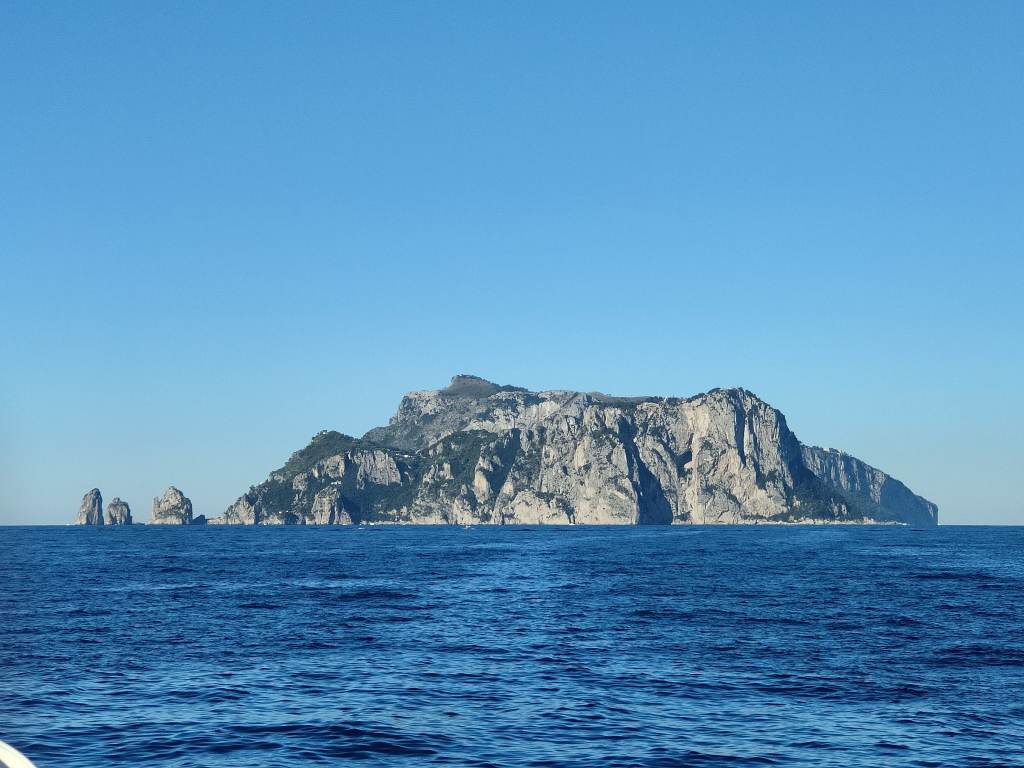
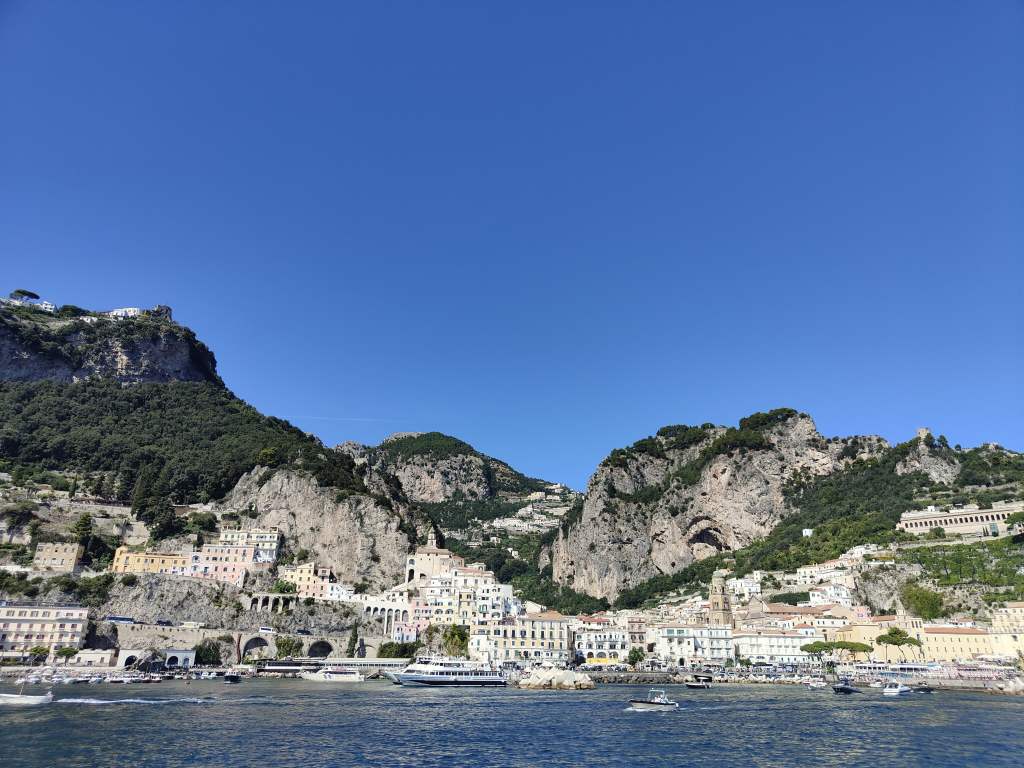
Approaching Capri Island

Capri became famous in Roman times, when Emperor Augustus claimed the island for himself and developed it as a private resort with temples, villas and gardens. However, Capri is most associated with his successor, Emperor Tiberius, who moved here permanently in 27AD and ruled the Roman empire from the luxurious Villa Jovis until his death in 37AD. Capri then fell into decline, until the 19th century when it was rediscovered by European artists and writers. In more recent times Capri became a popular tourist destination for “jet set” film stars in the 1950s and 60s. However these days the island has a mixed reputation, with some praising its continuing beauty and others talking of over-tourism and crazy prices. Today I would form my own judgment.

As my ferry docked in Capri’s large port (far busier than any of the others in the region, including the one in Naples), I was tending to the “over-tourism” view. Travellers milled around, seeking guidance from their phones, touts promoted boat tours around the island, and the girls staffing the tourist information booth looked very bored and pointed me towards the ticket office for the cable car with a notable lack of enthusiasm – forgetting to tell me that you can also pay by credit card and don’t actually need to buy tickets.

The cable car was a crowded but convenient way to make the steep climb from the port to the town of Capri, the main settlement on the island.
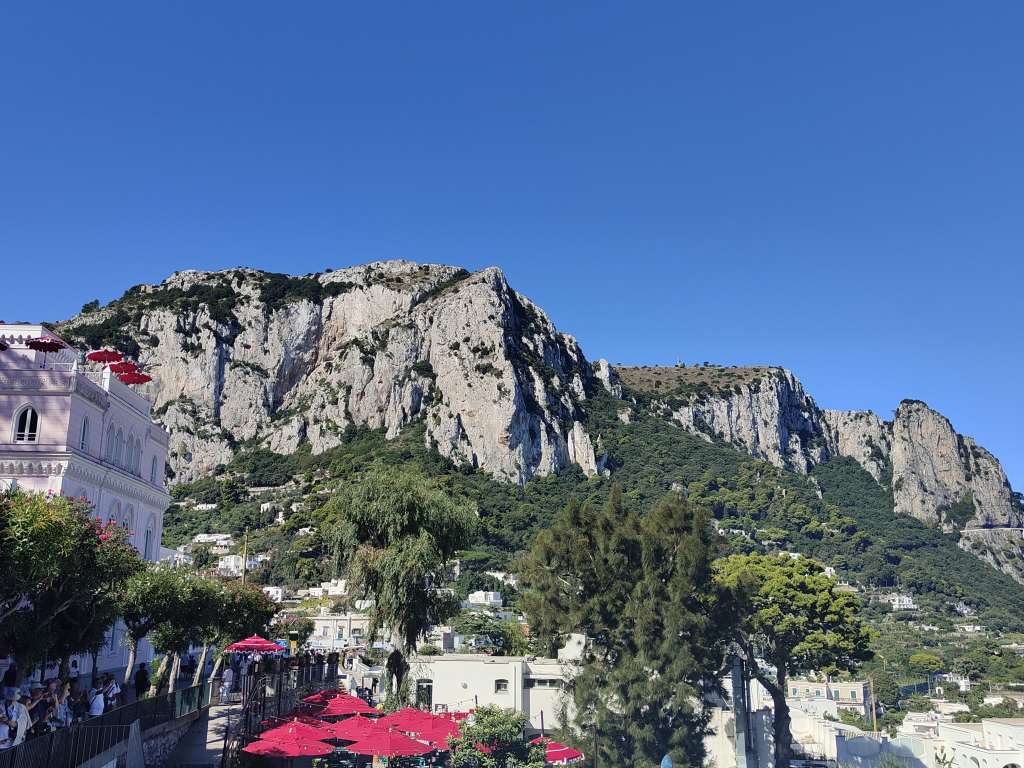
Capri town is surrounded by mountains

The town was a mix of squares and main streets packed with tourists and lined by luxury shops, and quieter side-streets – down one of which I headed on the way to my first destination of the day. As soon as I left the town centre, Capri became very pleasant – narrow lanes wound up the mountain, passing the locals’ villas – some luxurious and modern, some old and crumbling but still charming. I occasionally had to make way for one of the special electric carts used to transport luggage and people around the town (cars are banned), but otherwise there were very few fellow toursists.
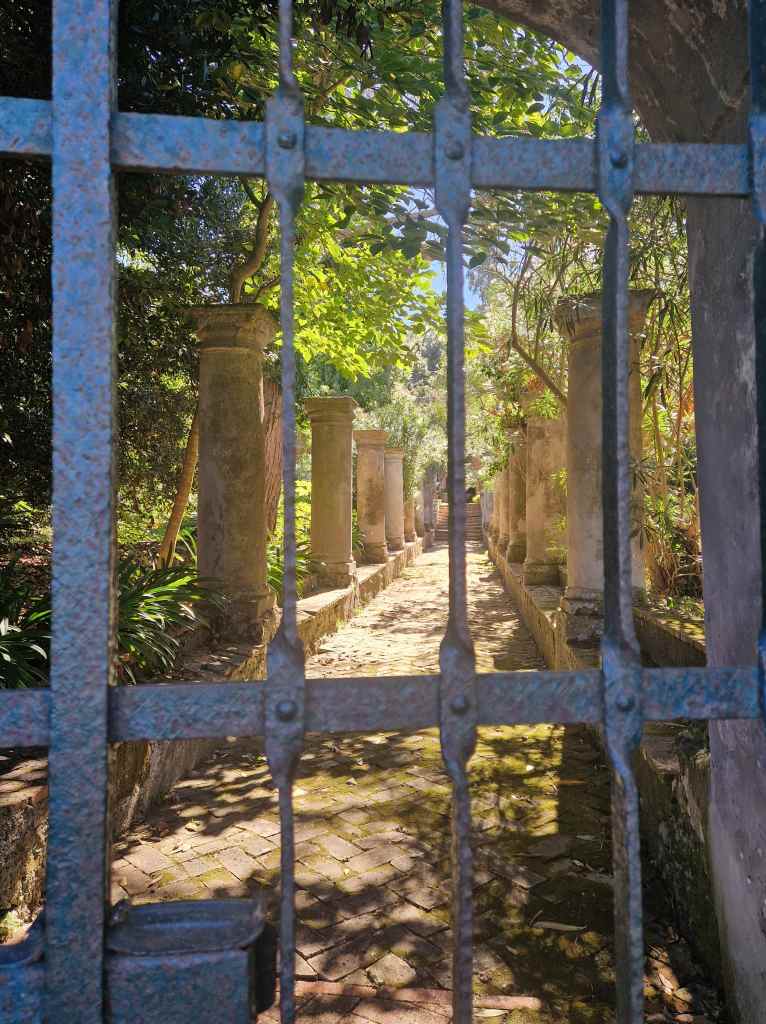
Behind closed doors – an elegant villa on Capri

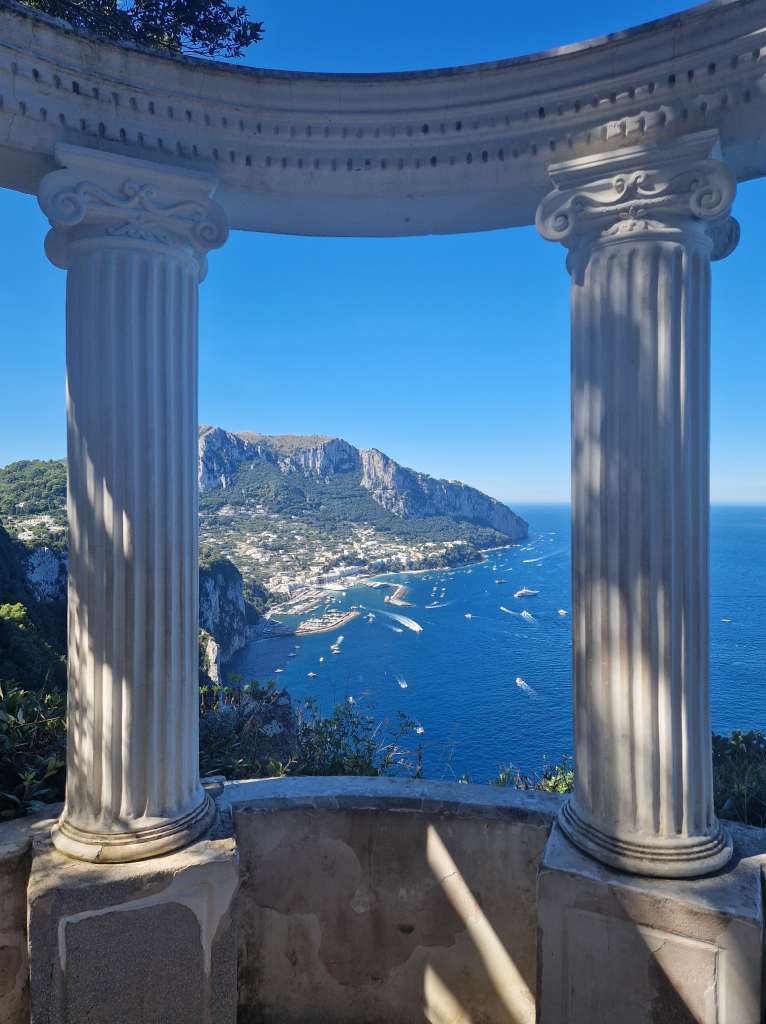
After a very pleasant twenty minute stroll I reached Villa Lysis, a home built by the rich Baron Fersen, who had been forced to leave his native France following various sex scandals. In 1904 he bought a plot of land on Capri in a prime location, overlooking the Bay of Naples, and commissioned the elegant villa and surrounding gardens that can be visited today. There he enjoyed a dissolute lifestyle with various lovers, turbo-charged with opium and cocaine until his death in 1923. Whatever one might think of Fersen, he certainly had taste and the views from his home are absolutely stunning.
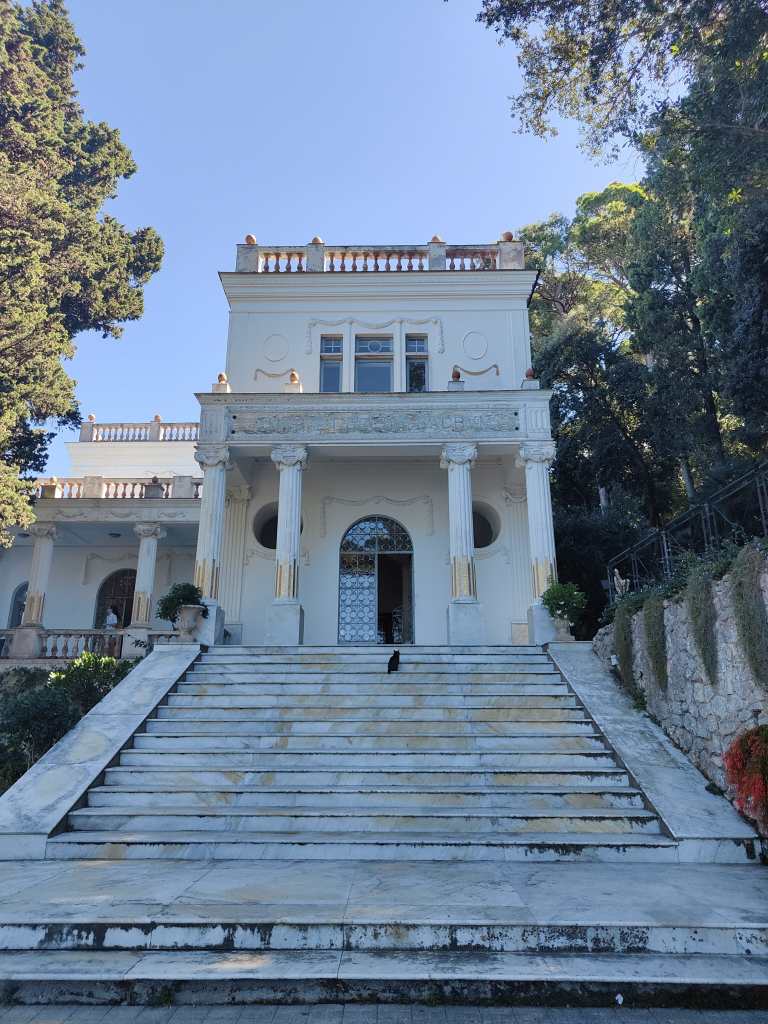
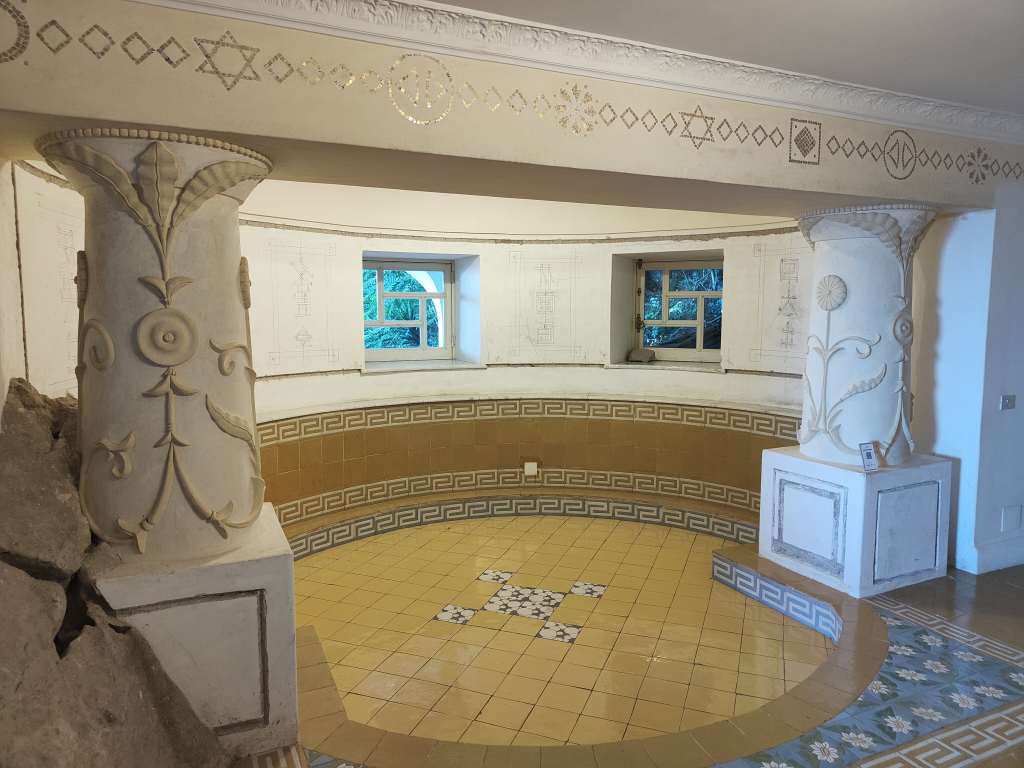
Baron Fersen’s villa…
…which includes an opium den….
…and which offers stunning views

It was so beautiful that it was hard to drag myself away from Villa Lysis, but as midday approached I knew I had to move on if I wanted to see more of Capri. I found a small trail that led through a forest around the coast and arrived at Villa Jovis, once the luxurious palace of the most powerful man in the world……and now an atmospheric ruin, visited by a small number of tourists and inhabited by goats.
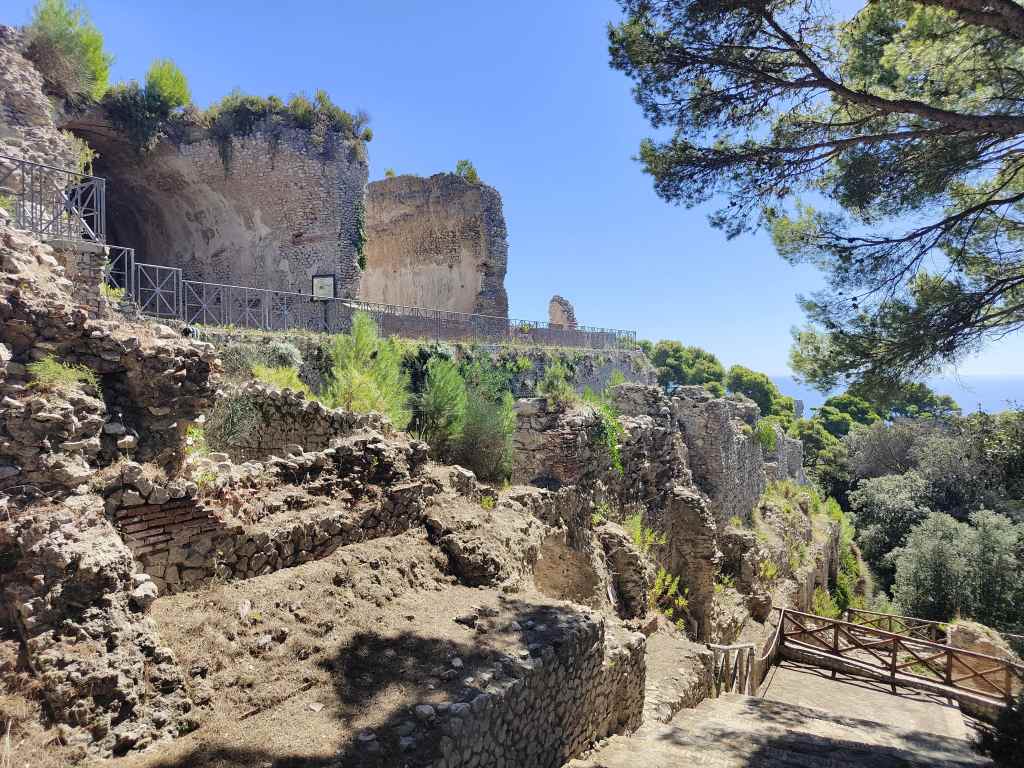
The ruins of Villa Jovis

I bought a ticket form a machine selling timed entry slots. For the slot I picked, the machine told me that there were 3947 tickets remaining – giving an idea of how few visitors Villa Jovis gets, despite its historical importance. It was very hard to imagine the palace that once stood there from the relatively modest ruins that remained, but it was very pleasant wandering around alone and admiring the views, including the sheer cliff from which it is claimed that Tiberius had his enemies thrown. A wonderful smell of pine trees alternated with the stench of feral goats.
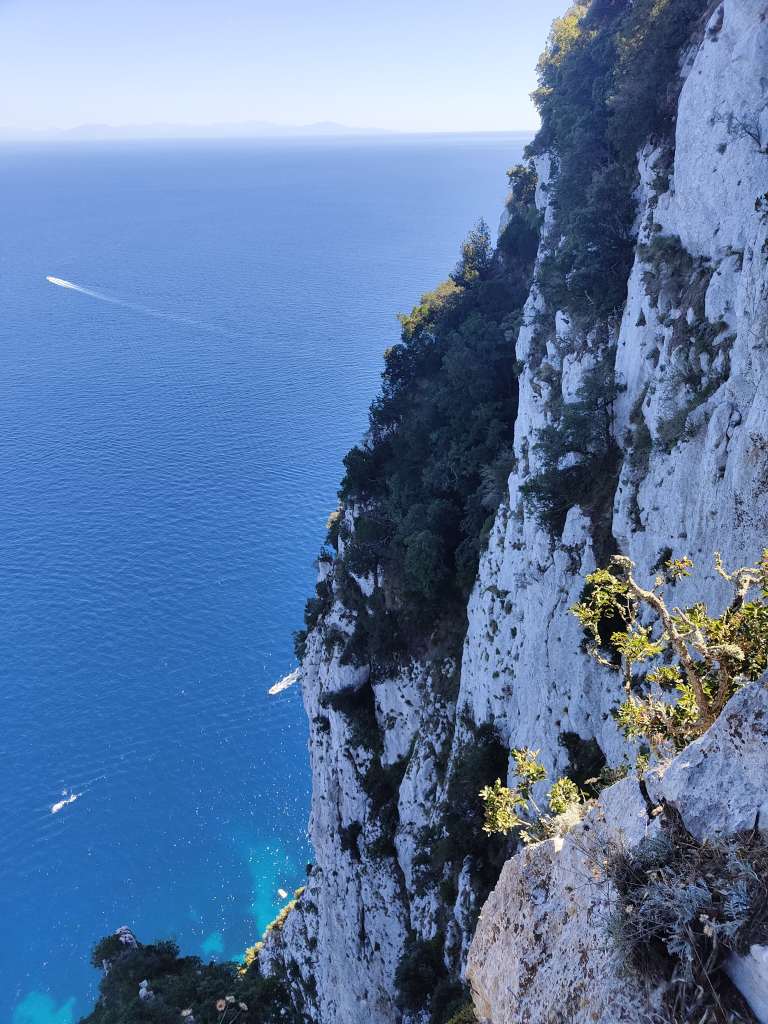
Tiberius’ Cliffs, Villa Jovis

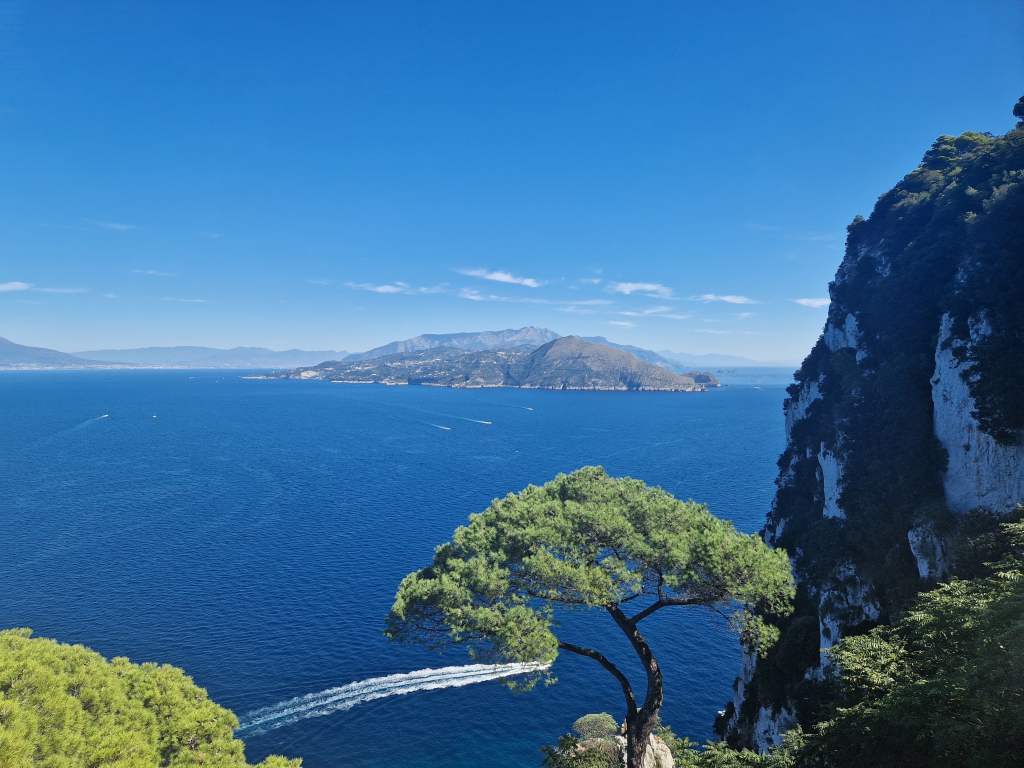
After I had seen everything, I explored a park just outside of the villa. It looked surprisingly neglected, and has been settled by yet more goats, but offered some amazing views over the sheer cliffs that make up much of Capri’s shoreline.
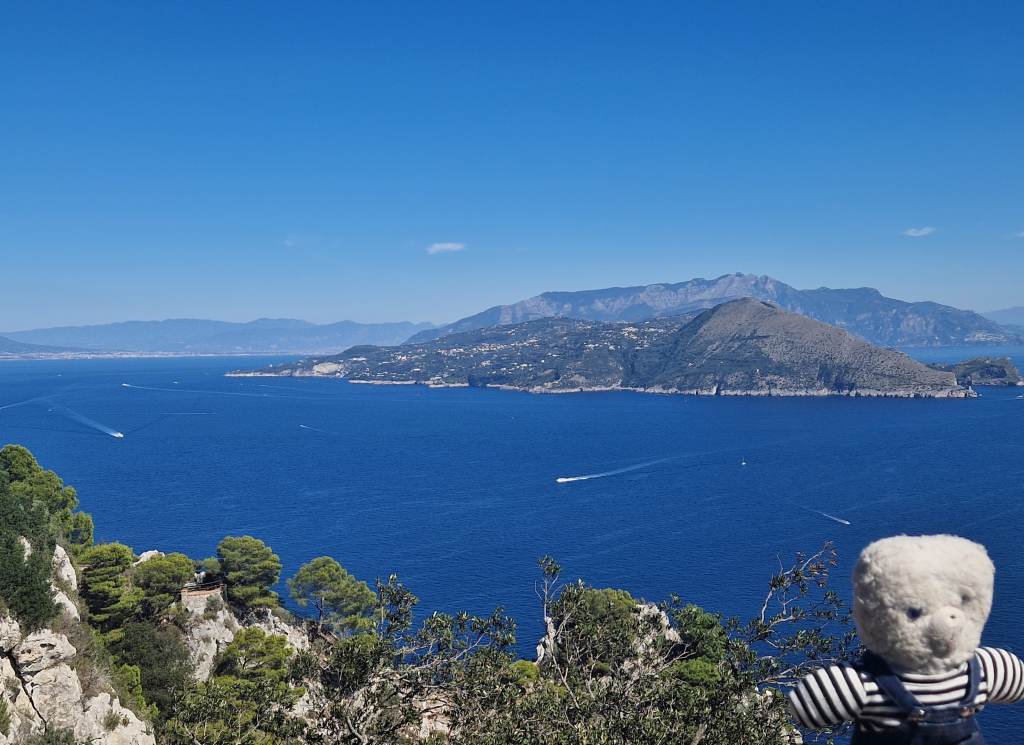
View from the park near Villa Jovis

Once again, I was surprised by how few visitors there were – where were all the people I had seen getting off boats and thronging the port? My answer came soon enough as a I walked back into Capri town and hit the main shopping street, linked with luxury boutiques like Bulgaro, Louis Vitton and Yves St.Laurent, and packed with affluent-looking tourists speaking American, Italian, French and Russian. My route to my next destination, the Gardens of Augustus, was like and even richer multilingual version of fighting my way through the crowds of Positano – excuse me/scusi/pardon/izvinnite! The gardens were similarly busy – they offered some nice views over the coast, but I was baffled by their popularity compared to the much more beautiful things I had seen earlier, which I had had almost to myself.
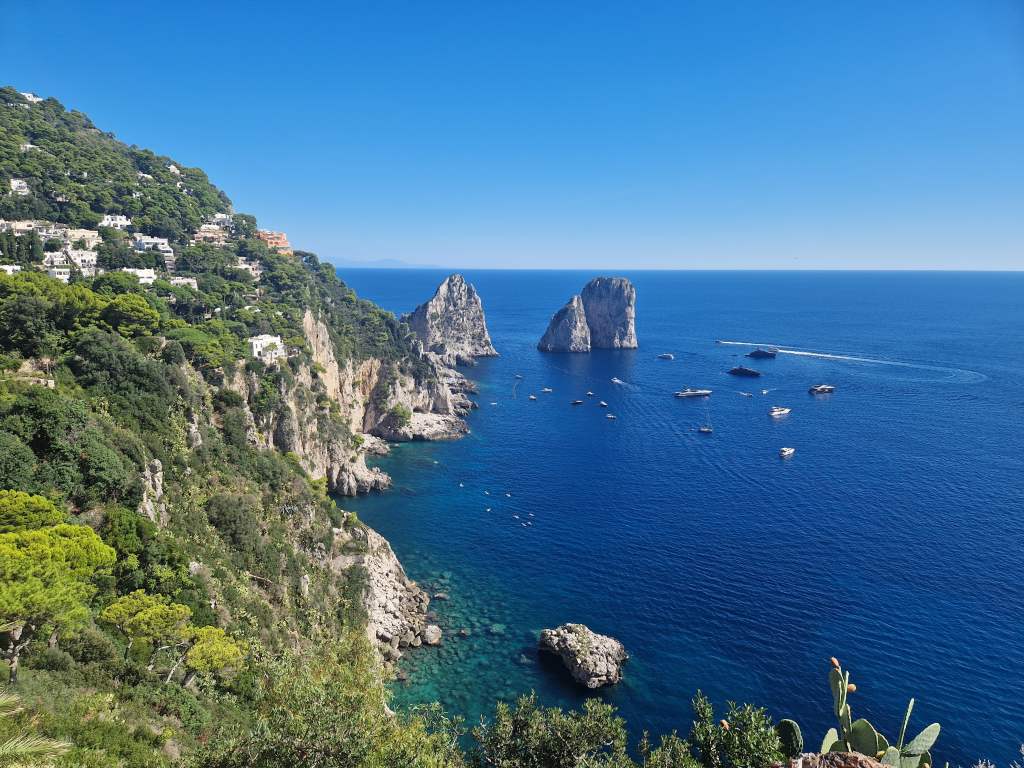
The view from the Gardens of Augustus

After seeing the fairly modest Gardens of Augustus I still had an hour before my ferry left, and popped into the huge former church of San Giacomo, which now houses several minor museums. The modern art there did not impress me, but it was fun wandering around the sprawling and pleasantly cool complex, discovering even more nice views of the coast. Once again, I had the place to the myself.
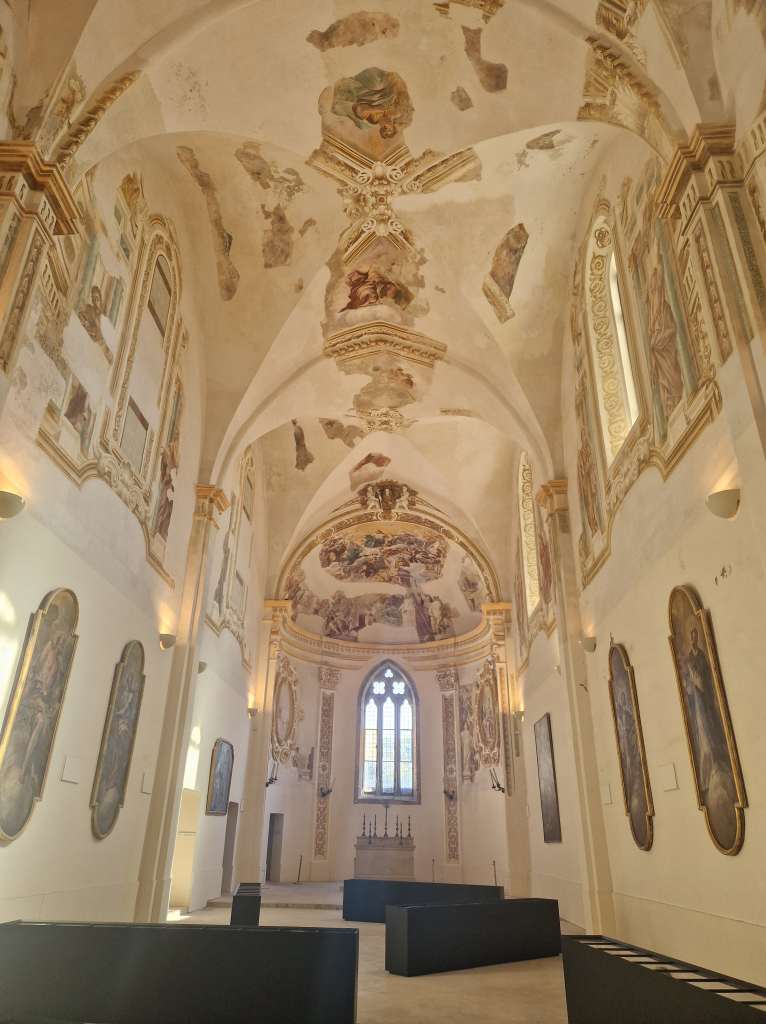
The former Church of San Giacomo

When the time finally came to head back to the cable car station to catch my ferry, I found a very long queue stretching out in baking sun into the neighbouring piazza. I glanced at my watch anxiously as the queue slowly advanced into the shade of the cable car building, to reveal an even longer queue inside. Here, the discipline of all these affluent visitors cracked as everyone realised they might miss there ferries, and people pushed and jostled. Being a small teddy sometimes has advantages, and I advanced cautiously at ground level amid a forest of sweaty legs to reach the turnstile at the front. I caught the cable car down, then had to find out which out of the thirty jetties my ferry would leave from, and finally rush to get there and make it onboard just in time.
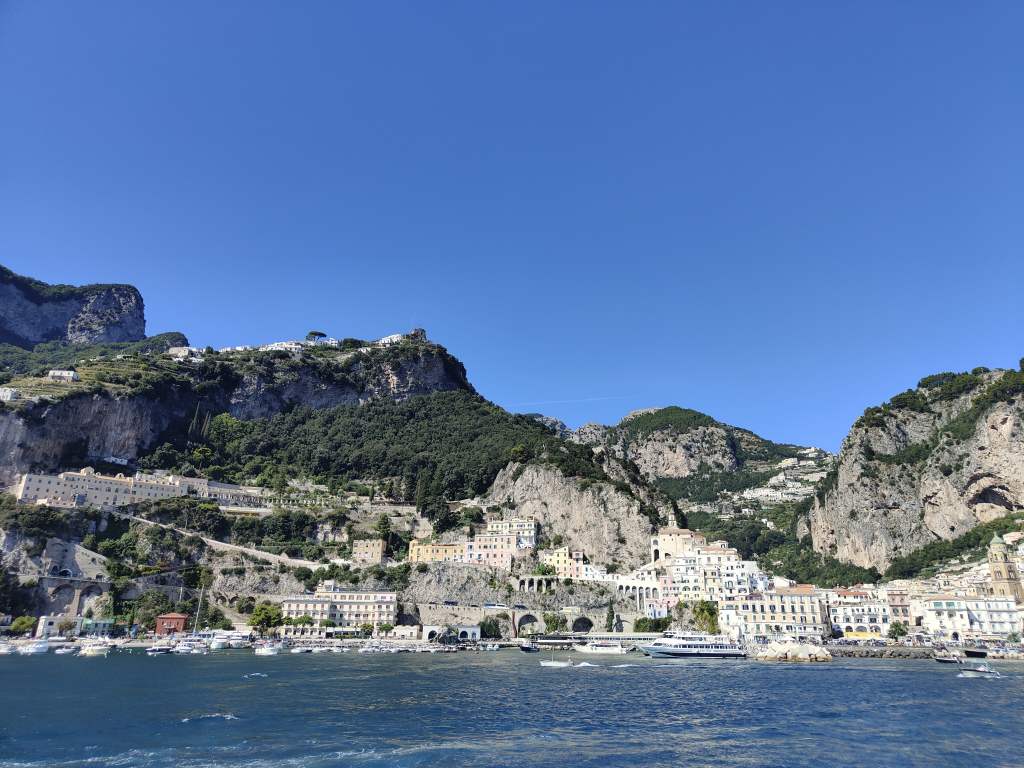
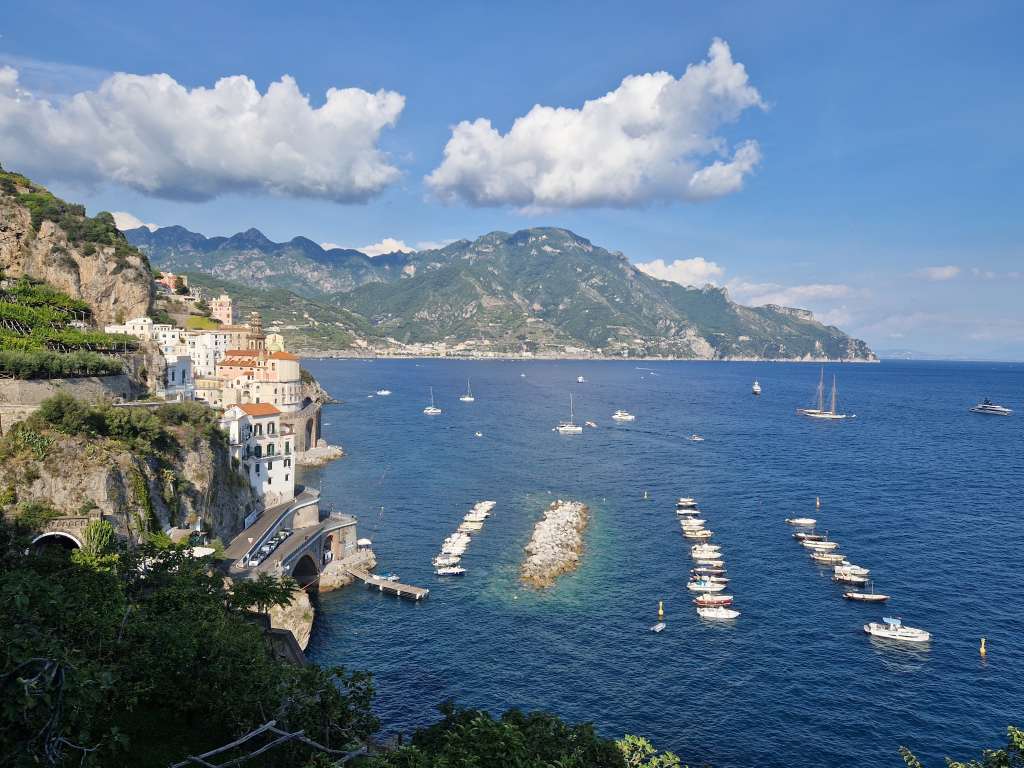
Approaching Amalfi at the end of the day!

Cruising back to Amalfi I could again relax, enjoy the amazing views, and process my thoughts about the day. Capri was a puzzling place – heavenly beautiful and deserted in parts, hellishly crowded and expensive in others. But on balance I had really liked it, and was very glad that so few people had made the effort to walk twenty minutes to see its most interesting sights. Villa Lysis had the most beautiful views of my trip so far, whilst Villa Jovis made me reflect on the transience of human life. The luxurious palace of the most powerful man in the world is a ruin where goats live – something that the world’s current rulers might do well to reflect on.

Previous Post: The Path of the Gods and Positano

Next Post: Matera

Scusi, Scusi! The Amalfi Coast – the Path of the Gods and Positano

Starting the Path of the Gods, Amalfi

As well as its spectacular coastline, the Amalfi area is known for its brilliant hiking tracks. A dense network of trails links the coast’s mountain settlements and seaside towns. Today I ventured onto one of the best known hikes – the Path of Gods, which starts at a small village called Bomerano, accessible by bus from Amalfi. I set an alarm to wake up early to catch the 08.15 bus promised by SITA’s oneline timetable and got to the bus stop with a few minutes to spare. Several other tourists were waiting but as 08.15 and then 08.30 came and went, I approached the SITA employee selling bus tickets only to be told that the next bus was at 09.15. Along with the other early rising tourists I trudged off grumpily back into town to kill another 45 minutes, but at least I got another good view of Amalfi’s cathedral without the crowds.

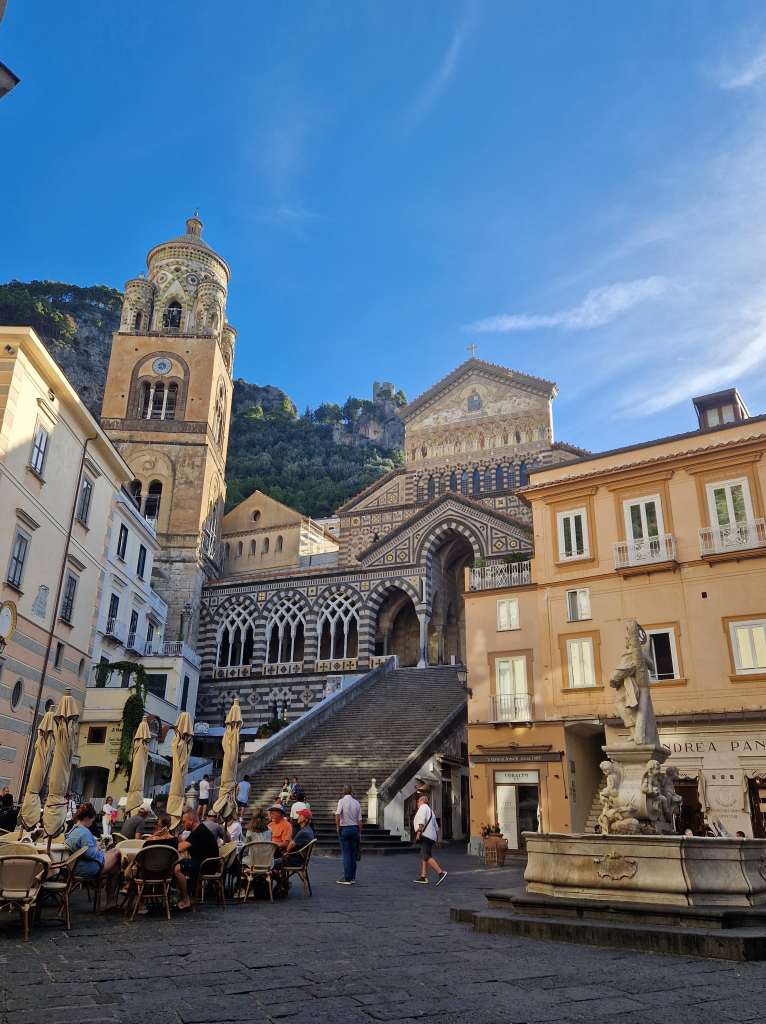
After my false start – back in Amalfi’s Piazza in the early morning

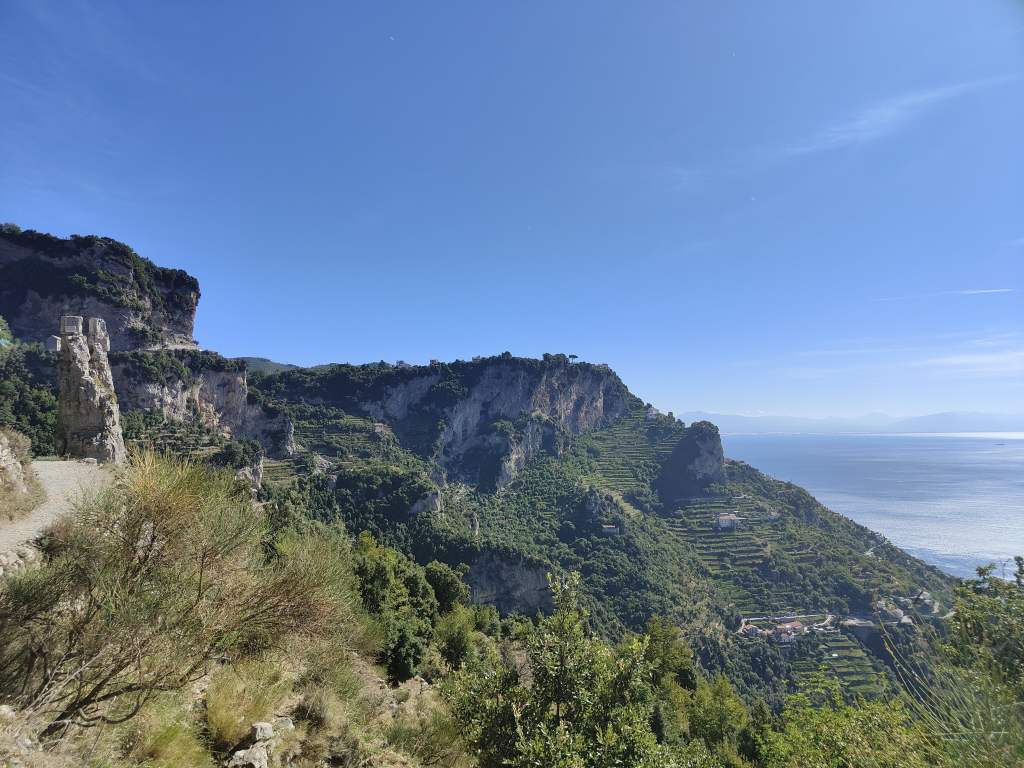
When 09.15 came, so did (this time) the bus. It was a very popular hike, and I was lucky to get a seat and not to have to stand as the driver sped up narrow mountain roads, testing himself, his vehicle and his passengers as he saw how quickly he could make the trip. The views of the coast far below, best glimpsed at the road’s many hairpin bends, were spectacular but fleeting – there was no question of being able to photograph them as the bus driver tested the laws of physics and centrifugal force with his bus. We soon arrived at Bomerano, and although the bus’s route carried on further, almost everyone disembarked. Indeed, the Path of the Gods is not a hike for those seeking solitude, and I set off behind a long straggle of fellow passengers along an easy path, which usually sloped gently downhill. As expected, the views were amazing and more than made up for times I had to negotiate my way through several organised tours of slower walkers, testing my Italian for “excuse me” (Scusi! Scusi!).

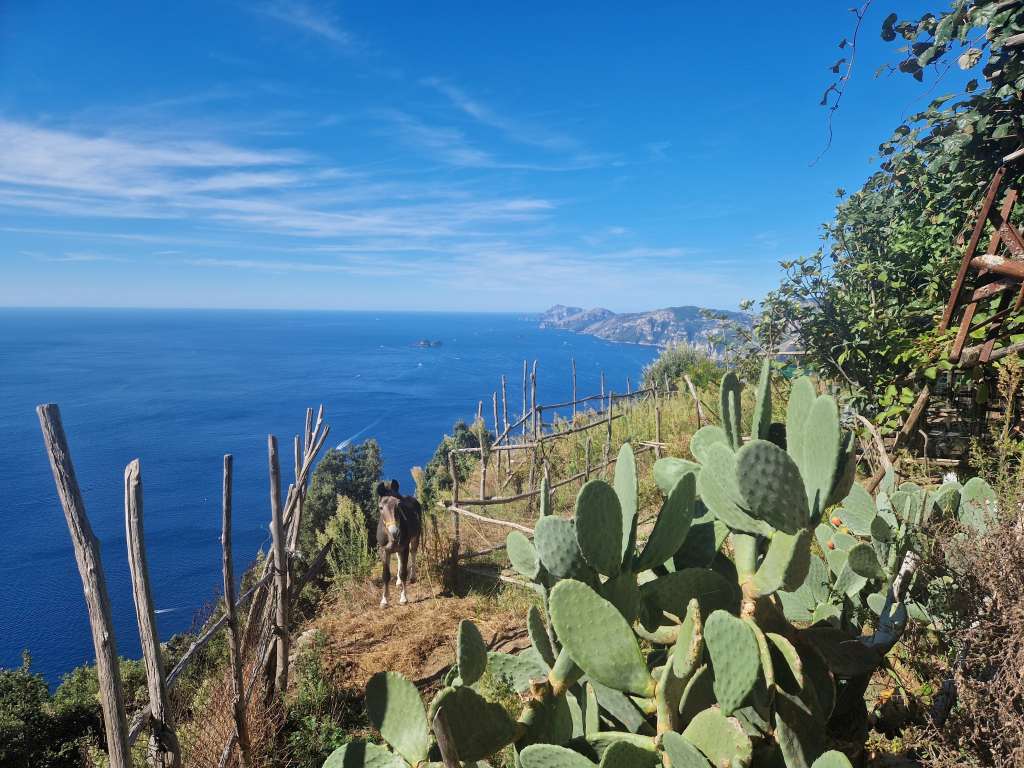
Near the start of the “Path of the Gods”
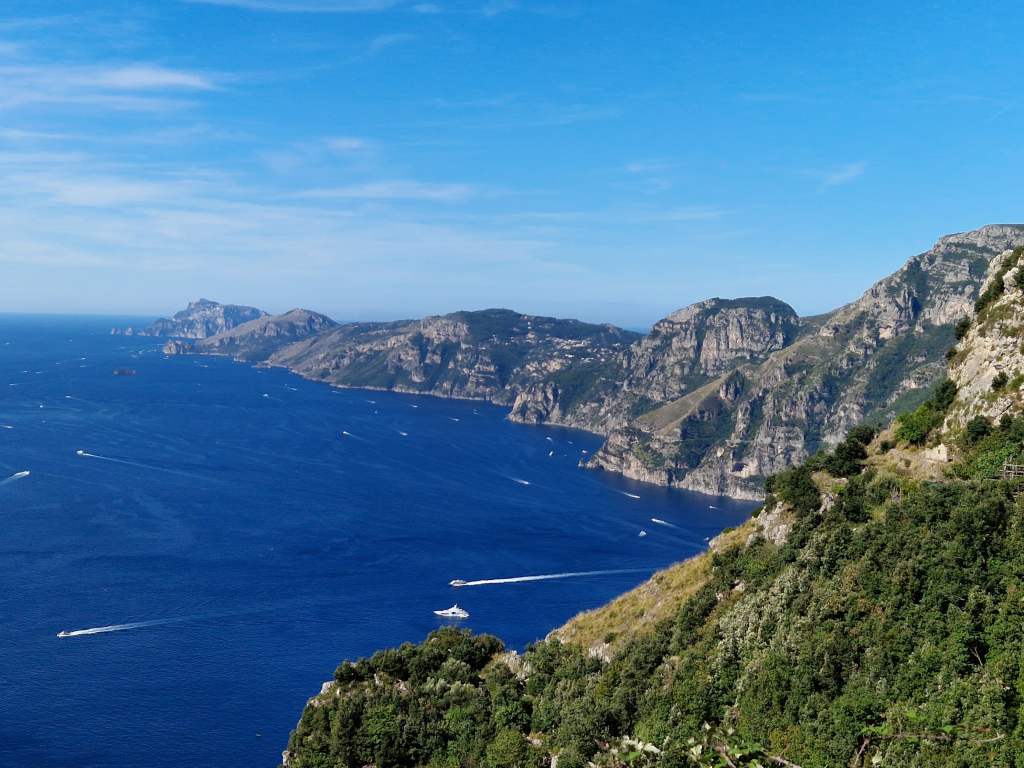
More stunning scenery along the way

The walk justified its reputation was one of the most beautiful of the Amalfi Coast – even though I felt that each view, although breathtakingly beautiful, was similar to the previous one.

Yet more stunning views on the Path of the Gods, Amalfi

After a couple of hours, which had passed surprisingly quickly, I found myself at the end of the main walk in a village called Nocello. The place was used to receiving tired and thirsty walkers and had a nice kiosk selling coffee and – even better on a hot day – lemon granite.

From Nocello there was supposedly a bus down the mountain to Positano, the nearest village on the coast. But my earlier bus experiences had so disappointed me that I did not even bother to try to find it, and set off on a path leading steeply downhill.

Starting the long descent to Positano

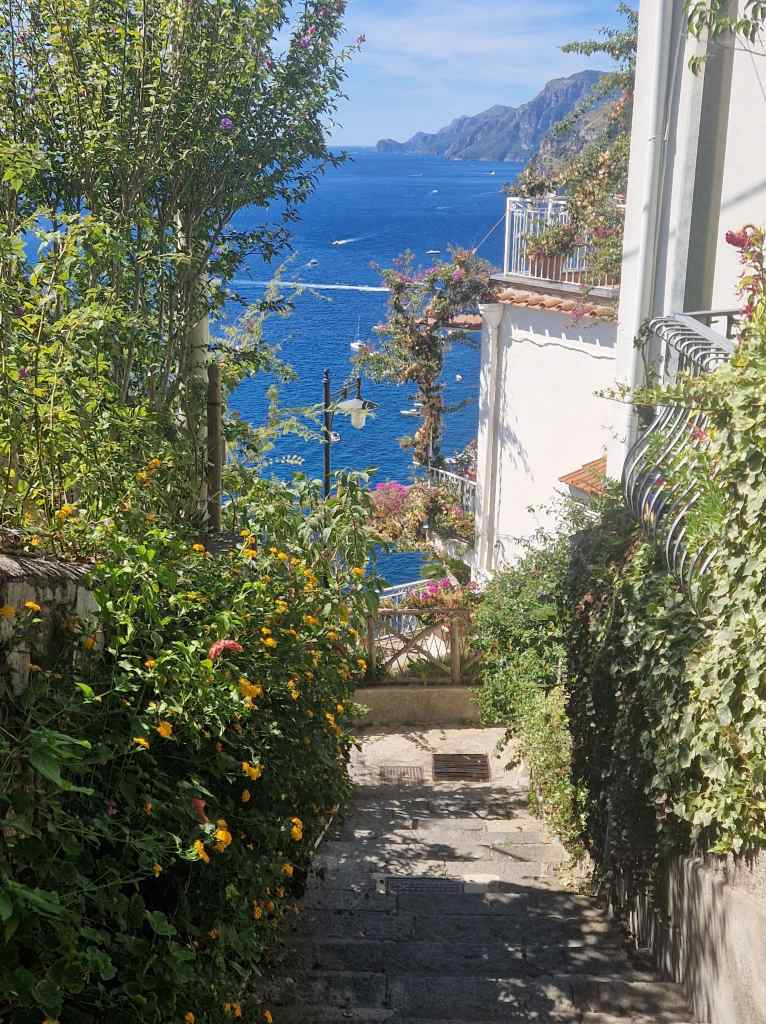
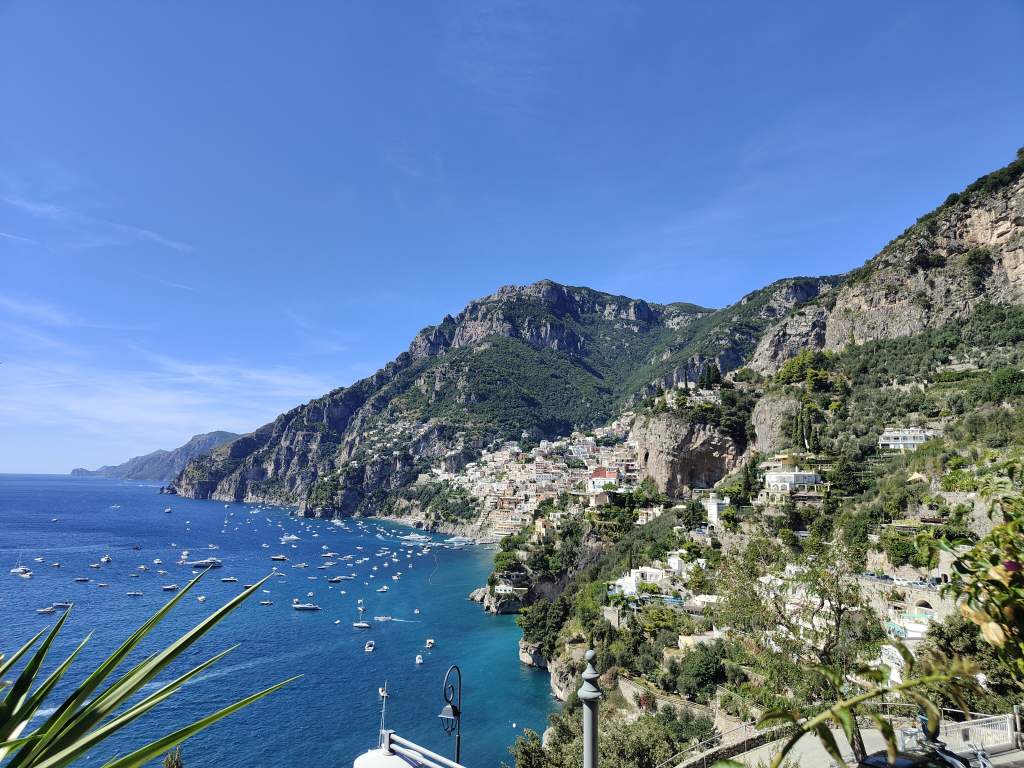
This might have been a mistake – there are 1700 steps on this path, and soon the calves of my little teddy legs were aching. I found this abrupt descent far harder than the steep climb up to Ravello I had made the day before. At the least the walk offered some nice views of Positano and the many boats anchored just offshore, which got bigger and bigger as I descended.

Positano comes into view

Soon I reached the main coastal road and had a decision to make – try to take a bus back to Amalfi or walk into Positano and take a ferry. Finding the bus stop answered this question quickly – there was already a large queue of hopeful passengers waiting for a bus which was supposed to have appeared ten minutes ago. I figured that even if this bus did eventually show up, the chance of me getting a space on it were as small as my little teddy legs, so I continued walking on into Positano. This is one of the Amalfi Coast’s most famous towns, but I disliked the bits I saw – narrow roads lined with shops selling upmarket goods and hopelessly crowded with fellow tourists. It took me another twenty minutes of “Scusi, Scusi!” to fight my way to the port – where my luck changed. There was a boat to Amalfi leaving in fifteen minutes, and I was soon enjoying the more civilised way to get around this region – by sea, enjoying once again the beautiful coast line between Positano and Amalfi, this time from sea level rather than from high on the mountains.

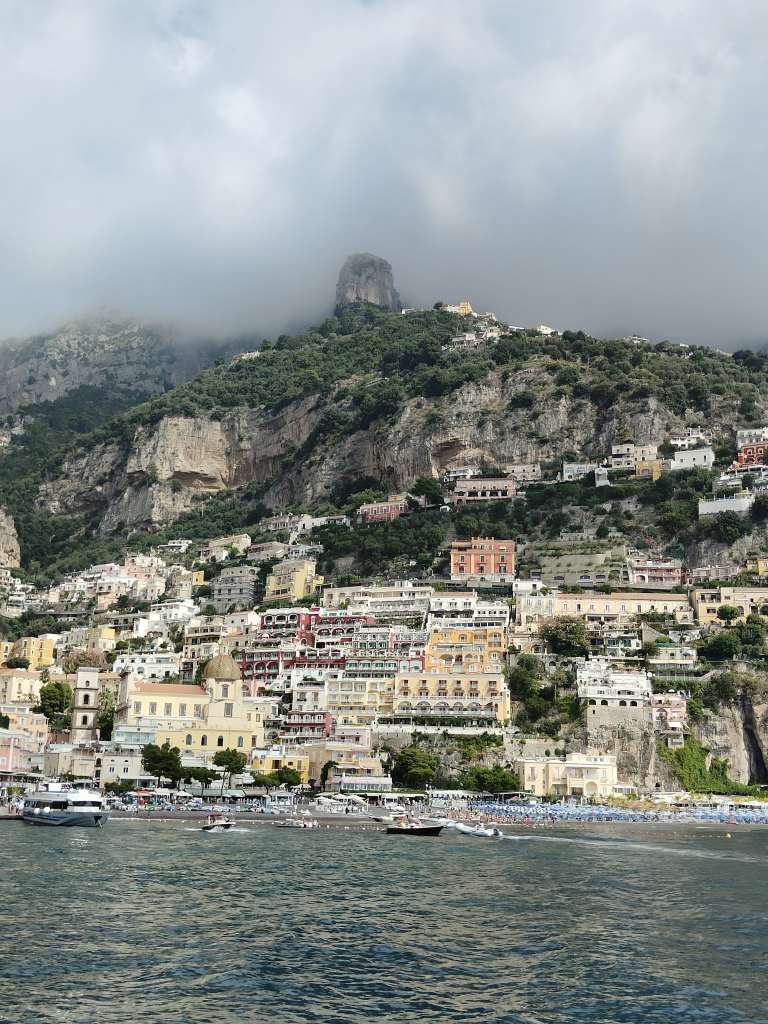
Positano – best viewed from the sea!
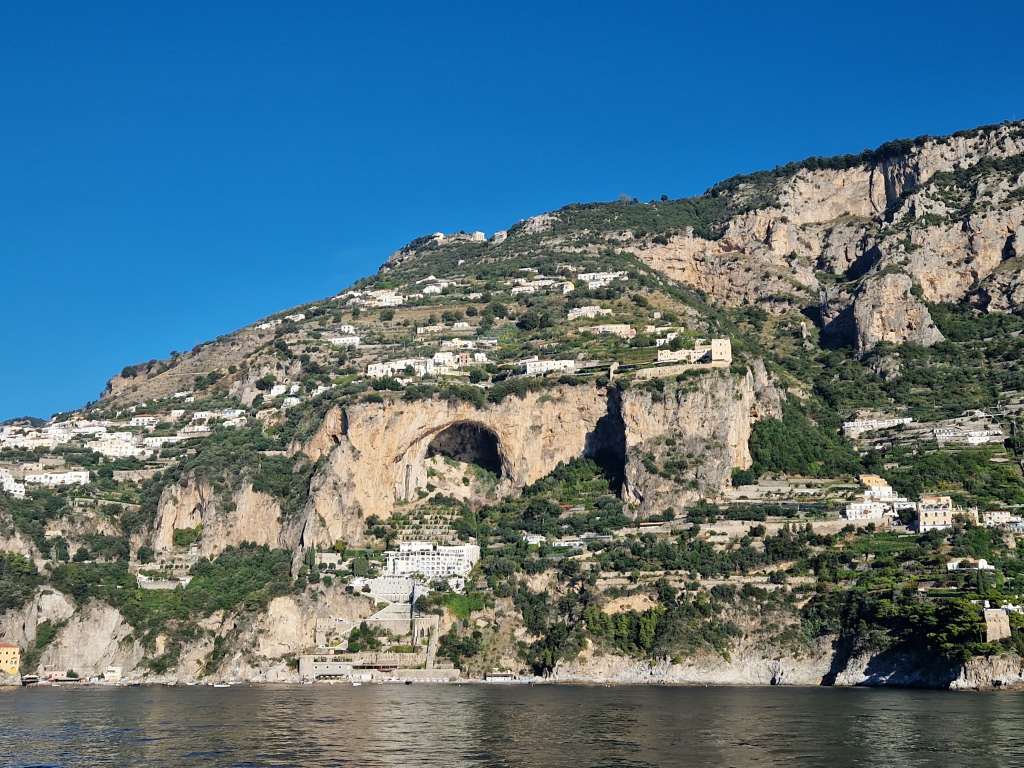
Interesting rock formations on the coast between Positano and Amalfi
Back in Amalfi!

It had been a mixed day. I had underestimated the difficulty of the long descent to Positano, the crowds in this popular town, and the unreliability of Italian buses. But the amazing views from the Path of the Gods and the pleasant ferry ride back to Amalfi more than compensated for these struggles. After all, this beauty is why the Amalfi Coast is so crowded in peak season.

Previous Post: Amalfi

Next Post: Capri

The Amalfi Coast

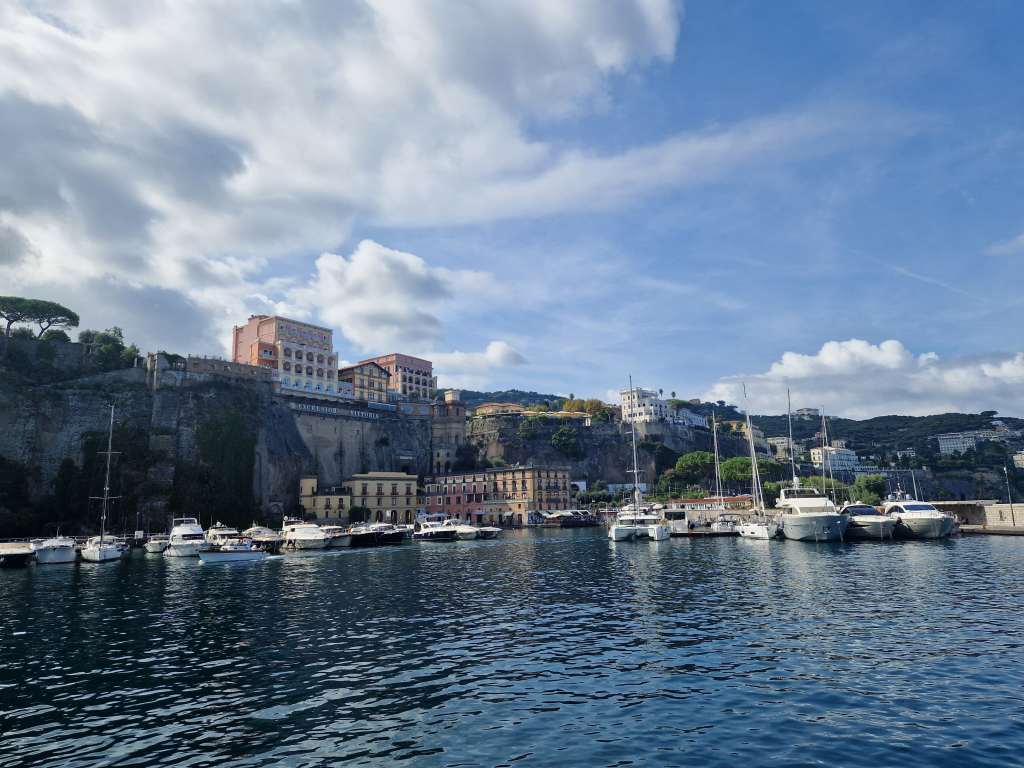
Back on the road again! The next few posts will devoted to my trip around southern Italy – Naples, the Amalfi Coast and Puglia. After a flight to Naples and one night there (more about this interesting city in a future post), I was soon on the morning ferry for the two-hour cruise to Amalfi. There were great views of the Bay of Naples with Mount Vesuvius looming behind, before we reached our first stop, the port of Sorrento. It looked a very smart place, but it was not the destination I had chosen for my stay.

On the way to Amalfi – Sorrento

Instead, I stayed on the boat as it rounded a cape and cruised past the island of Capri to the Amalfi Coast proper, with the scenery becoming more and more spectacular.

On the way to Amalfi – passing Positano

I arrived at Amalfi at around noon to learn the good news that I could check in early to my flat. I fought my way through the crowds in the town’s main road in the heat of the midday sun – even though it was mid- September, the temperature was 30C and my fur was hot and sticky by the time I arrived. I had a quick rest and some coffee before setting off to explore. My first stop was Amalfi’s cathedral, which was pleasantly quiet compared to the bustle of the main street. It was started in the 10th century, with many additions over the following years, and contains a mix of architectural styles. First I visited its peaceful and cool cloister with views of the surrounding mountains……..

The cloister of Amalfi’s Cathedral

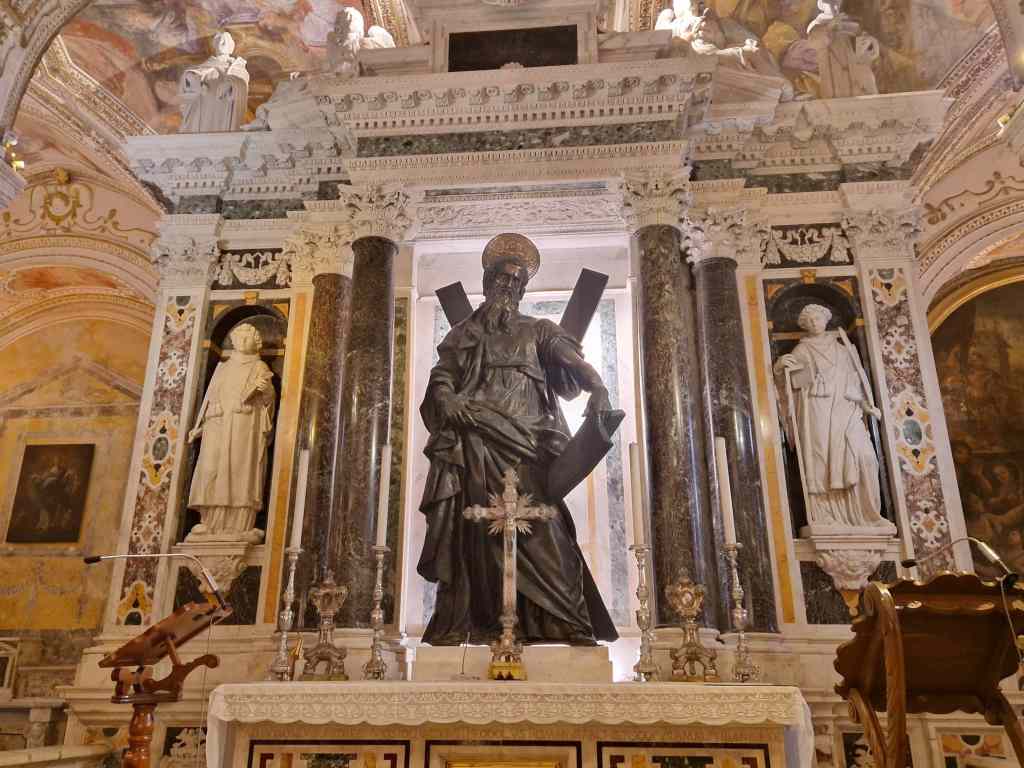
….and then a crypt which houses the remains of St Andrew. These were brought here by participants of the Fourth Crusade, who changed plans and sacked Constantinople instead of trying to conquer the Holy Land.

St Andrew’s tomb, Amalfi Cathedral

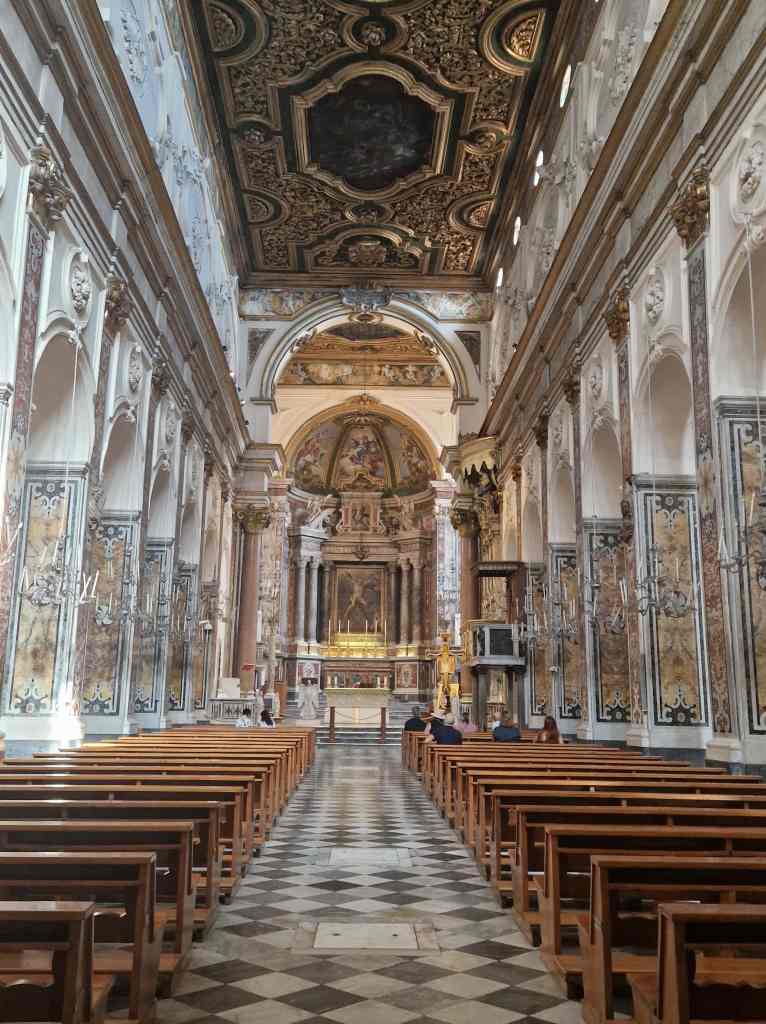
From the crypt, stairs led up to the stunning cathedral itself:

Amalfi Cathedral

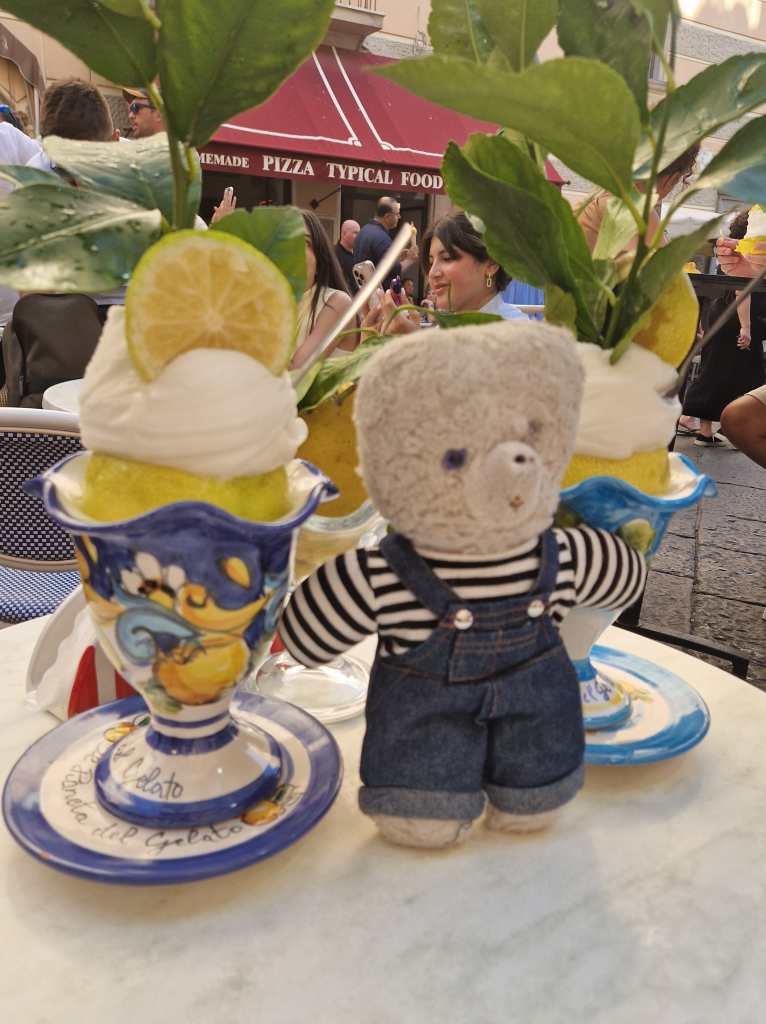
The main square in front of the cathedral was packed with tourists. Many seemed to simply arrive on boats and then sit in cafés, or queue for one of Amalfi’s specialites – lemon sorbet. The region is a big centre for growing lemons and production of Limoncello. I could not resist and sat down to try a huge sorbet, which was delicious but also very expensive – the Amalfi Coast is a justifiably famous destination, and has prices corresponding to its reputation and the deep pockets of the richer tourists that go there.

Lemon sorbet – delicious but expensive

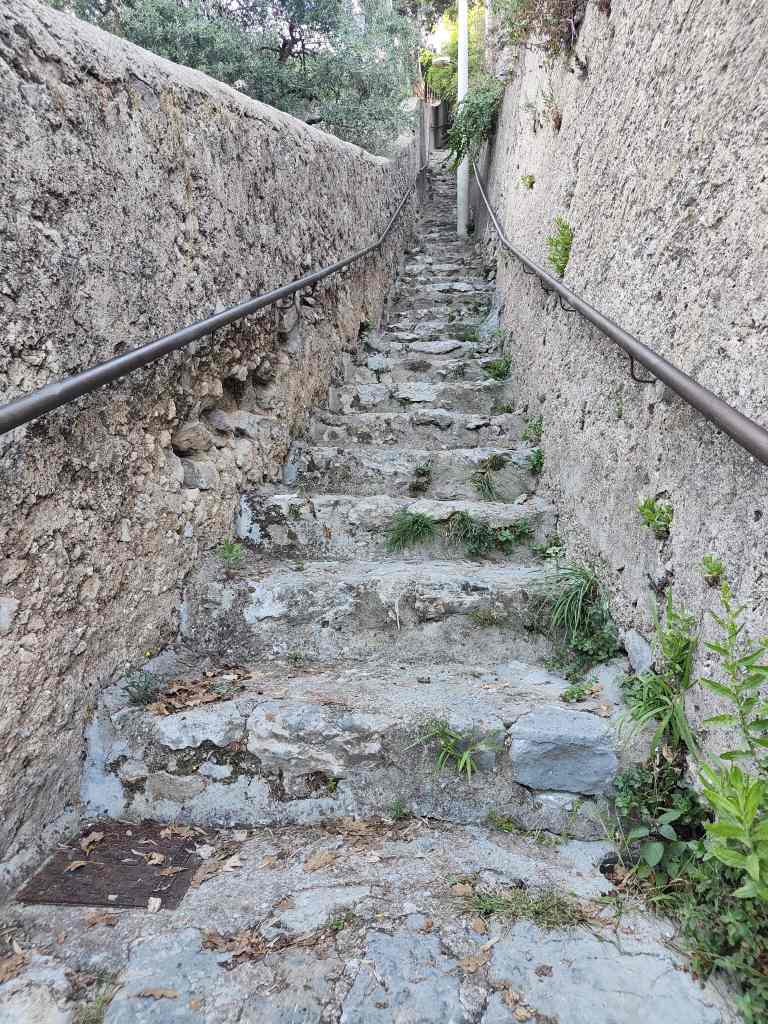
Refreshed and 24€ poorer after two sorbets, I decided to walk to Ravello, a town perched on top of the mountains surrounding Amalfi. The path first passed under the cathedral and then along many narrow winding staircases and alleyways to the nearby town of Altrani, which was pleasantly quiet compared to Amalfi.

The view towards Altrani from Amalfi

Then my route headed steeply upwards. I sweated heavily in the heat of the late afternoon, but at least most of the path was in shade, protecting me from the fierce sun.

Ooof – hard for little teddy legs!
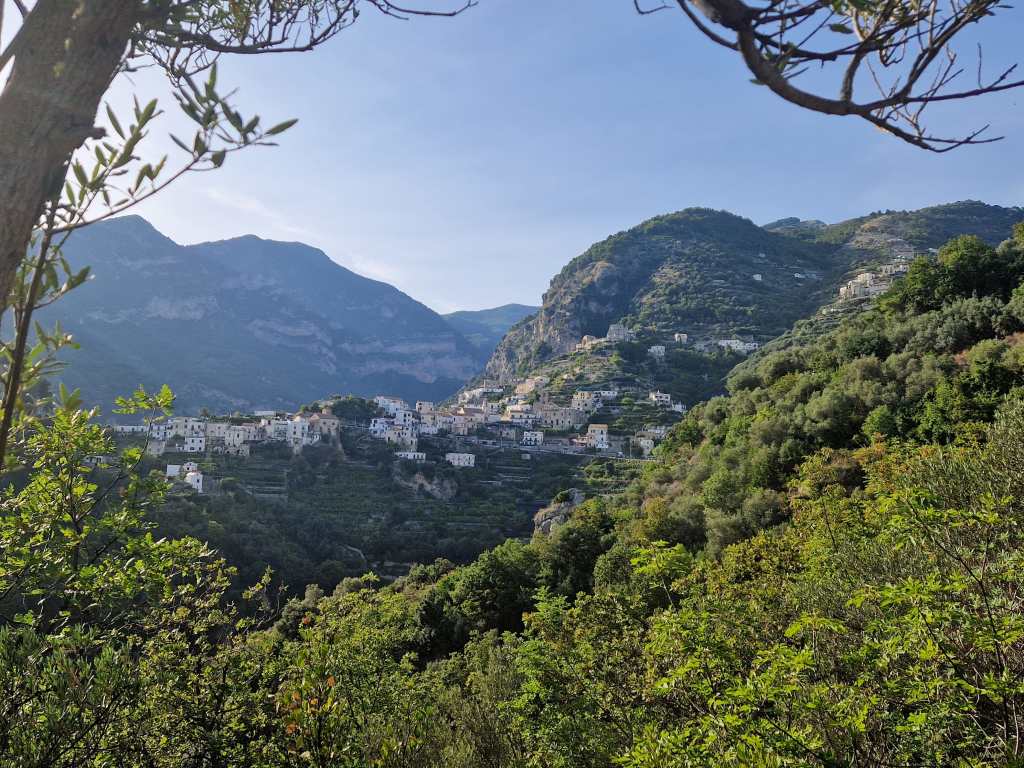
A view on the steep climb to Ravello

With great relief I finally made it to my destination, which turned out to be a charming place with some amazing views.

Finally – hot and sweaty but Ravello was worth the climb!

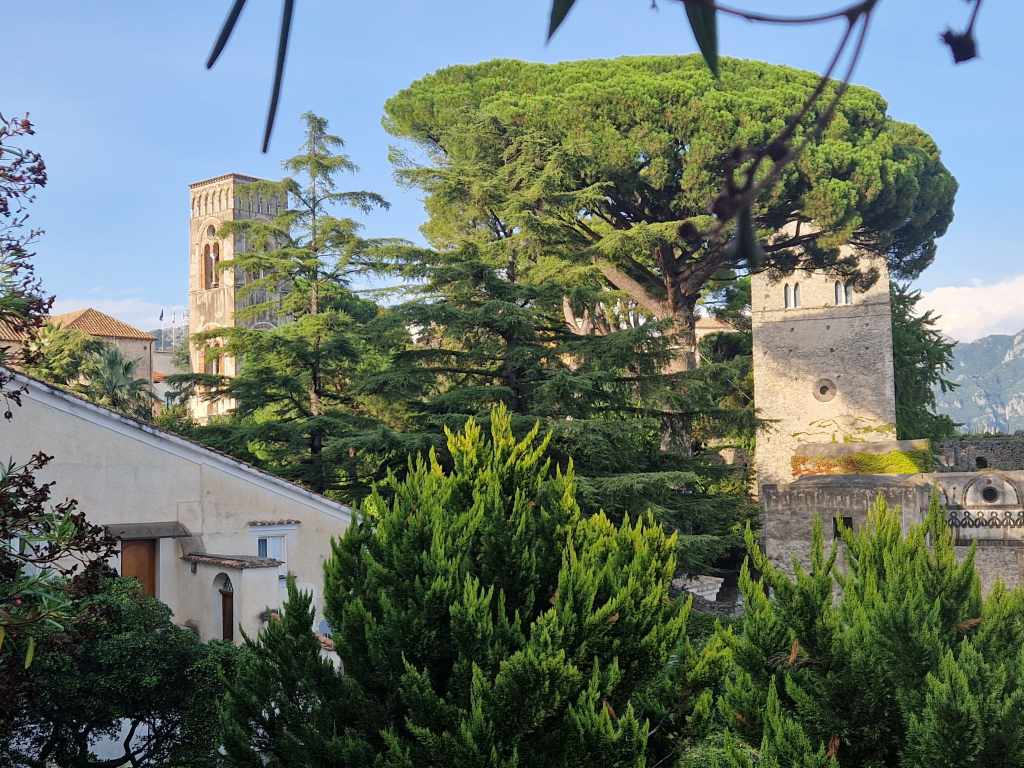
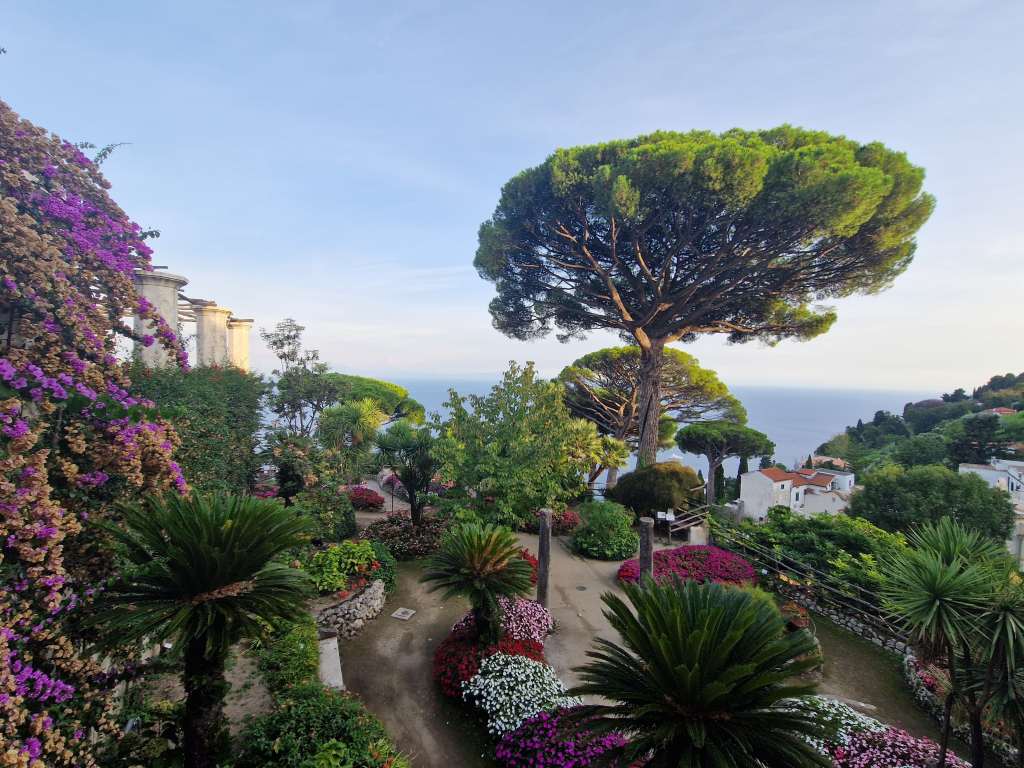
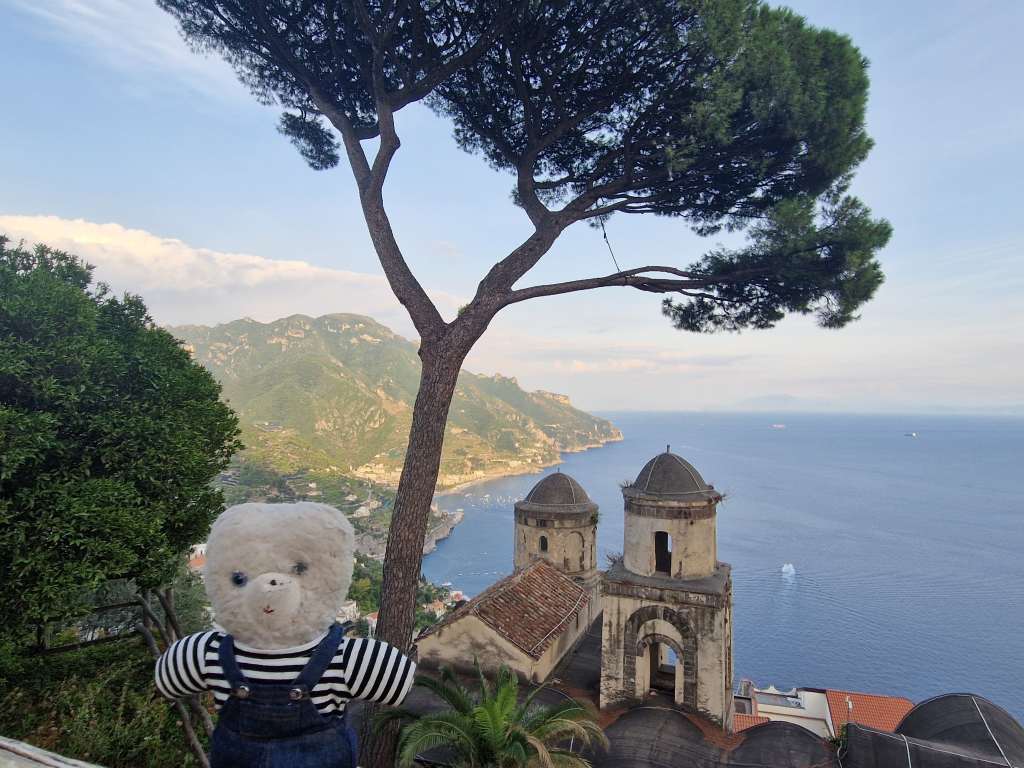
I had a drink in the main square to replenish my forces and noticed an interesting looking building at the edge of the piazza. This was the Villa Rufolo, originally built in the 13th century by the powerful family of the same name, but later extensively remodelled over the years. It has gardens with some of the best views of the Amalfi Coast (or perhaps of anywhere in the world….)

Villa Rufolo’s beautiful gardens
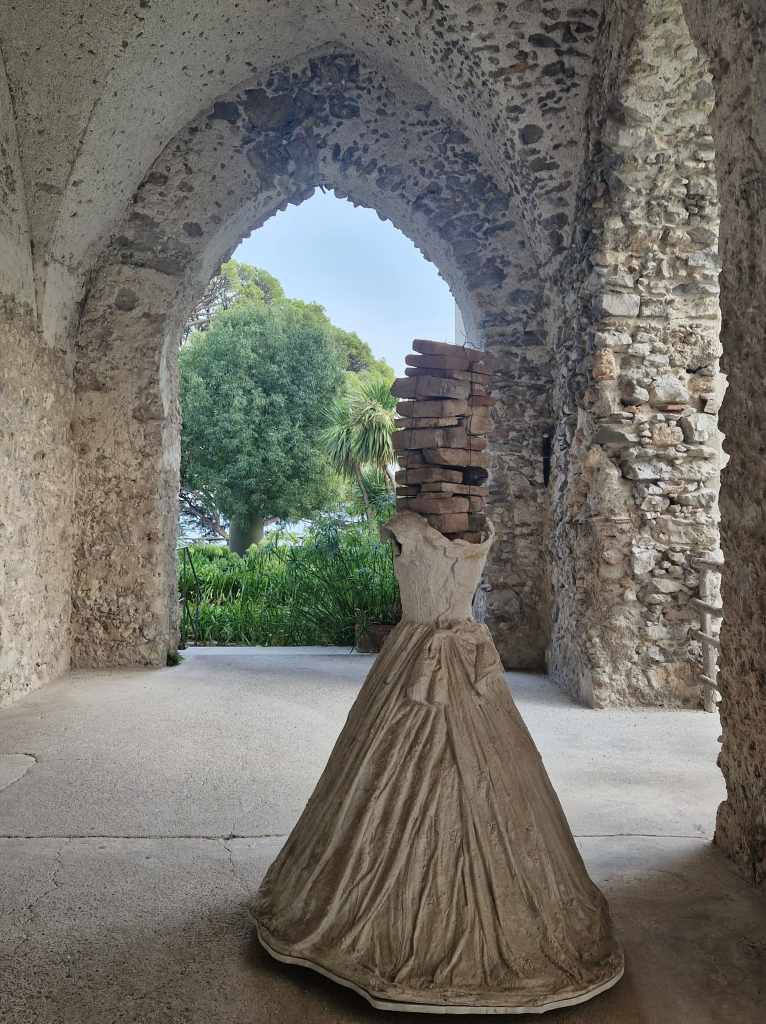
Wierd artwork in rambling Villa Rufolo
One of the best views of the Amalfi Coast

After visiting the villa it was getting late. I didn’t want to walk all the back to Amalfi in the fading light, and checked online to see if there might be a bus. The local bus company is called SITA and their website affirmed that there was one at 19.10, but on arriving at the stop there was a sign showing a different timetable and with a 19.20 departure. It turned out that the bus really left at 18.55, and I was quite lucky to have turned up early to catch it. Our driver negotiated the winding roads with extreme confidence and amazing speed; the other road users seemed to know it was wise to let the SITA bus have right of way.

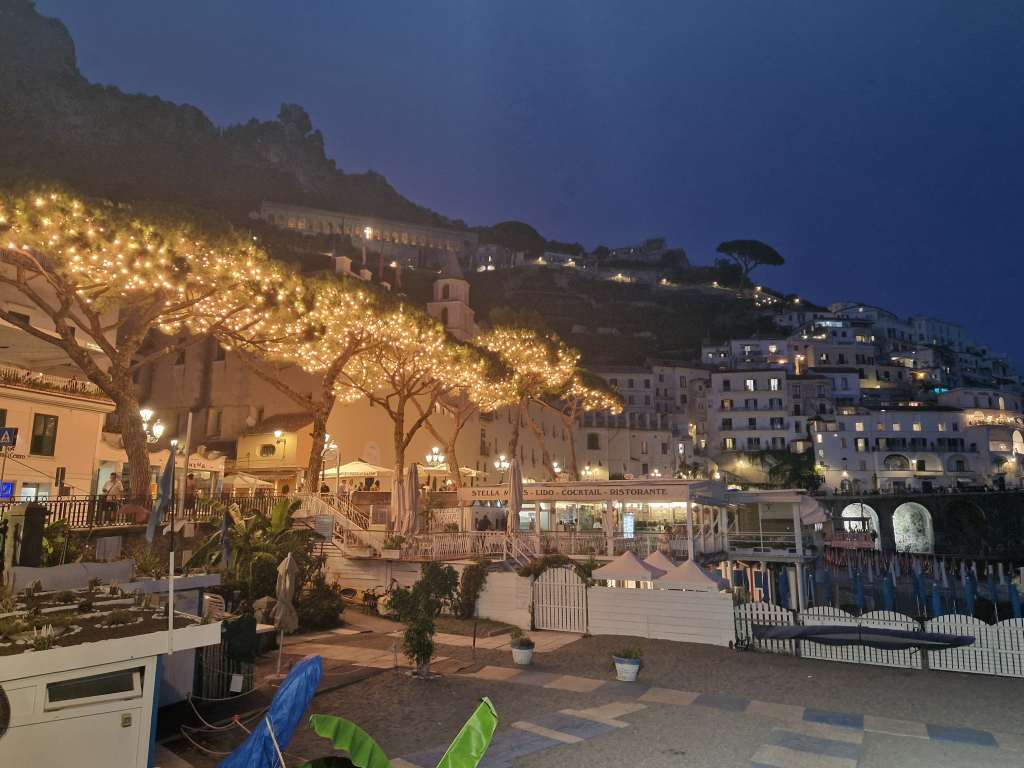
Amalfi seafront at night

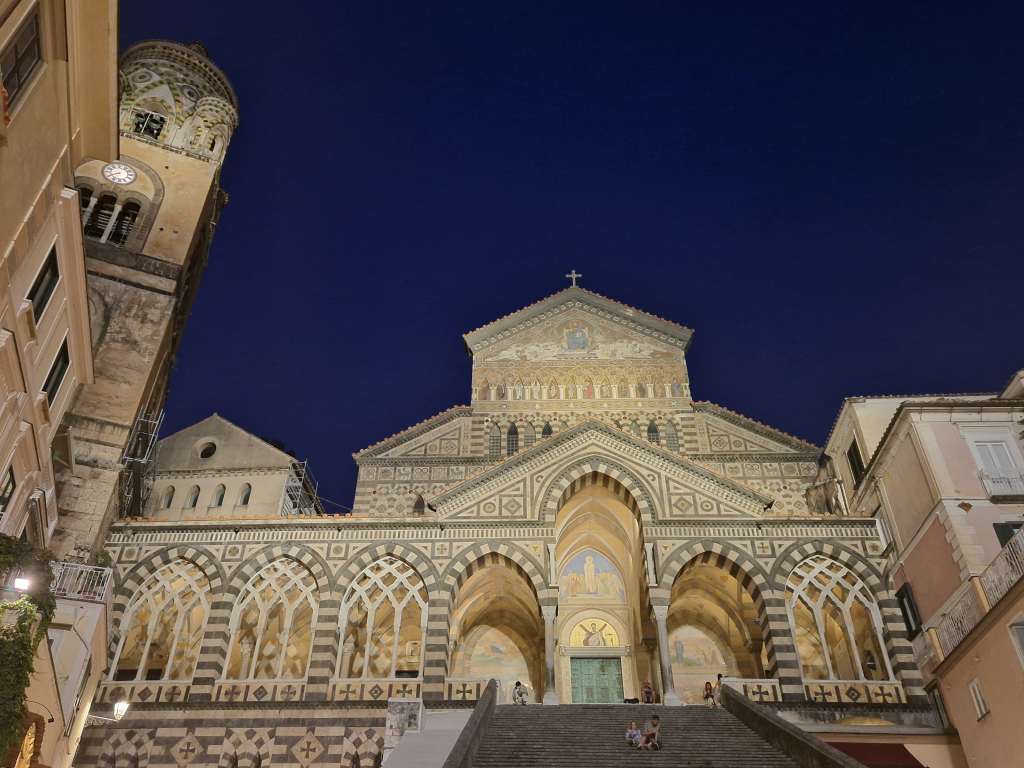
I got back to Amalfi in the early evening and rewarded myself with a well-deserved drink in a seafront café after a very full day. Walking back to my flat I could also enjoy a great view of the cathedral, without the daytime crowds. I was looking forward to my next couple of days exploring the Amalfi Coast.

Amalfi Cathedral without the crowds!

Next Post: The Path of the Gods

Blog at WordPress.com.

Up ↑