Hunting with the Hadzabe

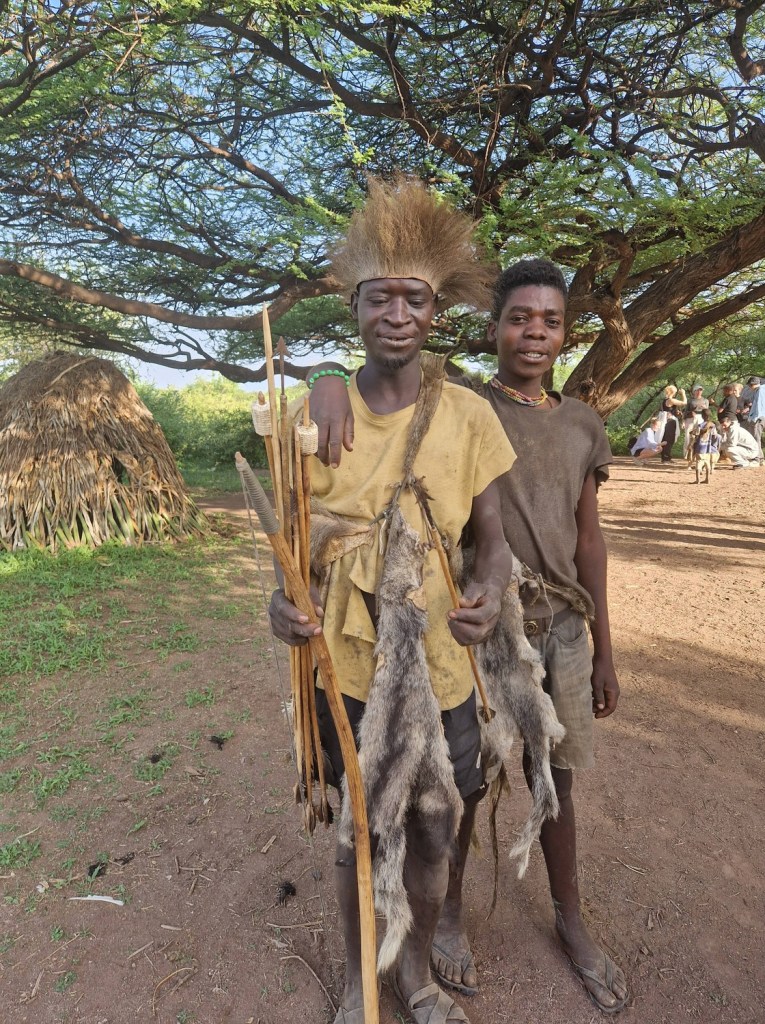
After several days watching animals, today we had a completely different experience, spending the morning with the Hadzabe tribe. They live in the bush and still live from hunting small animals and gathering fruit and berries. There are about five thousand Hadzabe, but no one knows the exact number since they live totally separate from the main Tanzanian society and have no birth or death records. We arrived in the early morning to meet the chief of the tribe, who was very welcoming and talkative. He insisted we learn a few words of their language, which was very strange, with clicking sounds made by the tongue and strange guttural sounds from the throat.

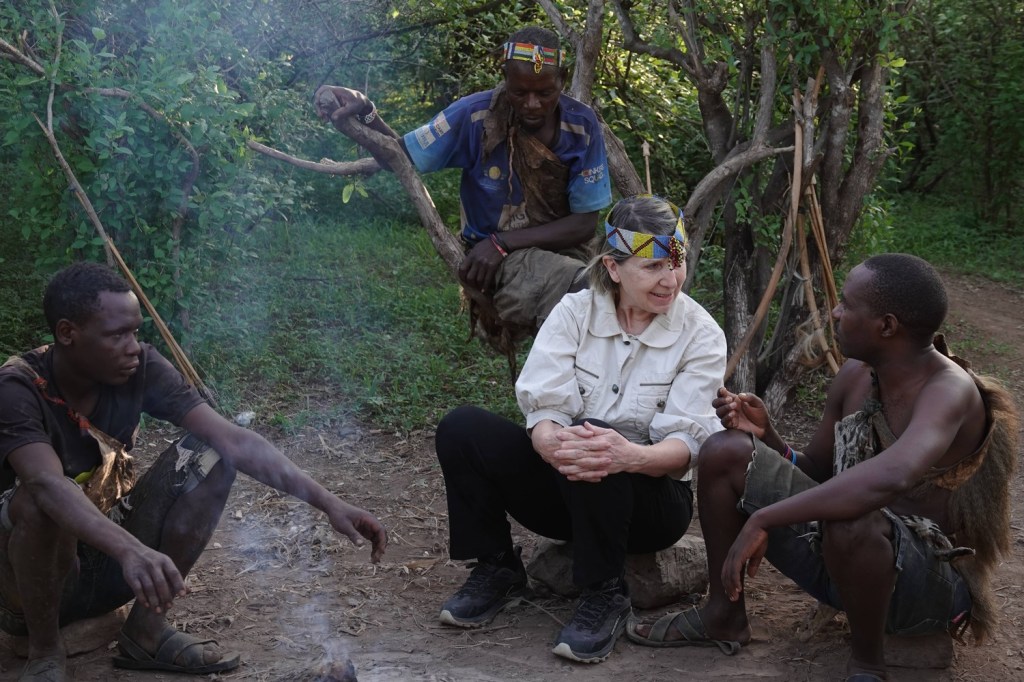
The Hadzabe chief greets a fellow tourist

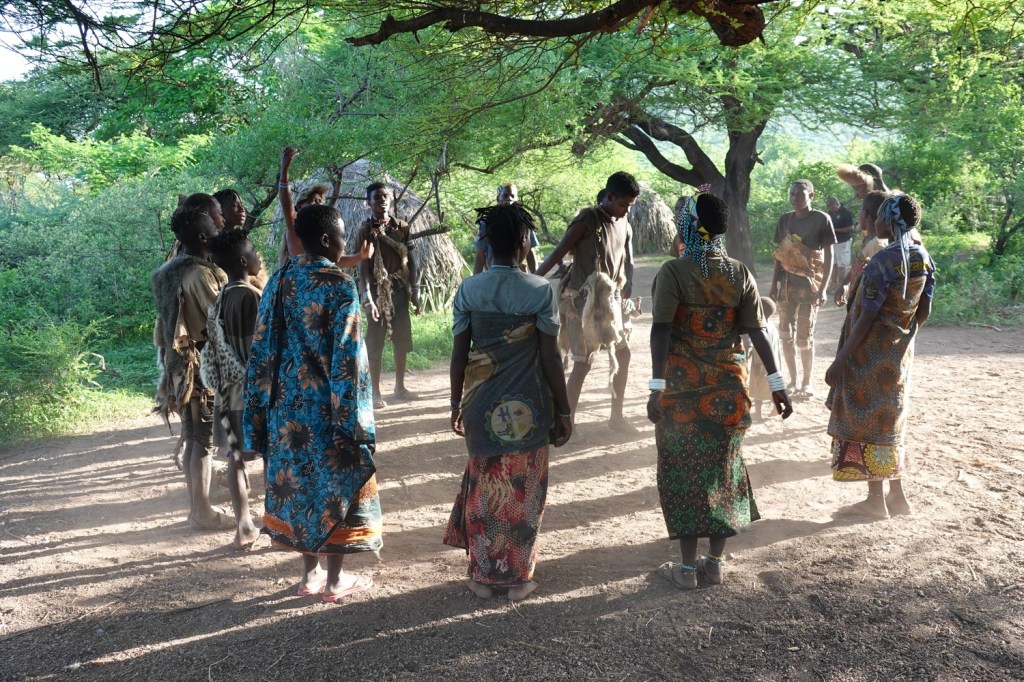
Having met the chief, we were invited to join a lively welcome dance.

The Hadzabe welcome us with a dance and song

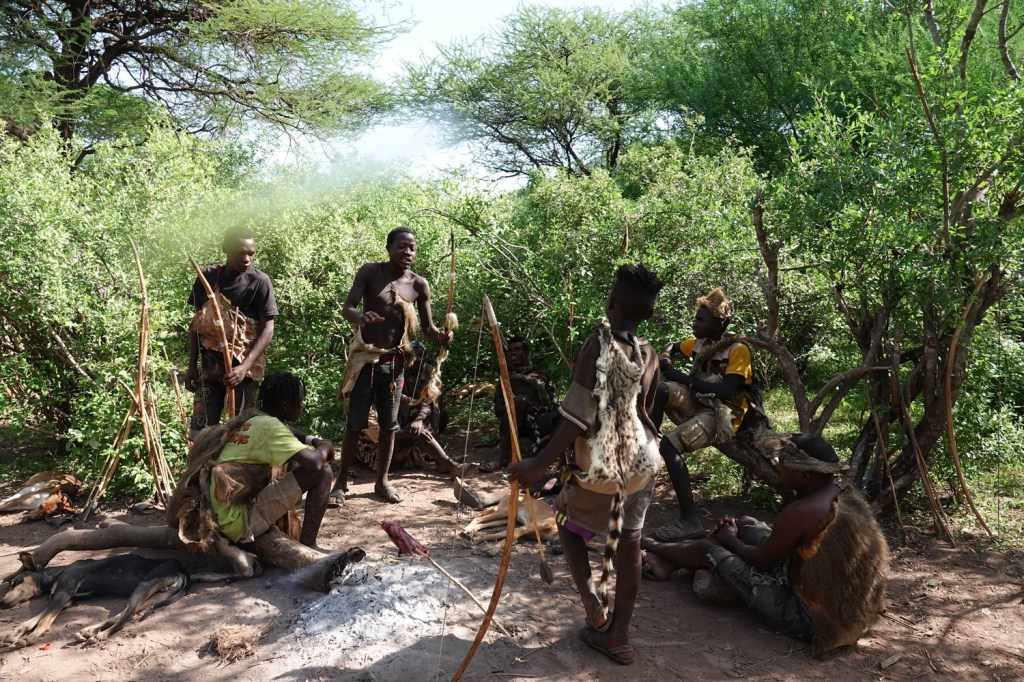
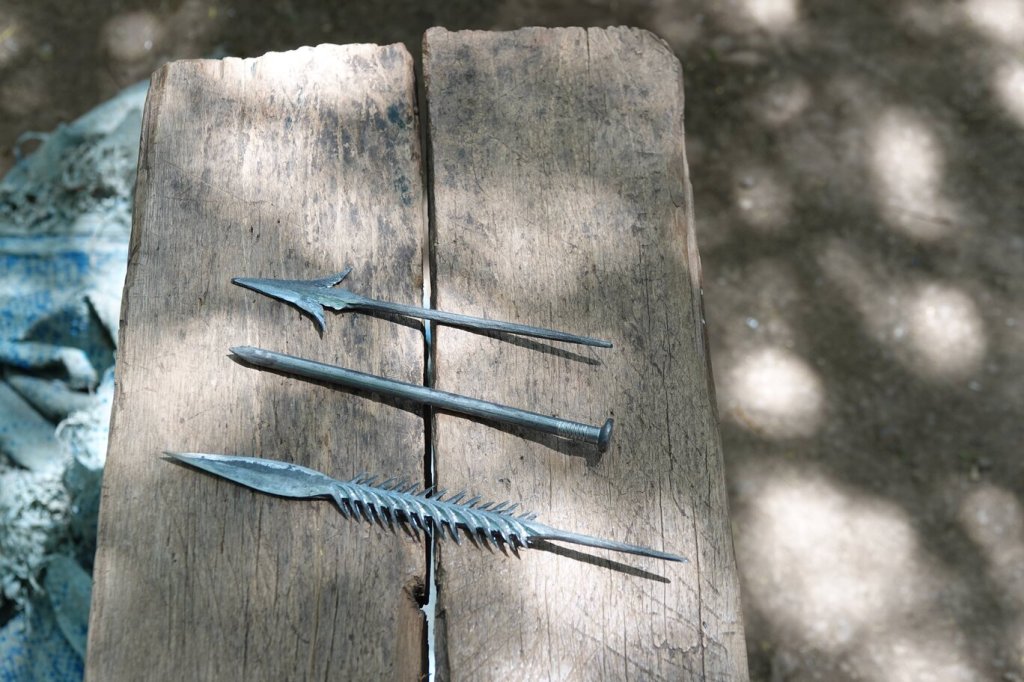
Next, one of the tribesmen gave a long and highly animated talk about how they hunt, with lots of gestures of dying animals and a demonstration of the different arrows they used for different prey. There was one for small birds, one for medium birds, one for monkeys, one for small mammals and a special poisoned arrow for bigger prey like antelope. Each type had a highly specialised arrowhead, which they obtained by trading from the nearby Datoga tribe, and we were forced to learn the Hadzabe names for each one.

Hadzabe tribesman explaining about his arrows

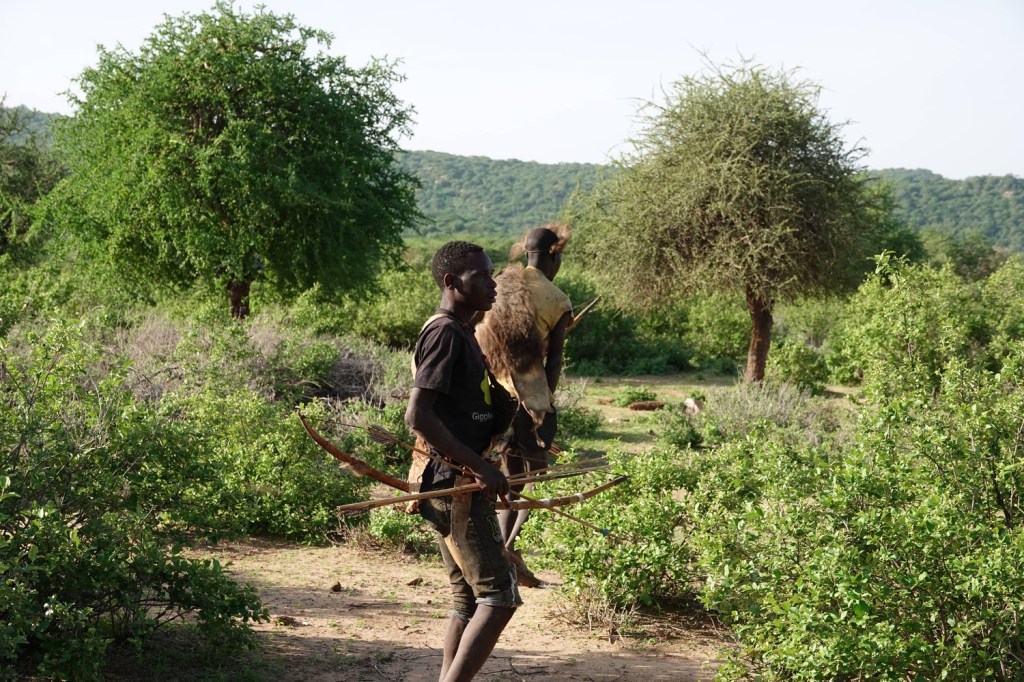
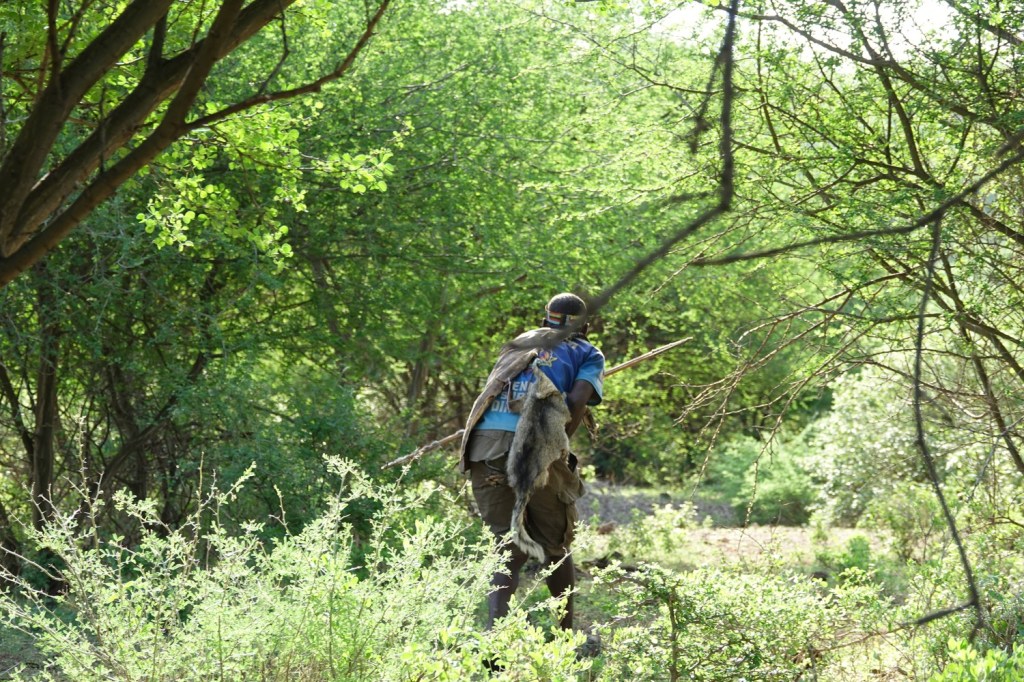
After a highly entertaining introduction to the art of hunting, we set off to follow three Hadzabe men into the bush in search of food. The party moved remarkable silently, gliding across the ground and through thick bushes with hardly a sound, bows and arrows in hand. Occasionally they would stop to shoot at a something in a tree. Their first few attempts were unsuccessful, and I was amazed at how quickly they managed to find and retrieve their spent arrows.

Following a Hadzabe hunting party

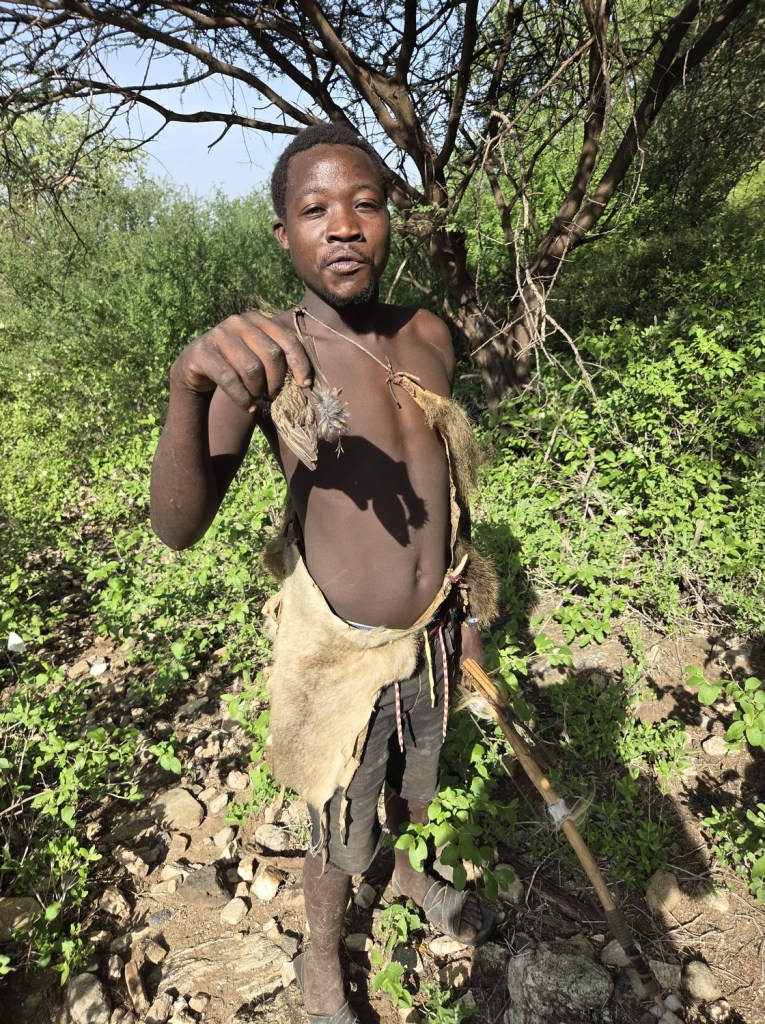
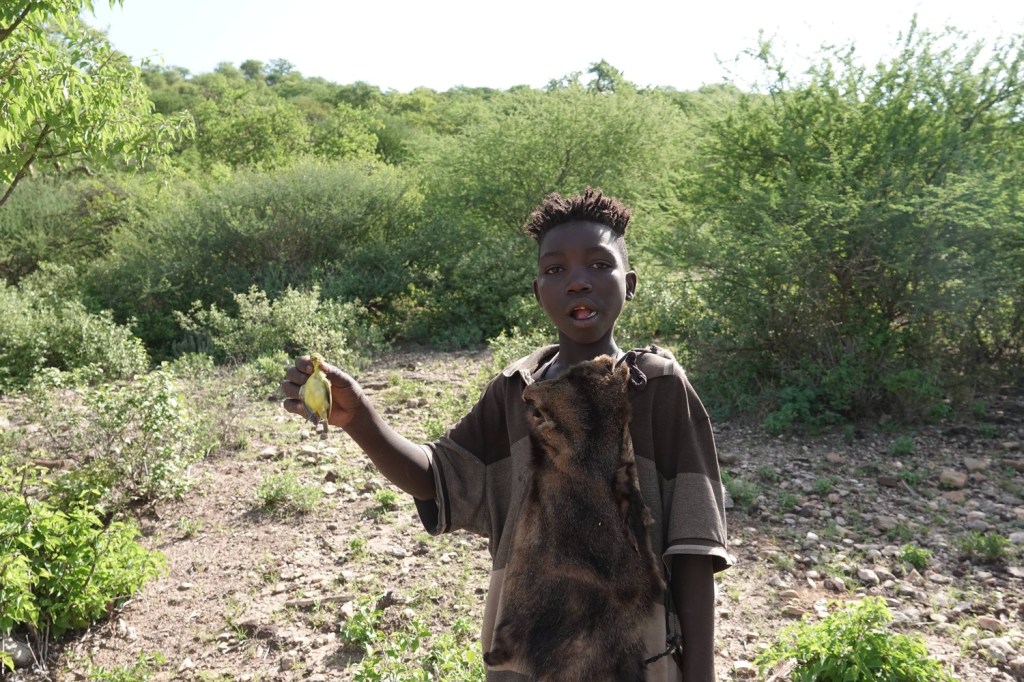
Finally one of the men managed to shoot a small bird. I wondered how such a tiny animal could provide much sustenance to a human, but the hunter was delighted and renacted the shooting for us in his language with many expansive gestures before posing for a picture.

The first catch of the expedition

The party headed on, deeper into the bush. The vegetation became more and more thorny, especially the viciously sharp thorns on the small acacia trees that often caught in our fur, and we struggled to keep up.

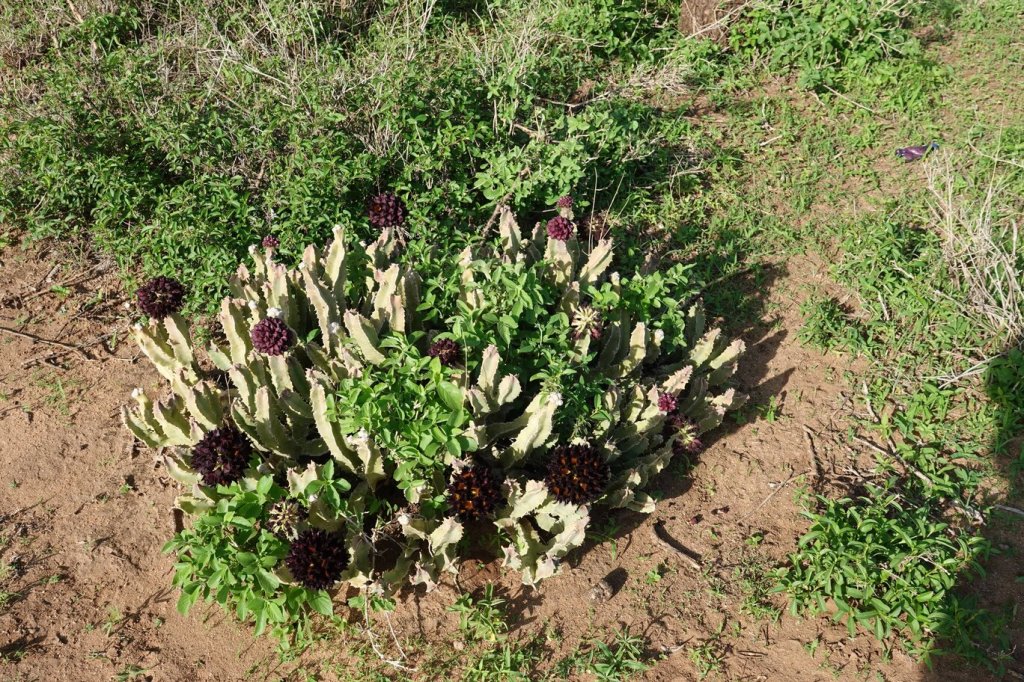
A rare bush plant that did not have ferocious thorns….

Up ahead we heard more sounds of celebration as two more small birds were shot.

Second catch of the day

After a couple of hours, it was getting hot and the group decided to head back – the best hunting is in the morning when there is a better chance of finding larger animals. I wondered how three small birds could possibly be a good return for two hours’ work, but the hunters seemed in excellent spirits. Back at the village the mood was also upbeat – a different hunting party had caught a civet cat, and was now roasting it over the fire.

Back at the village – roasting a civet cat

We spent a little more time with the tribe, trying archery with the men and meeting with the women, before it was time to offer our host a tip (some modern practices have been adopted by the Hadzabe!) and head off on our way.

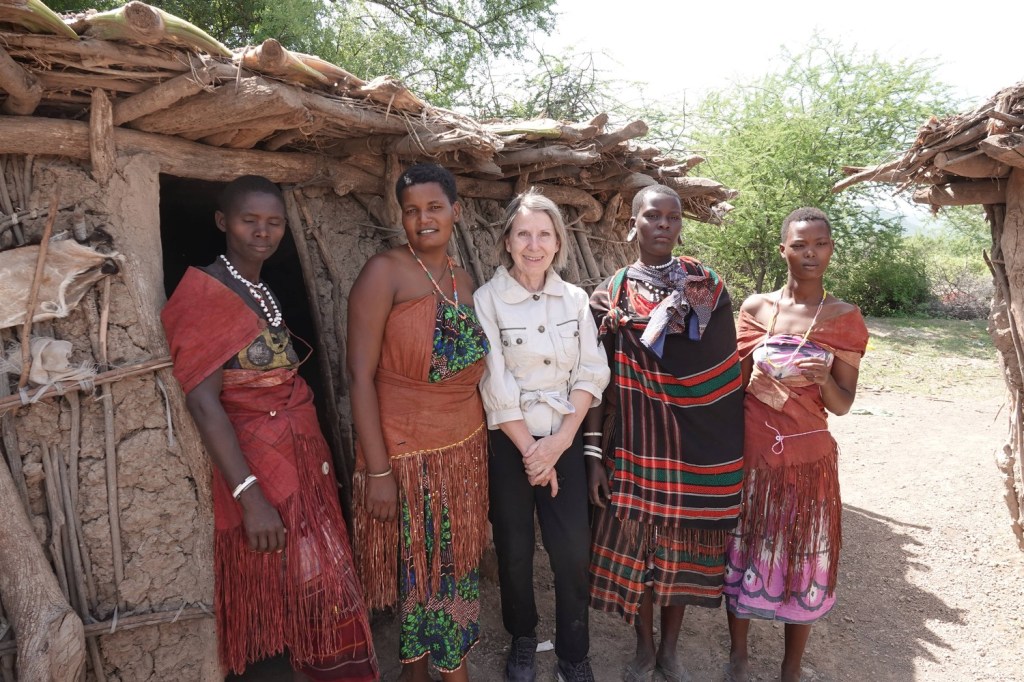
Our next destination was a different tribe – the Datoga. First we met the women of the village, and through our guide’s translation, chatted with them about village life in one of their huts.

Datoga tribeswomen with a fellow tourist

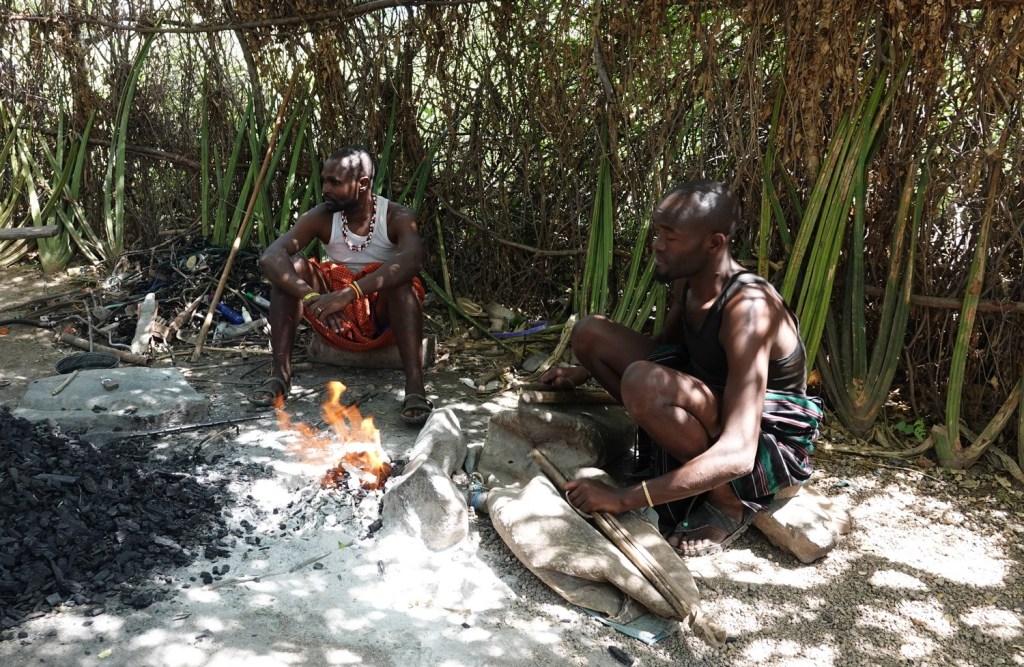
The Datoga men are known for working metal, and take scrap, like old brass taps or pipes, heat it for several days in fire to soften it, and then turn it into bracelets and other decorations.

Melting scrap metal

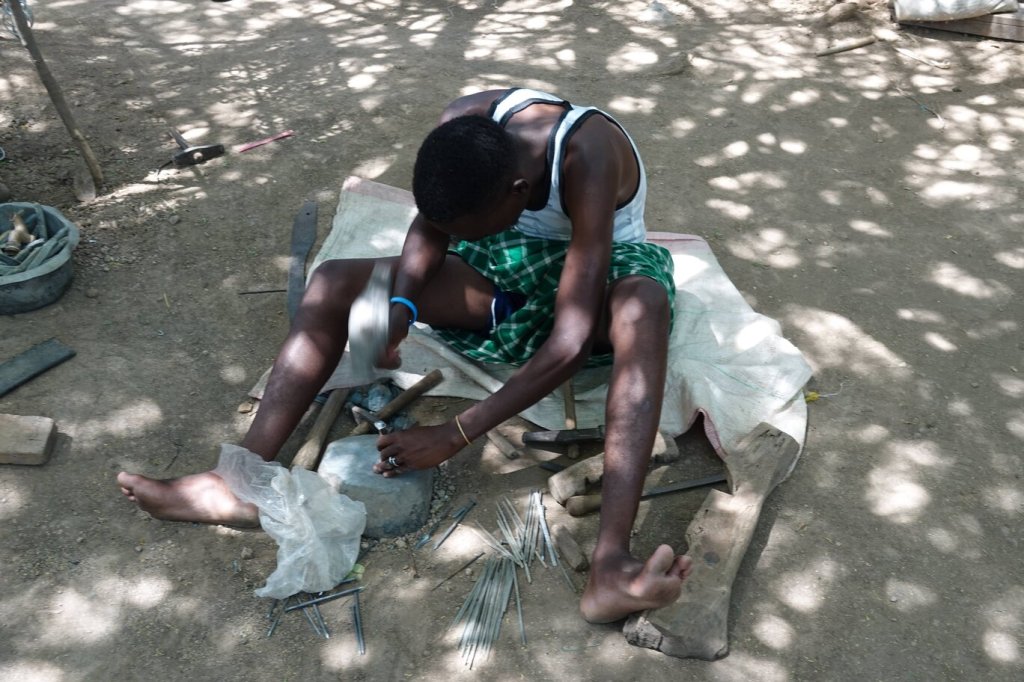
They also make all of the different shaped arrowheads for the Hadzabe by hammering old nails.

Turning a nail into an arrowhead

It was now late morning and time to head on to Arusha, the city we had stayed in when we first arrived, nearly two weeks ago; our exploration of Tanzania was coming to an end. We retraced our route north up the bumpy dusty track to the main road. Our visit to these two small Tanzanian tribes had represented quite a big detour for us, but it was worth it – seeing the Hadzabe in particular was a fascinating insight into how humanity must once have lived, and despite the heat and scratches from the ferocious vegetation, hunting with them was an unforgettable experience.

Previous Post: The Ngorongoro Crater
The Ngorongoro Crater
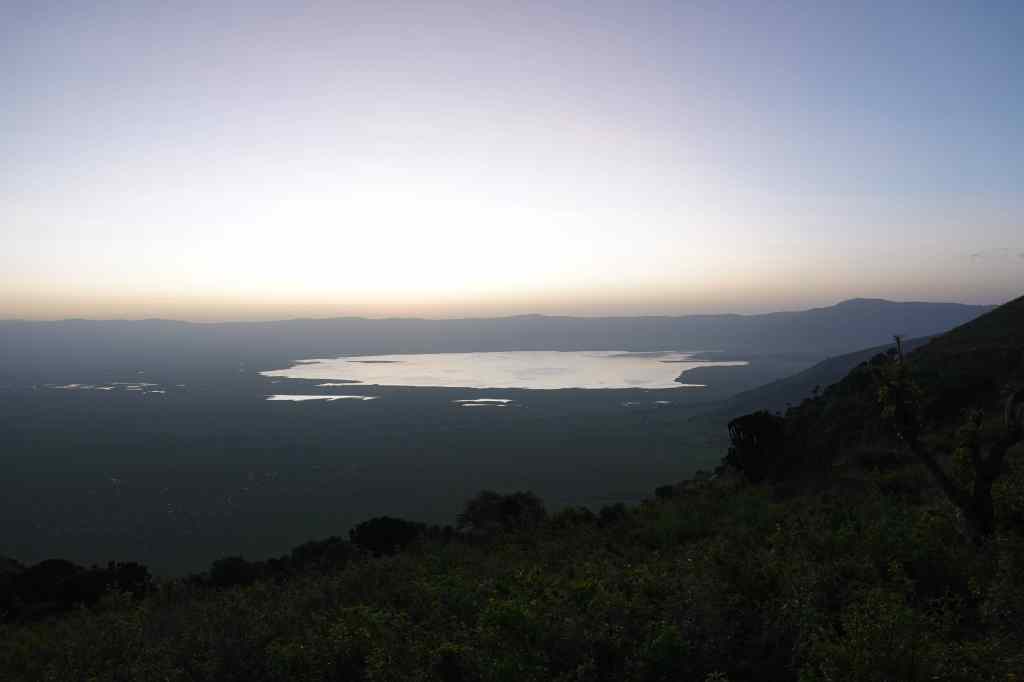
Today we got up early to experience one of Tanzania’s highlights – the Ngorongoro Crater, a huge volcanic caldera covering around 260 square kilometres. The area is home to a unique ecosystem, including lions, rhinos, elephant, hippos and many different types of antelope – but no giraffes, since the sides of the crater are too steep for them to enter. Our guide Estomih wanted us to be at the entrance gate at 06.00, saying that in the afternoon, the crater gets very busy with day trippers from the Serengeti or even from Arusha.
Ngorongoro Crater at Dawn

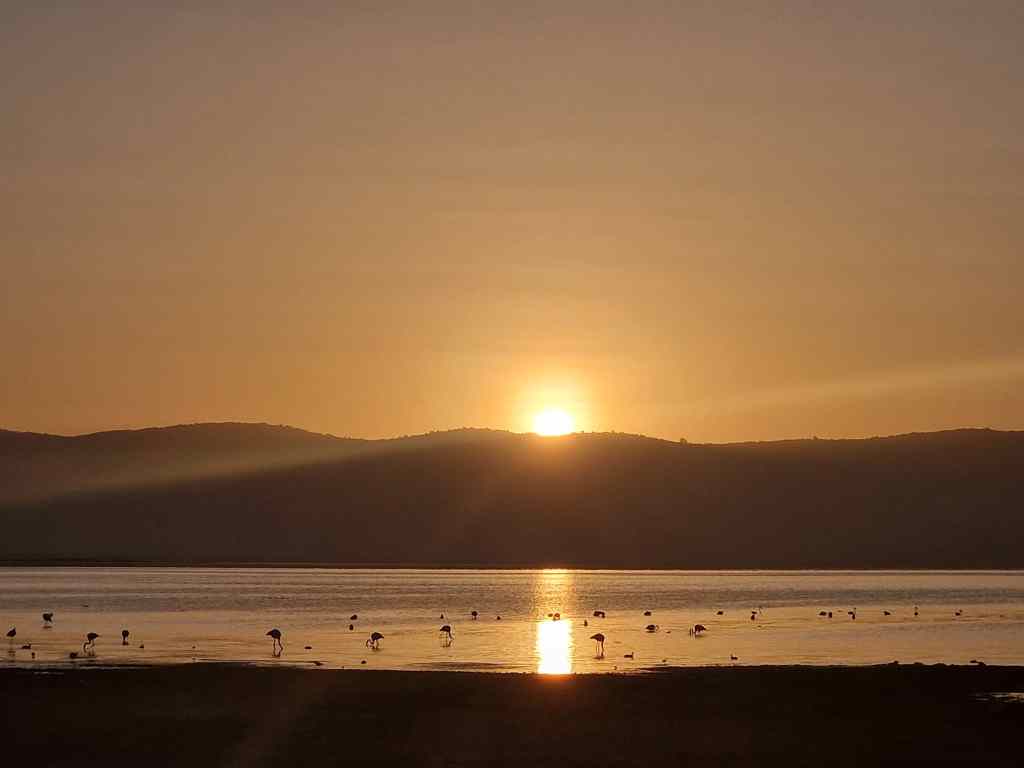
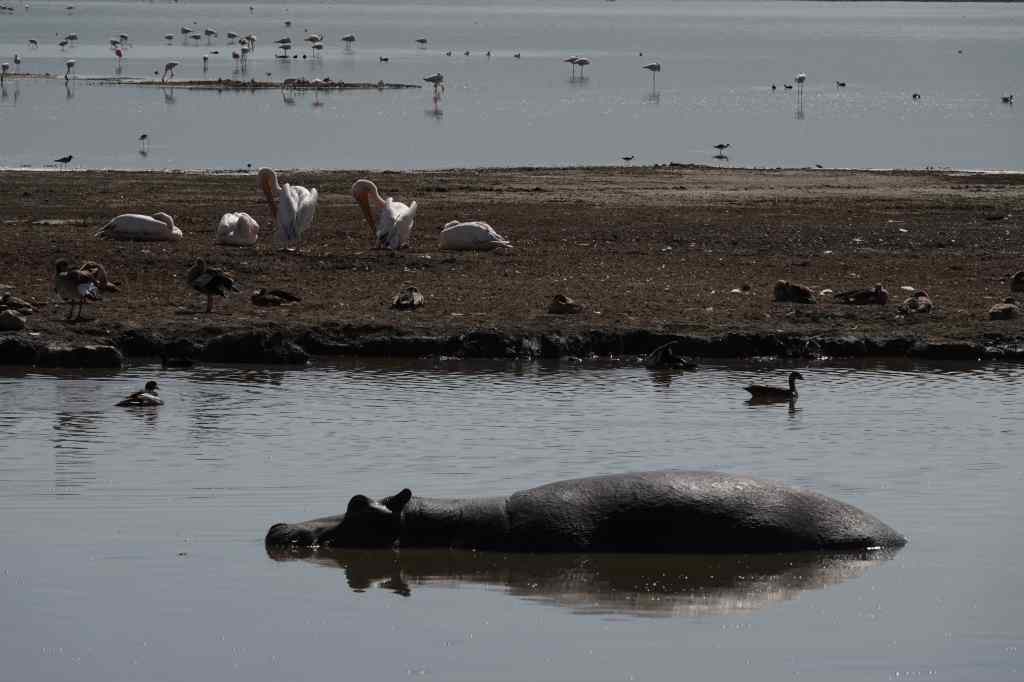
We arrived at the lip of the crater just as it started to get light, Estomih bought our (very expensive) permits, and we set off down a steep slope along a one-way road. Our first stop was the lake at the bottom of the caldera – apparently the largest volcanic lake in the world, and home to flamingos, hippos and pelicans.

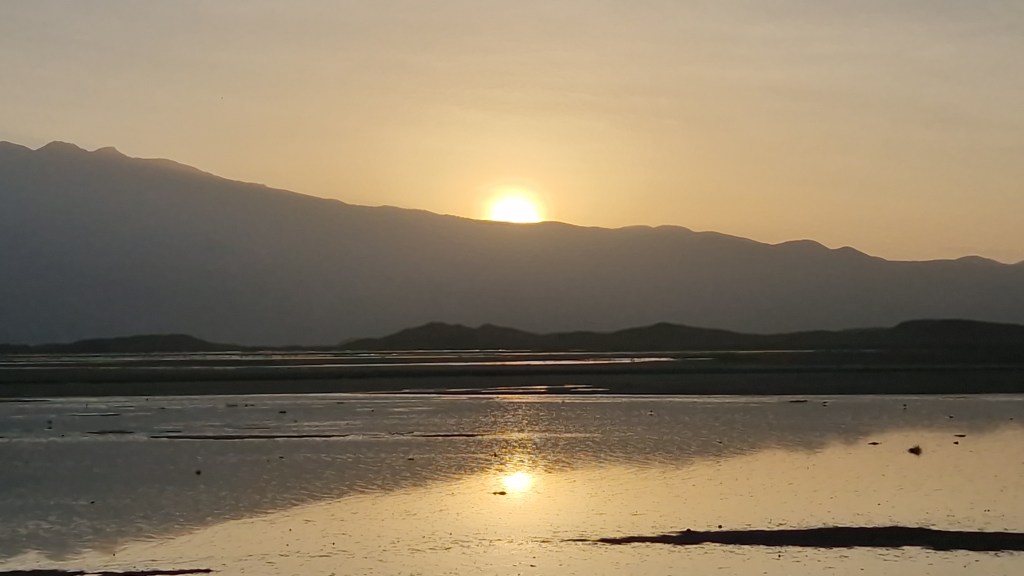
Sunrise at the Ngorongoro Crater at Dawn
The steep sides of the Ngorongoro Crater at Dawn
Hippo, pelicans and flamingos

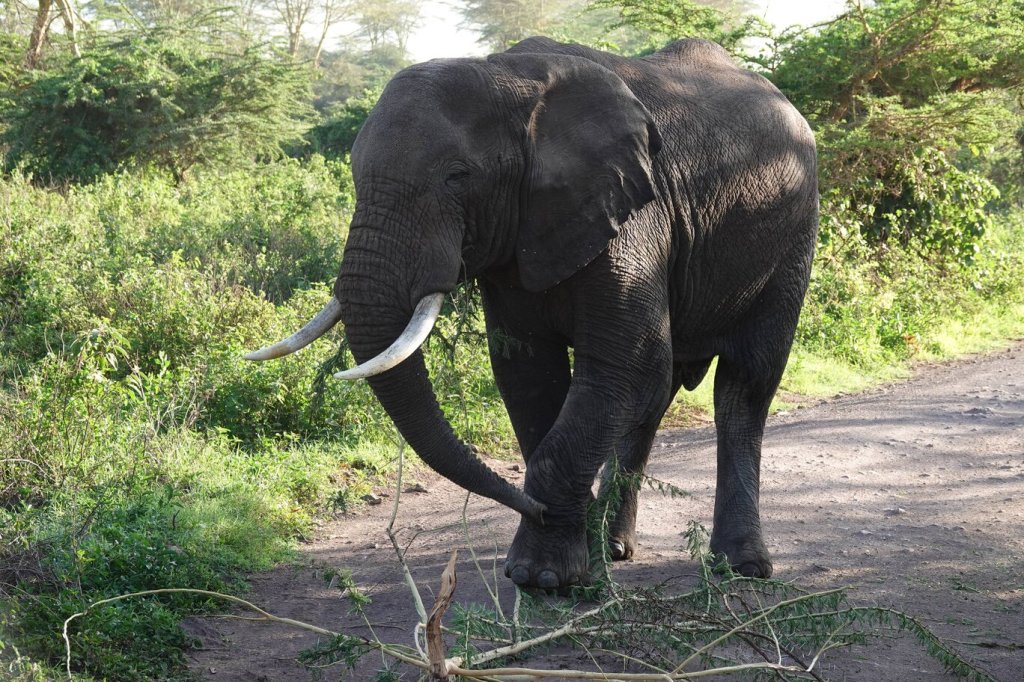
Next we headed to the small forest occupying the south end of the crater. There, through the trees, we caught a glimpse of some white rhinos in the far distance. This species was driven to extinction in Tanzania by poaching, and in 2025 eighteen were brought from South Africa to a special protected enclosure at Ngorongoro to see if they thrive and can eventually be released into the wild. Whilst we were admiring these massive animals, Estomih heard on the radio that back on the plains of the crater, a wild black rhino had been sighted, so we hurried off to see it. However, our road was unexpectedly blocked by an elephant having his breakfast, and we had to wait until he had hauled his tree branch out of the way before we could continue.

Unusual Road Hazard

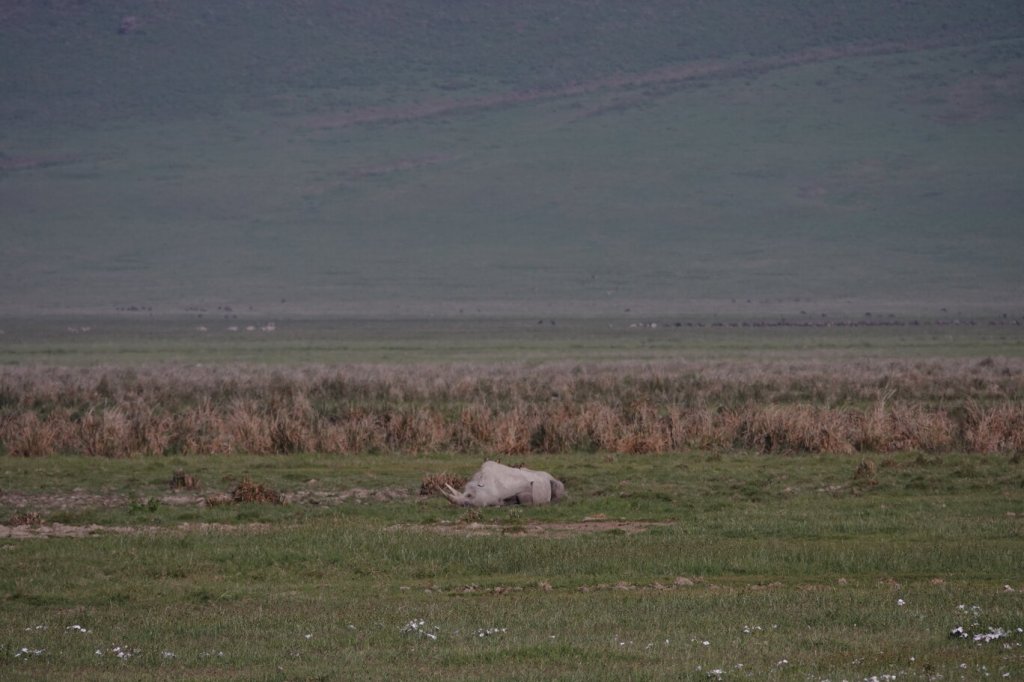
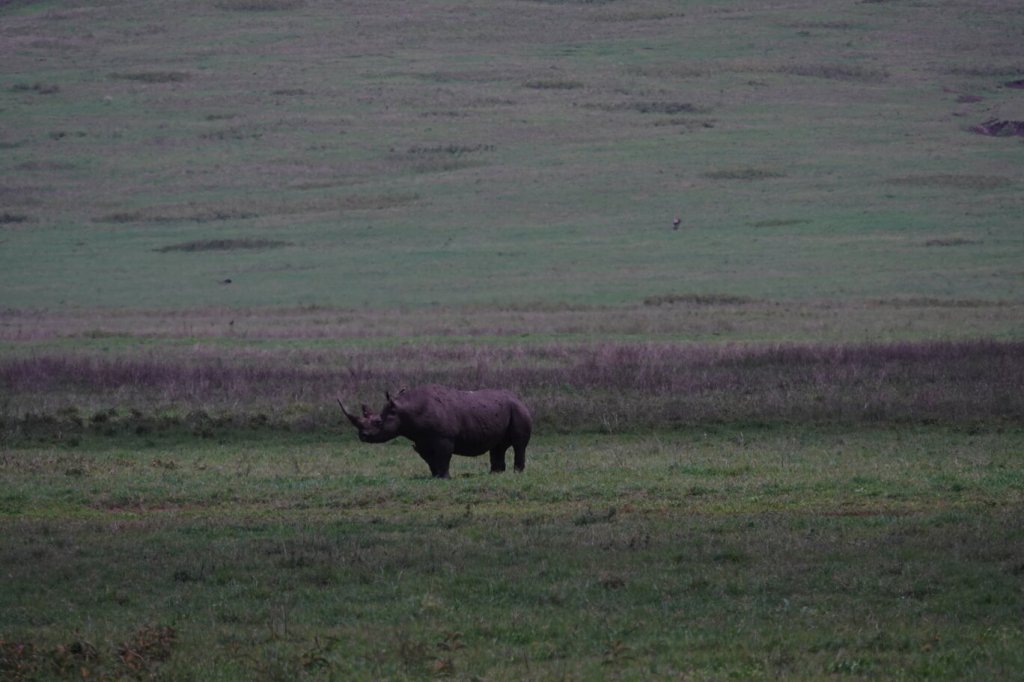
The black rhino proved to be a bit of a disappointment. It was far away, and lying down, disappointing the large group of tourists in jeeps that had assembled to watch it.

A lazy black rhino

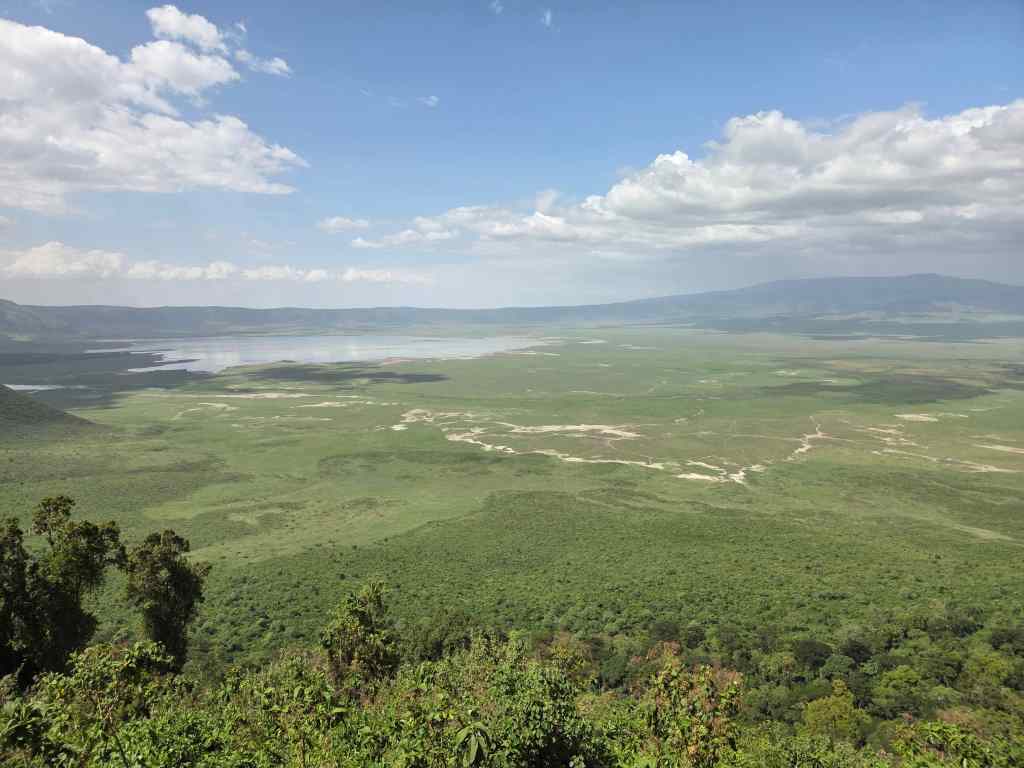
We had breakfast in our jeep, hoping the rhino might at least get up and walk a bit, but when we had finished he was still stubbornly immobile, so we headed of to see the rest of the crater. It was a beautiful sight, justifying its reputation as one of Africa’s seven natural wonders.

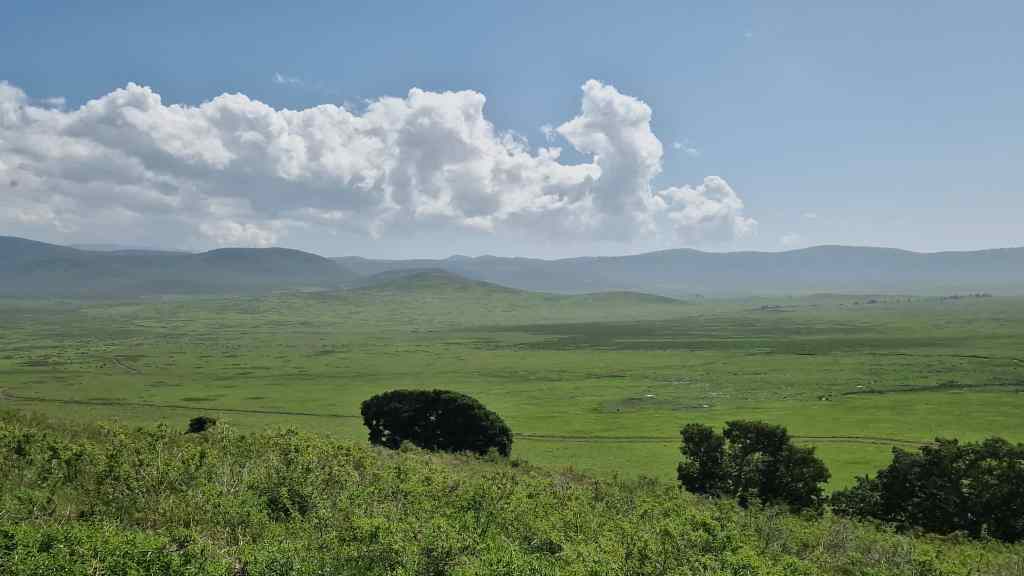
Sweeping scenery of Ngorongoro Crater
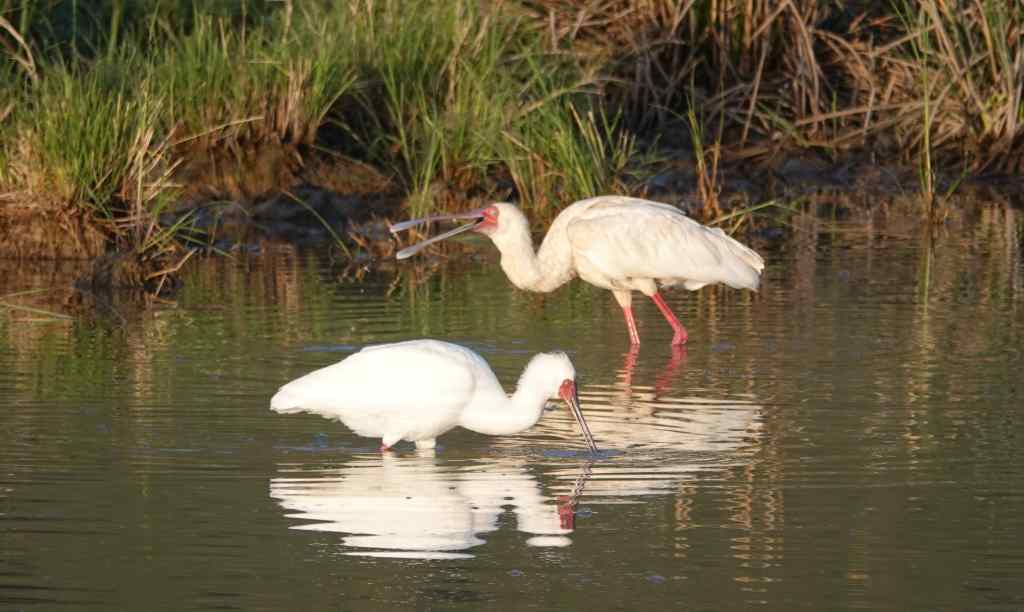
African Spoonbills

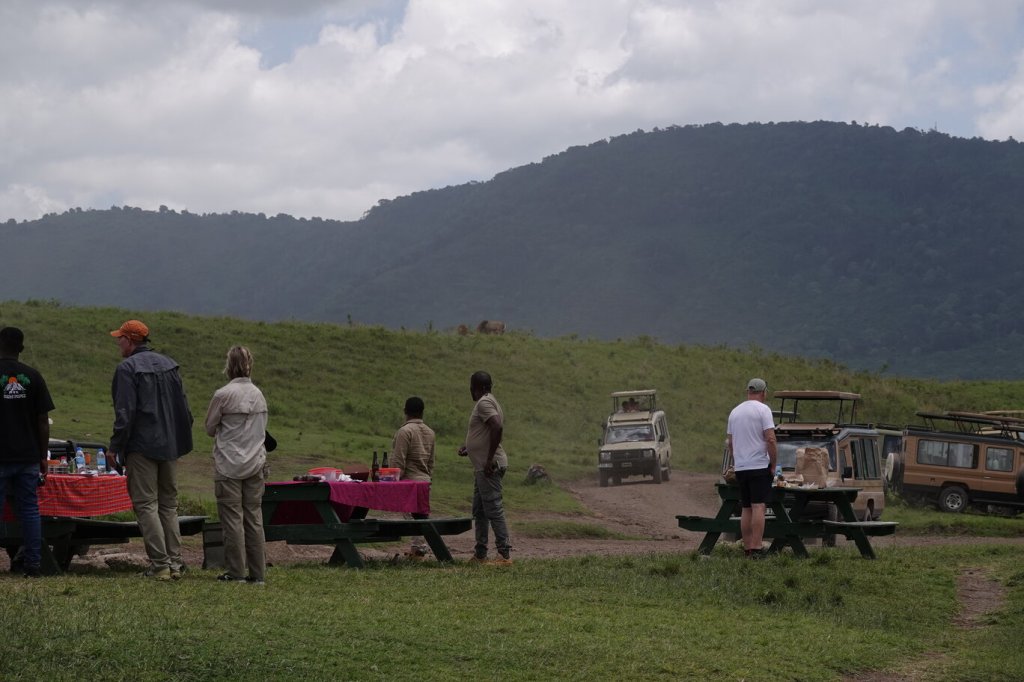
Soon it was time for lunch, which we ate at a picnic spot beside a small lake. The area was busy – just as Estomih had said, day trippers had arrived from the Serengeti, and the crater was now quite busy. We were concentrating on eating and protecting our food from the black kites circling overhead, when suddenly on top of a hill overlooking the lake appeared a group of lions. I quickly calculated that even with my small teddy legs, I could reach the safety of my jeep before a lion could reach me, but they ignored us and passed on their way.

Are they coming for lunch?

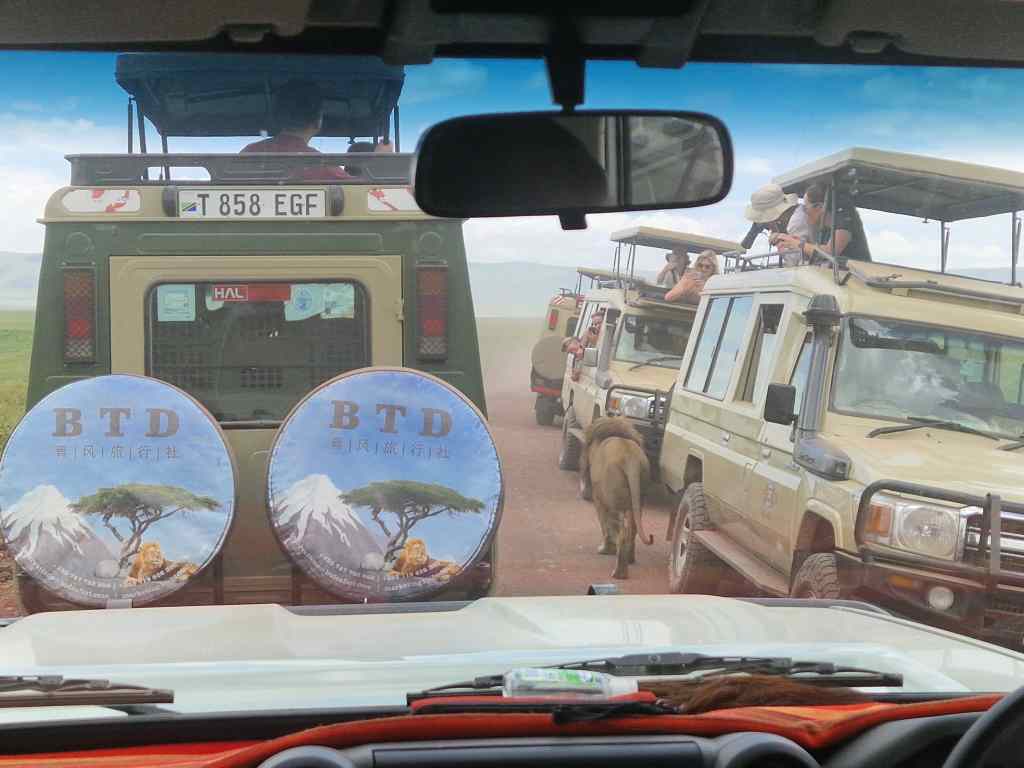
Estomih once again got a message on the radio about another rhino sighting, so we hurriedly finished eating and headed off…..to run into a big traffic jam caused by the lions we had just seen. They were now walking down the main road, oblivious to the chaos they were causing behind them. It seemed that the tourist jeeps divided into two groups – those with passengers like us who had seen lots of lions and were hurrying to see the much rarer rhino, and those with people who had just arrived and found lions exciting. The latter groups would stop frequently for pictures, making the traffic jam even worse.

Lions cause a huge traffic jam

Eventually we fought our way past the lions and found the black rhino, who, whilst still being a long way off, was at least walking around and posing for photos.

A more active black rhino

We took a few pictures of him before it was time to leave Ngorongoro – to control traffic and preserve the environment, the authorities only issue a six-hour permit to visit, and ours was due to expire at two pm. On the steep road back to the crater rim we had time for one last stop to admire the view of one of the most magical places in the world.

Farwell to the Ngorongoro Crater

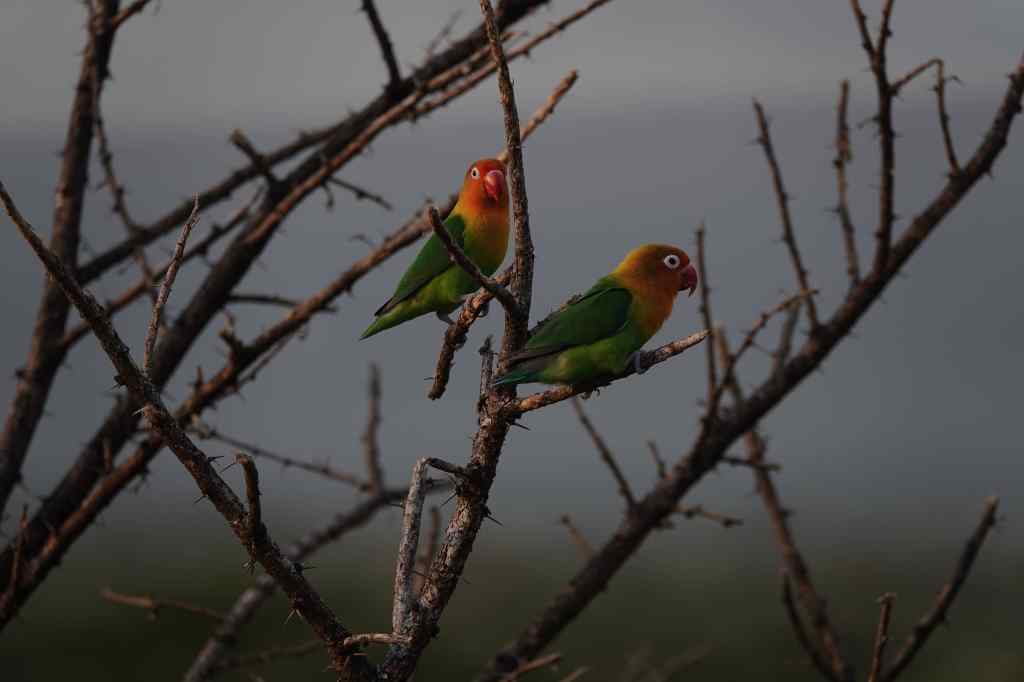
At the exit to the park, we continued our road east on the main road back towards Arusha, and then turned south on a dirt track to Lake Eyasi, arriving at our lodge in the mid-afternoon for once. This gave us time to sit in front of our room, looking at the sun setting over the lake, enjoying the company of a flock of lovebirds and absorbing what we had seen over the past few days in the Serengeti and Ngorongoro. The trip so far had been mostly devoted to Tanzania’s animals – it was now time to meet more of the country’s people……

Previous Post: From the Serengeti to Ngornogoro

Next Post: Hunting with the Hadzabe

From the Serengeti to Ngorongoro

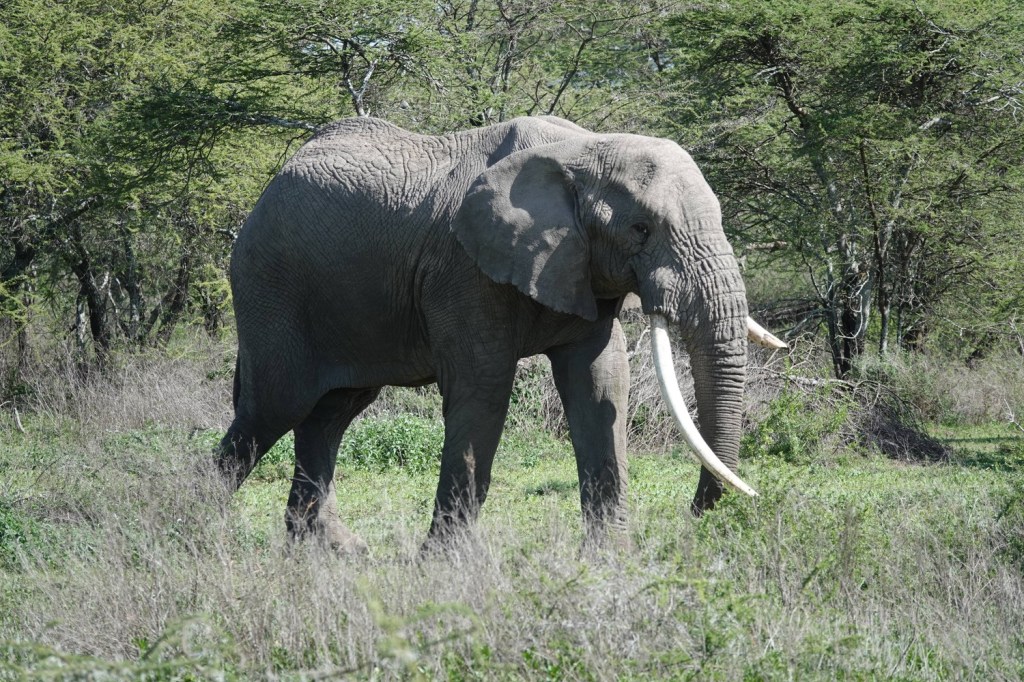
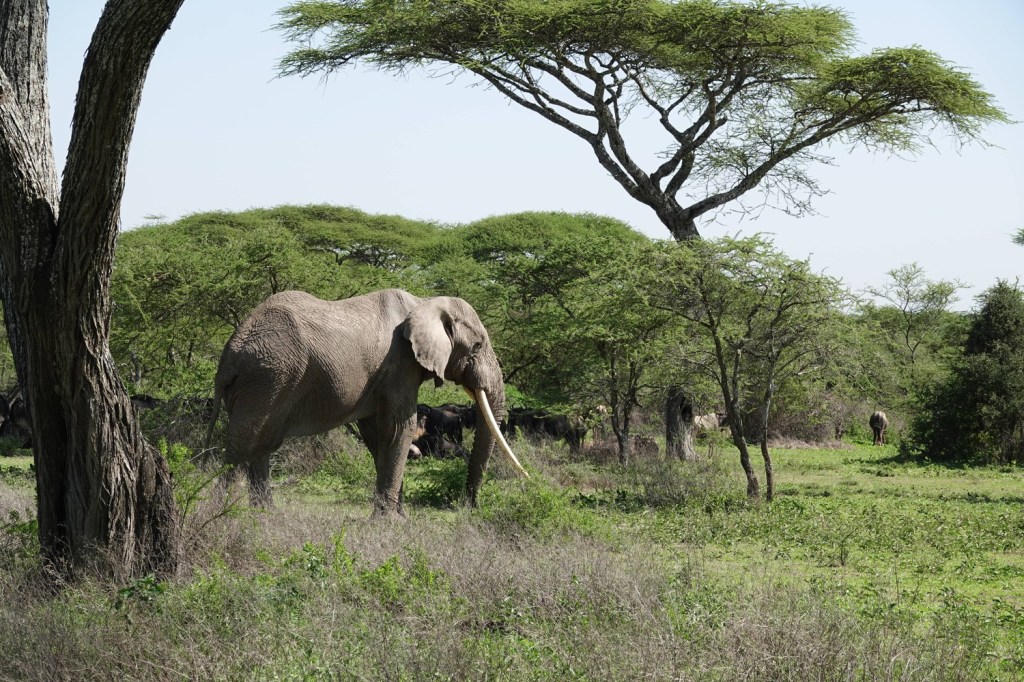
Today we had to leave the Serengeti and continue on to the Ngorongoro Conservation Area. We had time for one last morning game drive, during which we saw a huge bull elephant with one very long tusk. Our guide Estomih told us that this elephant had once attacked a tourist jeep that had approached too close to him during the mating season, and had rolled the vehicle over many times. Fortunately the occupants escaped with minor injuries. We were happy to admire him from a safe distance.

A huge bull elephant appears
Keep a safe distance!

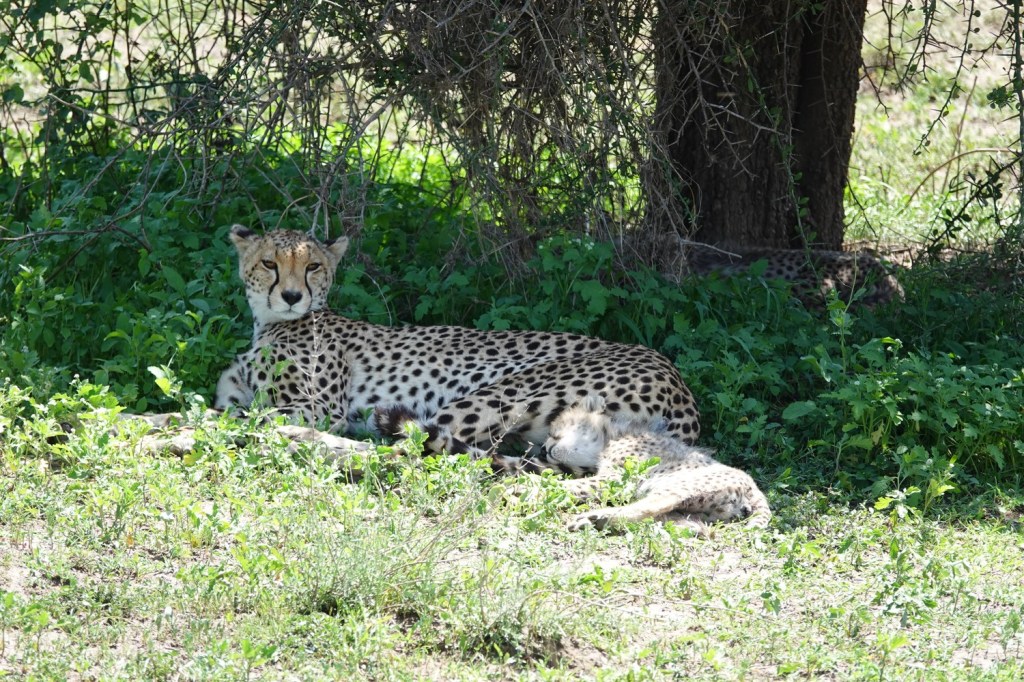
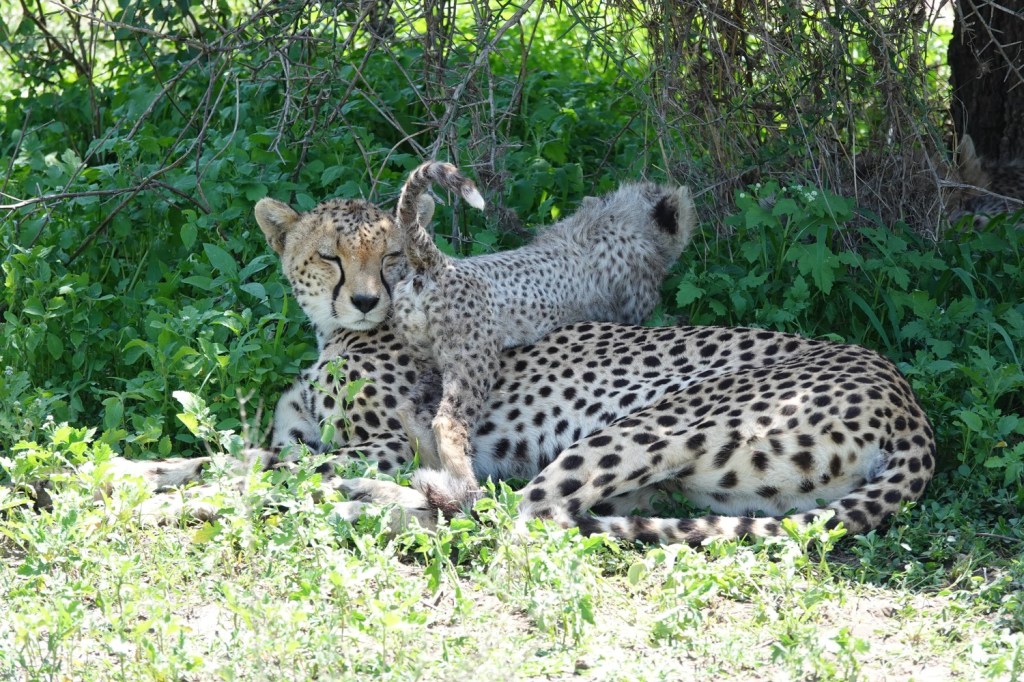
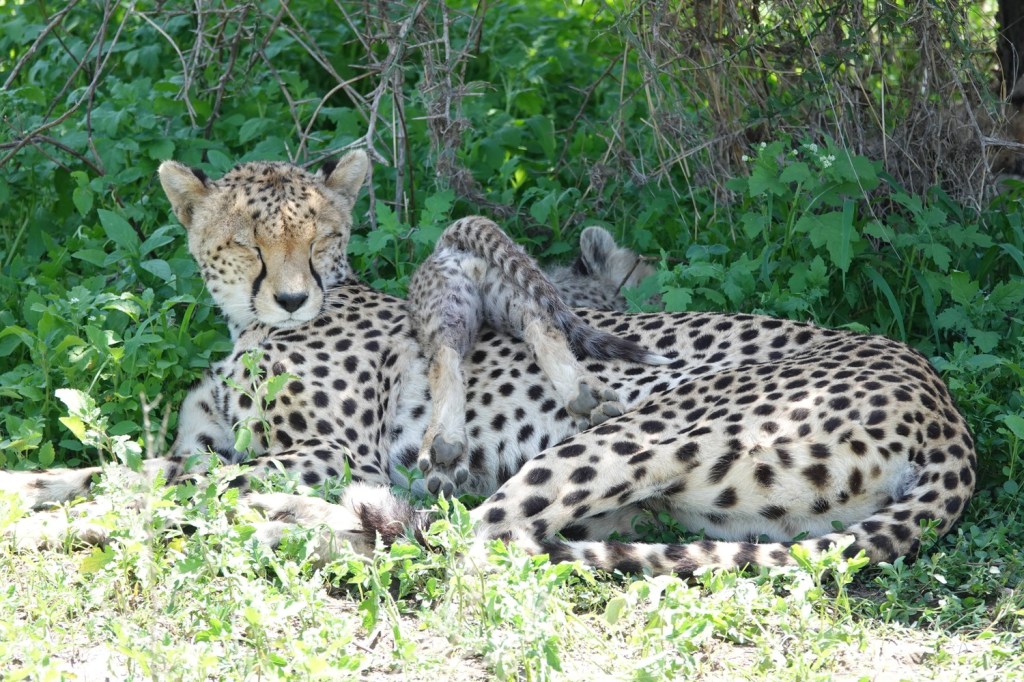
We also saw our good friends the mother cheetah and her cubs once last time, once again surrounded by tourist jeeps…

Our friend the mother cheetah and her cubs
A cub crawls onto to mum and collapses asleep
The cheetahs’ tree surrounded by jeeps

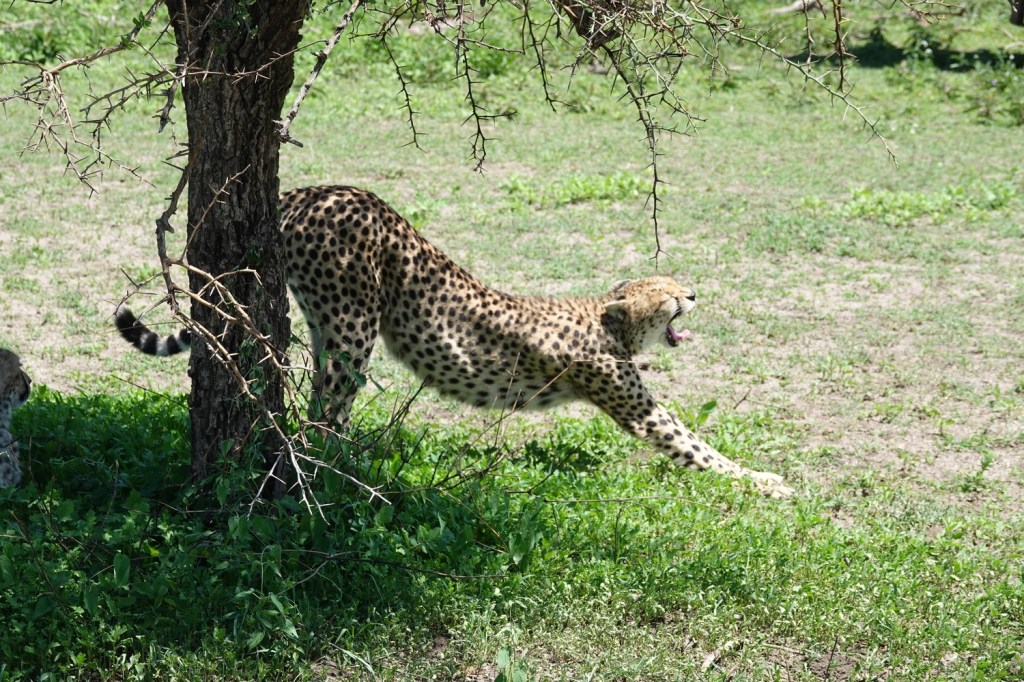
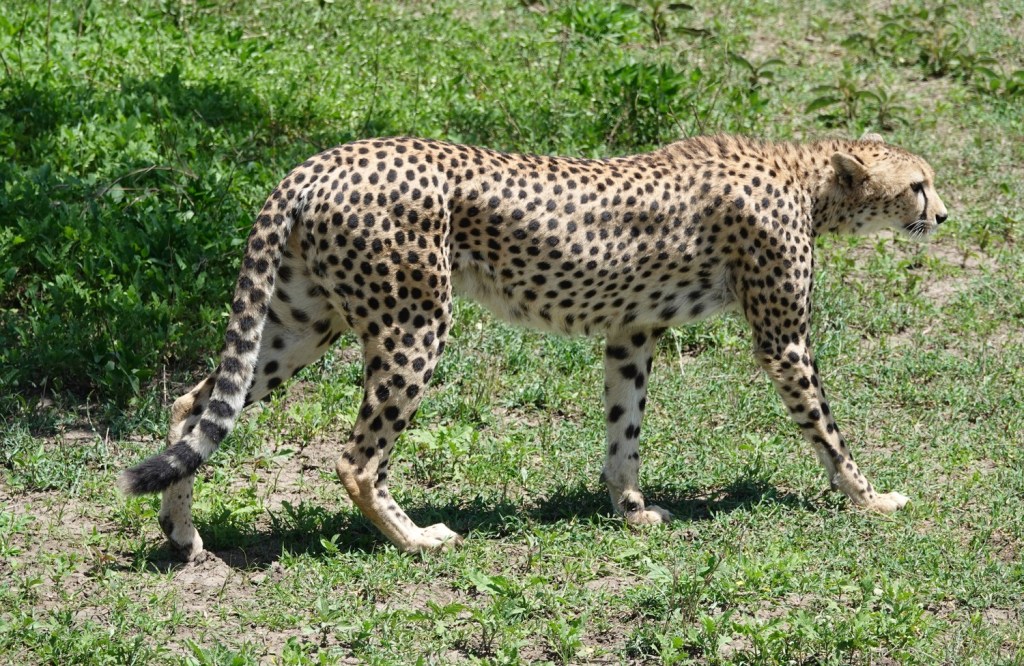
…before we spotted two other cheetahs in a different area of the park. For this couple of young males, we could relax and observe all for ourselves.

Young male cheetahs

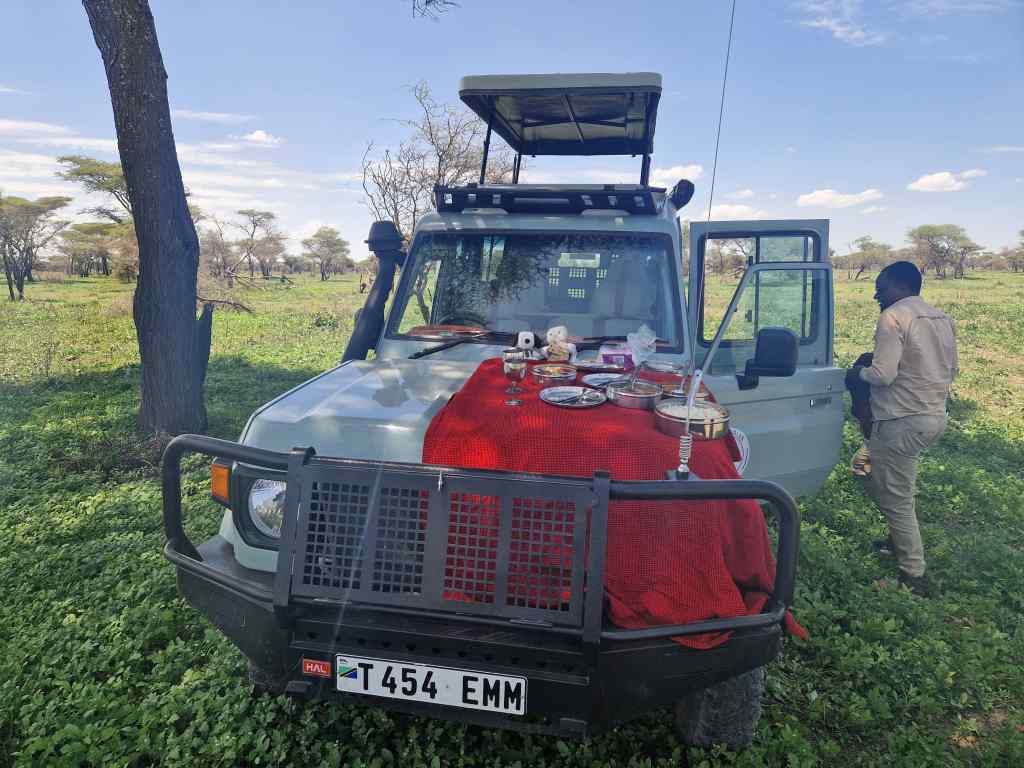
Estomih served lunch on the bonnet of our jeep, and we ate it whilst looking around carefully for any lions that might sneak up on us, but there were none. Indeed, this was the only day in our Serengeti stay when we did not see any.

Another bush lunch

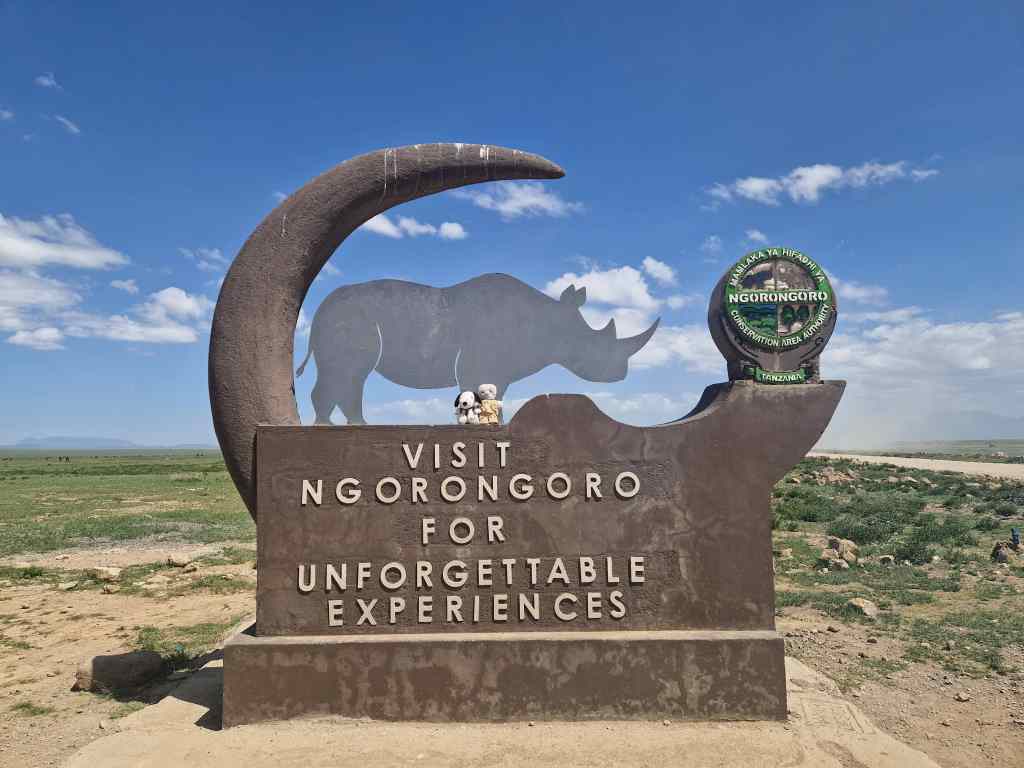
Finally, after four days of amazing game viewing, it was time to leave the Serengeti National Park, and pass into the Ngorongoro Conservation Area.

Goodbye Serengeti, Hello Ngorongoro!

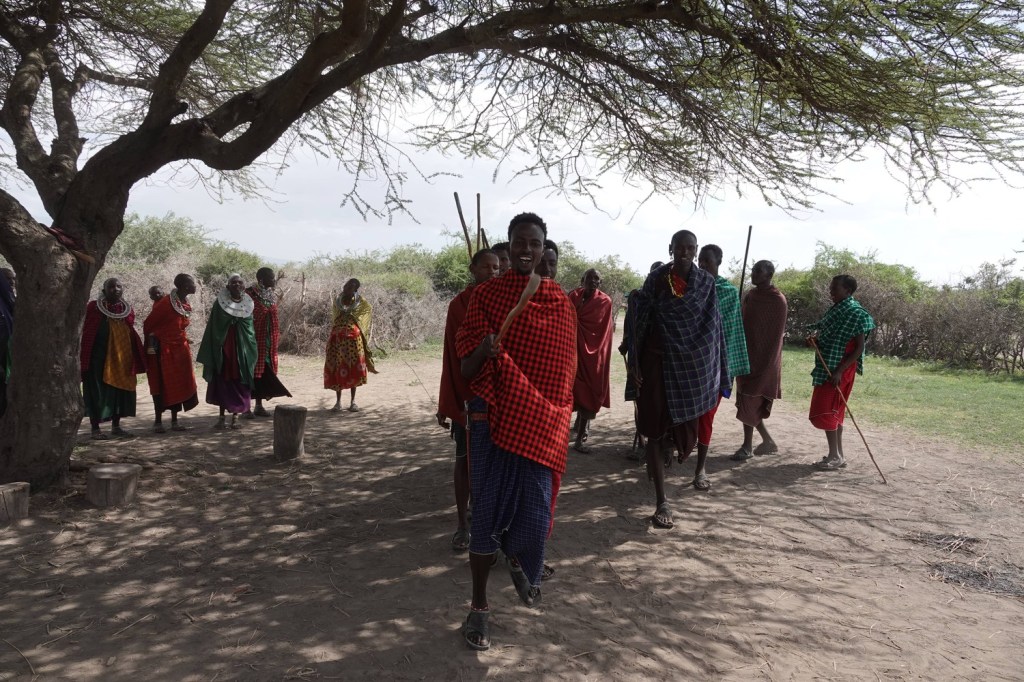
Unlike the park, the Masai are allowed to live in this area and we saw many of them tending their herds of cows and goats by the side of the road. We made a pre-arranged stop at one of their villages to learn about Masai life. We were greeted by a welcome dance…..

The Masai welcome us
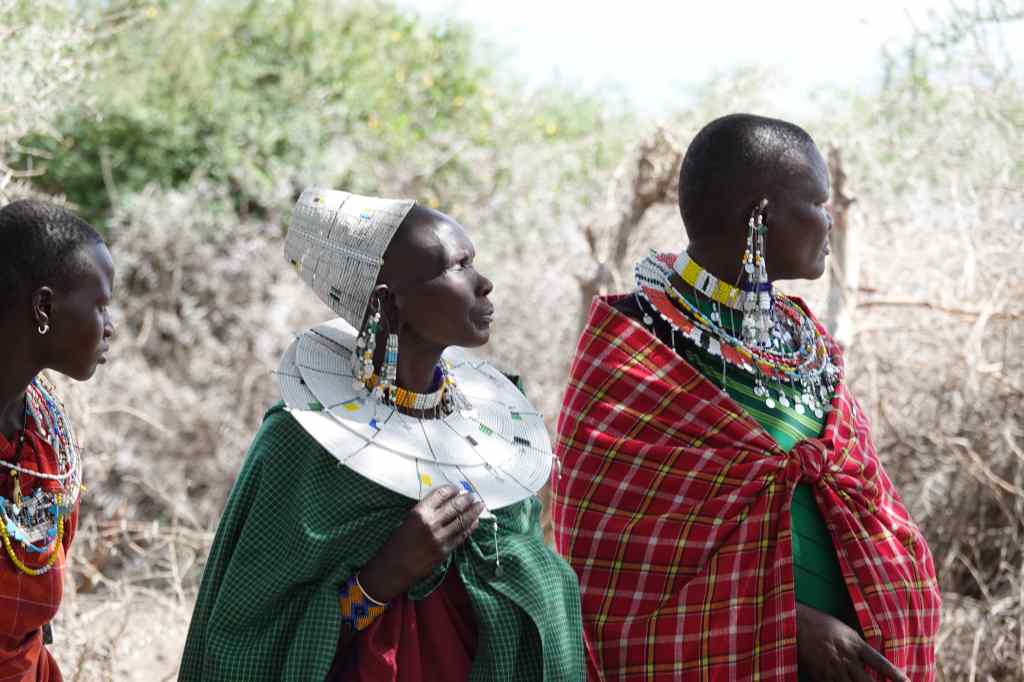
Masai ladies

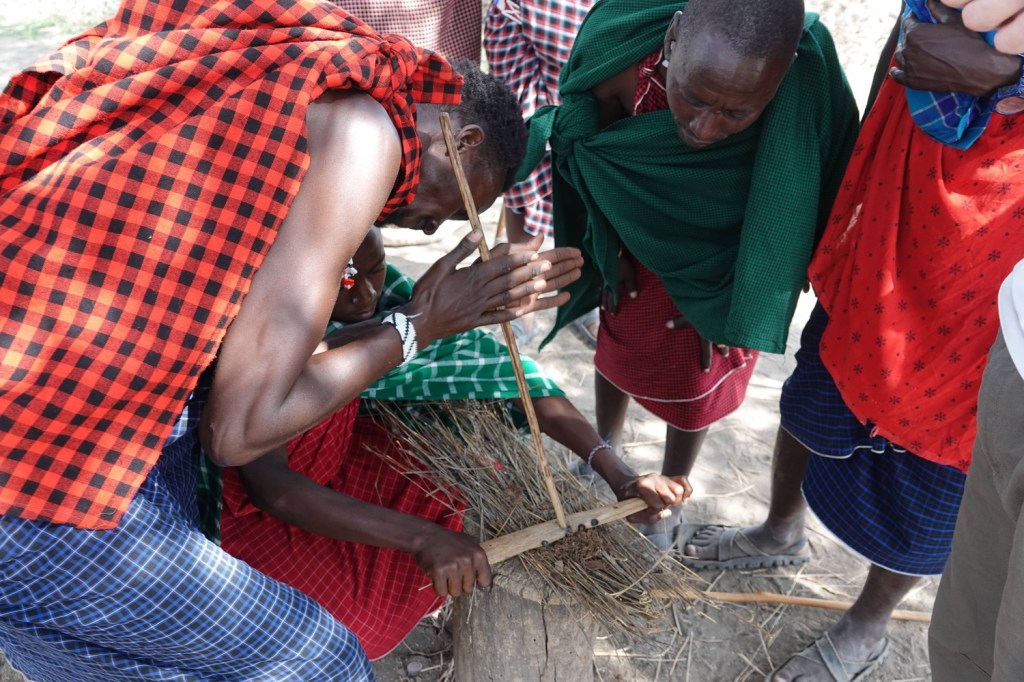
….before being shown how to make fire (actually a very quick process)…..

Making fire

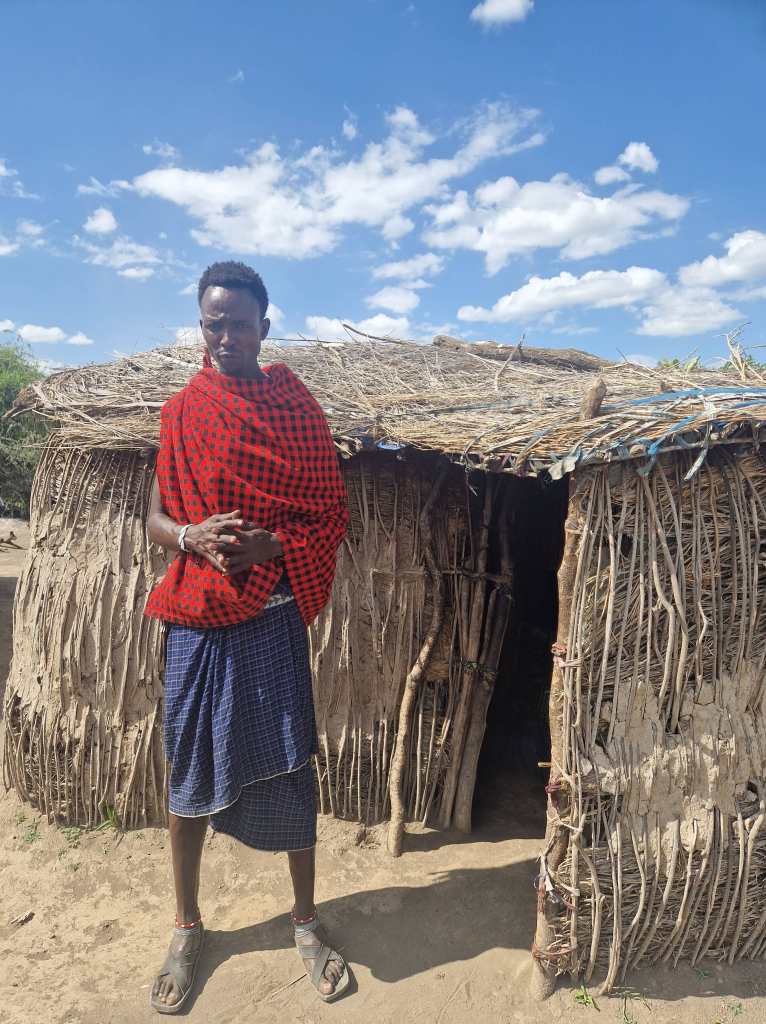
…..and then being invited into one of their tiny, simply huts to learn what the Masai ate – milk or cow’s blood in the morning, and meat in the evening, with no fruit or vegetables.

Our huge Masai host and his tiny hut

The visit ended with a slightly too insistent request to buy some of the huge number of carvings set out on a massive stall in the centre of the village. The Masai are good at commerce and have become quite expert at milking tourists for money in return for photographs or other services.

We headed onwards and visited a modest display about the attractions of the Ngorongoro area in small museum building just off the main road. There I learnt that the famous archaeological site of Olduvai Gorge was only five kilometres away down a dusty track. This is the place were the earliest fossils of hominid ancestors of man have been found, including the famous “Lucy” Australopithecus skeleton, and so can probably claim to be the birthplace of humanity. I asked Estomih whether we could go and visit the museum there, but he said that this needed to be booked in advance and that in any case it was late in the afternoon and it would close soon. I was a bit disappointed that I had forgotten to ask for this key site to be included in my safari itinerary.

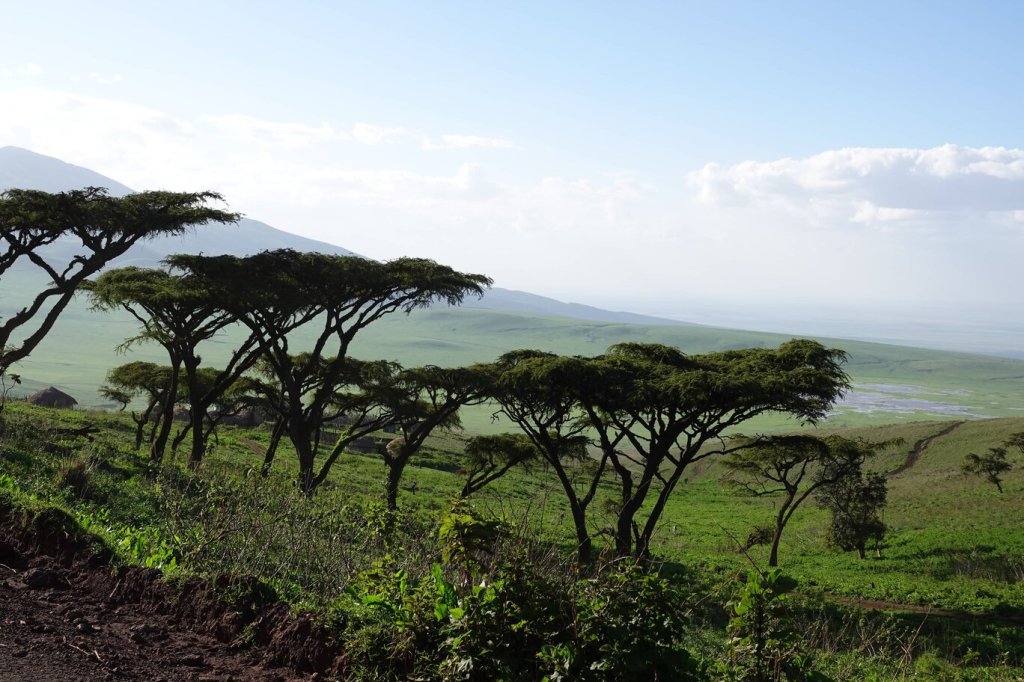
My disappointment was short-lived though, as the road climbed into lush green mountains with beautiful views of lakes, trees and small Masai villages.

Green Ngorongoro scenery
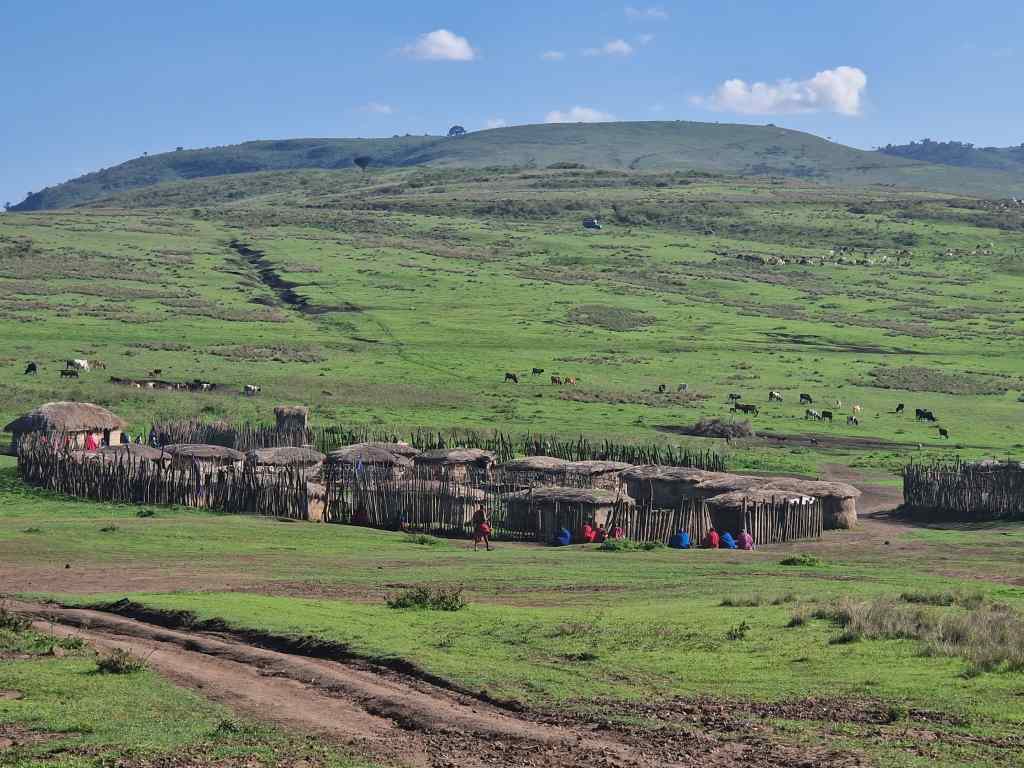
A Masai Village

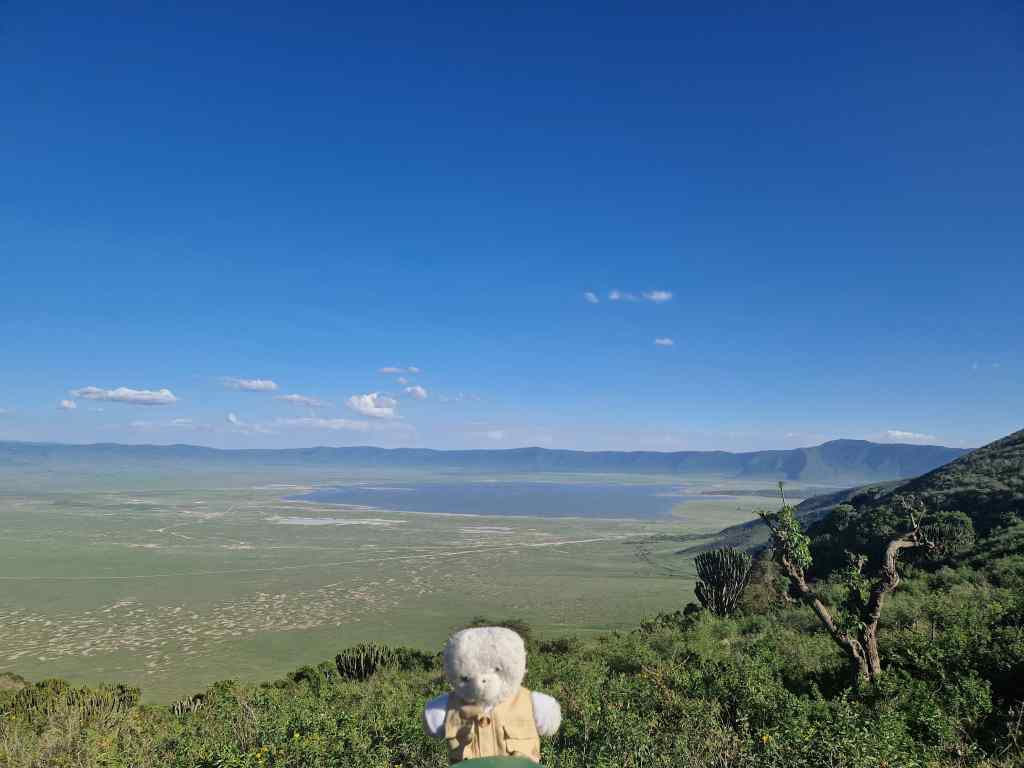
We made lots of stops to take photos, including one at the rim of the famous Ngorongoro Crater, our destination for the next day.

The Ngorongoro Crater

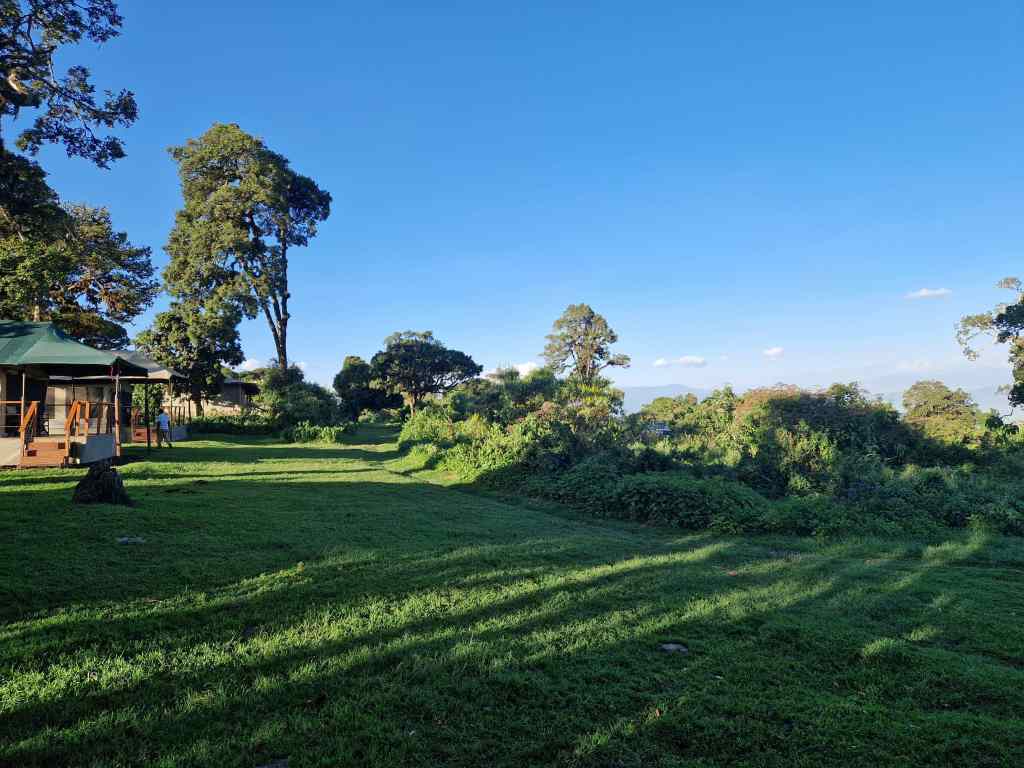
We reached our lodge as the sun was setting and the shadows lengthening, which was a shame because it was a really nice place and it would have been good to have enjoyed it for longer.

Our lodge on the edge of the Ngorongoro Crater

When the sun finally set, it became decidedly chilly, and we put on the warm clothes we had last used when changing planes at Amsterdam in Europe. After another nice evening meal we were soon snuggling in bed, delighted that the lodge had provided each of us with a hot water bottle.

Keeping warm ahead of another early start

Previous Post: Floating Above the Serengeti

Next Post: The Ngorongoro Crater

Floating over the Southern Serengeti

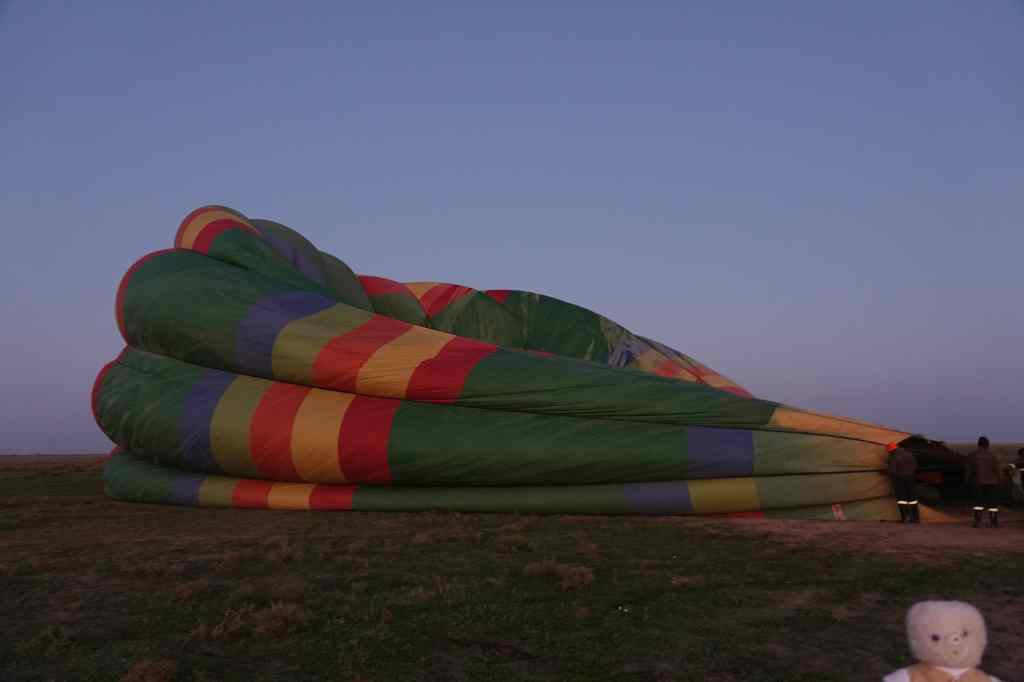
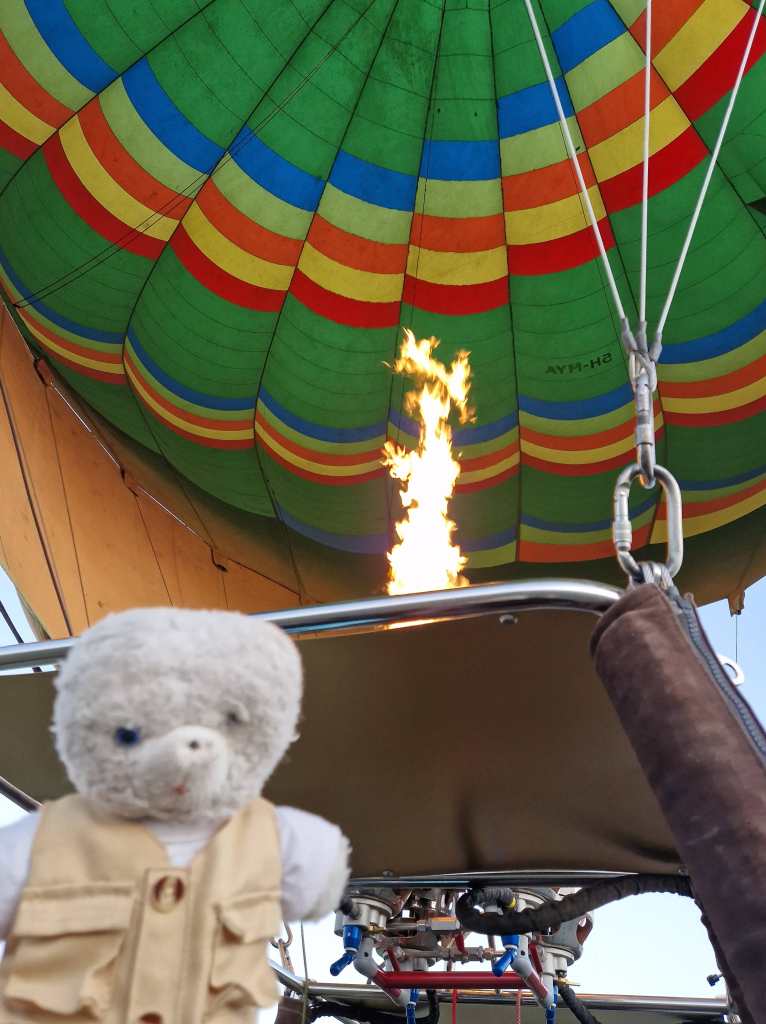
Today, even by the standards of our safari, we woke up unusually early for a 5.15 am departure. We drove through the night and arrived at a flat empty plain, where a group of Tanzanians was preparing a large hot air balloon. This was to be a new experience for us, and as the sky slowly got lighter in the east, we watched as the staff inspected the balloon’s fabric, and then started to fill it with hot air from a propane burner. The captain of our flight emerged to give us a safety briefing and assure us that he had been piloting balloons for twenty years without incident.

Checking our balloon

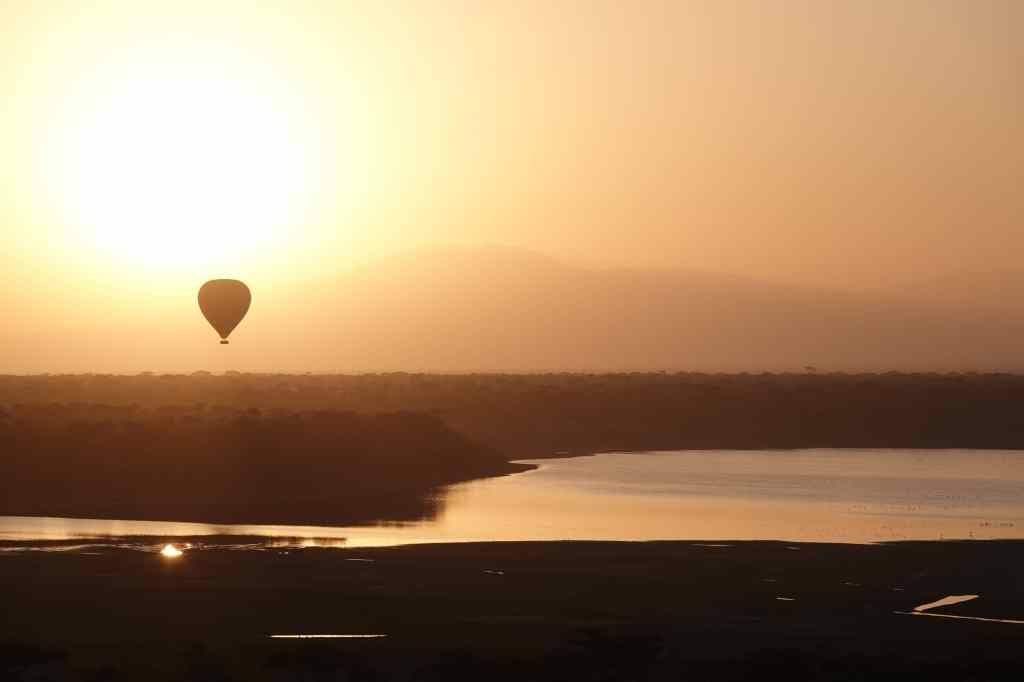
Just as the sun starting rising, we ready for take-off. Along with landing, this was the only slightly complicated part of the flight and involved us curling up at the bottom of the basket whilst balloon lifted slowly into the air. Soon our captain announced we could stand up and we were greeted by a magical sight of sunrise over the Serengeti plains, with the ground far below.

Sunrise from the air

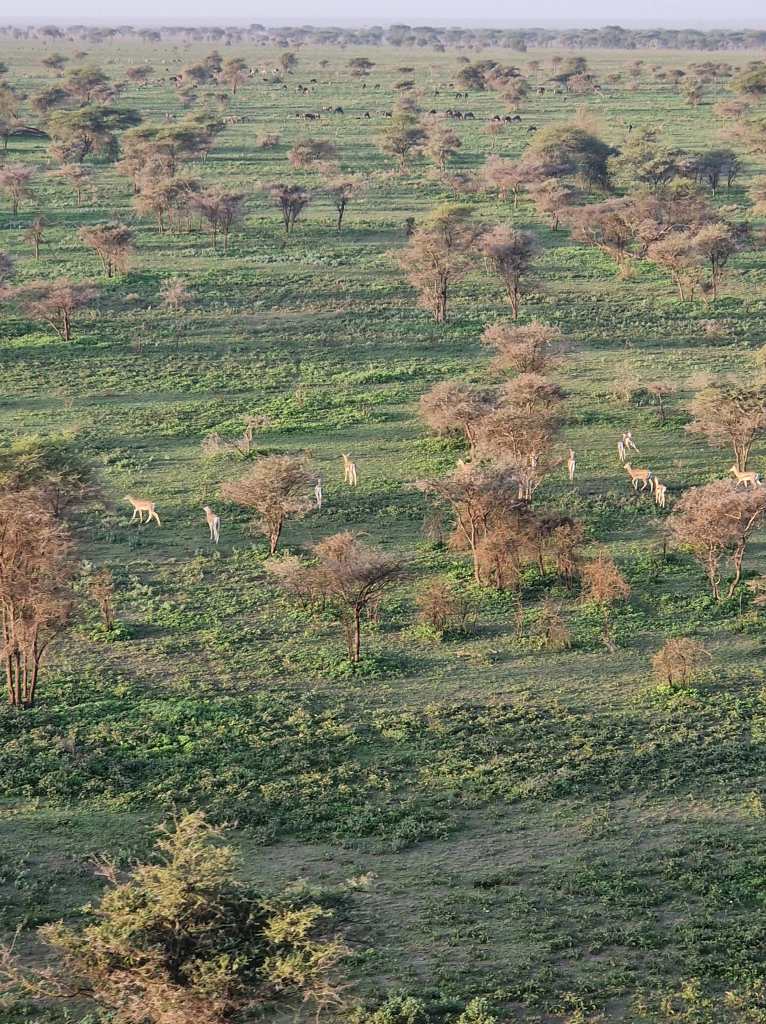
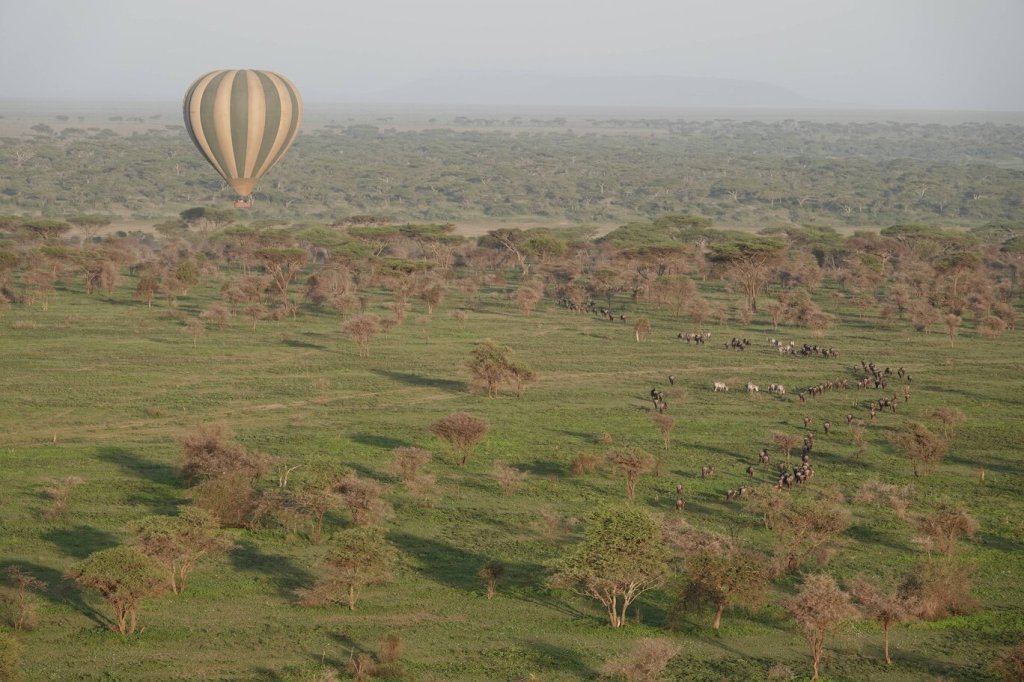
Our balloon drifted gently with the wind, sweeping over trees, herds of antelopes and giraffes. There was a wonderful silence, broken occasionally by the sound of some more gas been burnt to maintain our altitude, and the soft murmur of my fellow passengers as they admired the amazing sight. Although the Serengeti’s animals and birds are used to jeeps, they seemed scared by our balloon and hurried away as we approached them.

Looking down on antelope
Keeping afloat

We let our minds float with our balloon over the Serengeti plains, soaking in the experience and filming the animals below us.

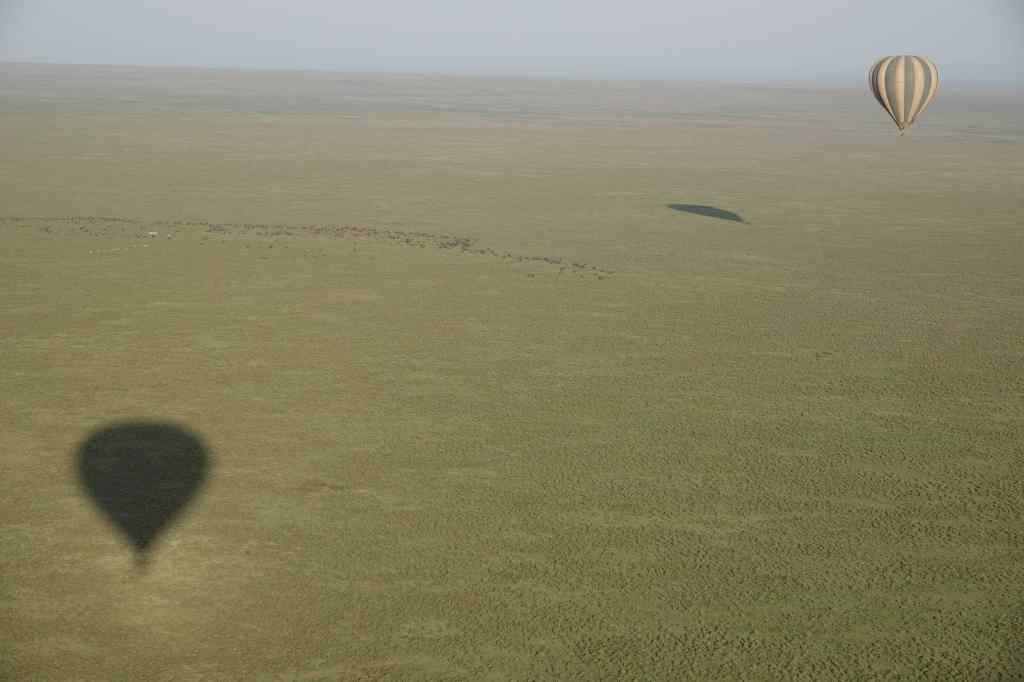
Our Balloon’s shadow on the plain

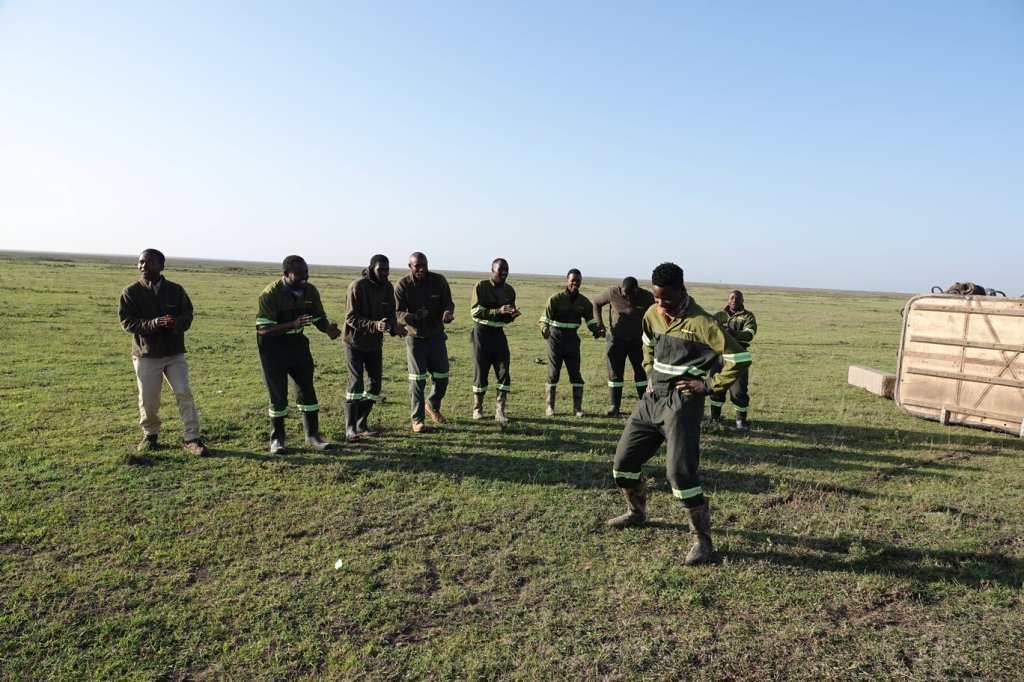
I was surprised when our pilot announced that we had been flying for over an hour and it was time to prepare for landing – it seemed that we had only just started. Too soon, we had to crouch back down in our basket and wait for out balloon to hit the ground with a series of bumps. Our successful flight was celebrated with fizzy wine accompanied by songs and dancing by the balloon’s support staff, who had been following us in jeeps as we flew.

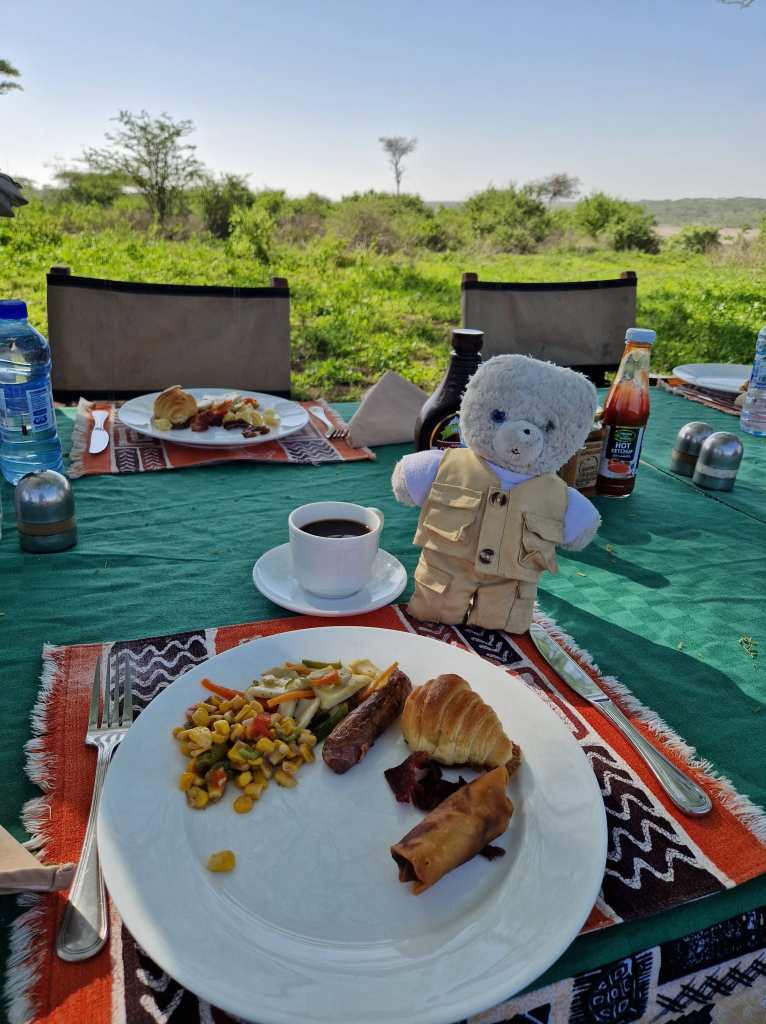
We then got back into a jeep and drove for about an hour back to a picnic area close to where we had started, for a copious outdoors breakfast. At around nine a.m. our balloon experience was over and we met up with our guide Estomih again in our own jeep.

Bush Breakfast

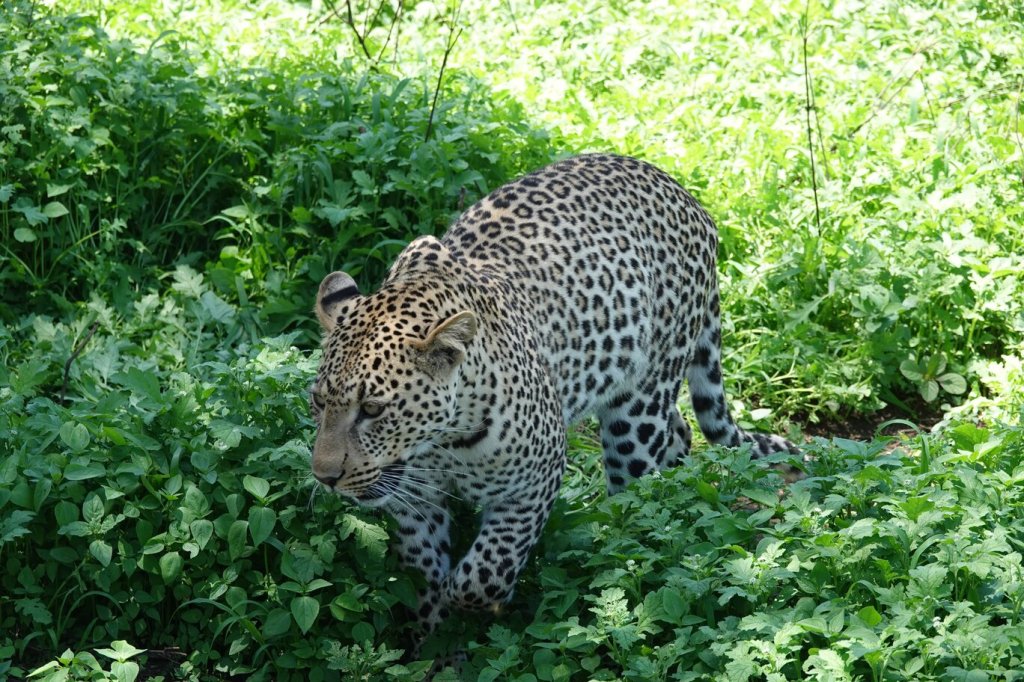
Amazingly we still had nearly a full day for a game drive, and to get yet more close up views of big cats, birds and herbivores. We got our closest yet view of a leopard, who started lying in the grass in front of us before climbing up a small tree…..

My best leopard photos yet!

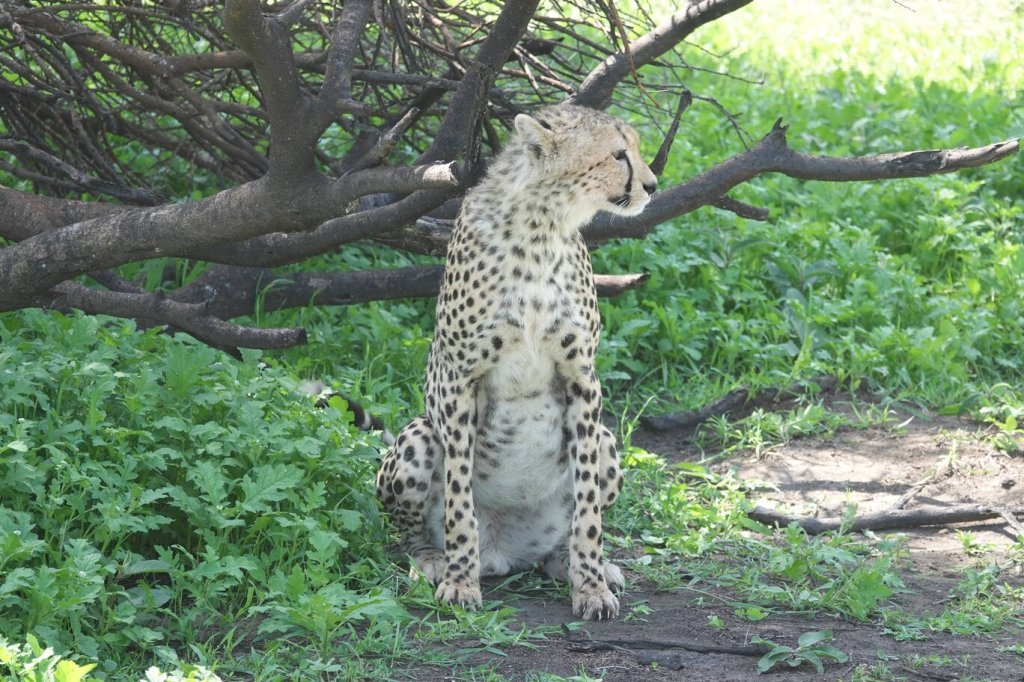
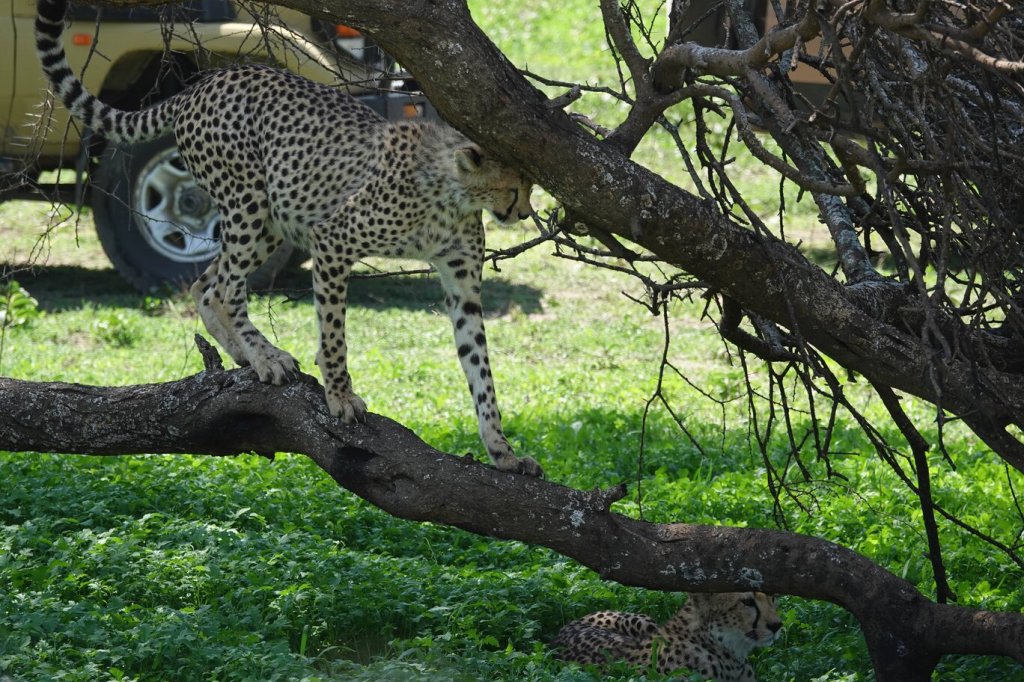
…..and then reconnected with the two cheetahs we had seen the day before.

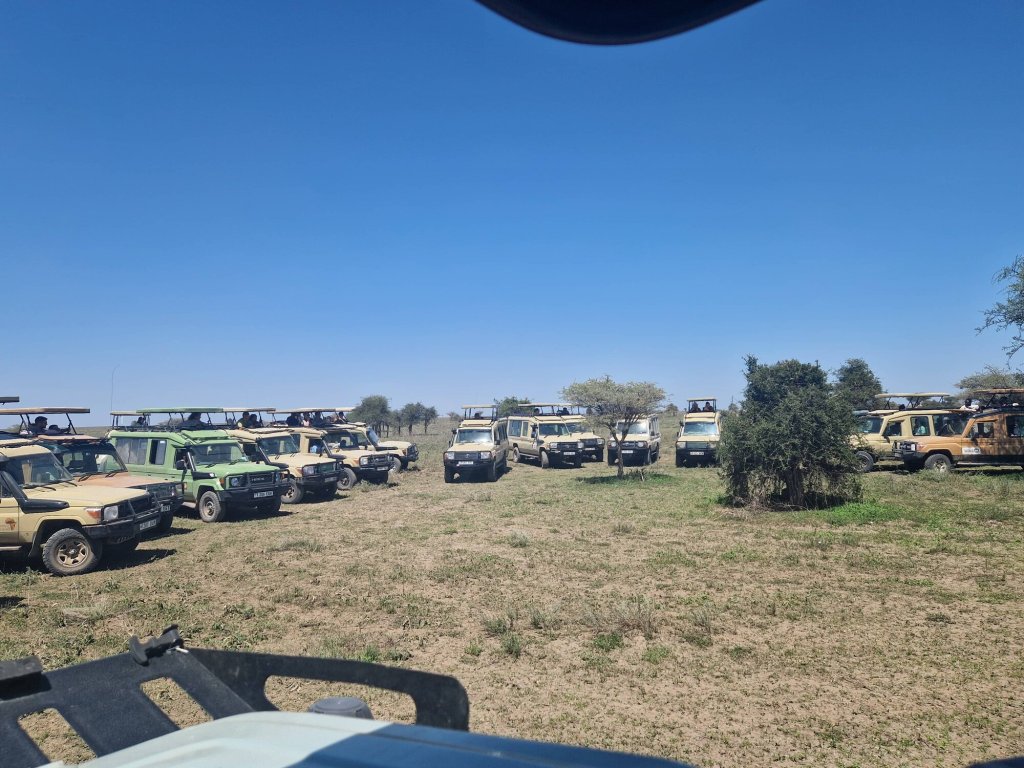
We were not alone to admire these cheetahs, whose small shady bush had been surrounded by an array of tourist jeeps. We were travelling in the mid-season (January), and Estomih told us that in high season there would be twice as many vehicles. We don’t like crowds and were glad we had avoided this.

Reconnecting with two cheetahs…..

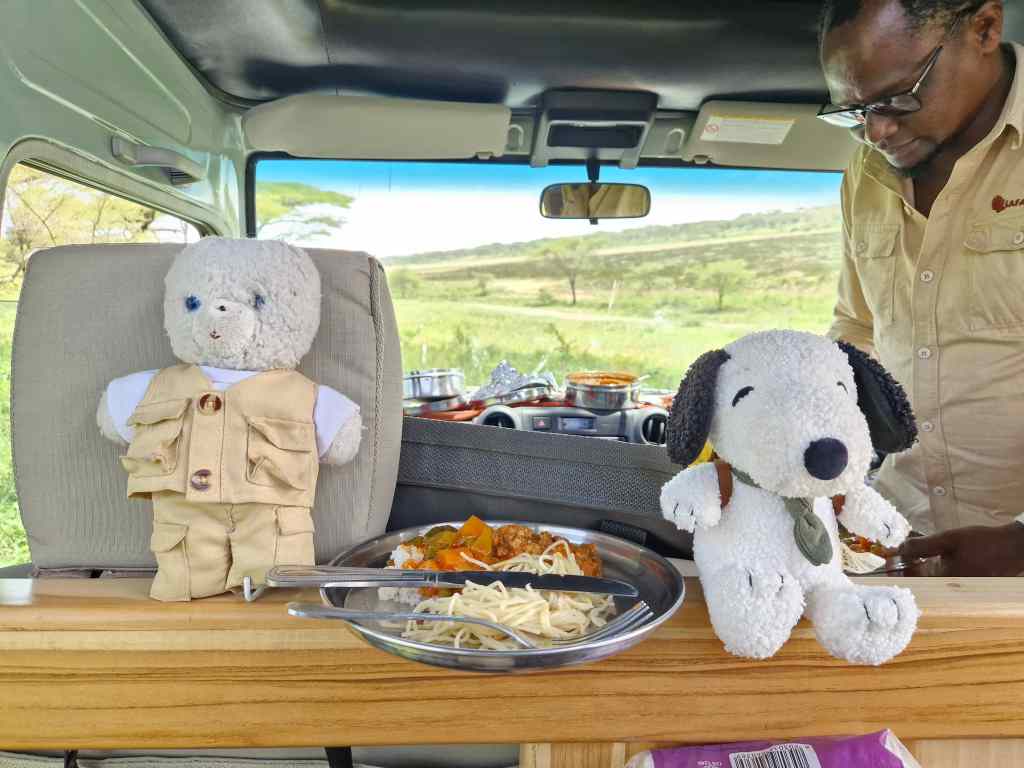
It was soon time for lunch, which we had inside our jeep for a change.

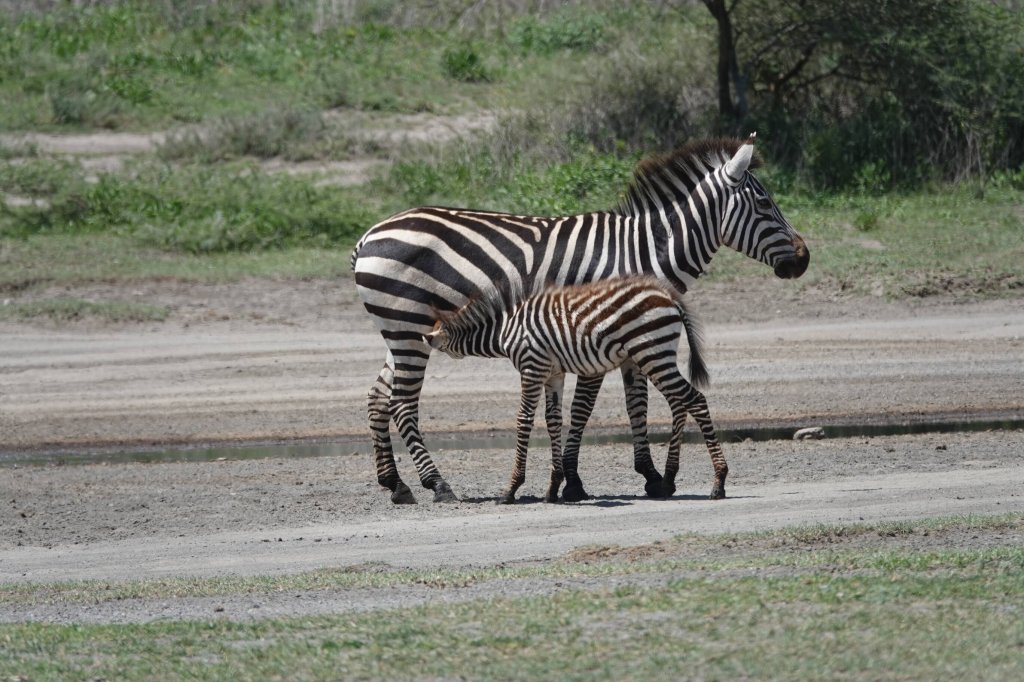
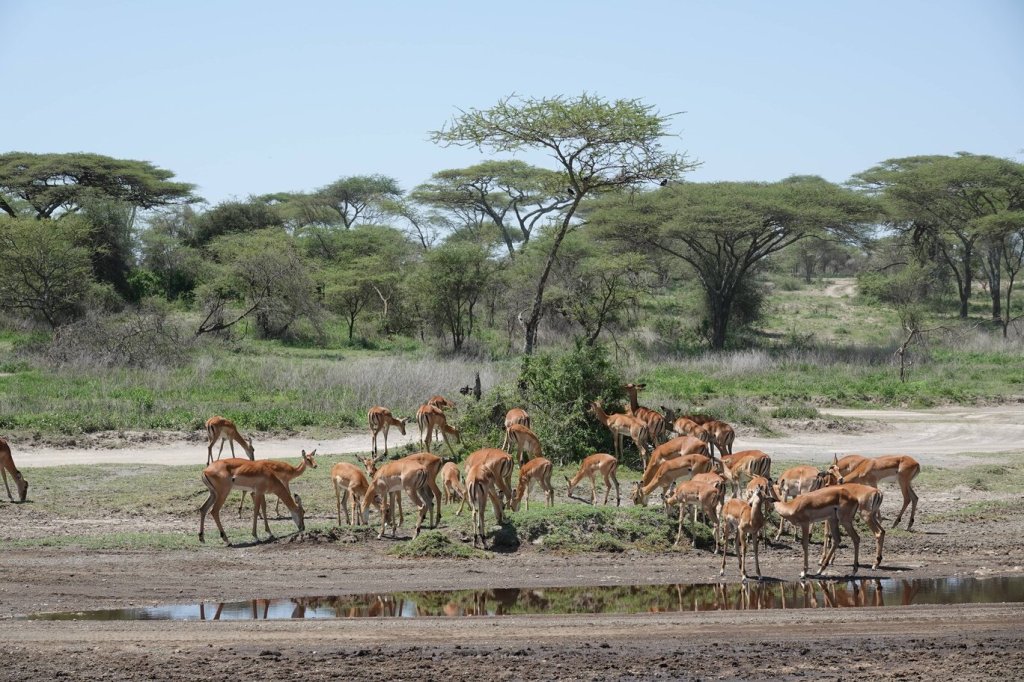
The afternoon’s game drive was quieter, with flamingos, impala, zebra, wildebeest and a few more lions.

Zebra with calf
A herd of Impala

As the afternoon progressed, we became a bit tired after several long days and early starts, not to mention our big lunch and glass of Tanzanian wine! So we headed back to our camp to recharge our batteries after another memorable day.

Previous Post: From Central to Southern Serengeti

Next Post: From the Serengeti to Ngorongoro

From Central to Southern Serengeti

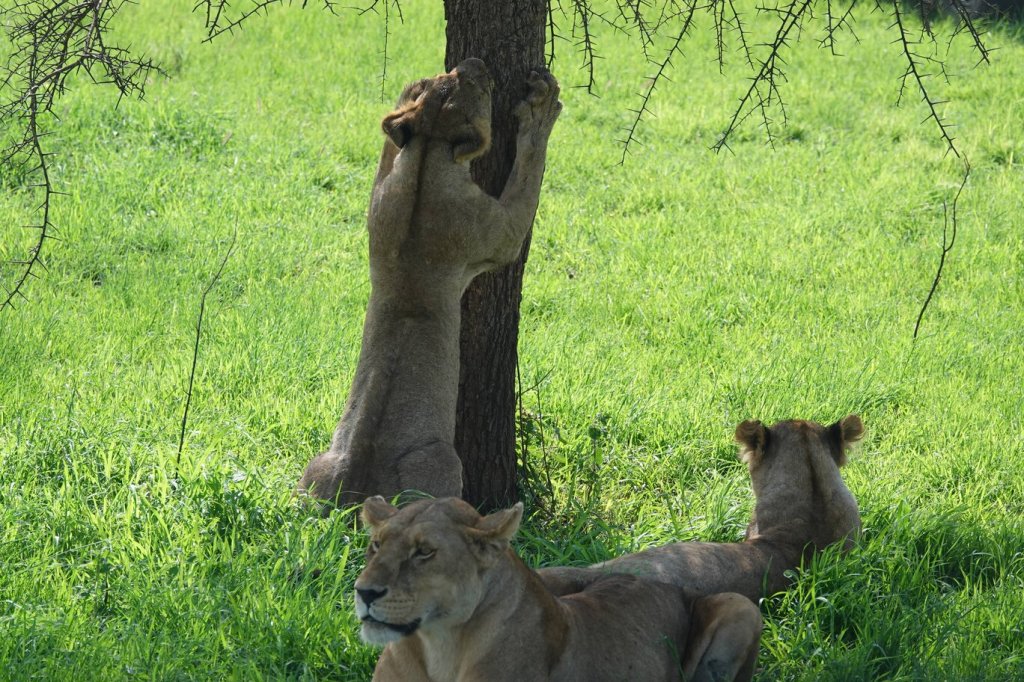
Today we were due to move from our camp in the centre of the Serengeti to one in the southern part of the park, enjoying a game drive along the way. Our day started well when we bumped into another superpride of lions. Initially we thought they were hunting some nearby buffalo, but instead they ambled along, inspecting our jeep and moving from one shady tree to the next.

Early morning lions finding shade under a tree……
….and sharpening their claws

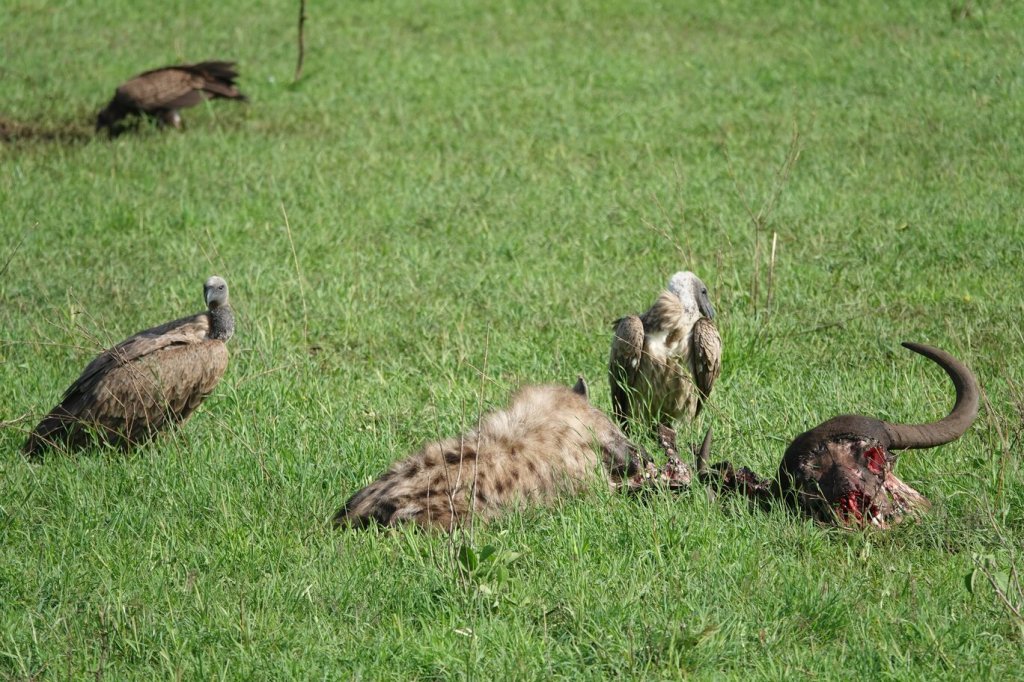
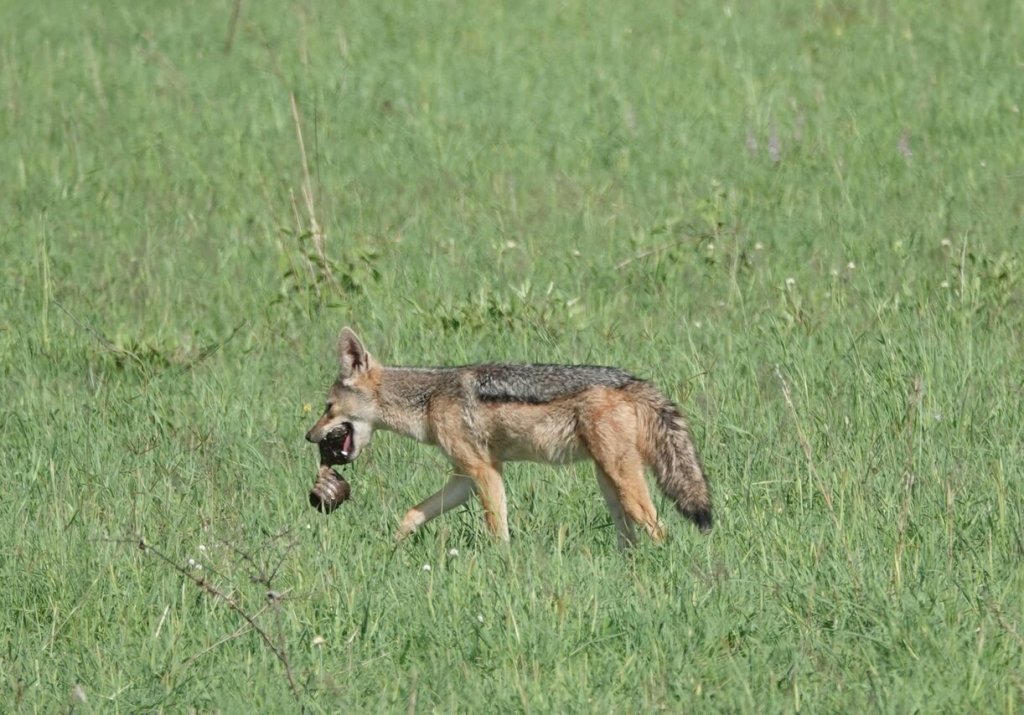
After this chance encounter we revisited the slain buffalo we had seen the previous day to see if the two lions were still there. It turned out that they had moved on, and been replaced by a couple of hyenas. All that was left of the poor buffalo was its skull – the hyenas have powerful jaws that can crush bones and will eat any part of any animal left over by more powerful predators. A couple of vultures waited patiently for the last hyena to finish, but we were not sure if anything would be left for them. Nearby a nimble jackal seemed to have managed to grab a bone from under the hyenas’ noses and was carrying it away to a safe distance to enjoy it.

All that was left of the poor buffalo
A jackal escapes with a bone

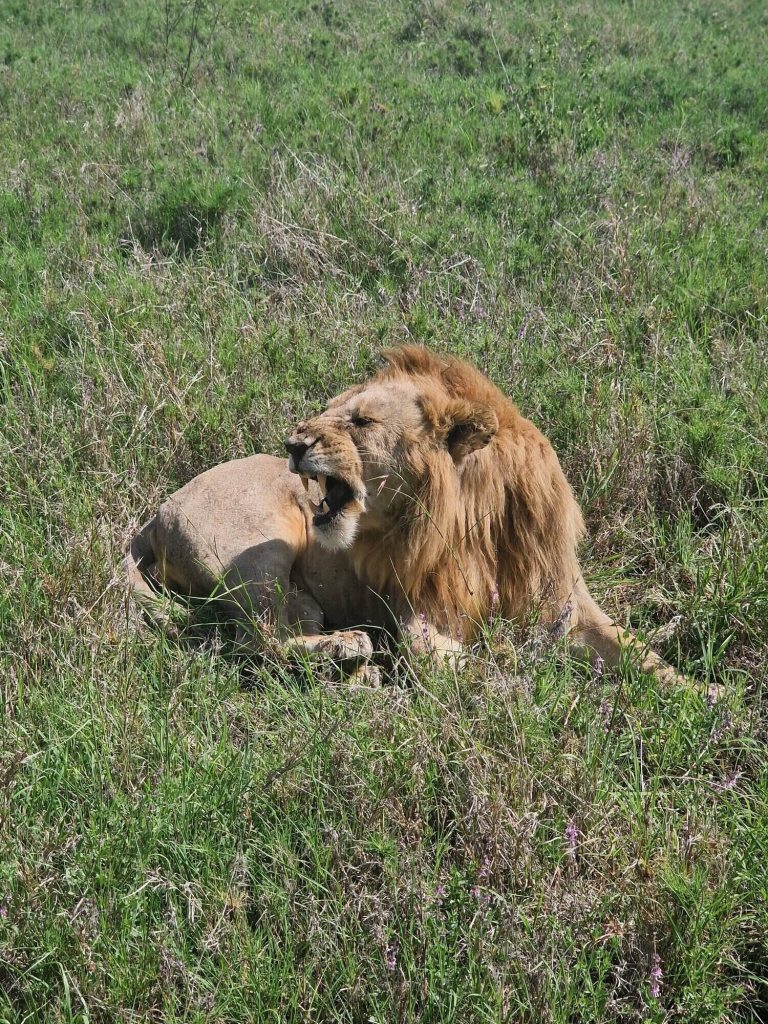
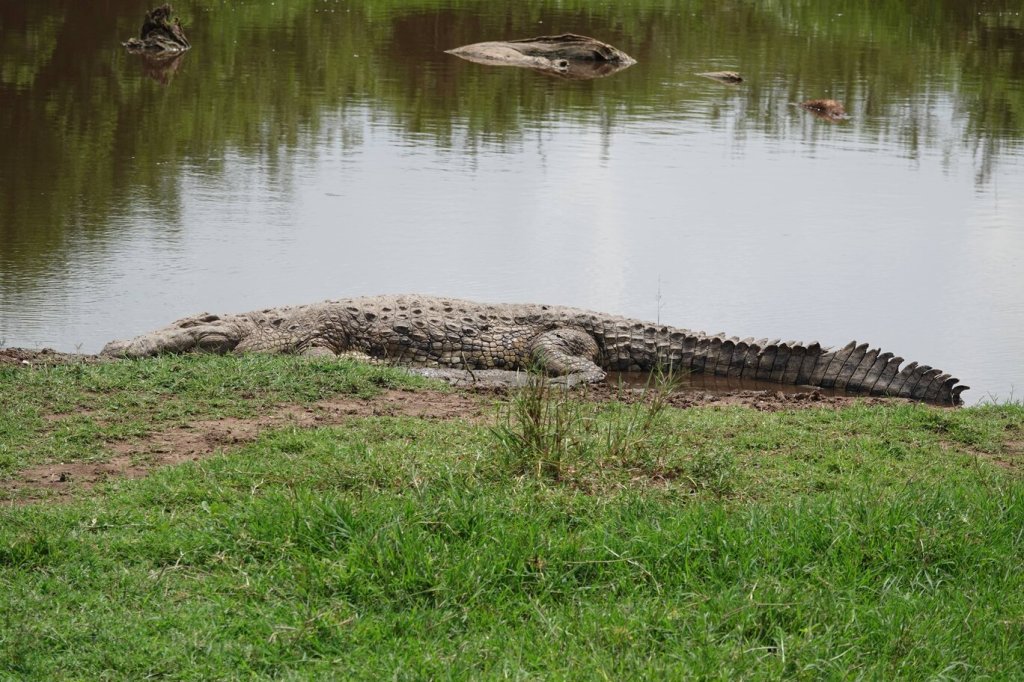
After the initial success of the early morning, we had less luck as the day wore on. We did find a group of three male lions hiding in the long grass, and spot a solitary Nile crocodile.

One of a group of three male lions we spotted
A Nile Crocodile

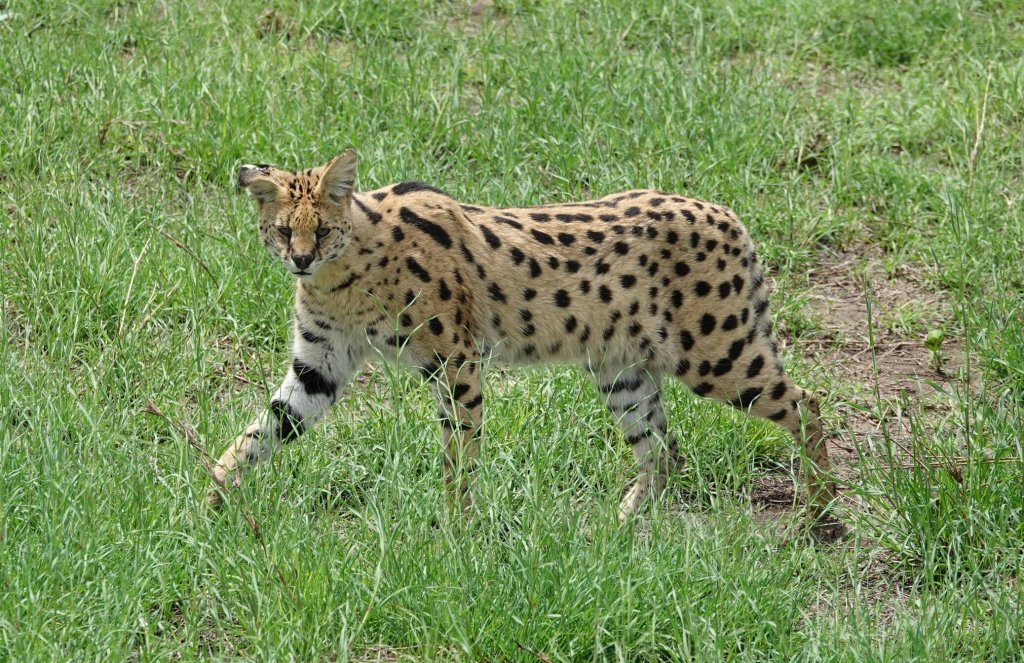
But then we spent a lot of time heading towards a reported sighting of a cheetah, only to find lots of jeeps and no signs of any animals. It was time for us to head south to our next camp, and we drove along a long and dusty road that initially appeared rather uninteresting. However we were lucky with two chance sightings of fairly rare animals – first we saw a bat-eared fox, an extremely cute animal that sadly disappeared into its burrow before I could take a picture. Next, we found a serval, a really beautiful smaller relative of leopards and cheetahs, who was much more happy to be filmed.

The beautiful Serval

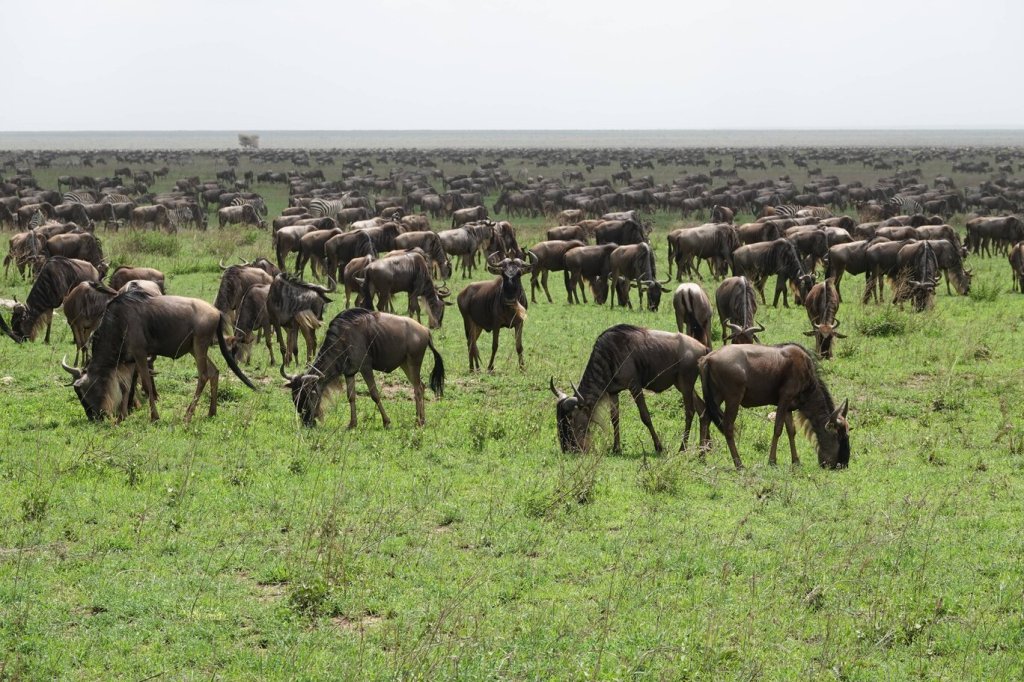
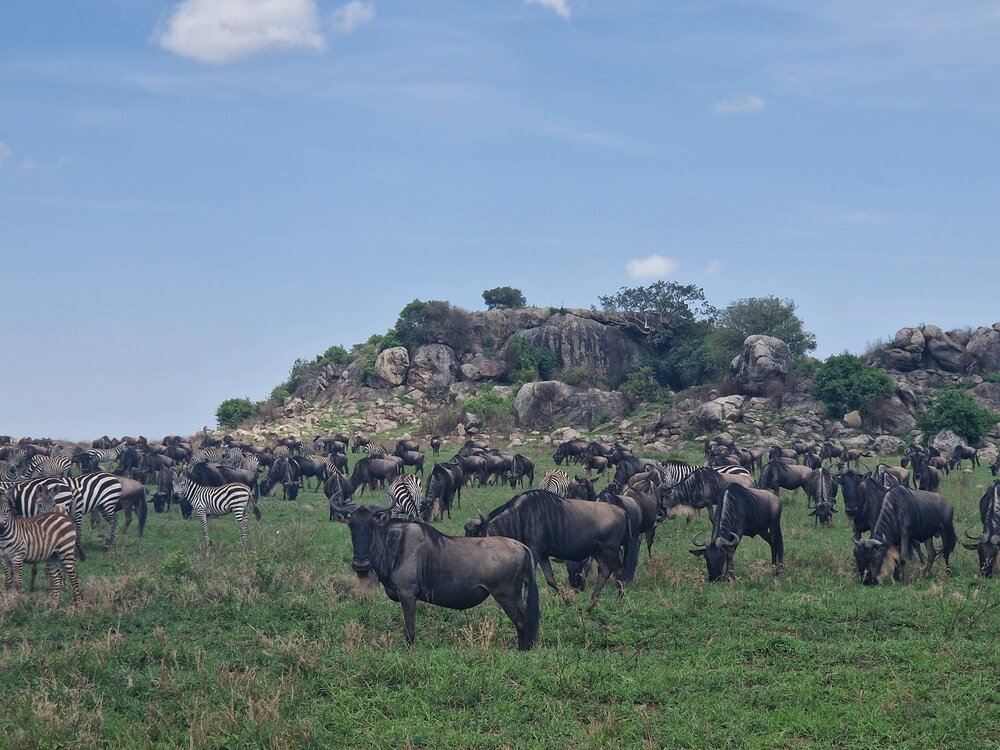
Further along the road we came across an amazing sight that the Serengeti is famous for – a huge herd of wildebeest and zebra, stretching all the way to the horizon and turning the yellow/green landscape into a mass of black animal bodies. In January most of these animals are found in the south of the park, which is why we had seen relatively few of them so far. In the summer most of them move north in a vast migration and make the hazardous crossing of the crocodile-infested Mara River into Kenya, before returning later in the year.

A huge herd of wildebeest and zebra stretches to the horizon

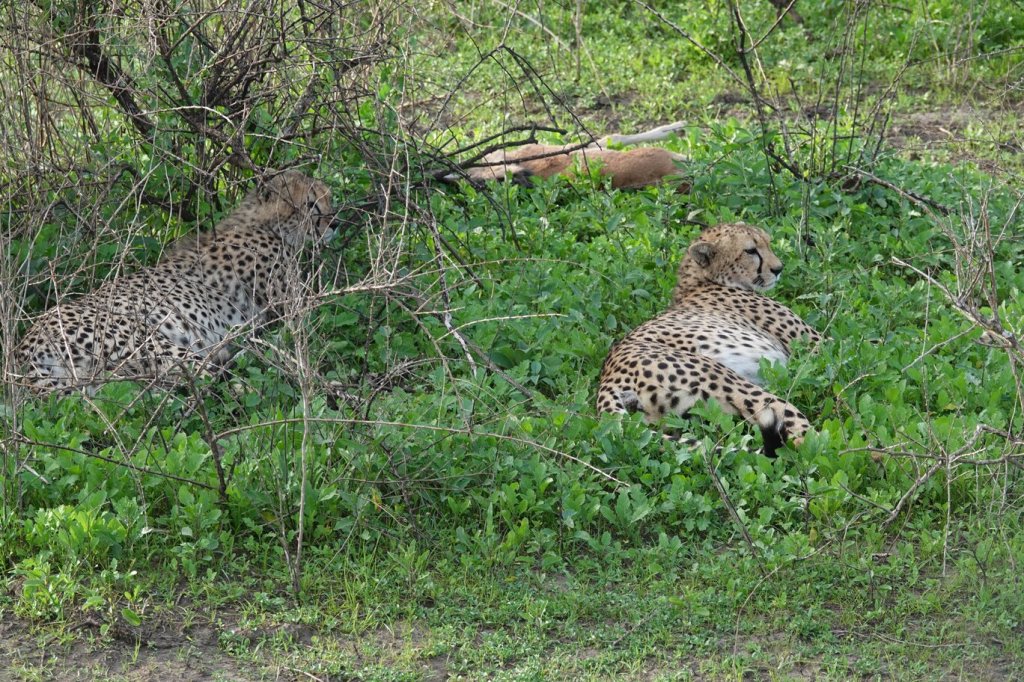
As we reached the southern part of the Serengeti it was getting late, but our guide Estomih insisted that we should check out two sightings of cheetahs before checking into our camp. We were a bit sceptical after several long days and our unsuccessful search in the morning, but eventually gave in to his enthusiasm. First we found a couple of young males, who had killed a gazelle, and were digesting their meal in the shade of a tree.

Two young cheetahs digest their meal

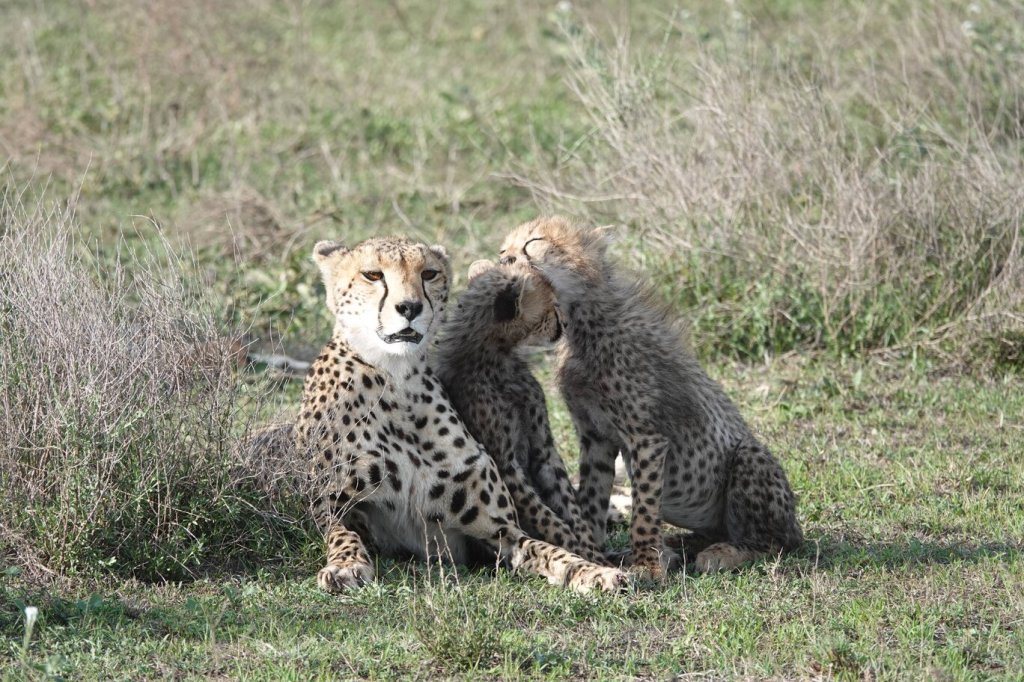
A bit further away, we found one of the highlights of our trip – a female cheetah with four cubs. She had caught them a young gazelle and was scanning the horizon for threats as they ate. When they had finished eating they approached her and gave her an affectionate lick.

A female cheetah with her four cubs

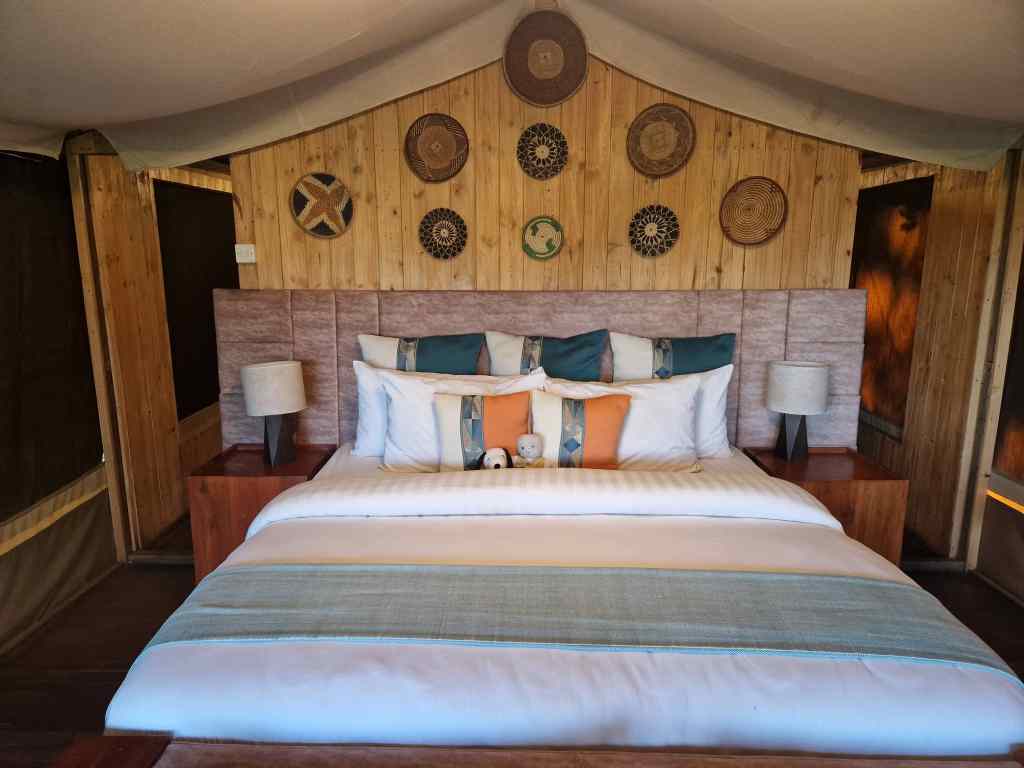
We finally reached our accommodation after sunset. It was a special mobile camp, which can be disassembled and moved to follow the migrating wildebeest. Despite this, it was remarkably comfortable and well-appointed. On arrival we went straight to dinner and then to bed, aware that the next day we would have to get up even earlier than usual for a very special treat.

Previous Post: The Serengeti – Leopards and Cheetahs

Next Post: Floating over the Southern Serengeti

The Serengeti – Leopards, Cheetahs and yet more lions

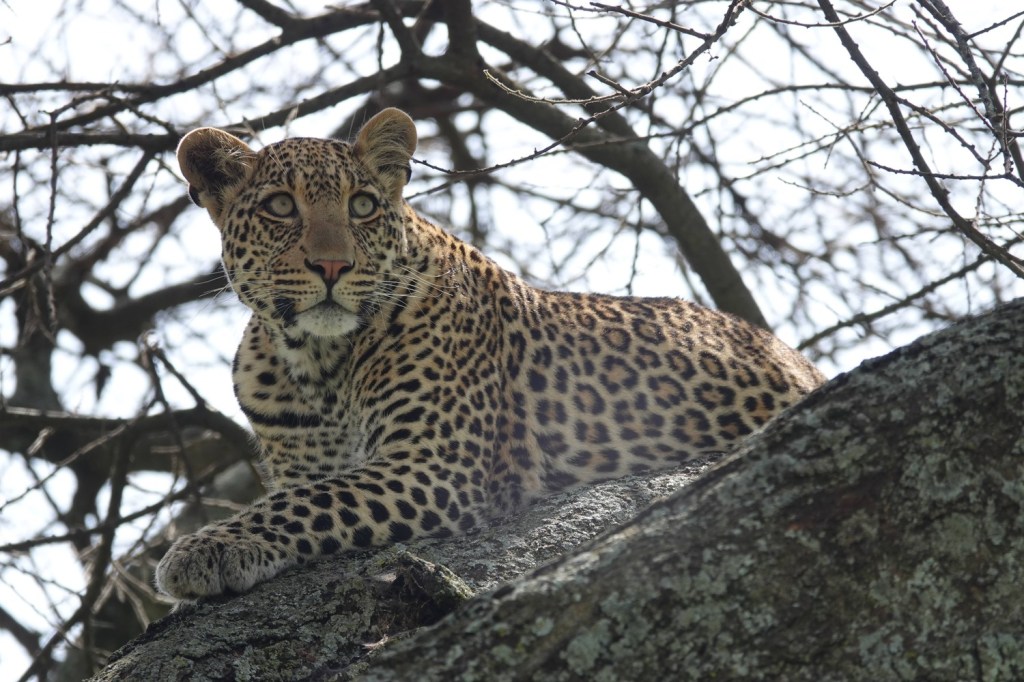
After the forty-eight lions we had seen yesterday, today Estomih our guide was determined to find us some different big cats. As usual, with the help of the guides’ exchanging of information over the radio, he delivered. Our first rendezvous was with a young male leopard, which as usual for its species was lazing in a tree.

A magnificent leopard

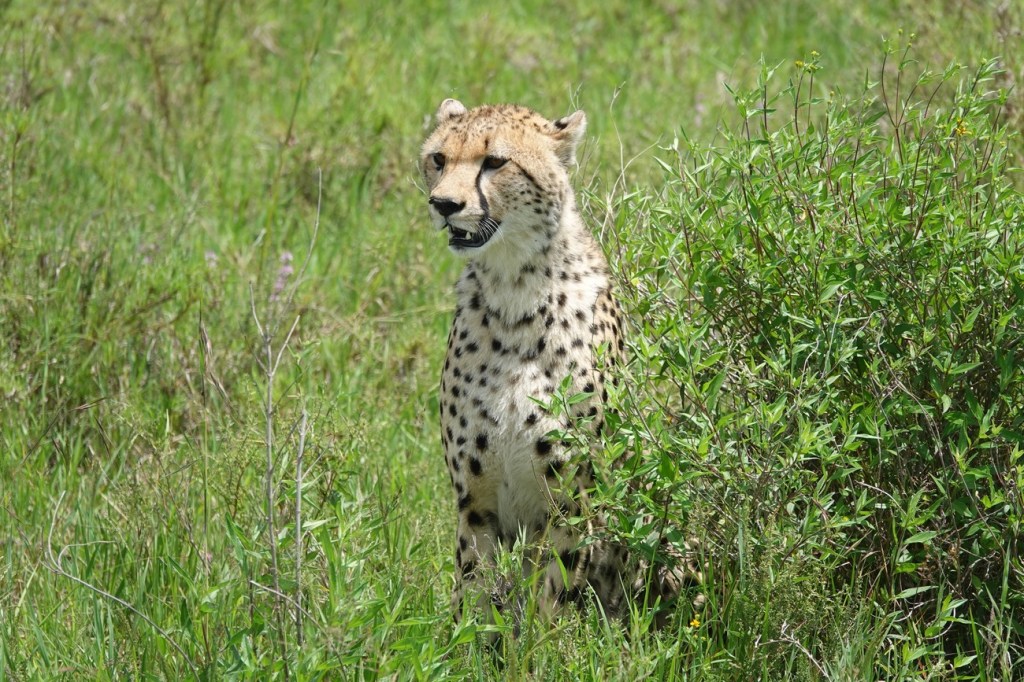
Having admired the magnificent animal for while, we set off in search of cheetahs…….and duly found three young males making their way through the thick grass of the Serengeti plains.

Our first cheetahs! (of many)

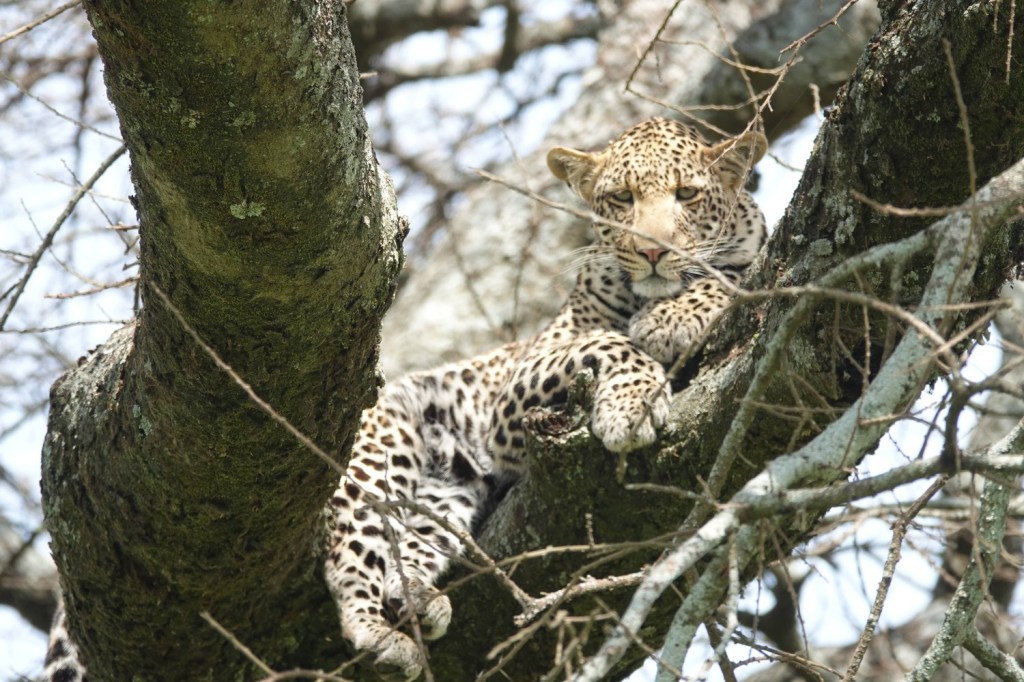
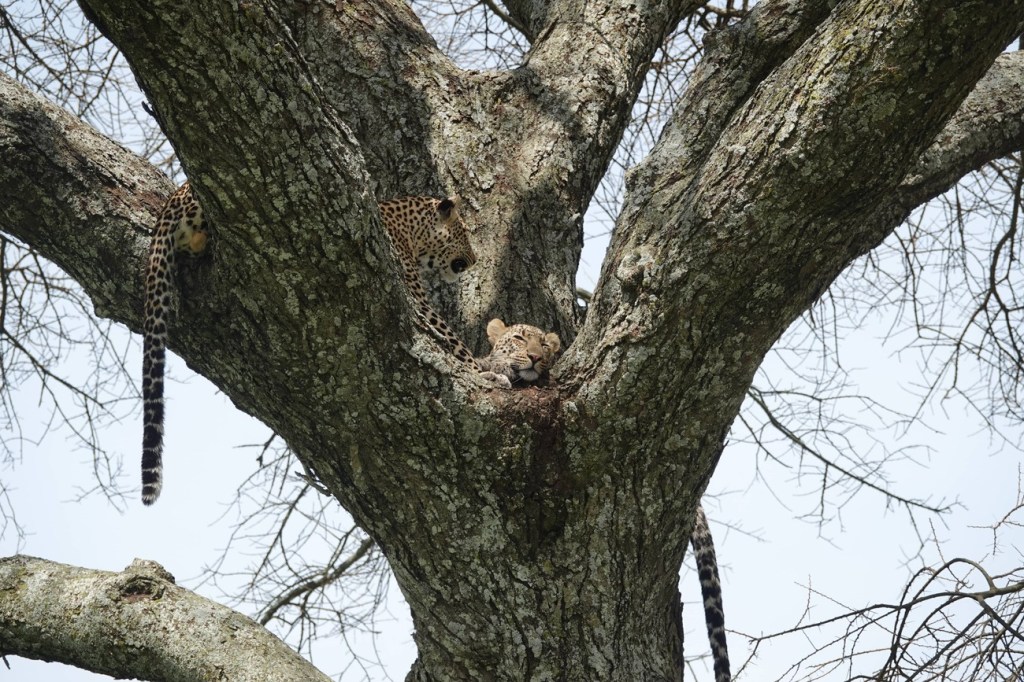
Over the radio, Estomih heard that our leopard had now been joined by his brother, so we headed back to the see the rather touching sight of the two siblings hanging out together in the branches of a tall tree.

Brotherly love

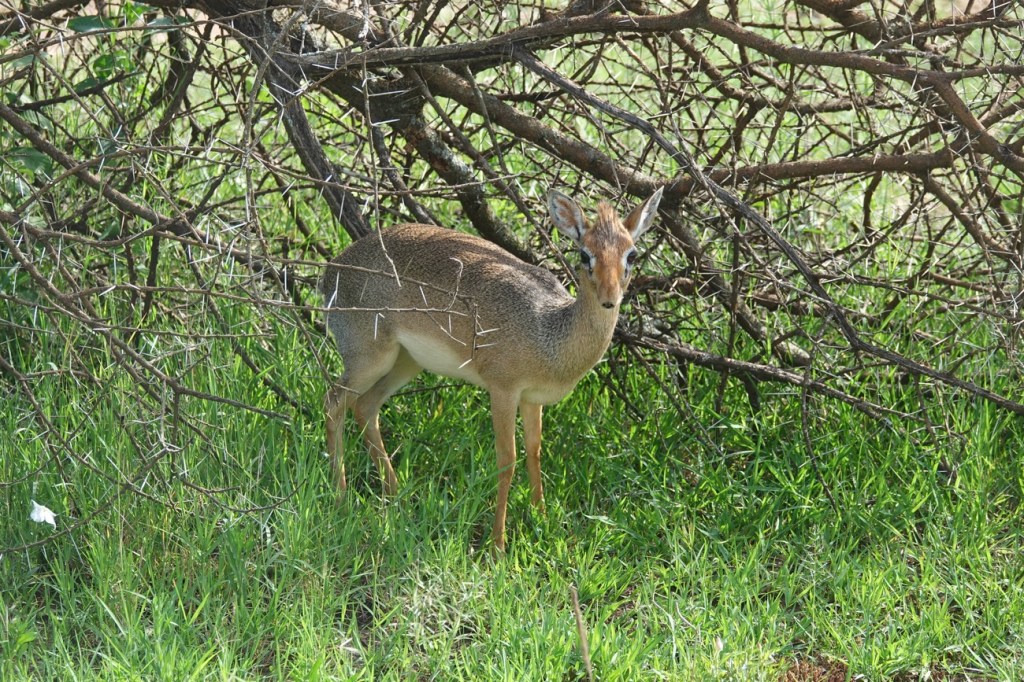
Having seen all of the big cats, we could relax, enjoy the Serengeti scenery, and pay more attention to the park’s less famous animals and birds, like the dik-dik, the smallest antelope…….

The cute dik-dik

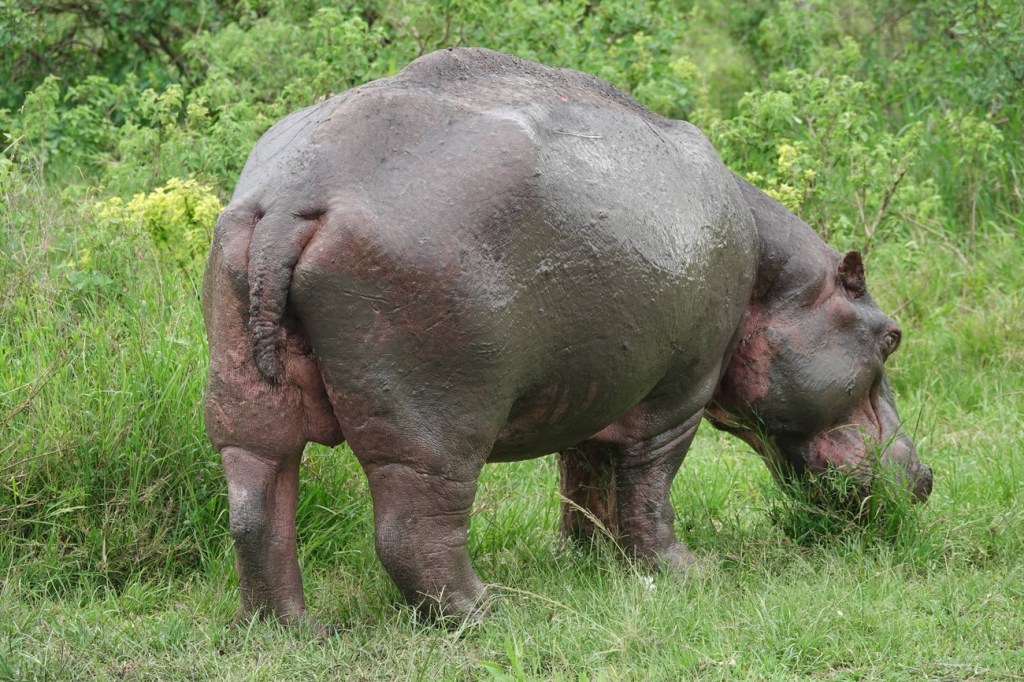
…..a big fat hippo, out of its pond…..

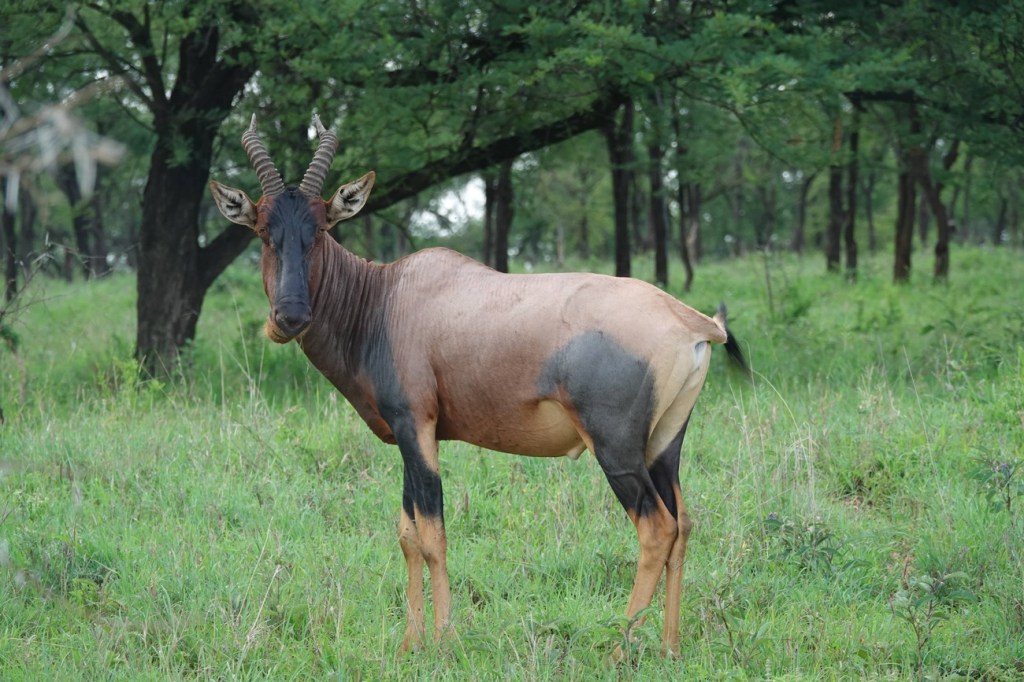
……the strange looking topi….

the Topi

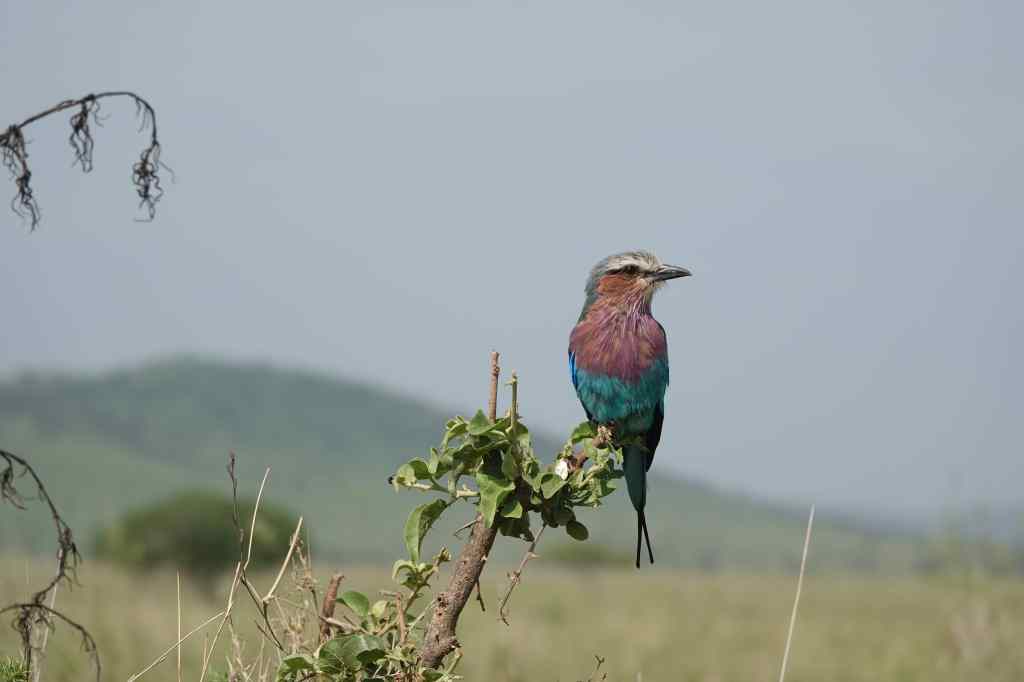
….and the beautiful lilac-breasted roller bird.

Lilac-breasted Roller Bird

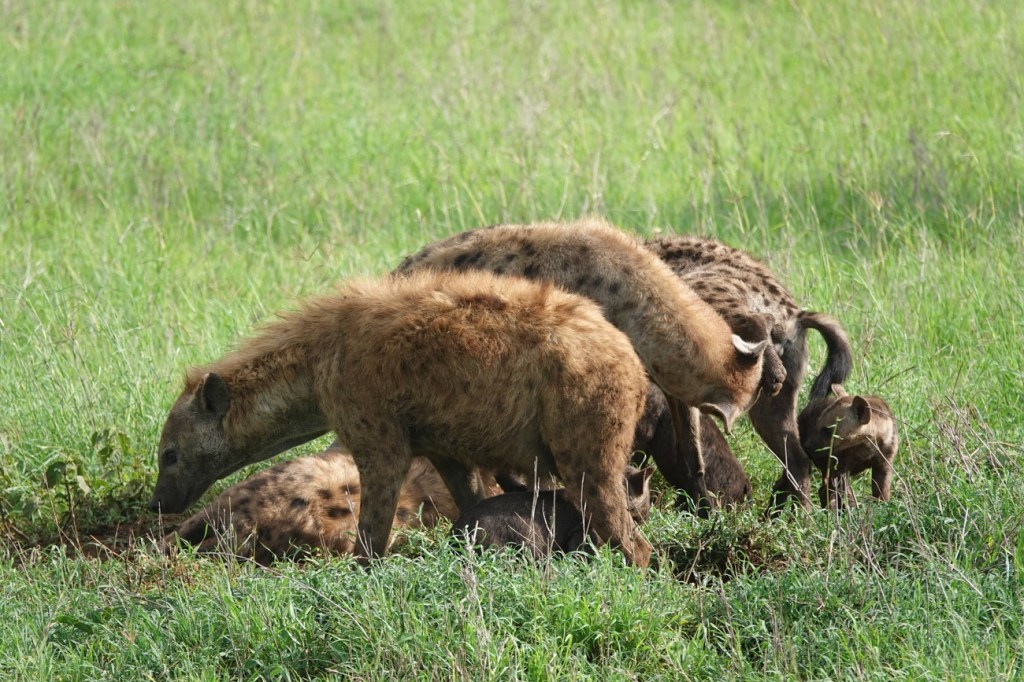
Towards the end of the day we bumped into a group of hyenas

A pack of hyenas

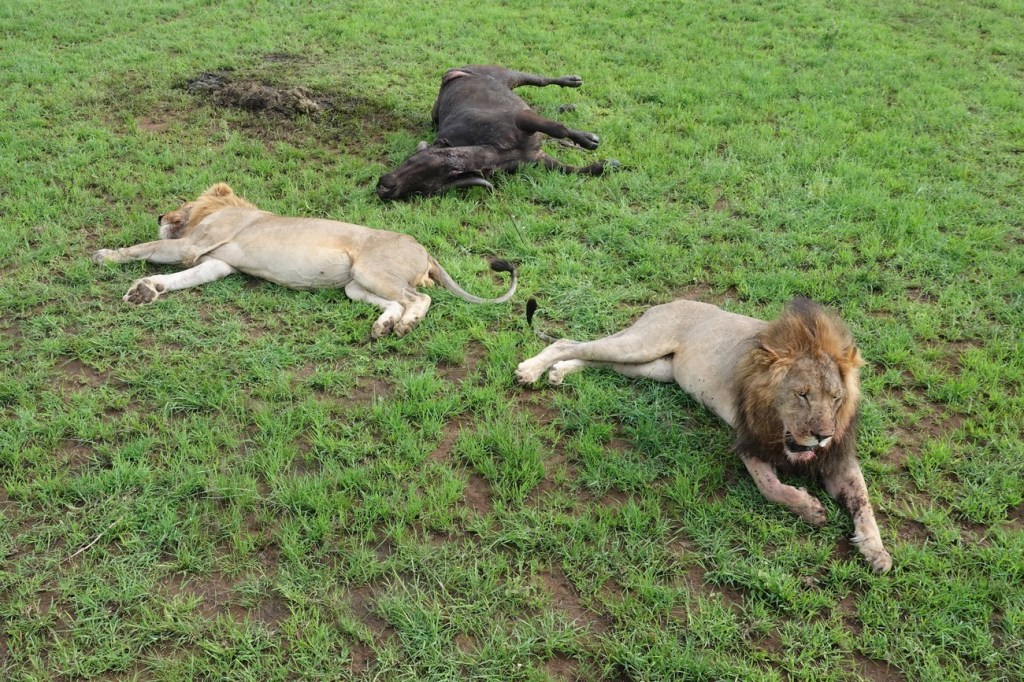
A short way further on, we found two lions who had recently killed a buffalo. They sat there with bloodied mouths and fat bellies, digesting their meal.

Two well-fed lions digesting their meal

It had been another great day, but over dinner back in our bush camp I began to wonder if we had already seen everything there was to see in the Serengeti, and whether the next two days here might become a bit repetitive. Fortunately I was wrong, as you will see in the next posts.

Previous Post: From Lake Natron to the Serengeti

Next Post: From Central to Southern Serengeti

From Lake Natron to Serengeti National Park (and 48 lions)

We woke up early and were ready to leave at six as our guide Estomih had suggested. Our first destination of the day was Lake Natron, a large salt lake that stretches across the border between Tanzania and Kenya. We arrived just in time for sunrise. Estomih parked the jeep, leaving us to make the short walk to the water’s edge across a mudflat.

Sunrise at Lake Natron
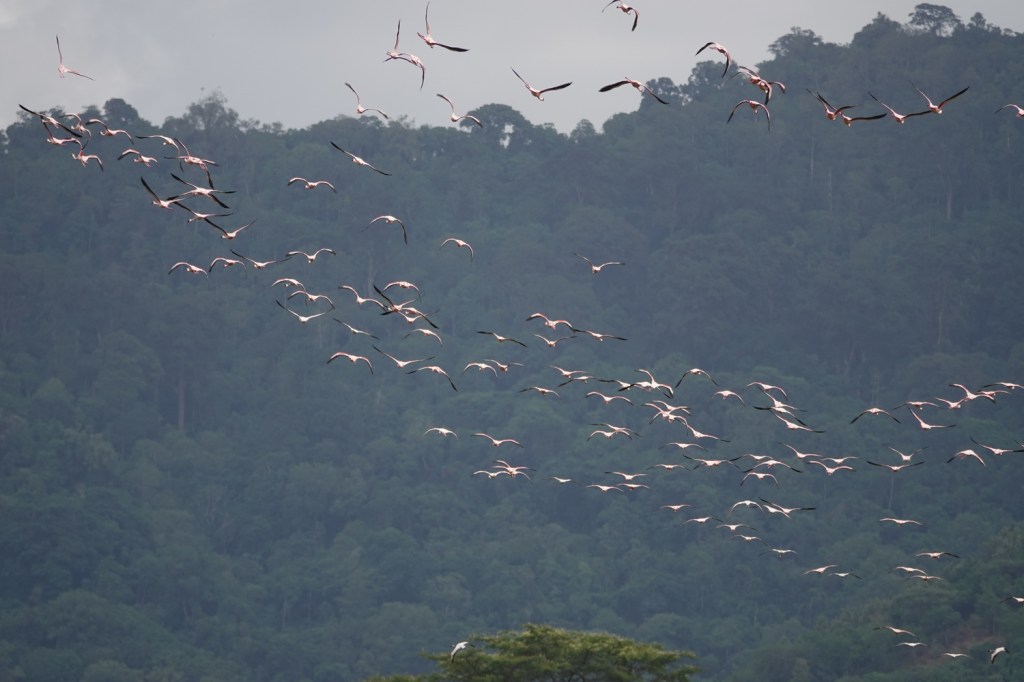
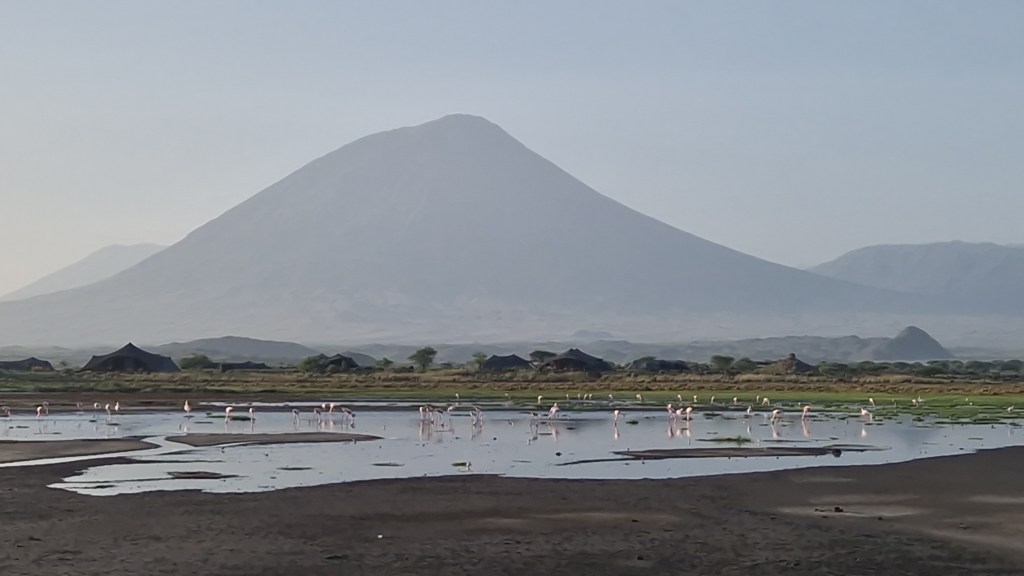
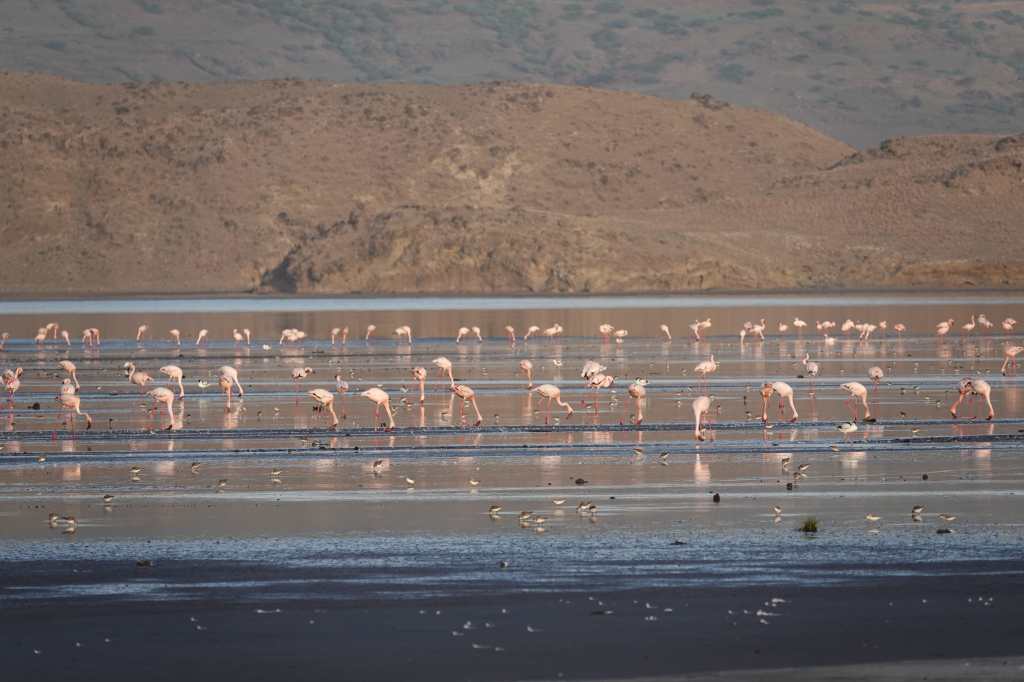
The flamingos appear at Lake Natron

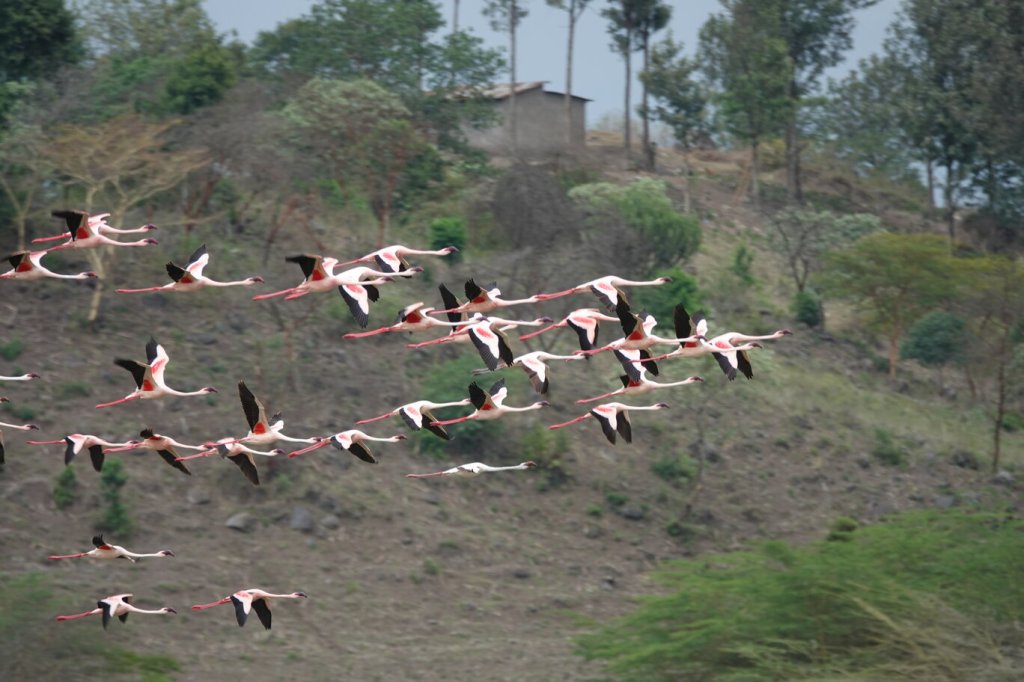
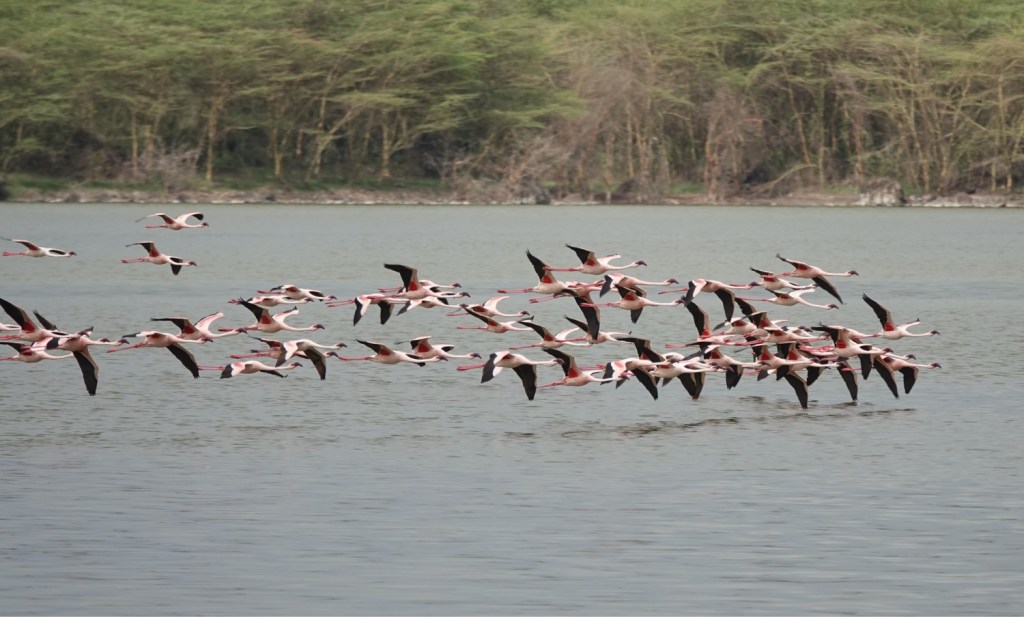
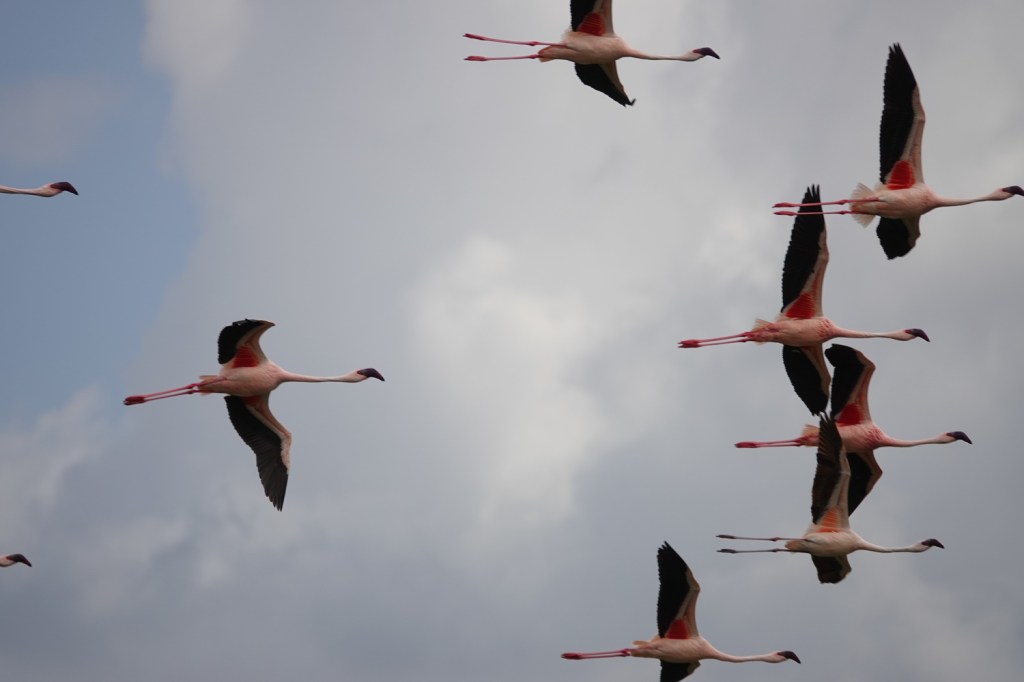
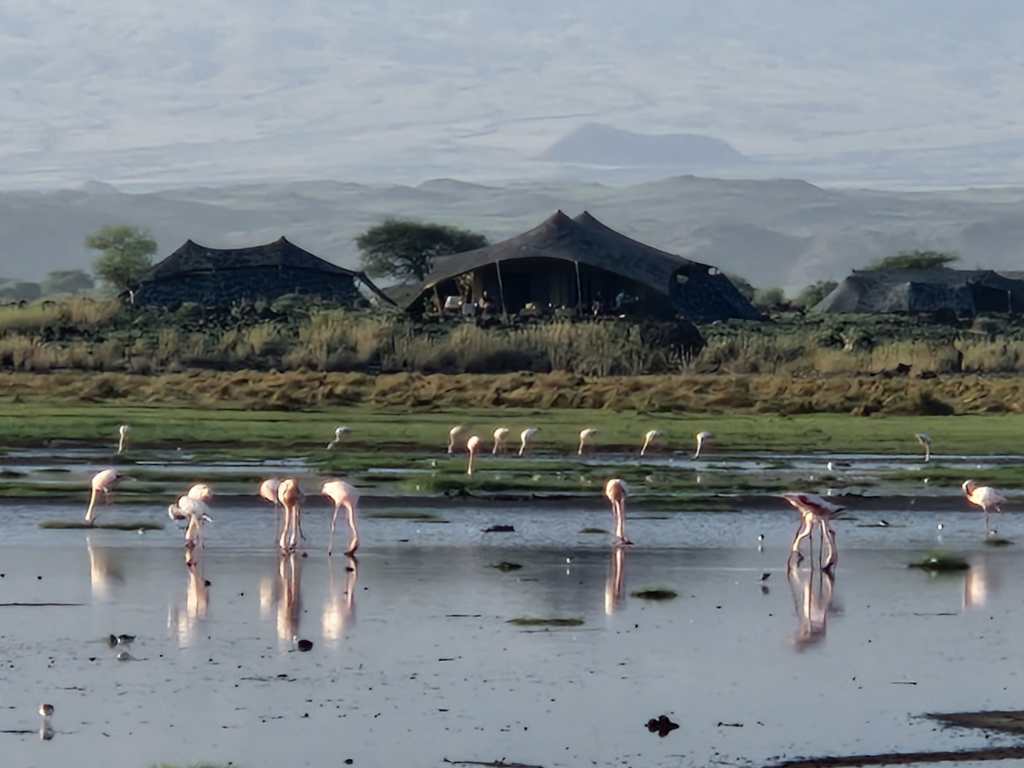
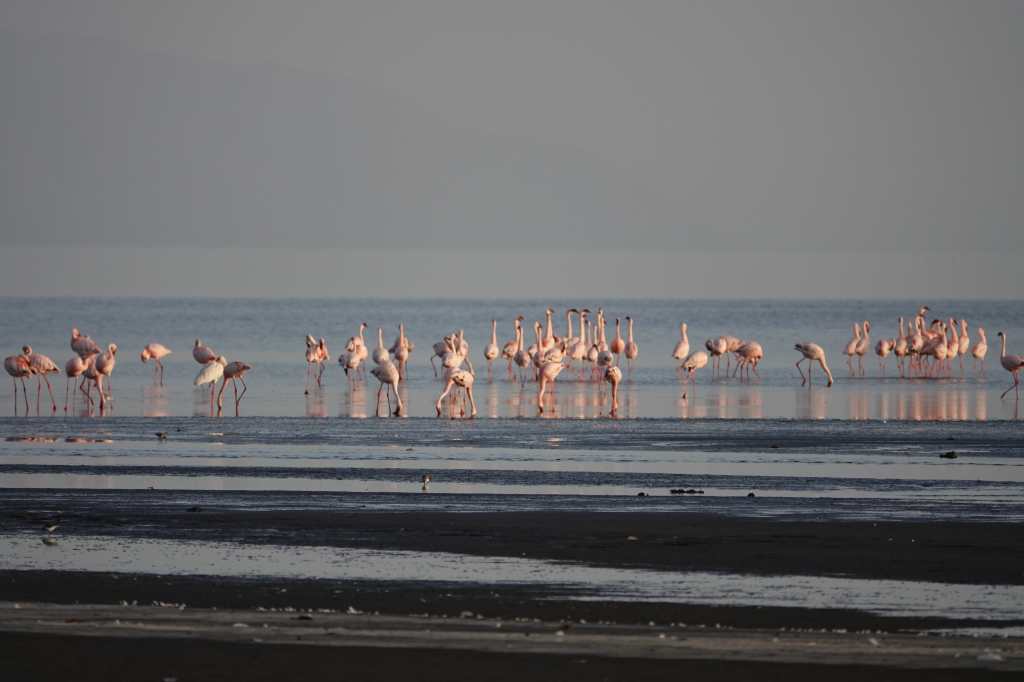
As it got lighter, we saw Lake Natron’s most famous sight – its flamingos, their pink colour enhanced by the early morning sun. From a distance they resembled a long pink band running along the short of the lake.

Flamingos…..
……..and more flamingos

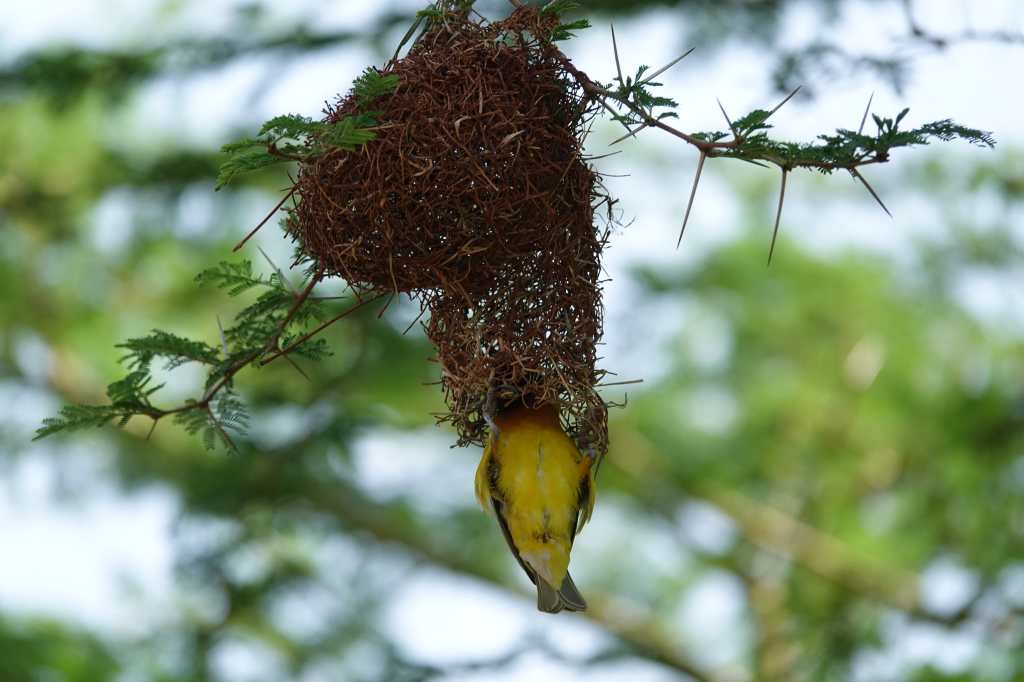
We were the only visitors there, and the lake had a very peaceful feeling, with the silence only broken by the occasional honking of the birds when we got too close to them. We spent about an hour there soaking up the atmosphere and then headed back to our lodge for breakfast, where we also admired the busy weaver birds who built nests in the nearby trees.

A busy weaver bird

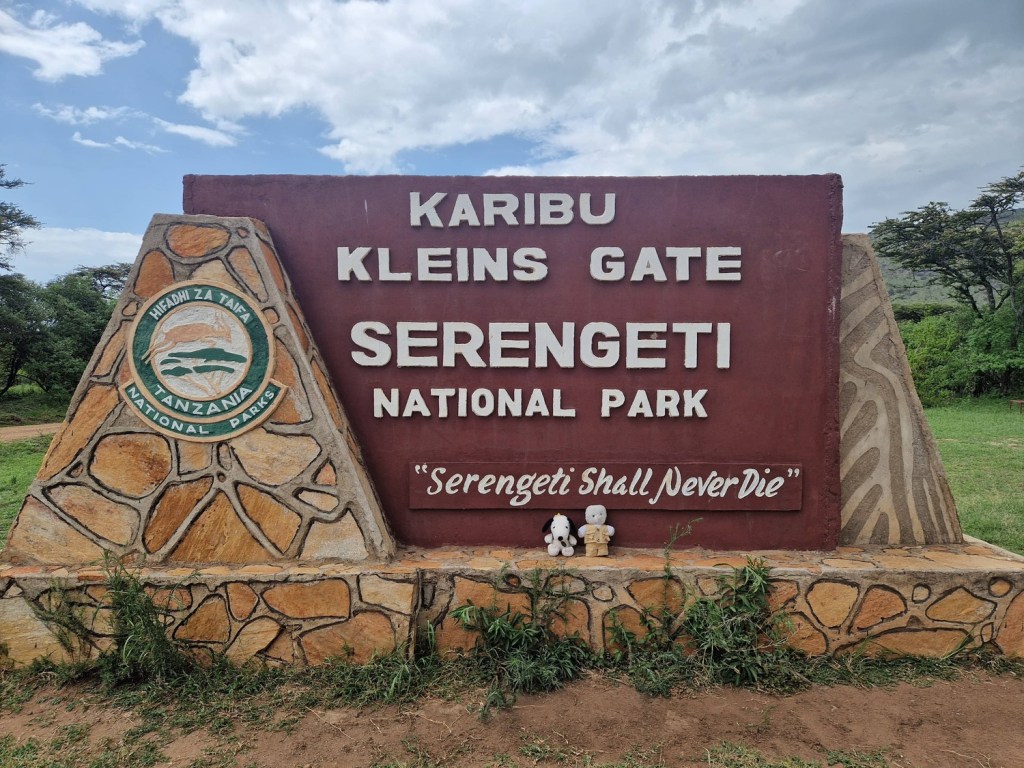
Refreshed and dosed with coffee, we got back into the jeep and made the four-hour drive along the back roads of Tanzania to the Klein’s gate, the northern entrance to the Serengeti National Park. The road was very quiet and quite scenic, and the time passed quickly.

Klein’s Gate, Serengeti National Park

We stopped for lunch just outside the entrance, and then in the early afternoon Estomih bought our pass and with mounting anticipation, we headed into the famous park. Initially, it was an anti-climax. We saw a few antelope and other small animals, but nothing remarkable. Estomih’s jeep had a radio with which he communicated with other guides, usually to share tips about where to see big cats. But this afternoon the guides were all complaining about how quiet things were.

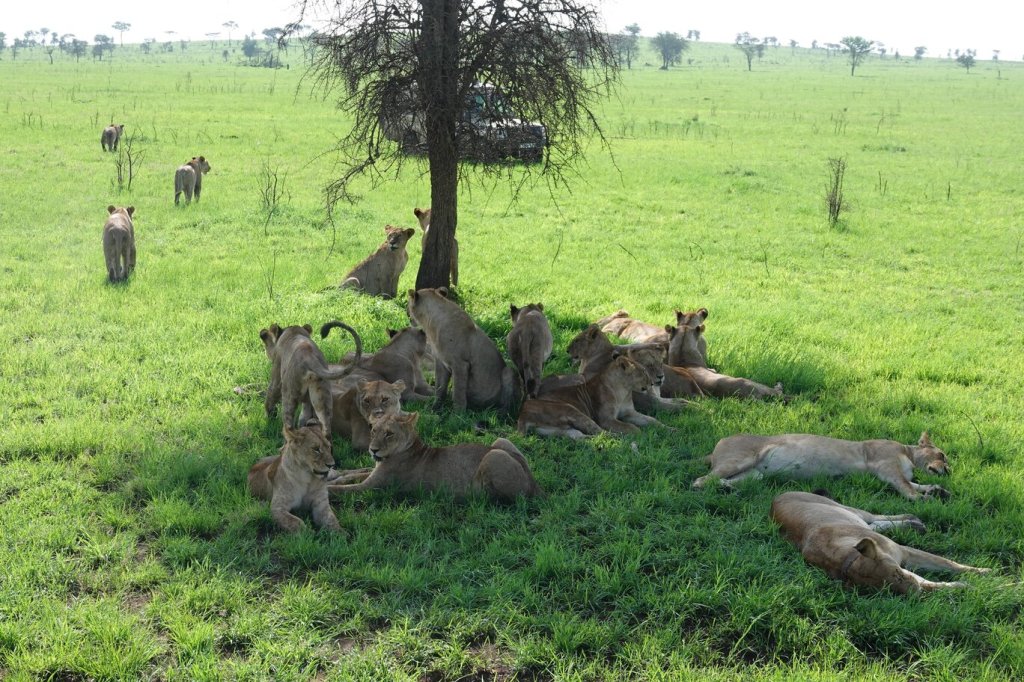
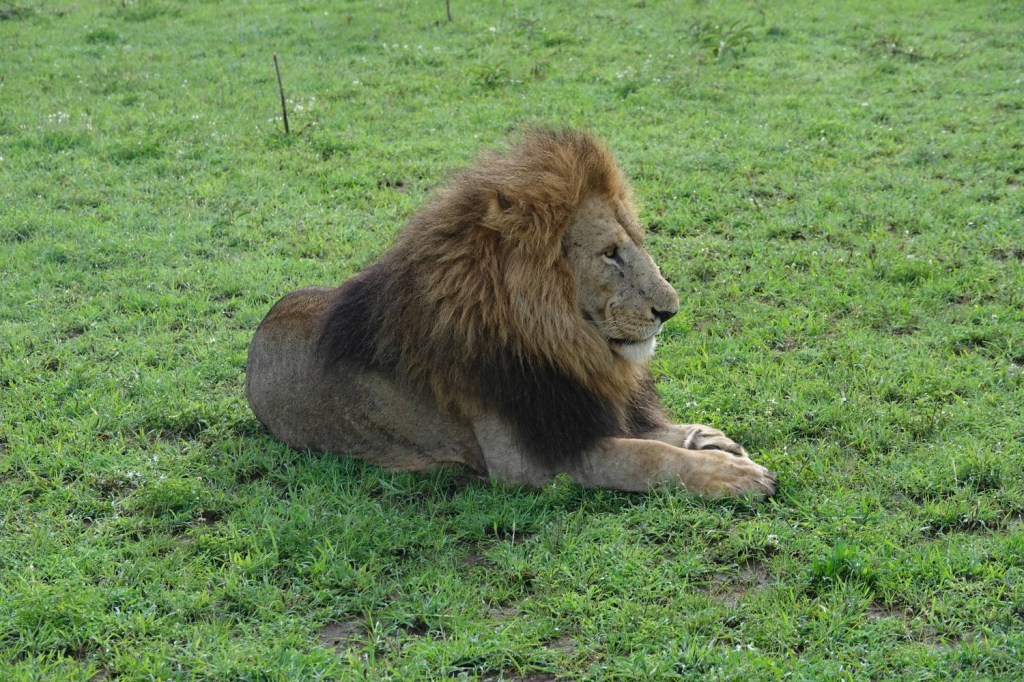
Estomih headed off to an area where some lions had been seen earlier in the day, and suddenly on the horizon I saw the distinctive profile of a large, old male lion with his large bushy mane. We rushed to look and found we had discovered one of the Serengeti’s “superprides” – a social group consisting of about a dominant male lion, many lionesses and even more cubs and young lions.

The leader of the superpride

Each member of the group behaved differently. The old male lounged around. He got up once to sniff our jeep suspiciously before peeing on our spare wheel to mark his territory, and then lay down again right beside us.

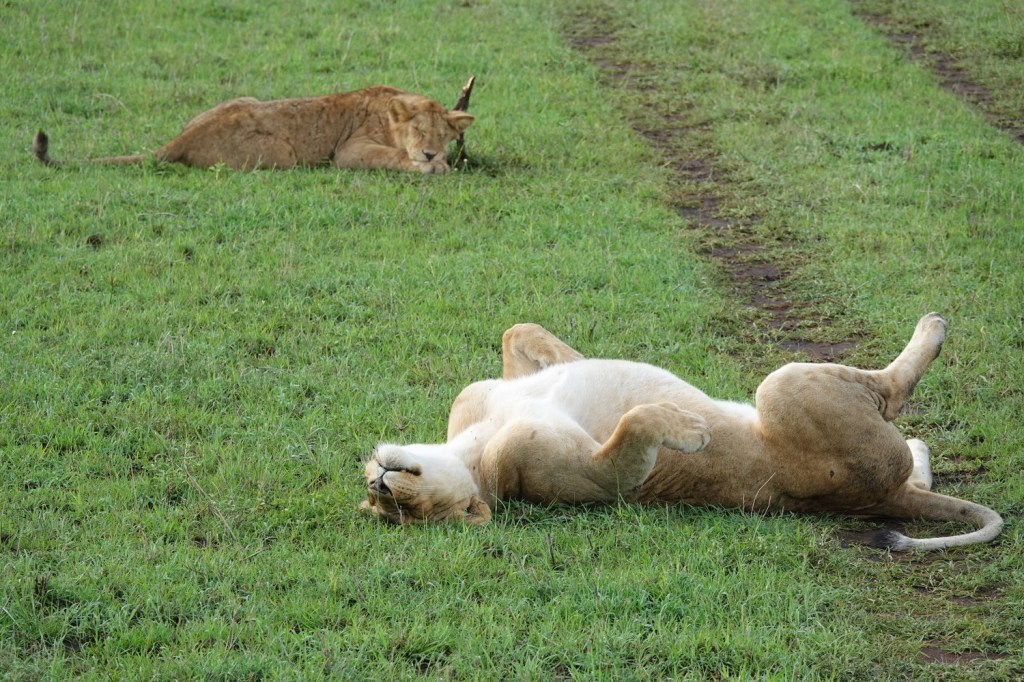
Lionesses relaxing

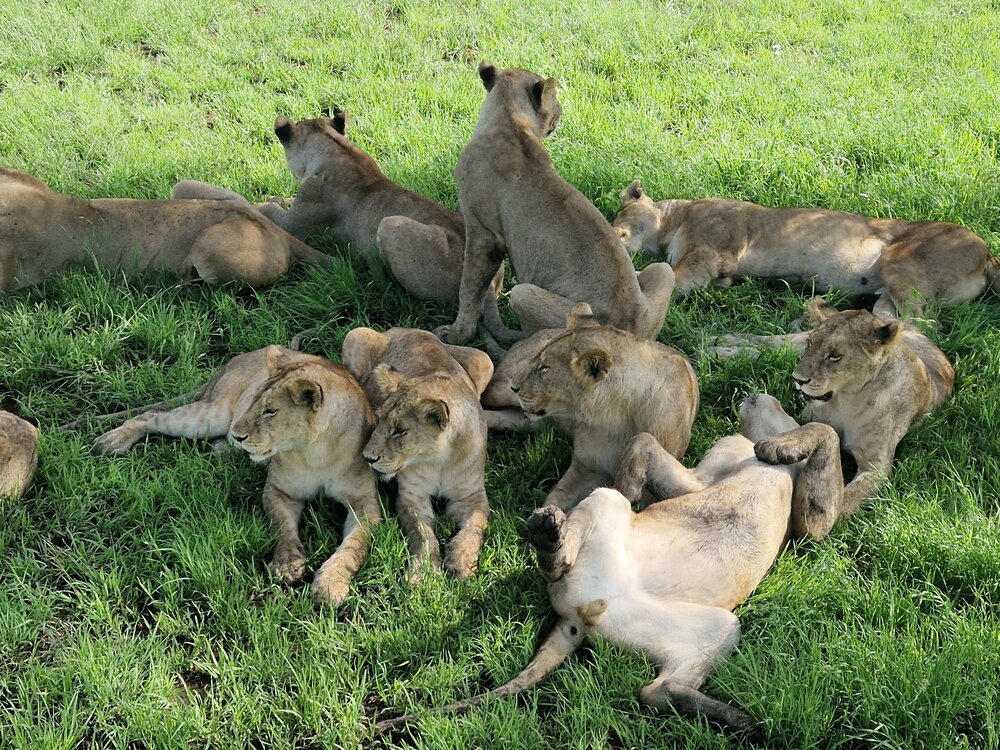
The lionesses walked around greeting each other and sometimes would roll around in the grass, with their tummies in the air – reminding me of my own little pet cat back home.

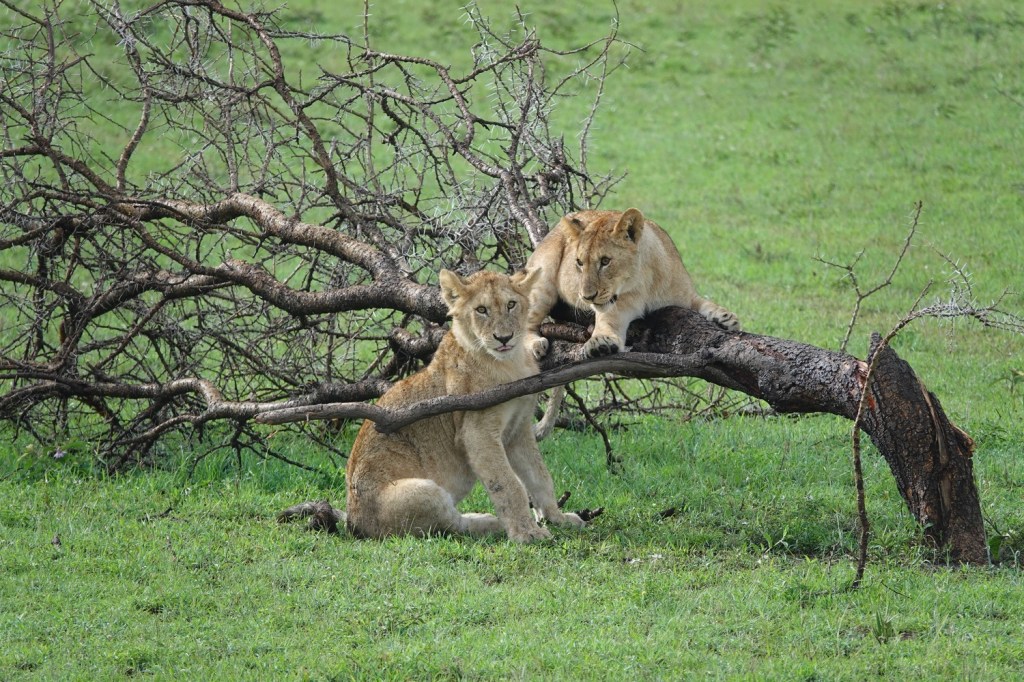
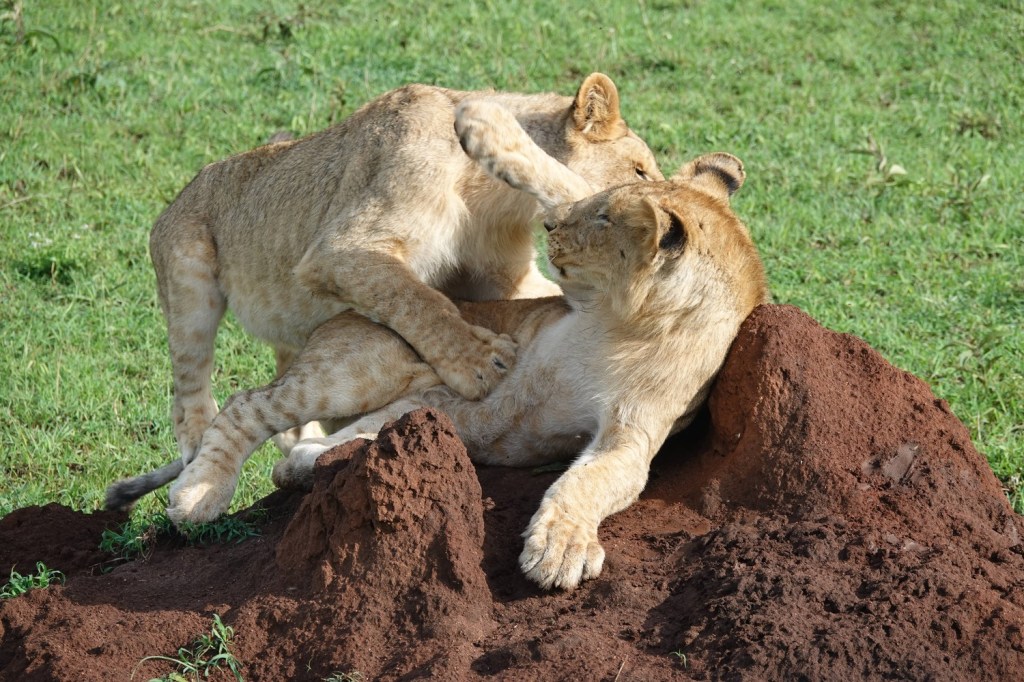
Cubs playing, Serengeti National Park

The younger lions on the other hand were very active and always playing.

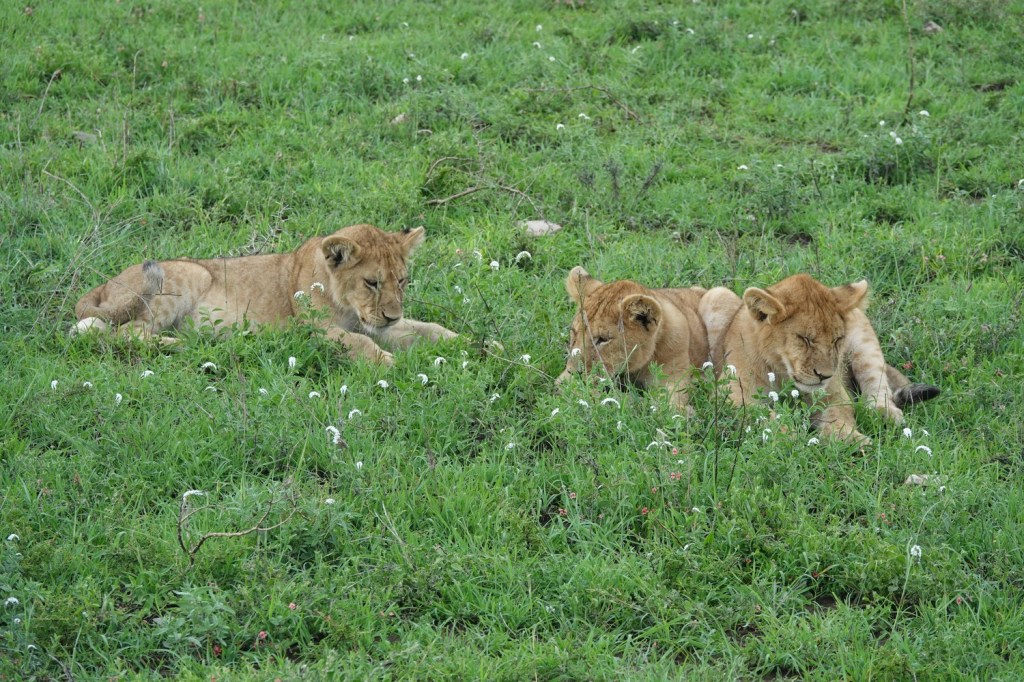
At first we were one of only two jeeps to have discovered this pride, and had the amazing spectacle almost to ourselves. But as time passed more jeeps arrived, and we decided to move on. A short drive away we discovered yet more lions – a lioness with three young cubs, which Estomih said were part of the same superpride.

Yet more lion cubs

Another short drive away we found two more male lions, lounging around in a base used for balloon flights. In total that brought the number of lions we had seen to twenty eight.

Two outcast males

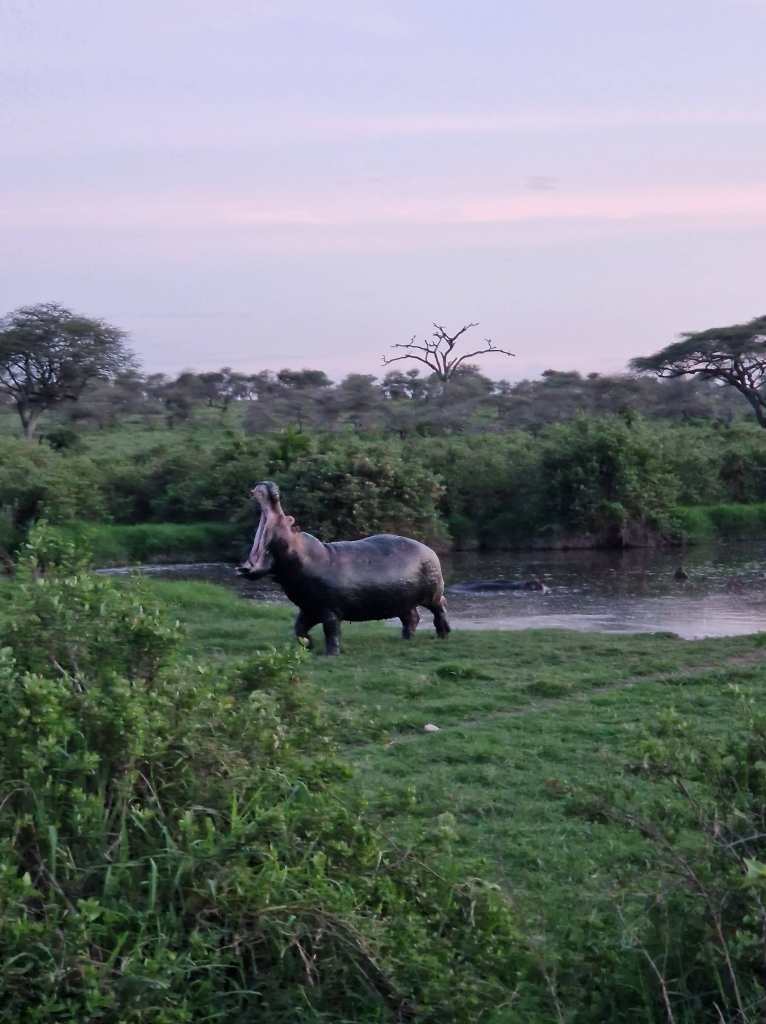
It was getting late, and it was time to head on to our camp for the night. In the fading light we caught a quick glimpse of a hippo that had left its river…….

Hippo, Serengeti National Park

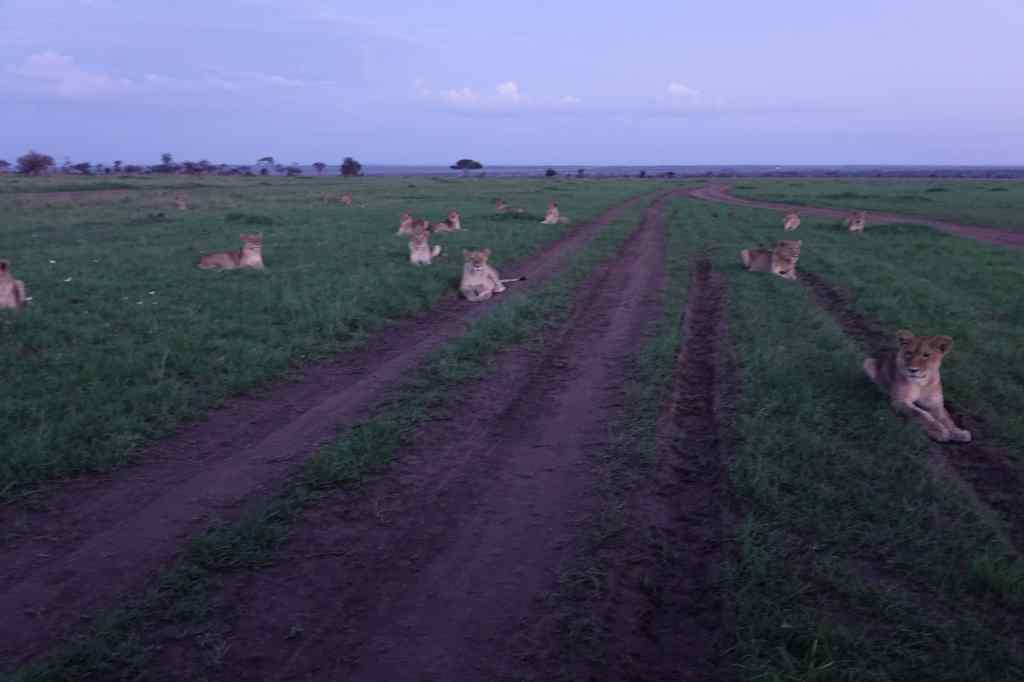
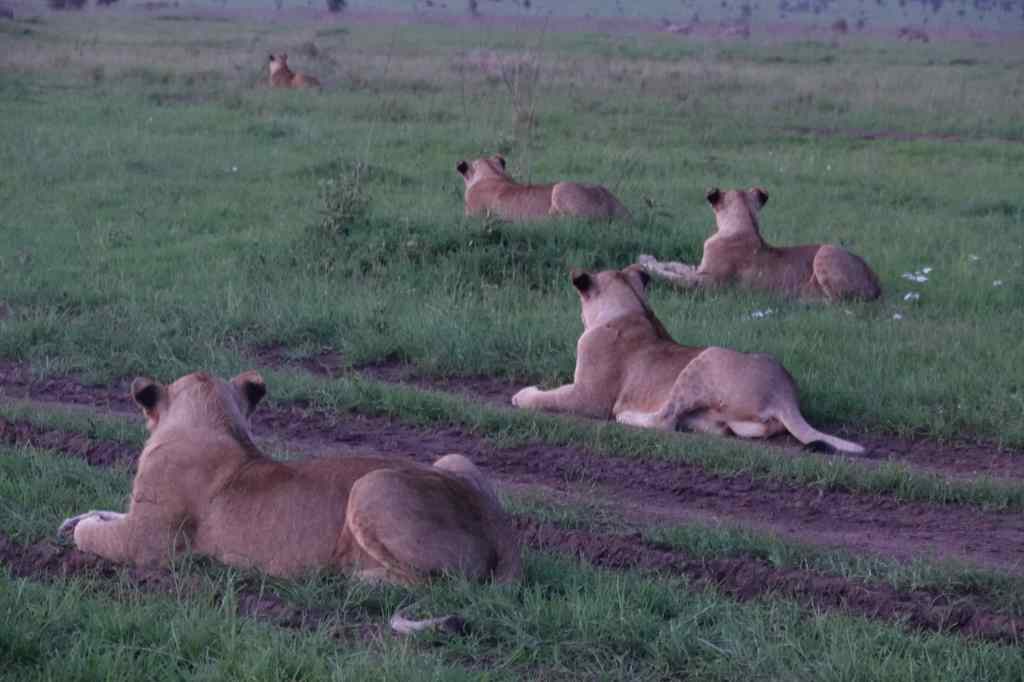
……and then just a bit later, a group of over twenty mostly female lions in a pack hunting zebra, spread out right across the track we were using. We stopped to take pictures, but they largely ignored us, staring intently into the distance in front of them. One of the lionesses got up to sniff the spare wheel which the large male had sprayed earlier, and looked at us suspiciously for a while before rejoining the group.

Dusk -a hunting pack of lionesses

Sadly, it was now very late, and we could not stay long to admire the lionesses. We finally got to our camp at about seven thirty, after a day which had started at six. We were impressed by Estomih’s stamina and dedication, and remembered that his work was not yet over – he still had to clean the jeep and wash up the plates from our lunch. What an amazing day – after the spectacular flamingos of Lake Natron, we had seen no less than forty-eight lions in the space of a few hours in the Serengeti National Park. Our expectations for the next three days we would spend there were now sky-high.

Previous Post: From Tarangire to Lake Natron

Next Post: The Serengeti – leopards, cheetahs and yet more lions

Tanzania – from Tarangire to Lake Natron

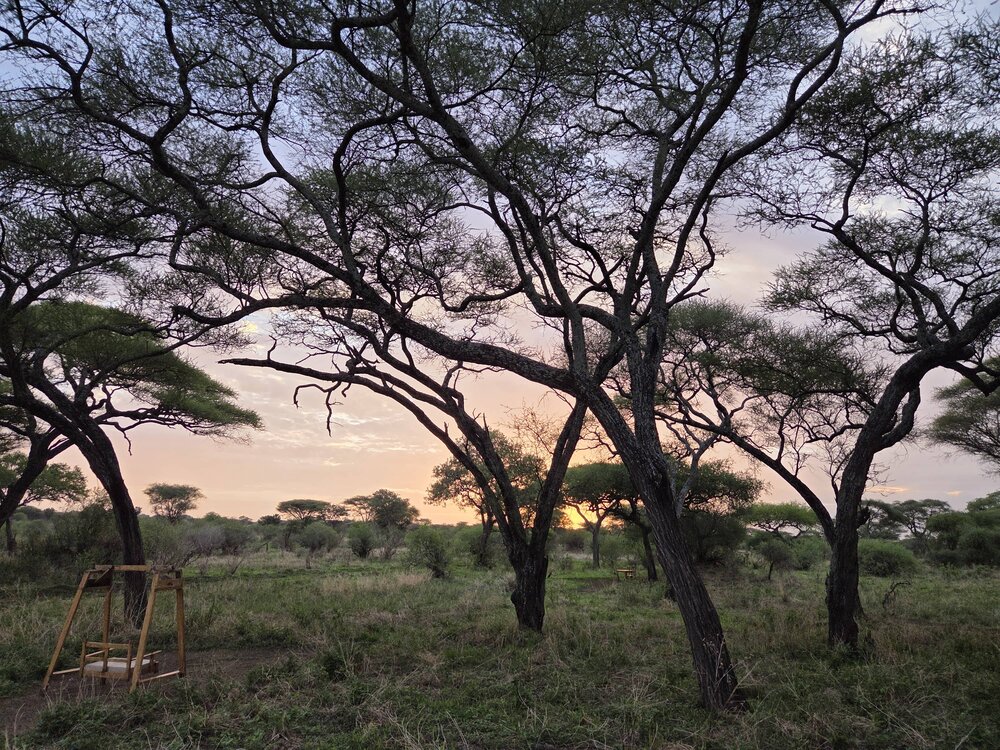
I slept very well in our bush camp tent, but my fellow traveller Snoopy had a more restless night, listening to the sounds of the jungle and some large animal that he thought was just outside. We got up and headed for breakfast, enjoying the sight of sunrise over the jungle.

Sunrise at Tarangire National Park

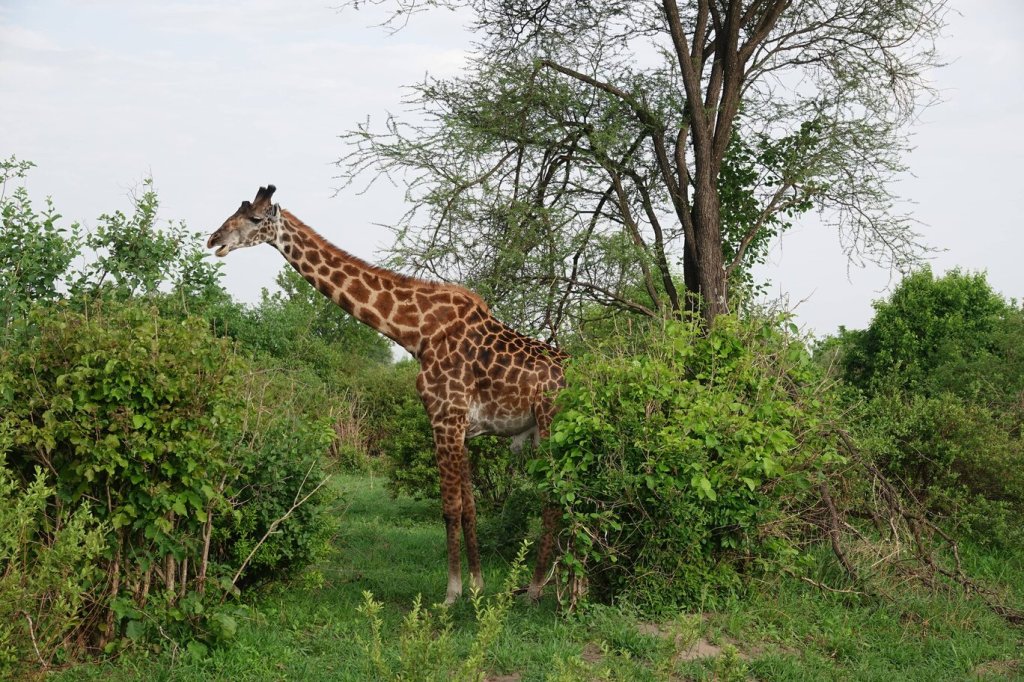
After breakfast we continued our game drive with our guide Estomih. The park seemed quieter today, and we didn’t see any big cats. Instead we enjoyed watching some of the park herbivores, including giraffes…

Tarangire Park – giraffe

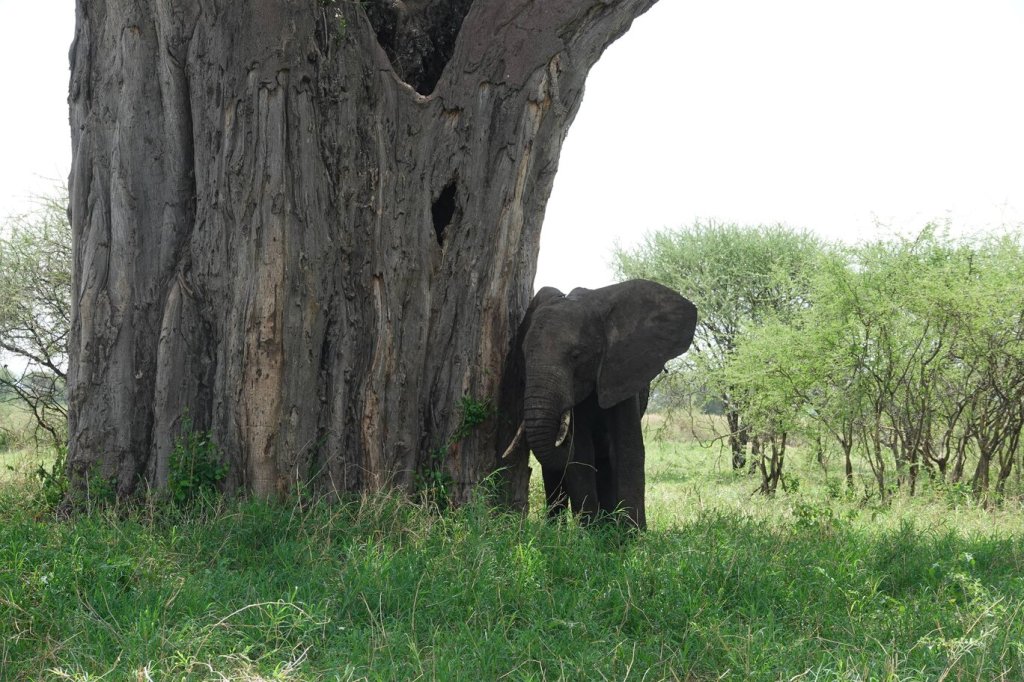
….and more elephants….

A male elephant rubbing against a baobab

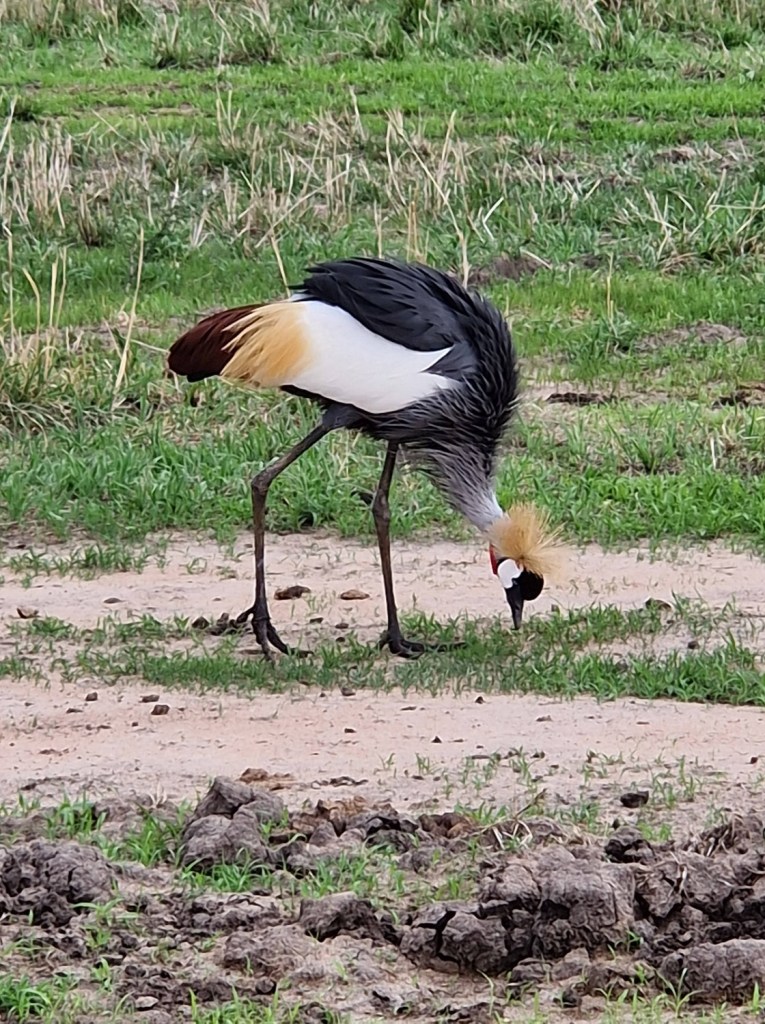
…and birds.

The Grey Crowned Crane

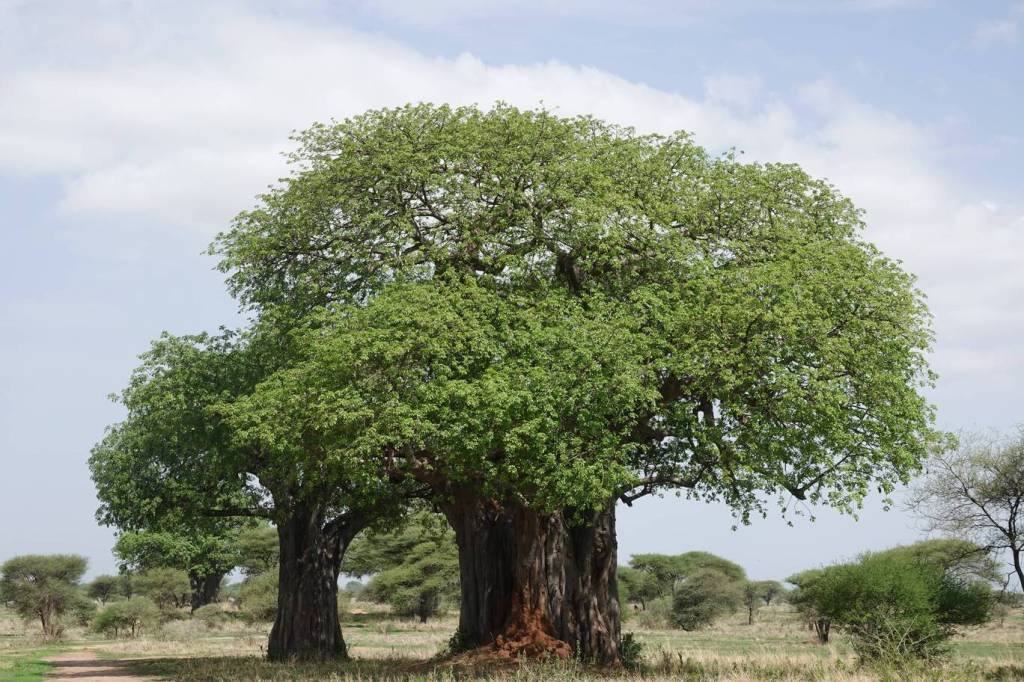
We also admired the park’s luxuriant vegetation, and especially its baobab trees…..

Magnificent Baobab Trees at Tarangire

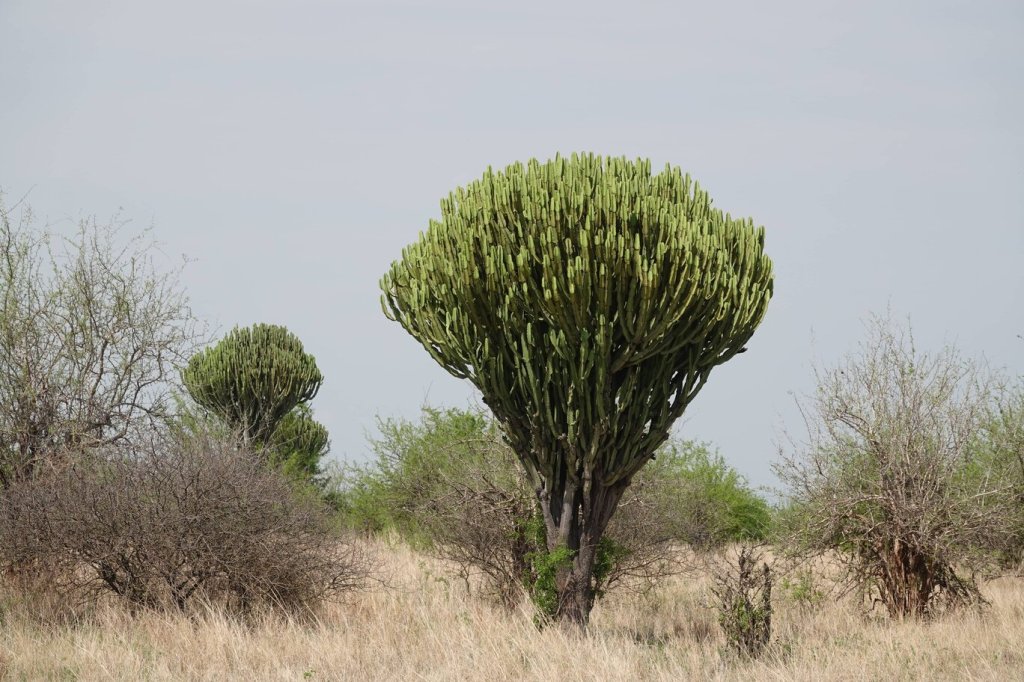
and “candelabra trees”.

A Candelabra or Cactus Tree

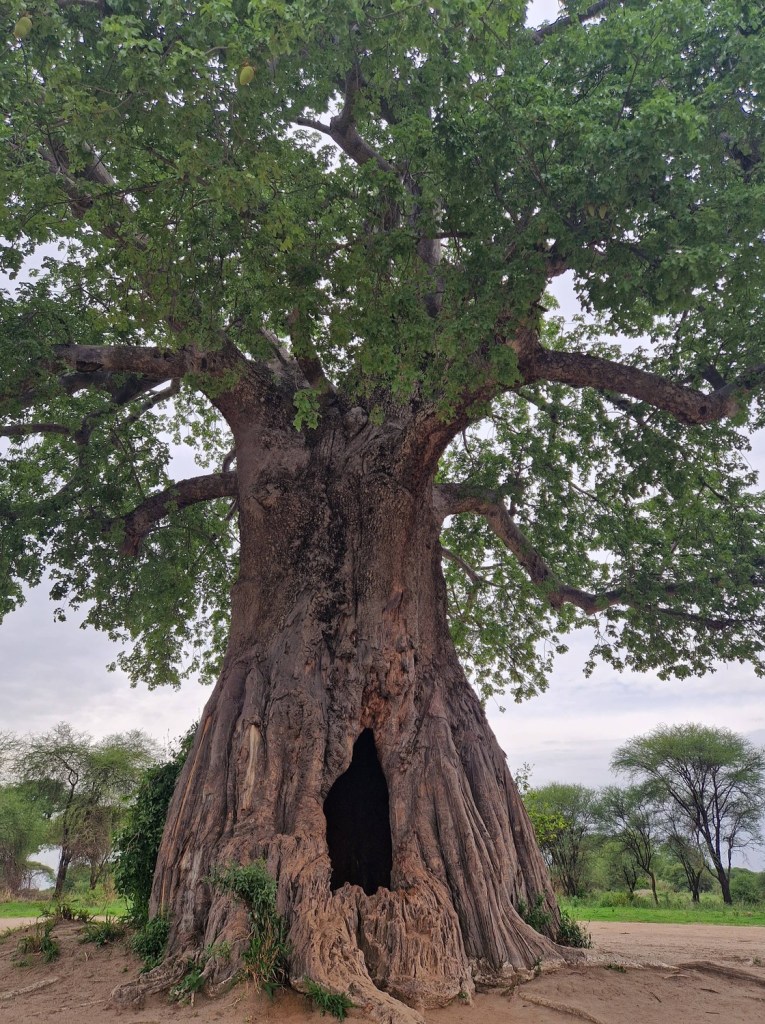
One large baobab had a large hole in the middle, and Estomih told us that this had been used by poachers to hide elephant tusks in the days when poaching had been a major problem in Tanzania (today the situation is much better, and the populations of hunted animals like rhinos and elephants are increasing again).

The poachers’ baobab

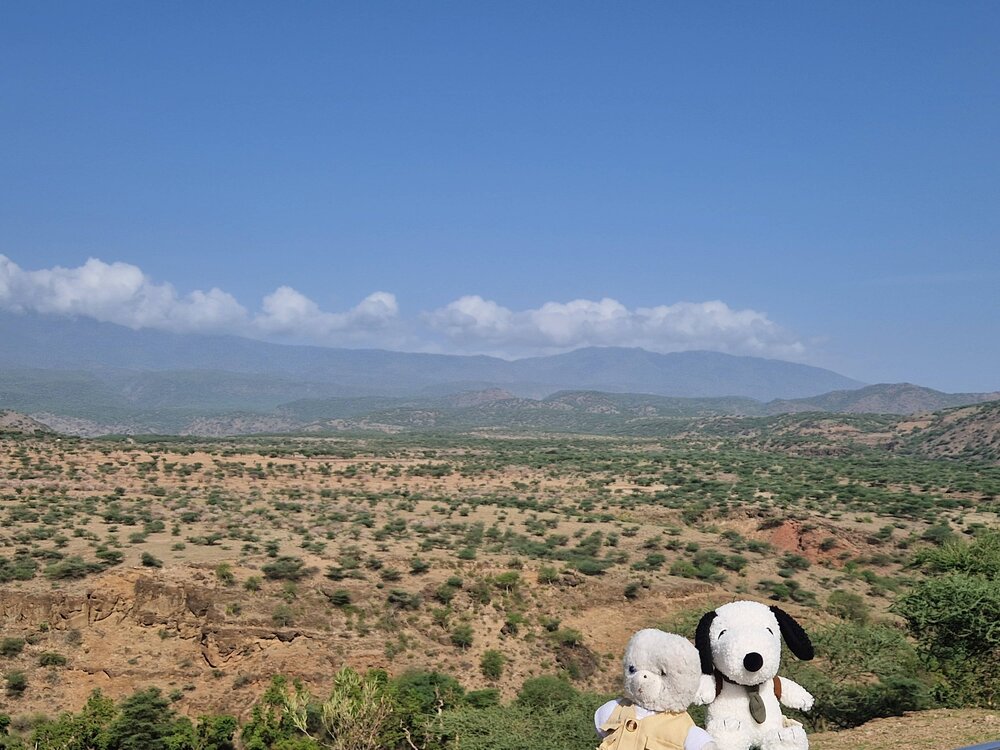
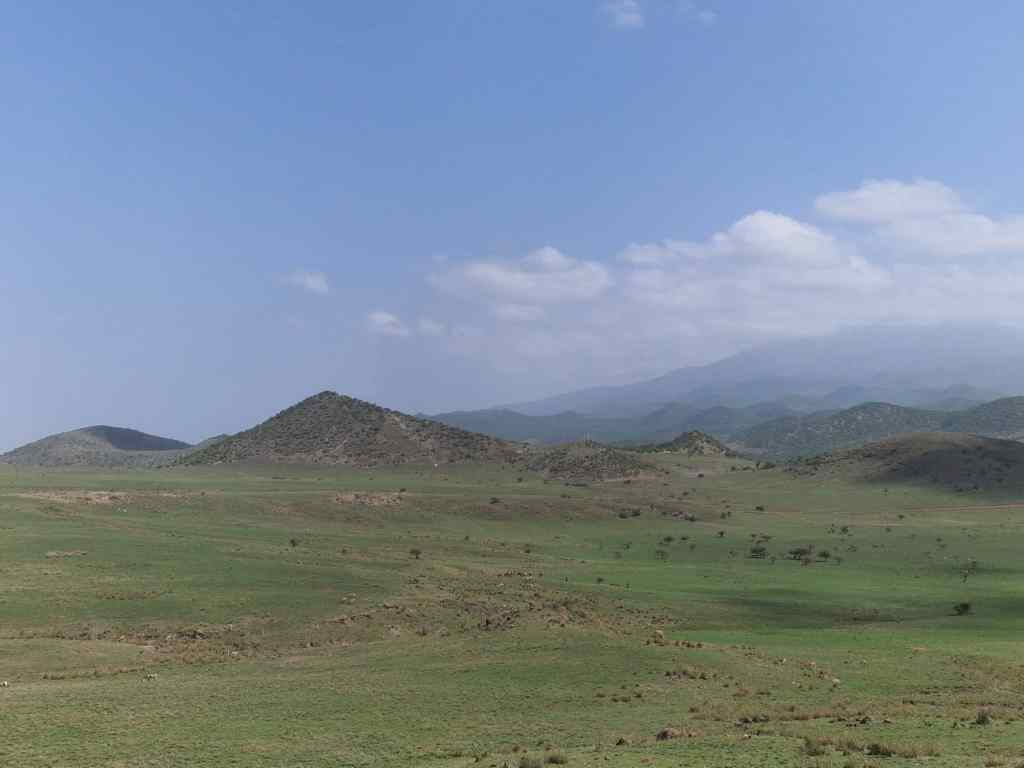
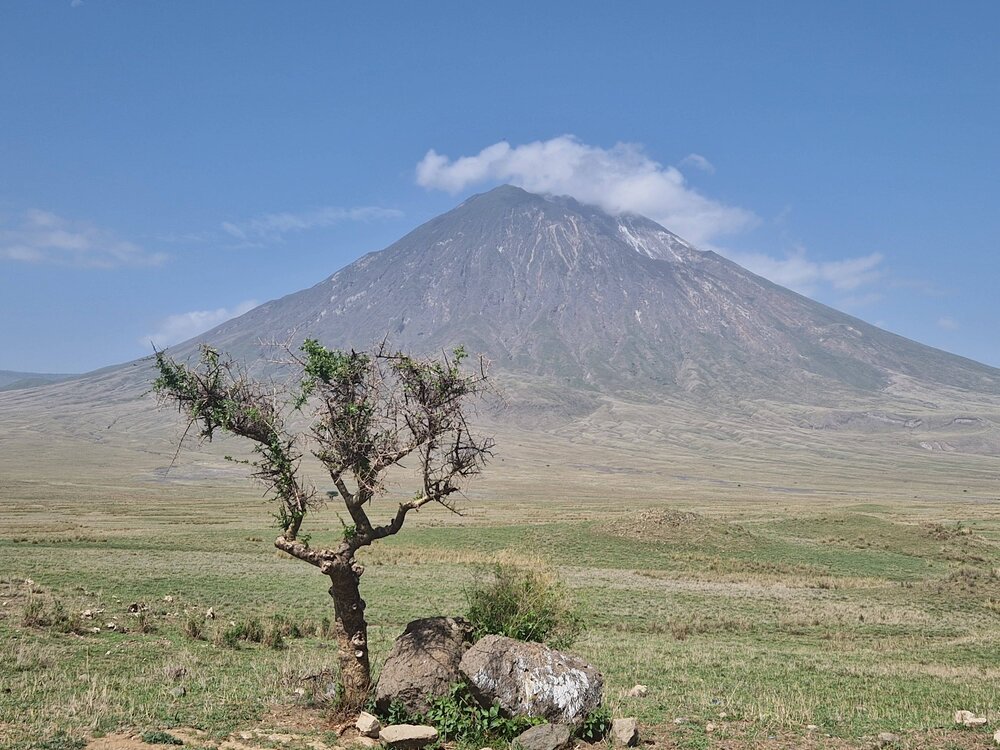
At around midday it was time to leave Tarangire and head on to our next destination, Lake Natron. We made the trip with an overnight stop at a lodge near Lake Manyara, one of the country’s salty lakes and the centre of another national park (which was not on our itinerary). From there we drove north towards the border with Kenya. Our route took us along the floor of the great East African Rift valley – a structure formed by the African and Arabian plates separating to leave a long stretch of low-lying land – and the scenery was magnificent, including the very steep and still active volcano Ol Doinyo Lengai. The sweeping plains were dotted with small villages, and we saw many Masai tending their herds of cows and goats alongside small groups of wild zebra and wildebeest.

The sweeping plains of the Great Rift Valley
Ol Doinyo Lengai Volcano

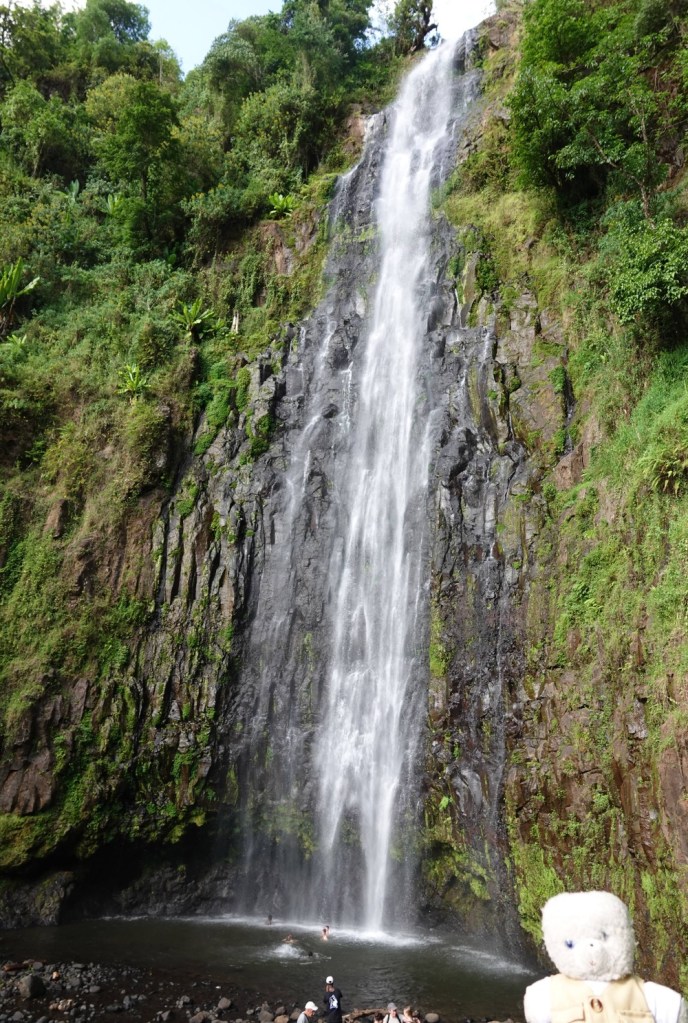
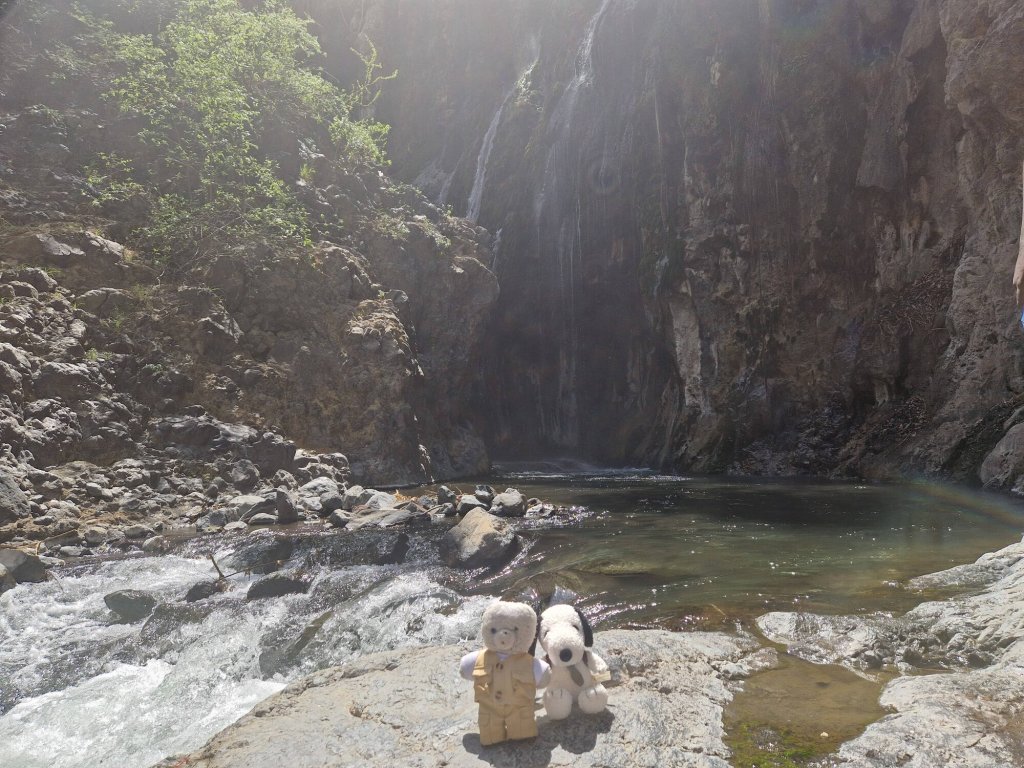
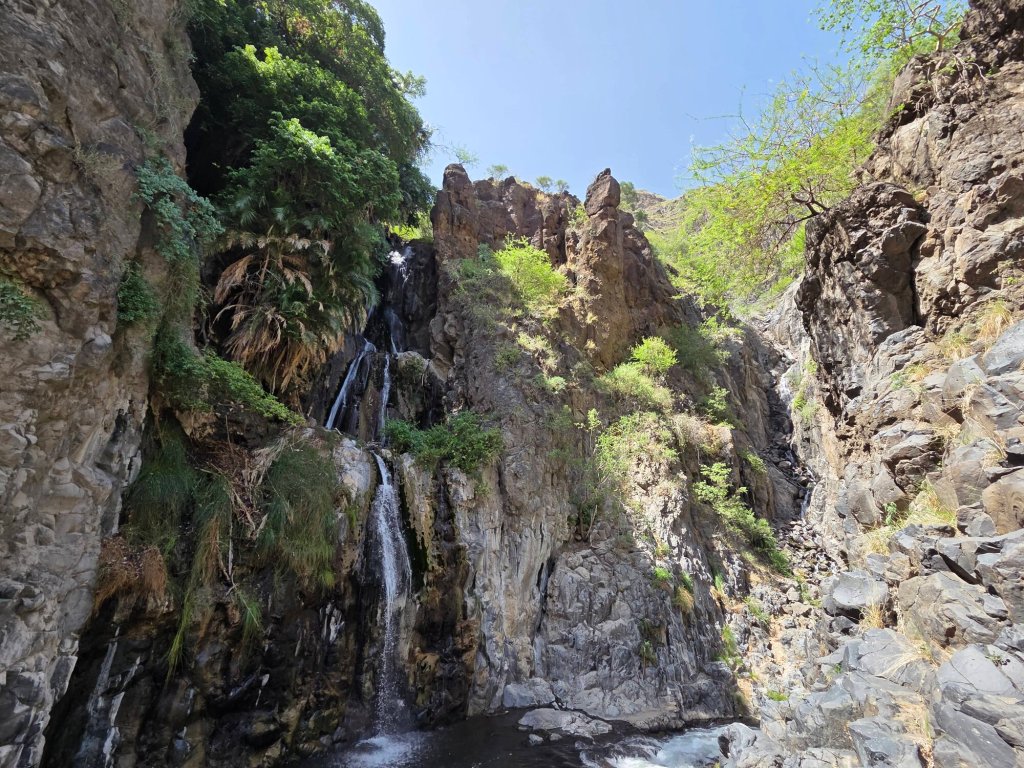
A short drive after the volcano we made a stop, where a Masai guide led us to a small waterfall hidden in a gorge.

An idyllic waterfall in the Great Rift Valley

It was a beautiful place and a very pleasant way to spend the late afternoon before we headed on to our lodge on the shores of Lake Natron. We got an early night, since Estomih warned us that tomorrow would be a very long day with a six a.m. start.

Previous Post: Tarangire National Park

Next Post: From Lake Natron to Serengeti National Park

Tanzania – Tarangire National Park

Trouspinet (left) and Snoopy

Welcome from Trouspinet the vagabond teddy bear! This time my destination is Tanzania, and I am accompanied by my friend Snoopy for a two week safari. As far as I know, there are no bears in this part of the world, but I am hoping to see lions, leopards, cheetahs, elephants and lots more – plus some amazing scenery and interesting people. We travelled in January to escape the depressing winter weather in London, but made the mistake of booking a flight passing through Schiphol airport in Amsterdam, where a couple of days of cold snowy weather had caused the cancellation of most of the flights. I followed developments anxiously online, but miraculously my flight from London into Amsterdam and my continuation to Tanzania were both among the small number of flights that operated.

Chaos at Schiphol airport, but we were very lucky

From the freezing cold in Amsterdam, we arrived in Arusha, Tanzania’s third biggest city, late in the evening. Immigration and baggage claim were both very efficient and soon after landing we were enjoying some warm fresh air and a cold beer by the side of my hotel’s swimming pool. We slept well and next day after breakfast met Estomih, who was to be our driver and guide for the next twelve days. He showed us to a large and comfortable specialised safari jeep with an opening roof, and we set off to our first destination, Tarangire National Park, a two hour drive away.

Our guide Estomih
Locals were curious to see a teddy and dog on safari
The entrance to Tarangire National Park

Tarangire Park is known for its dense forests, baobab trees and elephants. It is also home to lions and leopards, but they are usually hard to see because of the vegetation. However, luck smiled on us and a short way after the park entrance we bumped into a group of three lionesses drinking water and half-heartedly stalking some nearby zebra.

Two lionesses drinking water
A third lioness stalking zebra

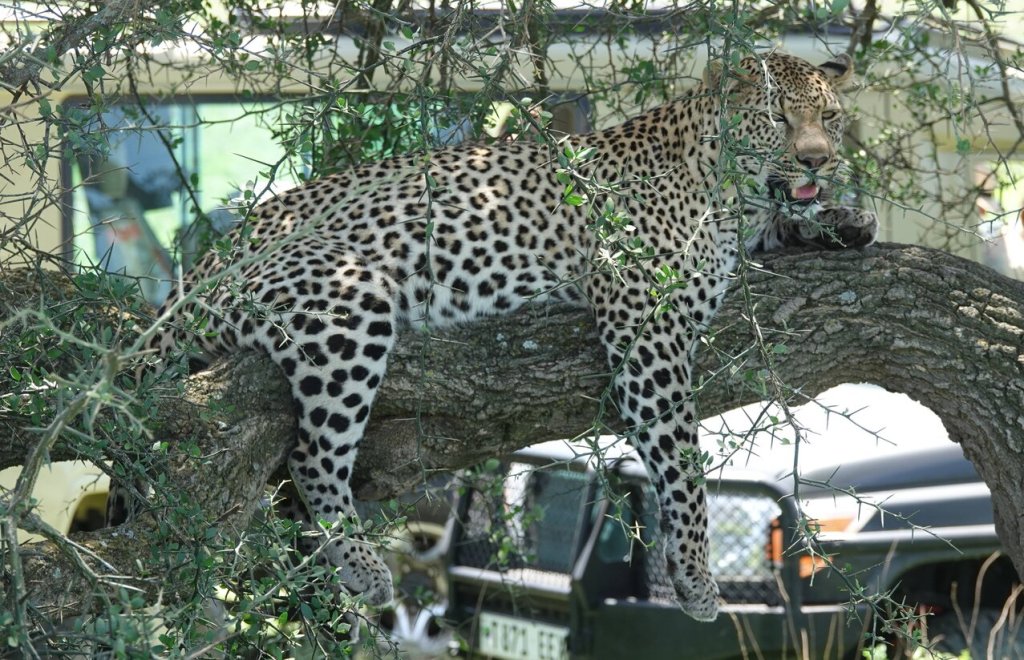
A short way further into the park we came across a leopard, hiding high in a tree.

A lazy leopard in a tree

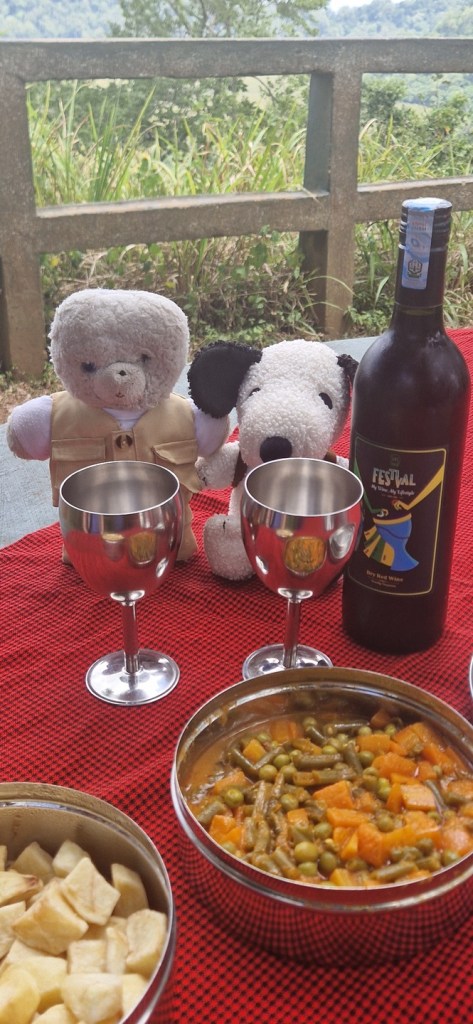
Surprisingly, finding Tarangire’s famous elephants proved rather harder. We drove around searching but the huge animals were nowhere to be seen, so instead we made a break for lunch at one of the park’s picnic areas. This proved to be a treat, and was to be a highlight of each day of our trip. Estomih brought a huge picnic hamper out of the jeep, found a picnic table, and set out a spread of rice, meat and vegetable stews, fish and fruit. As a final flourish he even produced a bottle of Tanzanian wine.

A feast at Tarangire National Park

We spent a leisurely hour sampling this feast and relaxing, occasionally driving away naughty monkeys who would jump onto tourists’ tables and steal any unguarded food.

After lunch we set off to explore again, and soon stumbled on a large herd of elephants slowly making their way through the jungle.

A herd of female and young elephants

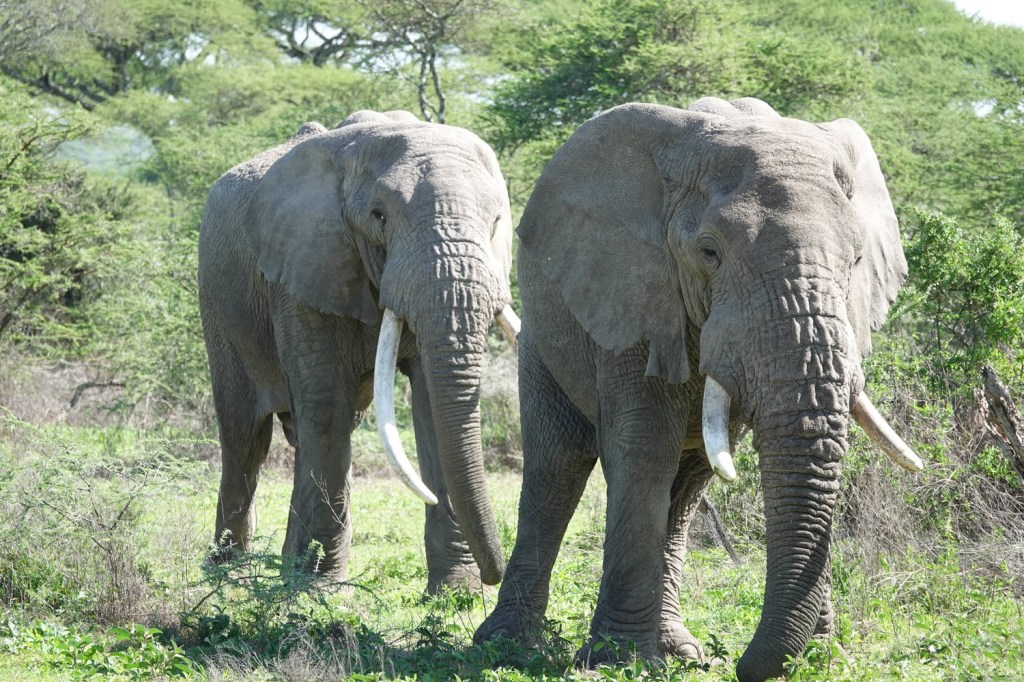
We also bumped into a few single adult males, who usually live separately from the herds of females and babies.

A solitary male elephant

As the afternoon wore on, it grew hot, and the wildlife became harder to see. Estomih drove us towards the remote part of the park where our camp was located; on the way we saw two more very sleepy lions.

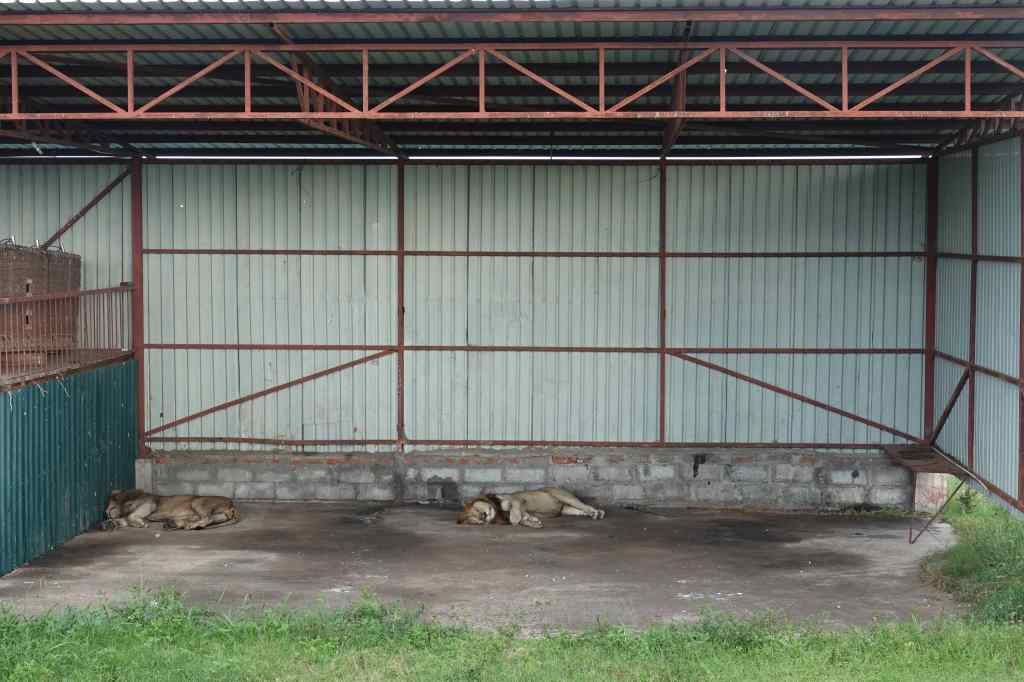
Two sleepy lions

Our accommodation was located inside the park, meaning that it can be visited by wild animals, especially at night. The manager introduced us to his camp, and explained the rules to us – the most important one being to use the walkie-talkie in our room to ask for an escort to take us to and from the restaurant at night. He said that there had been cases where camp staff or tourists had been attacked by animals, but that inside our tent we were quite safe. After dinner – which was good, given the remoteness of the site – we settled down in our tent for the evening. It was large, with a big bed and separate toilet and shower inside. We were soon drifting to sleep, listening to the sounds of the jungle around us. Our safari trip around Tanzania had started well.

Our bush camp at Tarangire National Park

Blog at WordPress.com.

Up ↑