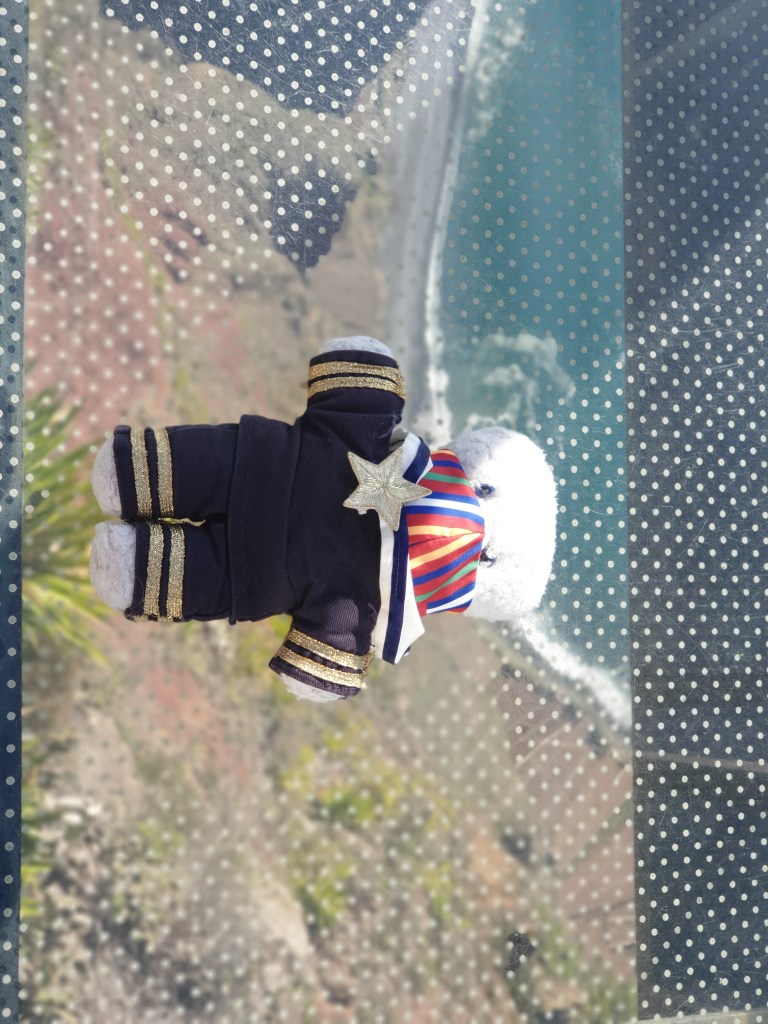
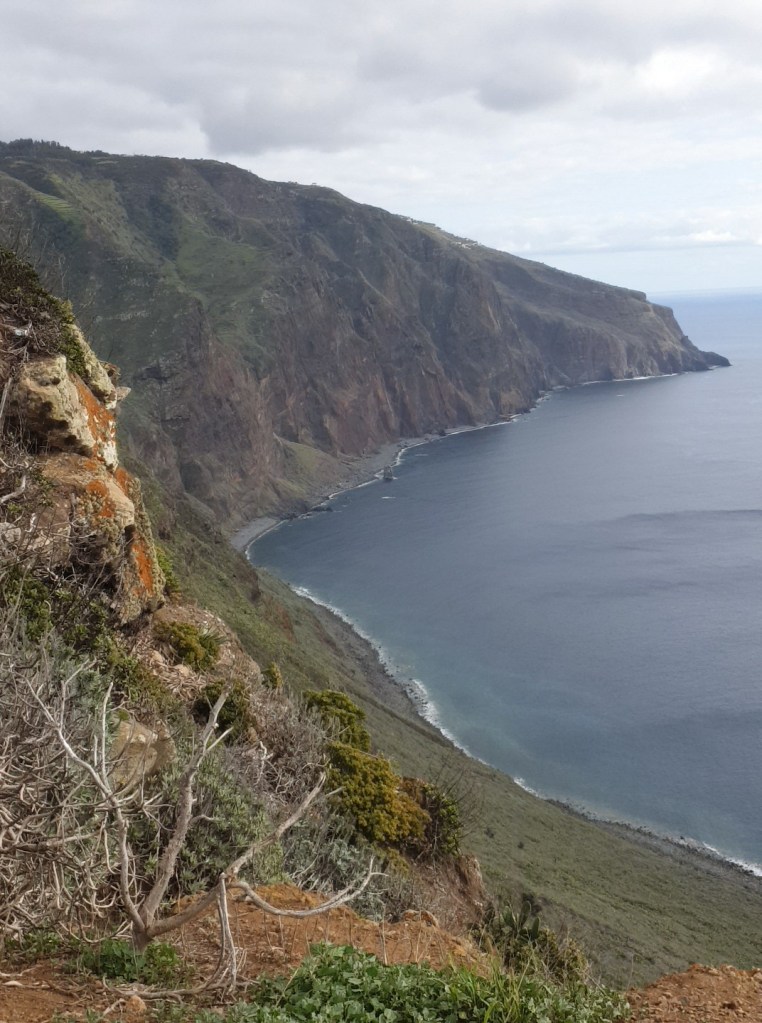
Today I moved to Funchal, the capital of Madeira and by far its biggest city. I went there via Cabo Girao, a tall cliff on the south coast where they have a built a glass platform over the cliff edge which allows you to look straight down 580m to the sea. Although I am very small compared to the other big tourists stomping over the glass, I stepped very gingerly and tried to make sure that I kept each paw on a different pane.
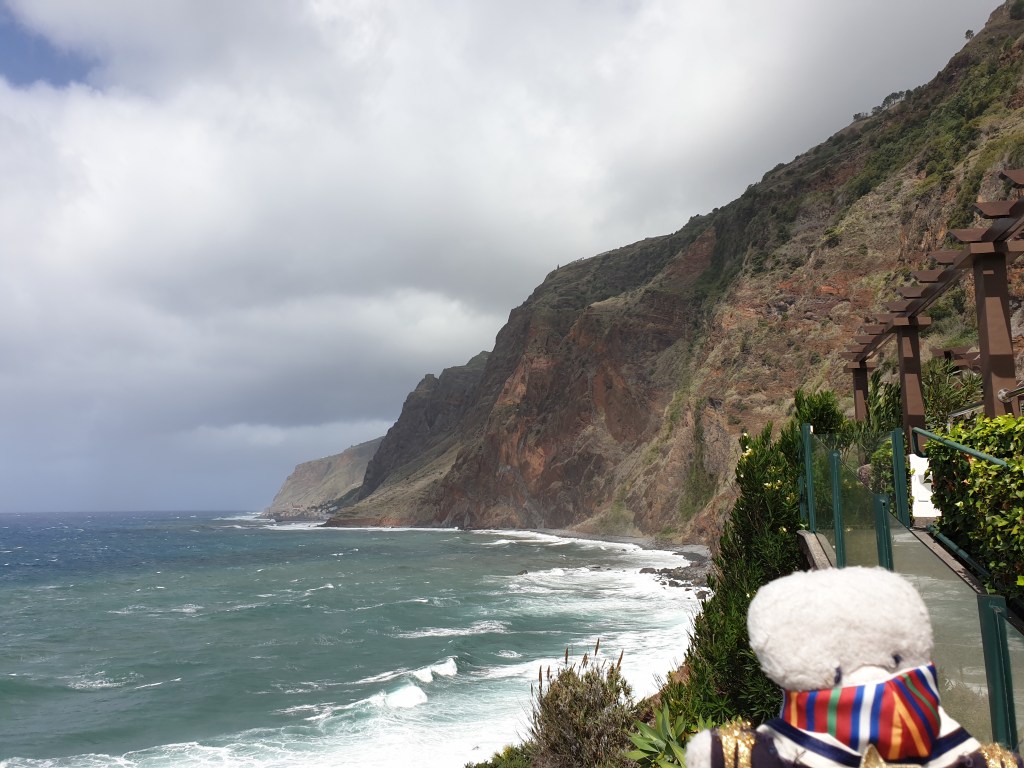
On the glass viewing platform of Cabo GiraoThe view from Cabo Girao
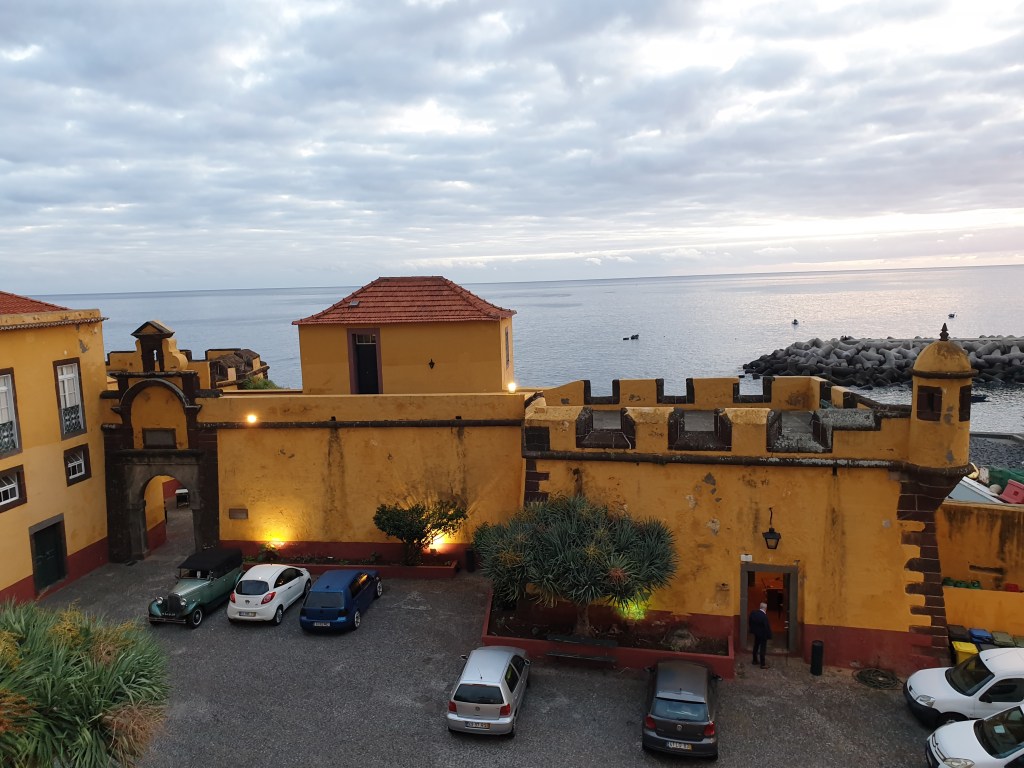
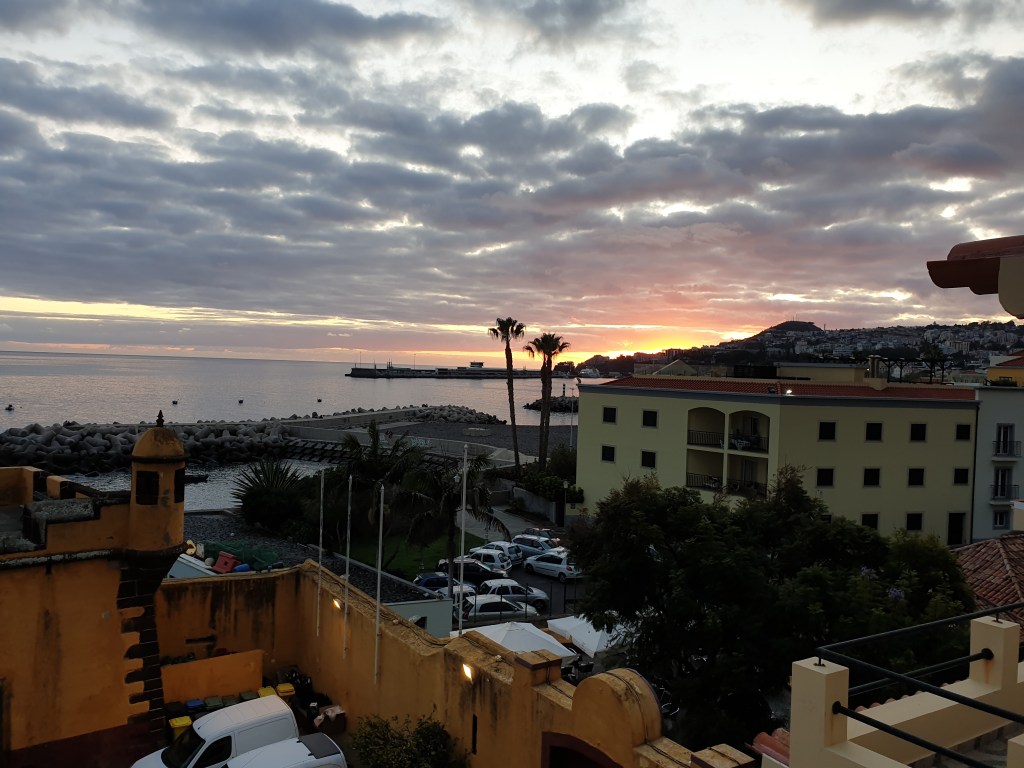
It was a nice site, and looking straight down past my paws to the sea was a novelty, but the view wasn’t that different from all the other pretty seascapes I’d seen on Madeira, and I found the constant stream of tourists rather oppressive. I headed on to Funchal where my flat was in the old town and looked out over Madeira’s old fort.
The view from my flat
I will write more about Funchal in a later post.My first activity in the afternoon was a boat trip to look for dolphins and whales. We headed out to sea in a small RIB (rigid inflatable boat) for about an hour. I scanned the horizon for fins sticking out from the water. Occasionally I got excited when I thought I’d seen one, only to realise that I’d seen the shady side of yet another wave. The skipper of the boat was better at spotting marine life than I was. “There they are!” he shouted. At first, I couldn’t see anything but then I realised we were in the middle of a big group of dolphins swimming right around the boat. The guide explained that they were Atlantic Spotted Dolphins, and this was a good thing because this species was very sociable and would come and do some “human watching” if they weren’t busy hunting fish. I spent the next ten minutes with my camera primed, trying to snap the moment when a dolphin fin or tail would break the water.
A rare successful dolphin shot
It was hard to get the timing right, and I ended up with lots of photos of swirling water eddies marking where a dolphin had been. I switched to filming video instead.
The guide said that the authorities had strict rules about bothering dolphins, with a limit of ten minutes for observing each group. When our time was up, the skipper accelerated our boat and we headed off to look for more marine life. Our first group of dolphins tried to follow us, occasionally jumping from the water, but eventually got bored and swam off.
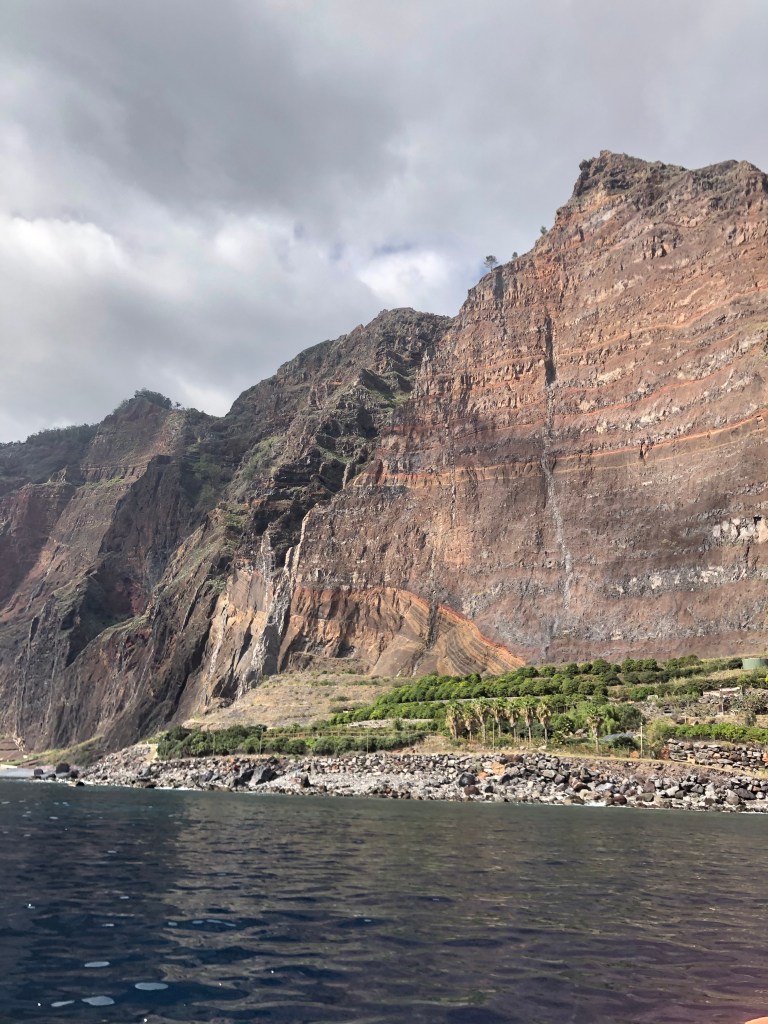
Very soon we came across another group of the same dolphin species, and the whole spectacle repeated itself. Apparently, dolphins are easy to spot, since they are very common and they welcome human contact. Whale sightings are rarer – we didn’t see any. On the way back, we went past the base of Cabo Girao, and admired the impressive cliff from the bottom.
Cabo Girao from the sea
With the excitement of filming the dolphins, I hadn’t felt sea-sick at all, but instead felt slightly queasy when I got my paws back on firm land at Funchal Marina. For dinner I had fresh dorado on the terrasse of my flat and tried a bottle of “dry” Madeira – which still tasted sweet to me but was very good all the same.
The next day was my last day in the villa on the west of Madeira, and I went for another walk up on the central plateau. Again, the drive was spectacular.
Yet another amazing view
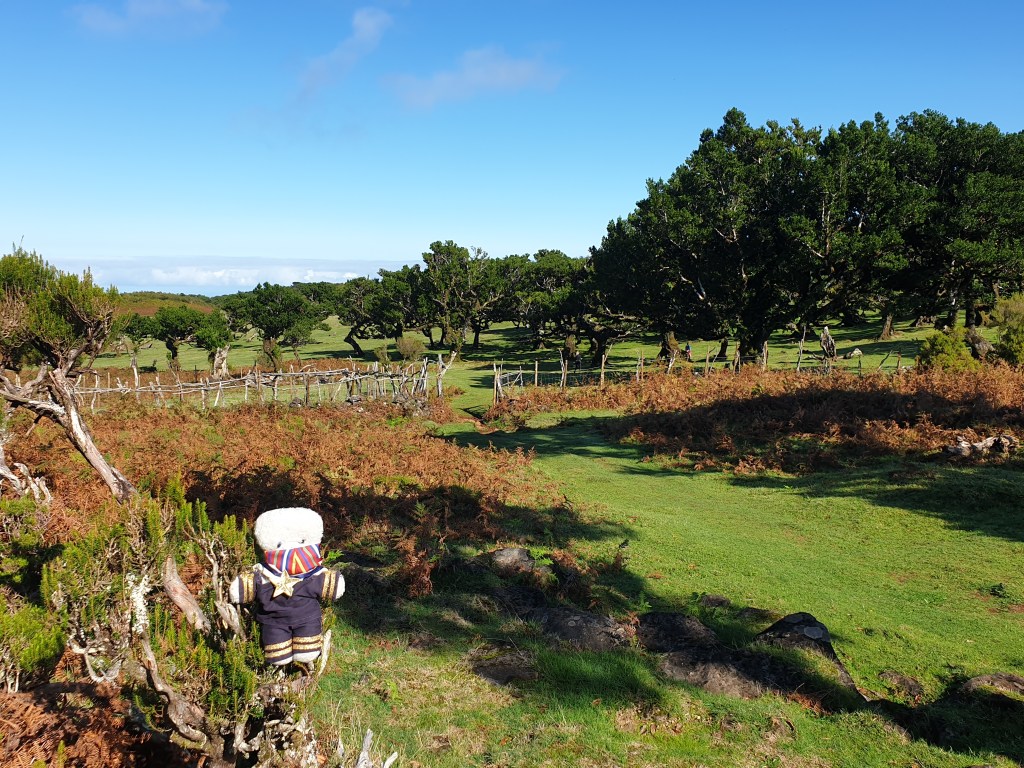
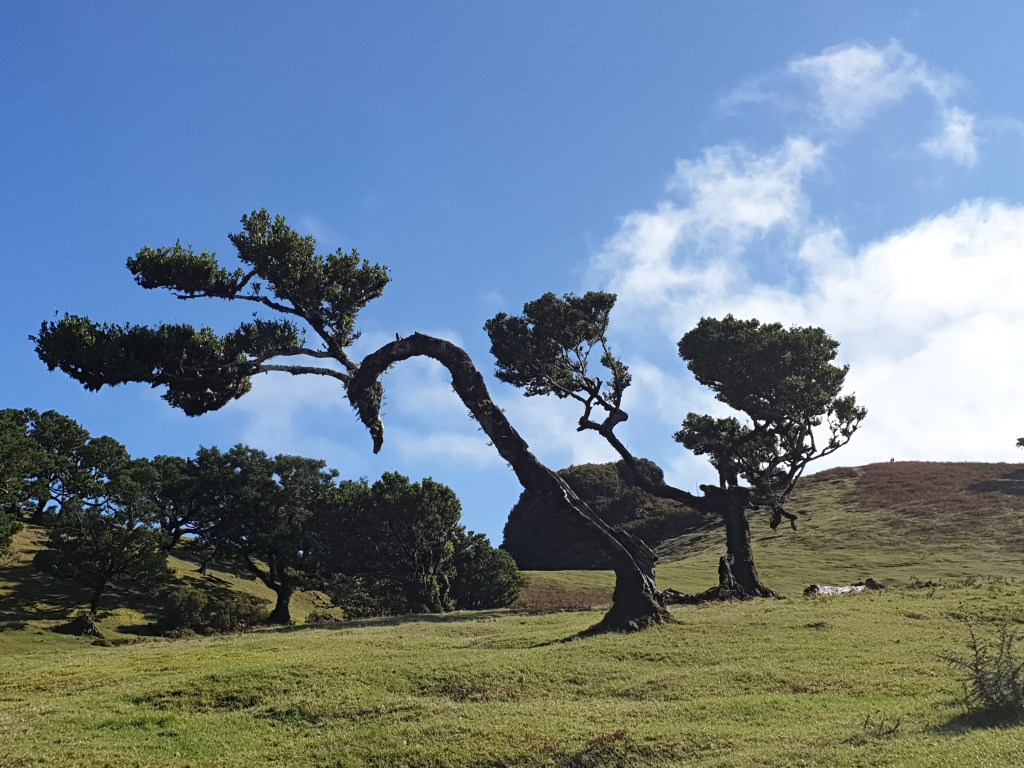
The walk was supposed to be one-way, requiring a taxi down the valley with the walk back up the mountain, but there were no taxis to be seen so I improvised. First I wandered around a beautiful meadow dotted with laurel trees and with views stretching far over the north coast. The wind had blown the trees into strange, twisted shapes.
A laurel wood on the high plateauThere is something human about the shape of this tree
I found a mountain bike track that led gently downhill, into a thick laurel forest. There were lots of different paths for walkers and bikers, and I made my way streadily downhill following the detailed map that was displayed at the car park, and which I had snapped on my phone. The laurel forest transformed into a broom forest. Eventually I found the main path CR14 which led back gently uphill alongside another levada. It was a pretty path, but after and hour following it, I got a little bored continually having to navigate around the muddy pools that dotted the side of the channel.
The levada runs thorugh a thick forest with ferns
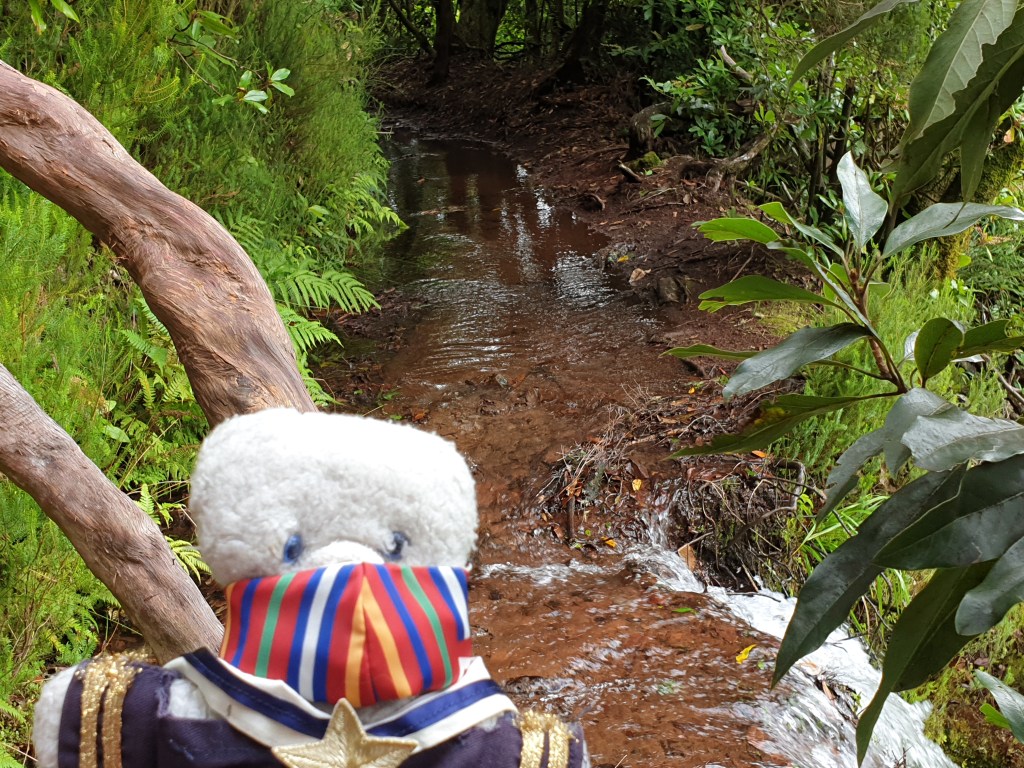
There seem to be levadas all over Madeira and I wondered how long it took to build them all. The engineering was impressive – the levadas run for kilometres with a continuous, gentle slope along routes that cling to hills and mountainsides. Occasionally a little side channel lets out some water to stop the main channel from overflowing. On today’s walk, one of these side channels had become blocked and the path had become flooded, so I had to get my paws wet.
Time to get my paws wet!
Finally, the path left the levada and headed straight up a very steep slope, emerging on the main road near the car park. I was tired and hungry but very happy with my improvised walk.
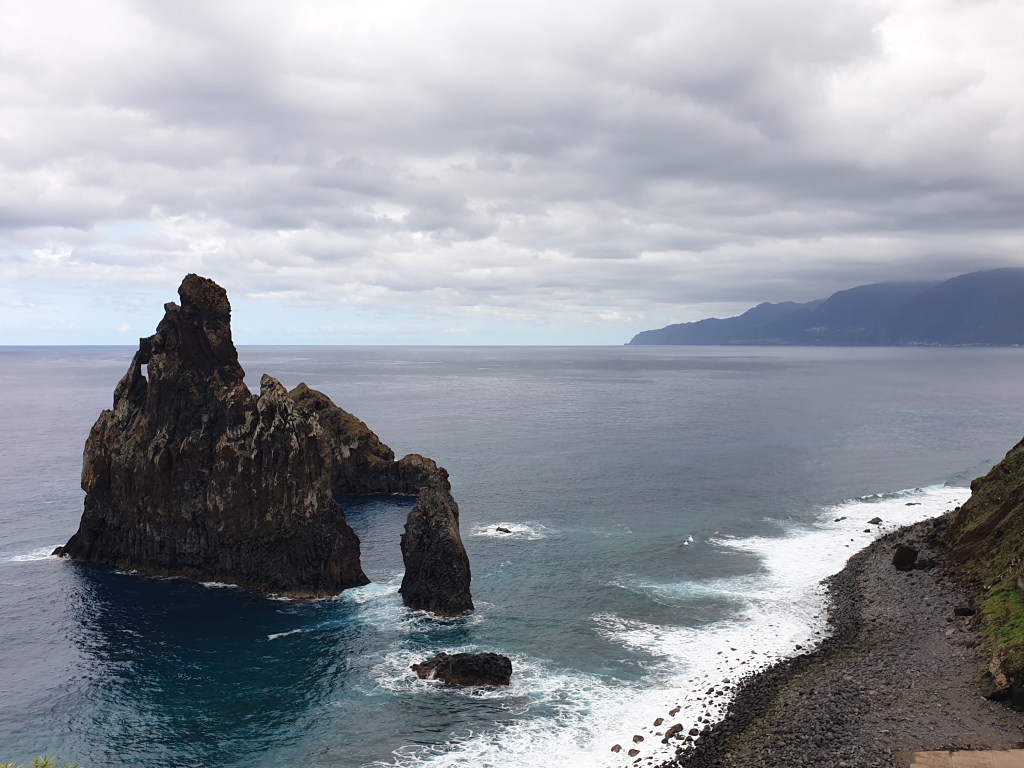
I continued the road down to Porto Moniz. At the coast I was rewarded with a view of a strange rock rising directly from the sea, which I had missed on my visit here a few days ago – I must have been inside a tunnel.
Back on the North Coast
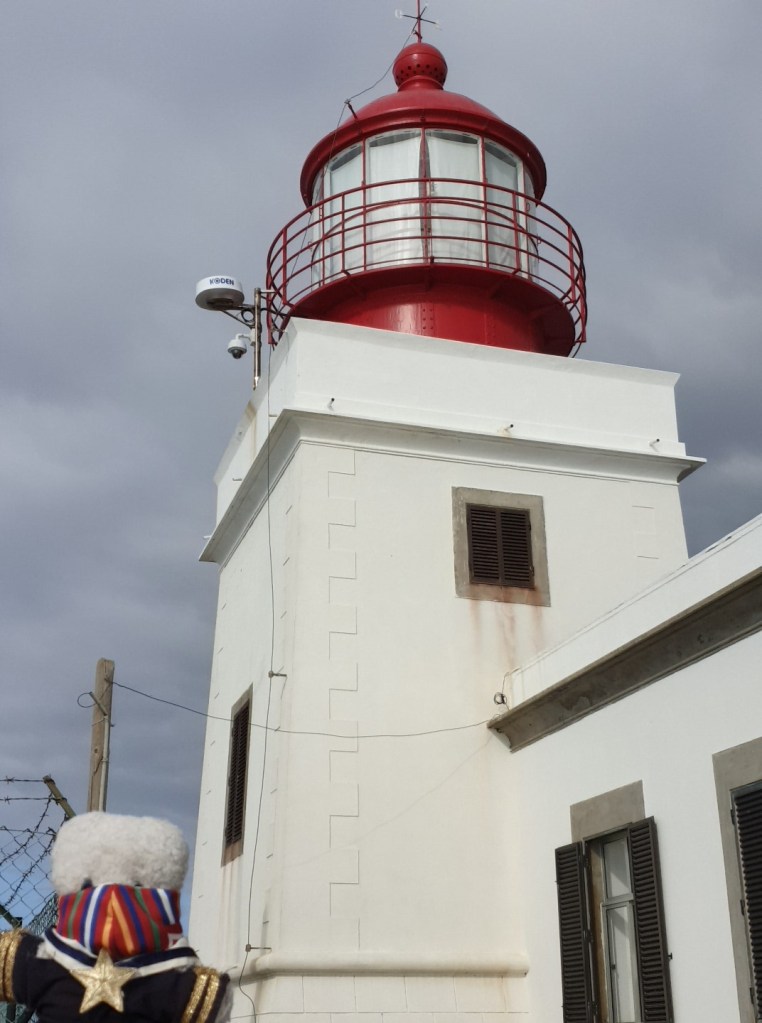
I drank a badly needed coffee and replenished my energy with a thick fish soup at an open-air café in the town, enjoying the view of the bay. I took the west coast road back home, and this time stopped at Ponta do Pargo to visit the lighthouse. This is the most south westerly point of Europe and if you sail out to sea in a straight line from here, the first stop will be America.
The lighthouse at the furthest edge of EuropeNext stop……America!
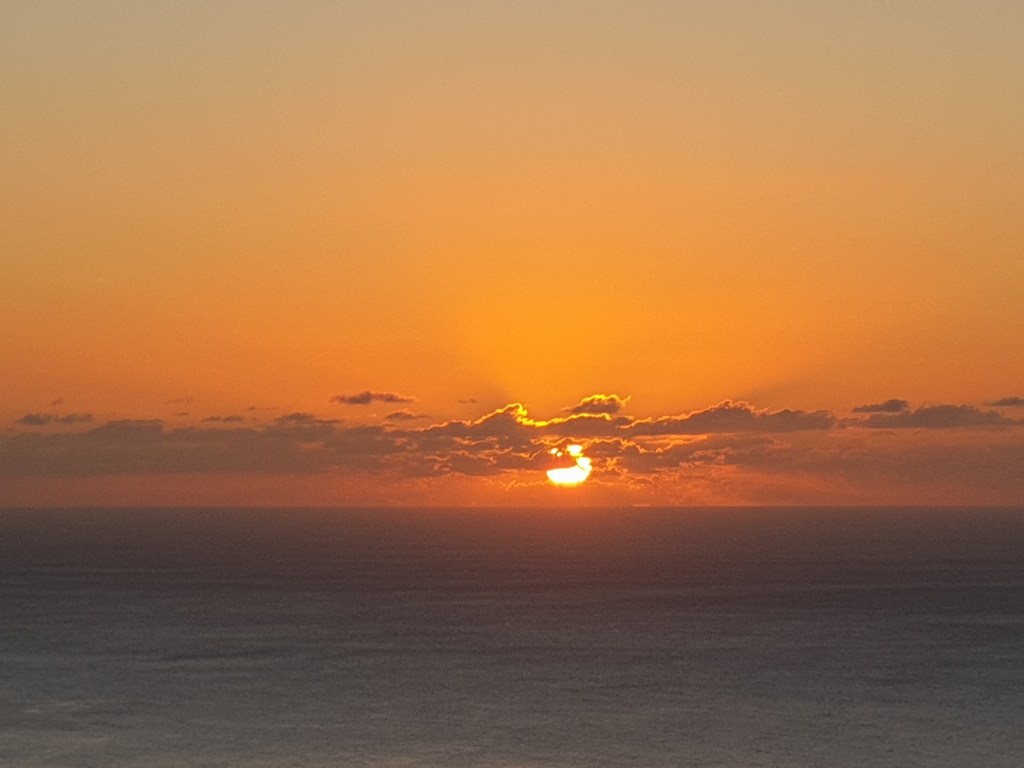
More fish for dinner back at the villa, and the first clear sunset of my stay to round off my time here.
Today I shook off my apathy and went walking for the first time. I drove up a steep minor road that led all the way up to the central plateau right on top of Madeira and was rewarded by a straight road with fantastic views over the coast – and not a tunnel in sight!
The view from the Madeiran plateau
I was headed towards 25 Fontes, one of the most popular walks on Madeira, and the parking area at the start of the walk was already busy. I headed down into the valley, admiring the views,
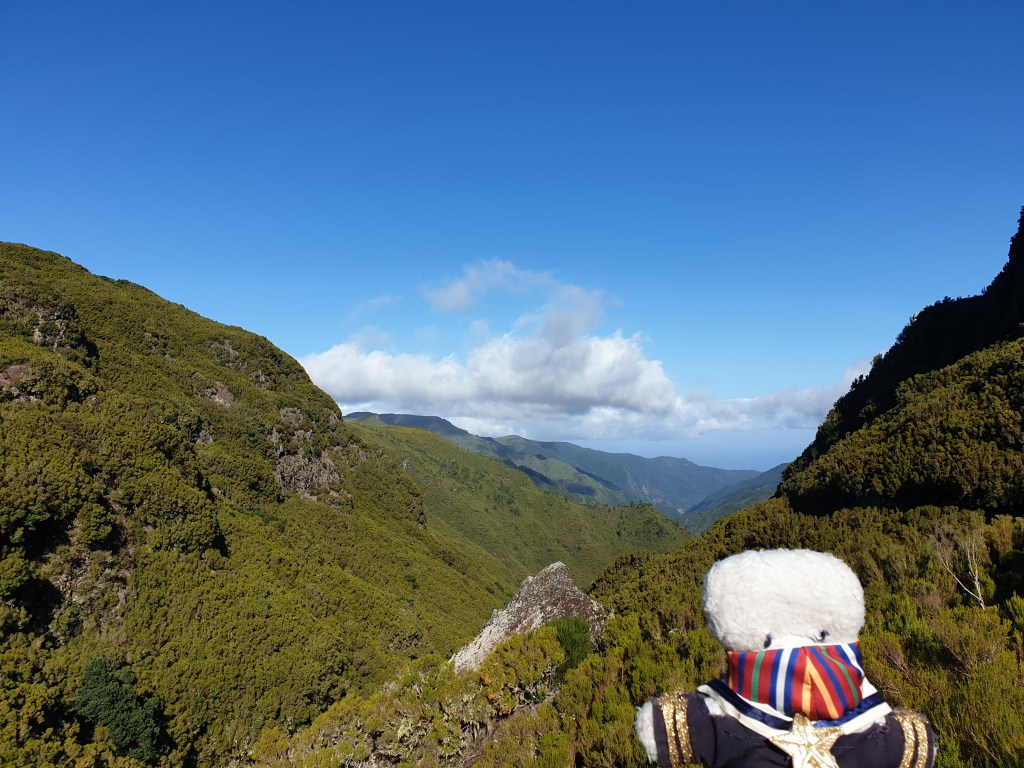
The view down the valled
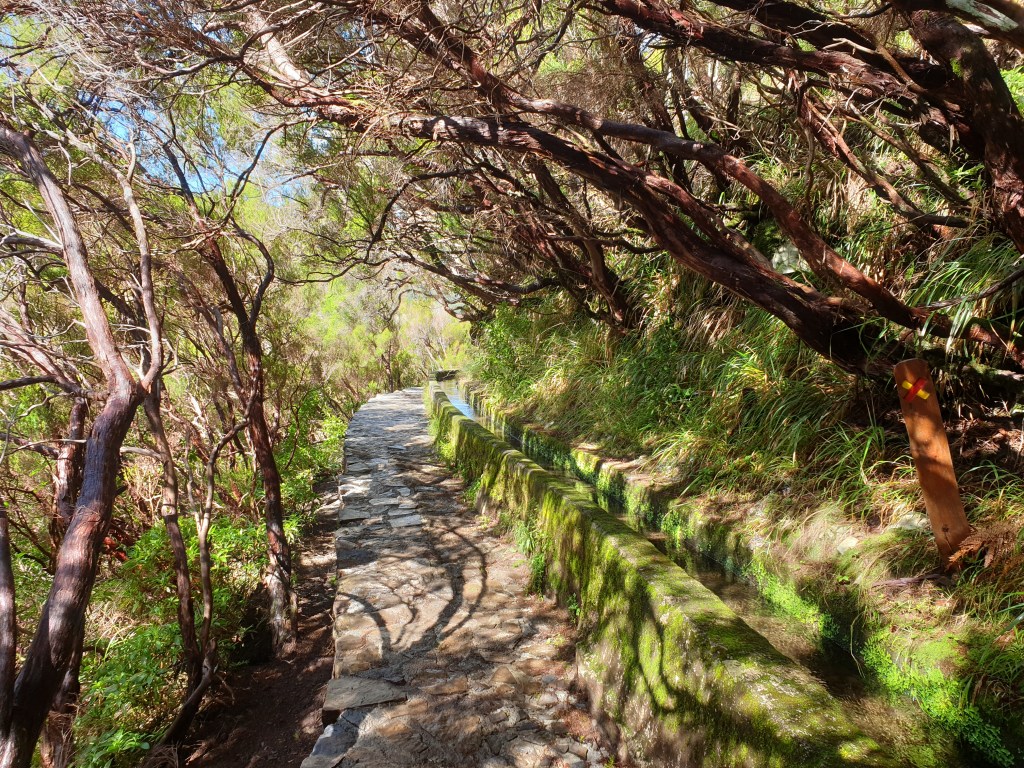
Then the path dived into a dense broom forest that ran alongside a levada (man-made water channels that run all around Madeira). I had always seen broom as little bushes and I didn’t know that it could grow into trees. It was a very pretty path and I enjoyed the alternating shade and sunshine, and the happy gurgle of the water.
Walking beside a “levada”
The path was narrow and I often had to stop to let other walkers pass. It was interesting watching the expression on people’s faces when this happened. Some looked happy and gave me a cheery “Bom Dia” or “Hello”, but others looked scared to be so close to another walker – even a teddy bear – and hurried past whilst frowning. Soon I arrived at the Cascada do Risco, a tall waterfall cascading down a sheer cliff, and hurried to take photos before more visitors arrived.
The Cascada do Risco
I then retraced my steps and took a new path along a different levada to the Cascada das 25 Fontes. In a big clearing, a wide central waterfall spilled down from the mountain, flanked by many smaller falls on both sides. To count 25 waterfalls required some imagination, but there were certainly a lot and it was a really pretty scene.
The Cascada de las 25 Fontes
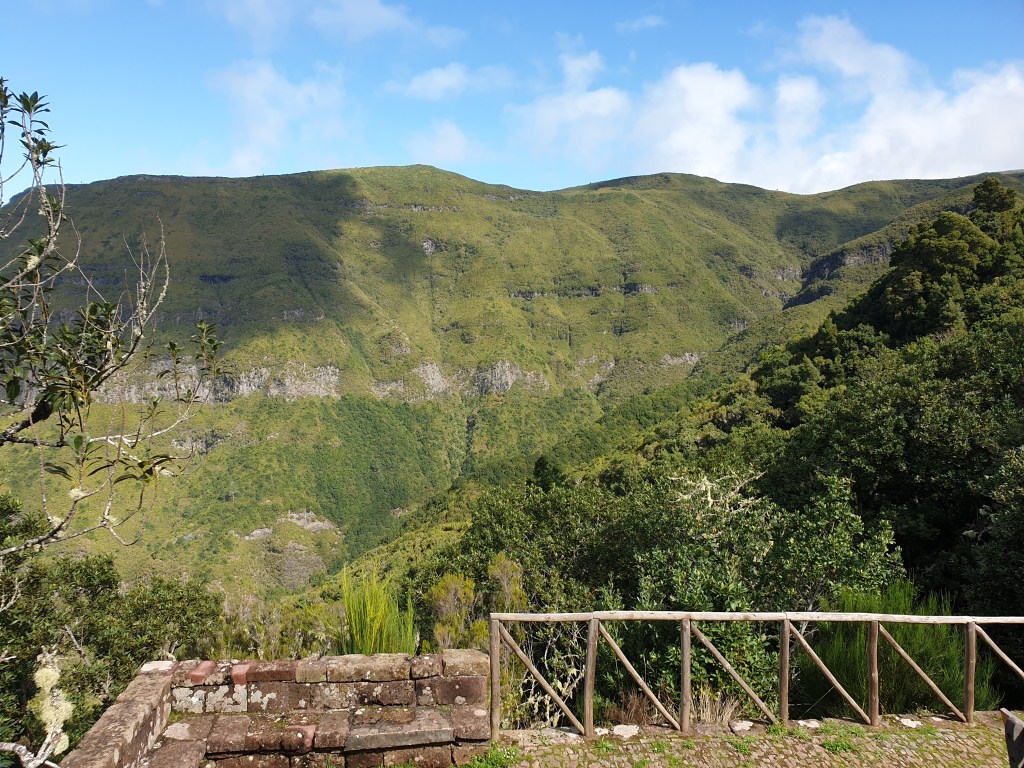
From there I retraced my steps to the visitor centre and its cafe. I found a really good place to sit, with far reaching views of the valley. I also met some new friends to share my garlic bread with.
The view from the cafeNew friends!
To get back to my villa I chose a minor road leading very steeply down to Calheta on the coast – I was pleasantly surprised that I got there without getting lost, and that a little levada followed the road all the way down. At Calheta I bought fresh fish and wine for dinner to celebrate one of my best days so far on Madeira.
I was running out of things to do in the west of Madeira so the next day I decided to visit some attractions near the capital, Funchal, on the south coast. I was going to stay there for five days at the end of my holiday but knew that I wouldn’t have time to see everything. First on my list the Curral das Freiras, a remote village located high in the mountains a few km inland. It didn’t seem far – only 20km – but although the road was good and fast, it almost entirely consisted of dark, smelly tunnels. By the time I arrived at the turn-off for my destination, I was badly in need of fresh air, which the steep mountain road leading to Curral provided. The village was founded by a group of nuns escaping the pirates who used to attack the coast, and indeed you would have to be a very determined assailant to make it all the way there by foot or on horseback.
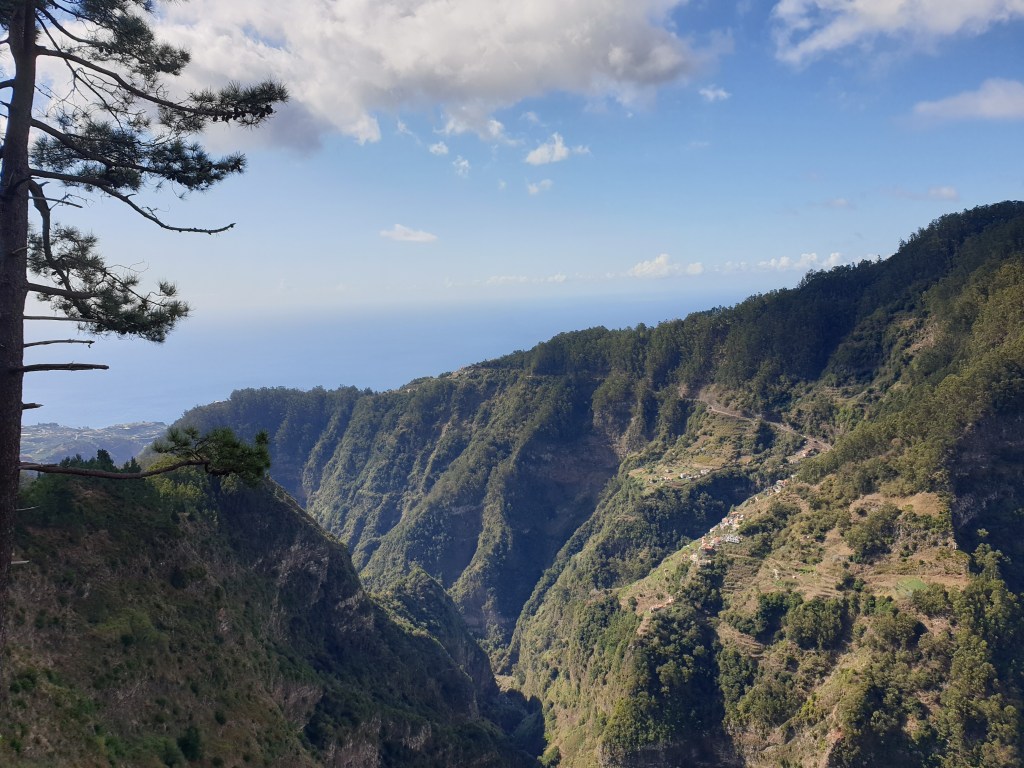
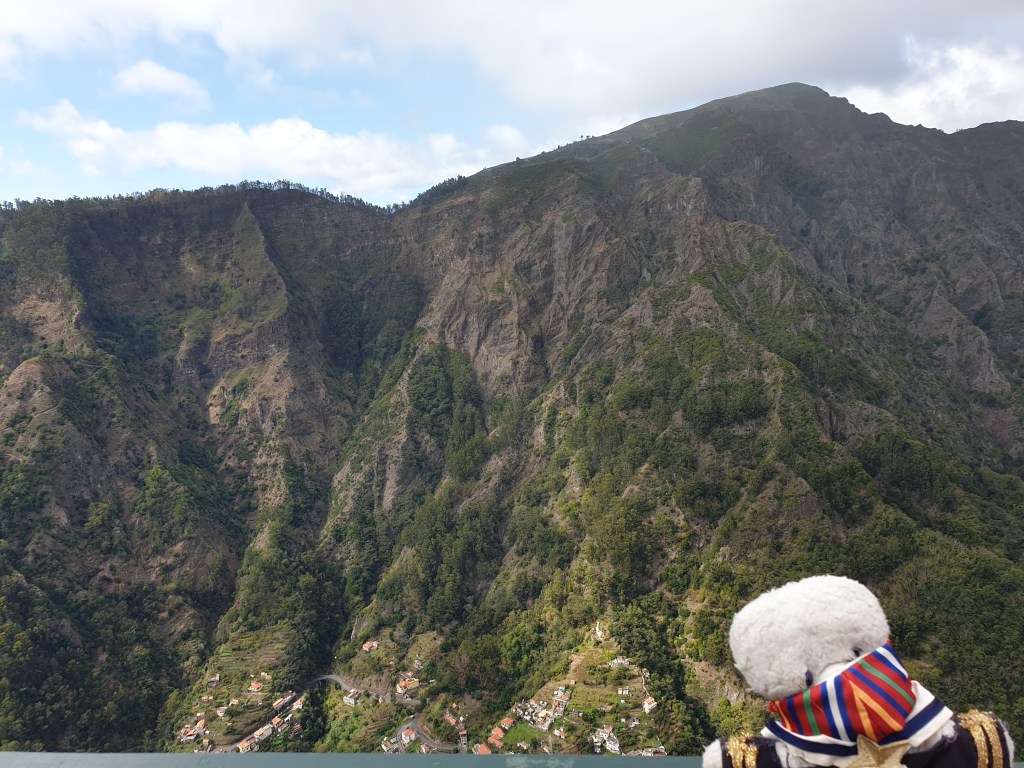
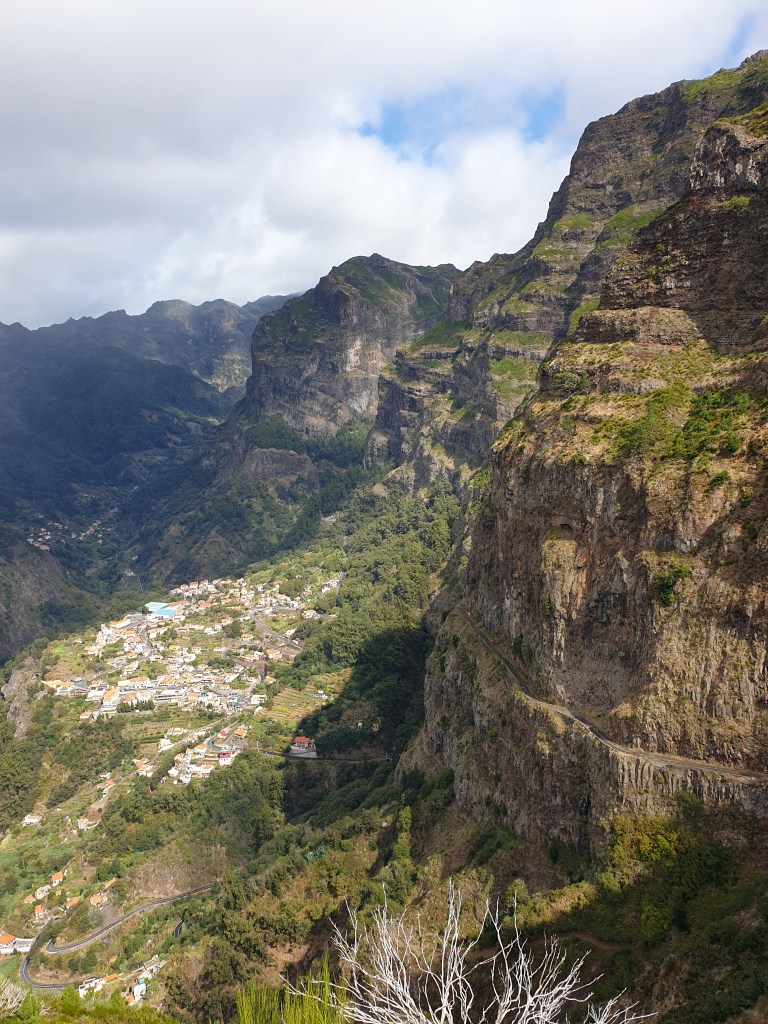
I made a detour to the Eira do Serrado viewing point on top of a mountain for spectacular views of the mountains and of Curral das Freiras itself, surrounded by towering peaks.
On the way up to Curral das FreirasAt the viewing pointCurral das Freiras and the old mountain road
I noticed the abandoned old road, which was now slowly falling away down the mountain-side, and which used to be the main road to the village. It had now been replaced – as almost everywhere on Madeira – by a direct tunnel, but I had already had an overdose of tunnels and I decided to give this one a miss. I couldn’t see how the view could be any better down in the village than it was up on top of the mountain.
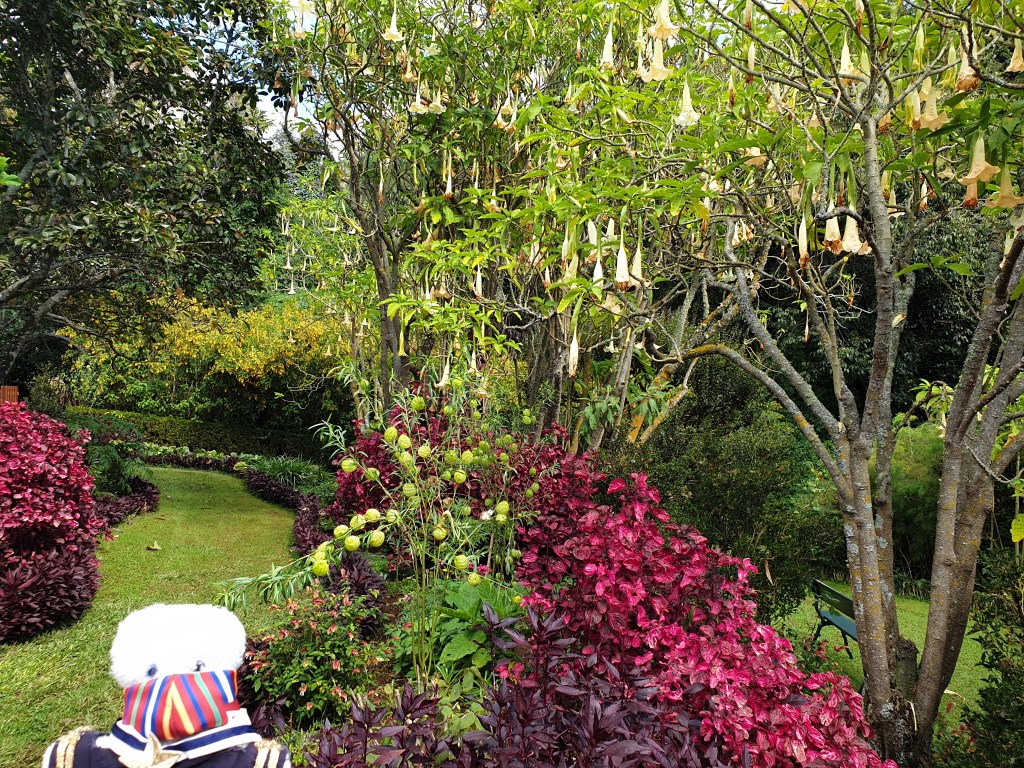
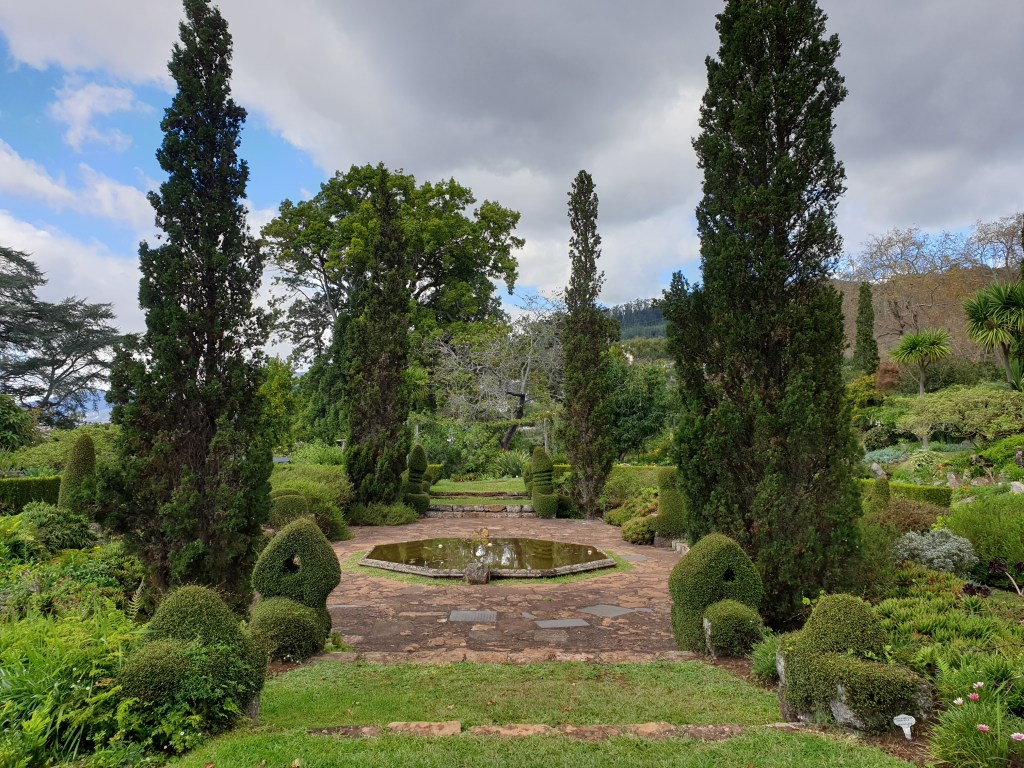
My next stop was the Jardim de Palheiro, on the east edge of Funchal. This garden is part of a private estate of an old Madeiran family, that now includes a hotel and golf course. It was surprisingly hard to find, and though pretty, was a little small.
The exotic plants of the Jardim do PalheiroThe gardeners have chosen some strange shapes for the topiary….
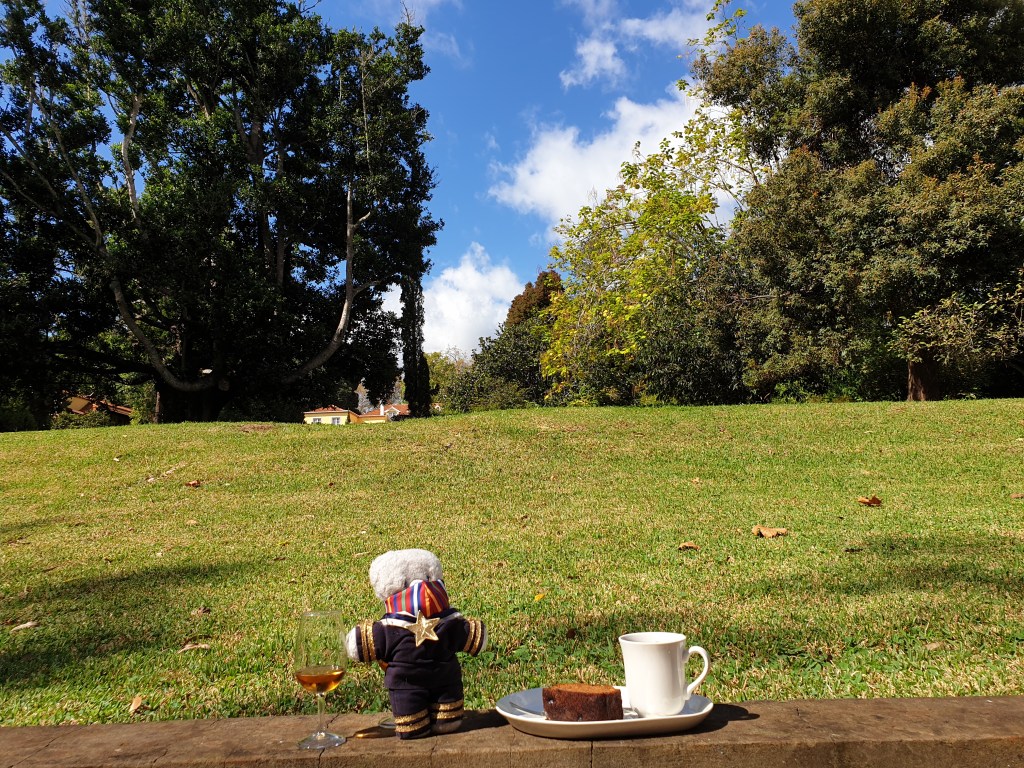
Considering the effort needed to get here, I was a bit disappointed – maybe October is not the best season for the gardens on Madeira. I consoled myself with some tea, cake and my first glass of Madeira in the garden’s café.
Madeira, tea and cake – how civilised!
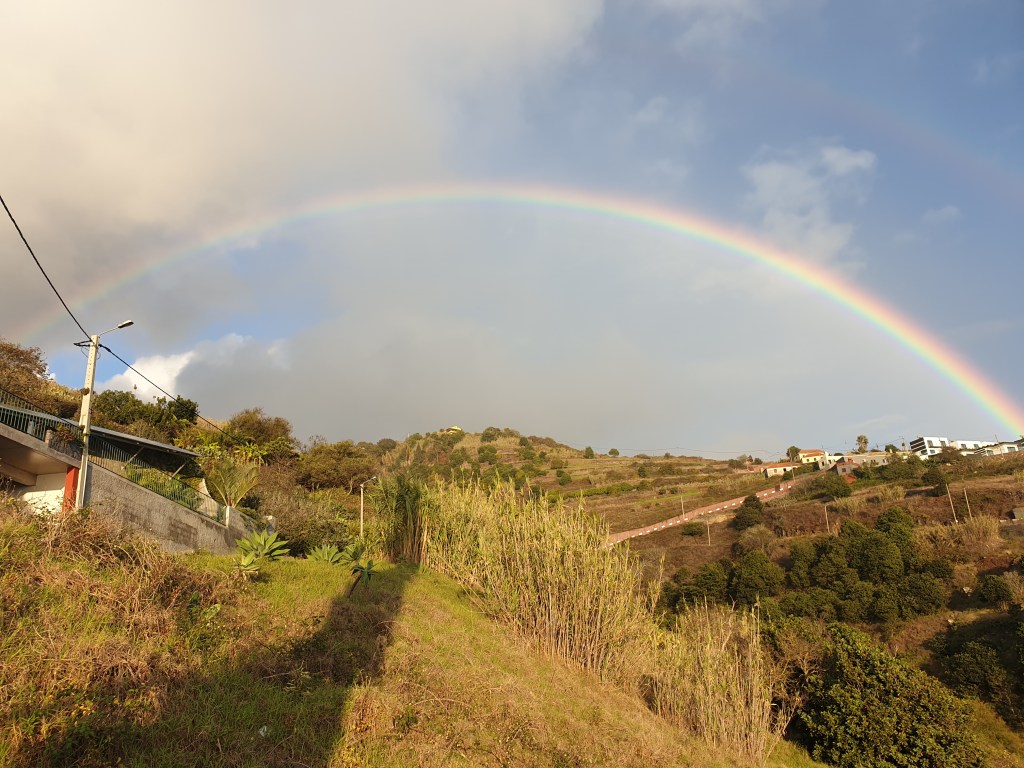
After enduring the endless tunnels of the southern highway on the way back, I sat on my sun-lounger in my villa’s garden and was lucky enough to see my first ever complete rainbow. Today I had done everything I had set out to do – but I preferred the unplanned freedom of my exploration of the north coast of the day before.
The next day I set off with the intention of doing a walk in the mountains in the north of Madeira, and then maybe visiting the lighthouse at Ponta del Pargo – the most south westerly point of Europe – on the way back.
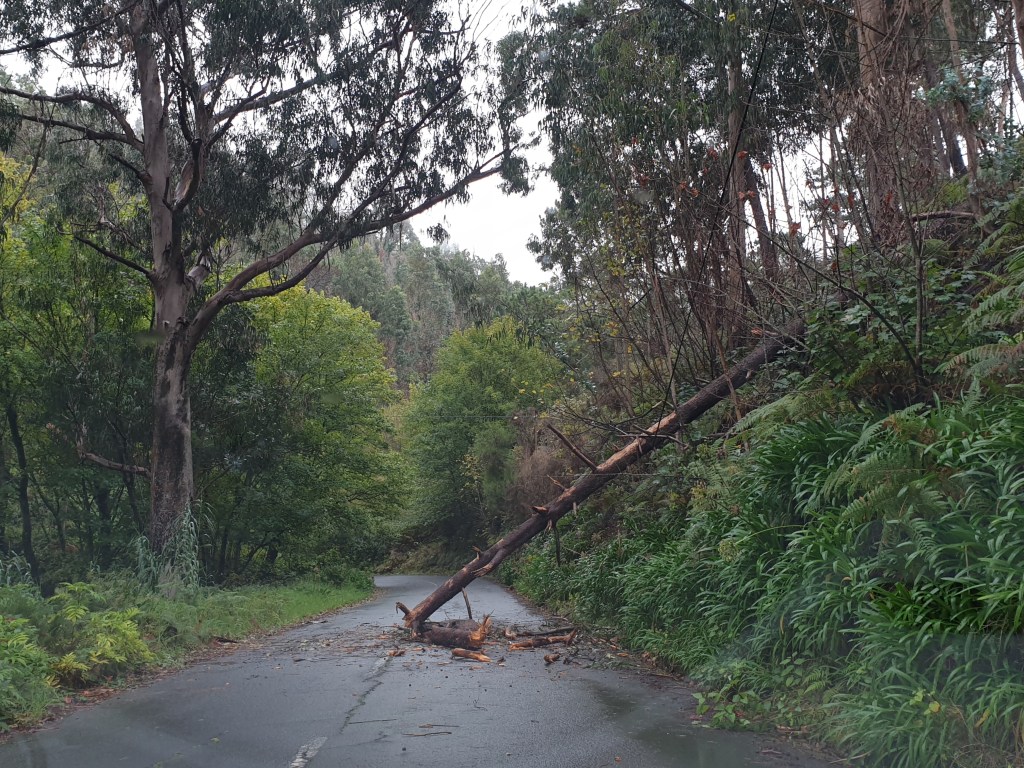
I took the main road around the far west of the island, which unlike the south, had yet to be “improved” with tunnels. Even though it was raining the road was pretty. It ran through woods of pine and eucalyptus and a pleasant smell of wet forest filled the air. The heavy rains and winds of the past few days had created a few hazards on the road, in the form of fallen rocks and one large fallen tree.
Unusual hazards on the roads of Madeira
It was slow driving along the winding mountain roads, but I finally made it to Porto Moniz, at the extreme north western tip of the island. This town is famous for its natural pools of seal water, formed by volcanic rock formations stretching into the sea.
The spectaculaar coast and natural rock pools of Porto Moniz
There was a solitary bather in the pools. I dipped my toe in; the water was not too cold, but it wasn’t sunny enough to consider swimming. Instead I admired the beautiful seascape and the contrast of the blue sea, the white surf, the green mountains and the stark black volcanic rock.
I decided to change plans. The walk through the forest was going to be steep, and would be very slippery after the rain, so it would be better to do this another day. Today I was enjoying simply driving and exploring, making things up as I went along. It reminded me of my early carefree backpacking days where I would set off to a destination with no firm plan, no bookings, and sometimes not even a guidebook.
Typical north coast scenery
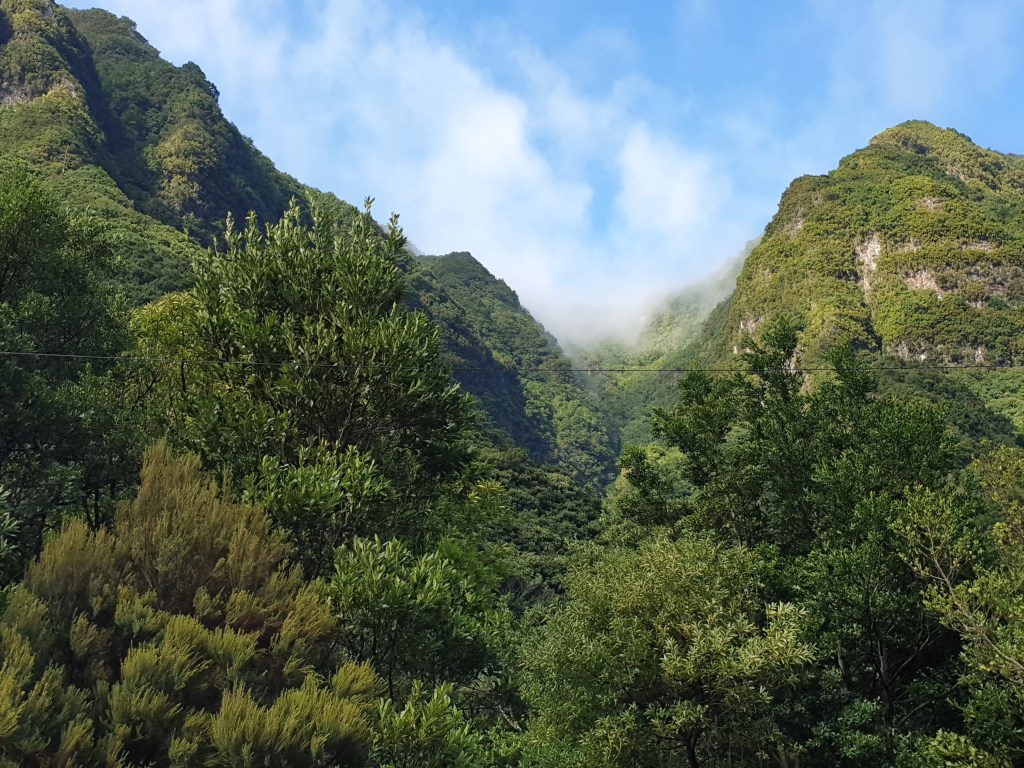
I drove along the north coast, admiring the views, and then took an interesting looking side road that that led steeply up into the mountains. After a few km the road petered out at the start of a walking trail; I stopped to take photographs and breathed in the fresh mountain air.
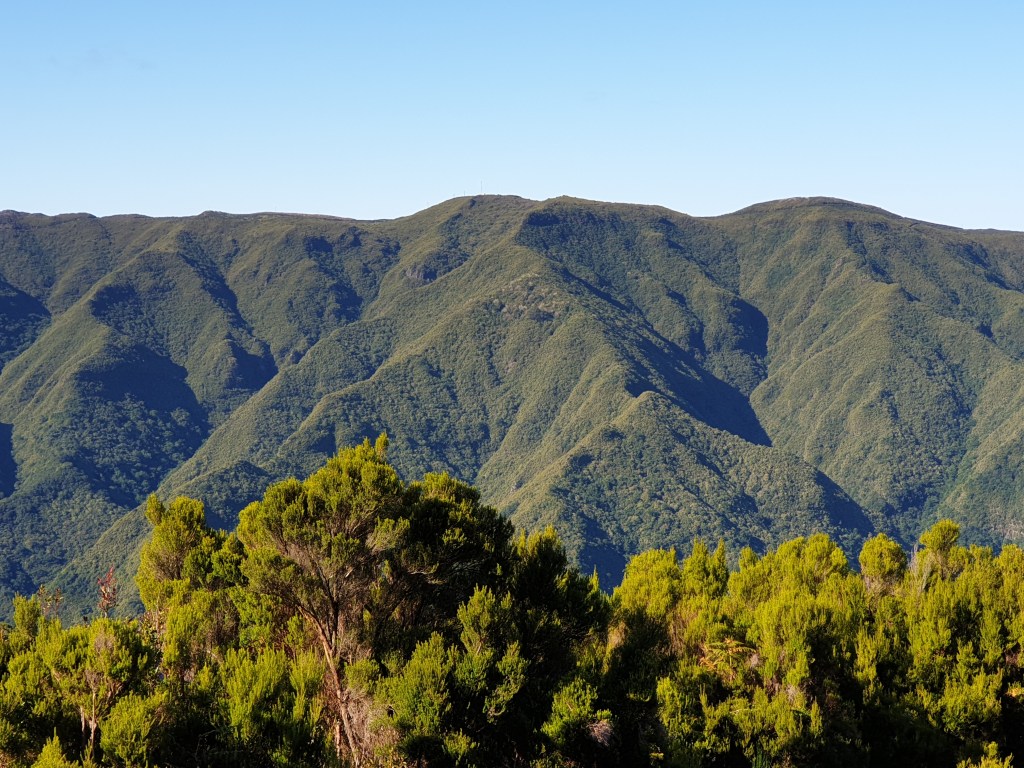
The mountains inland
Next I headed back to the coast. I reached the town of Seixal, which also has volcanic rock pools, took more photos and stopped for a coffee.
The natural rock pools at SeixalMore rock pools….
The weather continually changed – sometimes cold and showery, sometimes hot and sunny. The sea air made me feel relaxed and sleepy. I headed back home not having done any of the things that I had planned to do that day, but with a strange feeling of contentment.
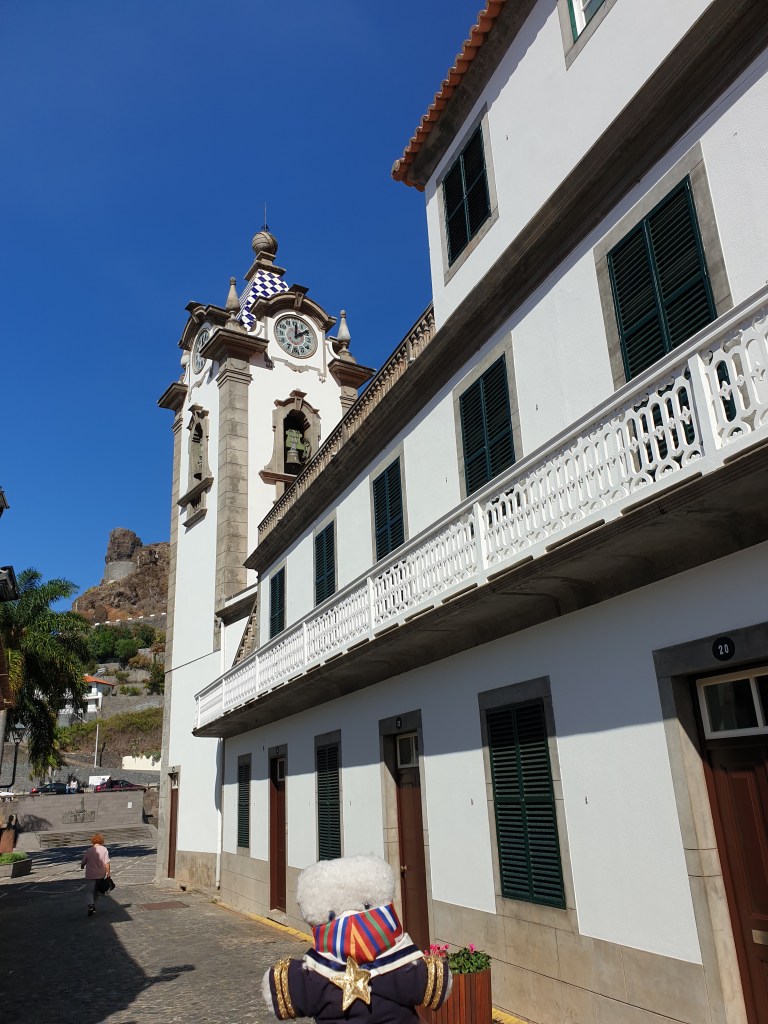
The next day I was due to move to my villa on the south west coast of Madeira. The weather in Santana was still very cloudy, but as soon as I had driven down to the south coast, the clouds were replaced by bright sunshine. The road seemed to consist almost entirely of tunnels. I couldn’t check in to my villa until 1 o’clock, so I made a short stop to visit Ribiera Brava, a pretty coastal town where I bought some food.
The Church at Riviera Brava
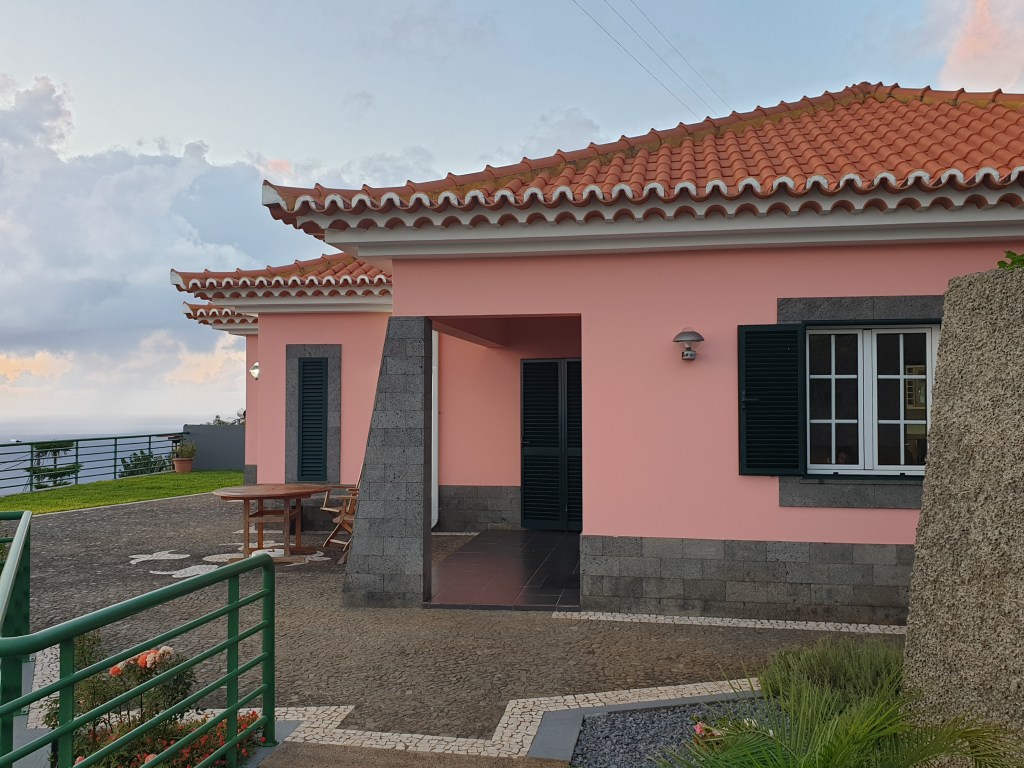
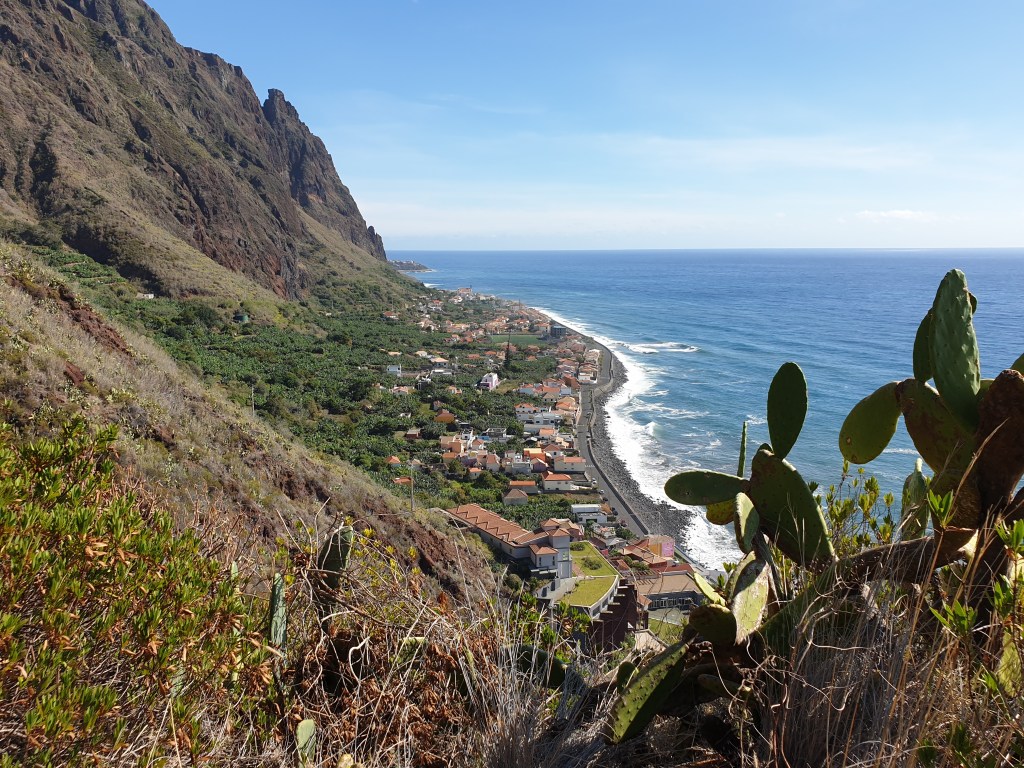
I then abandoned the highway and its endless tunnels for a slower winding mountain road, and I was rewarded by some spectacular views. My villa was in a small village called Faja da Ovelha, strung out over a steep hill which descended to the sea.
My villa
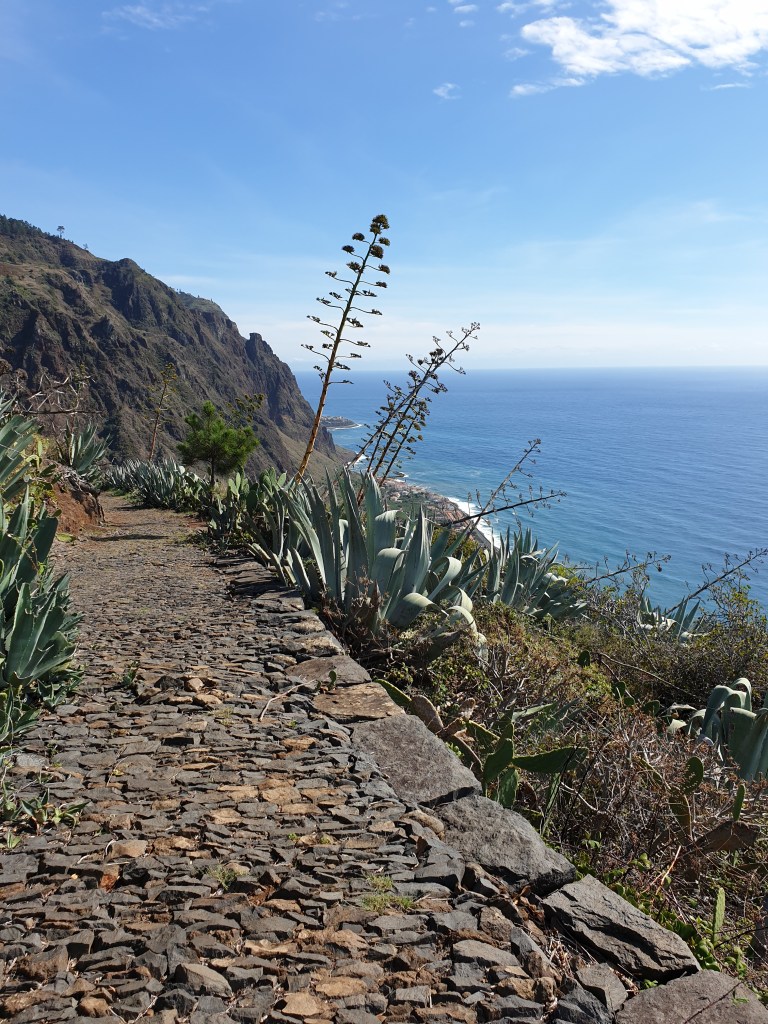
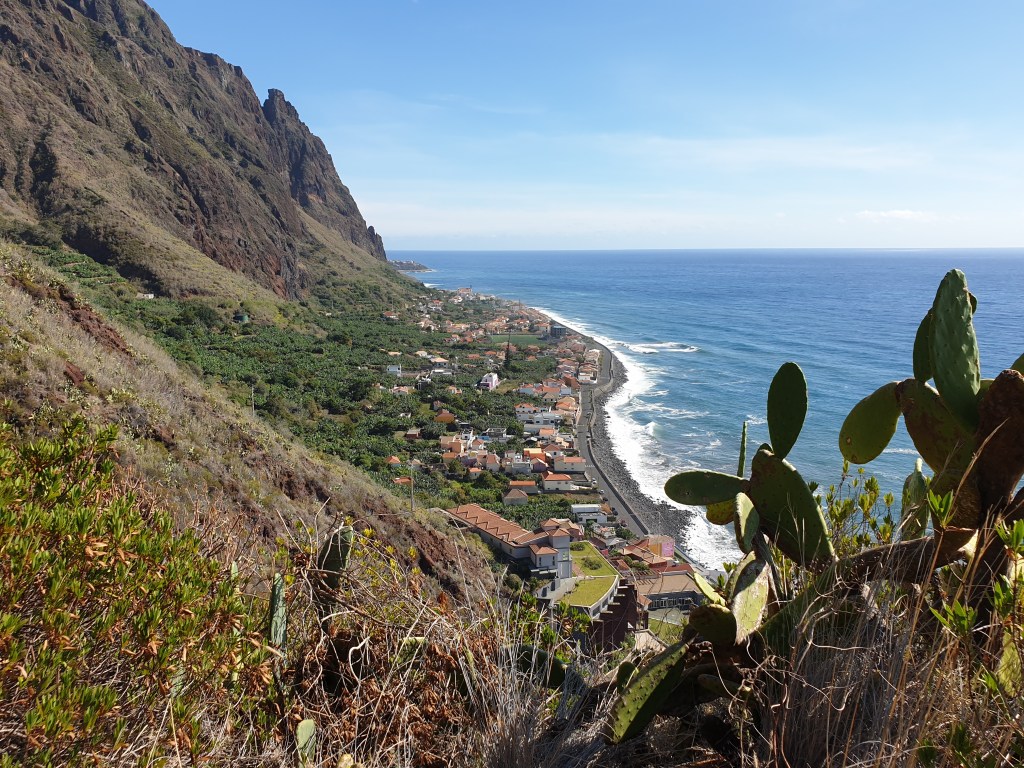
The village was tiny, with a church and a small bar but no shops. After checking in I enjoyed the view of the ocean from my terrace and then decided to take the steep path down to the village of Paul do Mar on the coast. The path gave a magnificent view of the mountains and the sea.
The start of the path downThe path continues
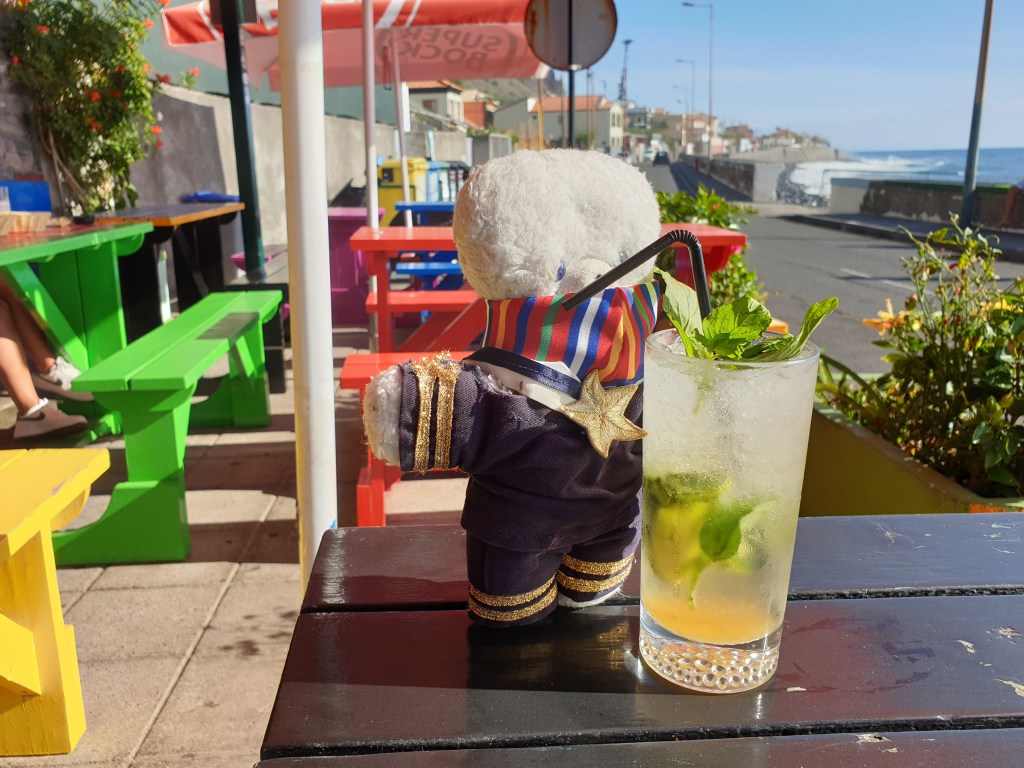
Paulo do Mar is a traditional fishing village but is also a surfing centre and had a few bars aimed at the surfer community. I stopped at the first bar I found and ordered a cold cocktail. The heat and the sound of the waves breaking against the sea wall made me feel very lazy, so instead of continuing my walk into the centre of the village, I ordered another cocktail.
Non-Alcolohic……honest!
A van stopped to deliver bread to the bar; in this part of Madeira people get their daily bread from this van, so I followed the local tradition and bought a loaf for 50c. The trip back to the villa was much slower than the trip down. The sun was now lower down on the horizon, and its warmth seemed to beam horizontally across the ocean directly onto the path. When I got back to the villa I was sweating heavily. I relaxed in a sunlounger for a bit and then cooked myself a huge tasty tuna steak for dinner – Madeira is a fish lover’s paradise.
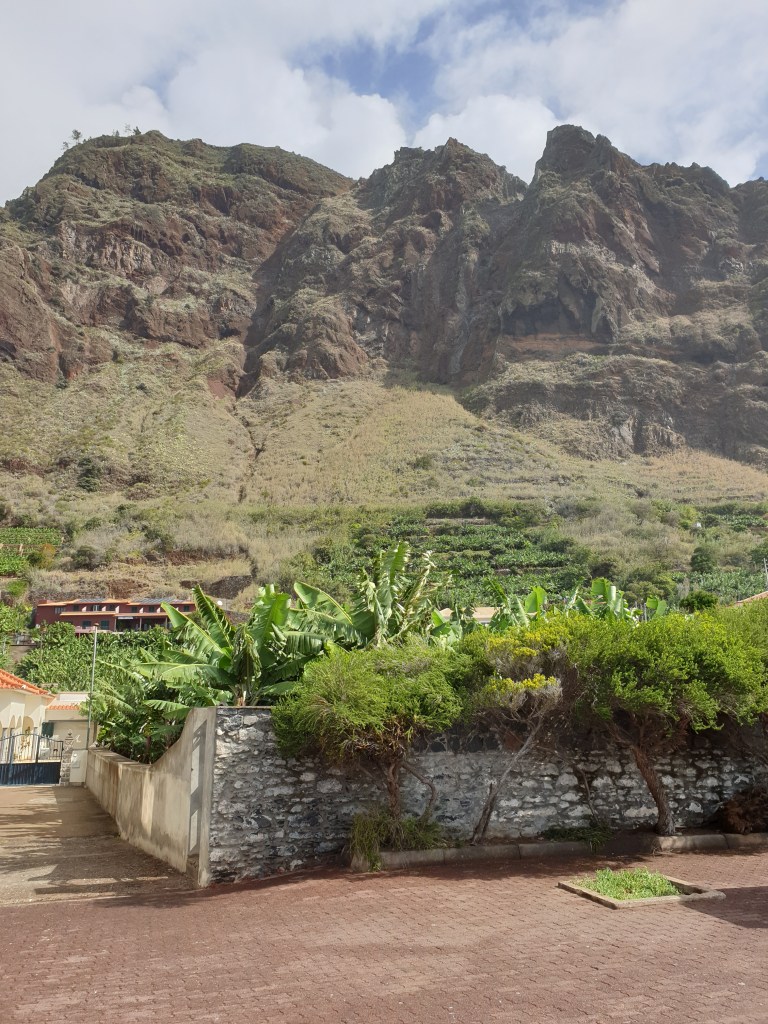
The next day the weather forecast was not great, but all the same the sun was shining when I woke up. The webcam site showed the weather in the north and centre was indeed bad, so I decided to visit the small seaside villages near my villa. The area is far off the usual tourist circuit and a long way (by Madeira standards) from the island’s main attractions. First, I drove to Paul do Mar, this time visiting the old centre, away from the surfers’ places. A maze of narrow streets led parallel to the sea and below towering cliffs to a small harbour.
Towering cliffs behind Paul do Mar
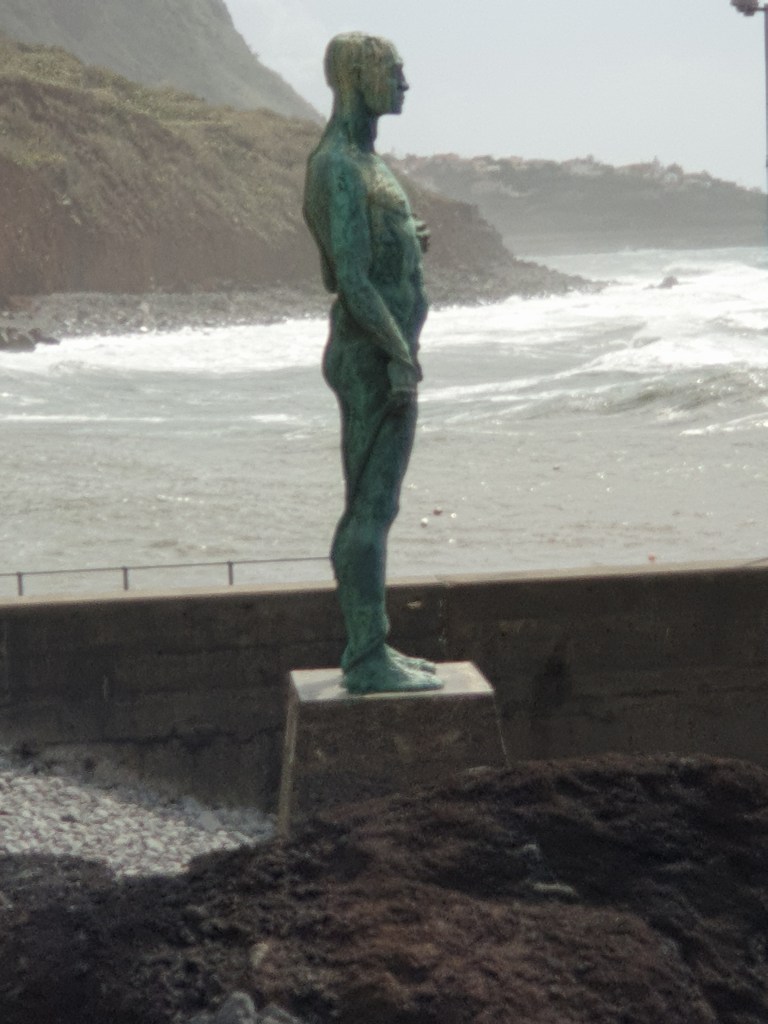
There I was met by a simple statue of a man staring out to sea, which had been commissioned by the local fishing captains and somehow seemed to perfectly capture the relationship between man, the land and the sea.
Simple but evocative
The next village along the coast was called Jardim do Mar and had long sea front path as well as a similar maze of small streets and colourful buildings. I stopped in a bar for a snack, enjoying the pleasant warmth and the gurgle of water running down the “Levada” running through the town. These small channels carry water from the mountainous centre of Madeira to the drier coast; many of them have walking paths running along their banks, which form an extensive long-distance hiking network around the island.
View of the sea at Jardim do Mar
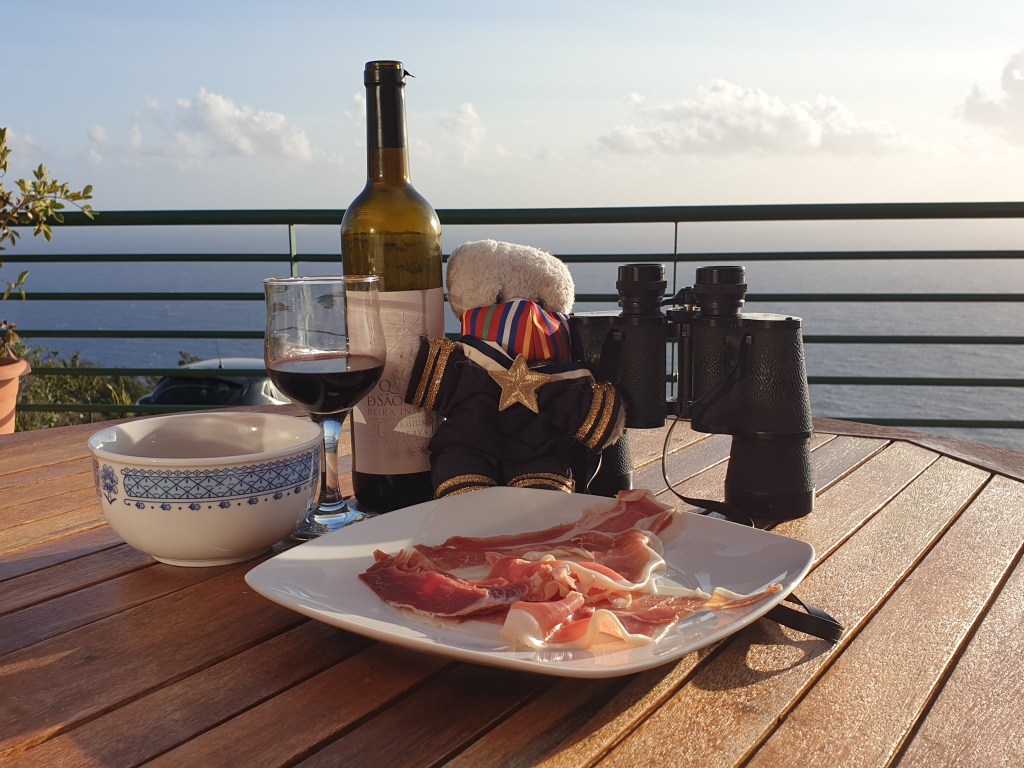
My final stop was Calheita, the next town along the coast. It was completely different, smart and modern, with a couple of large hotels and harbour filled with yachts. I enjoyed watchimg the ocean waves beating against, and occasionally over, the harbour wall before visiting the supermarket to do my shopping for the week. Although 30 minutes’ drive away, this was the closest large shop to my villa. There isn’t much to do in this part of Madeira but I was really enjoying taking things slowly and listening to the wind and the sea. Back at the villa I enjoyed a glass of red wine whilst looking out over the ocean. The welcome leaflet left by the owners said that sometimes you could see whales, and they had left some powerful binoculars for guests.
Tomorrow….
I couldn’t see any whales today, but it was fun looking. Maybe tomorrow. Here, it feels like “tomorrow” is the answer to everything.
Before starting my blog, a few words are in order to illustrate the difficulty of travelling during the global Covid epidemic and explain how I chose to visit Madeira, a little-known tourist destination. I had to go to Paris in October and was determined to avoid a repeat of two weeks’ quarantine on my return to the UK that I had had to do in the summer. I decided to spend time in a second, “approved” country instead of returning straight to the UK. Most of the countries on the approved list were in northern Europe and not somewhere worth going in October, but Italy was still on the list so I booked to spend two weeks on the Amalfi Coast. But then the president of the Campania Region said that all arriving travellers at Naples airport would have to do a Covid test and be quarantined until they got the result. My flight was scheduled to arrive very late, and who knows how long I would have to wait for a test at the airport or how long they might take to give me results. My Italian friends advised me to change my plans, so I cancelled everything and booked to go to Madeira instead.
Madeira!
Madeira is a group of volcanic islands located off the coast of Africa. Even the largest island is not very big – only 50km long by 20km wide. The islands were discovered and colonised by Portugal in 1420, but before that had been uninhabited. Today Madeira is known as a tourist destination, which has avoided the massive development of say Tenerife or Majorca, and as the source of Madeira wine. In the Covid era, the islands are now marketing themselves as “Madeira – clean and safe”. There is a complicated system where you do a Covid test before departure and fill in a long health form online. Someone checks everything and you get a QR code on your phone which lets you on to the island without having to do a test at the airport or quarantining. Having a holiday has never been so much work.
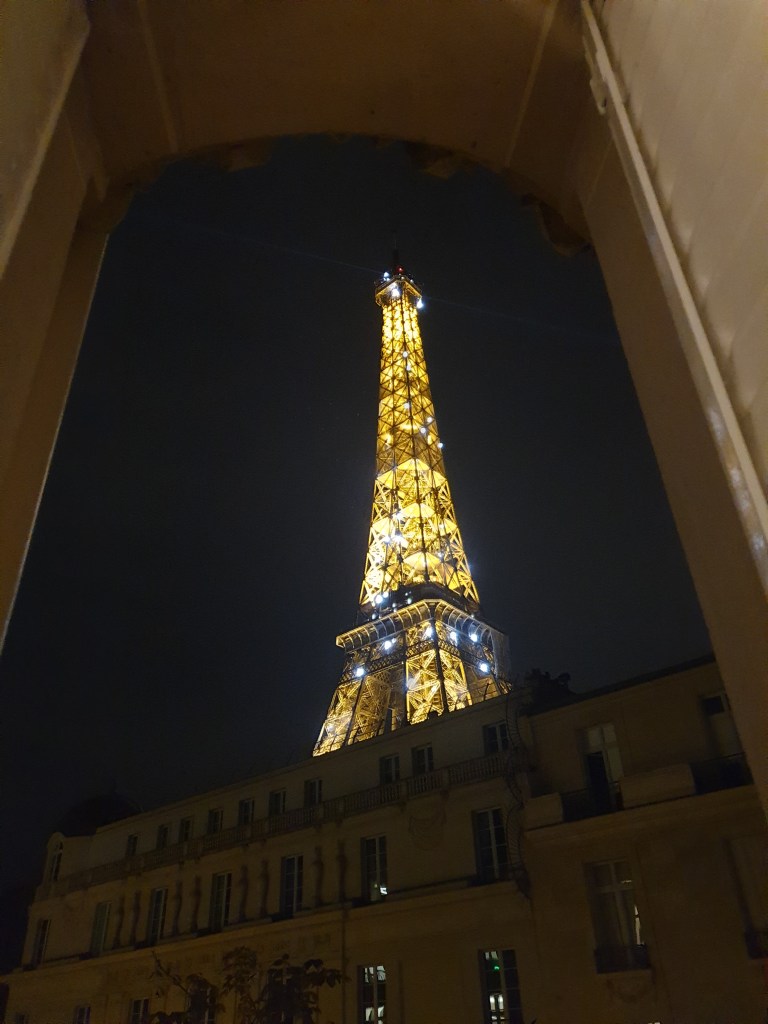
I spent a great few days in Paris in a flat with a view of the Eiffel Tower, enjoying the unique experience of visiting the Louvre and the Musee d’Orsay without the crowds.
View from my flat in Paris
I left Paris the day that a new 9pm curfew started and that the UK announced that Italy was no longer on its “exempt from quarantine list” (fist pump!!). With all the uncertainty and changing rules, I was greatly relieved that my flight left on time and I got thru the Madeira Covid controls with my QR code. I emerged from the airport into bright sunshine and a temperature of 20C, a welcome improvement on Paris and London.
I picked up my hire car and drove up to the small town of Santana in the east of Madeira. My accommodation was a small bungalow, which had a terrace with sun lounger, hammock…and lot lots of cats.
The terrace of my room
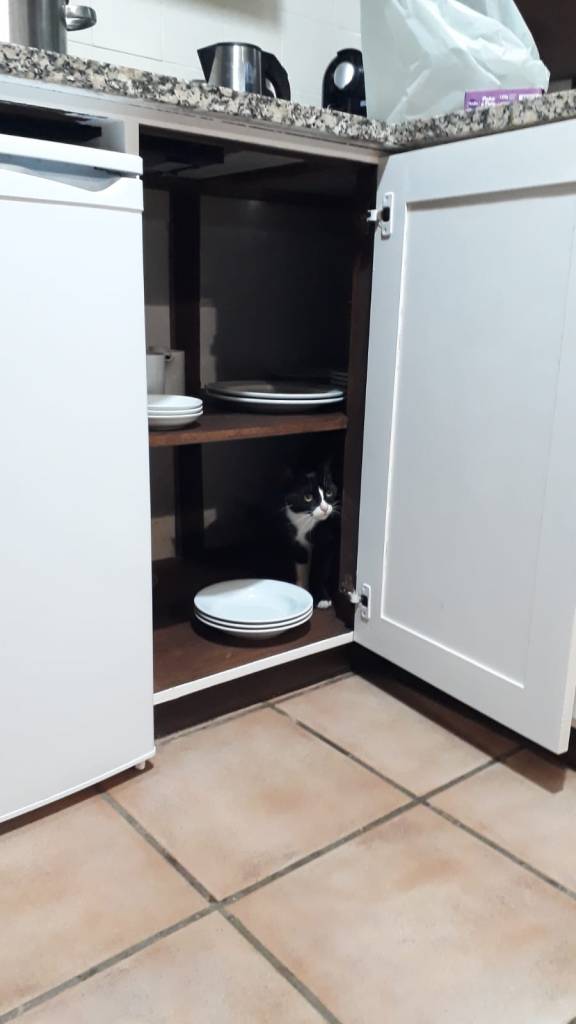
I bought some wine and pasta in a small local shop and enjoyed the cool evening air sipping my wine and playing with my new feline friends. They were used to visitors and had worked out a number of cute tricks to wheedle food out of them. These ranged from the traditional – being cute and asking to be stroked – to the adventurous – run inside as soon as a door is opened, take refuge in a kitchen cupboard and meow pitifully until fed.
“Feed me or I will stay here and cry all night!”
During the night I heard the sound of heavy rain and sure enough the next morning there were thick clouds in the sky. Over breakfast the hotel owner told me that the tropical storm Barbara was passing and we would have bad weather for four days. She recommended me a website which allows you to check the weather with webcams of towns all around Madeira. I thought it was strange to have such a website, but I soon found out why it was set up. Although the island is small, the weather in places only a few km apart can be completely different, and it changes constantly. However this morning all of the webcams showed the same fuzzy grey picture of thick cloud, so I decided to visit the vulcanology centre on the north coast, where you can visit lave tubes – caves formed when the outside of a flow of lava solidifies whilst the inside continues to flow. The guidebook described it as a good wet weather option. The road to get there was tricky – lots of steep climbs and sharp turns, with heavy rain most of the way. I arrived after about an hour, to find that the centre was shut due to bad weather – the caves flood during heavy rain. Disappointed I turned back and was rewarded with a small consolation – the sun appeared and revealed the spectacular mountain scenery of the island.
The sun begins to appear
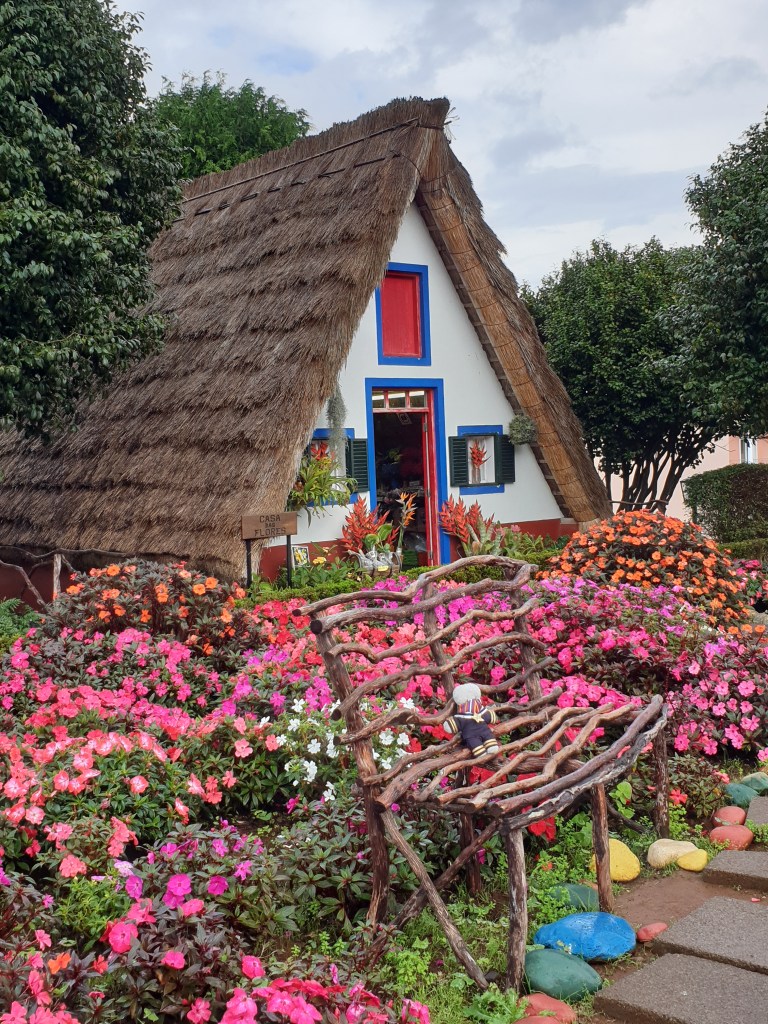
Back at Santana, I bought some fish for dinner in the local supermarket and visited some of the traditional houses for which the town is known. I am not sure how anyone – even a teddy bear – could ever live in something so small, but they are very pretty.
Traditional House in Santana
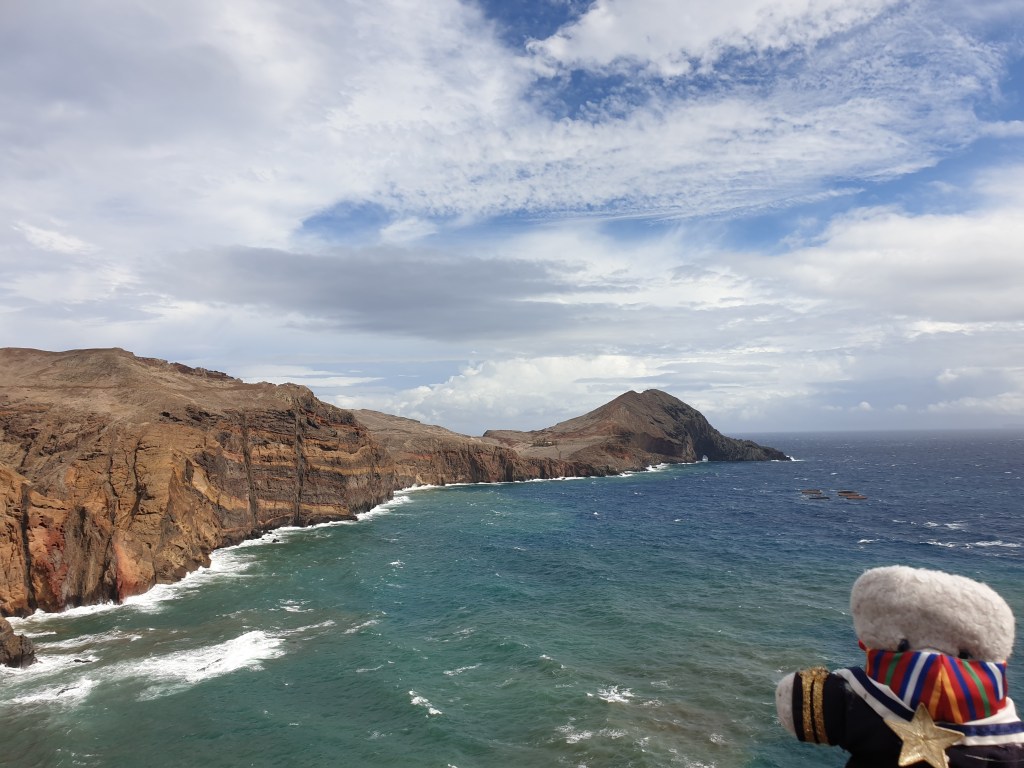
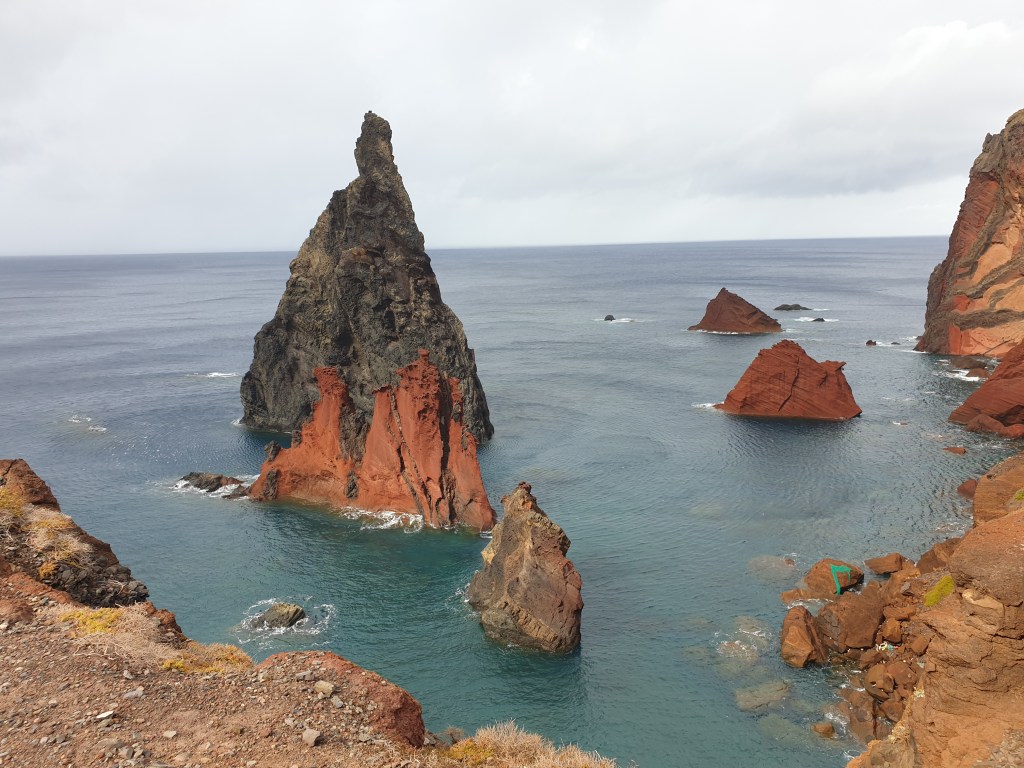
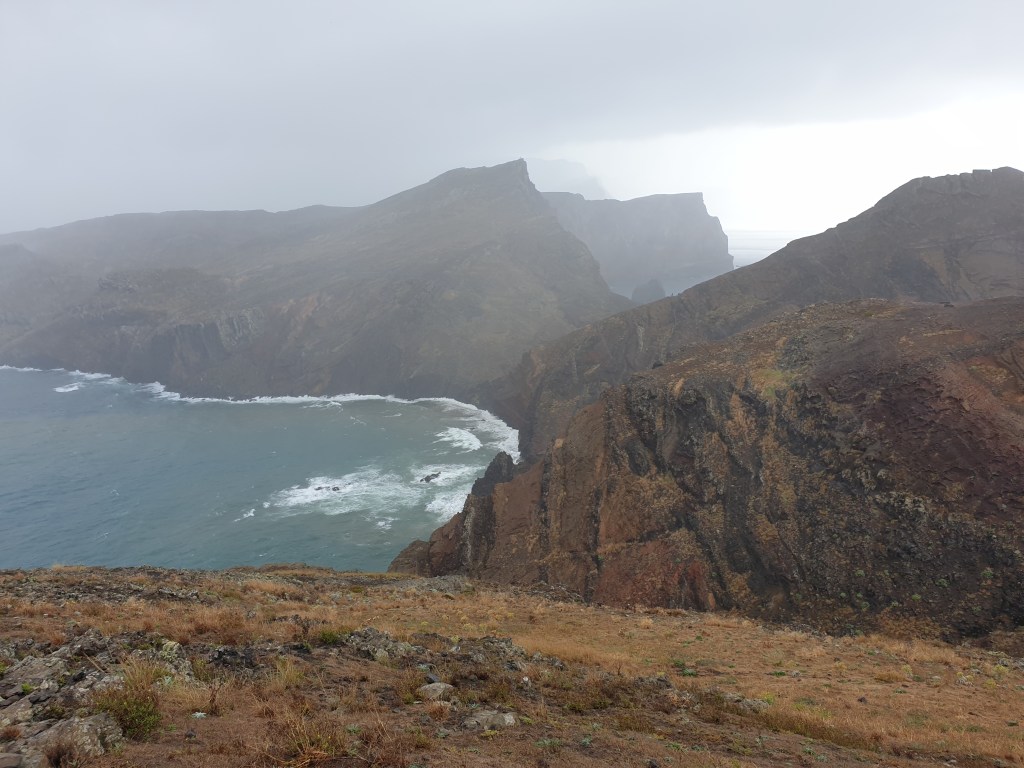
I noticed that the weather seemed to be improving. I checked out the website with the webcams, which showed bright sunshine at the Ponta de Sao Lorenco, a thin strip of land projecting into the Atlantic Ocean on the east side of the island, and one of Madeira’s national parks. The road leading there was good, with many tunnels instead of the twisting turns I had negotiated in the morning. Every time I went through a tunnel, the weather at the other end was different, and usually better. When I arrived at my destination there was bright sunshine, a clear blue sky and a very strong wind, which drove big waves against the colourful red and brown cliffs. The site was busy and I joined a stream of other walkers on the path to the far eastern point of the island. The scenery was spectacular, the red and brown cliffs contrasting with a bright blue sky and dark blue sea.
Ponta de Sao Lorenco in the sun….Still sunny……The weather begins to change……
After 3km and lots of stops for photographs, I reached the information centre for the park, which, like everything else I had visited today, was closed. As might have been expected, the weather then suddenly changed. First grey clouds covered the sun. Then came heavy rain, driven in horizontally from the sea by the wind. Just by opening your mouth and facing the wind you could have a drink of fresh rain water. What had been a muddy path turned into a river, fed by small waterfalls falling from the hills. It might have been pretty if it hadn’t been so………..wet. It is at times like these that you discover how waterproof your walking gear is – my top was good, but my legs were soon soaked through. Back at the car I peeled off the wet layers of clothing, removed my shoes and scraped the mud off them.
I drove back to my hotel barefoot and in my underpants, hoping that I wouldn’t be stopped by the police (even though my furry bear body is rather cute…). Back in my room, I hung up my wet clothes in a futile attempt to dry them. I reflected that the reason that there are very few Covid cases on Madeira is that if anyone coughs of sneezes, any infected droplets are immediately blown to Africa by the ferocious winds. At least dinner was delicious – fresh swordfish with tomatoes and pasta.
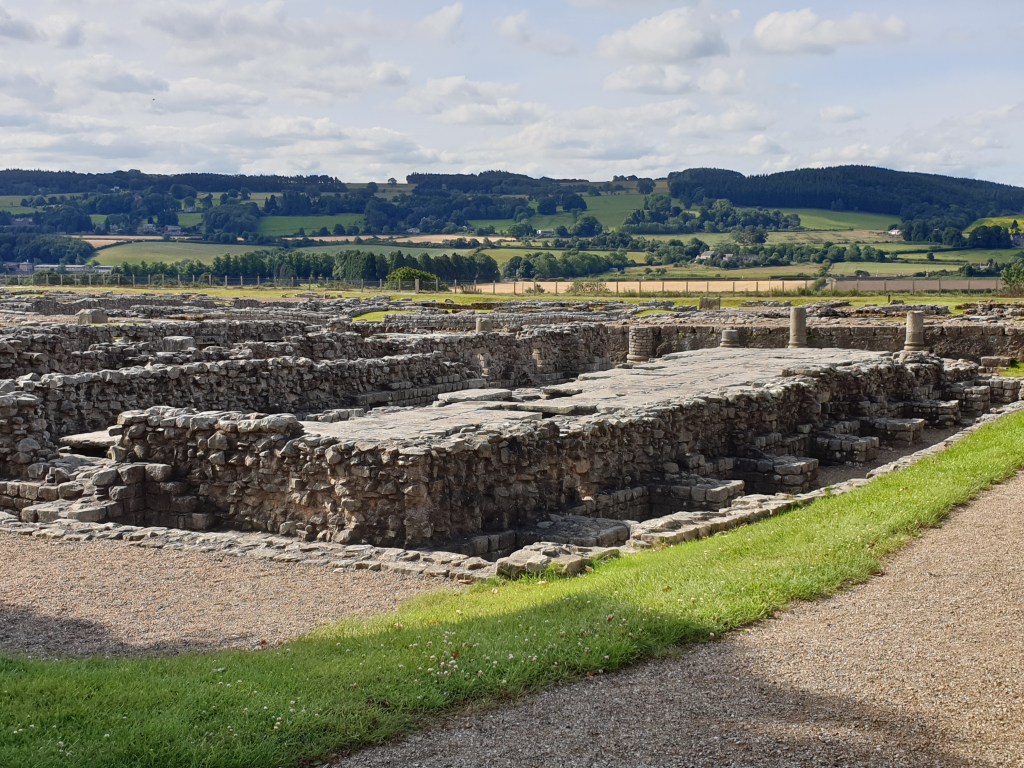
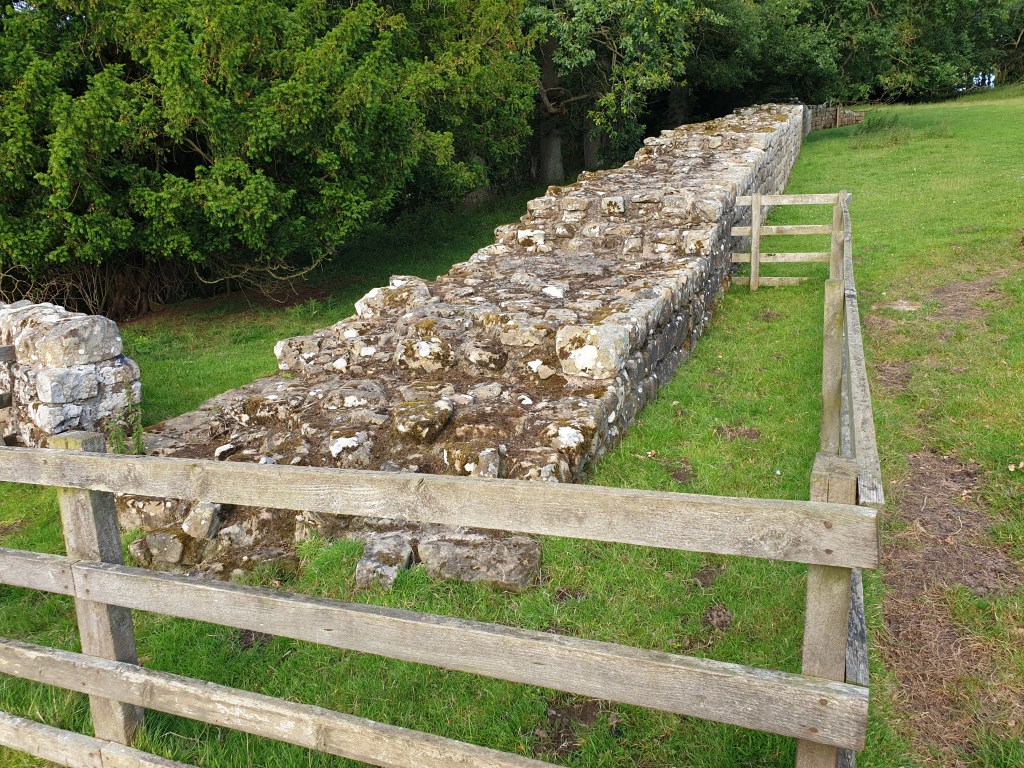
Today was the last visiting day of my holiday. It started with a quick visit of a Roman Fort near Hexham.
Ruins of a Roman Fort near Hexham
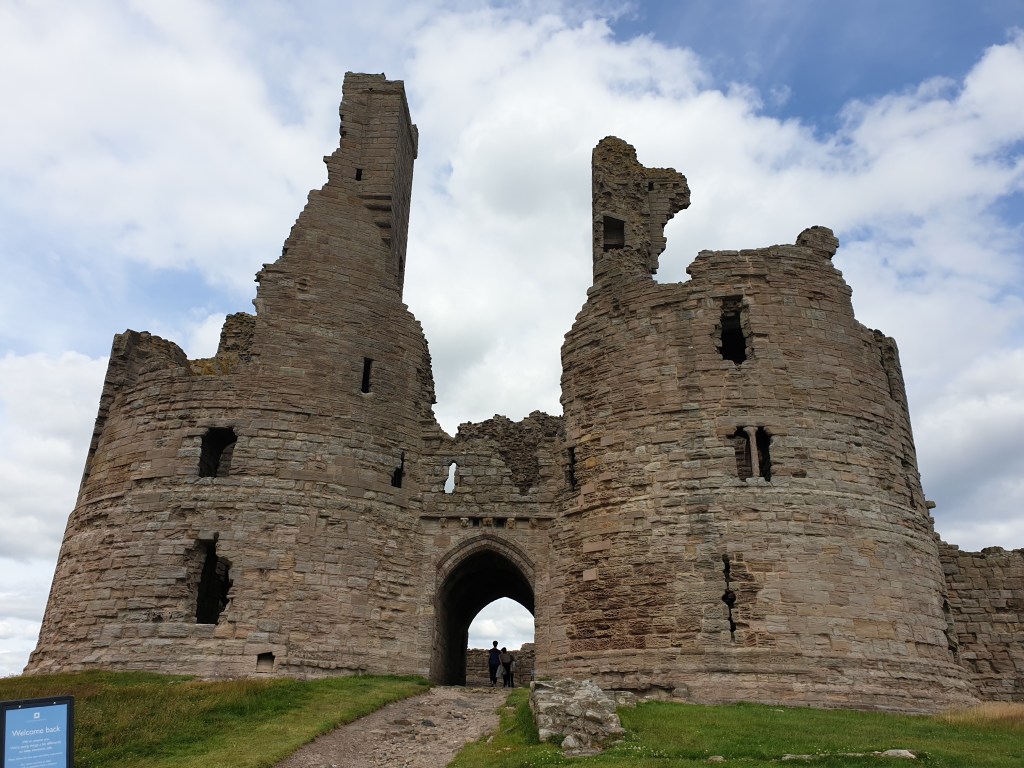
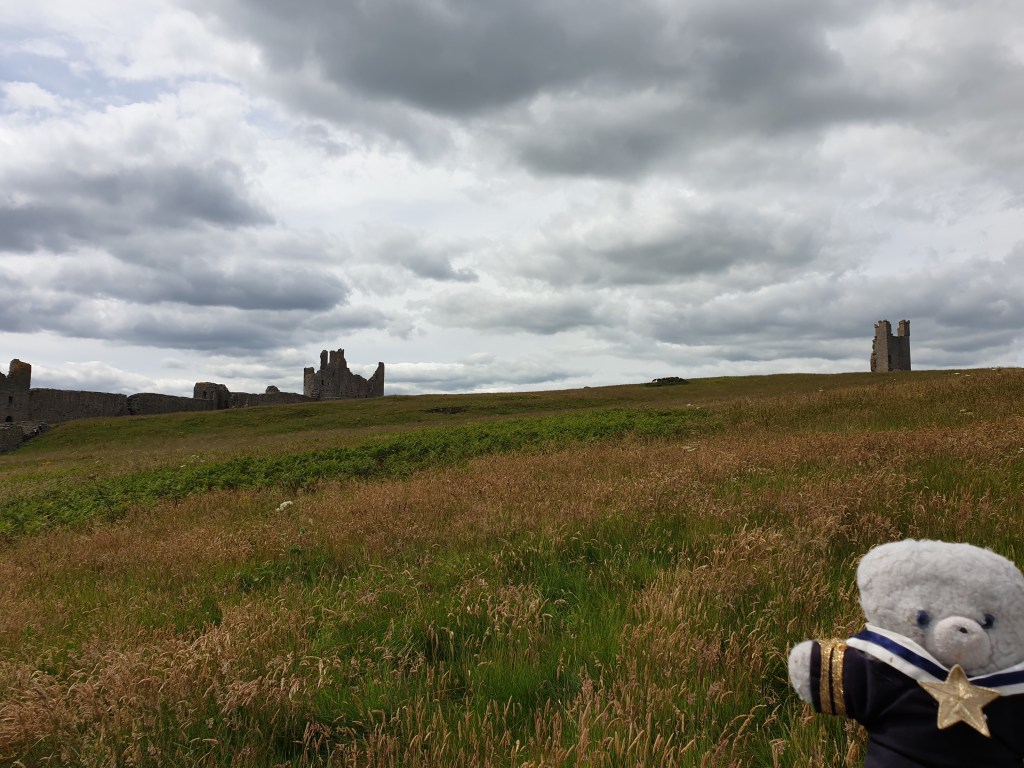
Then I headed north to the Northumbrian coast, where I parked in the pretty seaside port of Craster, and walked along the coast to visit the ruins of Dunstanburgh Castle. In its time (it was built in the 14th century) it must have been huge, and rivalled neighbouring Bamburgh Castle. The castle suffered badly during repeated sieges in the War of the Roses when it changed hands several times between Lancastrian and Yorkist forces. There is not much left now, but it was still impressive, with great views over steep cliffs and the sea.
The entrance to Dunstanburgh Castle Inside Dunstanburgh Castle – it must have been huge!
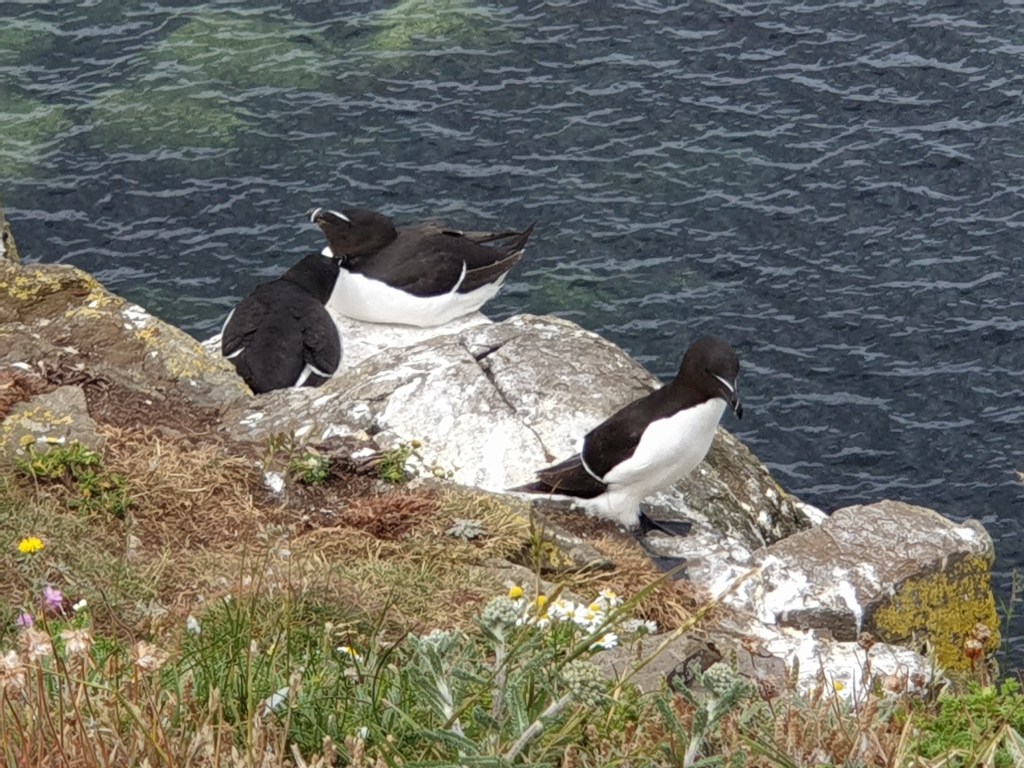
On one of the cliffs I noticed some cute, teddy-sized, penguin-like birds, which a quick search of the internet revealed were Auks. I would have gone to say hello, but the cliff looked very steep, so I took photos from a safe distance.
Cute Auks on a sea cliff
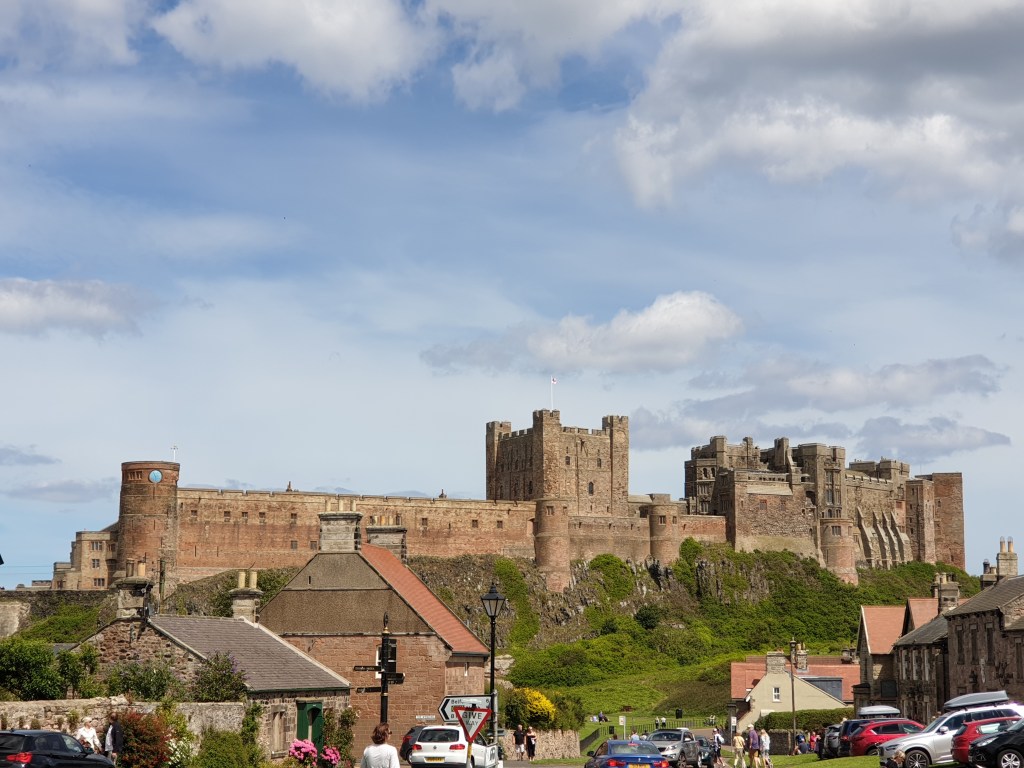
Back at the port, I enjoyed fresh crab sandwiches and a drink in the local pub, looking over the sea. From Craster I drove north along the coast road; it was a sunny Sunday afternoon and a lot of others had had the same idea. I stopped briefly in Bamburgh for coffee and to admire the huge castle from the outside. Parts of the castle date from the 11th century and Norman times and it is amazingly well-preserved. Unfortunately I didn’t have time to visit, but given the Sunday crowds this might not have been such a good idea anyway.
Bamburgh Castle dominates the horizon for miles around
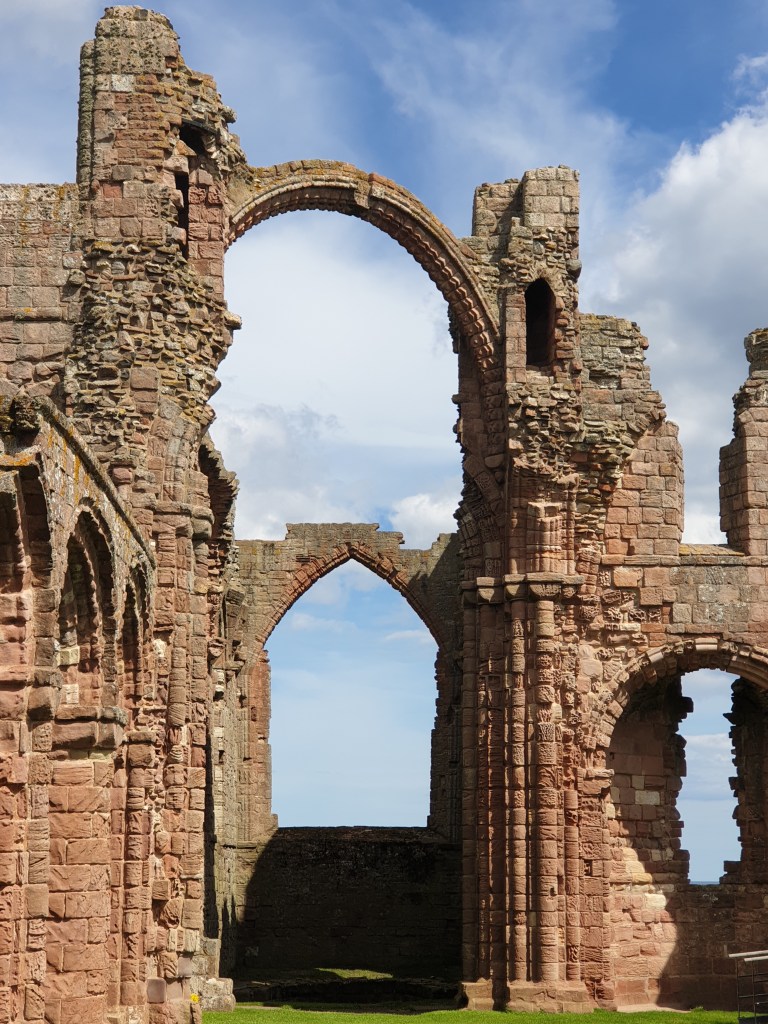
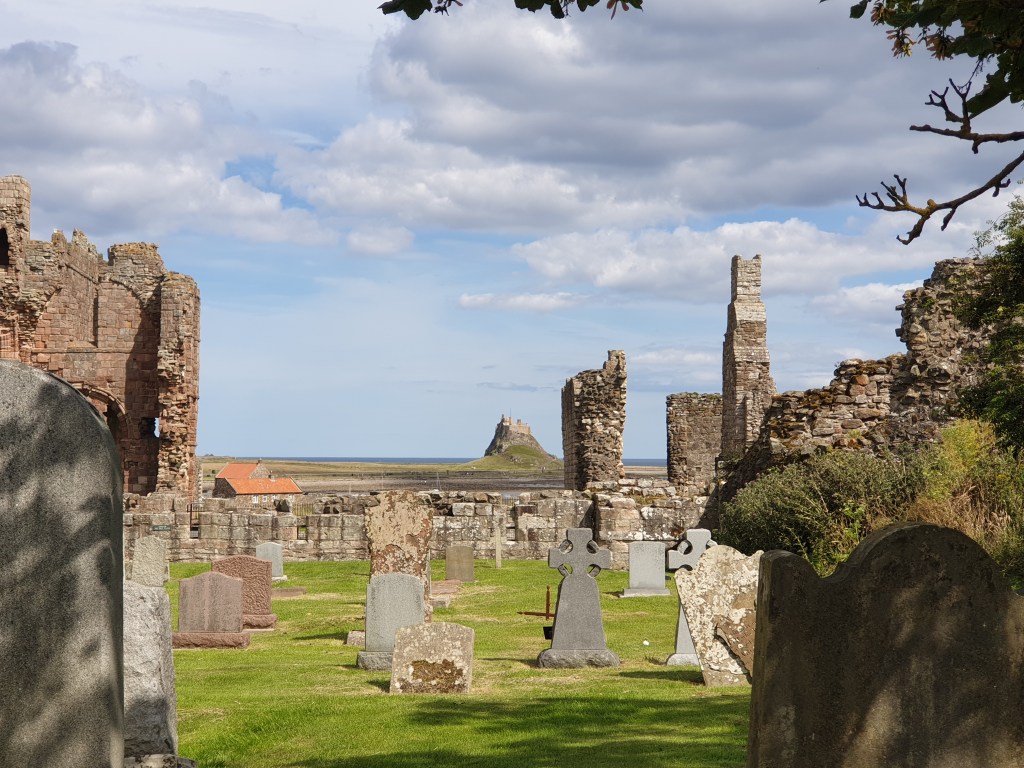
From Bamburgh I headed further up north to Holy Island, home of the famous ruined abbey of Lindisfarne. This was established as a monastery in 634AD and was a leading centre of learning and religion for all northern England. The monastery was probably the first ever place in Europe to be raided by the Vikings, in 793. Holy Island can only be reached during low tide, and many road signs advise you of safe crossing times and the perils of getting your timing wrong. There isn’t much left of the abbey any more – yet another ruined abbey to add to my list for this holiday – but the site still somehow has a special feeling to it, and is very photogenic, with a 15th century castle looming on a hill in the background.
What’s left of Liindisfarne Monastery, one of the holiest places for early English ChristiansThe graveyard near Lindisfarnce monastery with the castle in the distance
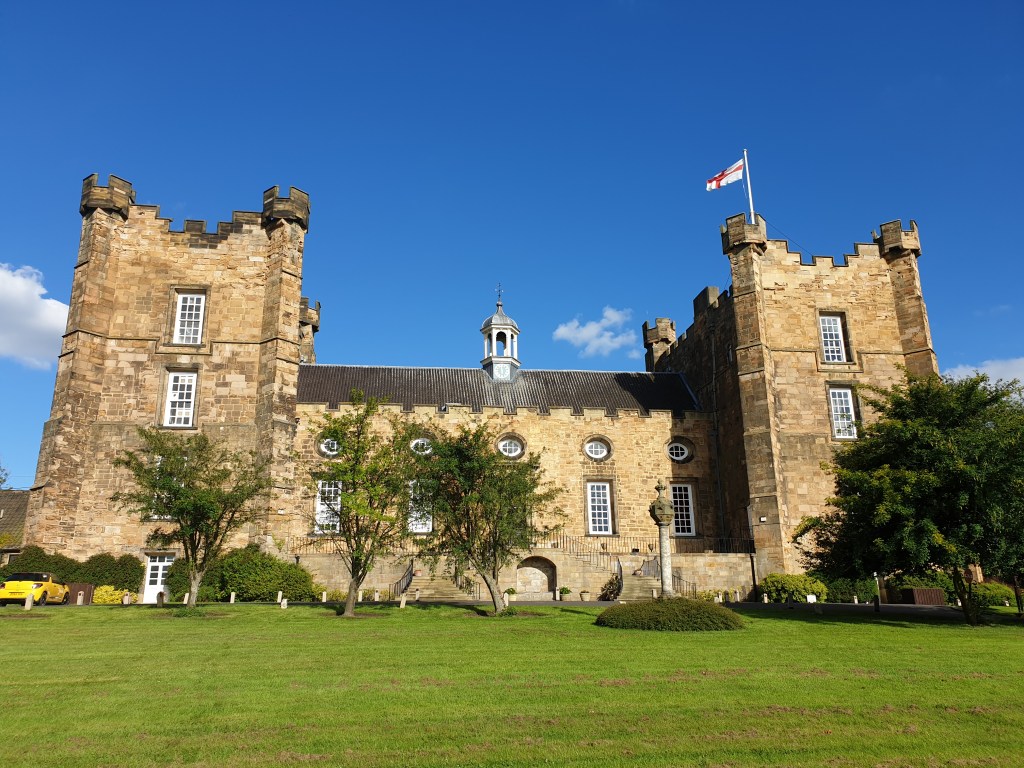
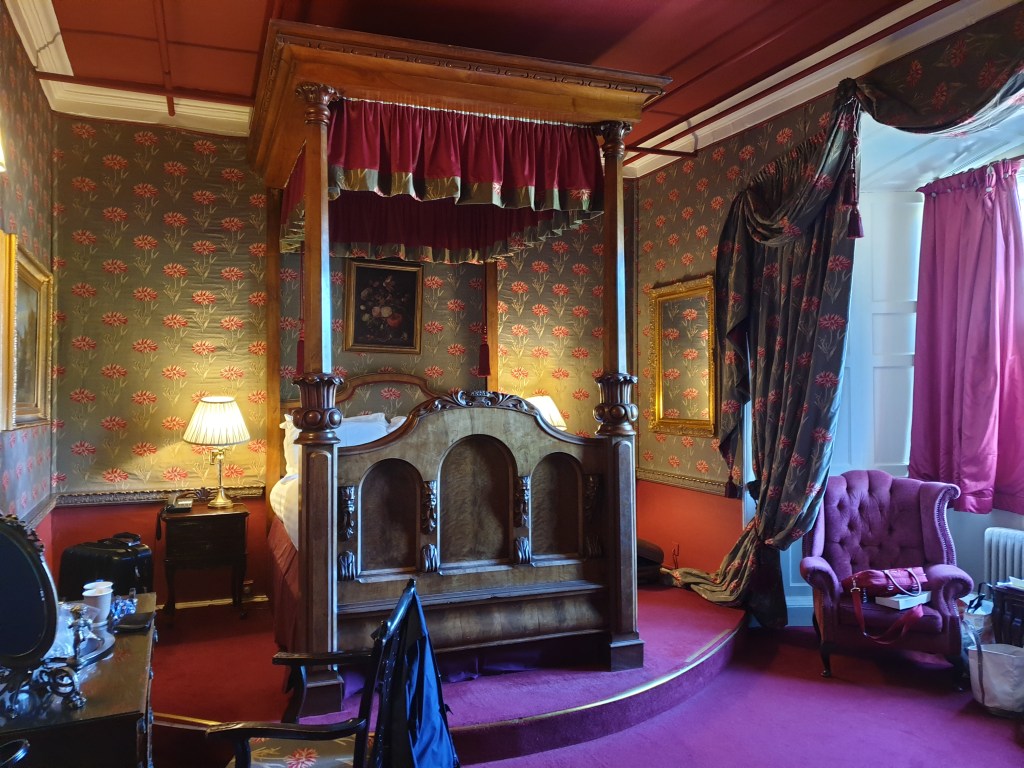
After Lindisfarne, it was time to head on to my next hotel. On the way I passed two other famous castles, Alnwick and Warkworth, but didn’t have time to visit. The whole area is rich in history – the many castles are a legacy of England’s turbulent relations with the Scots and also the struggle for power between local northern barons and the king. Appropriately, my last hotel was also a castle – Lumley Castle, built by Sir Ralph Lumsley in 1389. Sadly Sir Ralph backed the wrong side during one of medieval England’s many power struggles and lost his head shortly after the castle was finished. I ended my holiday in style with a room in the very oldest part of the castle.
Lumley Castle – a hotel built in 1389!My room !
The next day was the end of my holiday, and I completed the long drive back down to London. It was a very varied and interesting holiday, despite indifferent weather and Coronavirus restrictions. I will definitely return to Northumberland the Scottish borders – there are easily enough castles and walks to fill a good week of holiday and in two days I only scratched the surface of these little-known destinations. The Lake District was just as beautiful as I remembered it – despite my policy of not visiting the same place many times, I’ll keep my book of Lake District walks, just in case. After all I still haven’t climbed Scafell Pike, England’s highest mountain.
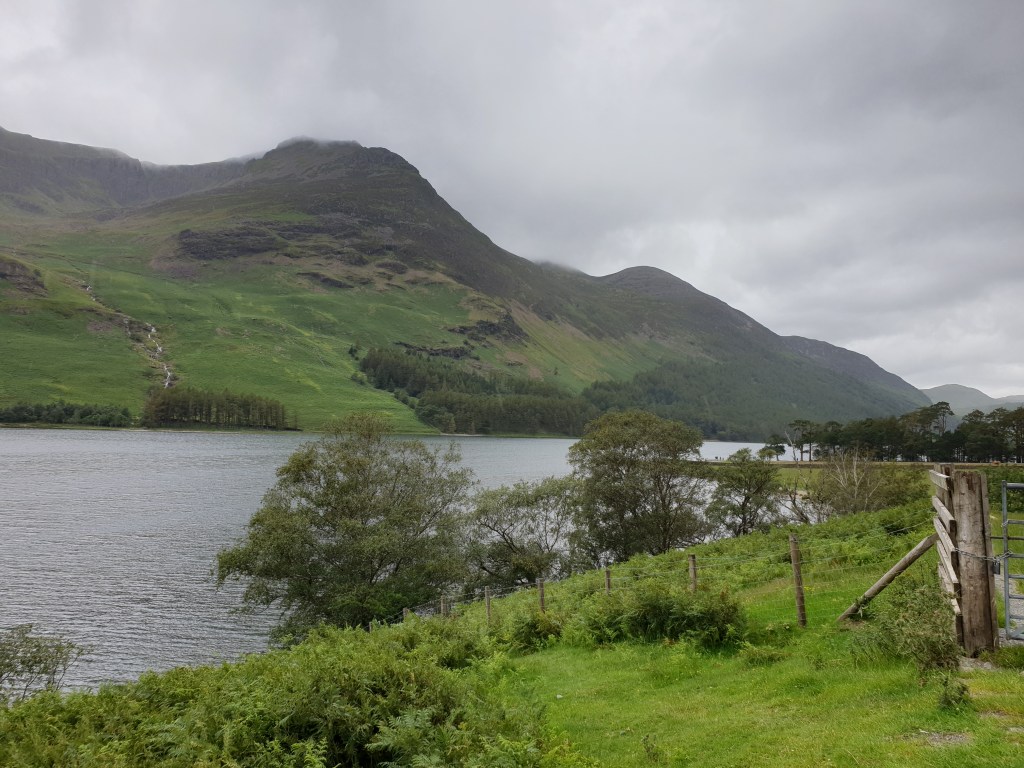
The next day I said farewell to my cottage and set off on a long driving tour into the Scottish borders and then back to Northumbria in England. I first made a small detour to see the north western part of the Lake District, around Keswick and Buttermere. This turned out to be a bad idea – the weather was poor, and with the arrival of the weekend, lots of other motorists had the same idea. I spent most of the time squeezing past oncoming vehicles on the tiny roads rather than looking at the scenery, but I did stop to take a photo of beautiful Buttermere in the rain.
Buttermere in the rain
From there I headed straight north up the M6 into Scotland, leaving the motorway at Moffat. This was a pretty little town, and much less touristy than the Lake District. Scotland had not fully emerged from its Coronavirus lockdown, so some shops were closed and everyone wore masks. I searched hard for a tea or coffee room, like there are all over the Lake District, but couldn’t find even one. In Scotland people seem to do their drinking in pubs (which were open) and drink beer rather than coffee at lunch time. I also had to search hard for somewhere to buy lunch, but finally found a bakery. After many communication problems caused by face masks and the owner’s broad Scottish accent, I finally managed to order three scones. A final communication issue arose when I couldn’t believe the price – only £1.65 in total. You’d pay that per scone in London.
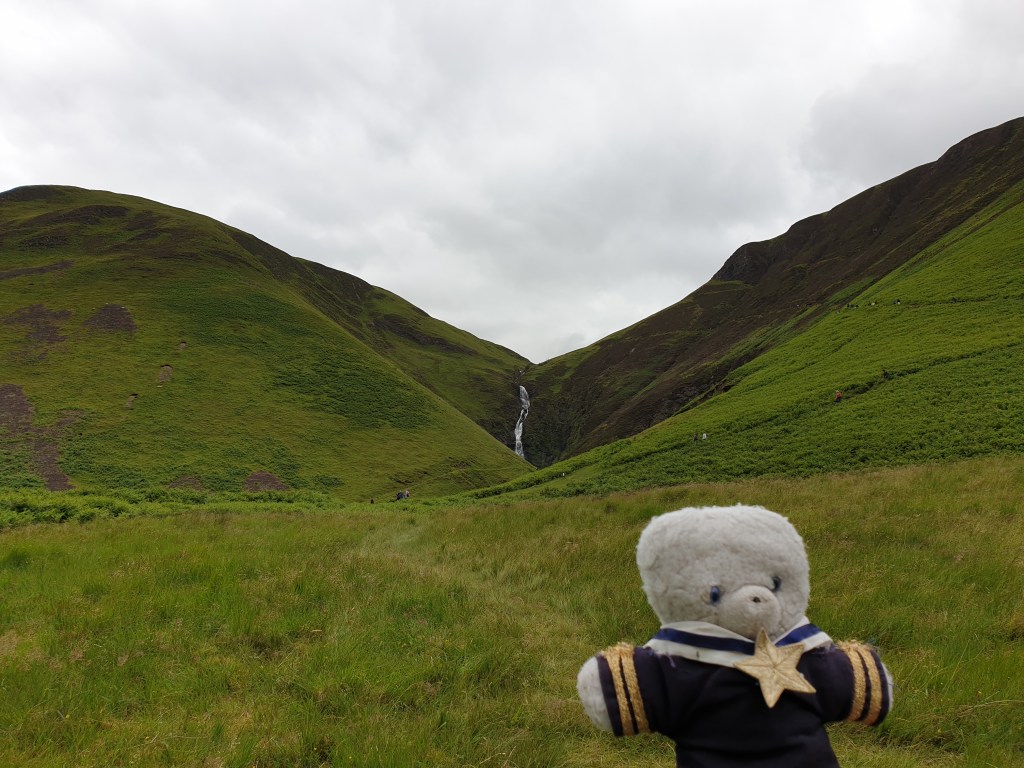
From Moffat I headed off along a country road, through rolling, empty hills. The straight and broad road was a relief after the twisty roads of the Lake District. I stopped briefly – along with what looked like half of the local borders population – at a local beauty spot called the Mare’s Tail, where there is a pretty waterfall.
Me wtih the Mare’s Tail in the background
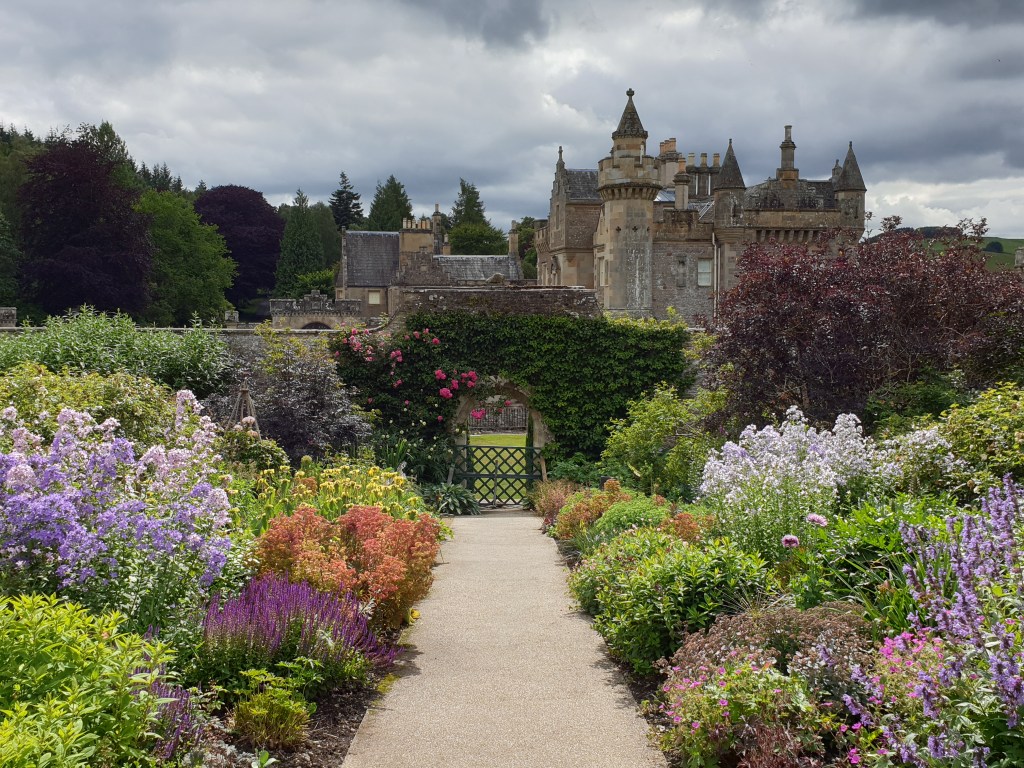
Then I headed on through Selkirk to Abbottsford Castle, the home of Sir Walter Scott (author of many classic British novels, such as Ivanhoe and Rob Roy). The castle was still closed (Coronavirus again) but I spent a very pleasant half hour strolling through the beautiful gardens.
Sir Walter Scott’s castle and garden at Abbottsford
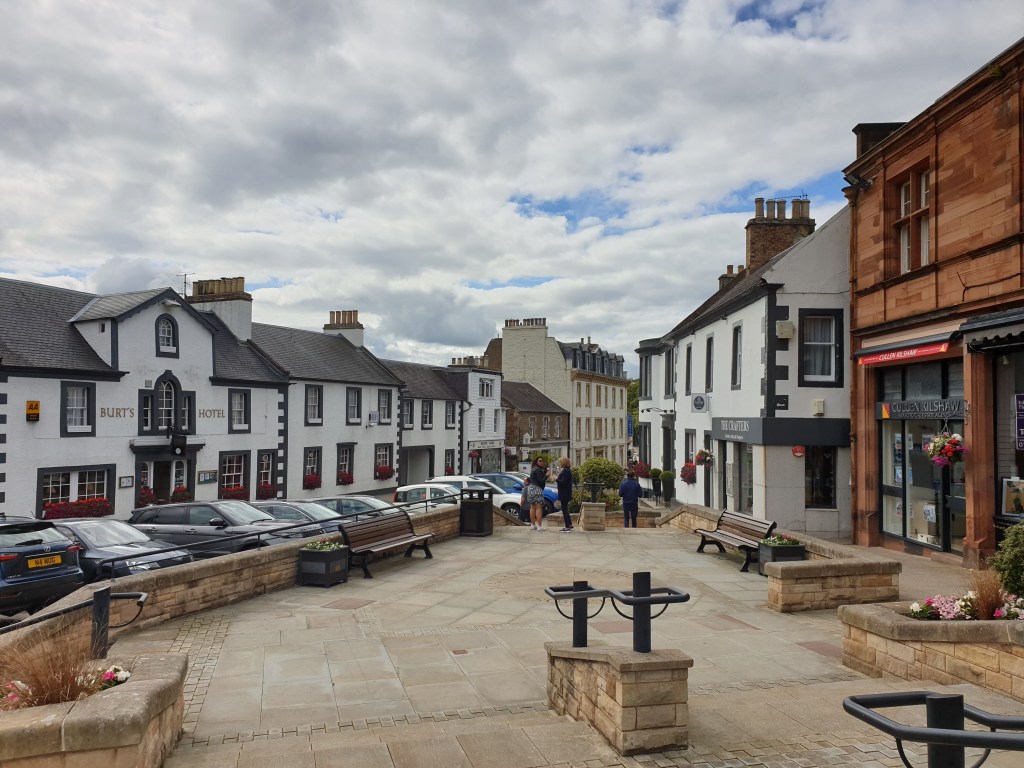
From Abbottsford, I headed on to Melrose, yet another pretty borders town with a nice central square and ruined abbey.
Melrose – pretty town but no tea room!
I searched again in vain for a tea-room, but there were none, not even closed ones. One pub was open, but was full and wouldn’t let me in. Just outside of Melrose I visited another local beauty spot called Scott’s View- three hills rising out of rolling Scottish countryside. It was a beautiful sight in the late afternoon sun.
Scott’s view
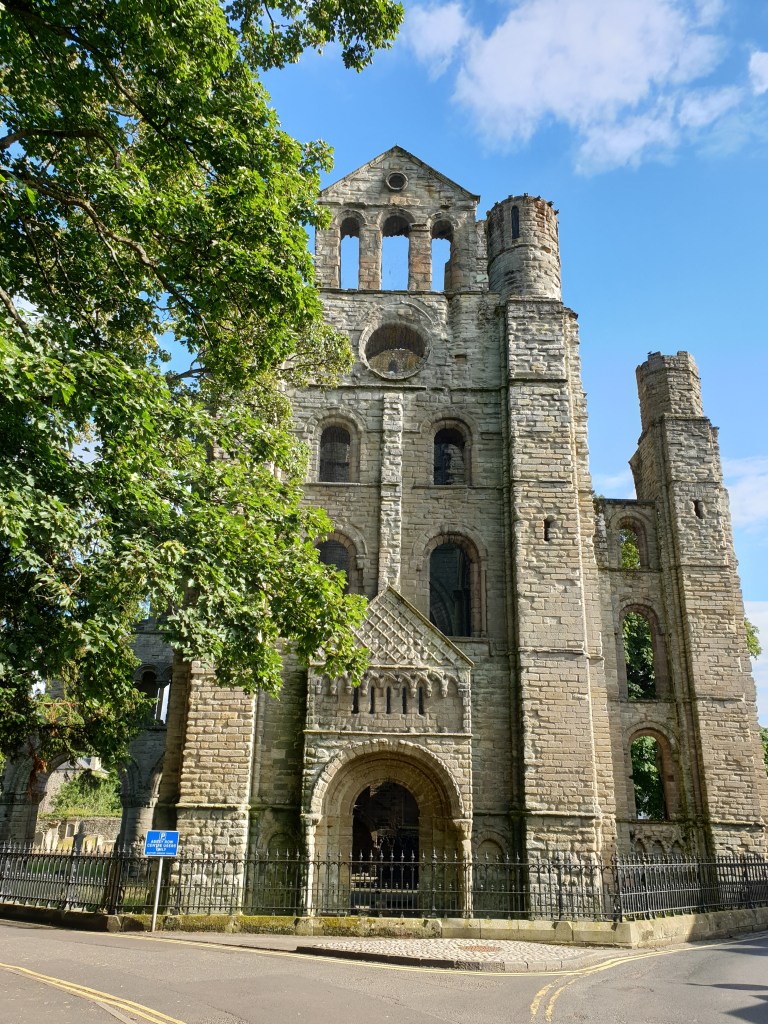
Last on my Scottish excursion was Kelso, another small market-town. All these towns seem to be built to the same pattern, with a pretty central square and ruined abbey. I arrived after five o’clock so had no hopes of finding a coffee room open (I didn’t even see a closed one) but did I stumble across a Co-op and stocked up on some snacks and some cans of cold latte to help me drive the remaining two hours to my hotel.
The abbey at Kelso
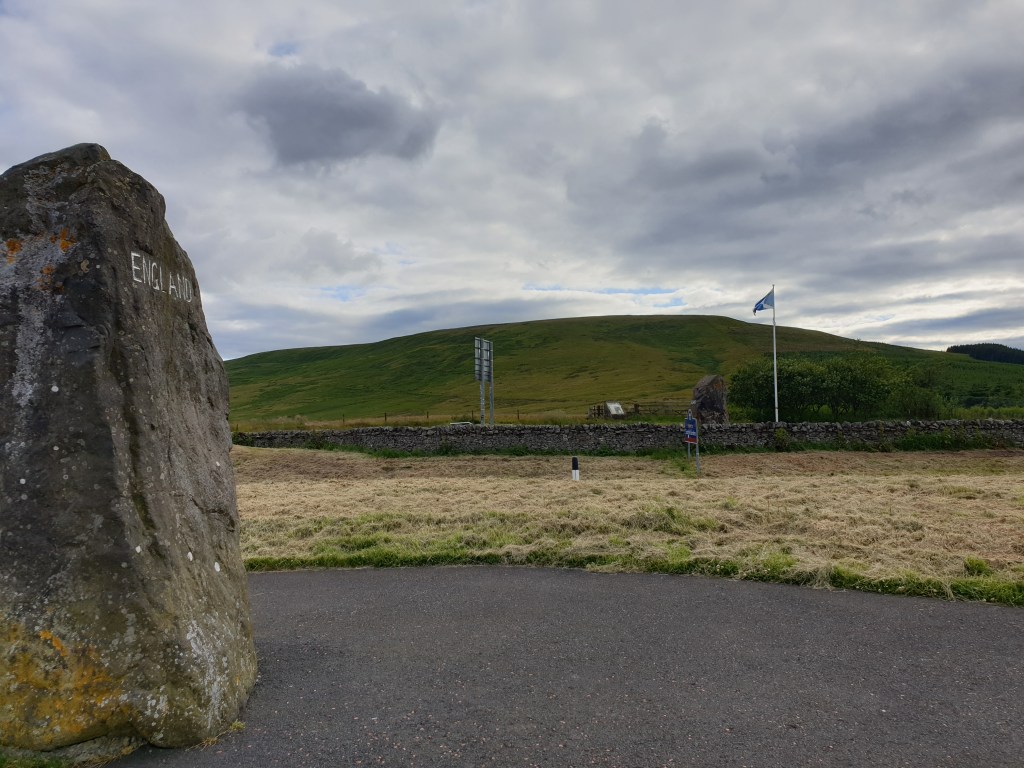
From Kelso my route took me back south to England. I passed through Jedburgh, which was also supposed to be worth visiting – but it was late and I’d seen enough pretty town squares and ruined abbeys for the day. The border with England was marked by a Scottish flag and large “Goodbye from Scotland” sign on the Scottish side….and a small inscription “England” on a stone on the other side.
Enthusiasm for the border seems to be rather different between the Scots and the English…
The road continued through rolling hills of the Northumberland National Park and yielded one further interesting detour to see a part of Hadrian’s Wall.
Nearly 2000 years old
Hmm, small………Not nearly as impressive as the Great Wall of China (see my very first blog for a description of this), but given that it is nearly 2000 years old it’s still remarkable. Apparently, there are more extensive sections elsewhere but unfortunately my route didn’t go past them. I finally arrived at my hotel in Hexham at around 8pm. I’d picked a really nice hotel, facing………yes, another medieval abbey, only this time still in use as a church. I had a quick stroll around town – another pretty place, very similar to the others I had visited – before enjoying a surprisingly sophisticated dinner in my hotel’s restaurant.
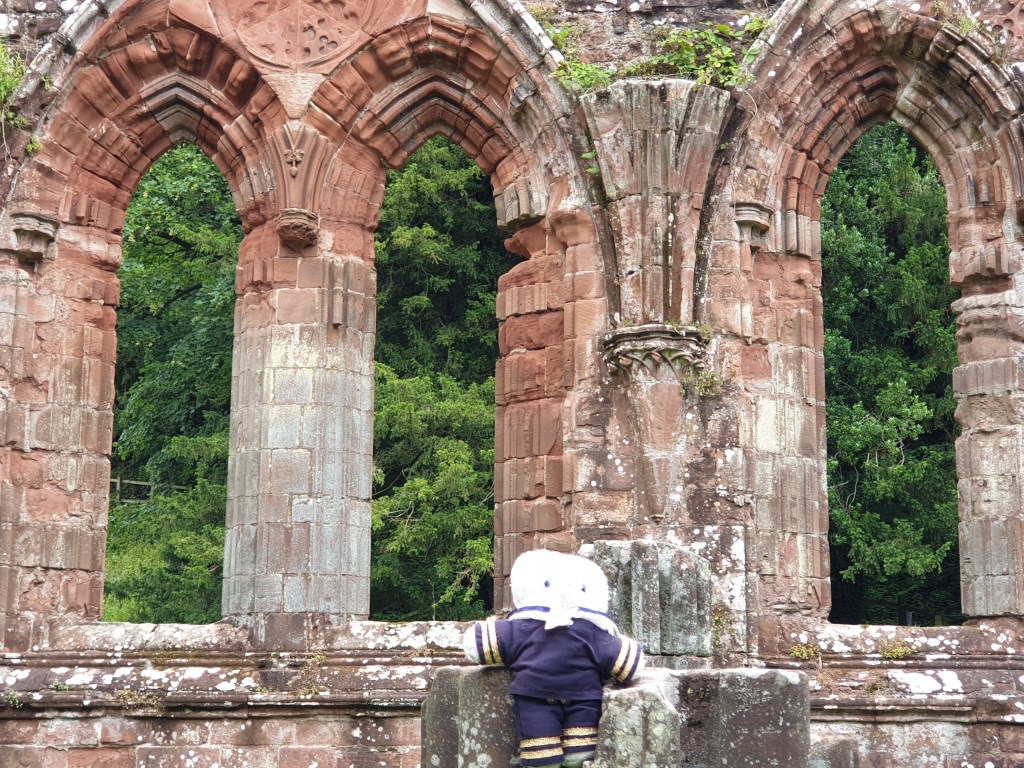
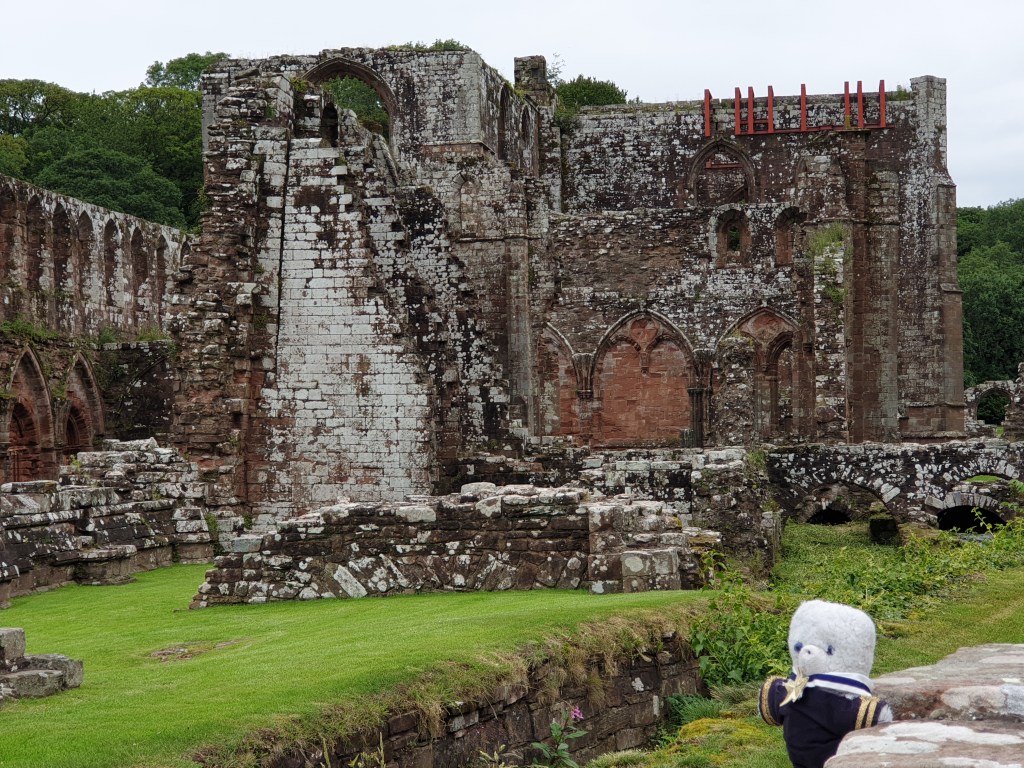
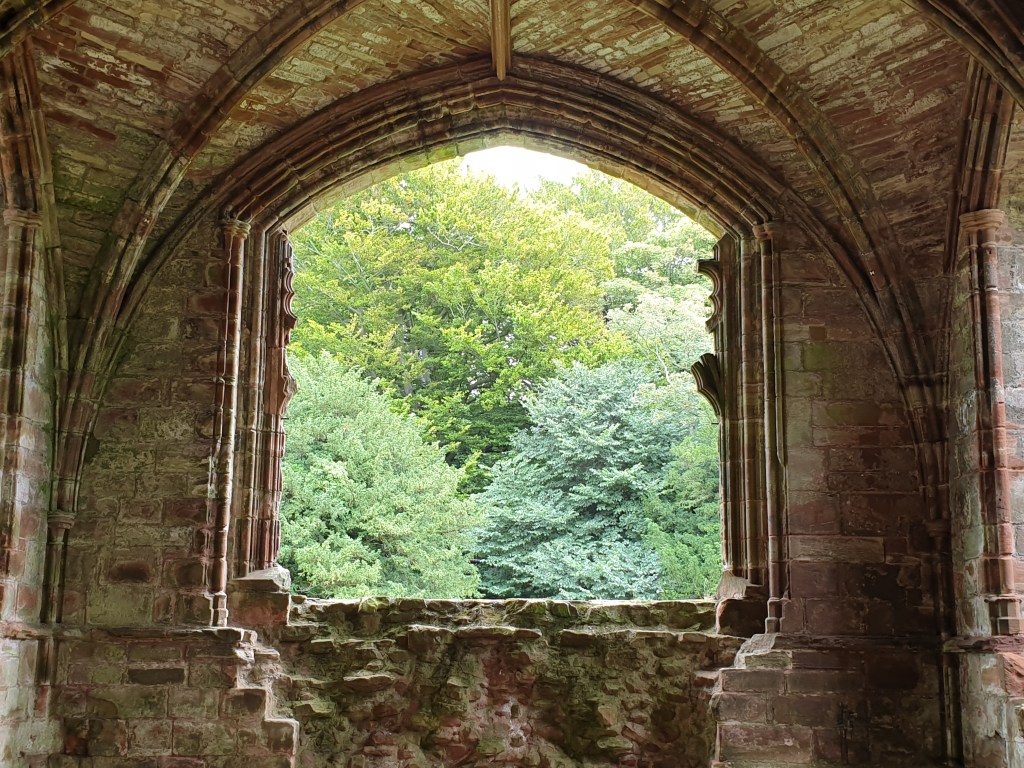
Thursday’s weather forecast was for more grey cloud and some light rain, so I decided to do a short low level walk instead of climbing another peak. However, I missed the turning off the main road to the start of the walk and found myself on the road to Barrow. I made a quick decision not to turn back but to carry on and do a driving tour first before the walk. The road left the mountains and then followed a pretty coastal route, before reaching Barrow. I had expected the city to be poor, and suffering from the collapse of the British shipbuilding industry, but instead it seemed quite active, and had some fine and well-maintained Victorian architecture from its glory days. On the road back from Barrow I noticed a sign for Furness Abbey, so I decided to visit that. The abbey used to be the second biggest in England, but was destroyed in the Reformation by Henry VIII. The remaining ruins were very atmospheric – it helped greatly that I was almost the only visitor. I enjoyed my sandwich lunch at a pretty spot by a small stream. By the time I’d finished visiting, there wasn’t time to do my originally planned walk any more, so I headed back to the cottage.
Furness abbey ruinsWhere I had my lunchShades of green….
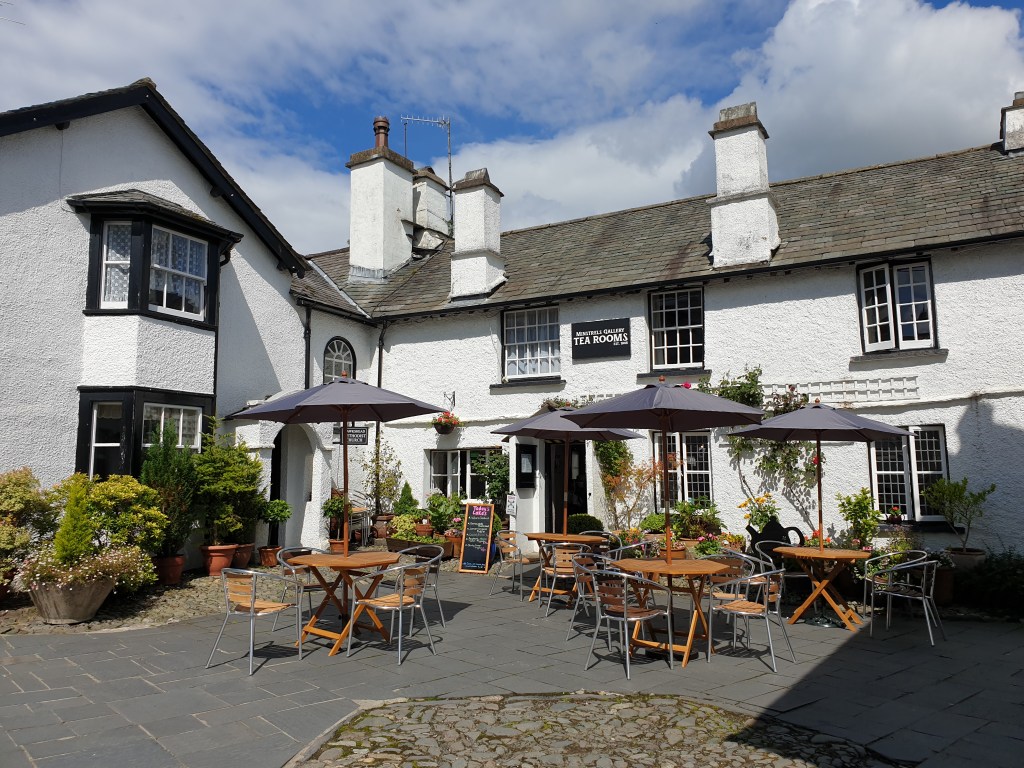
Friday was my last full day in the cottage, and I opted for another classic walk – climbing the Langdale Pikes in the very middle of the Lake District. I took a roundabout drive to get there, taking the smaller rounds around the west of Lake Windermere. These turned out to be winding and very narrow, and a real test of my driving skills. One compensation of my route was the opportunity to visit Hawkshead, a pretty small village with many very nice tea shops.
One of two pretty tea shops I visited in HawksheadOn the road to the Langdale Pikes
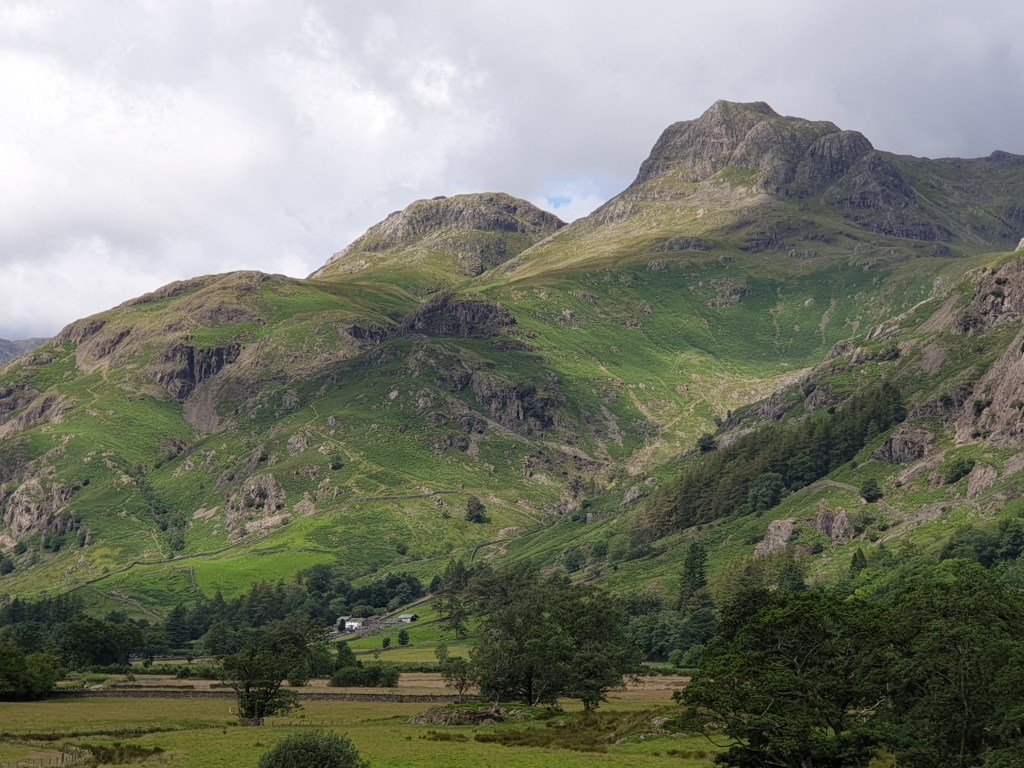
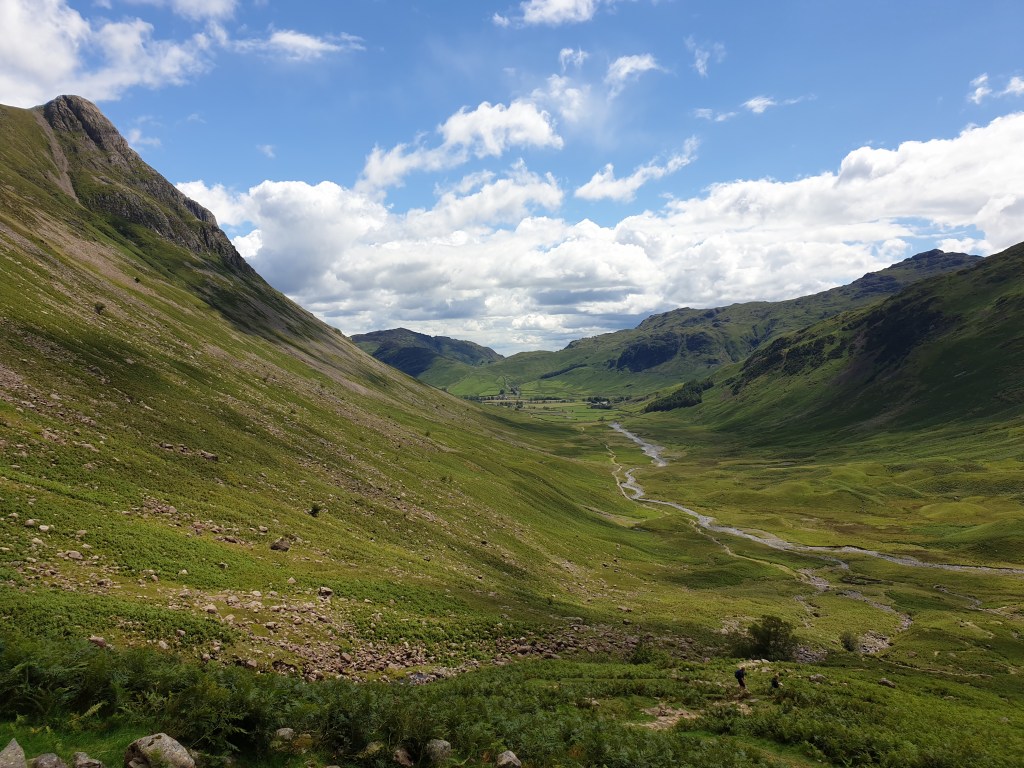
The hike up to the Langdale Pikes was almost as enjoyable as Helvellyn. The walk started up a broad valley, surrounding ahead and on each side by almost sheer mountains, with the distinctive dome-shaped Langdale Pikes on my right.
The view at the start of the walkLooking back along the valley before starting the climb
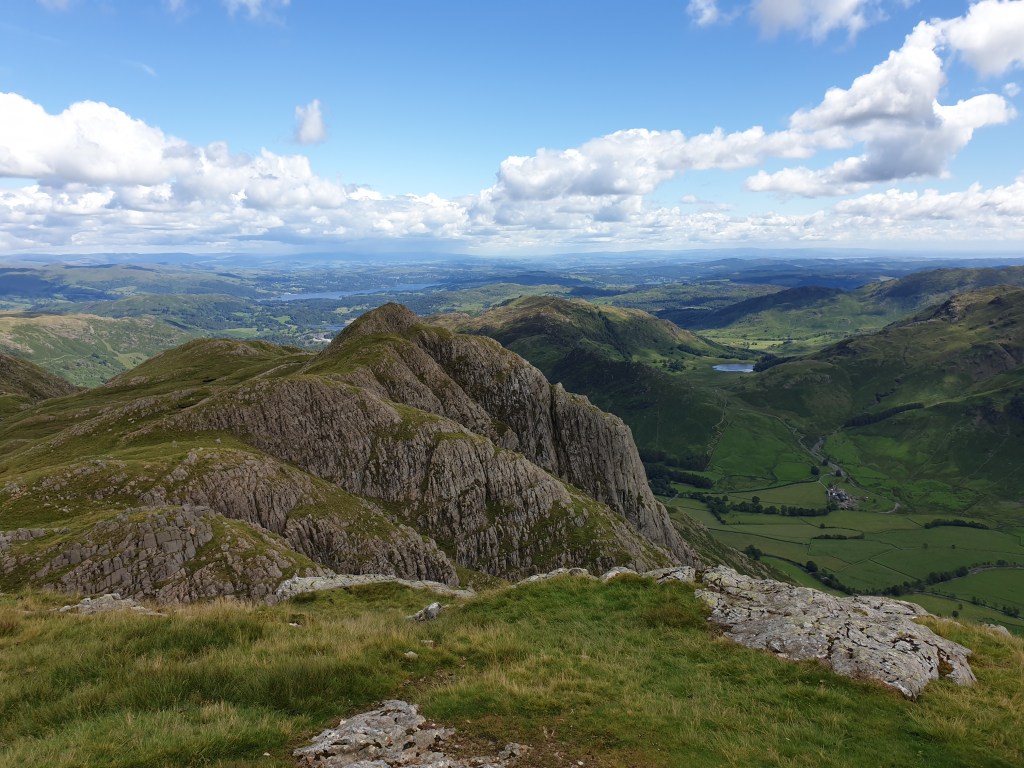
Then I climbed up alongside a stream to a plateau, with views out to Scafell to the west. Next came another climb to Pike o’Stickle mountain and a short, easy, hands and feet scramble up to the top. The view from there was the very best I’d seen so far – a sheer drop on two sides, views back down the valley to the east, to Scafell to the north west and as far as the sea to the south-west. There were even seagulls for company, gliding effortlessly in the stiff breeze.
The view from the top
The walk was supposed to continue with a climbing of the other “pikes”, but it was getting late – all that time I spent having tea and cakes in the morning! I thought the view would be pretty much the same from all of the others, so I took a short-cut back down the mountain. I arrived back at the car park in bright sunshine and was very happy to find a nice pub with a beer garden and views of the mountains. I toasted my latest climbing success with a lager shandy and suddenly remembered that this was the first day of the week when I hadn’t rained at all.
















 Trouspinet travels