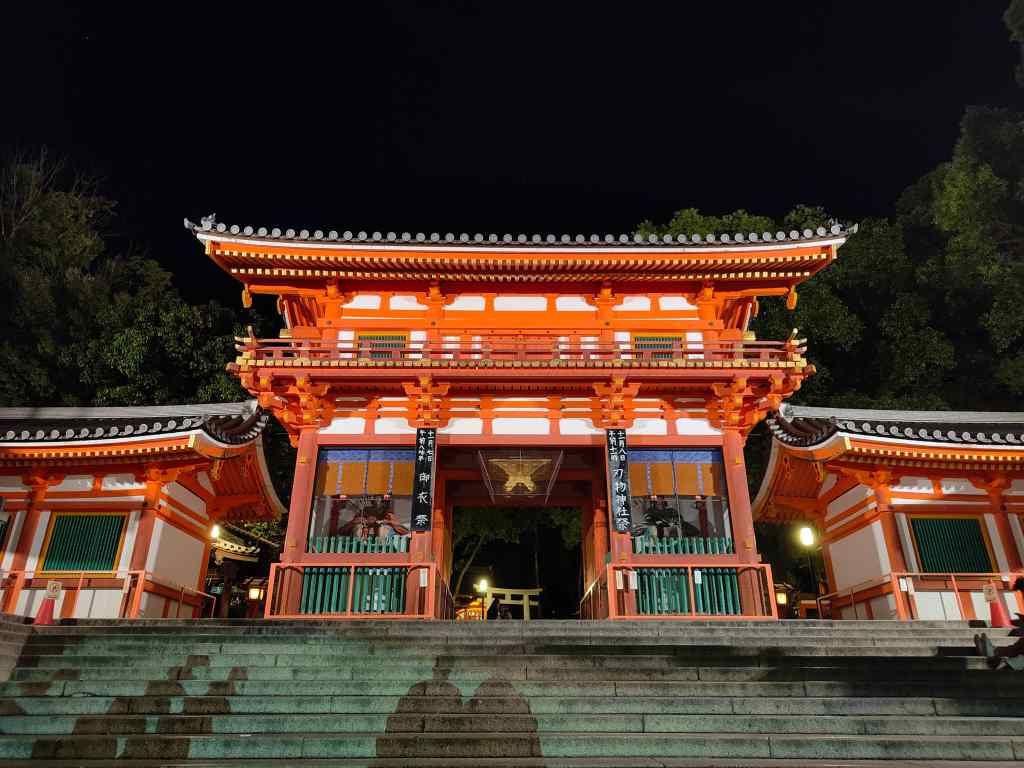
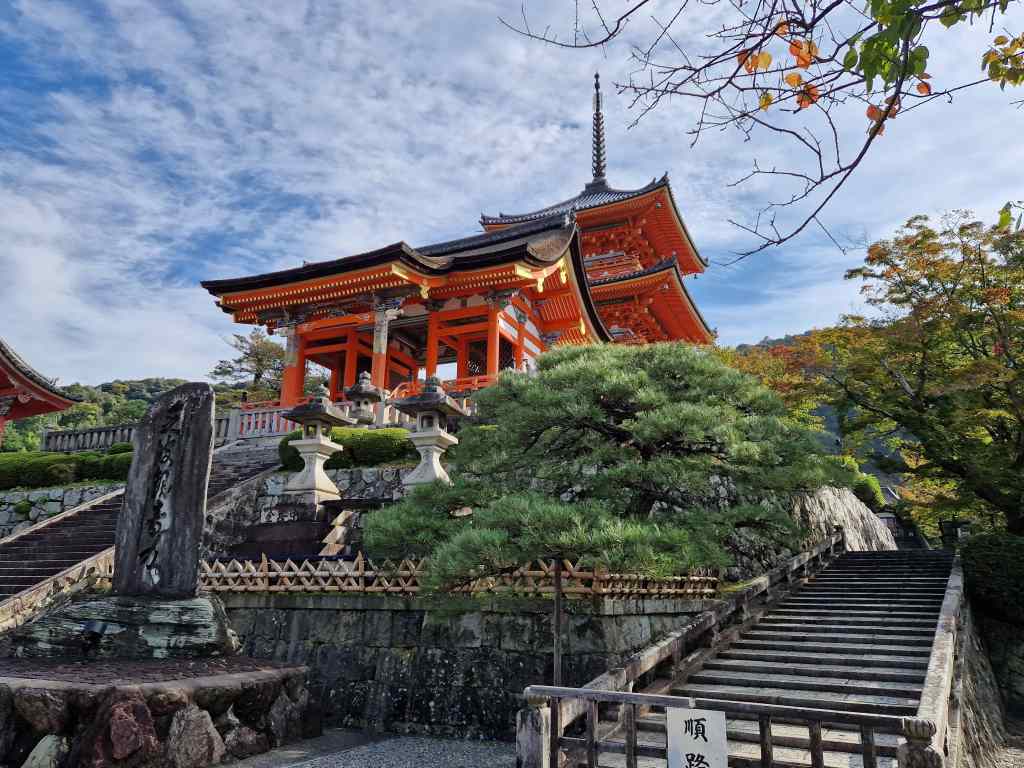
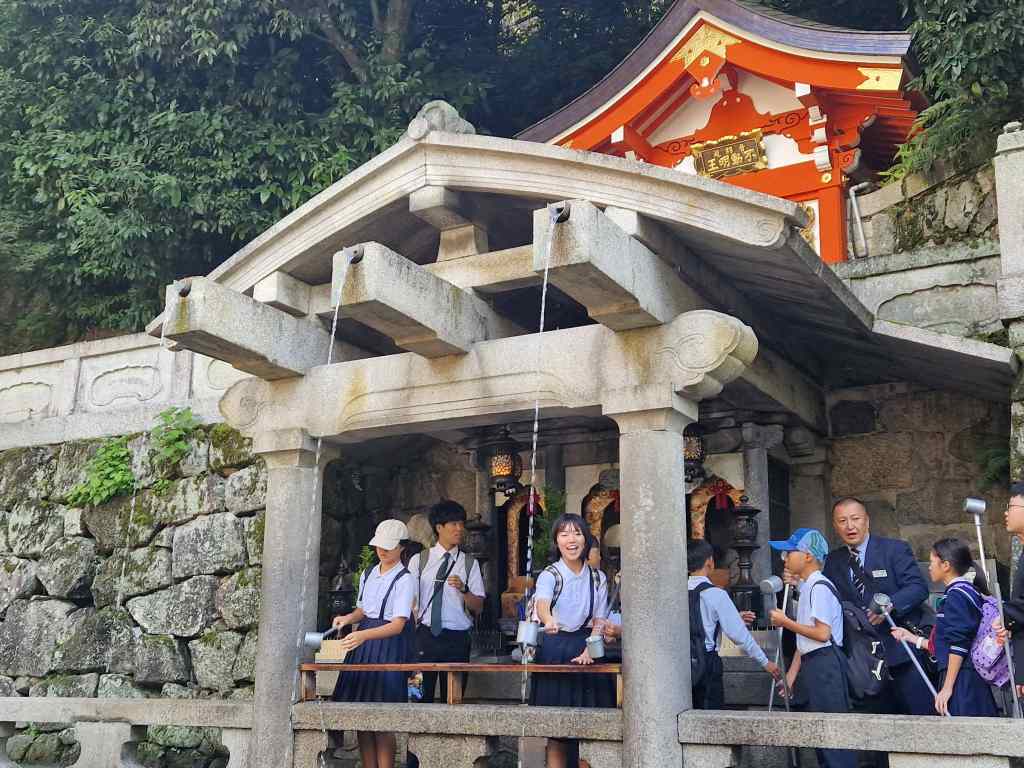
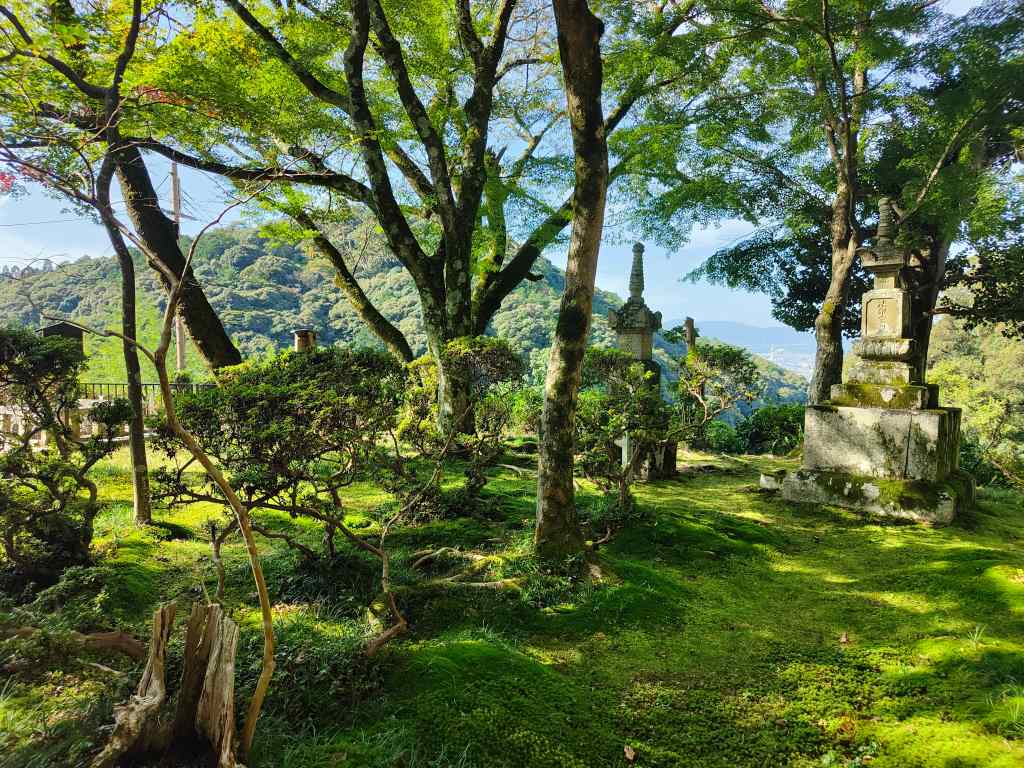
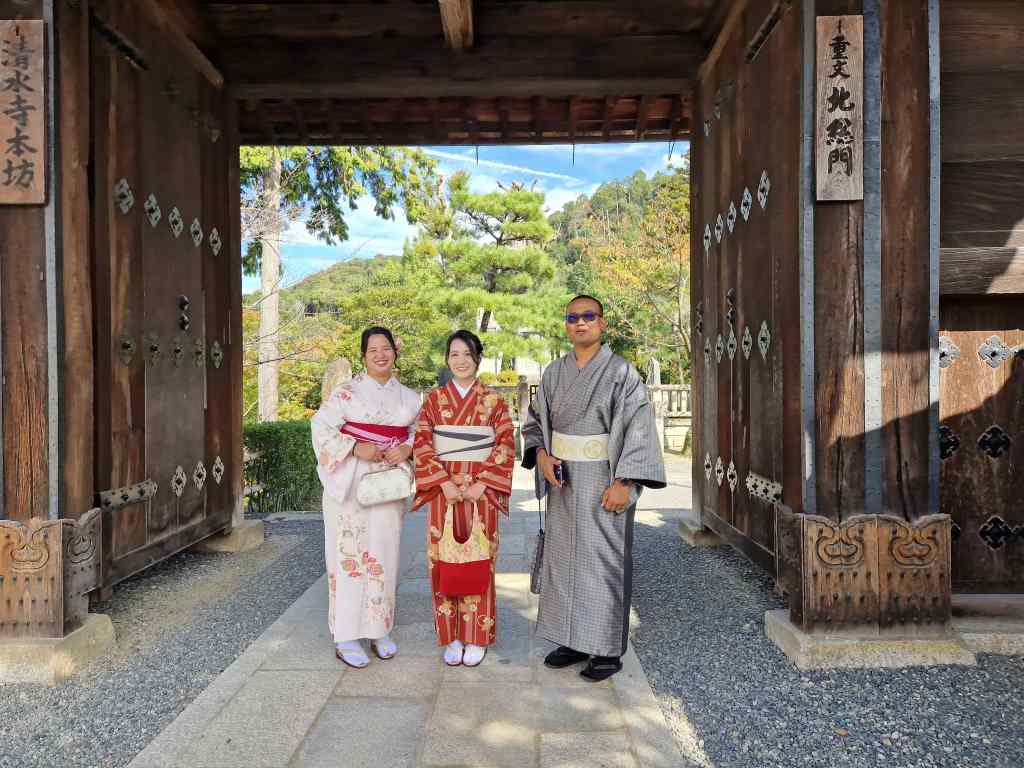
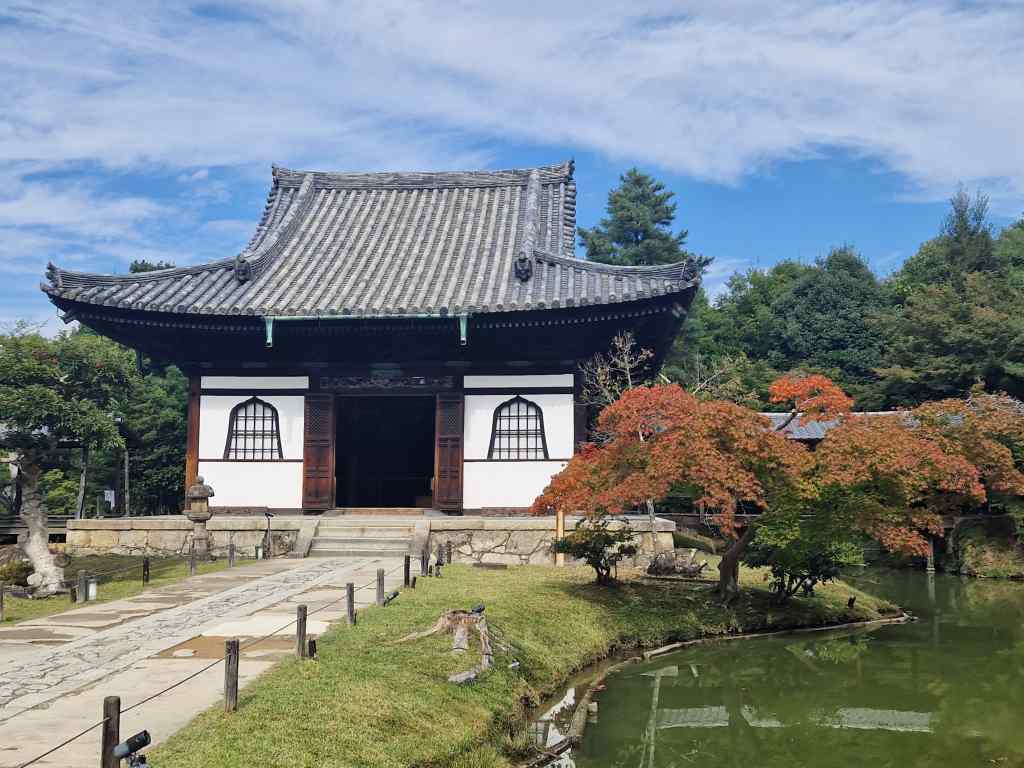
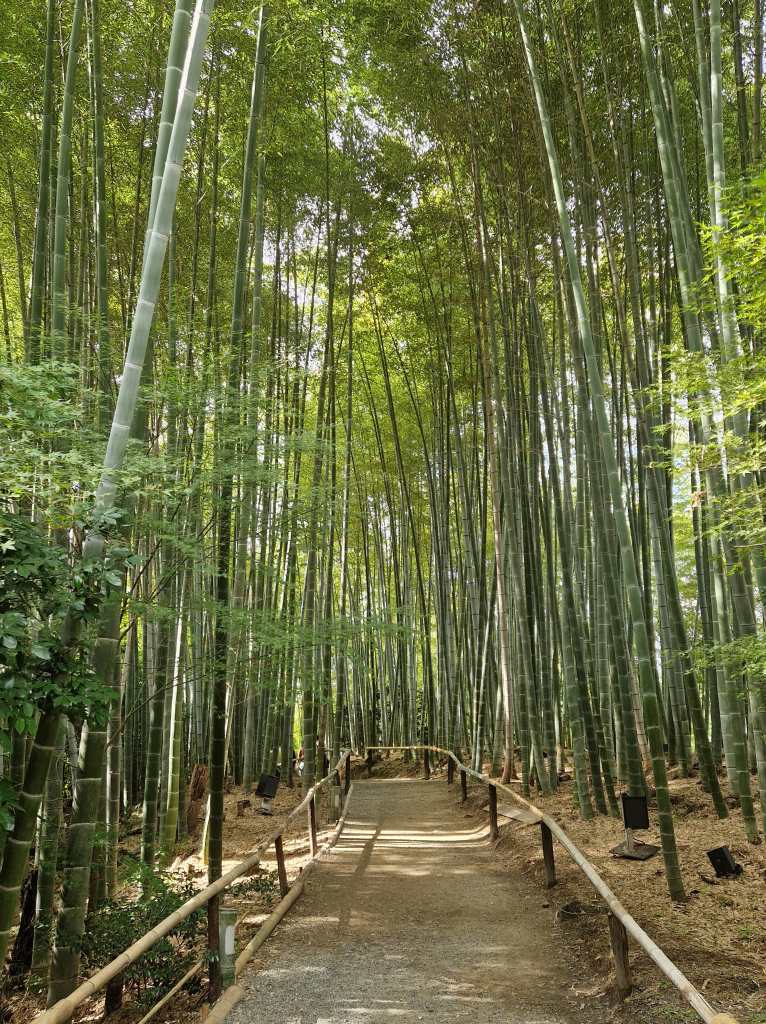
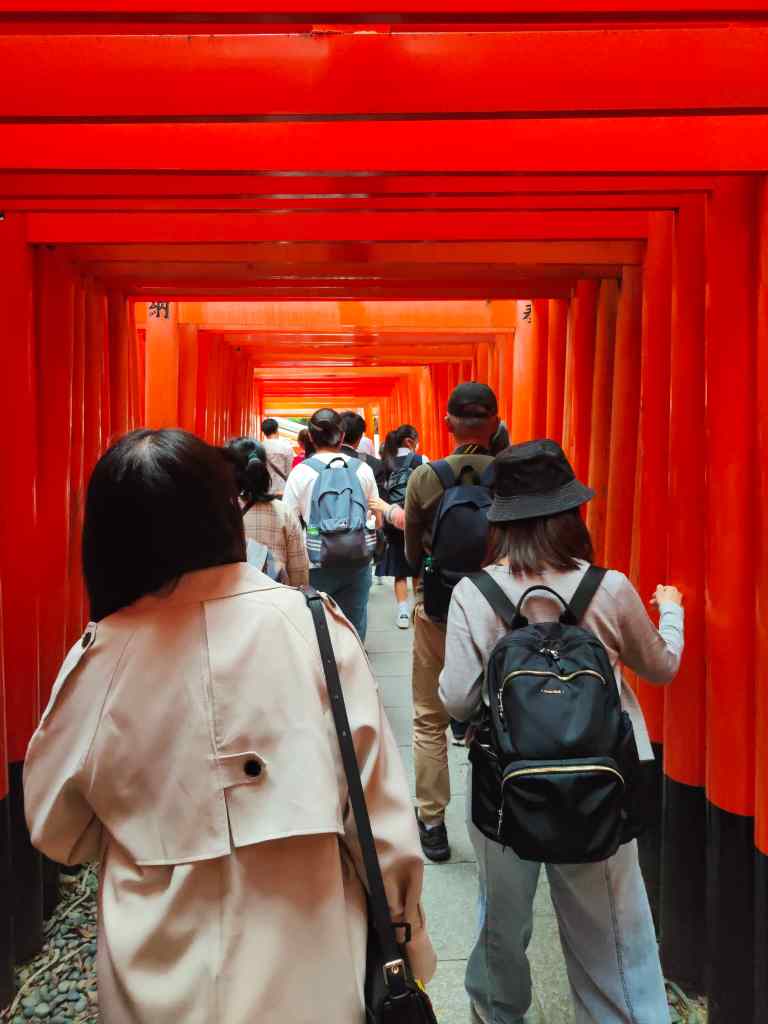
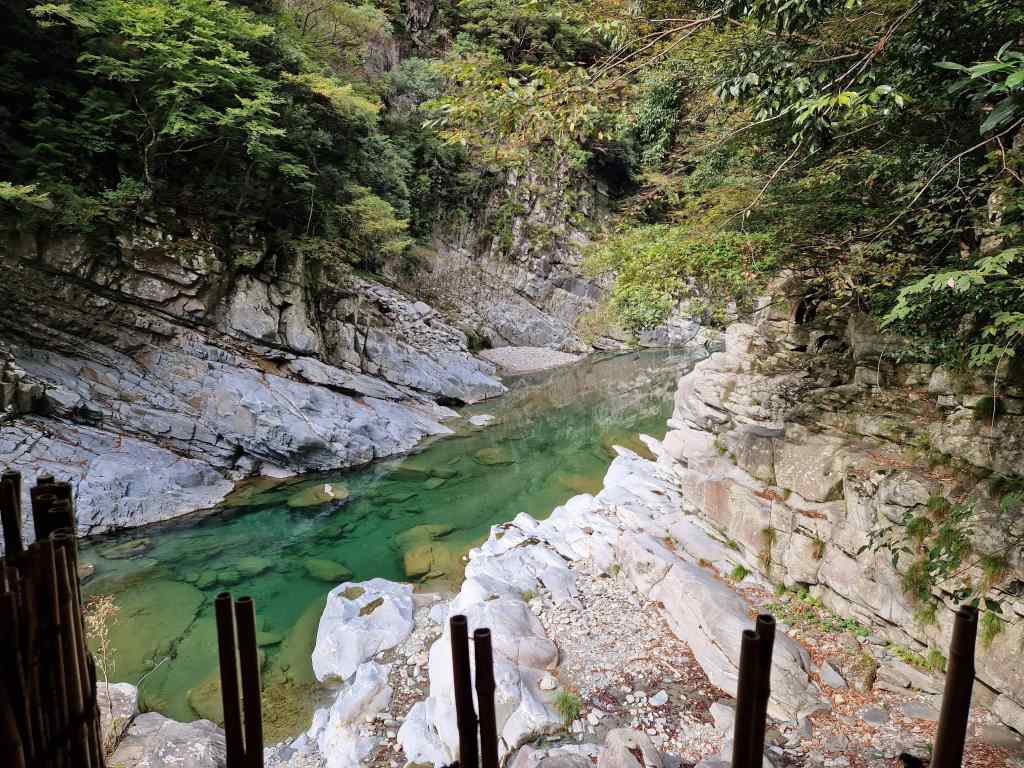
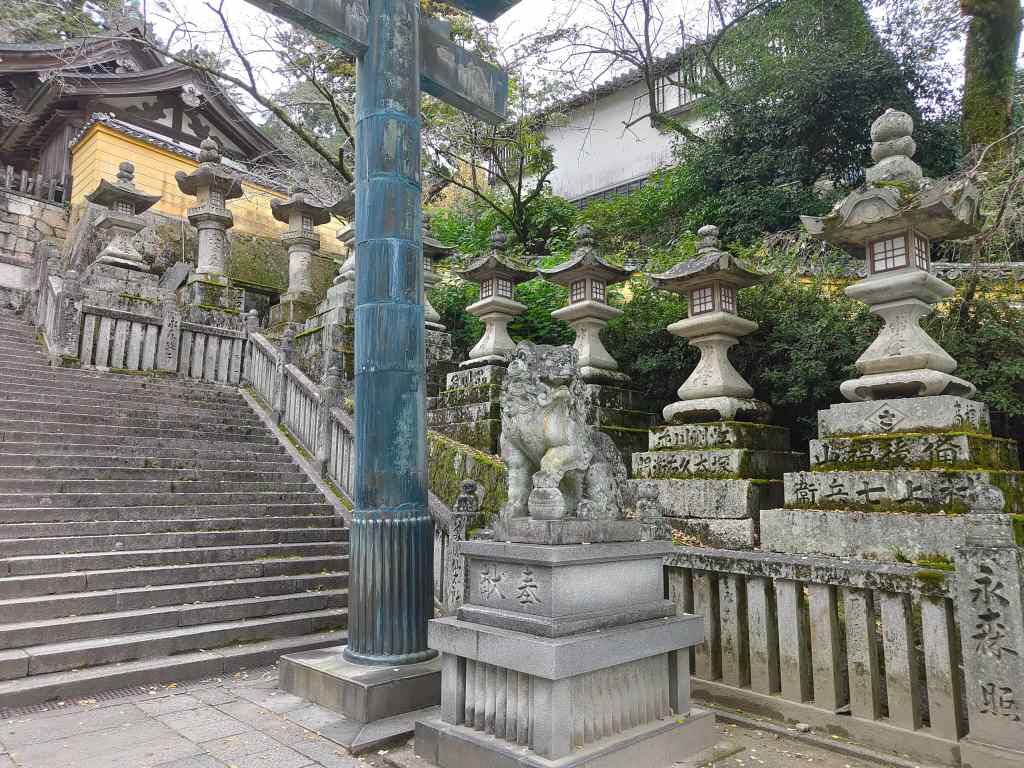
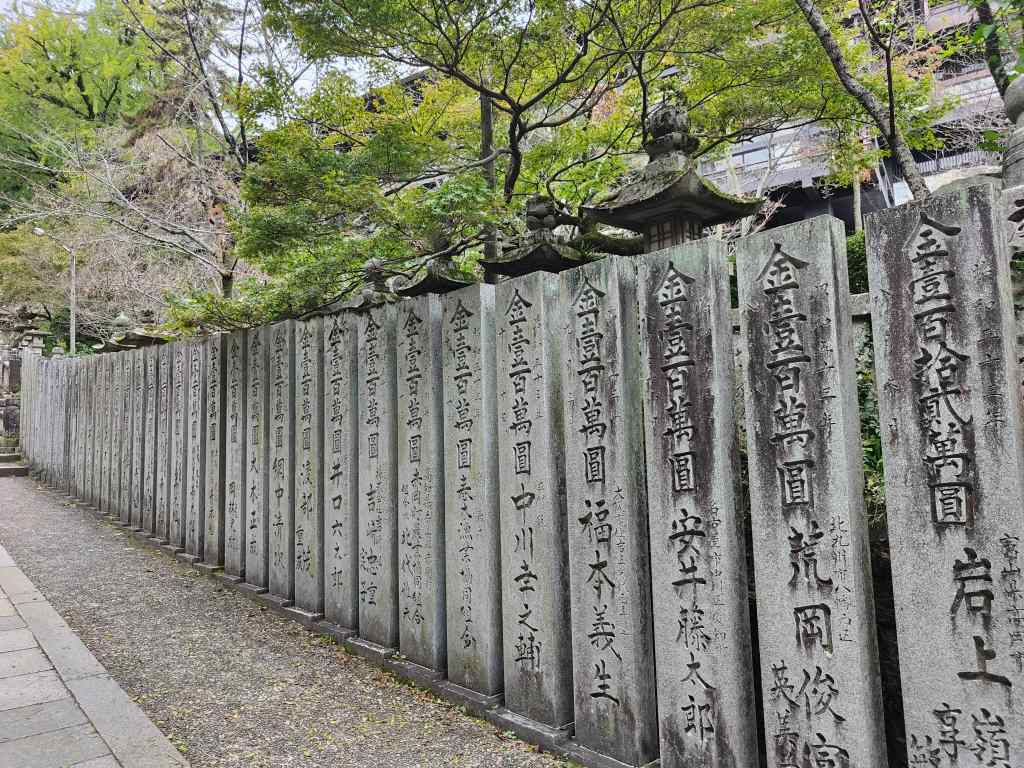
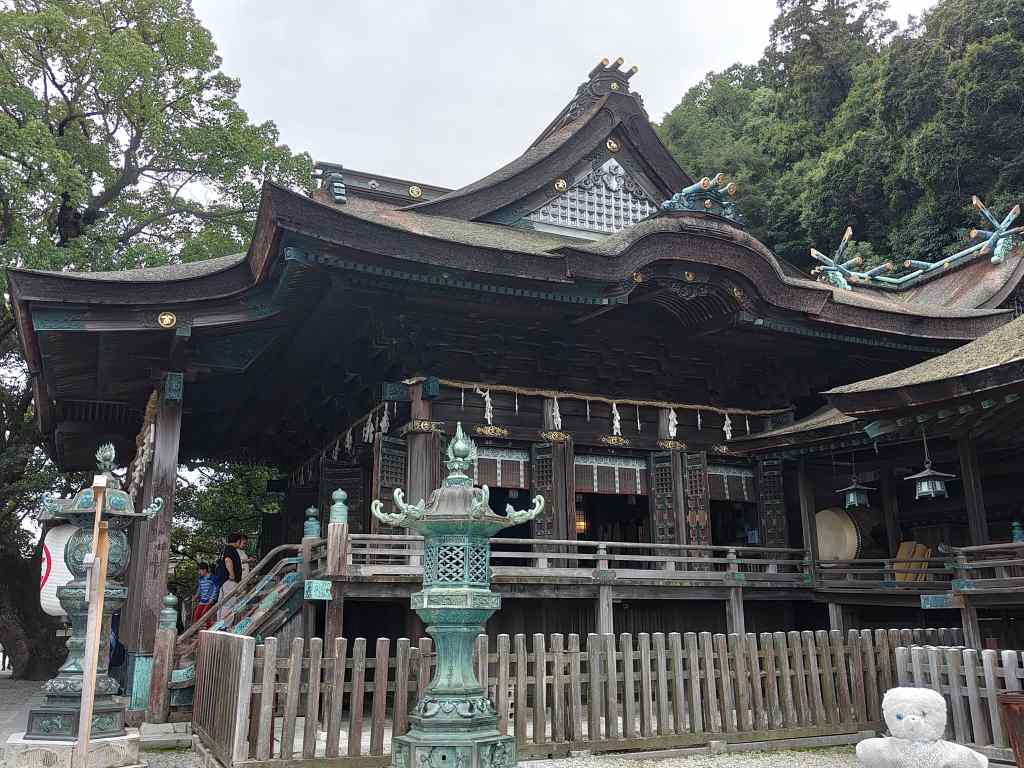
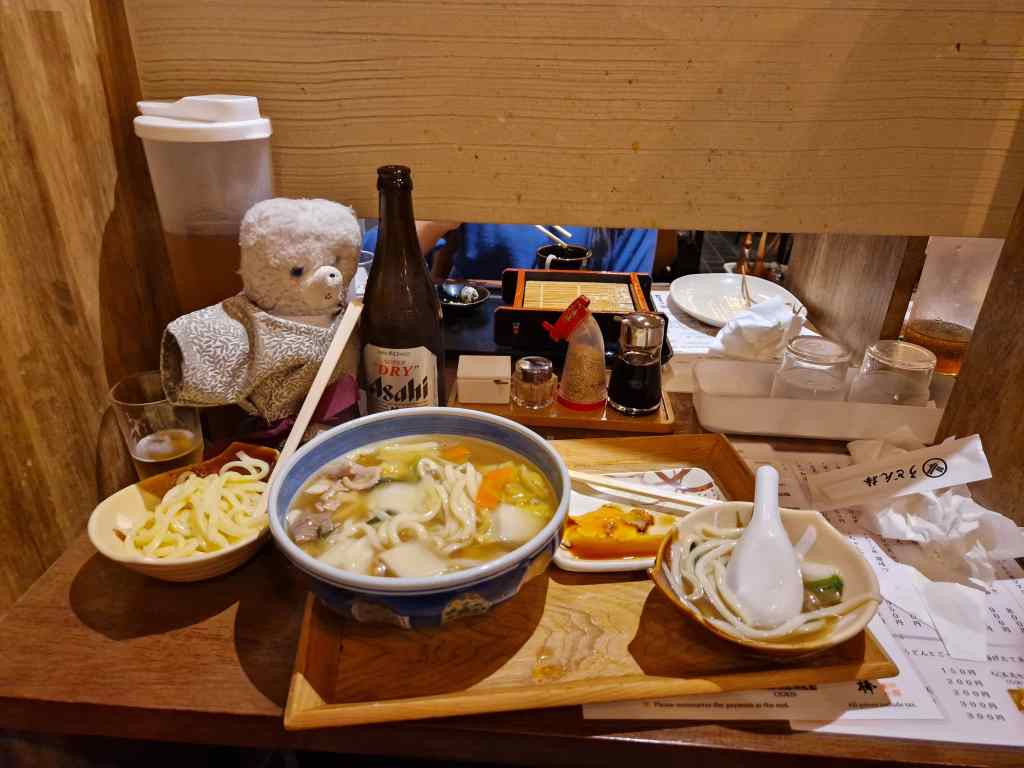
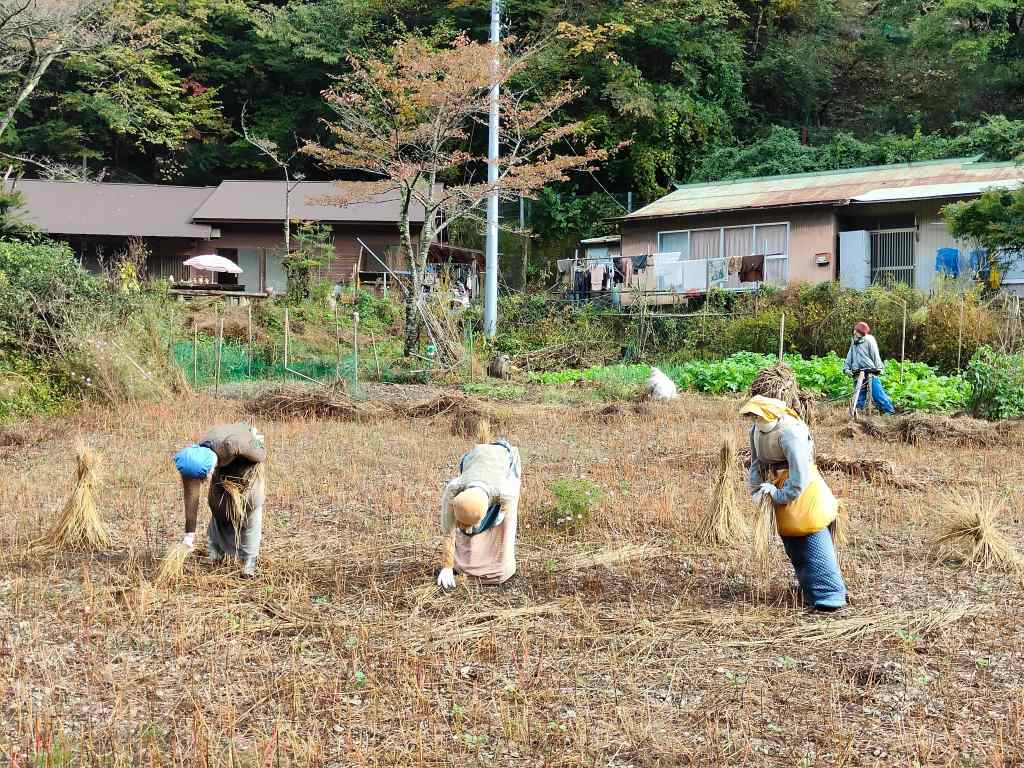
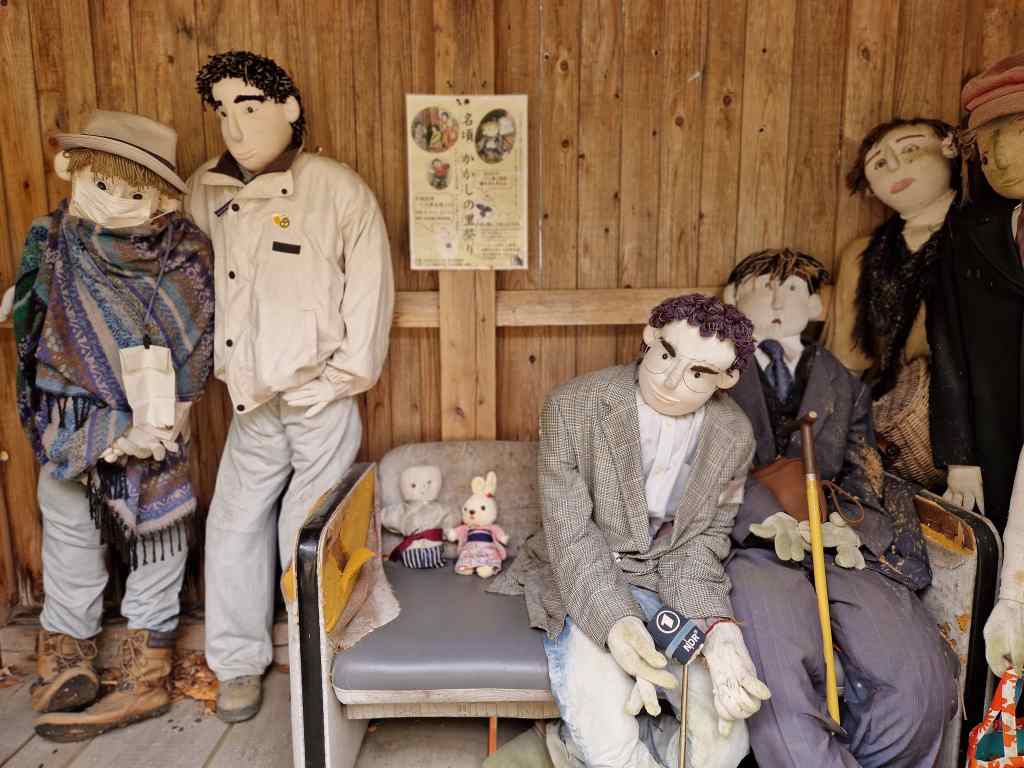
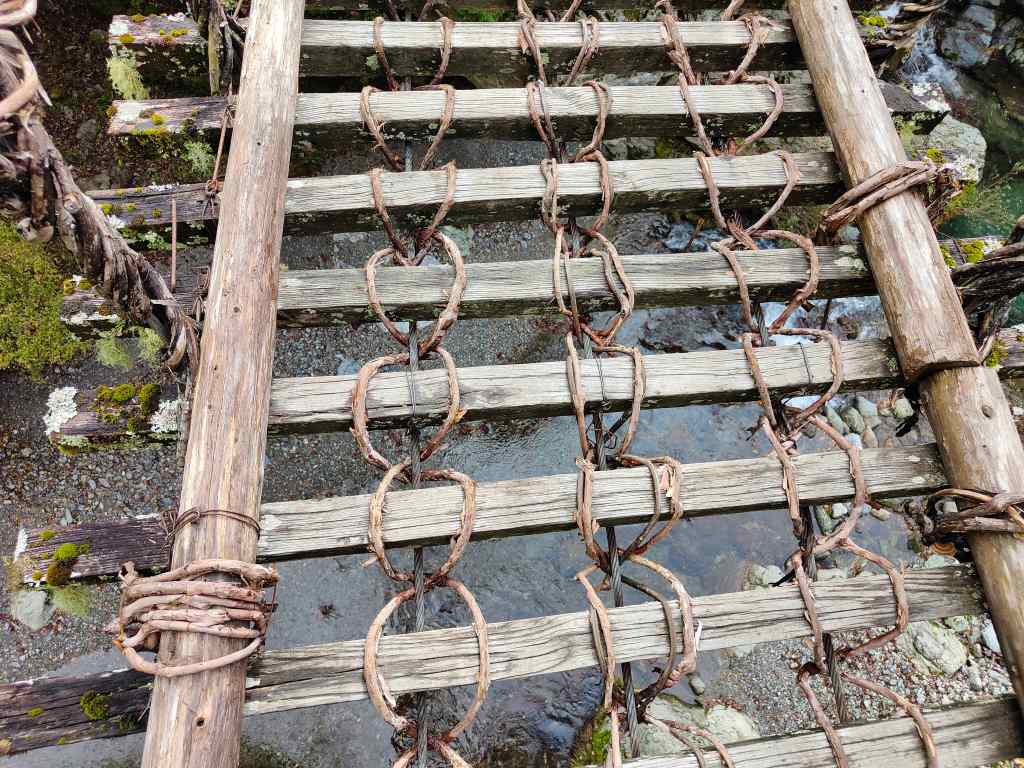
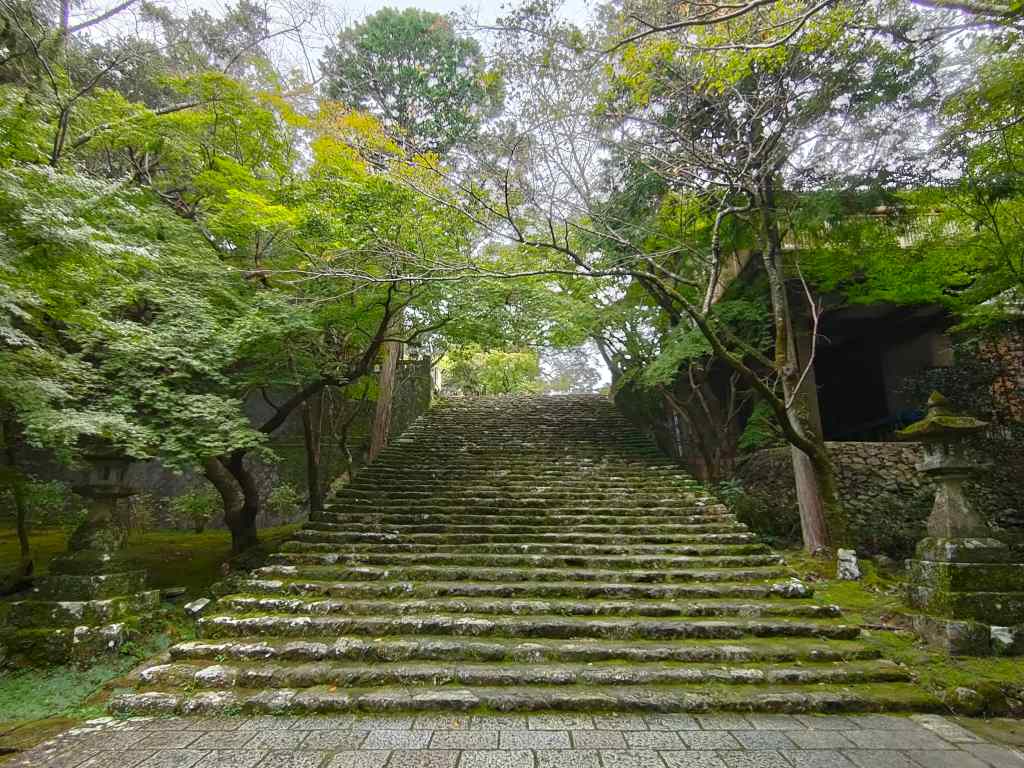
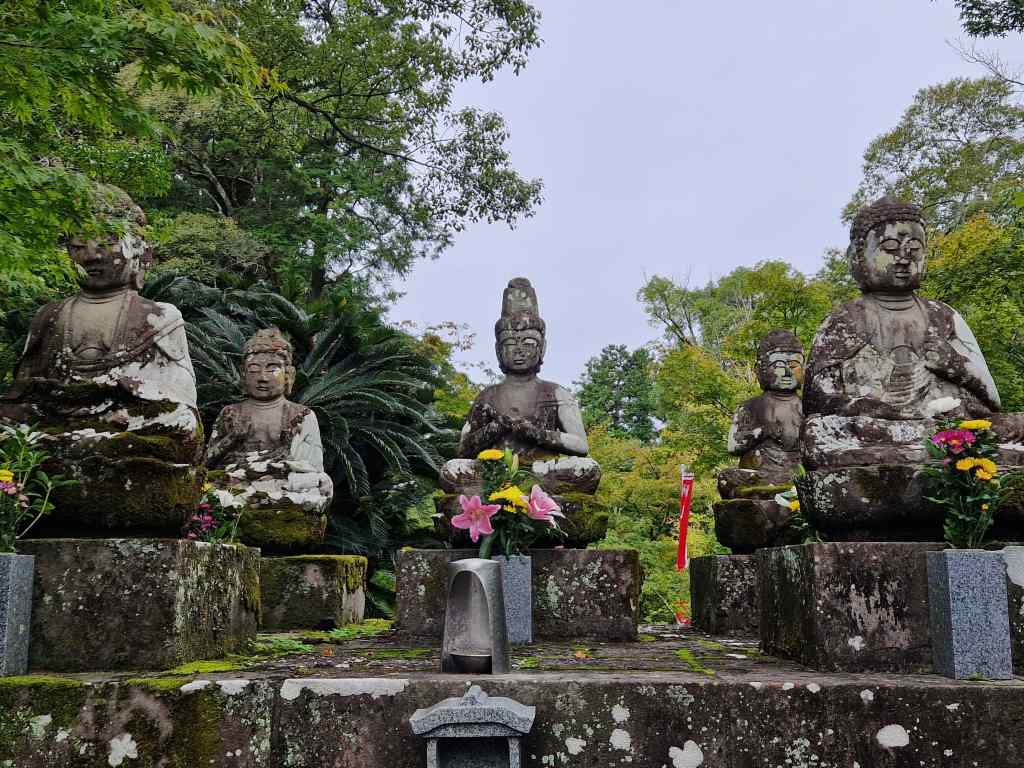
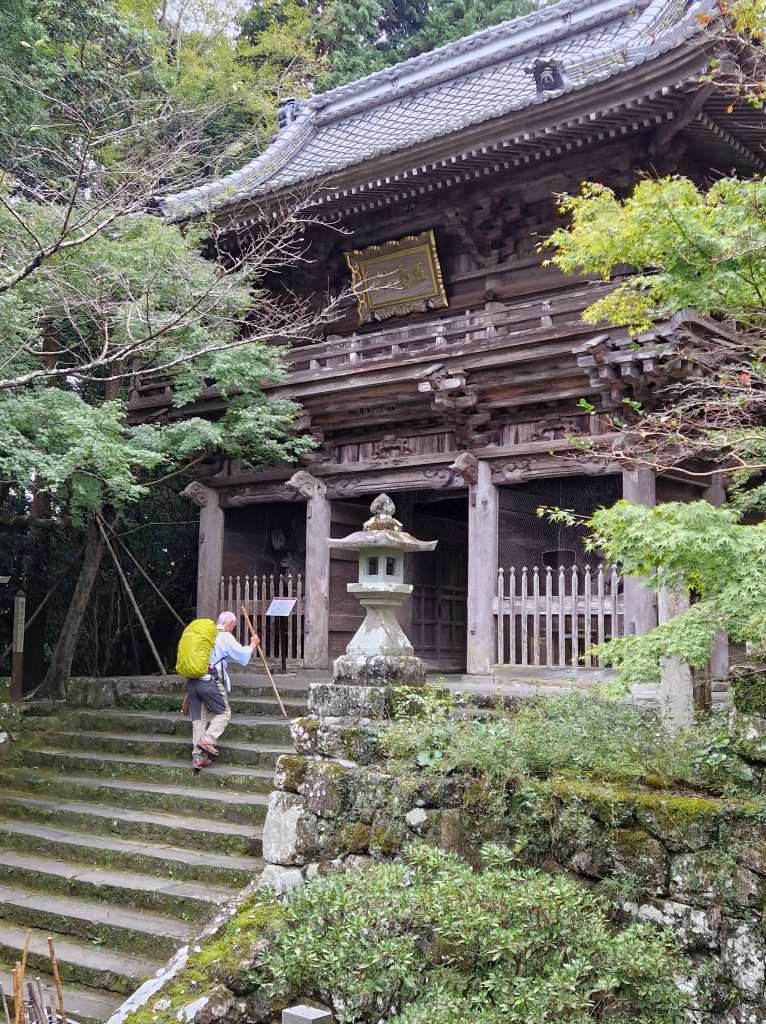
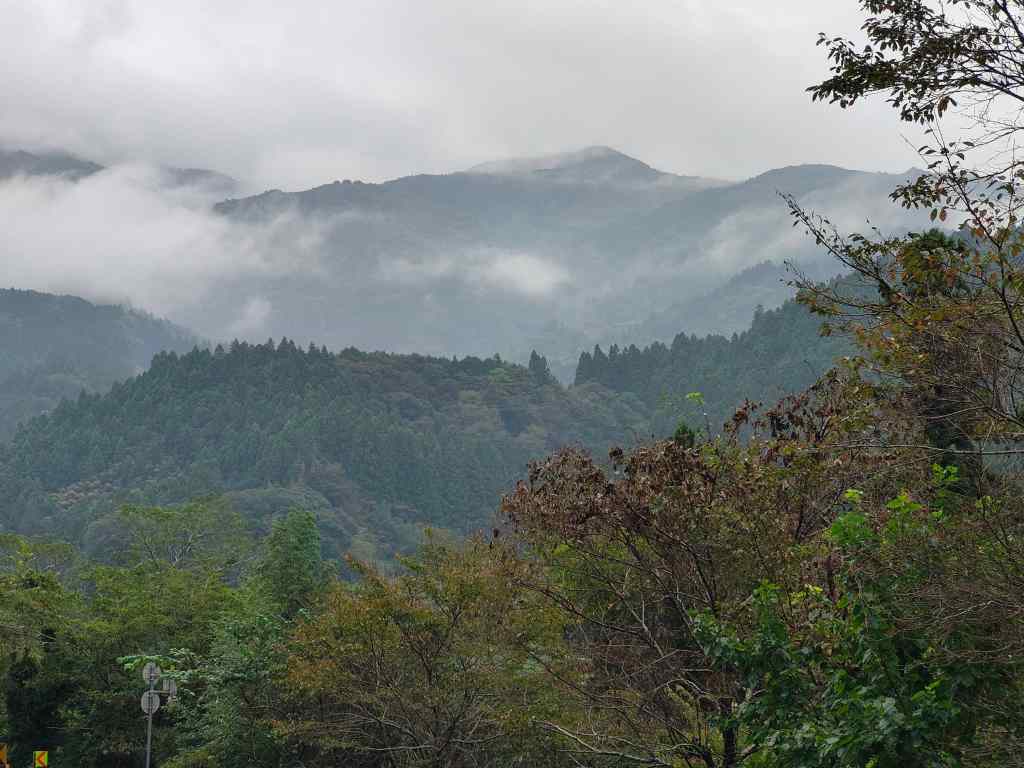
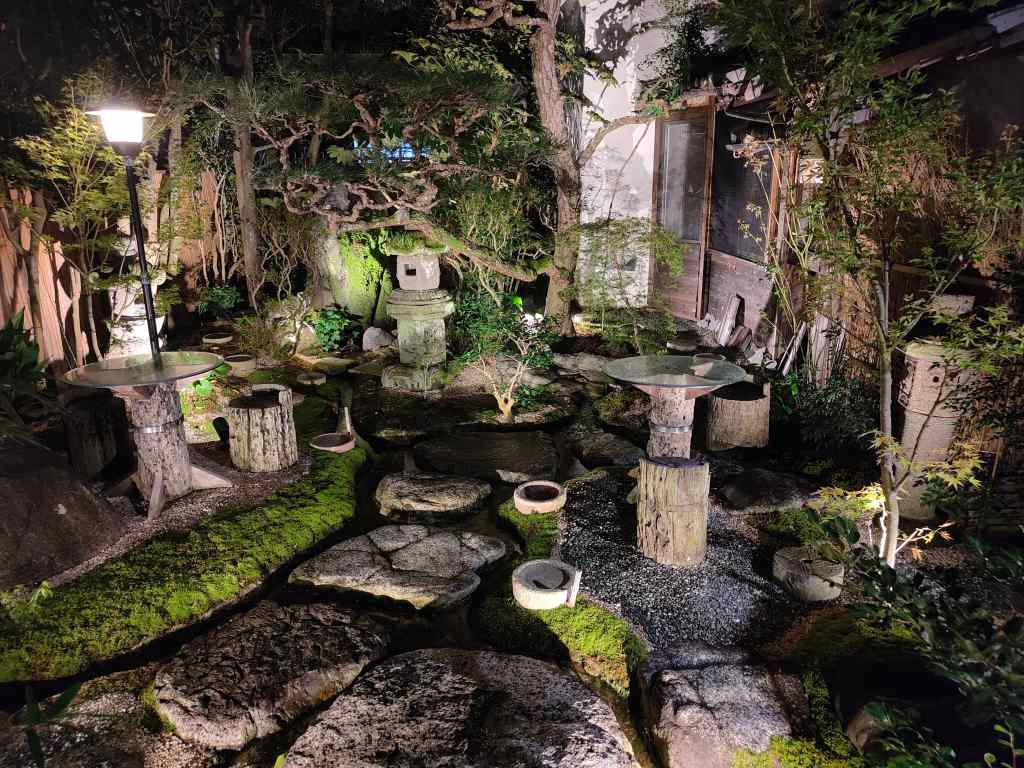
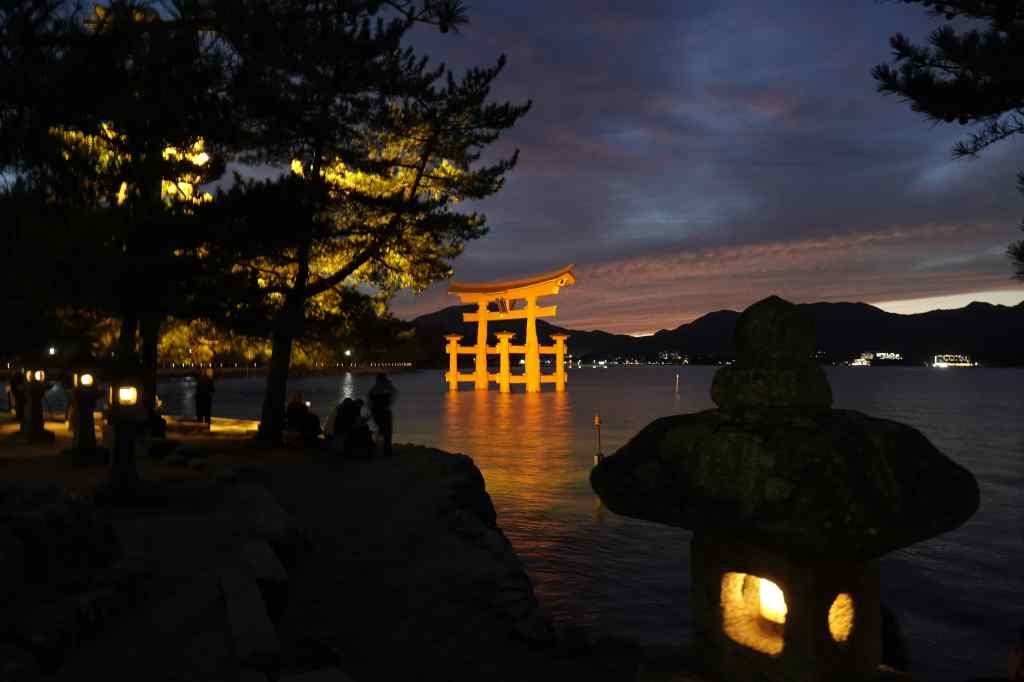
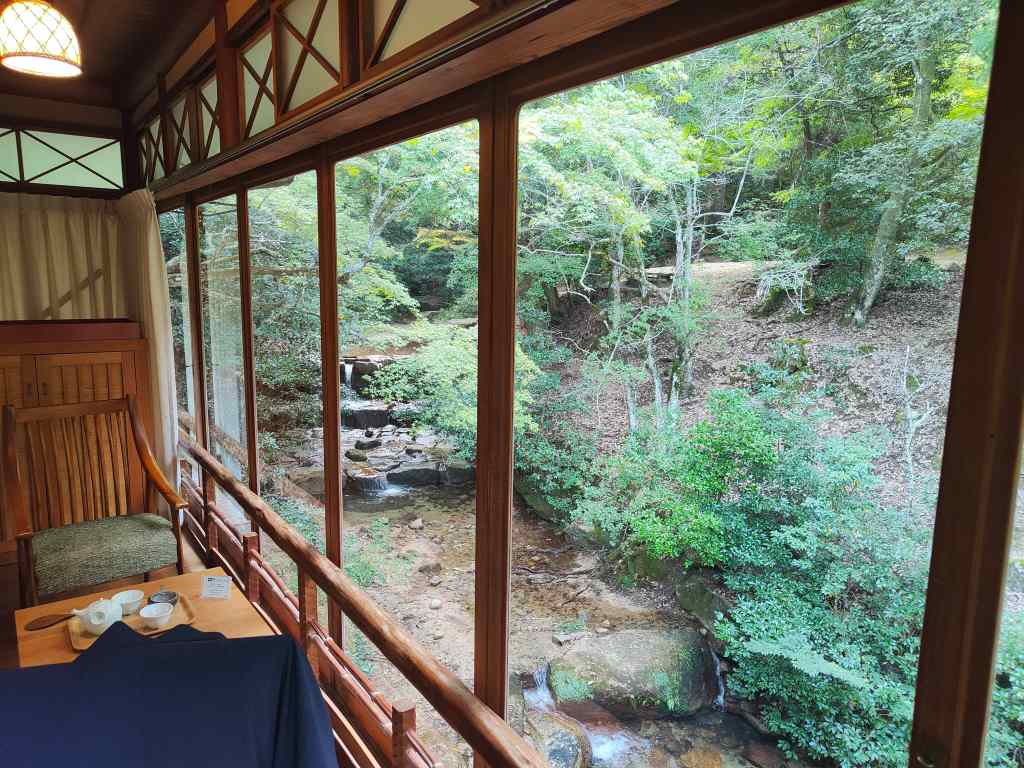
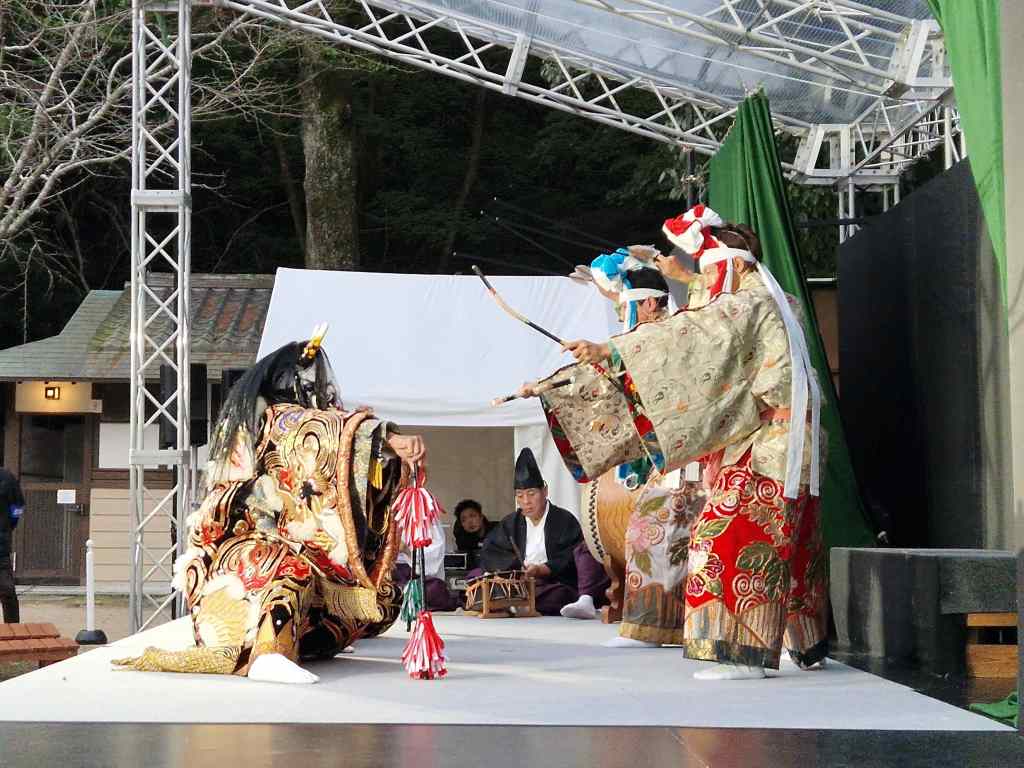
Kanazawa – a city with many sides

Over the next couple of days we explored Kanazawa, a port city famous for its food, and which retained many old districts, since it escaped bombing during WWII. The city was once the headquarters of the powerful Maeda family, who sided with Tokugawa Ieyasu in the decisive battle which led to the establishment of the Tokugawa shogunate. The Maeda’s Kaga clan became the second richest and most powerful in Japan, which greatly benefited Kanazawa’s development.  

Our first stop was one of the city’s main attractions – the Kenrokuen Gardens. They were rather different to places like Kew Gardens that we knew from elsewhere in the world – very neat and ordered, as if in Japan nature is also elegant and tidy. It was a beautiful sunny day, so they looked at their best.

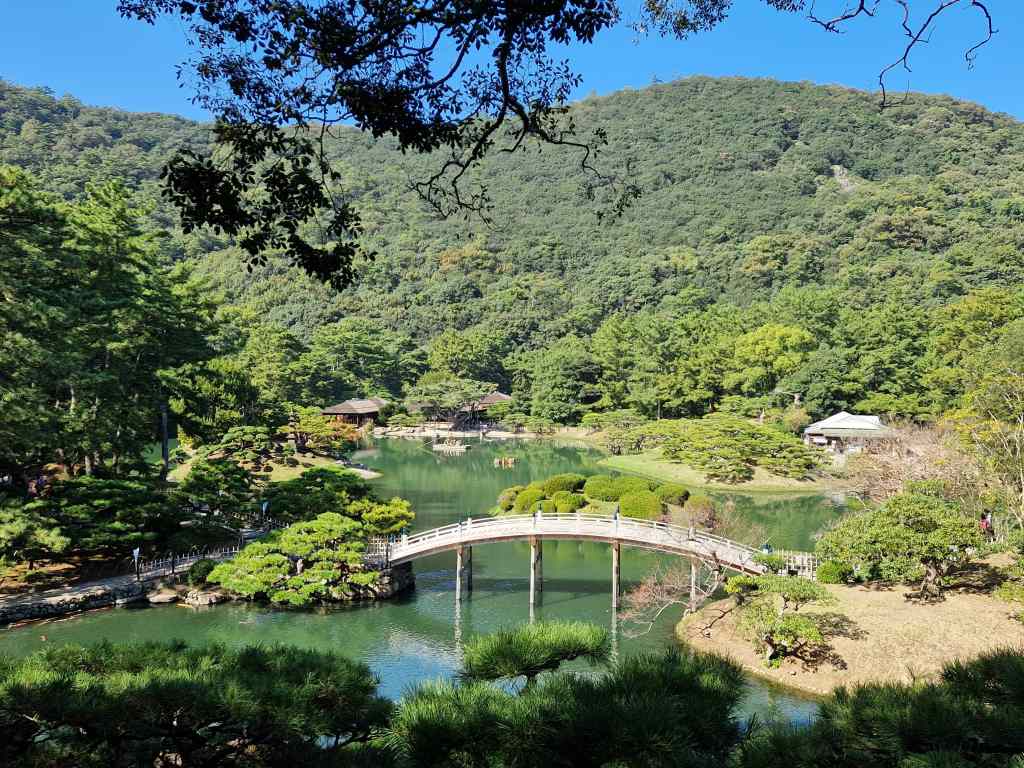
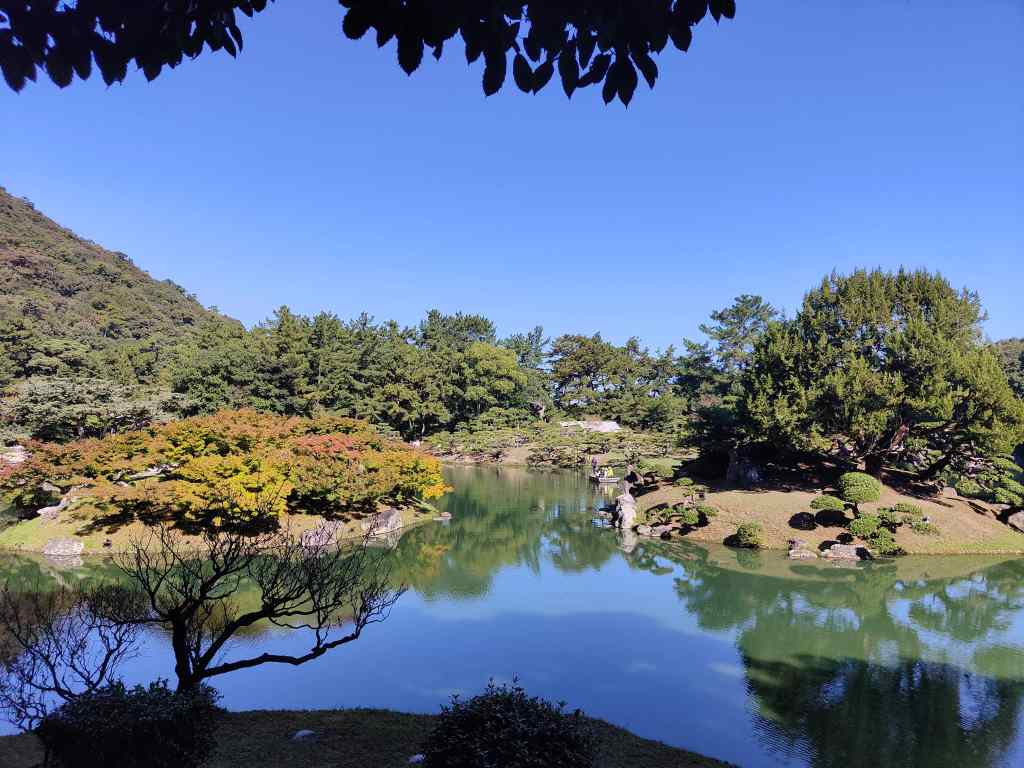
The magnificent Kenrokuen Gardens

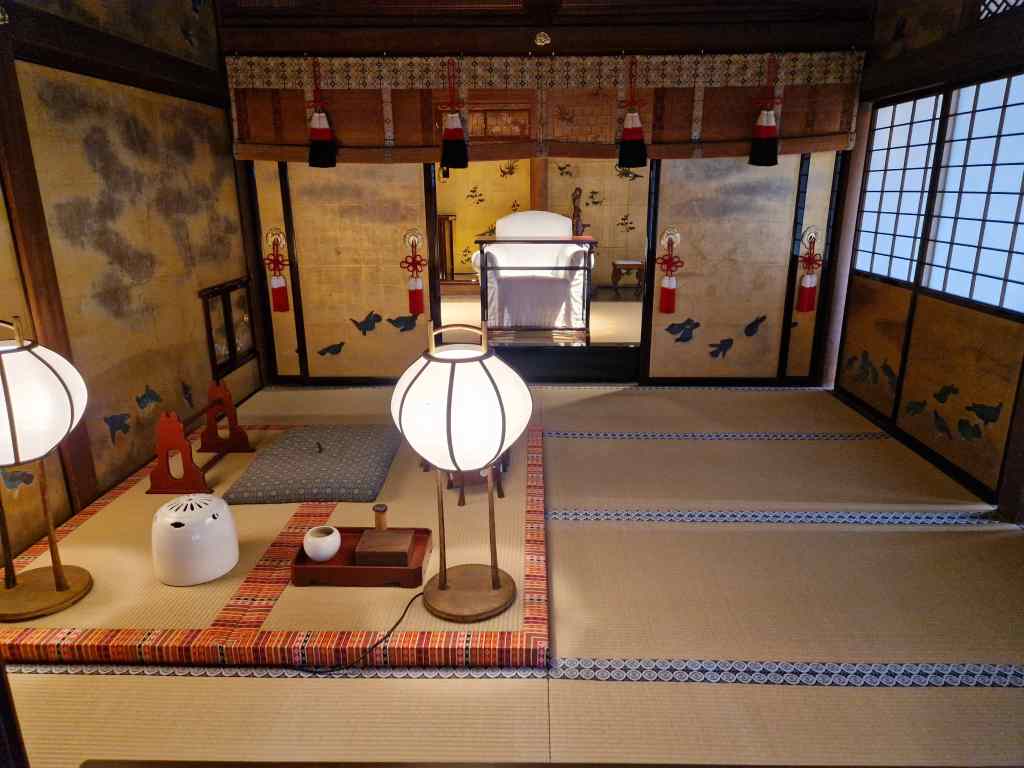
Inside the garden grounds was the beautiful  Seisonkaku Villa, built by one of the Maeda clan chiefs for his mother.

We were only allowed to take photos of the villa’s beautiful garden, not its inside

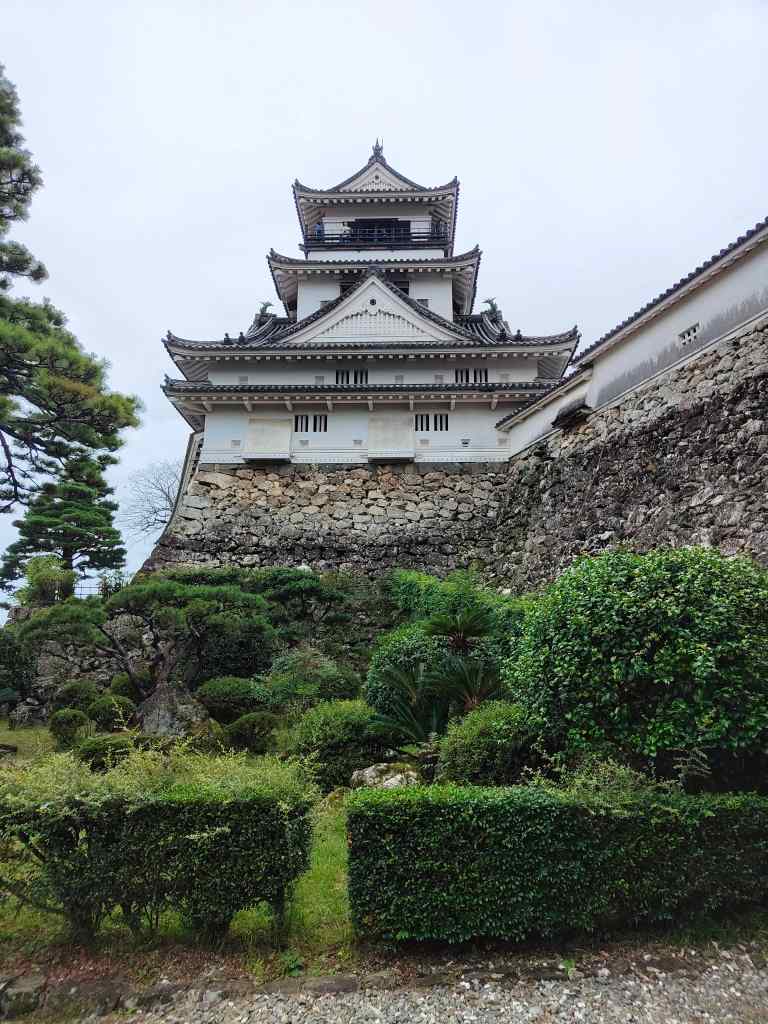
Our next stop was Kanazawa castle. This had burnt down several times during its history, mostly a disastrous fire in 1881 which left only one gate and two storehouse standing. It seems that fire and lightning were much bigger threats to wooden Japanese castles than enemy attacks. The buildings have been painstakingly restored in recent years, and now it makes for an impressive sight, even if what is visible is mostly modern reconstruction.

Kanazawa Castle

We didn’t visit inside, but inside continued our walk through the castle’s park to the city’s former geisha district. This was an odd mixture of charming quiet lanes, with wooden buildings and very few people, and a very busy centre with the same pretty houses, but lots of tourists.

Quiet (above) and busy (below) streets in the Geisha district

We stopped at the Ochaya Shima Geisha House, once a place where the geishas used to entertain their customers and now a museum (unlike most of the other former geisha houses, which have been converted into shops and restaurants). It was very pretty, but there was (as often in Japan) very little explanation in English about the exhibits and the geisha profession.

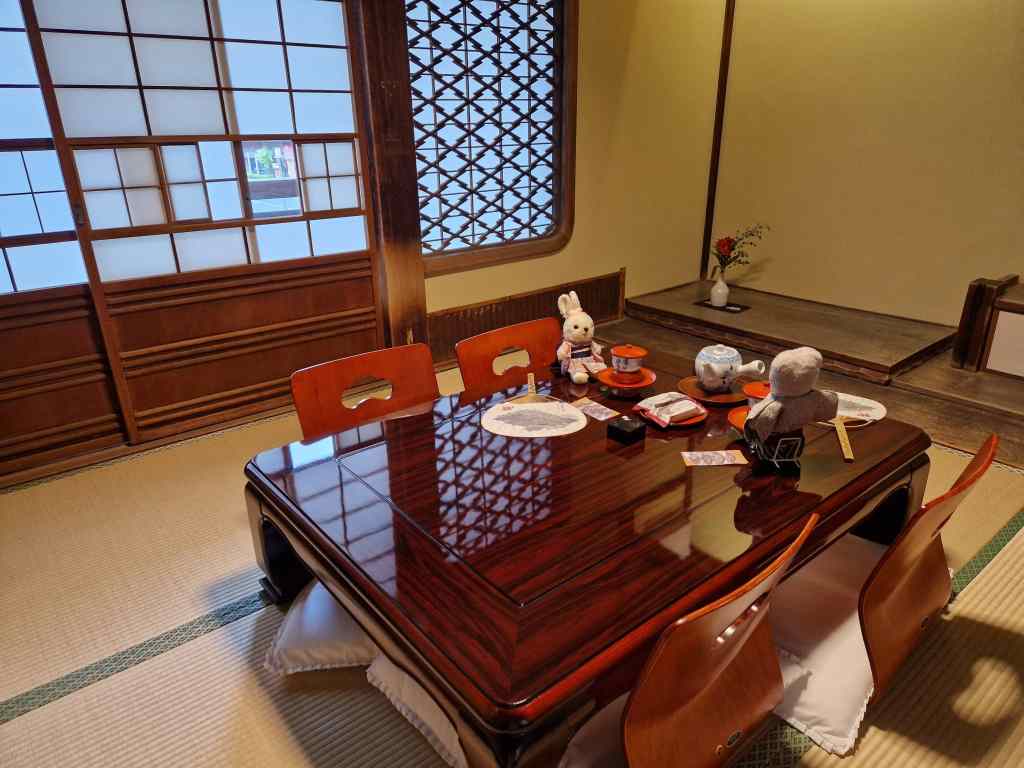
Inside the Ochaya Shima Geisha House

Our final stop of the day was a workshop making gold leaf and sculptures using this precious material. There were some really nice souvenirs on offer, but for us the highlight was the toilets, whose walls and ceilings were covered with gold (the ladies) or platinum (the gents).

A golden washroom!

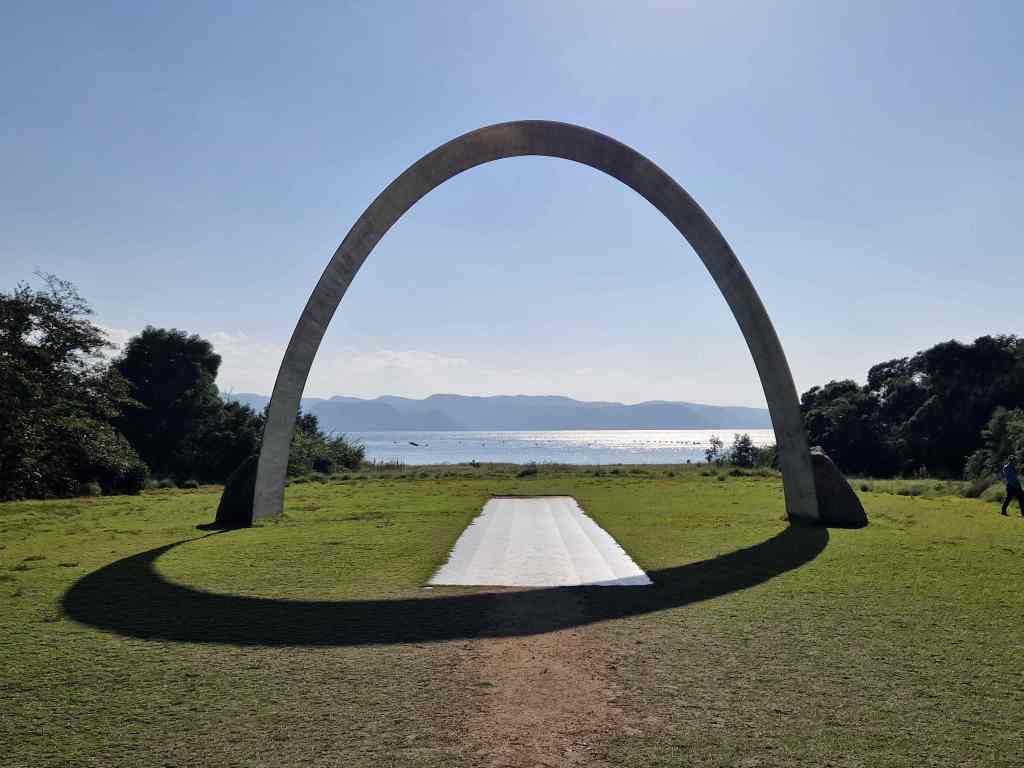
The next day we explored the city further, first visiting a district where many former samurai houses are preserved. It was indeed a beautiful area, despite the occasional tour groups. One of the old houses had been converted to a shop selling cakes and sweets, and we stopped there for a mid-morning coffee.
Fine buildings in the Samurai district
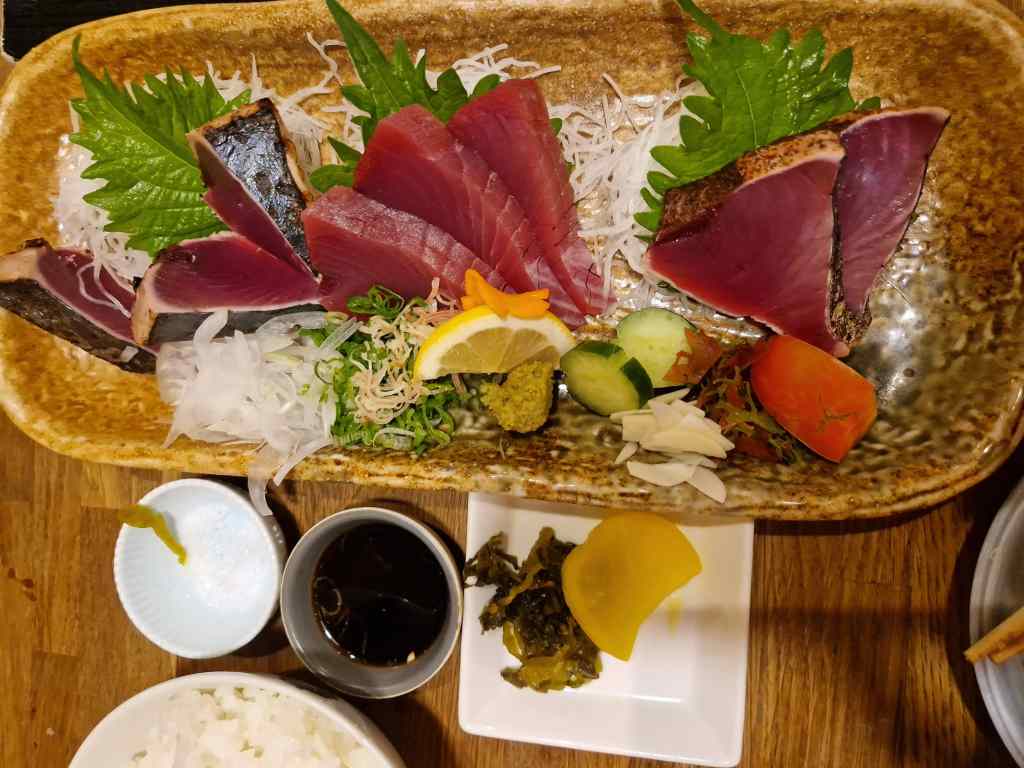
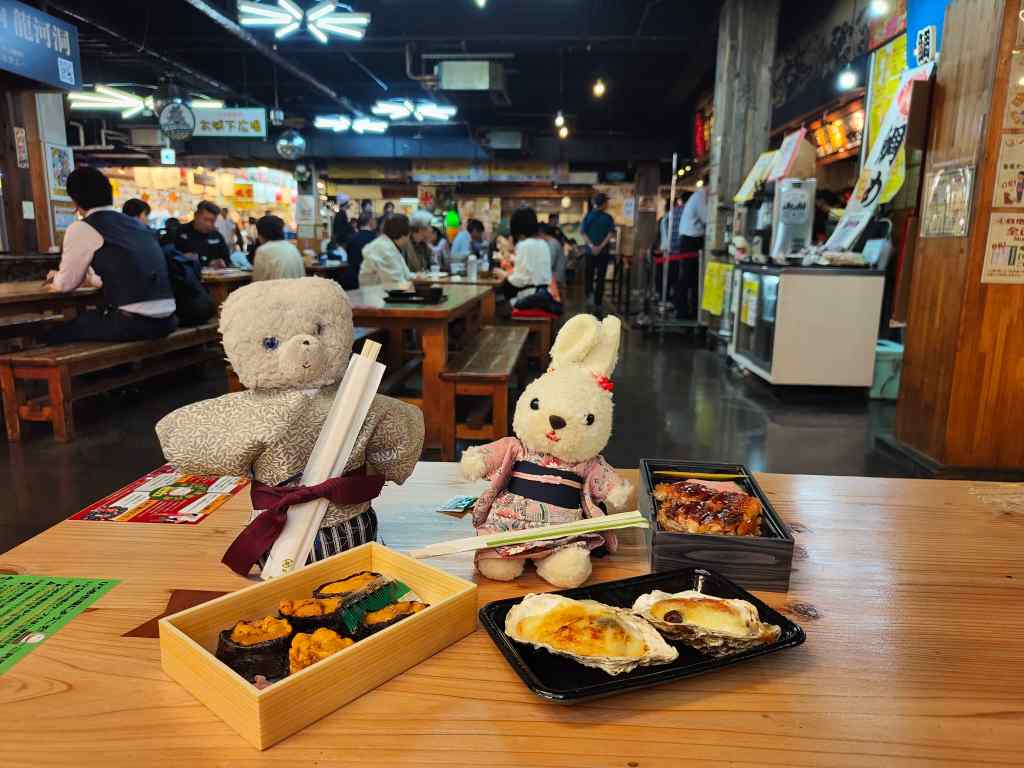
For lunch we headed to the Omicho market, a short walk away. The seafood here is rated amongst the best and freshest in all Japan, and originally we had planned to buy some sashimi for dinner. But we found that the shops selling food had mostly closed or sold out, leaving only restaurants. So, we changed plans and had an extraordinary sea food lunch instead.

A lunch to remember at the market

In the afternoon, we explored one final part of the city, a short bus ride away on the other side of Kanazawa’s river – the Teramachi Temple District. We found dozens of small temples located either on the main road or down quite side streets. We ended up outside one of the largest ones, the Myoryuji Temple, more often known by its nickname of “Ninja Temple”. There were signs saying that guided tours could be booked by telephoning to make a reservation or by applying to the temple office. This seemed rather strange – temples are usually free to visit – and we wondered if it was a tourist trap. We decided to give it a chance and were put on a tour leaving immediately. It was one of our best decisions of the holiday.

The structure was built by a Maeda lord at a time when there was deep mutual suspicion between his clan and the ruling Tokugawas.  Superficially a temple from the outside, it was in fact a disguised military installation with many features to ensnare enemy soldiers or assassins. The tour was in Japanese only, but they gave us booklets with a description of each room in English. Our guide led us through fifteen rooms, each with a fascinating set of features, including many devious traps for the unwary. These included a secret escape tunnel, sunken pits for enemies to fall into, hidden doors, a watchtower, and our favourite – a small windowless room where a vanquished samurai warrior was expected to commit ritual suicide if he had failed to defeat intruders. The forty-minute visit was a highlight of Kanazawa and also of Japan as a whole.

The outside of the “Jinja Temple” (sadly photos inside not allowed)

This pleasant surprise concluded our exploration of Kanazawa. We thought the city’s reputation as one of the most interesting in Japan was richly deserved.

Previous Post: The Alpine Route

Next Post: Takayama

Wow – Japan’s Alpine Route

Today we set off on one of Japan’s great travel experiences – the Alpine Route. This involves a succession of different modes of transportation that delivers travellers across the Japanese Alps – from Ogizawa in the southeast to Toyama in the northwest. In our case, the trip included extra sections getting to the starting point and also from Toyama to our final destination of Kanazawa. I had researched the trip on the web, but was rather confused by the description given by the Japanese transport company managing the route. It all seemed rather complicated, including surrendering our luggage at the start and magically getting it back at the end.

We had to set off early on the 07.48 local train from Matsumoto to Omachi. The weather was cloudy and I worried about the complexity of the trip, whether we would actually see anything up in the mountains, and how cold it would be on top (the weather forecast for Murodo, the highest point of the route, was 0°C). A physical discomfort was soon added to our mental ones; our backsides started to get uncomfortably hot. Although it was a basic local train, the seats were heated when they detected that they were occupied by passengers. The intensity of the heating suggested that they were designed for the depths of the Japanese winter, when temperatures in this area can drop to -15 °C – and not for autumn. We found the only way to survive was to continually change seats, moving on when our new places got too hot to endure. The few other passengers in the train – all Japanese – looked at us with puzzlement. They seemed not to mind having their posteriors roasted.

We arrived at the small, uninteresting town of Otomachi about an hour later and were glad of the exposure to cold mountain air. We found the office offering bag forwarding and handed over our luggage, wondering if we would see it again, and waited for a local bus to a place called Ogizawa, which marked the beginning of our ascent into the mountains. This turned out to be another unremarkable small settlement. To get this far we had spent three hours on mundane local trains and buses, under heavy clouds, and were thinking that the Alpine Route had better be good to justify all this effort. Next, an electric bus took us through a long tunnel to the first stop on the Alpine Route proper. As the bus slowed down to stop at its destination, we could see brilliant sunlight streaming in from outside and hurried off to admire the first of a series of amazing sights – the Kurobe dam. From this point on, words cannot do justice to the scenery and I will let our photos tell most of the story of an amazing trip.

The Kurobe dam
Kurobe dam double rainbow
Scenery around the Kurobe dam

From the Kurobe dam there was a cable car to Kurobedaira, where there was a small botanical garden and yet more stunning views.

Views at Kurobedaira

From Kurobedaira the Tateyama ropeway took us to Daikanbo….

On the Tateyama ropeway

….from where an electric trolleybus took us through the mountain to the highest point of the trip, Murodo (2450m), where the scenery markedly changed and where we made a short hike.

Hiking around Murodo

From Murodo, there was a regular bus down to Midagahara. On the way we saw, and then entered, the magical “sea of cloud”.

The Sea of Cloud

After we had entered the “sea of cloud” the weather was, unsurprisingly, cloudy and there was not much more to see. We still had to take a cable car down to Tateyama (where our luggage was magically waiting for us), then a painfully slow local train to Toyama, and then an express “shinkansen” to Kanazawa, and then a taxi to our house. We finally arrived at around seven, after 11 hours of travelling – half of which had been magical. We dumped our bags and headed out to the nearest restaurant. They only had a menu in Japanese, written with such a highly stylised script that Google Translate could only decipher the words “conger eel”, “egg” and “today’s horse” amongst a sea of hieroglyphics. We asked the waiter to choose for us, setting a budget of 7,000 yen, and were served a real feast with six courses including – sashimi, tempura, omlet and miso – all of very high quality. We ate so well that it was a relief when tea arrived to signal the end of the meal. It was a fitting end to an exceptional day.

Trying to figure out the menu

Previous Post: Matusmoto

Next Post: Kanazawa

Quirky Matsumoto

Matsumoto’s main tourist attraction – its castle

Today the weather forecast was for heavy rain, and so we decided to visit Matsumoto, the small city we had chosen as a base for exploring the Japanese Alps. First we had a big traditional Japanese breakfast.

Breakfast Japanese-style

Matsumoto is a pleasant, quirky place with some classic and some very unusual tourist attractions. One of the former was just across the road from our ryokan (hotel) – a museum devoted to weighing scales. This was such a weird idea that we had to visit. It was actually quite fun, with a collection of old devices from different centuries, and a whole room devoted to the once important task of weighing silk worm cocoons.

The Scales Museum

Our next destination was Matsumoto’s famous castle, but on the way we saw the Matsumoto City Museum, which advertised a special exhibition about the art of Japanese food. Unfortunately, this had only one panel with any English explanation, and we were left looking at plastic models of different types of fish or radishes. We did at least learn that around Japan’s coasts and in its rivers there are 4500 species of fish, as compared to only 300 in my native UK.

A weird museum exhibit

Matsumoto castle was a more traditional tourist destination. It is one of the few castles remaining intact from Japan’s feudal age, and was built around 1600. From the outside, the castle, its moat and grounds were beautiful. Inside was rather disappointing – it was quite bare, with a few museum exhibits about weapons and other aspects of life in that period. The interior was laid out over six floors linked by very steep staircases. Each successive floor got smaller and smaller, the staircases became steeper and stepper, and the queue of visitors to go up them got longer and longer – all to reach a totally empty sixth floor.

Matsumoto castle – impressive from the outside

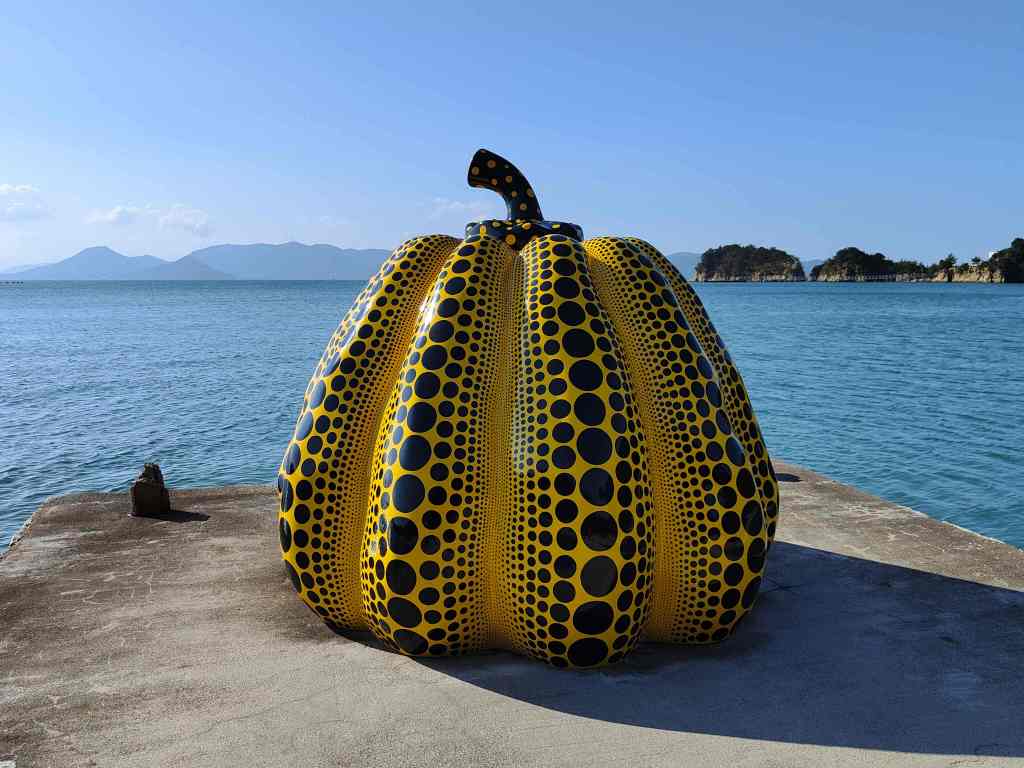
Our next destination was the Matsumoto City Museum of Art. The highlight here is a series of rooms devoted to the Japanese artist Yayoi Kusama, who was born here. Some rooms were devoted to her work using mirrors, and then we came across this huge colourful pumpkin…

Pumpkin by Yayoi Kasuma

Having seen almost all Matsumoto had to offer, we returned to our ryokan to wait for the expected rain. A ryokan is a traditional Japanese inn, and ours was a comfortable place to sit and work.

Our ryokan and our room

We only ventured forth at dinner time, to a restaurant recommended by our host. It was so popular, that we had to queue to get in, but once sat behind a table, we enjoyed a huge feast of soba noodles (made from buckwheat flour).

Soba noodles feast!

Matsumoto had been a pleasant base for our trips around the Japanese Alps, but tomorrow we were due to move on, for something that I hoped would be a highlight of our tour around Japan.

Previous Post: Off the Beaten Track in the Japanese Alps

Next Post: The Alpine Route

Off the Beaten Track in the Japanese Alps

In the Norikura Region in Autumn

Today was one of those wonderful days when a traveller discovers something for themselves. Our original plan was to drive to the Japanese Alps, and then take a bus/cable car to Mount Norikura, Japan’s third highest volcano. However, when we got into the mountains, it was cloudy and we thought that we would not see anything at the top. As we wondered what to do, Aki noticed a small sign with a picture of a large, bright red maple tree, so we followed the direction it indicated and found ourselves driving through a beautiful meadow, with nature’s autumn colours on full display – but this time with the red that we had been missing during our walk at Kamikochi.

The view from the café

The road went past a café, which, unusually for remote places in Japan, served excellent coffee and which had an excellent view of the scenery. In the car park in front, there was a sign showing a few short walks in the area, so we made a circular hike of around 5km, marvelling at the colours and taking lots of photos. We saw very few other people on our way, and almost no foreigners at all. Most of the people we did see were gathered around the big red maple tree shown on the road sign.

The locally famous big red maple tree

Our guidebooks did not mention the area. Maybe outside of autumn it is nothing special, but for us it was one of the highlights (so far) of Japan.

More stunning red colours….
…and more

The map also showed a couple of waterfalls, which were a bit far to reach on foot, so we drove to visit the Zengorno and Sanbon falls, both of which were well worth the drive and short hike.

Zengorno falls
Sanbon Falls

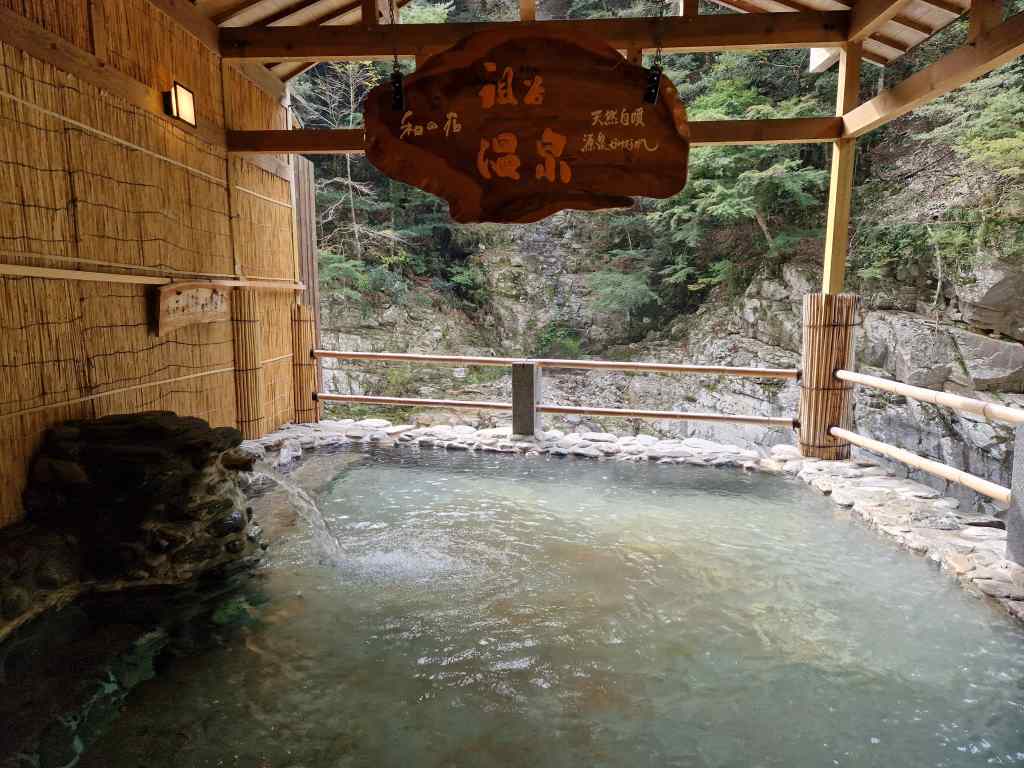
After a day hiking in beautiful forests, it was time for another of Japan’s traditions – a dip in an “onsen” or hot bath. These are found all over Japan and are hugely popular. They are often fed by volcanic hot springs, particularly in the Japanese Alps region. We drove to the well-known spa town of Shirahone Onsen, which was a short distance away, and paid for a day visit to the baths at the Awanoyu Ryokan (a hotel). After getting undressed and carefully washing in a shower room, we soaked in a pleasant outdoor pool for an hour. The water was milky white, and a relaxing 40°C, whilst the pool was surrounded by trees at the bottom of the river valley. Sadly no photos were allowed, so I have to use this one found on their website (from a rather sunnier day!).

It was a pleasant way to end a day of exploration and surprises, well off the beaten track.

Next Post: Matsumoto

Previous Post: Kamikochi

Autumn Colours in Kamikochi

Near the start of our walk in Kamikochi

Today we left Tokyo for Matsumoto in the Japanese Alps. The easiest way to get there is by train, but I was hoping to visit the Fuji Five Lakes area on the way, so hired a car from Shinjuku. Driving in Tokyo was easier than expected and after a few turns our satnav delivered us onto an expressway heading straight to our destination. But when we got to the mountains it was cloudy, with no chance of seeing Fuji again, so we headed straight for Matsumoto and explored the city in the afternoon – more about this in a future post.

The next day we used our hire car to drive to one of Japan’s most popular attractions – Kamikochi. This is a protected area in the heart of the Japanese Alps, and the starting point for many pretty walks or more ambitious climbs of the surrounding mountains. Private cars are not allowed to drive all the way there, instead you have to use one of the many parking lots on the highway and take a bus for the last 10km to the national park.

On arrival there was a large reception area with restrooms, tourist information, ticket booth for the return buses and some snack stalls. We bought some coffee but immediately regretted it. The hot black liquid resembled dishwater and was hopelessly weak – coffee is the one food/drink that many Japanese establishments haven’t really mastered yet. What’s worse, there was nowhere to dispose of our paper cups, so we had to carefully throw away our drink and fold them into our backpacks. Japan is amazingly clean, maybe because there are almost no litter bins anywhere, and people are used to taking their rubbish home with them.

View from Kappabashi Bridge

A short walk took us the popular Kappabashi bridge, with great views up and down the valley, including an iconic vista of the Hotaka peaks. It was crowded with tourists trying to take selfies, so we didn’t stay long and instead set off on our walk. It was a beautiful day, and the autumn leaf colours were spectacular, with all shades of green, yellow and gold – although we didn’t see much of the brilliant red colours that we had been expecting.

Our walk took us along the bank of the river. We met many other hikers coming the other way, most of whom were Japanese. They greeted us with a smile and a cheery “Konnichiwa” (hello). Many of them were wearing little bells that jangled as they walked, to deter bears. In my opinion no self-respecting wild bear would go anywhere near a path with so many humans passing along it, and the continual jangling annoyed me a bit. The obsession with bears seemed to be deeply felt, and the park authorities had also put up lots of warning signs and occasional bear bells along the path for additional protection.

Bear and Bear Bell

At the end of the trail was a small restaurant, where we enjoyed another local culinary highlight – a tasty Japanese “katsu” curry.

Mmm….Katsu Curry

The way back followed the other side of the river. At about halfway, there was a large, still pond (the Tashiro Pond), surrounded by trees with their autumn leaves. We sat down, breathed deeply and simply enjoyed nature’s beauty. 

The stunning Tashiro Pond

When we finally decided to move on from our idyllic spot, the path continued along a raised walkway through a green forest, where we met some monkeys. They ignored us as they strolled on, not even bothering to beg for food – they knew that in well-disciplined Japan, no one would feed them.

Green forest for a change
Furry Friends

The sun was now beginning to set, and the autumn foliage offered yet more variants on gold and yellow in the evening light. We arrived back at the trailhead delighted with our day out, thinking that Kamikochi deserved its reputation as one of Japan’s top sights.

Back near Kappabashi at the end of the afternoon

Previous Post: At Home in Tokyo

Next Post: Off the Beaten Track in the Japanese Alps

At home in Tokyo

Japan is a foodie’s dream come true

The next two days we were busy in Tokyo, catching up with two different Japanese friends from our travels around the world. Each of them invited us to a series of uniquely Japanese experiences, some of which would be hard for a foreigner to do on their own. A big feature of our reunions was Japan’s excellent food.

Inside our own private sushi restaurant

Our first friend invited us to lunch in a sushi restaurant. It was in a residential neighbourhood, and from the outside looked like any other house in the road, with no sign telling you what it was. We ducked under a low door into a small room with four chairs lined up against a counter, behind which sat our chef. It was a private restaurant just for us, seating a maximum of six people, and the owner would be our personal sushi chef for the afternoon. As we had expected, the food was amazing:

Salmon eggs and urchin

After a couple of hours of indulging in sushi we went for a short walk to digest our feast, before tackling the next big event of the day – a kabuki performance in the historic Kabukiza theatre in the Ginza district. My friend directed me around the theatre, including the place where foreigners can rent a touchpad that displays the English text of the dialogue on stage. That afternoon’s show consisted of two different plays, with two intervals (for which our hosts had brought us a bento box to enjoy). I was worried about falling asleep after such a big lunch, but instead was fascinated by the performances. The sets and costumes were beautiful. Each play had a simple plot, and concentrated on expressing concepts like honour, duty, jealousy and revenge through dialogue.

Kabukiza theatre before the show
Poster advertising the performance
Just before “curtains up” (or in Japan, “curtains left”)

The three- and half-hours in the theatre flew by, and by the early evening we were back in our comfortable Tokyo flat, which we finally had a bit more time to enjoy. It had taken us a while to get used to some of its particularities, like ultra-modern washer-drier which was already loaded with washing powder for us, but whose buttons were all in Japanese. The flat’s toilet was also space age – on opening the entrance door, its lid automatically raised itself and a little pipe sprayed warm water around the area. It flushed automatically when you closed the lid. It seemed that everything worked in a slightly different way to back home, and was set up to provide maximum comfort and convenience for the minimum possible use of space.

The next day we met a different friend, who was now in charge of a tiny temple in Tokyo, a responsibility his family has held for generations. First, he showed us the Zozoji Temple, where he trained in Buddhism. It was in central Tokyo, with a photogenic location behind the Tokyo Tower landmark.

Zozoji Temple
The Tokyo Tower

Next, we went to the tiny temple where he lives for green tea and a chat, before heading on to explore the Ginza district. It was the weekend, so the main road there was closed to traffic, allowing the area to soak up the many visitors without feeling crowded. Our host told us that the Ginza is now mostly frequented by tourists, especially the Chinese, and few Japanese go there anymore. There were some fun shops selling upmarket souvenirs, and lots of department stores – of which I particularly like Ginza 6, with its huge “Big Cat Bang” sculpture suspended from its ceiling.

The Ginza
Big Cat Bang

Soon it was time for dinner, in small tempura restaurant in a side street, a place my friend’s family has been visiting for three generations. We could see why – the food was again excellent. We have yet to have a bad meal in Japan.

More amazing food – tempura this time

Previous Post: Hakone

Next Post: Kamikochi

Fuji-san, where are you? – the Hakone Circuit

Today we took another excursion outside of Tokyo – this time to Hakone, a town on a lake near Mount Fuji. The weather forecast was good, and I had booked a rather expensive “Hakone pass” allowing free travel all around the area and made a reservation in the special “Romancecar”, an express train service that leaves from Shinjuku station. We arrived in good time, only to hear an announcement that our train had been cancelled – something that is not supposed to happen in Japan. We spent a stressful few minutes trying to figure out what to do. As we left the platform in search of information, the turnstile swallowed Aki’s Hakone Pass. In alarm we asked the staff for help, and to our surprise they spoke good English. One of them helpfully held back the masses of commuters trying to use the turnstile so that he could open the machine and retrieve our ticket, and then told us that regular, slower trains were still running to Hakone and would take about 30 minutes longer. We would also now need to change trains at the end of the line or take a bus to cover the last stretch to Hakone.

We boarded one of the slower trains and again experienced an hour of watching Tokyo’s bland suburbs, followed by an hour of progressively more interesting scenery. At the terminus of Odawara we took a very crowded local train on to Hakone Yumoto, which left from a platform number 11, confusingly located next to platform 7. On arrival, we found that we had lost an hour compared to our original plan, and that it was cloudy.

The enterprising Hakone Tourist Association has set up a fun system of travel around the area including trains, a cable car, a ropeway and even pirate ships. They all accept the Hakone pass and form a big loop connecting the area’s many attractions. This circuit is hugely popular with foreign and Japanese tourists alike, and even though it was not the weekend, it was very busy. We boarded a small train to do the first part of the route. On a different day this ride could have been fun, as the railway line makes a steep ascent of a mountain, squeezing through narrow valleys and tunnels. But the train was very crowded and although we got seats, they faced inwards into the mass of standing passengers.

Hakone cable car…
….or human sardine can?

At the end of the train line, we took a very slow cable car for another slow, cramped climb up a mountain. I was beginning to feel decidedly grumpy and rather regretted my whole Hakone plan. Next, came a ropeway, where at least we have more space and the possibility of some views. Over a Tannoy system it was announced that Mount Fuji was to our right….as indeed it might have been. We could see something big looming up behind dark clouds but were not sure that this was the iconic volcano.

Fuji-san, where are you?

Then things got more interesting, as our cabin flew over a valley filled with jets of steam emerging from vents in the ground. There was a strong smell of sulphur and in places the ground was bright yellow.

Things get more interesting!

We arrived at an intermediary ropeway station called Owakudani from where we could admire this spectacle from closer up.

Volcanic activity at Owakudani

A local tradition is to boil eggs in the sulphur springs, which makes them go black. They claim that eating one extends your life by seven years….but I wonder if that is not another invention of the Hakone Tourist Board. There were several shops selling them, so I tried a couple – they tasted exactly like normal eggs.

I will live 14 years longer! (according to the Hakone Tourist Board)

Enterprising locals have extended the “black food” idea further and also offer black ice cream and black curry buns. We tried both – the ice cream was simply vanilla with bamboo charcoal added, and made our teeth go back. I am not sure how they make the black curry bun, but it was really delicious, and began to restore our mood, which had been a bit down. The emergence of the sun also helped cheer us up, as we could better appreciate the scenery. It also gave us hope that on the last section of our trip – the boat ride – we would finally see Mount Fuji.

Pirate ships! Don’t ask me why

We continued the rope way back down to Lake Ashi,  where we queued up for the last part of the Hakone circuit – a boat ride across the lake on a pirate ship. Why a pirate ship? We have no idea, please ask the Hakone Tourist Board. The cruise was corny but fun, and we were now enjoying bright sunshine – but Mount Fuji remained stubbornly hidden behind clouds. We arrived at a small town called Motohakone with Fuji-san still refusing to appear and decided to visit one last thing in the area – the Hakone-Jinja Shrine. We headed back from there to join the long queue for the bus back to the train station; I had calculated that, queuing time included, we had just enough time to catch the “Romancecar” we had reserved for 17.00.

The Hakone-Jinja shrine

However, once we had regained the town, we had a pleasant surprise. The clouds had lifted and at the far end of the lake, there stood Fuji-san in all its glory.

Finally Fuji-san appears!

We stayed for ten minutes, and decided that seeing Fuji at sunset was as once-in-a-lifetime experience that was well worth missing our train for. Instead of taking the bus, we walked along the shore of the lake to a pretty park, for yet more stunning views of Japan’s iconic volcano.

We took endless photos…..

We watched as the shadow of one mountain slowly crept up to the summit of a higher mountain on the lake’s east shore, and when the sun finally dipped below the horizon, we started thinking about how to get home. Our return proved to be quite an odyssey. We walked to another small town from where there was supposed to be an express bus back to the main train station, and had been waiting ten minutes when a bus company employee arrived to tell us that the express would be full and advise us to take a local stopping service – which we did. This bus weaved its way around mountain roads for about half an hour, slowly working its way towards the main train station. Then there was an announcement – in Japanese and English – that there was a big traffic jam ahead, and that people in a hurry would be better off taking the small local train that we had used to climb into the mountains at the start of our Hakone circuit. We got off the bus just in time to catch a train to take us to the main station. On the way, I managed to use my phone to make a new online Romancecar booking and after a short stop at Hakone Yumato we were speeding back to Shinjuku in a fast and comfortable (but maybe not romantic) express. We reached Tokyo late – twelve hours after we set off – tired but happy. We had finally seen Fuji-san, and our earlier problems may have been a blessing in disguise – if we had arrived at Hakone on time, we would probably have left earlier and missed one of Japan’s iconic sights.

Previous Post: Nikko

Next Post: At Home in Tokyo

Nikko – one of Japan’s highlights

Today I got up early to take the train to Nikko, home to some of Japan’s most beautiful shrines. First, I met my Japanese friend Aki, who is to be my companion for parts of my Japan trip. Shinjuku station was very busy and very confusing, and it took us some time dodging through the crowds of people to find the right platform. Unusually for Japan, our train was a few minutes late, but when it arrived we sat down in large comfortable seats for the two-hour trip. The first hour was dull – miles and miles of rectangular blocks of flats or offices. But then the city finally ended, and the concrete gave way to green rice fields and mountains.

On arrival, Aki and I made a short walk through the town to the forest where various shrines and temples are located. The entrance to this area is marked by the famous Shinkyo bridge, built in 1636.

Just after the bridge is the entrance to a beautiful cedar forest and the Nikko world heritage site.

Once inside the park, we made for the Rinnoji Temple, the most important in the area, and originally founded in the 8th century by Shodo Shonin, a monk who brought Buddhism to Nikko.

The front (above) and back (below) of the Rinnoji Temple

  After visiting the temple we took a few minutes to visit the pretty Shoyoen Garden next door.

Introducing my friend Aki!

Our next stop was the highlight of Nikko – the Toshogu Shrine. This is a memorial to Tokugawa Ieyasu, the founder of the Tokugawa Shogunate, which ruled Japan for over 250 years until 1868. The shrine was at first a simple mausoleum, but was later transformed into a huge complex by Ieyasu’s grandson in the 17th century. There was a lot to see, and we spent about an hour wandering around and taking lots of photos. At the entrance there was an impressive five-story pagoda…..

…then inside the walls of the complex are a series of richly carved gates, shrines and temples….

Spectacular carvings at the Toshogu Shrine
More amazing woodwork, Toshogu Shrine Nikko

….and finally the relatively modest resting place of Tokugawa Ieyasu himself. The workmanship of this temple complex is incredible and it richly deserves its reputation as one of the highlights of any visit to Japan. Making the site even more remarkable is setting, surrounded by the towering trees of a beautiful cedar forest.

After the truly awesome Toshogu Shrine, our next stop was the more modest Futarasan Shrine, dedicated to Nikko’s sacred mountains. Indeed, the whole area around Nikko is a national park, famed for its beautiful November colours – but sadly we did not have time to spend the extra day that a visit there would have required. The Futarasan Shrine was more modest than the other places we had visited in Nikko, but less crowded, and still very pleasant.

Detail from the Futarasan Shrine

From there we made a short walk to our last destination, the Tamozawa Imperial Villa. This was constructed in 1899, using parts on an older building already on site and parts of a house in Tokyo belonging to the Tokugawa family. It was used as a summer residence for the emperor and his family. The villa was quite different to Nikko’s other sites – its restrained, elegant architecture contrasted with the extravagant carvings of the shrines. We found it radiated a feeling of calm and contemplation and were very happy we had chosen to visit this place last, to provide a peaceful end to a busy day sightseeing.

The Imperial Villa

We both had a snooze in the train on the way back to Shinjuku, to prepare us for another night of partying – this time in the nearby Shibuya district, which is also famed for its nightlife. Shibuya’s station was even more confusing than Shinjuku’s and we spent a frustrating half an hour wandering through construction work, underground tunnels and then along raised walkways, with our Google Maps navigator totally unable to find its way out of the mess. When we finally emerged, we didn’t have much time left to explore the area but did at least get to see this aspiring boy band performing on the street.

Japanese Boy Band in Shibuya

Dinner was at the rooftop Ce La Vi restaurant and was excellent. Aki and I indulged in some very good cocktails and a glass of sparkling sake. It was a great way to end the day, even if we started early and got back to our flat at midnight.

Enjoying Ce La Vi restaurant

View over Tokyo’s skyscrapers at night

Previous Post: Tokyo – Shinjuku and Meiji Shrine

Next Post: Hakone Circuit

Welcome to Japan! – Tokyo, Shinjuku and the Meiji Shrine

Shinjuku at night

The bear is back! This trip is to a new destination for me, which has recently become very popular – Japan.  As most bears do, my entry point was Tokyo. I chose to stay in an Airbnb flat in Shinjuku, a resolutely modern part of the city famous for its nightclub and skyscrapers.

I spent my first night quietly and set out mid-morning the next day to explore. My Airbnb was in one of the few low-rise parts of Shinjuku where people actually live, and had narrow lanes, small houses, and a few scattered restaurants and convenience shops (including the ubiquitous 7-11). I stumbled across a small temple and then many small pedestrianised streets lined with restaurants.

Inside a small local temple in Shinjuku
Shinjuku street scene during the day

It was unusually quiet, with few people on the streets, until I reached Shinjuku station – the world’s busiest, seeing four million passengers pass through on a weekday. Despite the mass of humanity thronging around the station, the area was clean, tidy and orderly with people waiting patiently at the pedestrian crossings for the lights to turn green – not at all like the big stations in my hometown London. I stopped by at the Japan Rail (JR) ticket office to buy tickets for tomorrow’s destination, the town of Nikko.

Crowds crossing to Shinjuku Station

To the west of the station was a business district with many skyscrapers.  Two of the most distinctive buildings in the area are the twin towers of the headquarters of the Tokyo Metropolitan government. They stand 243m tall and their observation platforms (202 metres up) offer brilliant views over the city, which I spent half an hour enjoying. They say that on a clear day you can see Mount Fuji from the top, but on my visit, the famous volcano was covered by clouds – I was to find out that this is often the case.

The HQ of the Tokyo Metropolitan Government
…and the view from the top

Near the twin towers is the SOMPO museum of art, famous for having bought one of four versions of Van Gogh’s “Sunflowers” for $40 million in 1987 – shattering the previous record of just over $8 million for a painting. When I visited, the museum had an exhibition dedicated to Canaletto. Though not my favourite artist, I found his paintings of London interesting (I learnt that he spent 10 years there) and enjoyed scenes of Venice painted by the artists who came after him, including Matisse and Monet. Of course, I also stopped to admire the “Sunflowers”, which never leave the museum.

World record-breaking Sunflowers

From the skyscrapers of Shinjuku, I walked a short distance to the Meiji Shrine, located in the large Yoyogi Park, and dedicated to Emperor Meiji, the emperor of modern Japan. He ruled from 1867 to 1912, a time when Japan evolved rapidly from a backward feudal society into one of the world’s leading powers. The main entrance to the park is in the south, but I was lucky, entering from the quieter northwest gate. This meant I could enjoy a peaceful stroll along a path lined by shady trees, before I reached the centre of the park, which was very busy.

The quiet northern entrance to Yoyogi Park

The shrine itself is one of the most important places of worship of Japan’s Shinto religion. It was crowded with tourists, worshippers, and a Japanese family celebrating a marriage. Though it is on the “must-see” list of things to do in Japan, for me the swarms of people made it one of the least interesting experiences of my Tokyo trip.

The Meiji Shrine

I headed away from the shrine towards the main Harajuku gate in the south, along a path with a constant stream of people heading both ways. To escape the crowds for a bit I ducked into a pretty garden with a pond.

A peaceful escape from the crowds

Having rested for a bit, I continued my way to Harajuku metro station. It was now rush hour and it was very crowded, but still people queued patiently to get in, and then again on the platform to get on a train. I arrived back at Shinjuku station as night was falling to find the area completely transformed. The streets that had been quiet were now packed with people setting off for an evening of fun in the countless bars, restaurants and lounges of the area. Huge neon displays – some very original – shone down from the tall buildings.

Shinjuku at night – transformed!
The huge neon cat goes through one display…..
…to emerge on another building!

A short distance north of the station I came across a strange spectacle – attractive young people, some dressed stylishly, some suggestively, lined the road on either side, each carrying a sign with a price – usually 1000 to 2000 yen per hour or half hour. I was baffled, but later research on the internet revealed that these people are recruiting customers for the nearby lounge bars, where in addition to the (probably expensive) drinks, you pay for time spent with a pretty young girl or boy.

Gathering customers for lounge bars

Next, I wandered by chance into a very different area with narrow alleyways and small, wooden buildings, from which sprouted dozens of signs advertising tiny bars. I had found the “Golden Gai”, an area infamous as a cheap place to have a lot to drink. Most of the bars had a single counter with several chairs squeezed up to it, creating a cramped, intimate space where strangers are almost forced to talk to one another. I picked one, and enjoyed trying Japanese whisky, which was excellent, whilst chatting to a young Japanese Oasis fan, who seemed to have already had a little too much to drink.

The infamous Golden Gai
Japanese whisky is excellent!

Not wanting to be too adventurous on only my second night in Tokyo, I limited myself to two drinks before heading back to my flat, which turned out to be very close by. It had been a promising introduction to Tokyo and its nightlife.

Next Post: Nikko

Bucharest and Farewell to Romania

My final Romanian post is devoted to its capital, Bucharest. I had spent one night here on my arrival in the country, before heading off to Transylvania. My first impression was negative – the main road from the airport to the centre looked dirty and dilapidated, with many crumbling buildings. I wondered how the city could ever have been called “the Paris of the East” – as it was a century ago. On my return at the end of my trip, I spent a whole day here and formed a more favourable impression. Large parts of Bucharest are indeed poorly maintained – the city suffered badly in the second world war and during the 1989 revolution that deposed the communist dictator Nikolae Ceaușescu. However, there is a central area where some fine old buildings have been renovated and I had a very pleasant stroll exploring.

The Central Bank, one of the elegant old buildings in Bucharest that has been restored
Inside an old orthodox church in Bucharest

The city reminded me more of Moscow in the early 2000s than Paris, with a mix of grand impressive monuments and old churches interspersed with modern concrete constructions and once handsome but now crumbling buildings from Bucharest’s “Golden Age” at the beginning of the 20th century. After taking in a few sights I stopped for a fancy coffee at one of Bucharest’s many excellent and very cheap cafés and restaurants.

Morning refuelling!

After coffee, my next stop – and a particular highlight – was the Romanian Athenaeum, probably the most striking venue for classical music I have ever seen. I was lucky to stumble across music students practicing for the Enescu Competition, named after Romania’s only famous classical composer. I stayed for nearly an hour listening to his music, resolving to hear some more when got home.

The Romanian Athenaeum – small but beautiful

Another very different highlight was Romania’s Palace of Parliament, a huge complex dominating the surrounding area. It is the biggest building in Europe and the second biggest administrative building in the world (after the Pentagon). The palace was the idea of Ceaușescu, and work started in 1984 and lasted until 1997, long after the dictator’s fall and execution. Construction involved demolition of an existing neighbourhood, relocation of 40,000 people and huge expense – at a time when the country was already weighed down by the burden of huge international debts.

The Palace of Parliament – Big and Impressive

Suitably awed by the huge edifice, I headed off for lunch in Caru’cu Bere, a big restaurant in Bucharest’s historic centre. It was very busy with lots of tourists and waiters in local traditional costume – but it was also lots of fun, and the food was simple but good.

In Caru’cu Bere, a traditional restaurant

After lunch I explored the historic centre, which was popular with tour groups and stag parties and much less interesting than the centres of Sibui or Brasov. I took refuge from the crowds in an interesting set of galleries called “Art Safari”, housed in a beautiful old building.

A church in the Historic Centre of Bucharest
Historic centre – an old building now housing “Art Safari”

That evening, I had lobster risotto on the terrace of a chic restaurant near my hotel to celebrate the end of my short trip around Romania. I had very much enjoyed my time, even if it had not been what I had expected. I had thought the country would be poor, backward and maybe even a bit unsafe. Instead, the part I had visited was relaxed and seemed affluent, with well maintained roads and immaculately preserved towns and villages. Food and drink had also been a highlight – both were very good and very cheap compared to anywhere else in western Europe, and exploring some of the country’s unique wines had been great fun. Finally, Romania has around 9,000 bears living in the wild!

Probably my favourite highlight of Romania!

Some day I will return to Transylvania and maybe continue to explore Romania’s northern border with the Ukraine, to see if there are still some areas remaining that match my original vision of a remote and wild country. For the moment that is all – keep following me for my trip to Japan in a month’s time!

Next stop Japan (photo from my Berlin trip)

Previous Post – Sibiu, the Transfagarsan…and Wild Bears!

Blog at WordPress.com.

Up ↑