Today I made a day trip to the island of Capri in the Bay of Naples. I took a morning ferry and was soon cruising past the now familiar landscapes of the Amalfi Coast. After stopping at Positano, the boat struck out into the sea, and my destination grew ever bigger on the horizon in front of me.
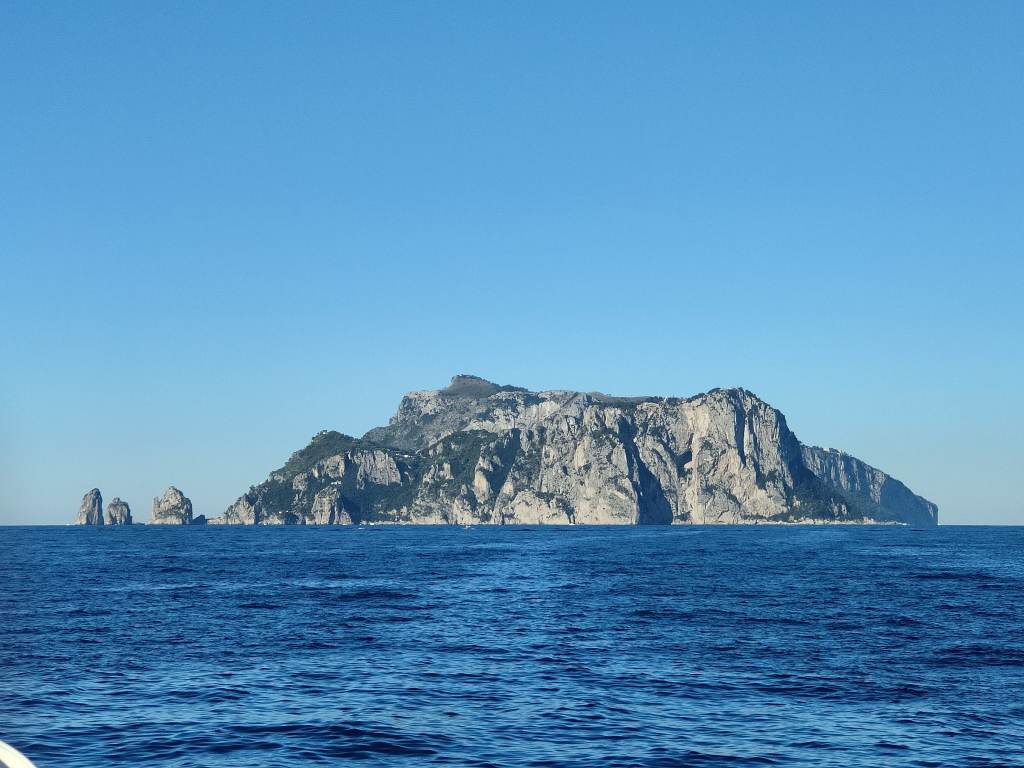
Capri became famous in Roman times, when Emperor Augustus claimed the island for himself and developed it as a private resort with temples, villas and gardens. However, Capri is most associated with his successor, Emperor Tiberius, who moved here permanently in 27AD and ruled the Roman empire from the luxurious Villa Jovis until his death in 37AD. Capri then fell into decline, until the 19th century when it was rediscovered by European artists and writers. In more recent times Capri became a popular tourist destination for “jet set” film stars in the 1950s and 60s. However these days the island has a mixed reputation, with some praising its continuing beauty and others talking of over-tourism and crazy prices. Today I would form my own judgment.
As my ferry docked in Capri’s large port (far busier than any of the others in the region, including the one in Naples), I was tending to the “over-tourism” view. Travellers milled around, seeking guidance from their phones, touts promoted boat tours around the island, and the girls staffing the tourist information booth looked very bored and pointed me towards the ticket office for the cable car with a notable lack of enthusiasm – forgetting to tell me that you can also pay by credit card and don’t actually need to buy tickets.
The cable car was a crowded but convenient way to make the steep climb from the port to the town of Capri, the main settlement on the island.
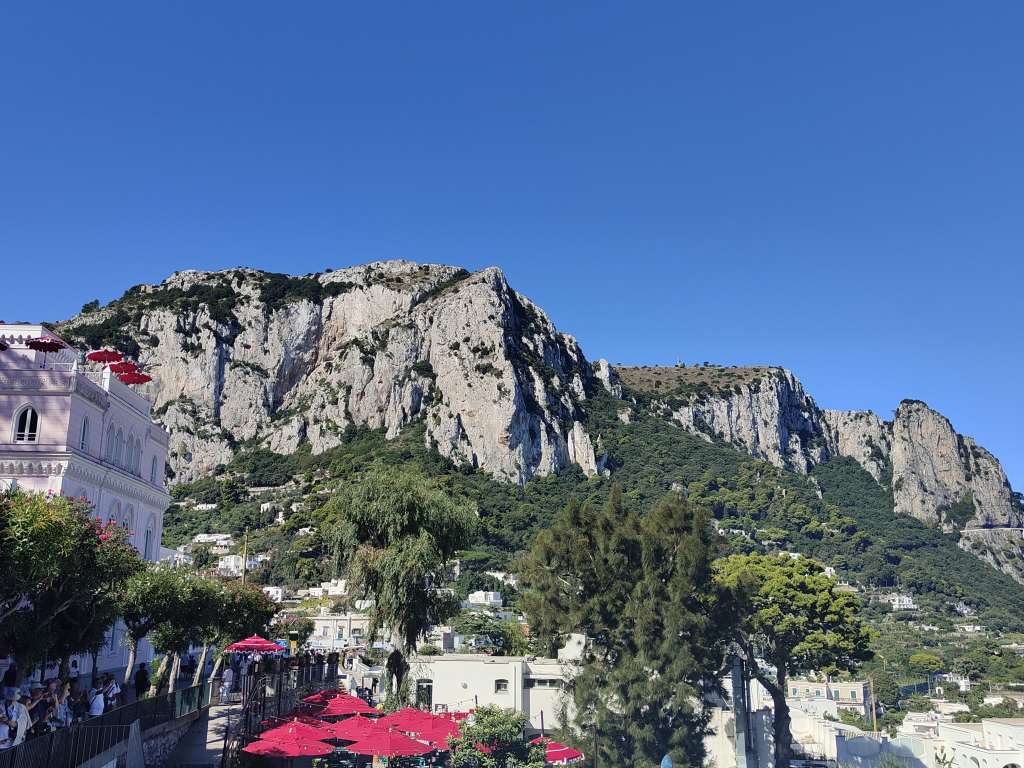
The town was a mix of squares and main streets packed with tourists and lined by luxury shops, and quieter side-streets – down one of which I headed on the way to my first destination of the day. As soon as I left the town centre, Capri became very pleasant – narrow lanes wound up the mountain, passing the locals’ villas – some luxurious and modern, some old and crumbling but still charming. I occasionally had to make way for one of the special electric carts used to transport luggage and people around the town (cars are banned), but otherwise there were very few fellow toursists.
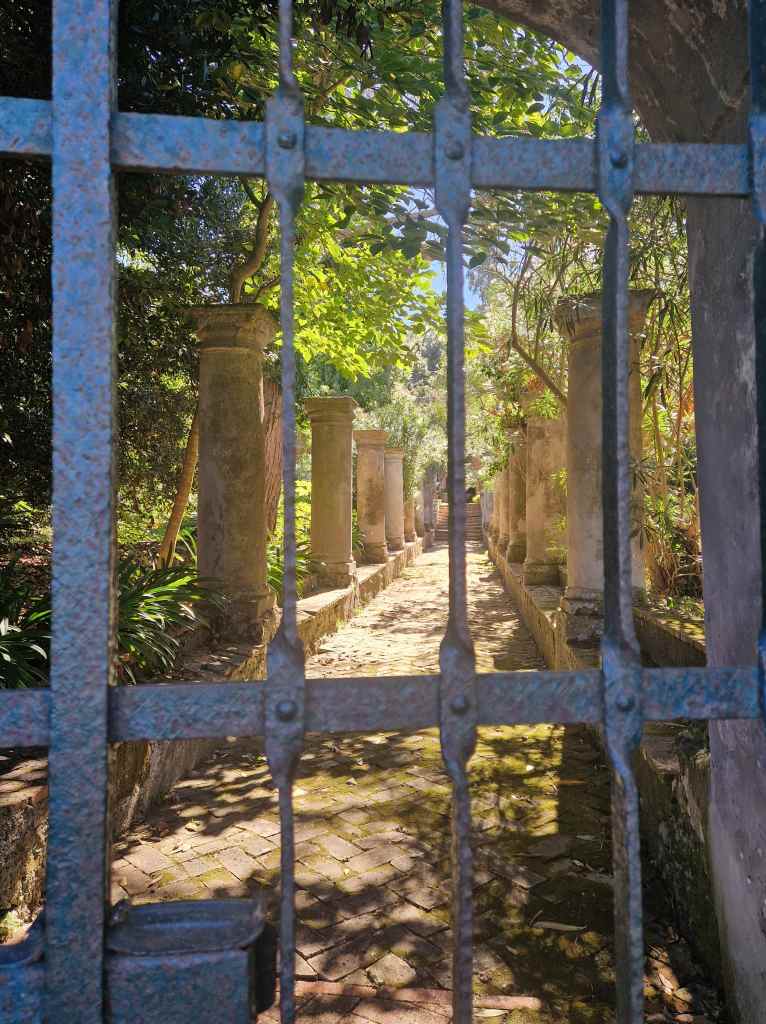
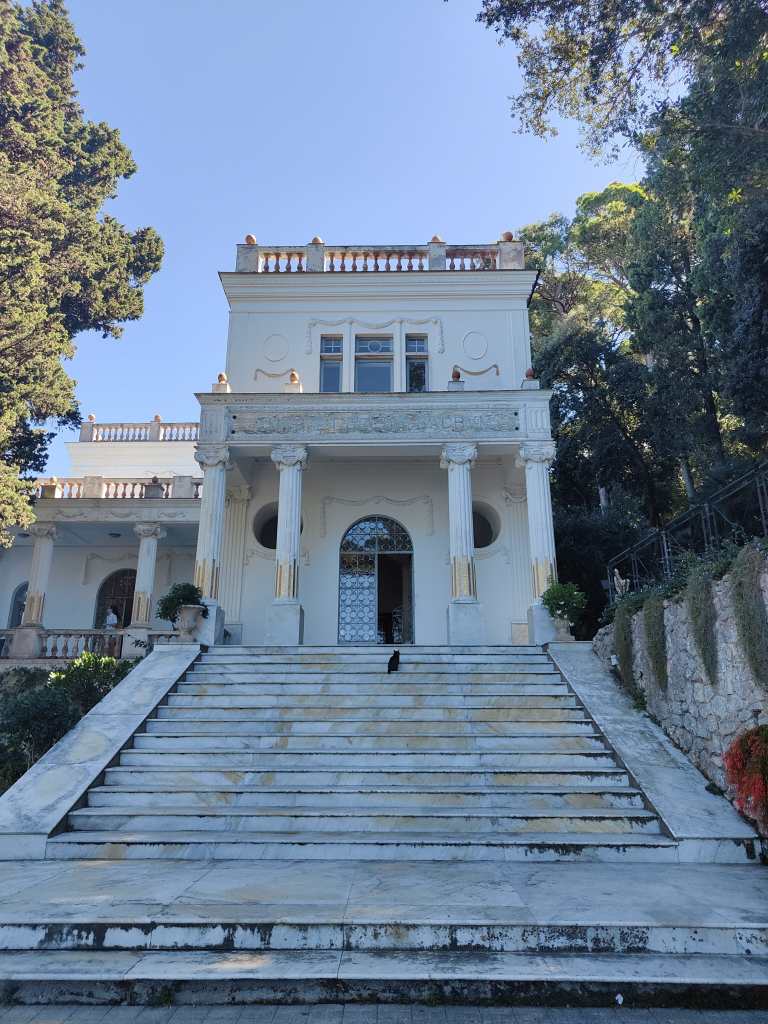
After a very pleasant twenty minute stroll I reached Villa Lysis, a home built by the rich Baron Fersen, who had been forced to leave his native France following various sex scandals. In 1904 he bought a plot of land on Capri in a prime location, overlooking the Bay of Naples, and commissioned the elegant villa and surrounding gardens that can be visited today. There he enjoyed a dissolute lifestyle with various lovers, turbo-charged with opium and cocaine until his death in 1923. Whatever one might think of Fersen, he certainly had taste and the views from his home are absolutely stunning.
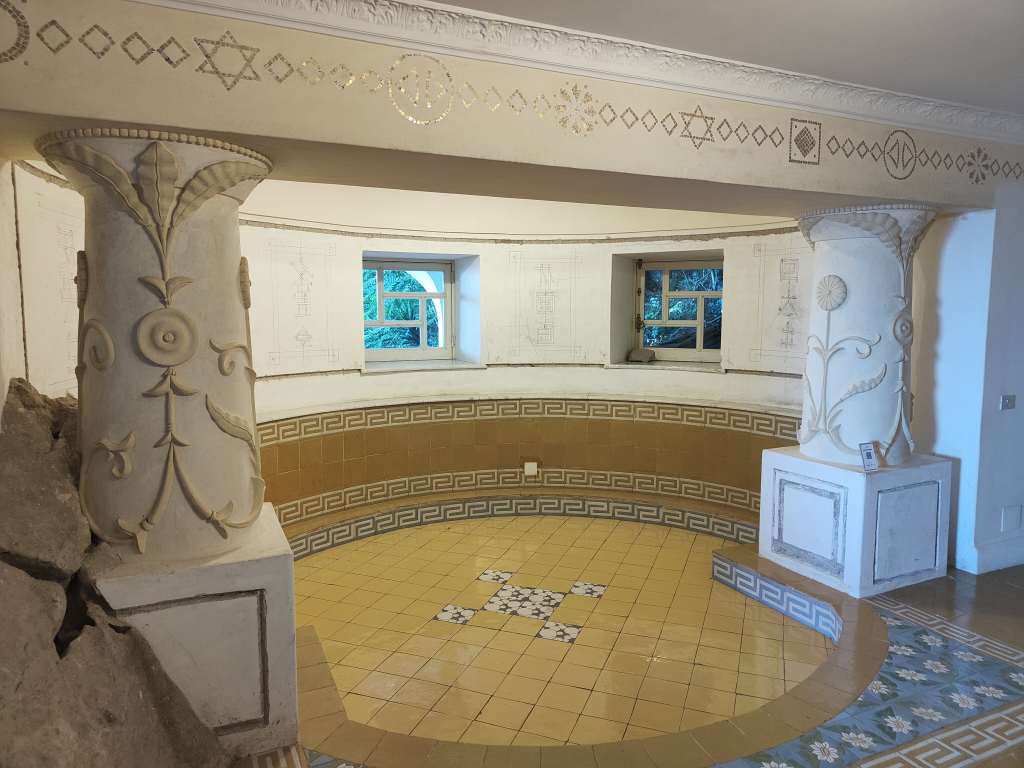
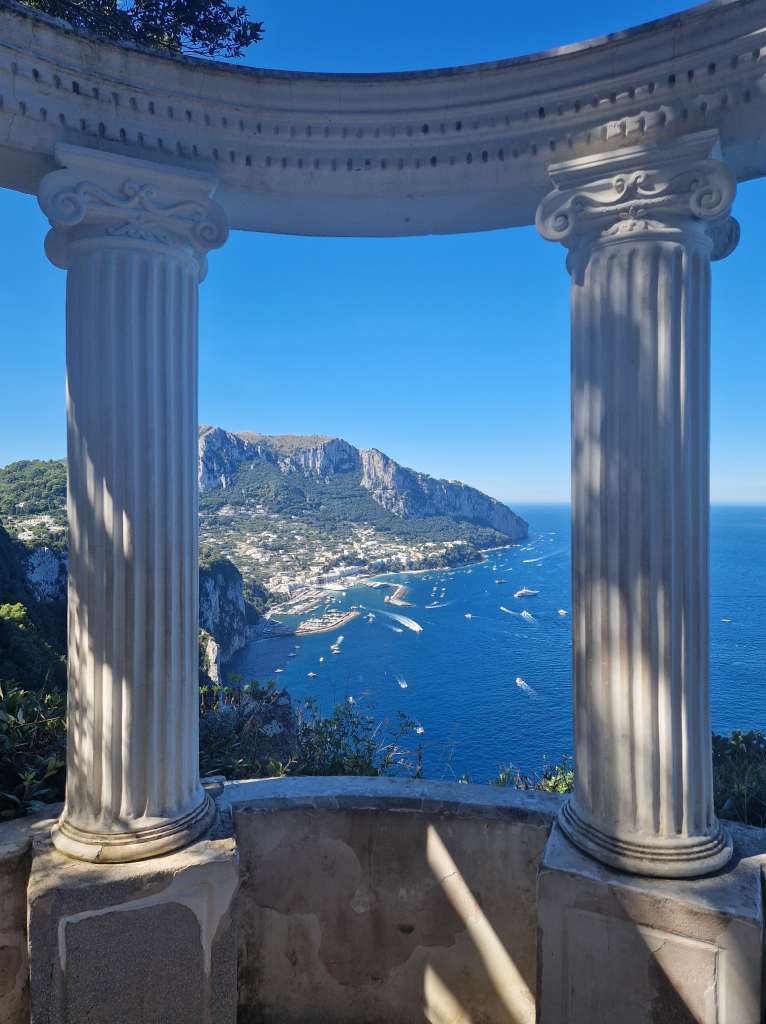
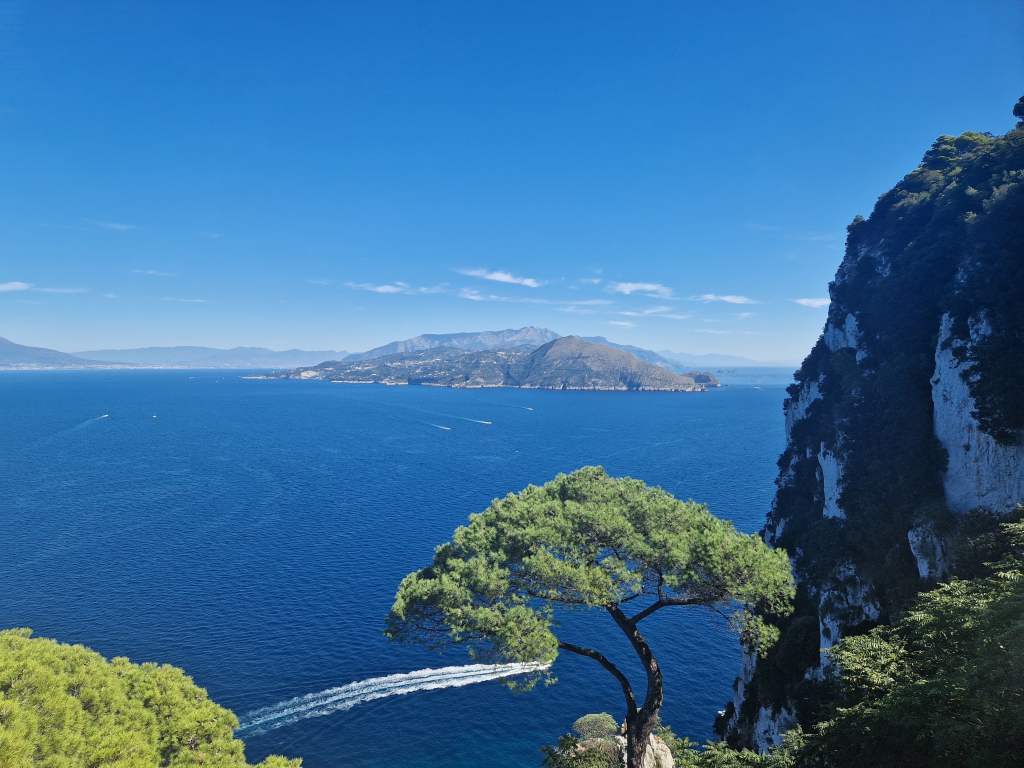
It was so beautiful that it was hard to drag myself away from Villa Lysis, but as midday approached I knew I had to move on if I wanted to see more of Capri. I found a small trail that led through a forest around the coast and arrived at Villa Jovis, once the luxurious palace of the most powerful man in the world……and now an atmospheric ruin, visited by a small number of tourists and inhabited by goats.
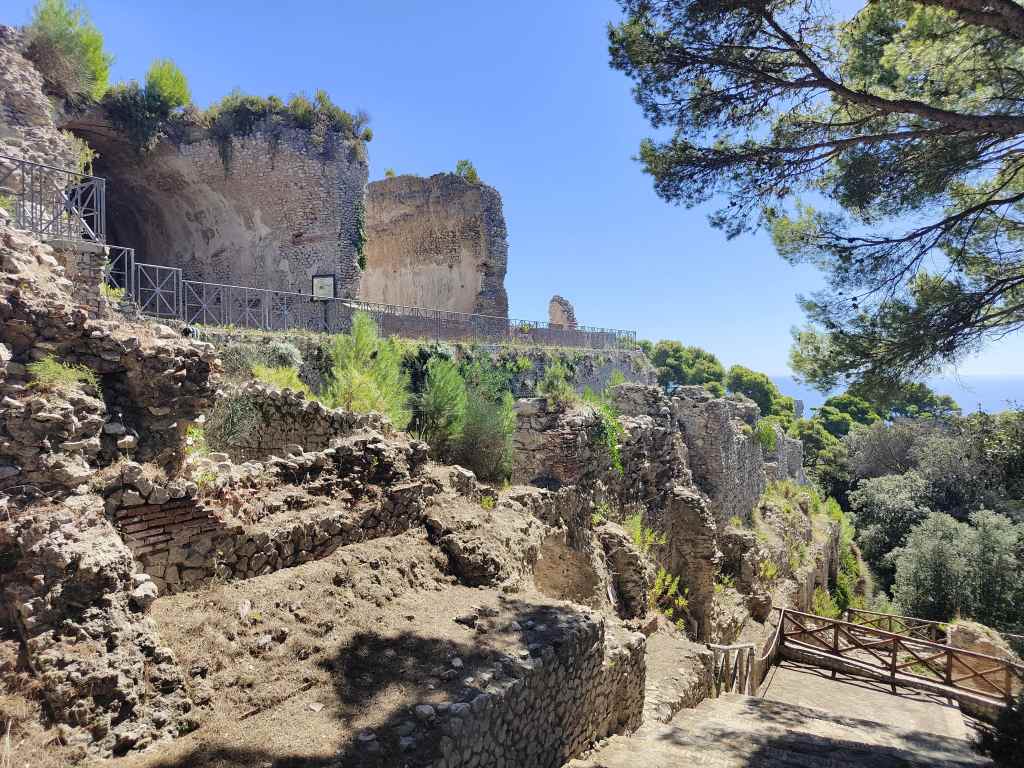
I bought a ticket form a machine selling timed entry slots. For the slot I picked, the machine told me that there were 3947 tickets remaining – giving an idea of how few visitors Villa Jovis gets, despite its historical importance. It was very hard to imagine the palace that once stood there from the relatively modest ruins that remained, but it was very pleasant wandering around alone and admiring the views, including the sheer cliff from which it is claimed that Tiberius had his enemies thrown. A wonderful smell of pine trees alternated with the stench of feral goats.
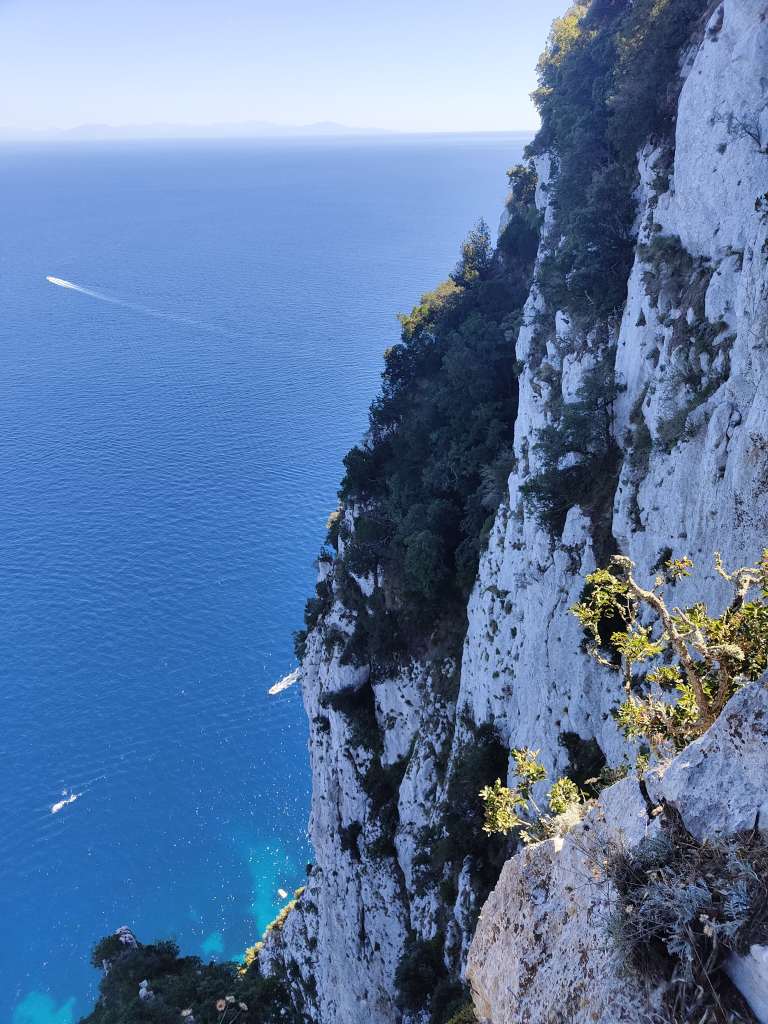
After I had seen everything, I explored a park just outside of the villa. It looked surprisingly neglected, and has been settled by yet more goats, but offered some amazing views over the sheer cliffs that make up much of Capri’s shoreline.
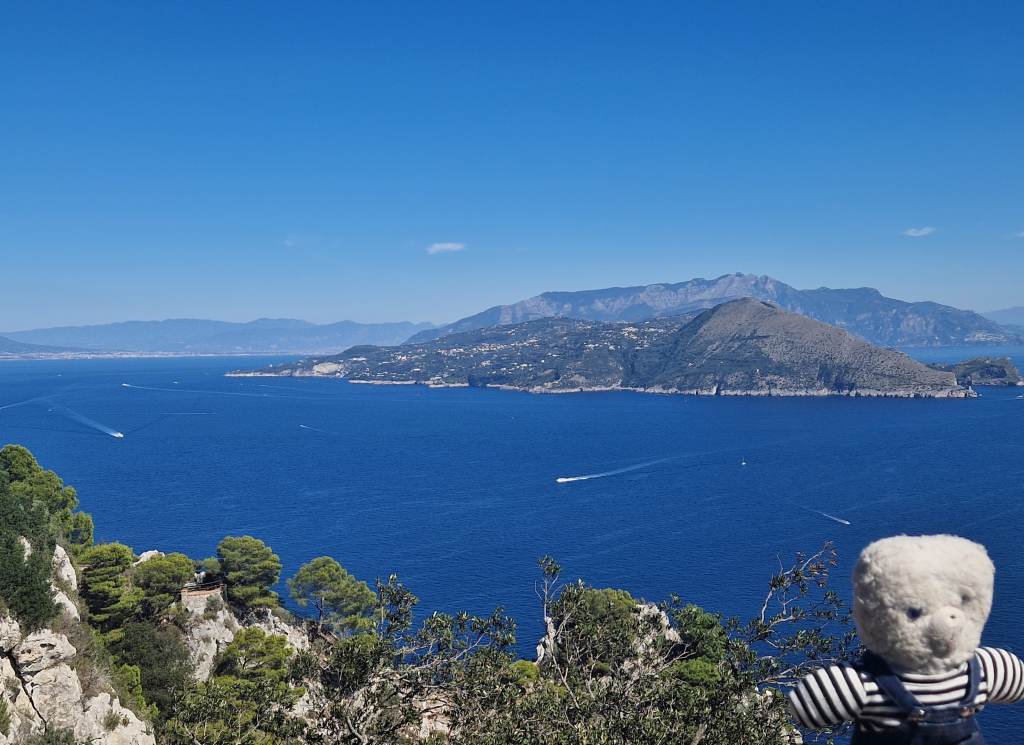
Once again, I was surprised by how few visitors there were – where were all the people I had seen getting off boats and thronging the port? My answer came soon enough as a I walked back into Capri town and hit the main shopping street, linked with luxury boutiques like Bulgaro, Louis Vitton and Yves St.Laurent, and packed with affluent-looking tourists speaking American, Italian, French and Russian. My route to my next destination, the Gardens of Augustus, was like and even richer multilingual version of fighting my way through the crowds of Positano – excuse me/scusi/pardon/izvinnite! The gardens were similarly busy – they offered some nice views over the coast, but I was baffled by their popularity compared to the much more beautiful things I had seen earlier, which I had had almost to myself.
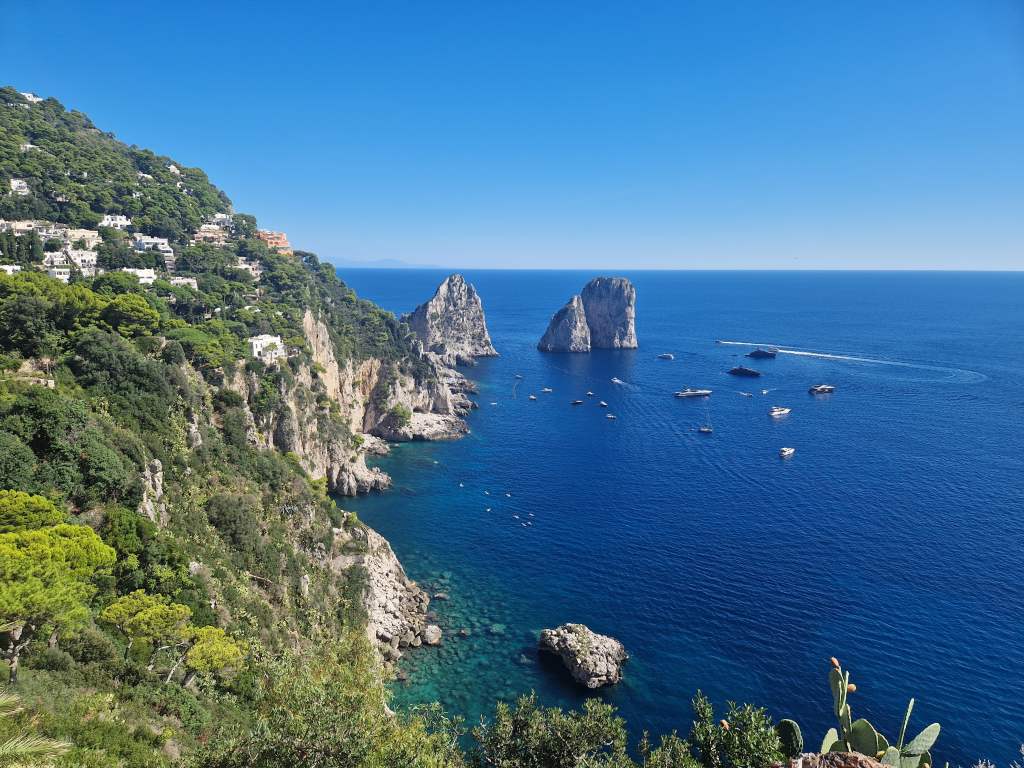
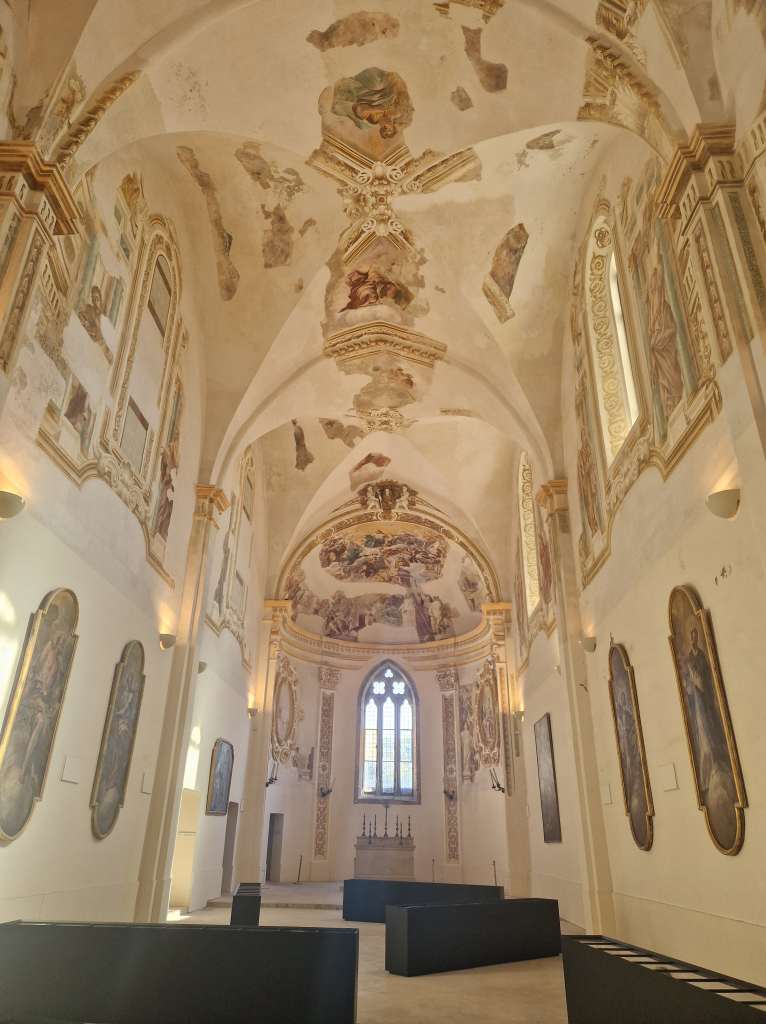
After seeing the fairly modest Gardens of Augustus I still had an hour before my ferry left, and popped into the huge former church of San Giacomo, which now houses several minor museums. The modern art there did not impress me, but it was fun wandering around the sprawling and pleasantly cool complex, discovering even more nice views of the coast. Once again, I had the place to the myself.
When the time finally came to head back to the cable car station to catch my ferry, I found a very long queue stretching out in baking sun into the neighbouring piazza. I glanced at my watch anxiously as the queue slowly advanced into the shade of the cable car building, to reveal an even longer queue inside. Here, the discipline of all these affluent visitors cracked as everyone realised they might miss there ferries, and people pushed and jostled. Being a small teddy sometimes has advantages, and I advanced cautiously at ground level amid a forest of sweaty legs to reach the turnstile at the front. I caught the cable car down, then had to find out which out of the thirty jetties my ferry would leave from, and finally rush to get there and make it onboard just in time.
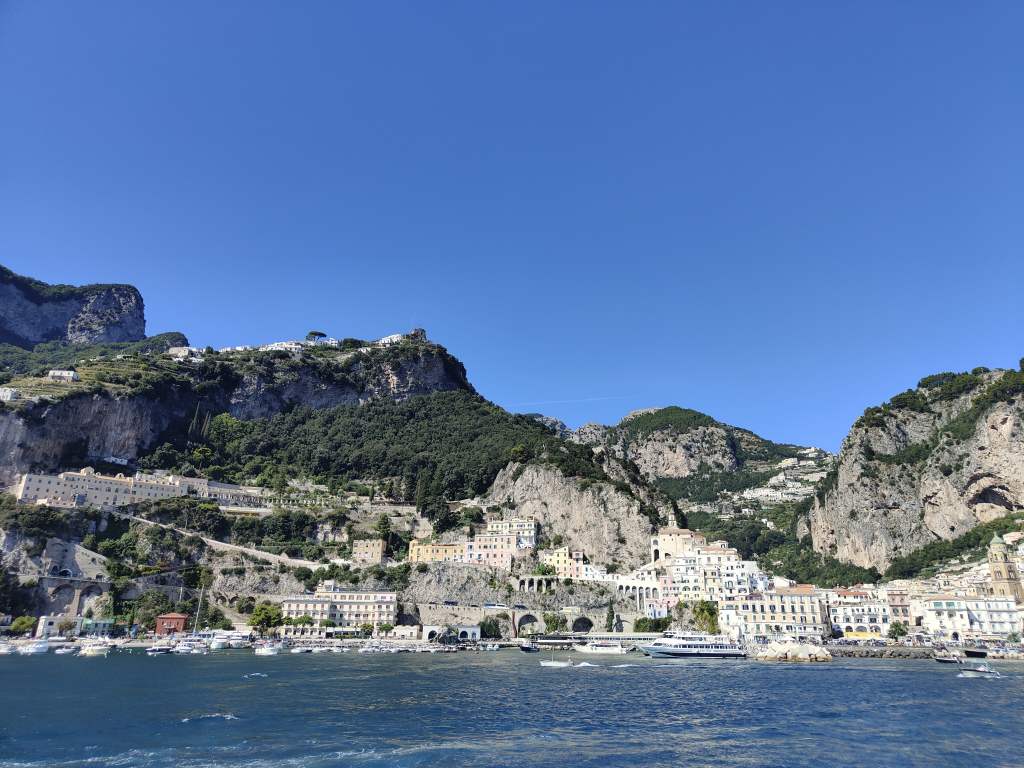
Cruising back to Amalfi I could again relax, enjoy the amazing views, and process my thoughts about the day. Capri was a puzzling place – heavenly beautiful and deserted in parts, hellishly crowded and expensive in others. But on balance I had really liked it, and was very glad that so few people had made the effort to walk twenty minutes to see its most interesting sights. Villa Lysis had the most beautiful views of my trip so far, whilst Villa Jovis made me reflect on the transience of human life. The luxurious palace of the most powerful man in the world is a ruin where goats live – something that the world’s current rulers might do well to reflect on.
Previous Post: The Path of the Gods and Positano
Next Post: Matera
 Trouspinet travels
Passionnant compte-rendu. Merci Trouspinet
LikeLike
Ton reportage trouspinet me confirme que Capri n’est pas fini (contrairement à ce que dit la chanson) et en dépit des touristes reste merveilleuse de beauté.
Pascale Anderson Mair
LikeLike
Yep, Capri exceeded my expectations.
LikeLike