This post is about an often-troubled part of the Russia – the Caucasus, located at the southern end of European Russia. North of the border are the mountainous Russian republics of Chechnya, Ingushetia, North Ossetia and Dagestan, whilst south of the border lie the former Soviet republics of Georgia and Azerbaijan. In some parts of this region the peoples are very different to the Slavs that make up most of population of the rest of Russia, and many are Muslim, giving the region a completely different feel. The area has often been a hotbed of discontent against Russian rule, typified by the brutal civil war in Chechnya, which lasted from 1999 to 2009.

However, my first trip to the Russian Caucasus was to a rather safer area a little further north, in Stavrapol Kray, a popular holiday destination for Russians since tsarist times. People came here to enjoy the pleasant climate, mountains and many hot springs providing mineral water with claimed healing properties. My main base was the pleasant city of Kislovodsk -literally meaning “acid waters” – nestled at the foot of tall and steep mountains and with the hot springs and spa complex obligatory for any self-respecting city in the region.
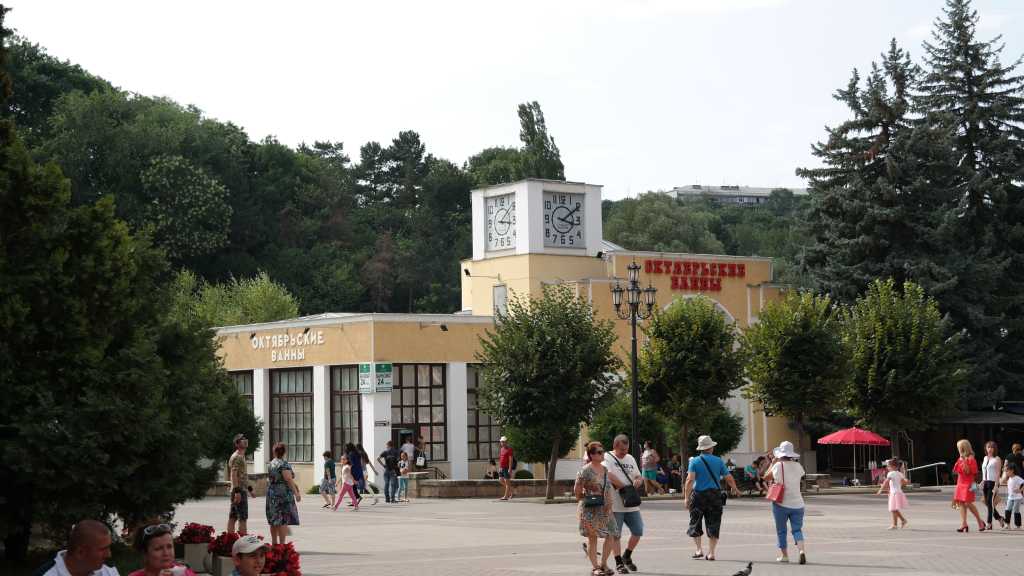
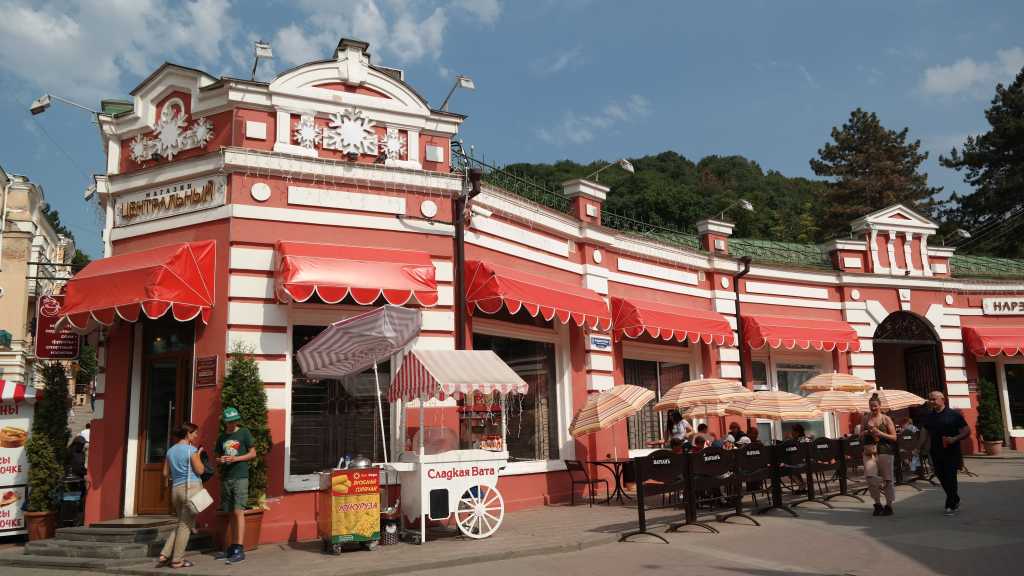
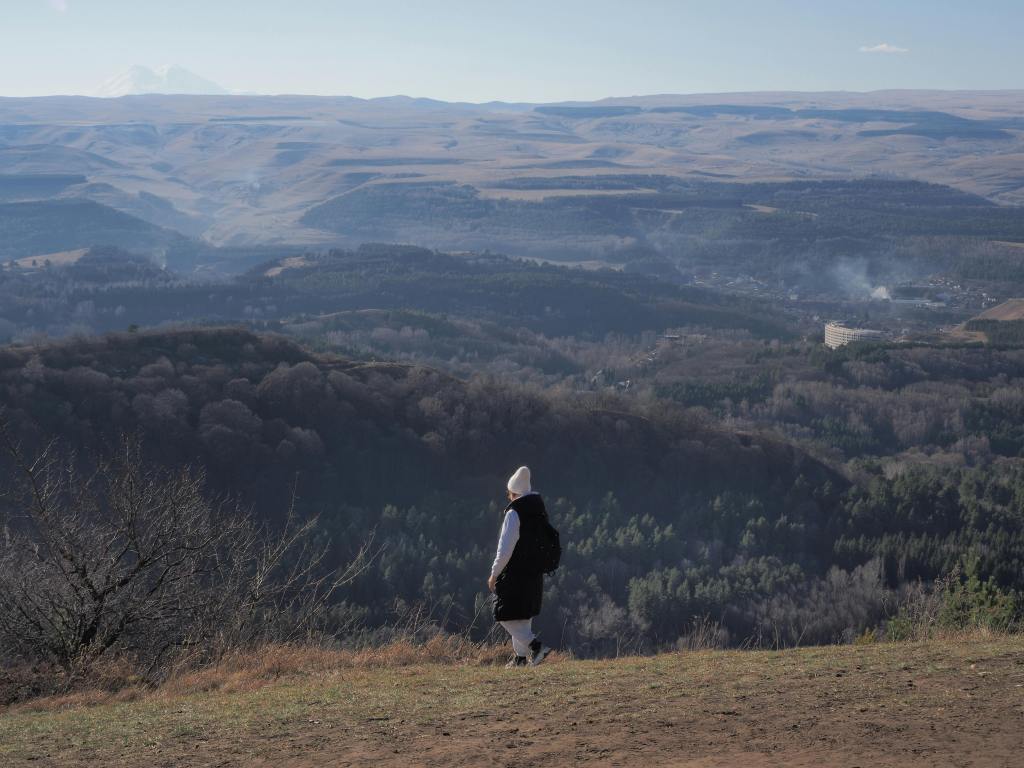
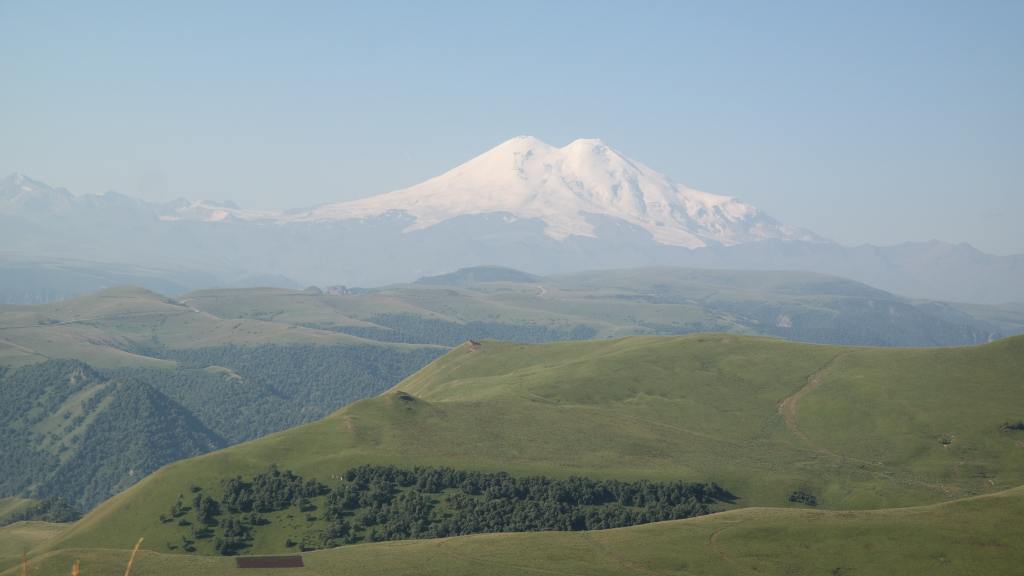
Kislovodsk has a huge park which stretched all the way from the town itself, through various ornamental gardens and then through wild forest to a hilltop which offers views back over the city – and in the far distance, Mount Elbrus, Europe’s highest mountain.
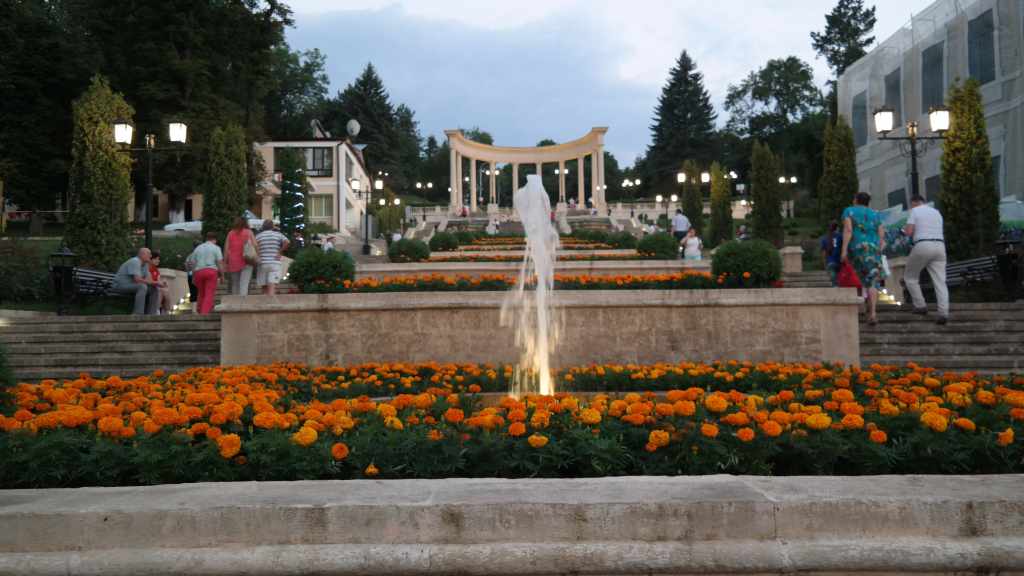
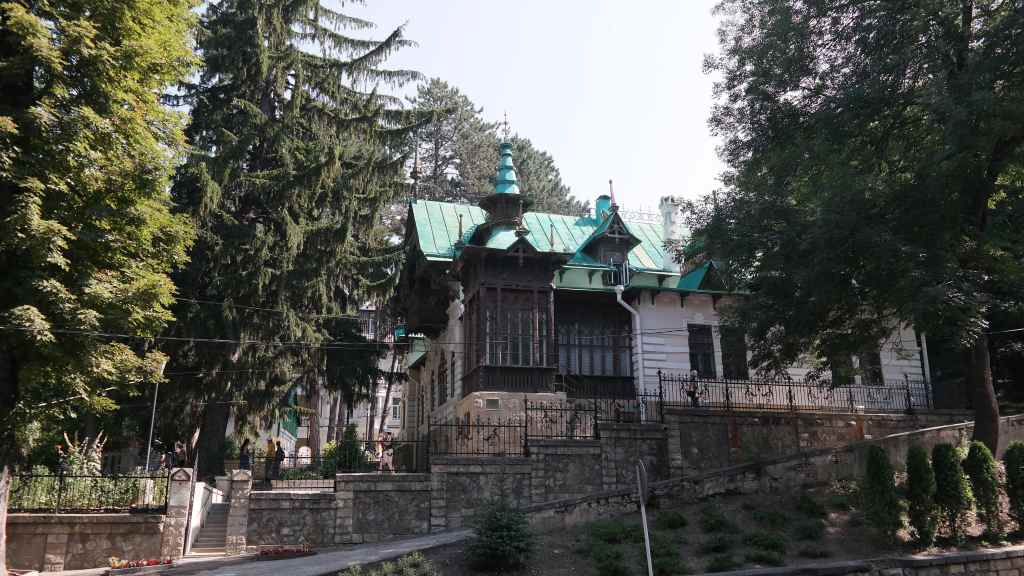
Kislovodsk was THE place to go on holiday in tsarist times and had many famous visitors. One prominent fan was the famous singer Shalyapin, who rented a beautiful house here which you can still visit to this day. One summer the composer Rachmaninov visited him and they offered a free concert to the city’s inhabitants, throwing open the doors of the house’s concert room.
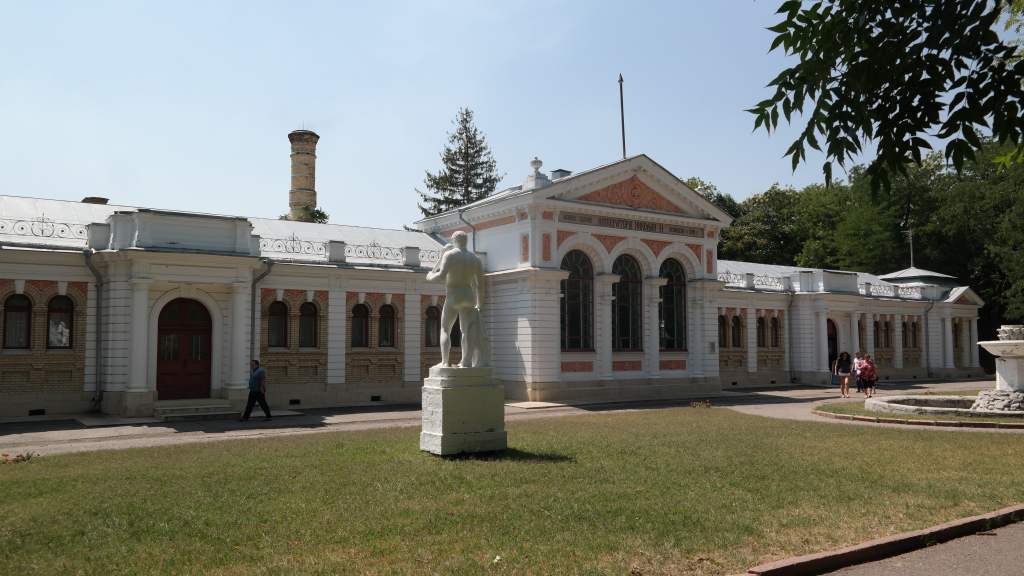
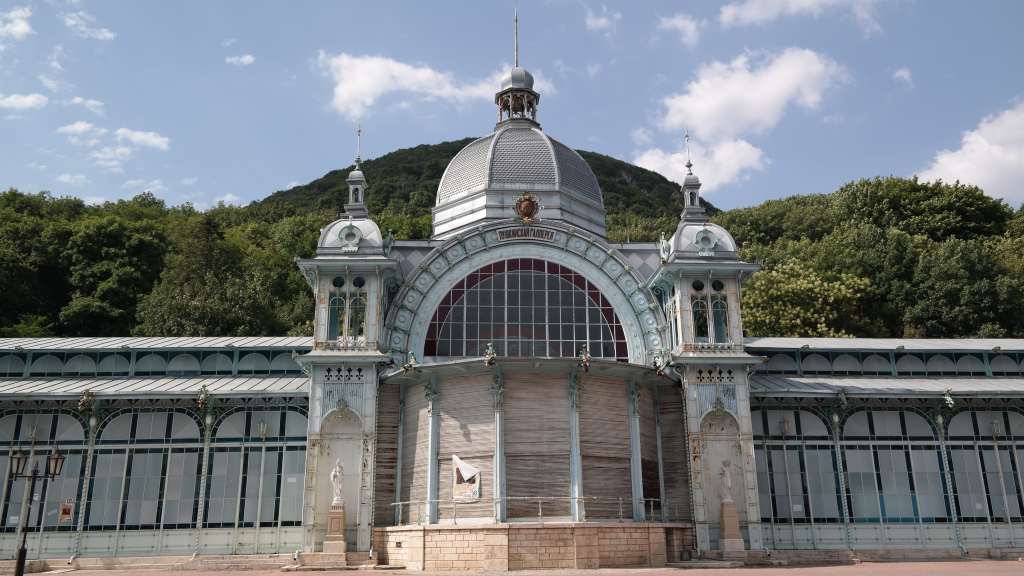
Near Kislovodsk there are many other spa cities, such as Piyatigorsk, Yessentuki and Zheleznovodsk. Some have retained the opulence of the tsarist days, with large spa complexes like this –
…whilst other once-opulent buildings have fallen into abandon.
My trip to region also included an excursion to Dombay, Russia’s first ski resort, and located close to the Georgian border. The trip had some nice views of Mount Elbrus along the way.
As a ski destination, Dombay has fallen far behind the bigger resorts near Sochi, and some of its chair lifts looked perilous……
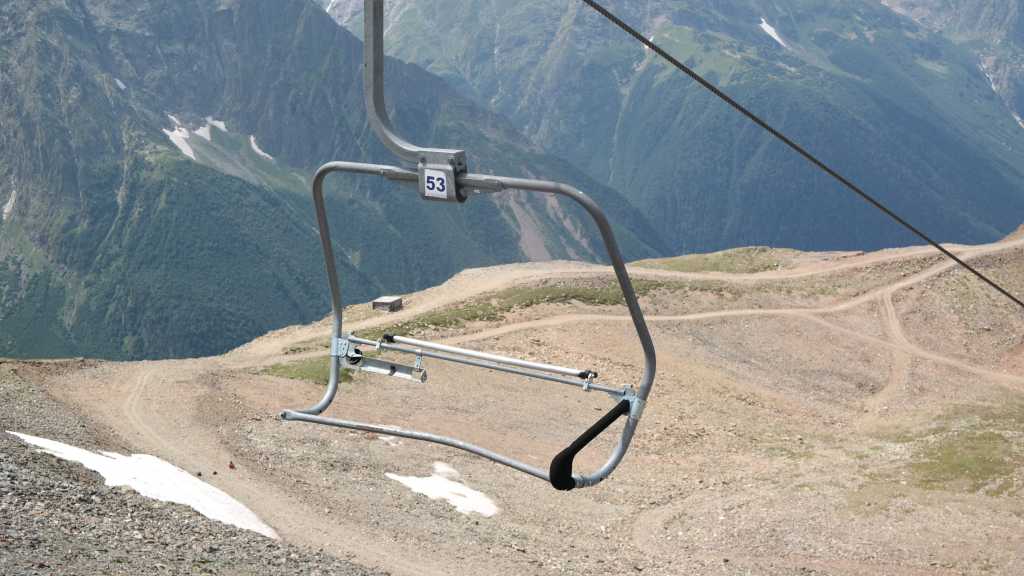
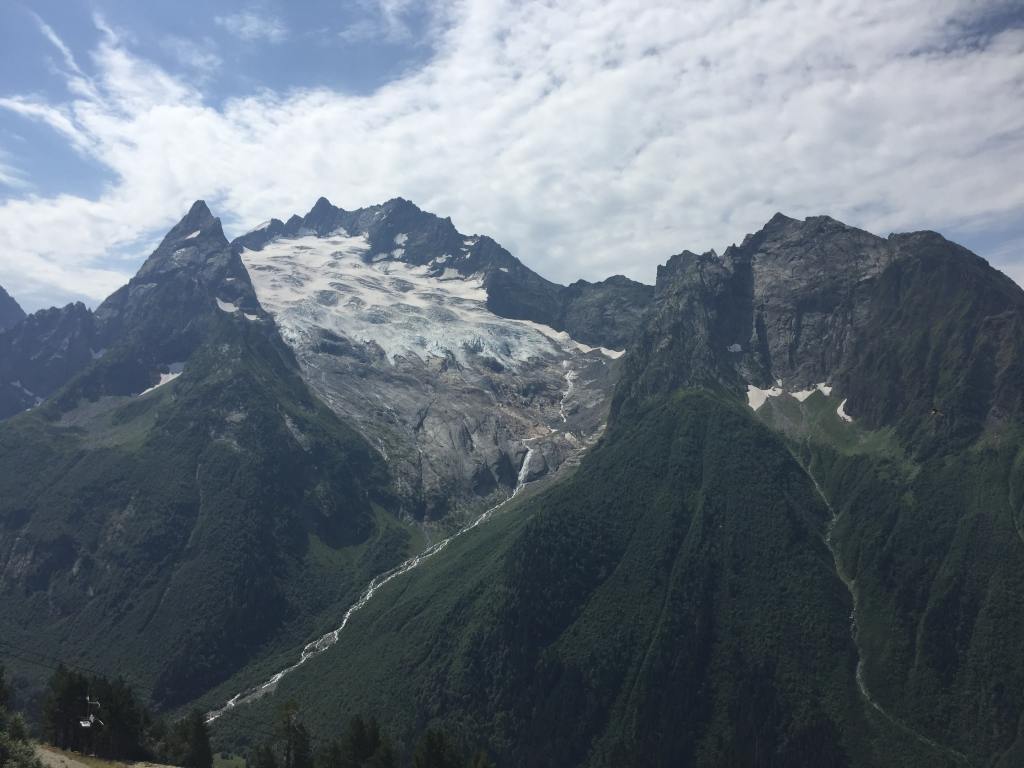
….but the town was surrounded by pretty mountains and made a nice day-long excursion.
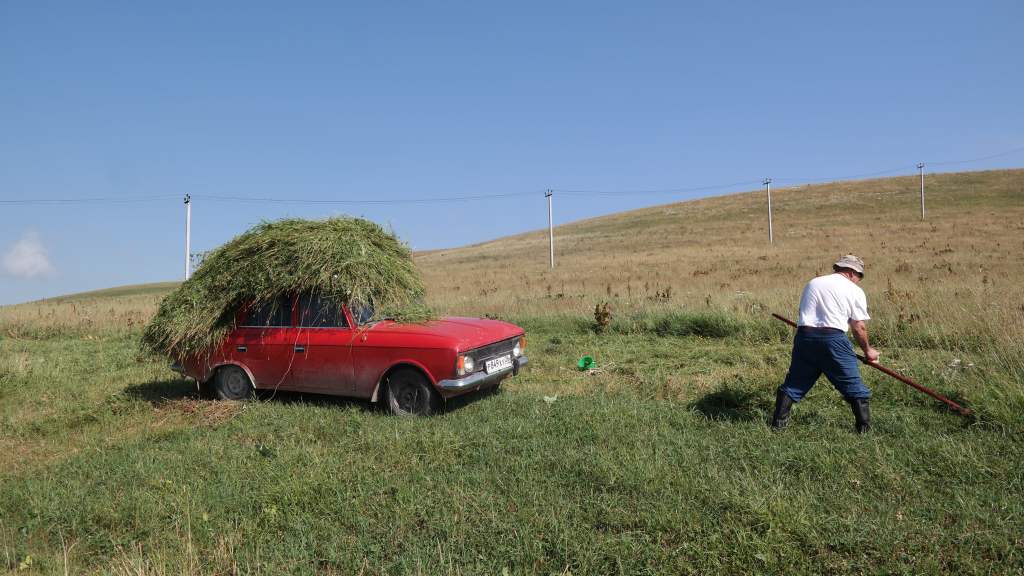
My final experience in this “Russian” part of the Caucus was a trip out into the countryside into a rural area where few other tourists go.
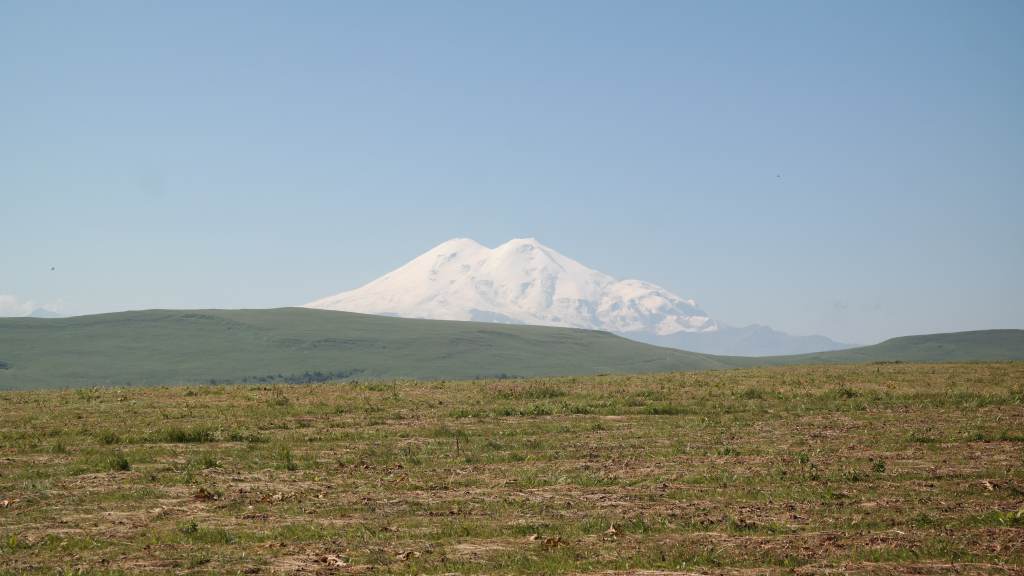
Our guide took us to a wild plateau, edged with weird rock formations and dominated by Mount Elbrus in the distance.
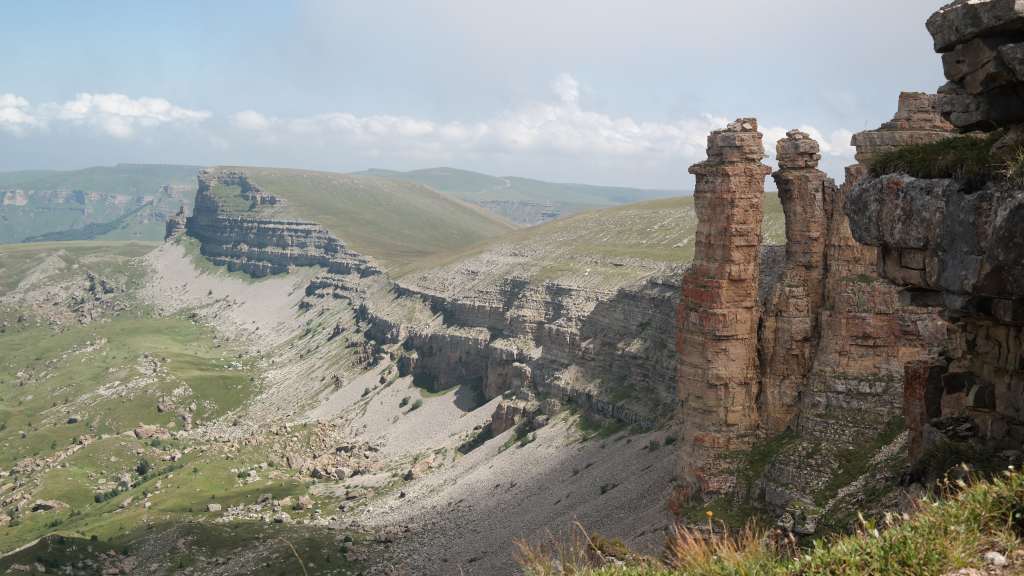
It was almost completely empty except for a shepherd on horseback and his large flock….. and a tiny café set in the most unlikely location on the edge of a cliff. Next to the café was a viewing platform with a sheer drop of several hundred feet underneath it, but having seen the condition of the some of the Russian ski lift equipment in Dombay, I did not dare to venture onto to it.
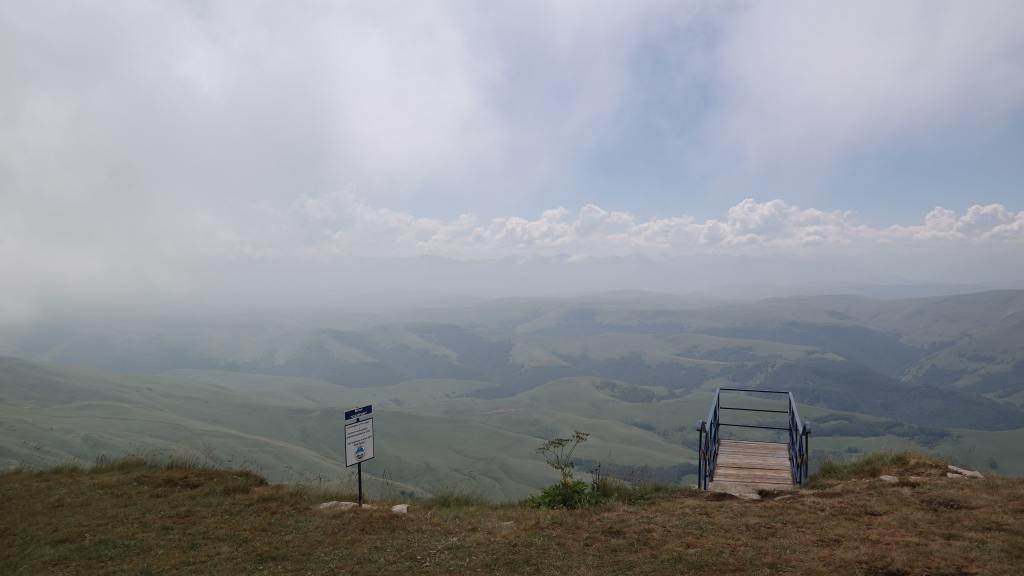
In any case the view of Elbrus was just as good from the safety of solid ground.
That’s it for this post about the area around Kislovodsk in the Russian Caucasus. My next post will cover the wild Russian republics of North Ossetia, Ingushetia and Chechnya. Stay tuned!
Previous Post: Moscow 2013-2019
Next Post: The Russian Caucasus 2 – North Ossetia, Ingushetia and Chechnya
 Trouspinet travels
Very interesting indeed. I do not remember this report. The villages have a real nice feel and the mountain is striking a bit like Mount Fuji. Looking forward the next post, Pascale
LikeLike