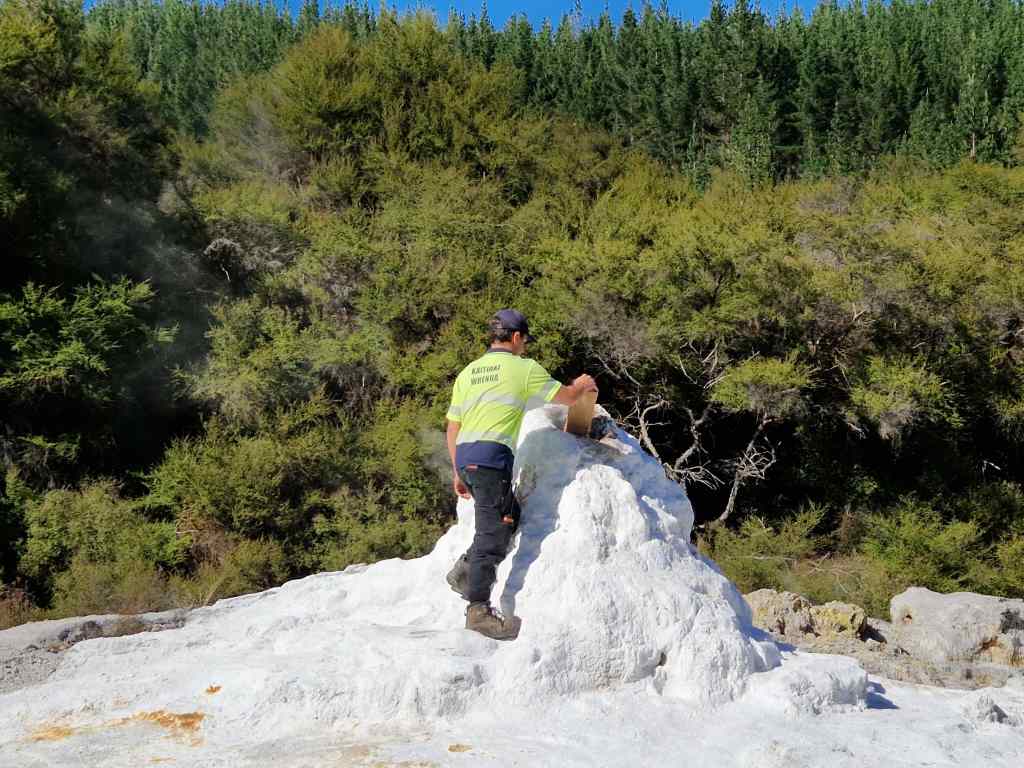
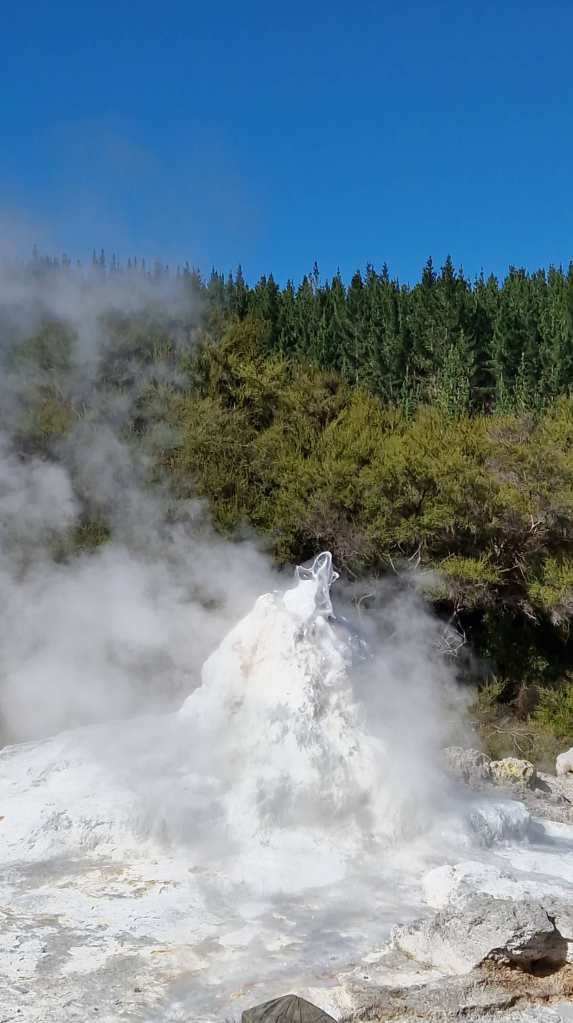
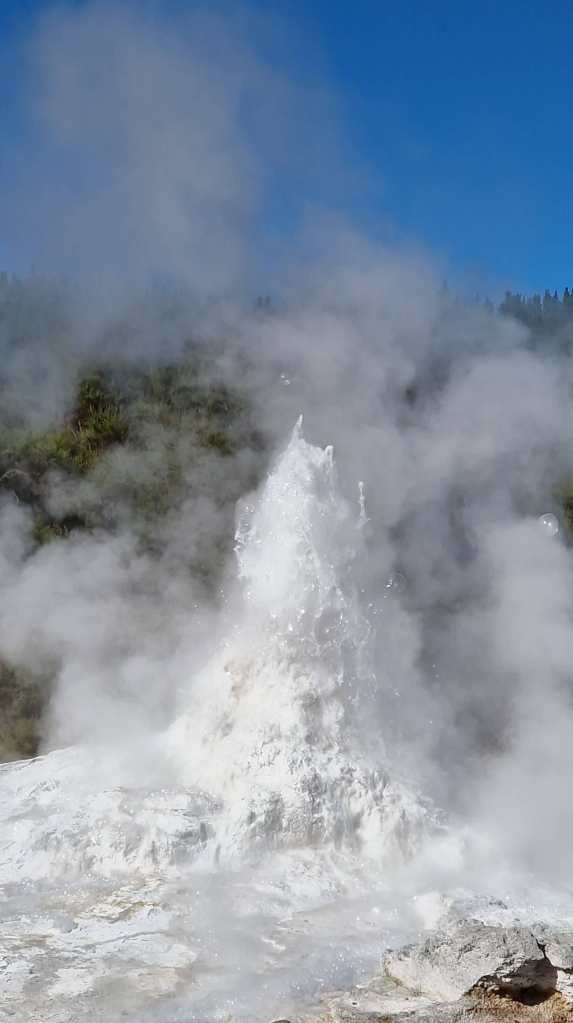
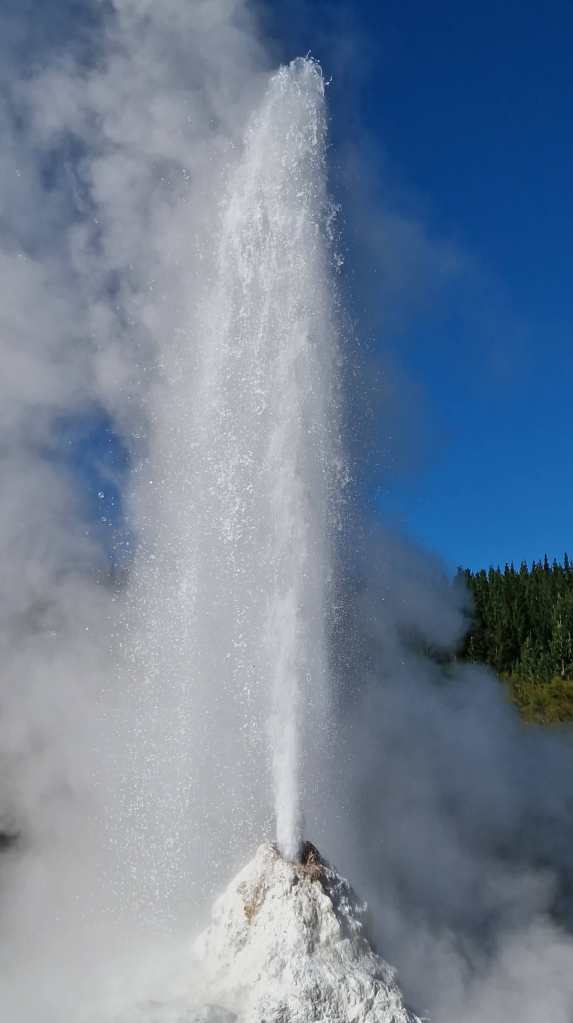
Today was my last day in New Zealand. I have been here nearly four weeks, and the time has flown past. I visited one last geothermal park outside of Rotorua called Wai-O-Tapu. My visit started at Lady Knox Geyser, which erupts at 10.15 every day. I was a little puzzled by the precision of this event – surely a natural phenomenon like a geyser should be at least a bit variable, and what happens when New Zealand goes from summertime to wintertime (as it just had)? All was revealed when I joined a large group of tourists sitting in an amphitheatre around the geyser. One of the park employees explained that the geyser had been discovered when a group of workers had been washing their clothes in the nearby hot springs. They introduced some detergent into the water, which triggered a spectacular eruption (and panic amongst the surprised workers, who ran around naked to escape). In modern times, at 10.15 every day, a park employee puts some detergent down the hole of the geyser to trigger an impressive, if partially artificial, spectacle.
With the geyser show over, the crowd headed to the park’s main entrance to start out on a path through a prehistoric landscape of bubbling mud pools, smoking hot springs and tranquil lakes. Wai-O-Tapu park is particularly known its brightly coloured rock formations, including the famous Champagne Pool.
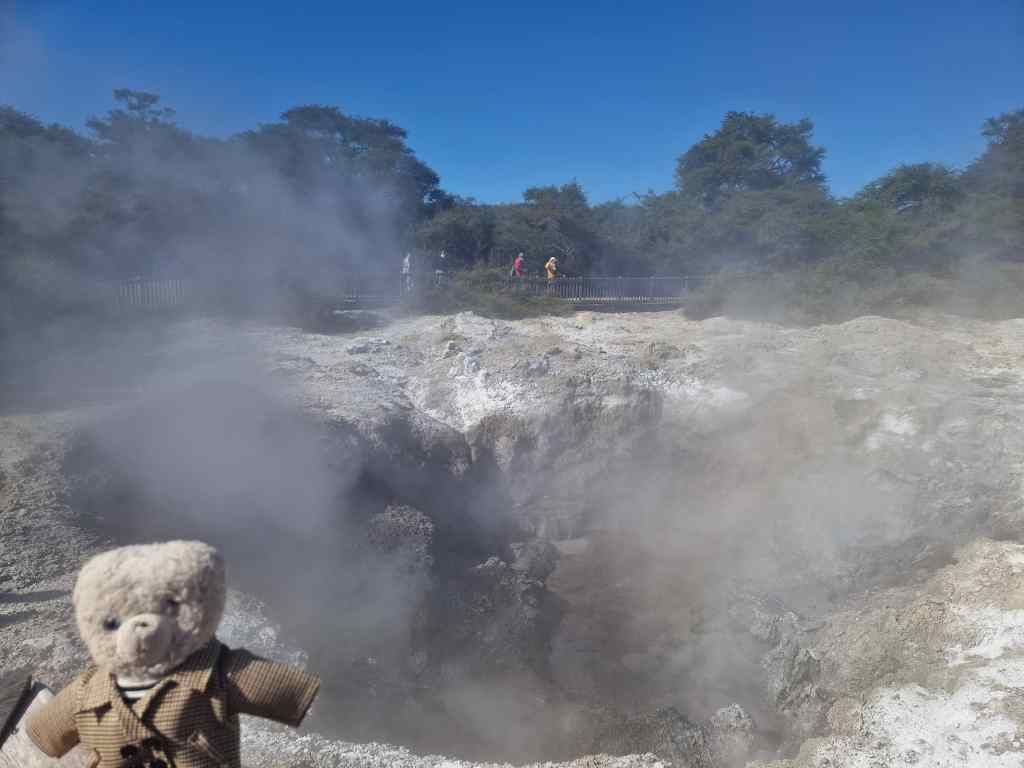
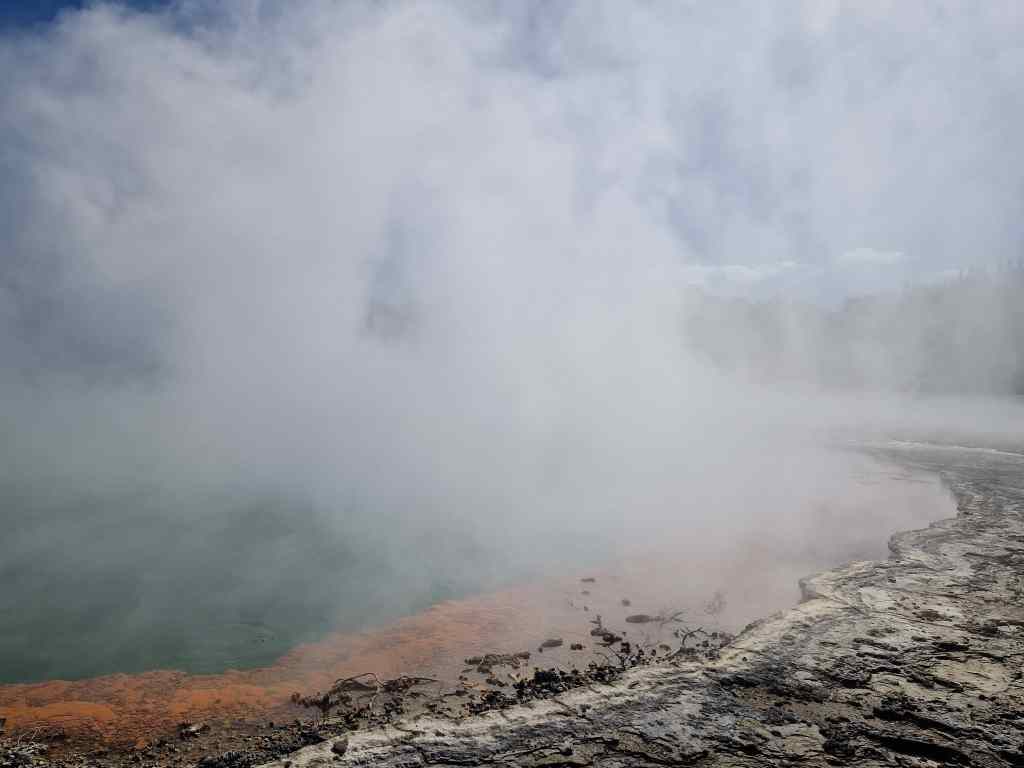
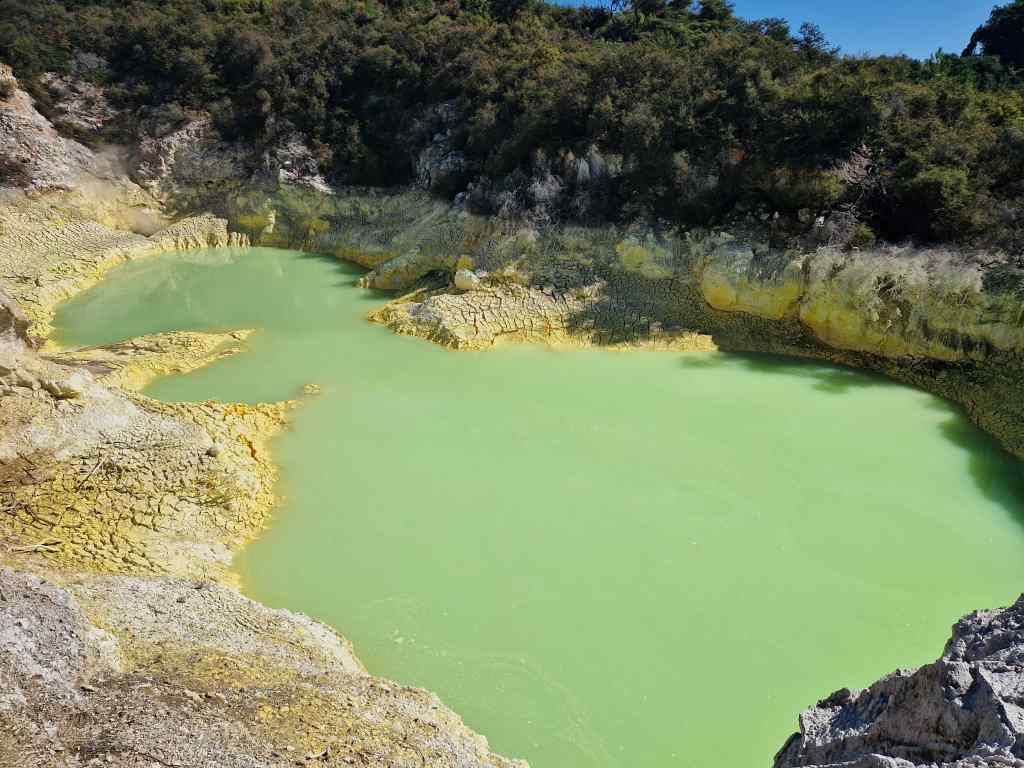

After a couple of hours exploring Wai-O-Tapu, it was time for a complete change – a tour of the Maori cultural centre Te Puia. After the slightly sad experience of visiting the neighbouring village of Whakarewarewa, my expectations were not so high, but I was pleasantly surprised. The visit started with a visit to a training centre where students learn Maori crafts like sculpture (a male activity) or weaving (a female one), where we got to see some wonderful pieces of art.
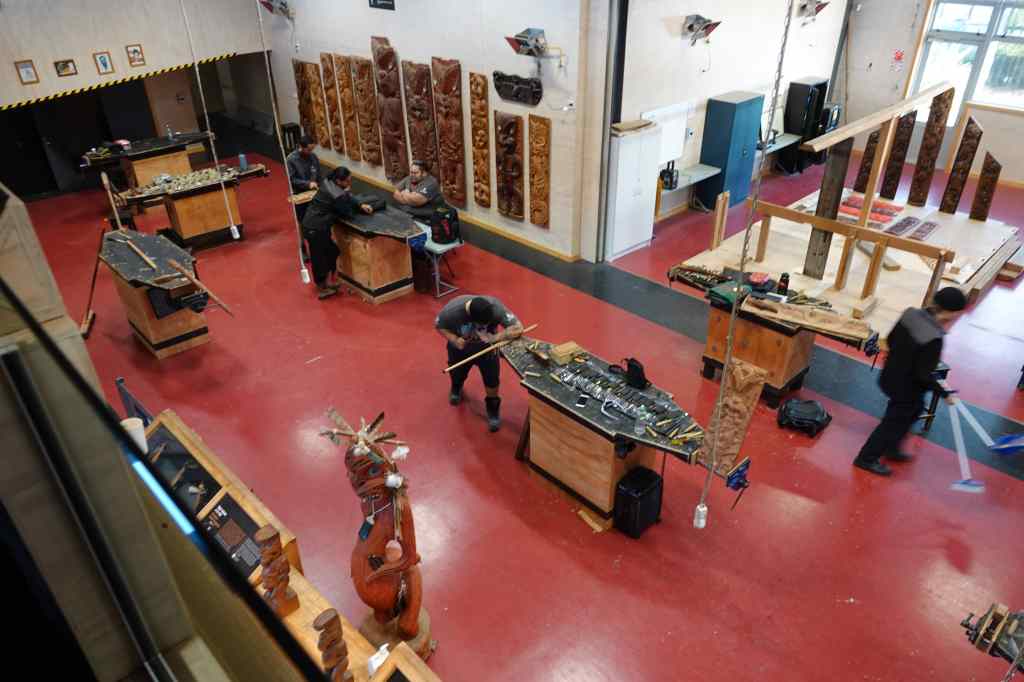
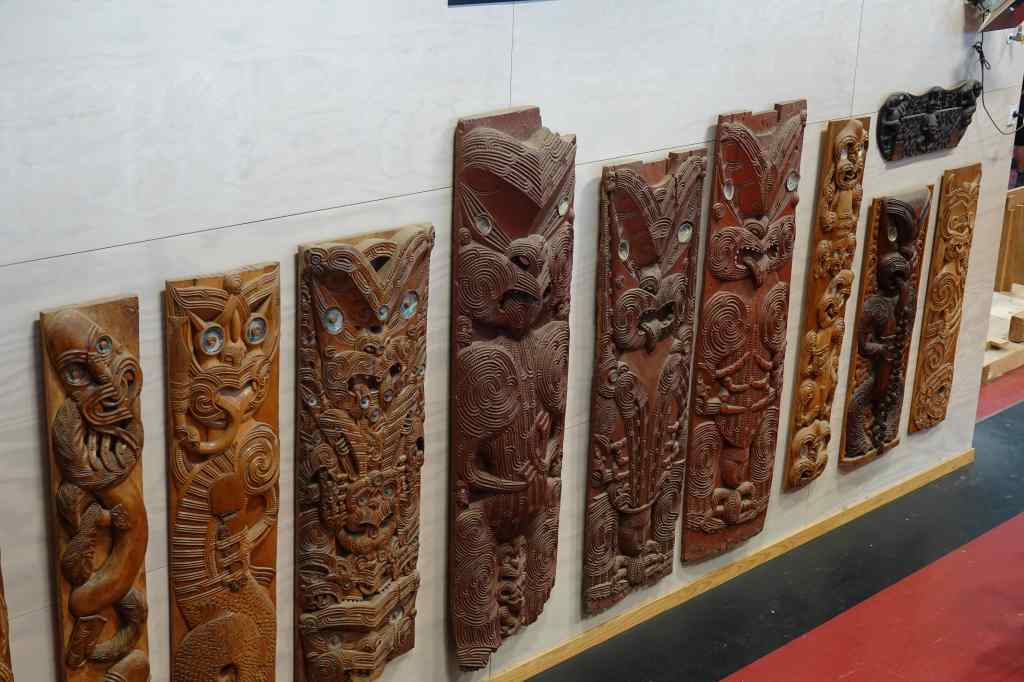
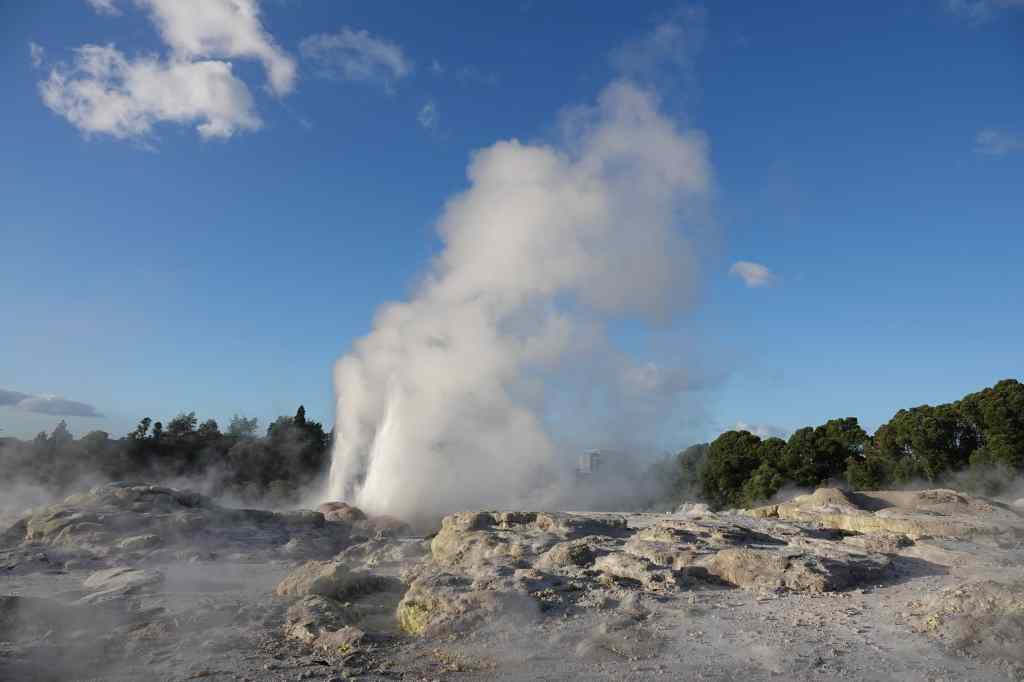
Next, there was a rapid visit to a kiwi conservation centre where I got a glimpse of their recently born, but still very large, kiwi chick. The birds are nocturnal, so during tour hours their enclosures are kept in near darkness, and no photos were allowed. After that was a visit to the Pohutu geyser area, for yet another look at Rotorua’s geothermal area. The viewing area at Te Puia was much closer than at Whakarewarewa, so I could get a really good look, but sadly Pohutu was not very active.
After a buffet dinner our group was treated to a performance of Maori songs and dances in the marae, the large meeting house found in all Maori settlements. Before we could enter, there was an elaborate ritual in which a succession of warriors came to challenge and intimidate the leader of our group, swirling their weapons through the air, sticking out their tongues and making their eyes bulge.

When that didn’t work the final warrior put down a leaf on the floor in front of our leader, a peace offering showing that we were welcome to visit them. Once everyone was inside and seated, there was another Maori tradition, the powhiri, or speech of welcome – spoken only in Maori. With the lengthy formalities over, our hosts switched to English to welcome us and explain the series of Maori songs and dances they presented, including the famous haka war dance.
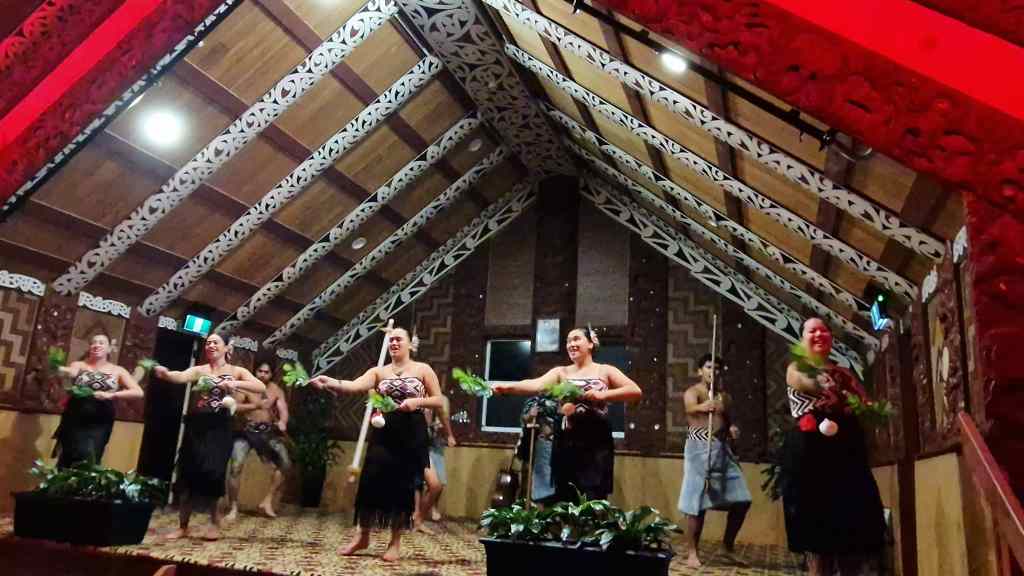
This all probably sounds very touristy, and of course, it was. However, the show was presented with such enthusiasm that I soon found myself thoroughly enjoying the occasion and clapping wildly at the end. The evening still had not quite finished though, and we were invited for one last look at Pohotu – this time at night, with the geyser lit up by floodlights. Around the observation area there were stone terraces heated geothermally, and I sat on one to watch as the staff distributed hot chocolate. I stayed nearly an hour, as our Maori hosts passed among the crowds chatting to people, and was finally rewarded by a small eruption of Pohotu.

It had been a great day and a good way to end my trip to New Zealand and Australia. Tomorrow I will make the 2-3 hour drive up to Auckland airport, and then the even longer twenty-nine-hour flight back home to London via Doha. New Zealand has been a special place with many amazing things to see, but it is a looooong way from anywhere. Memories that will stay with me forever include flying around Mount Cook, seeing blue whales in Kaikoura, the geothermal areas around Rotorua, hiking to Mount Aspiring’s glacier and sailing Milford Sound. Had the weather been kinder to me, maybe the Marlborough Sounds, Abel Tasman Park and the Tongariro Alpine Crossing would also have made my list of highlights. I think I will be back one day to give them another look, and to visit some of the areas I missed this time – like the country’s sub-tropical far north. But with the huge distance, I suspect it will be part of a round-the-world tour rather than a dedicated trip.
Previous Post: Rotorua – Kaituna Falls and Waimangu
 Trouspinet travels
test
LikeLike
excellent summary, can confirm the veracity of the report! thank you for having me; it was very enjoyable.
LikeLike