Feeling refreshed after a day’s break from visiting stuff, we woke early, and took a taxi to the Golden Temple or Kinkaku-ji, in the northern suburbs. The long ride let us appreciate the city’s geography. Kyoto sits in a valley and nearly all of the tourist attractions lie in the outer suburbs, at the foot of pretty, forested mountains. The centre is a highly developed and rather ugly urban sprawl and crossing through it is quite time consuming.
We arrived for the 09.00 opening of the temple to find that there was already a large queue waiting to get in – foreign and Japanese tourists, and groups of schoolchildren. Still, the crowds were worth it, since the Golden Temple really is an unmissable sight – a temple entirely covered in gold leaf (even the gutters are gilded) sitting by a lake in a beautiful garden. We joined the throng to take one of THE essential Kyoto photos, of the temple with its reflection in the water.
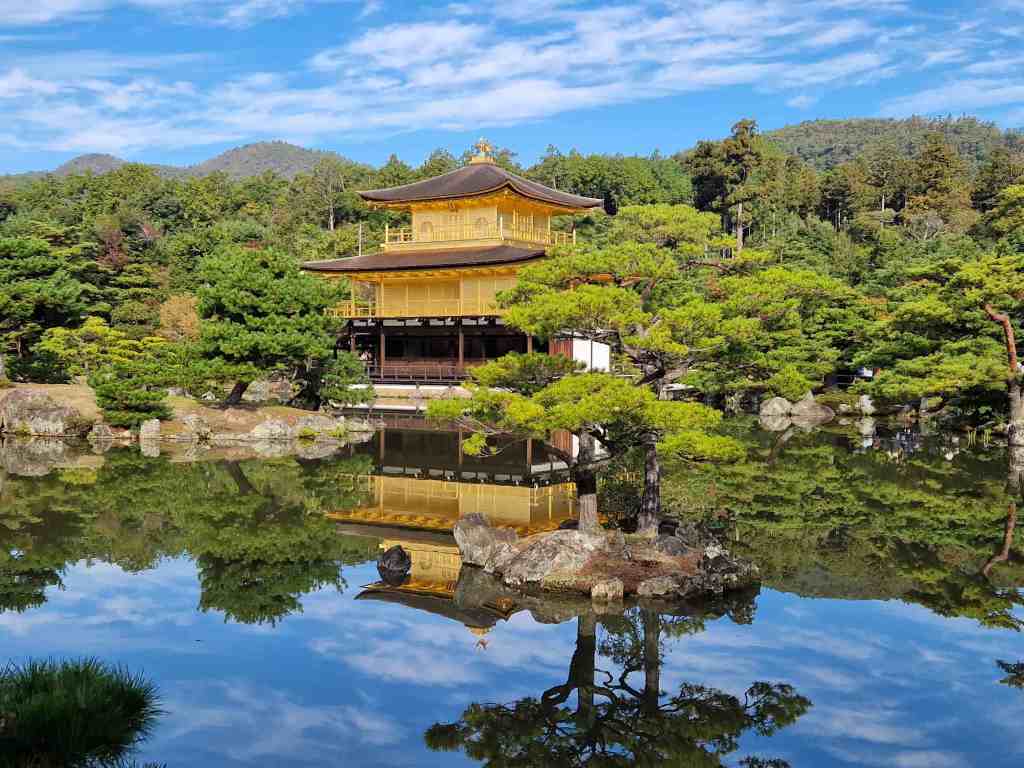
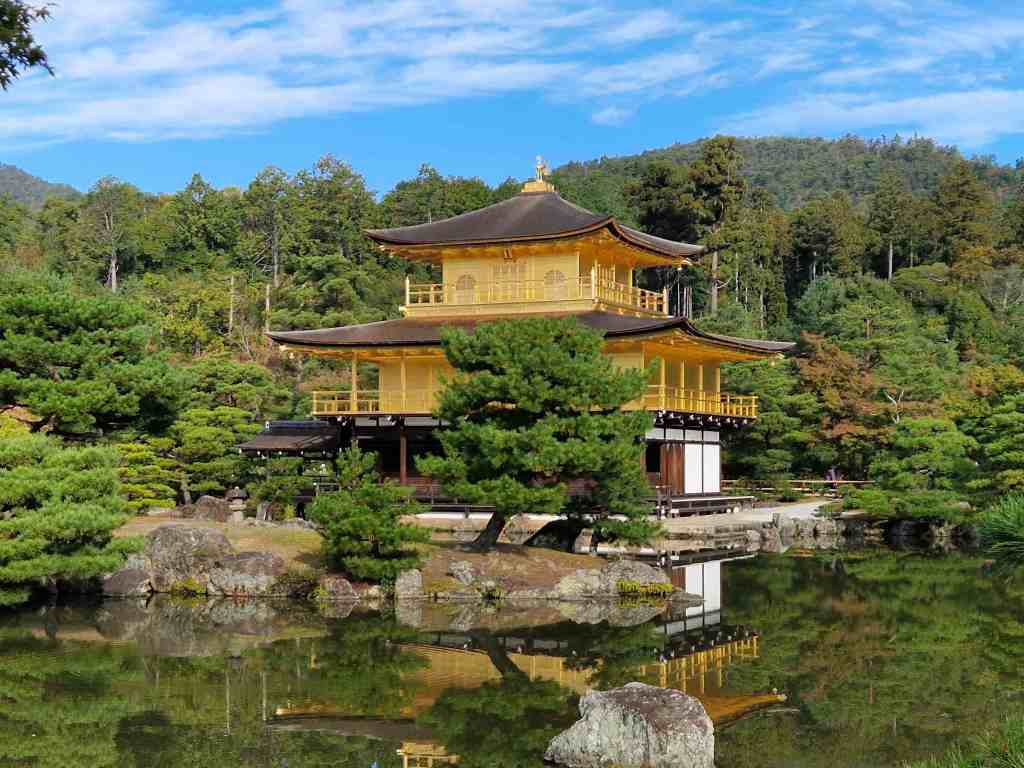
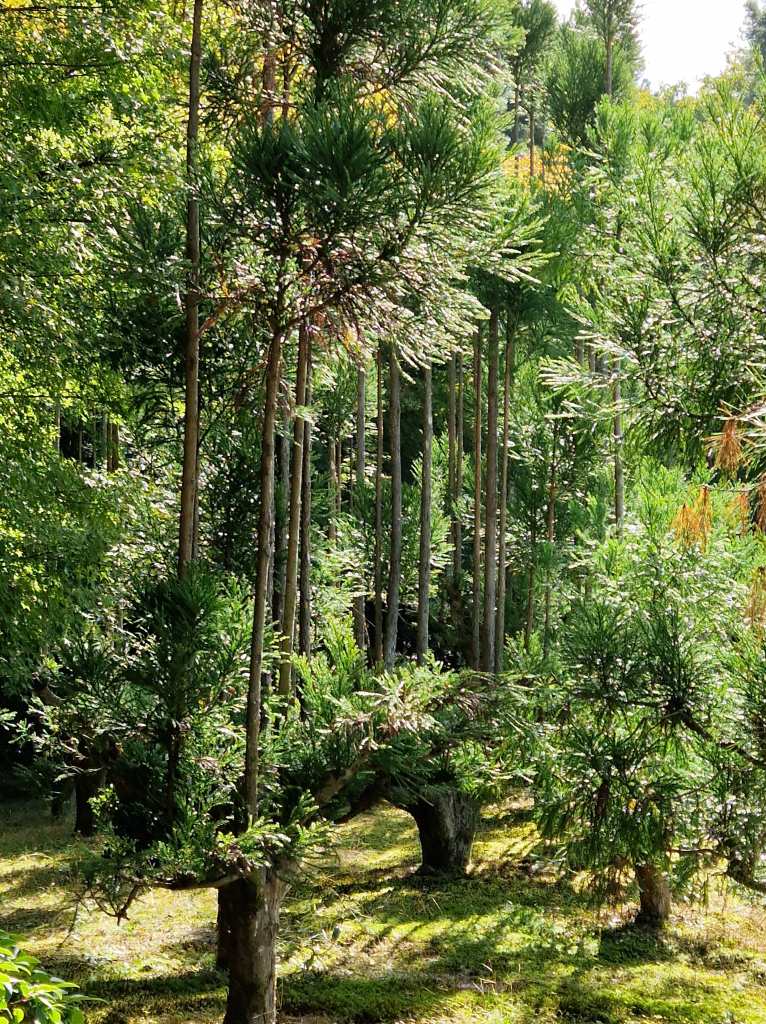
The building was originally a villa for the shogun Ashikaga Yoshimitsu and was first built in 1408. After his death, it was turned into a temple as per the terms of his will. Over the years it has burnt down and been rebuilt many times, most recently in 1950 when it was set alight by a deranged monk. The current building dates from 1955. A well-trodden path led – with a strict one-way system – past the temple, through its garden and to the exit. The visit had taken us about thirty minutes. Since we had come such a long way, we wanted to see as much as we could of this northern part of Kyoto as possible, so we took a taxi to the nearby Ryoan-ji temple. It could not compete with Kinkaku-ji’s beauty, but it was a haven of peace with a beautiful pond and some very strange pine trees, somehow made to grow like giant inverted chandeliers.

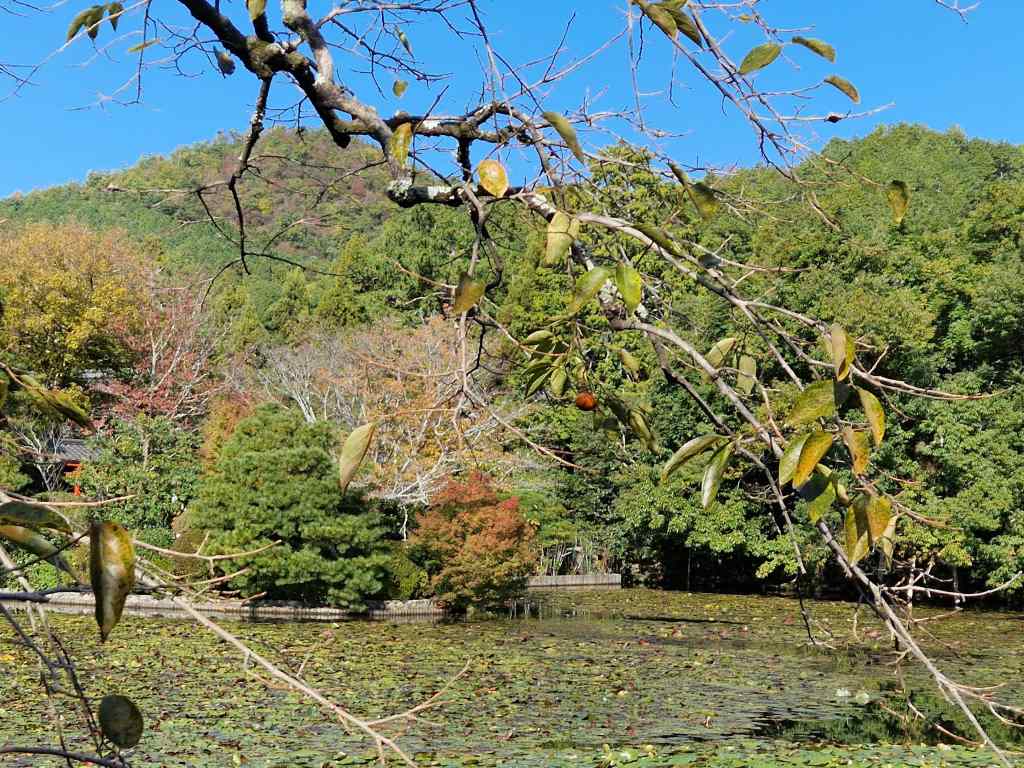
Next, we visited yet another temple, Ninna-ji, which was about twenty minutes away by foot. This was another beautiful, peaceful place with almost no visitors.

It was now midday, and we wondered what to do next. At the back exit of the complex was a sign advertising a mini-pilgrimage of 88 local temples over 10km – imitating Shikoku’s 88-temple 1200km epic trek. It was an intriguing prospect…..but we had already saturated on religious buildings for the day.
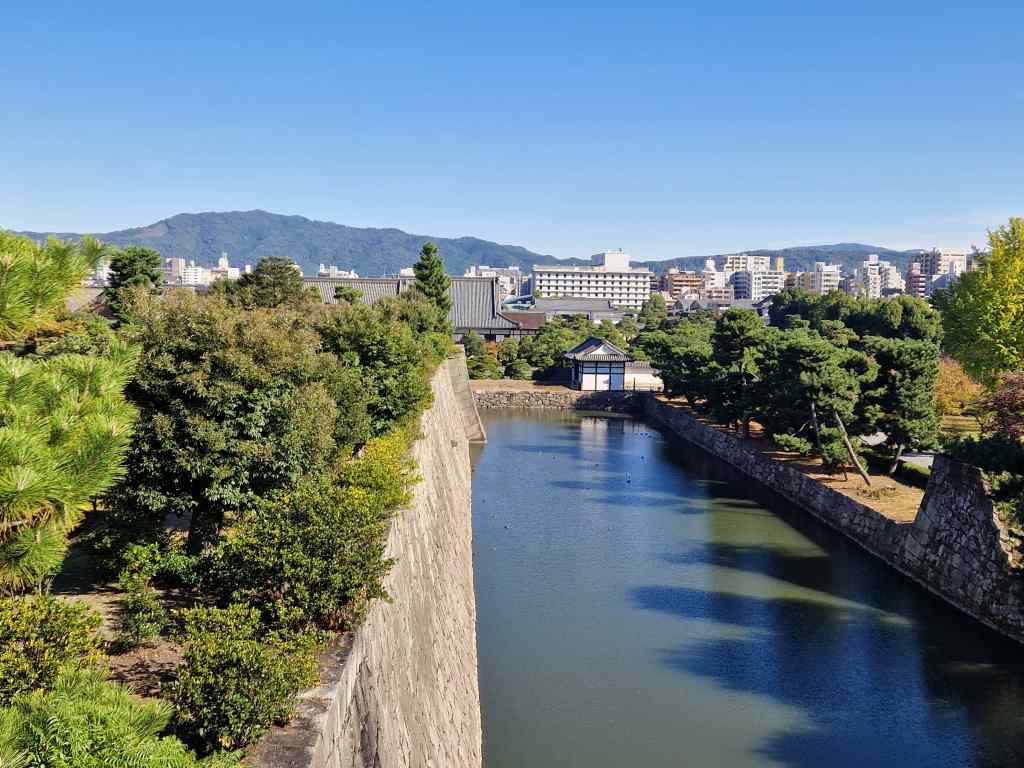
We stopped in the Ninna-ji’s café to study the map and decide our next move. It was advertised as a “luxury relaxation space” but the coffee was as weak as dishwater. Still, the break was useful as Aki pointed out that Kyoto castle, a rare attraction in the city centre, could be worth visiting on the way back. I was doubtful – the castles we had visited so far were all very similar, pretty from the outside but empty and boring inside. Kyoto’s castle, being on the plain, was not even likely to have a good view. Still, the only other option seemed to be to visit yet more temples, so we gave it a go – and were very happy we did.
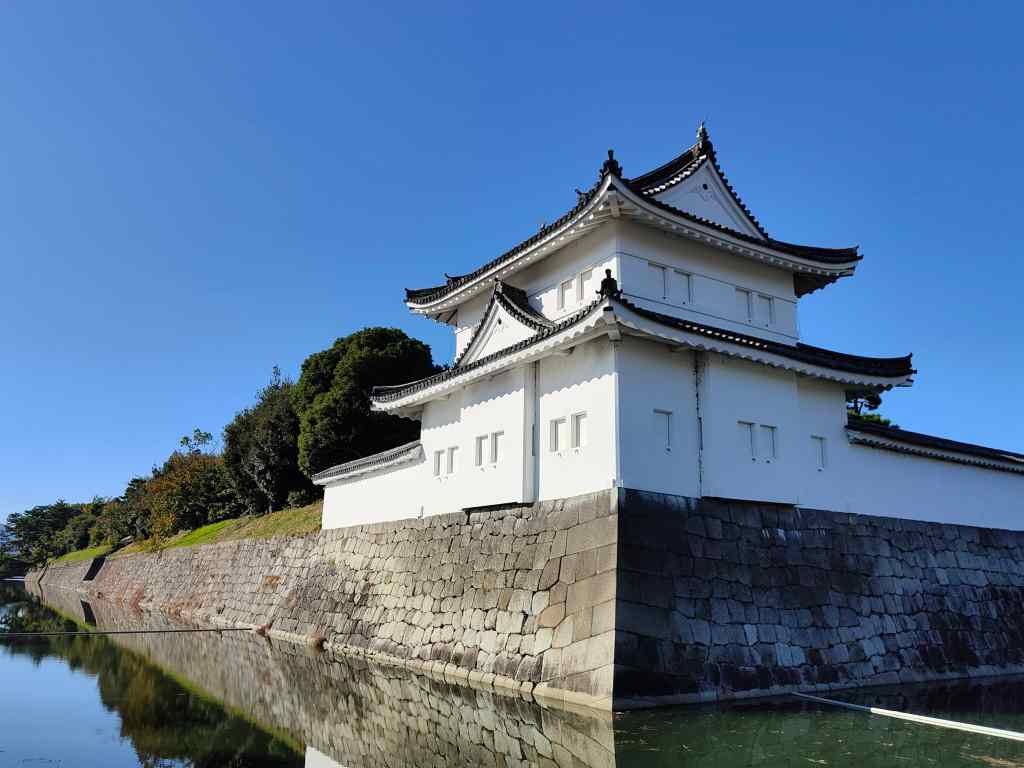
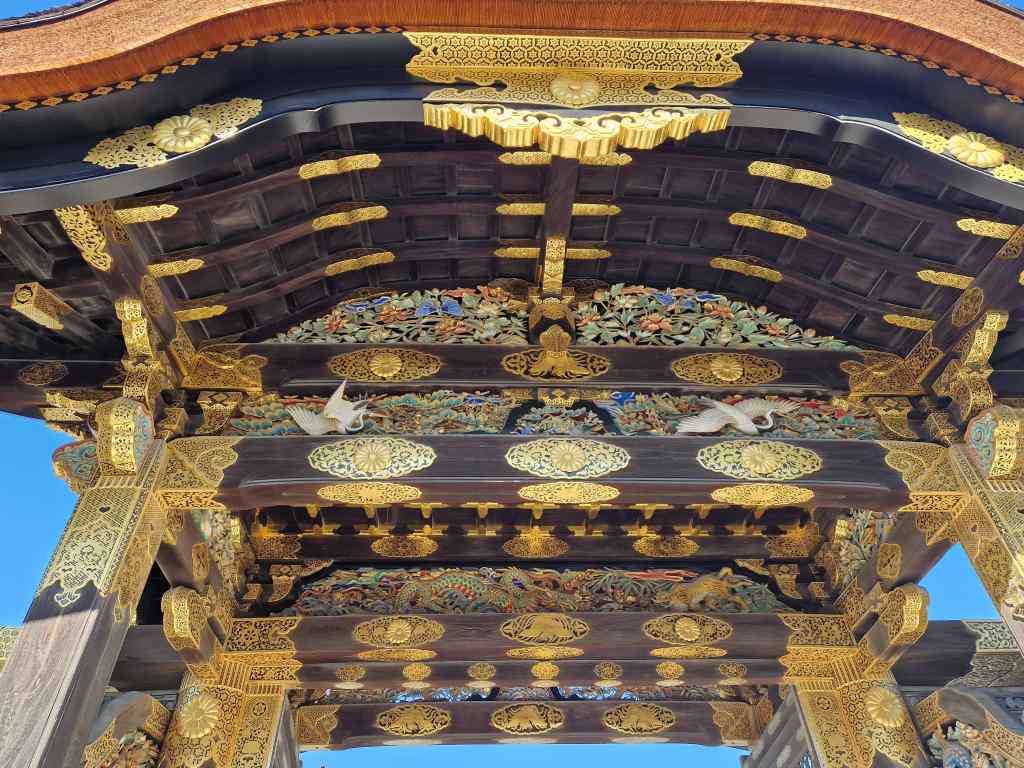
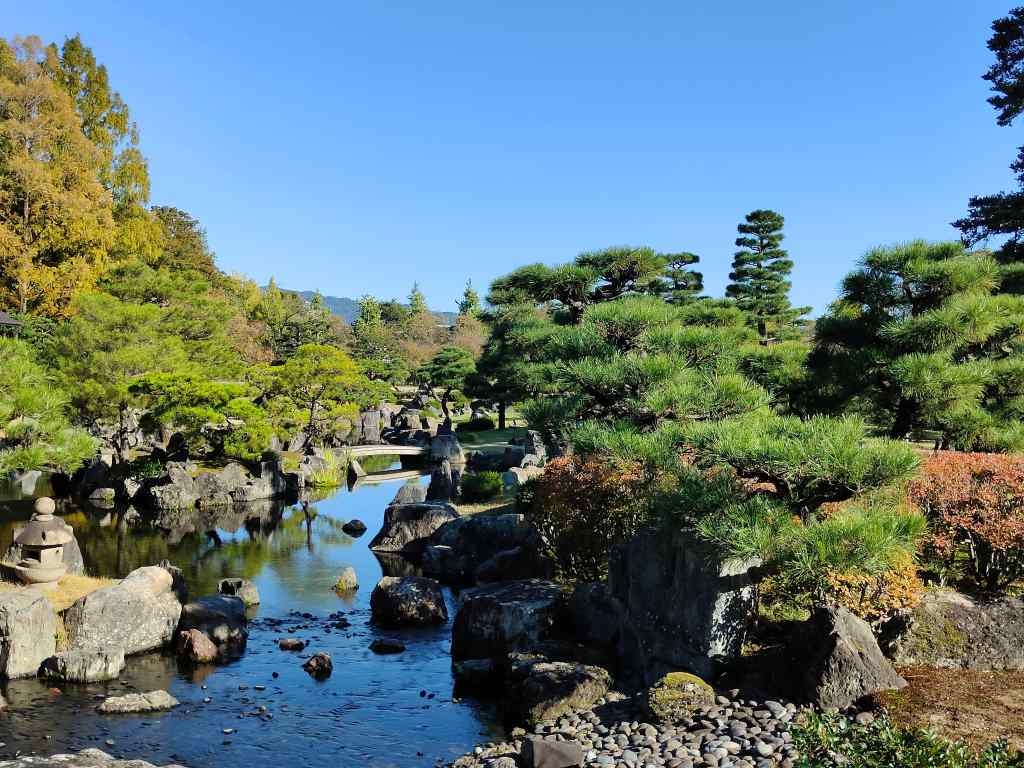
Building of the castle started in 1603 to provide the Kyoto residence of Tokugawa Ieyasu, a purpose it served until the fall of the Tokugawa shogunate, when it was briefly used as a residence of the newly reinstated emperor of Japan. The highlight of the visit was the beautiful Ninomaru Palace, located inside the defensive walls. This was a place where the shogun would receive guests or consult with officials, and consisted of a series of sumptuously decorated rooms (sadly no photos were allowed). It was so interesting that we went around twice before strolling around the palace’s garden with its inevitable tearoom. The Ninomaru Palace was one of the highlights of our stay in Kyoto – perhaps because it was not yet another temple.
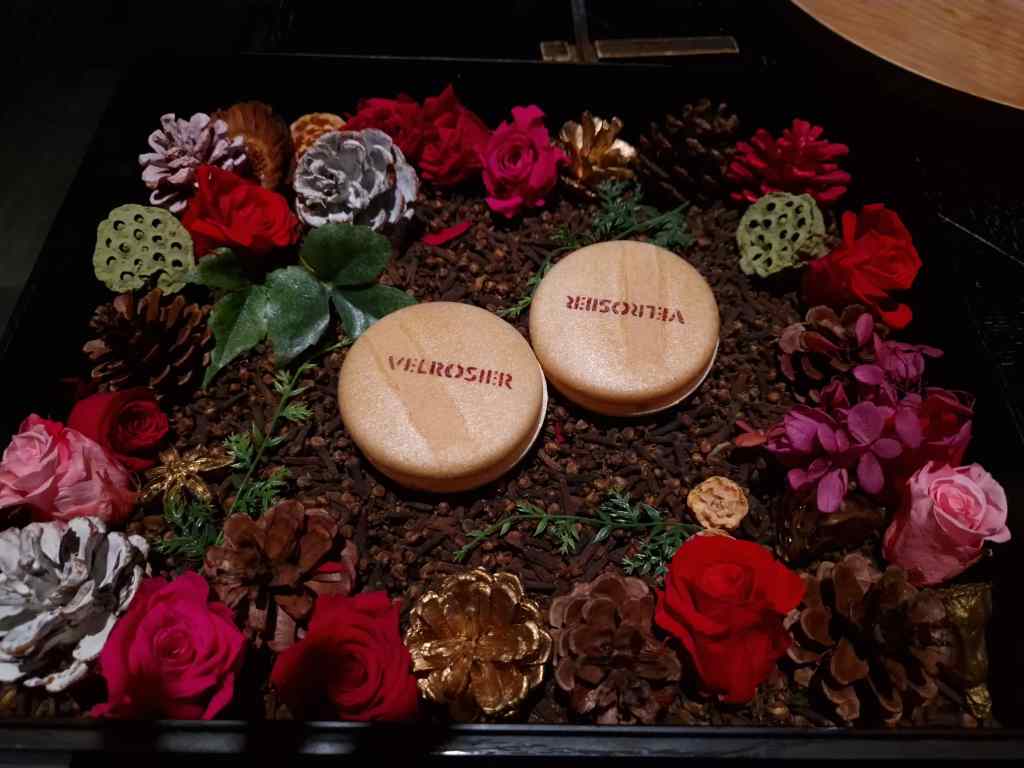
That evening we had planned another non-temple activity – dinner in Velrosier, a restaurant which had just won its second Michelin star. The food throughout our trip in Japan had been consistently excellent and very good value. Having tried lots of different types of cheap or mid-range restaurants – all very good – we wanted to try a top-end place. Japan has a lot of Michelin-rated restaurants and we wanted to see if the hype was justified. Dinner at Velrosier was probably the best meal we had ever had, beating more expensive and higher rated places we had visited in London – a two-hour feast of Chinese-inspired cooking. After similar experiences in Europe, we would usually wonder if a meal – however good – could justify the cost of top-end dining. Here, we wondered how on earth they could make a profit on what they had served us – five cooks prepared fourteen exquisite courses for only ten guests. Japan really is a foodie’s paradise.
Next Post: Farewell to Kyoto
Previous Post: Nara
 Trouspinet travels
Kyoto castle is really something. Such a contrast between the beauty of the gate and the gardens and the modern, urban sprawl of Kyoto. Also that final image is so pretty!
LikeLike
I completely agree about your comment on food. I have ate well everywhere in Japan…although I did not go to a two start Michelin! Market food was always excellent. You are right Foodies’ dream.
LikeLike