Today we made a short excursion our from Kyoto to the city of Nara, capital of Japan from 710 to 794. Today Nara is a medium sized provincial city, but back in the 8th century some of Japan’s most beautiful temples were built there, many of which remain today. Our trip started at Kyoto’s train station, which was almost as crowded as Shinjuku’s. However, in Tokyo everyone seems to know where they are going and how to behave, whilst in Kyoto, many foreigners looked lost. They formed large groups that blocked passageways or looked around dumbly, unaware that behind them a big rucksack was swinging that could knock over smaller Japanese passengers (or teddy bears). We were glad to get on our train and make the 40-minutes trip.
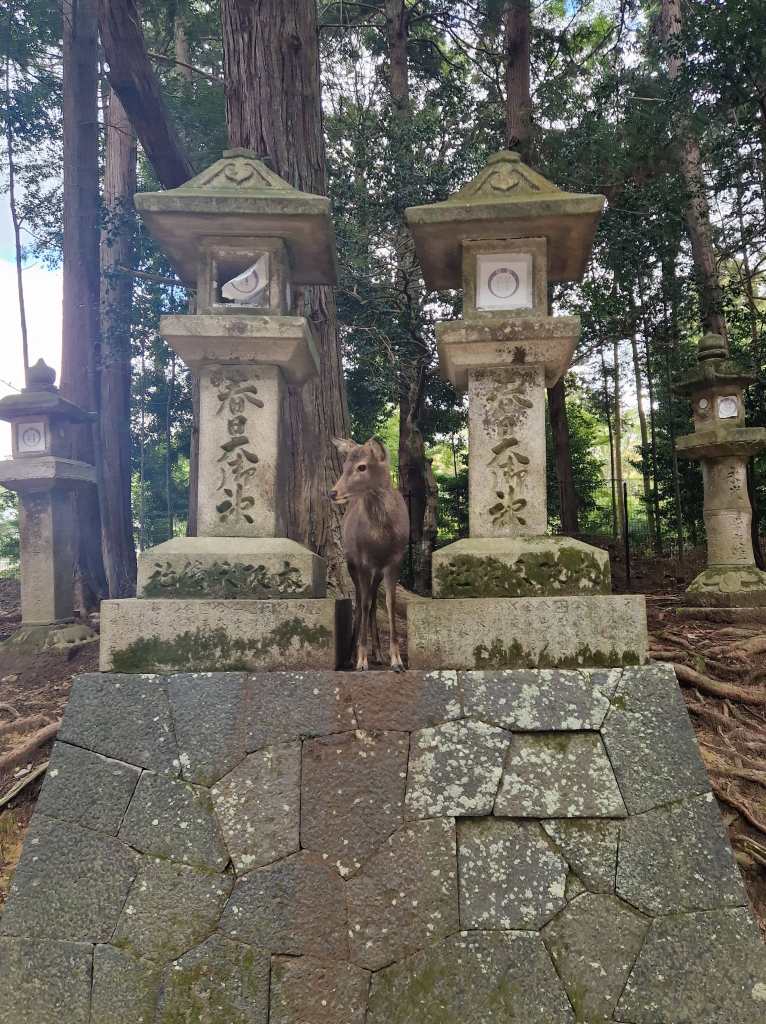
The station at Nara was located right next to the city’s park, which is also one of its tourist attractions and which houses many of its old temples. The park is home to hundreds, maybe even thousands, of “sacred” deer. They have grown used to humans and hang around expectantly, waiting for a tourist to feed them some of the rice crackers sold by many small shops.
We didn’t feed the deer – some of them looked so hungry that they could swallow us along with the rice crackers – and headed straight for Todai-ji temple, one of the most famous in Japan and first completed in 752. The temple’s centrepiece is the huge Daibutsuden or Big Buddha Hall, which houses an enormous gilded bronze Buddha statue. This hall has been destroyed by fire and rebuilt several times, most recently in 1709. Today, it is possibly still the world’s biggest wooden building (though the title is disputed) – but before 1709 it was even bigger, the last reconstruction being scaled down to save money.
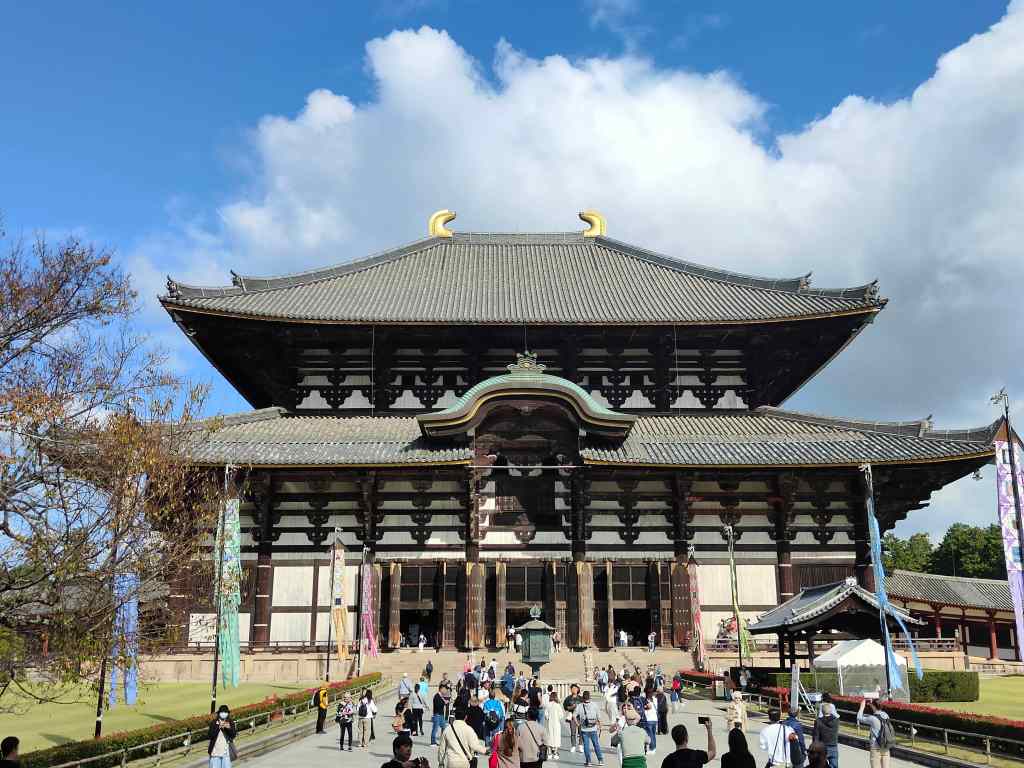
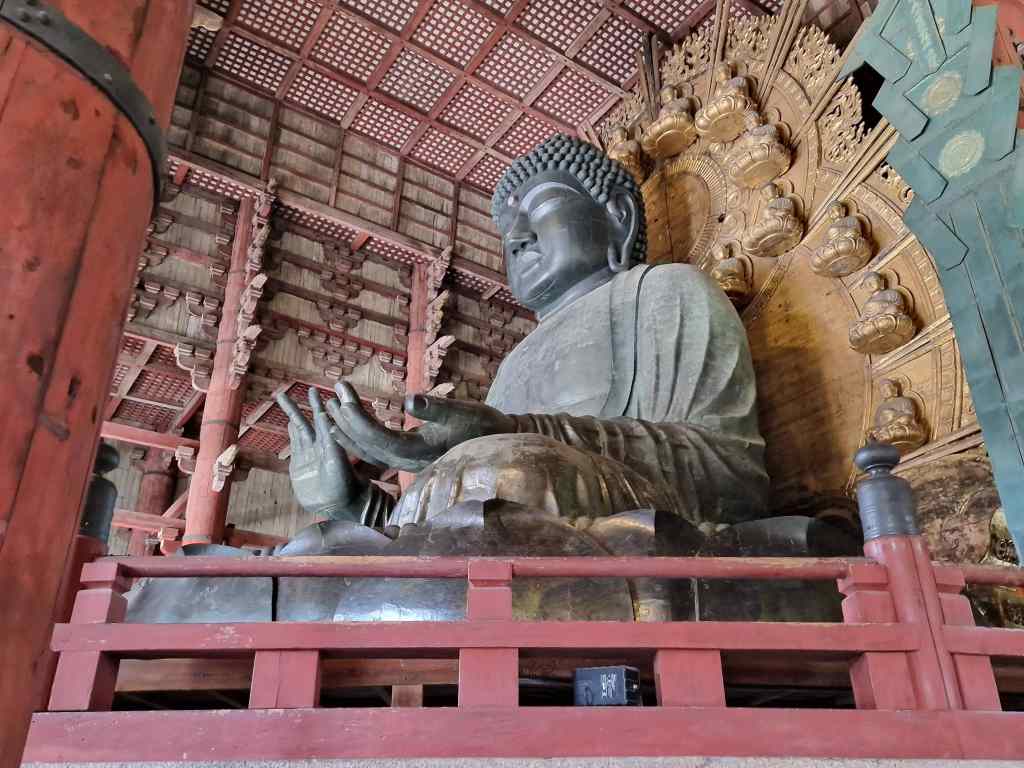
The hall and the majestic Buddha inside are really mind-blowing sights, and we made the circuit of the interior twice, to make sure we fully soaked up the atmosphere.


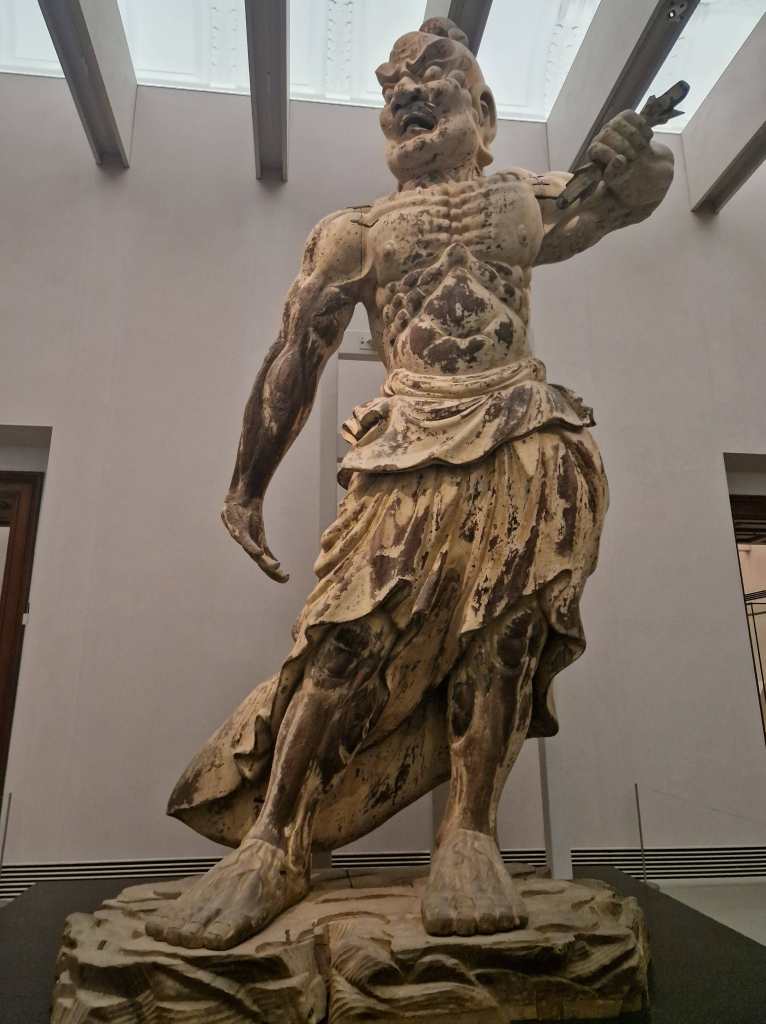
After that we visited a few other buildings in the huge Todai-ji complex, finishing at their interesting museum – which had some magnificent Buddhist sculptures (photos not allowed) and most importantly a café that served acceptable coffee. Finding a good caffeine fix is a problem in Japan, and most coffee and tea houses sell horribly weak filter coffee, which just isn’t strong enough even for a little teddy.
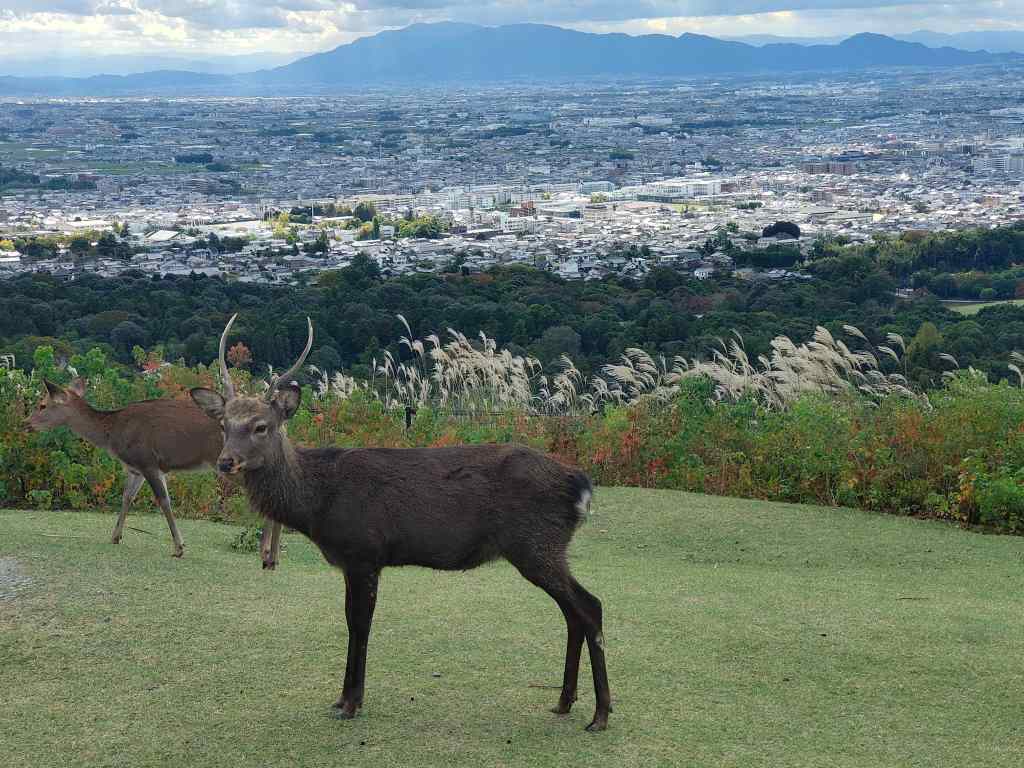
After a reviving drink we walked up a steep hill with good views over the city. The autumn colours were just starting, but sadly it was clear that we would miss the peak by a couple of weeks. The “sacred” deer on top of the hill were particularly aggressive, and one young male even attacked a tourist that had tried to limit him to one rice cracker.
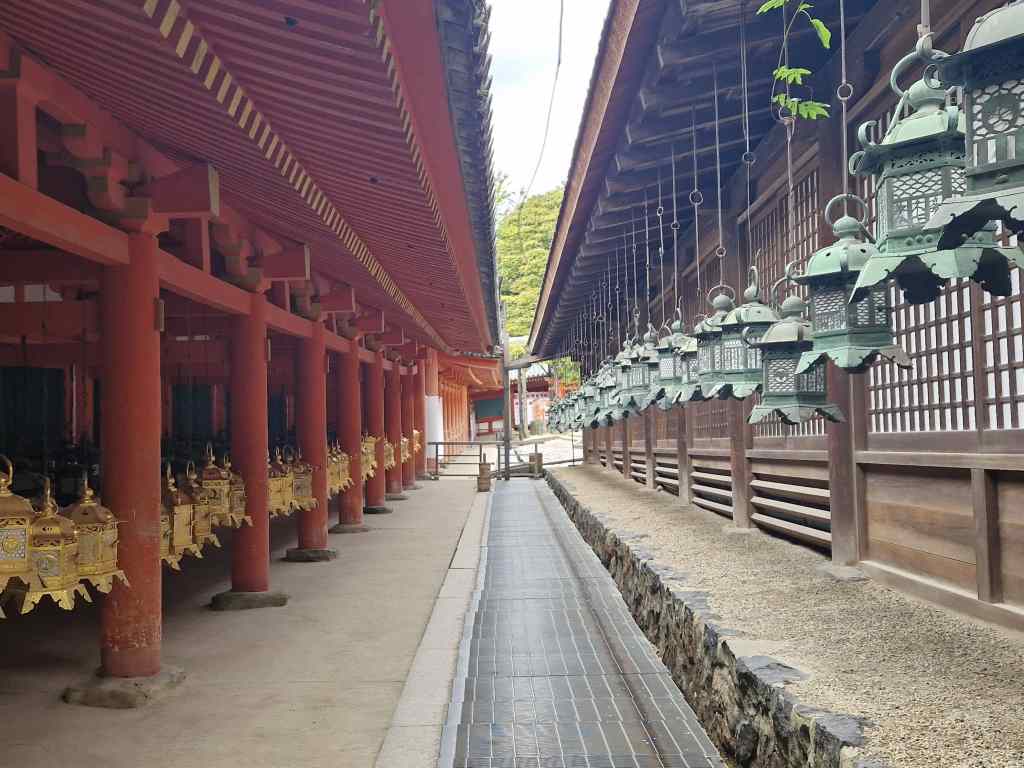
We walked back down the hill and strolled on to the Kasuga Taisha shrine. On the way, we felt a sudden drop in our energy levels and wandered around the place on autopilot. Looking at our photos later on that evening, they looked interesting, but at the time it was simply one temple too many – or one cup of coffee too few.

We strolled back to the station, wondering how long to stay in Nara. Our train back was booked for 18.30, but we were running out of energy and things to see in the area of the park. We decided to make one last stop at the Nara National Museum – partly because we thought it would contain more of the wonderful Buddhist sculptures we had seen earlier, and partly because the cafés in museums tended to have better coffee than elsewhere. Sadly, neither hope was fully realised. The museum was housed in two buildings with an underground passage between them. It was very popular, and entry was by timed slots. We joined a large queue of mostly Japanese visitors, to be ushered into a series of rooms displaying scrolls, fragments of cloth and old pots. These seemed to greatly excite everyone else, and there was a two-person deep crowd around each exhibit, making it very hard for us to see anything. We probably set a speed record for visiting the first part of the museum, lured on by the knowledge that there was a café in the passage leading to the second building….but the coffee there was as weak as it had been everywhere else. At least the next part of the museum did contain some magnificent sculptures, though you could only take photos of a small selection of them.
We left the museum with even less energy than when we entered. On the way back to the station, we visited one more temple – Horyuji. Apparently it has the world’s oldest surviving wooden buildings, dating from 607, but it failed to excite us, and we chose to catch an early train back to Kyoto. We left feeling that we hadn’t done justice to Nara. The temples ranged from the interesting Horyuji to the spectacular Todai-ji, but we didn’t have the energy to appreciate them. There were other highly rated temples near to the city, but we didn’t have time to visit them.
We decided it was time to take a break from temple-hopping and spent the next day in Kyoto shopping, watching a dance show by one of the Geisha associations, and cruising the nightlife area of Pontocho, a narrow street lined with restaurants and bars.

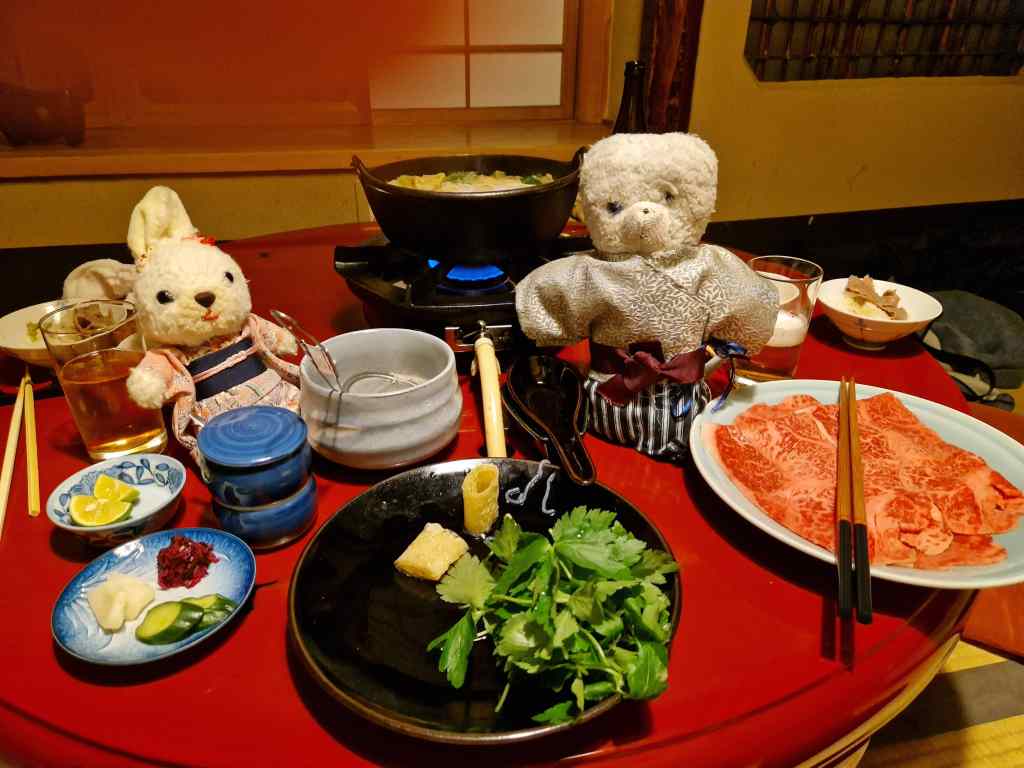
We opted for a shabu-shabu dinner – thin slices of Japanese beef that you take with your chopsticks and swish around in a boiling hot pot of water and vegetables for a few second until they are cooked. The meat melted in the mouth!
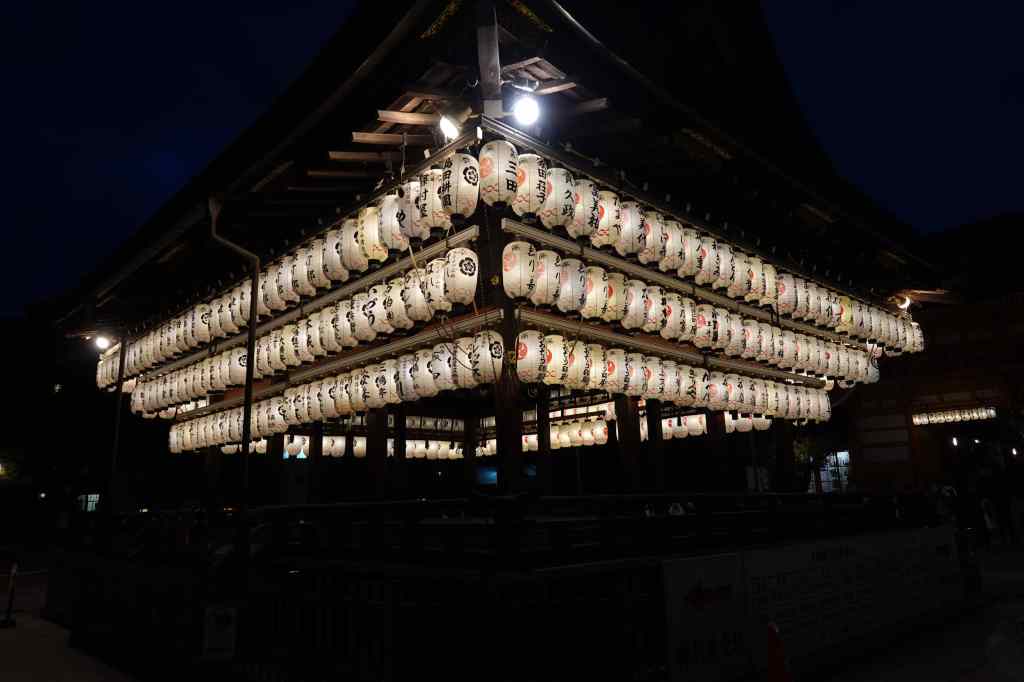
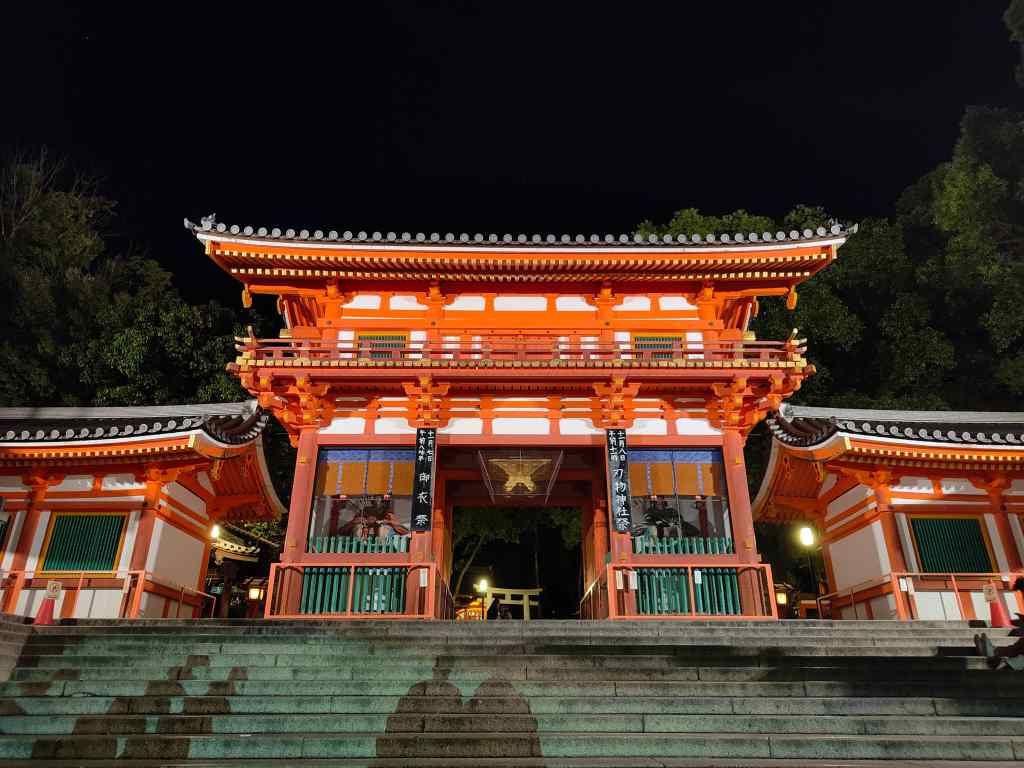
Still, it is harder to avoid photogenic temples in Kyoto, so despite our resolution not to visit one today, we still found ourselves taking photos of the colourful Yasaka Shrine in the early evening, after the Geisha show. Temples often look at lot better at that time, when the crowds have left and their red and white colours contrast with the night sky. Our enjoyment of this shrine suggested to us that tomorrow we would be ready for some more temple visiting…
Next Post: Kyoto Golden Temple and Castle
Previous Post: Heaven and Hell in Kyoto – Kiyomizudera and Fushimi Inari
 Trouspinet travels
I have a bit of a thing with deer and follow a few Nara based instagram accounts. I think these accounts show the best side of the deer, I did wonder if they get up to mischief. I guess once they know you have food, it’s game on!
LikeLike
Indeed. The deer in the picture on the hill came up to me from behind and put his hooves on my shoulders to get at the packet of rice crackers in my hands. There are lots of warning signs around Nara showing the naughty things deer can do (that was not one of them though, it was probably a first).
LikeLiked by 1 person
How would you rate Nara compared to other places? it was my disapointment not to be able to fit this visit because of my hospital duty! it looks great.
BTW in Kyoto you did not do the 1000 statue temple?
LikeLike
The Big Buddha Hall is very impressive and justifies the short train ride from Kyoto on its own. The rest of the area around Nara Park is less interesting compared to what you can see elsewhere, especially if deer don’t impress you. We didn’t have time for two other temples just outside Nara that are supposed to be very nice. We also missed the 1000 statue temple……only so much you can do……
LikeLike