
We woke up and were treated to the typical multiple course ryokan breakfast, which we ate whilst keeping an eye on the weather outside. It had stopped raining, but was still cloudy. However, as we finished our tea, we suddenly saw a patch of blue sky. Perhaps we would be lucky.
We set off in our car on a road following the Iya river, climbing up the remote and sparsely-populated valley. We saw very few people in the settlements we passed, but after a few miles we came across a village that at first sight appeared to be teaming with life.
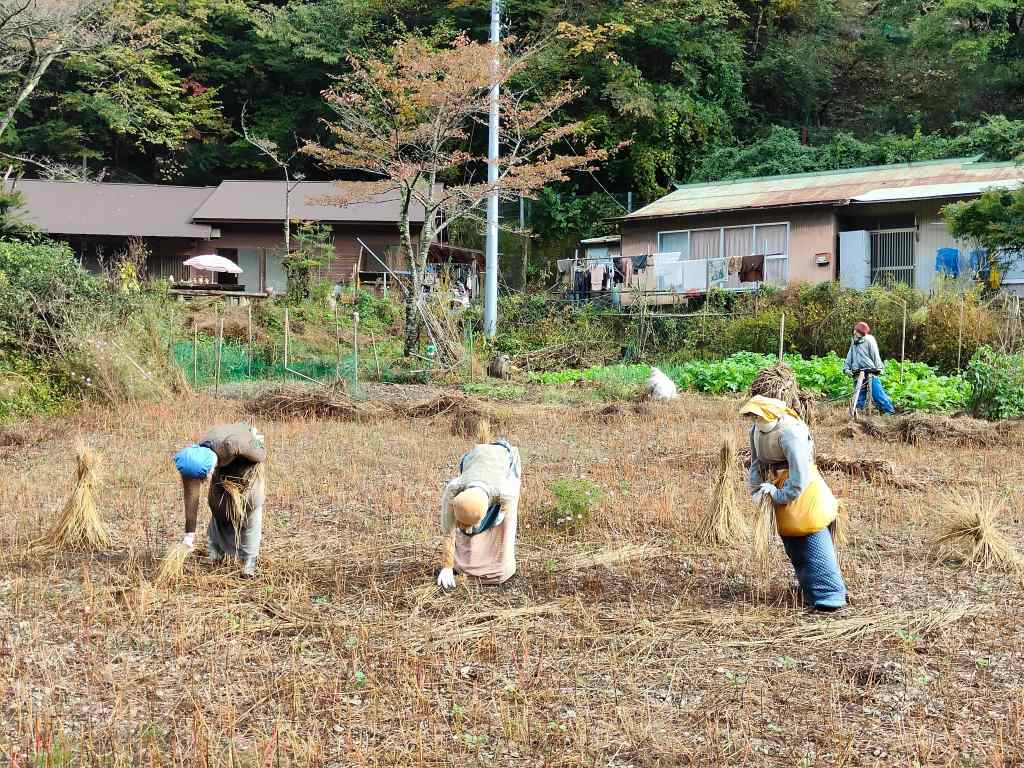
On closer inspection, the “people” were dummies, more usually used scarecrows for scaring away birds. They were everywhere – harvesting in the fields, waiting for a bus, working on the road, even engaging in a tug of war in the sports hall of a disused school.
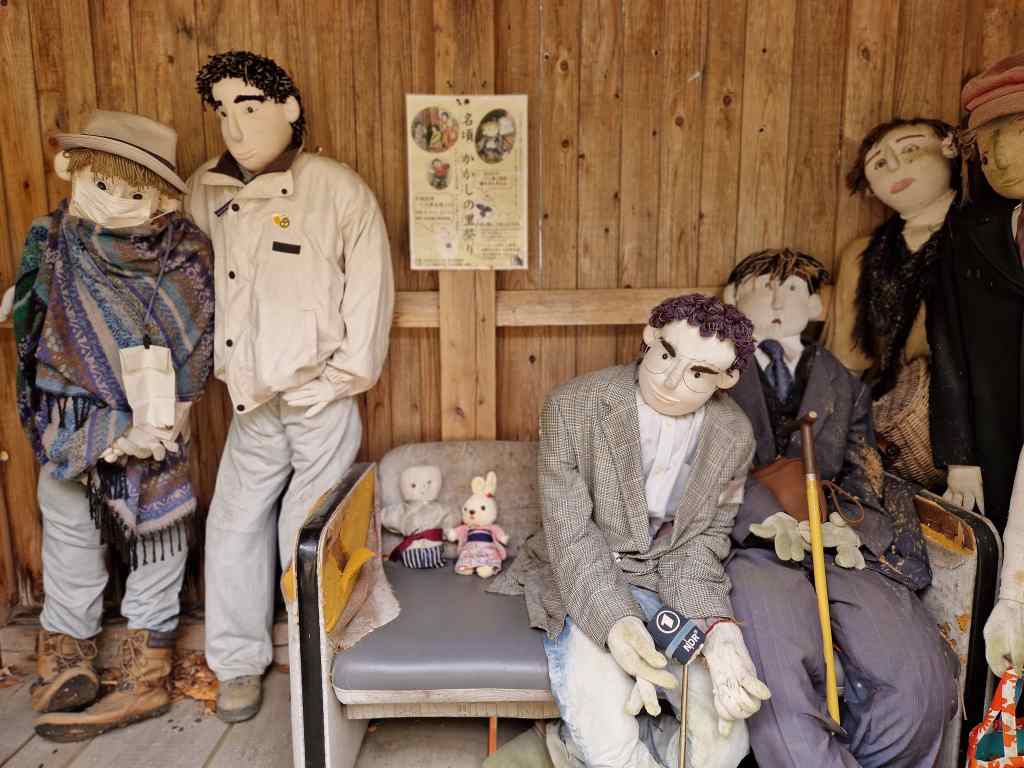
Consulting our guide book we realised we had arrived at Nagaro village. The scarecrow story started when a woman moved to the village to look after her aged father. To occupy herself, she made a scarecrow in his likeness, which was so realistic that fellow villagers would say “good morning” to it as they passed. She made more figures, many using local residents as models, as way of relieving boredom and loneliness – the area is suffering from depopulation as older residents die and younger people move to the cities to find better jobs. Other people followed her example, and now there are around 350 scarecrows in the village, which has become a tourist attraction. When we visited we saw around 100 scarecrows, two human tourists and one dog – but no local people. So although the initiative has put Nagoro on the map, it has not solved their depopulation problem.
A few miles down the road there was another, more famous tourist attraction – a pair of “vine bridges”. These structures are made from planks of wood tied together with natural vines and were originally built hundreds of years ago, no one is quite sure by whom or why. There were originally many such bridges over the Iya river, but now only three remain, of which two were here, almost side by side – the larger one is nicknamed the “male” bridge and the smaller one, “female”.

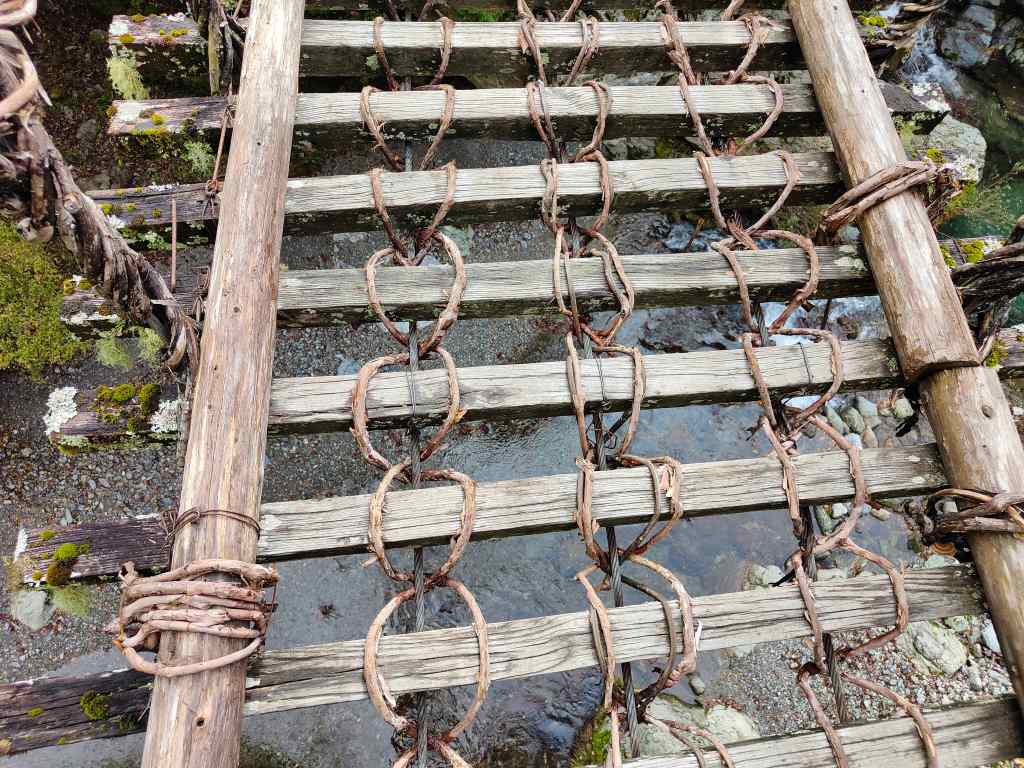
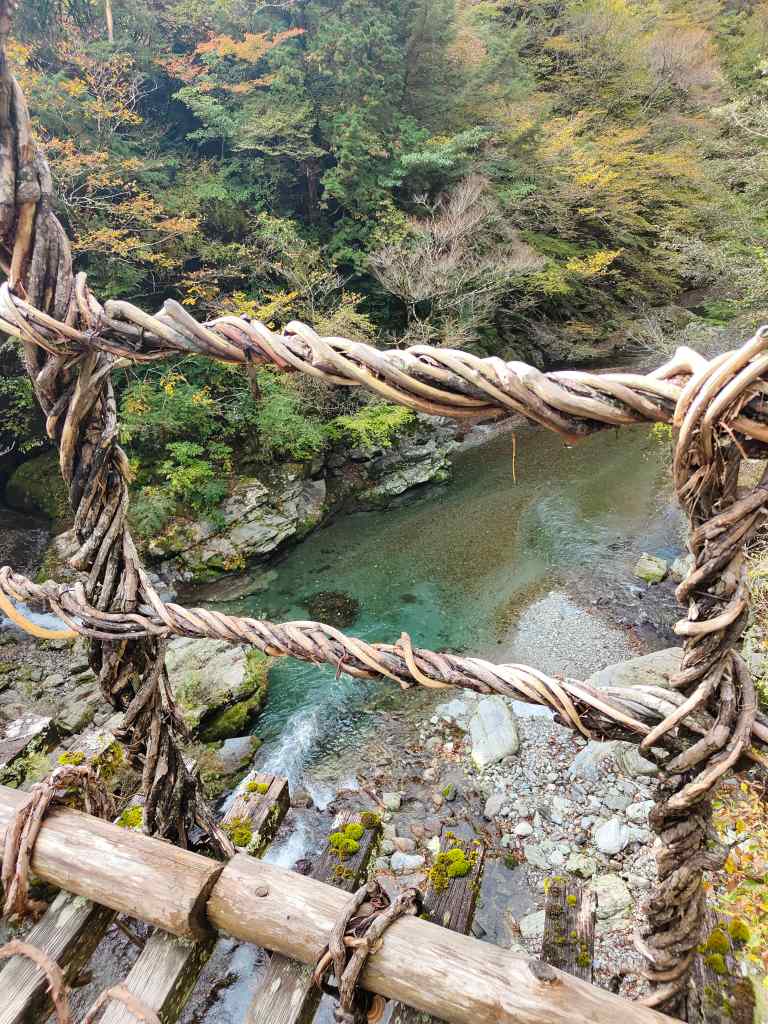
I cautiously stepped across on the male bridge with my little teddy legs, leaving Aki, who does not like heights, behind me to film my progress. The gaps between the planks were quite big, and I think even a human could have slipped between them into the river, clearly visible under my paws far below. Certainly a little teddy could fall through and disappear without trace into the water. I finally made it across and let out a big sigh of relief. I used the “female” bridge to get back, and fortunately this was shorter and lower, and less of an ordeal to cross. With my adrenaline rush over I could relax with Aki to enjoy the wonderful scenery around the area.
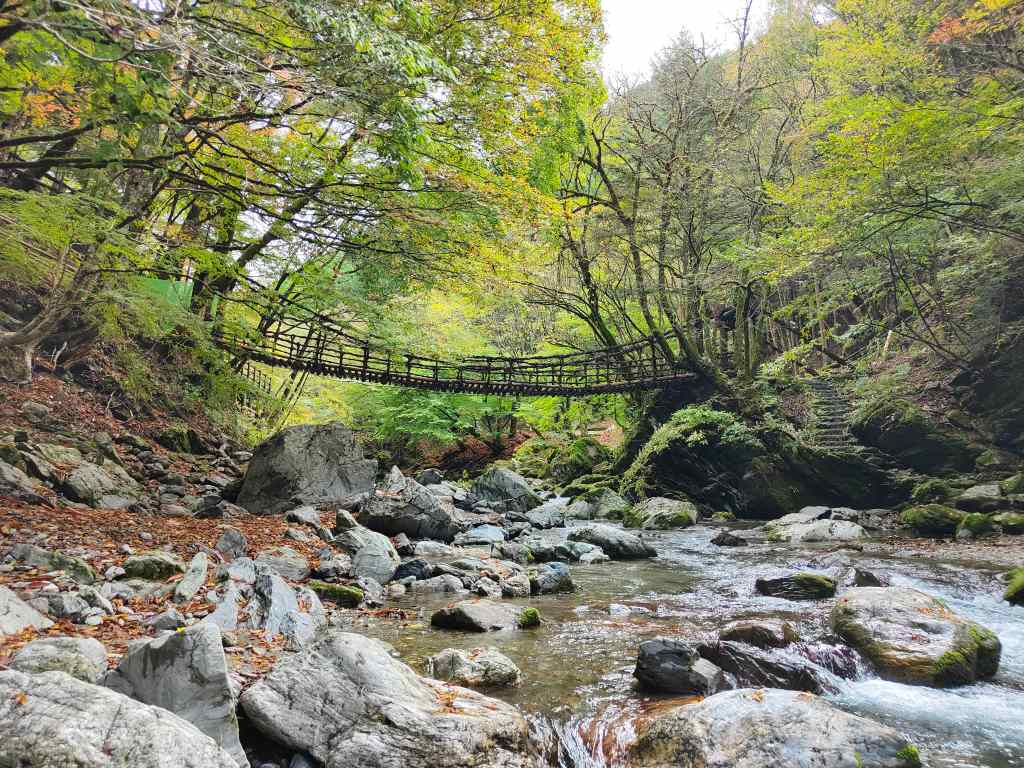
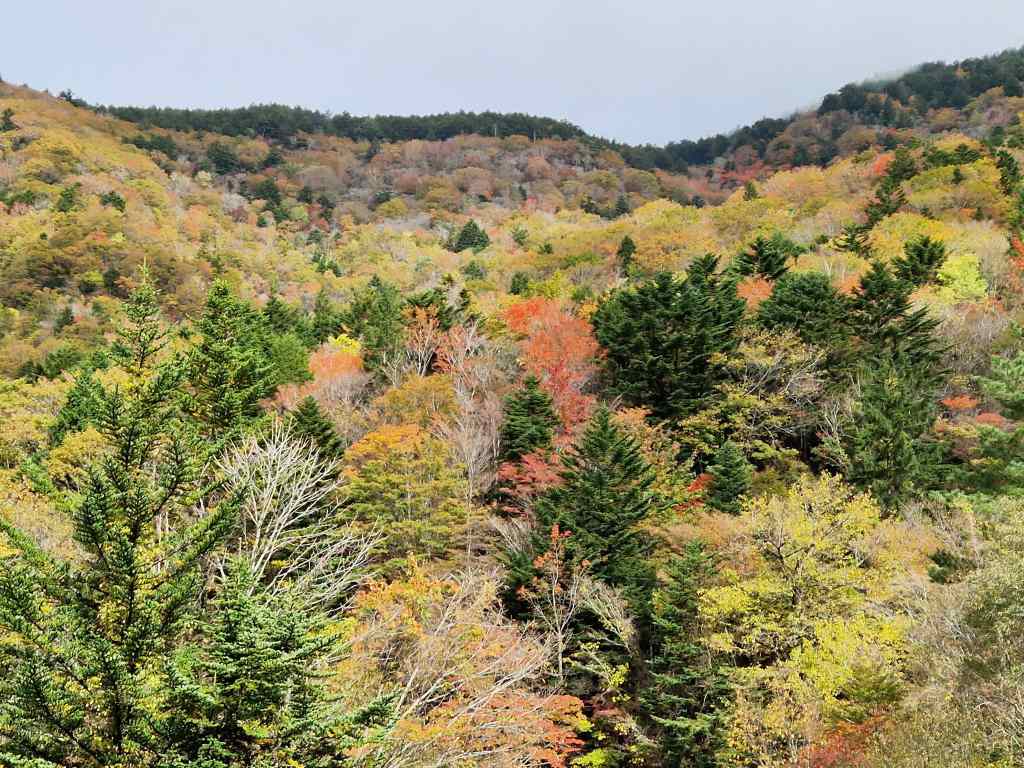
We continued our drive up the valley, steadily gaining altitude. As we rose, the vegetation changed and we found ourselves driving through mixed forests, including many spectacular maple trees, their leaves a bright red. The mountains were a patchwork of greens, yellows and reds, and very beautiful.
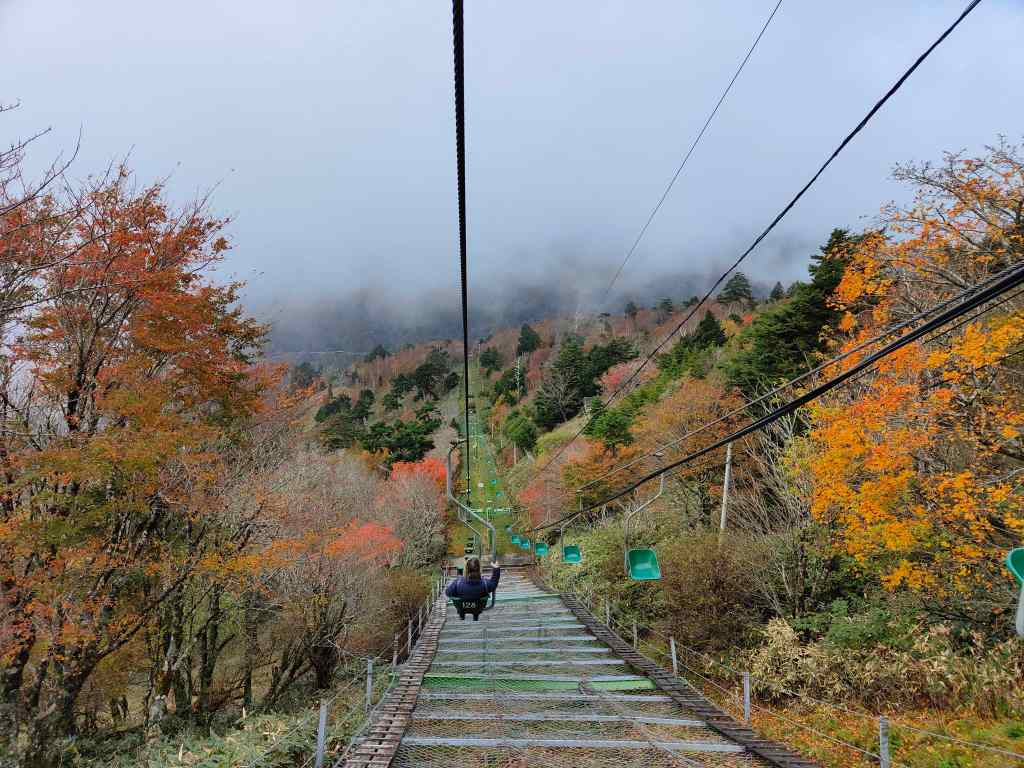
We arrived at the chairlift station taking hikers up to the starting point for trails leading to the various mountains surrounding us. The chairlift ride itself gave wonderful views of the forests’ autumn colours, even if it was a little scary, since the chairs lacked any protective barriers to stop you falling off.
The most popular climb in the area is Mount Tsurugi, the second highest mountain on Shikoku island. But we decided to climb the very slightly smaller Mount Jirogyu, which the Iya Valley tourist information website said offered even better views. We paused continually on the way up to take pictures of the wonderful views in a mix of cloud and bright sunshine.
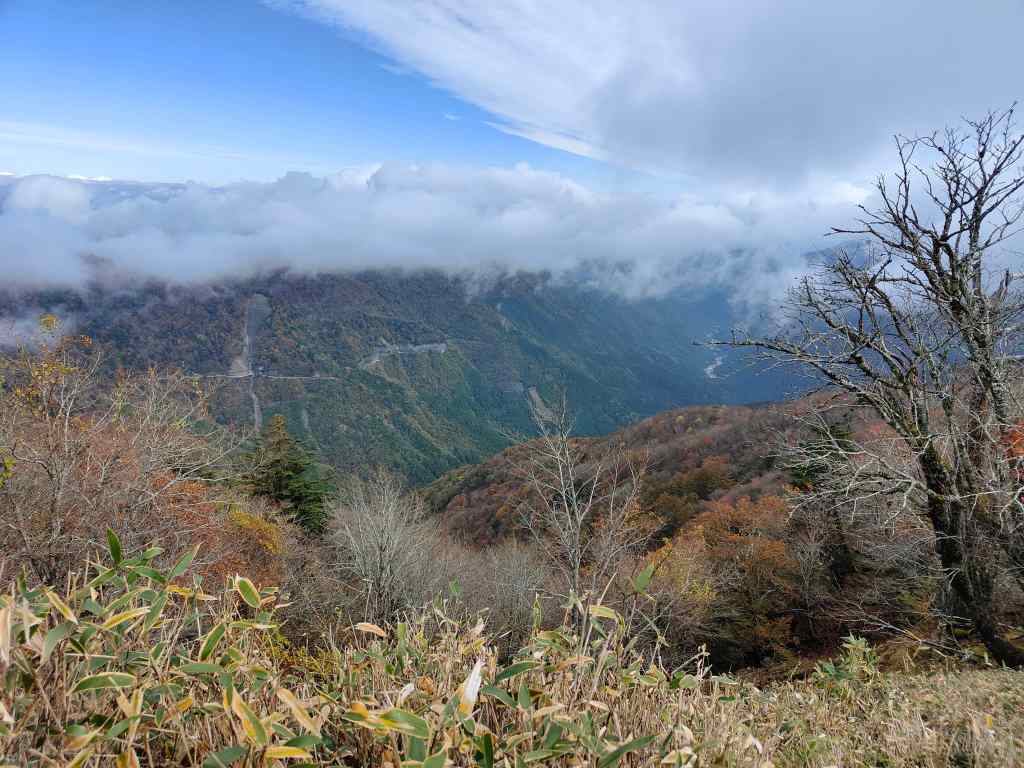
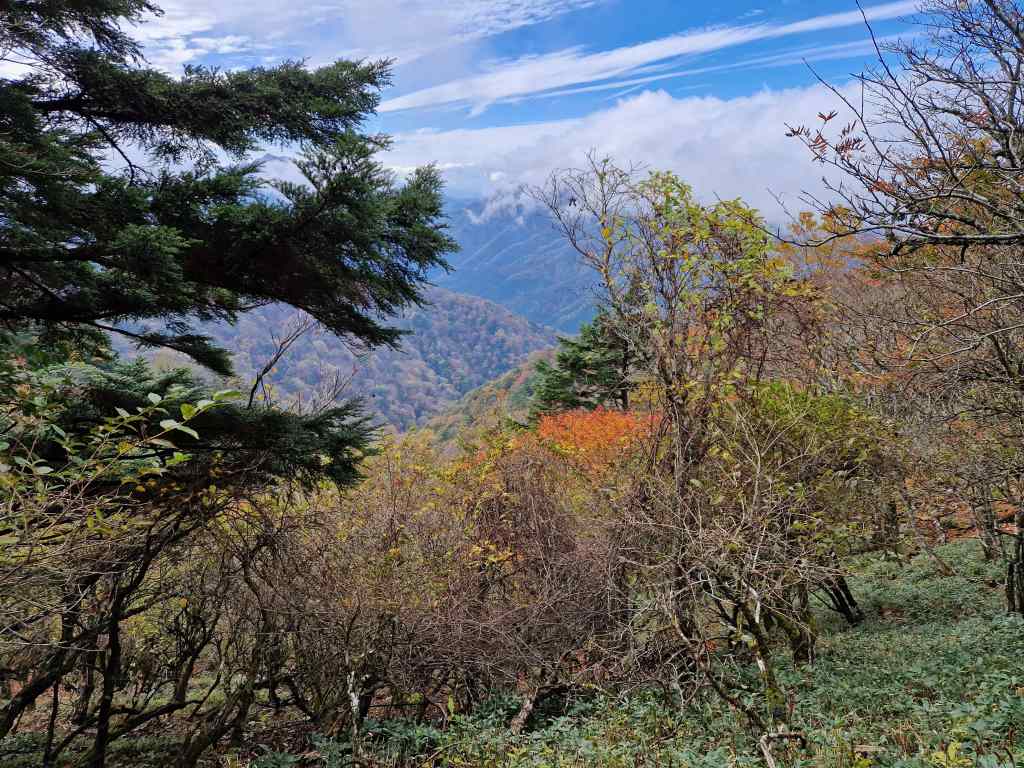
But as we neared the end of the climb and with our goal in sight, clouds blew in from the west, obscuring the summit.

We climbed up all the same, but all that we could see at the top was thick cloud.
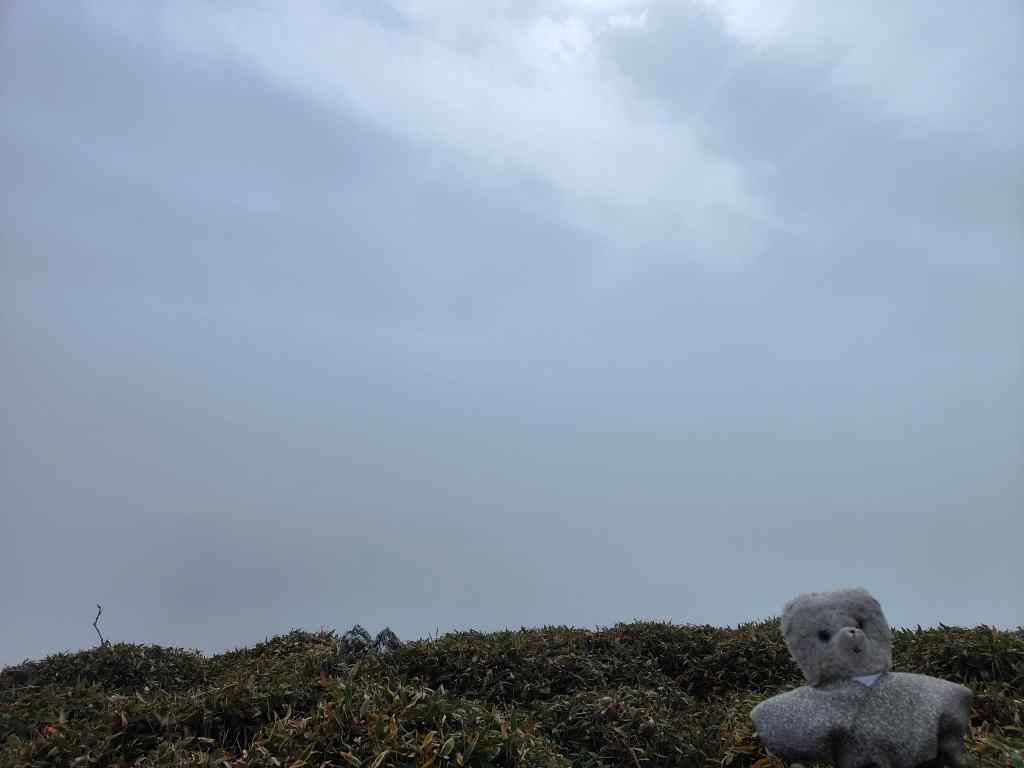
Out of the sun, it was chilly and windy, so we hurried back down. Below the clouds we could once again enjoy the autumn foliage.
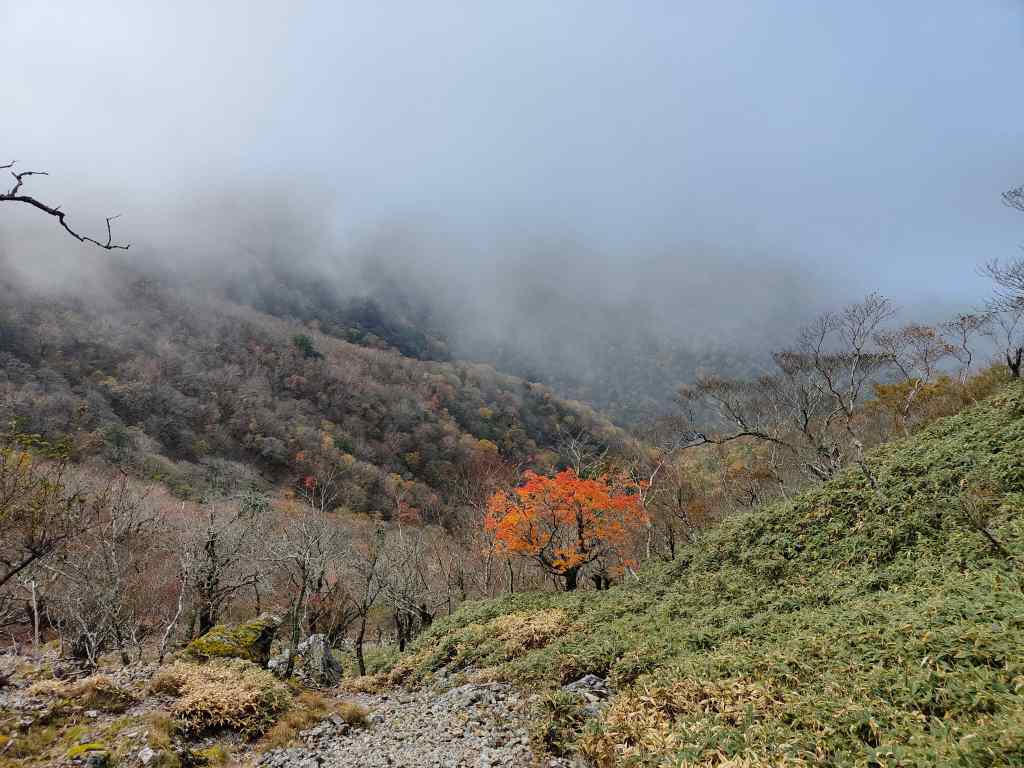
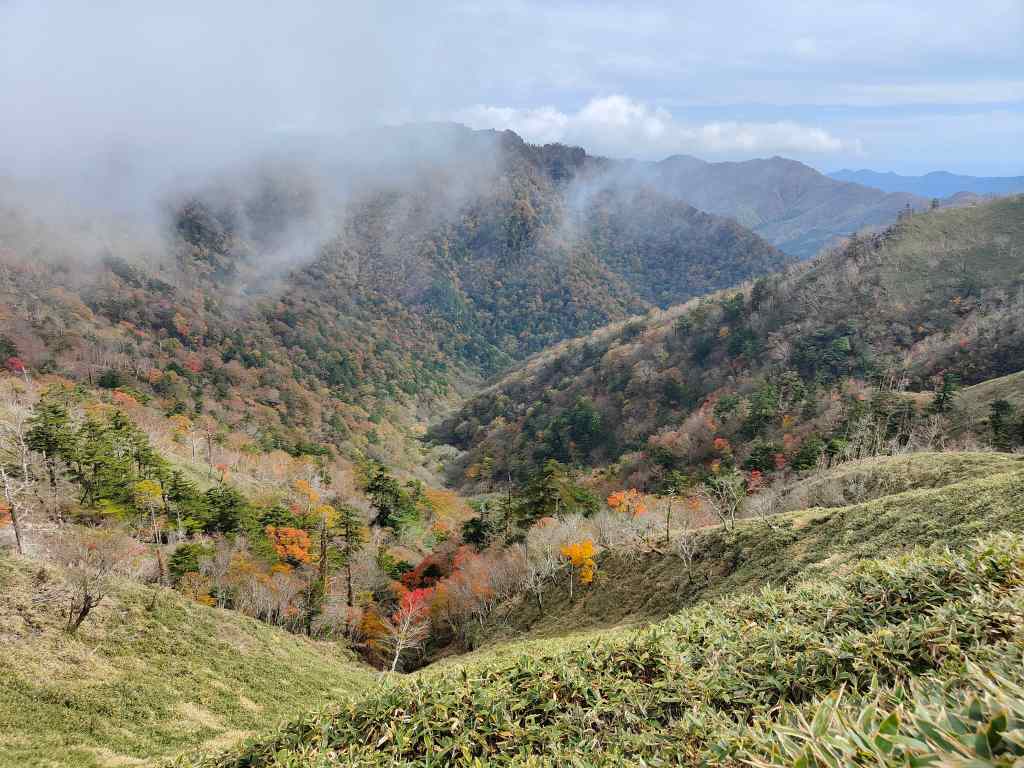
We drove back to our ryokan to have a hot bath to warm up, after our exposure to the cold mountain air and damp clouds. It had been a brilliant day but could have been perfect if only we had started maybe an hour earlier so that we could enjoy the view from the summit of Mount Jirogyu . That will have to be a plan for another trip – we liked the Iya Valley so much that we will try to come back one day.
Next Post: More Iya Valley, Kotohira and Takamatsu
Previous Post: Kochi (Japan), Shikoku
 Trouspinet travels
To boldly go …. And what views and tales you have to share with us poor stay at homers!
LikeLike
the views and the colours are stunning but the bridges male or female are not for me. I am in the Aki club!
LikeLike