Today we said goodbye to Kanazawa, a city we had really enjoyed. We took a bus to the station and went by train to Hiroshima, a trip that took about five hours, including a stop in Osaka to buy tickets for the second leg of the journey. Our hotel was the Prince Hotel, located some way out of town centre on a peninsula near the port.
The hotel had hosted the meeting of the G7 in 2023 and seemed very proud of this fact. We visited the table where the world’s leaders had lunch (by special arrangement, the hotel can offer deep-pocketed guests the same menu as served that day).

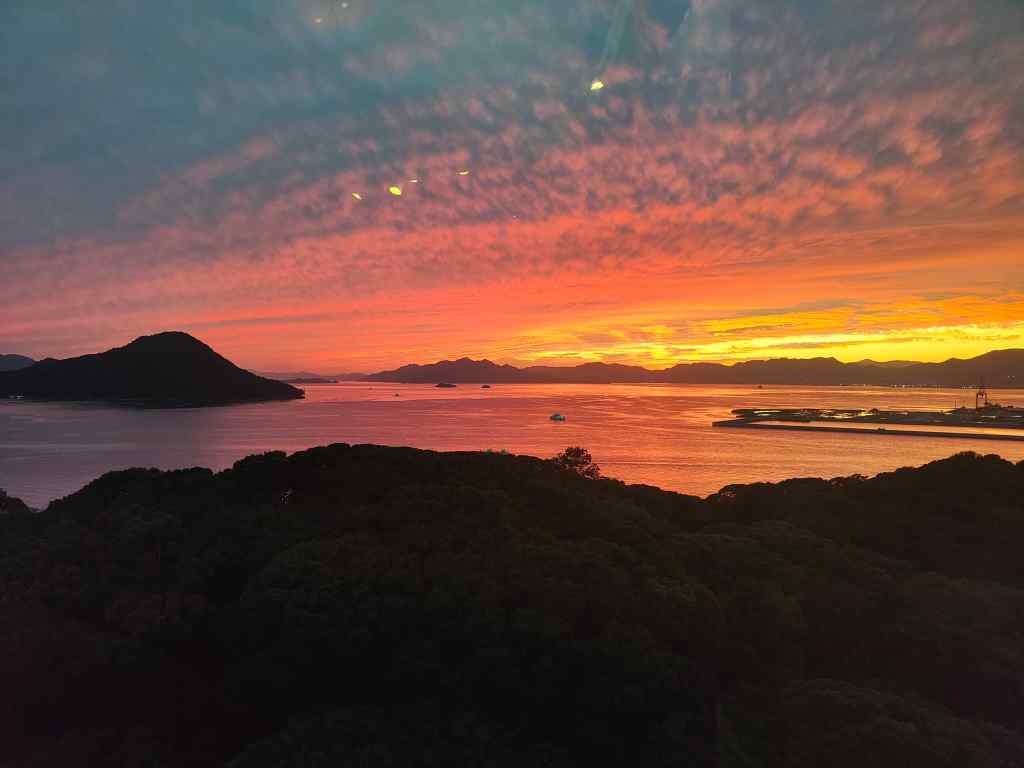
By the time we had checked in, it seemed a bit late to do anything in the city so we enjoyed the hotel’s onsen, which looked out onto the Inland Sea, the stretch of water separating Honshu (Japan’s biggest island) from Shikoku (the fourth biggest). It was a great view, and as the evening drew near, we got dressed to go to the top floor bar to see the spectacular sunset shown above.
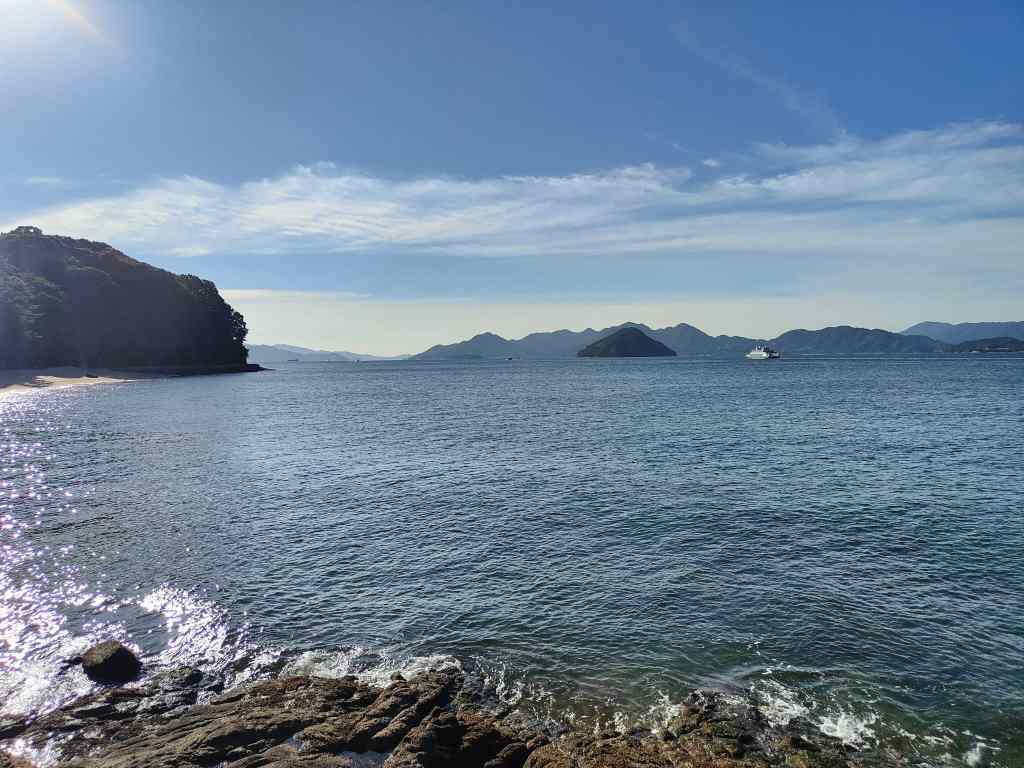
The next day we started our exploration of the city with a pleasant walk around the peninsula we were on, which gave us more views out towards the countless small and large islands of the Inland Sea.
We arrived at the port, and I checked our onward boat connections, before we caught a tram to Hiroshima’s most famous and most visited site – the Peace Park, which contains the Peace Memorial Museum. We went around the latter first. It was a harrowing experience, starting with immediate impact of the first use of an atomic bomb.

The first part of the exhibition focussed on a large group of school children who had been mobilised to demolish wooden buildings and who were working near the place where the bomb exploded. They suffered horrific burns, which were shown in graphic detail in photographs, and either died immediately or later, in great pain. Next there were exhibits of some of the victim’s belongings like singed clothing or charred watches, and then a description of the longer-term suffering of people that survived the initial blast but died later of various illnesses caused by radiation or burns. It was harrowing and shocking material, leaving a visitor sad and angry. Later floors of the museum were a bit easier to visit, being devoted to the development and reasons for use of the bomb, testimonies from survivors and the efforts to rebuild the city after the war.
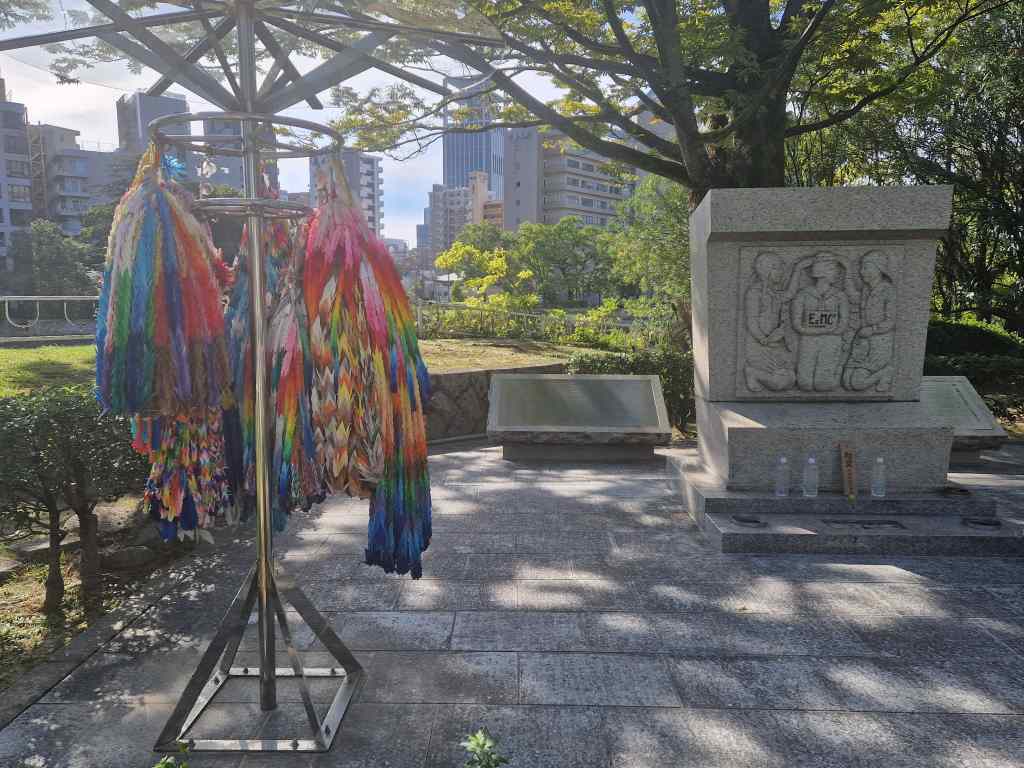
Outside the museum was a complete contrast. There was a beautiful park, with several monuments promoting peace.
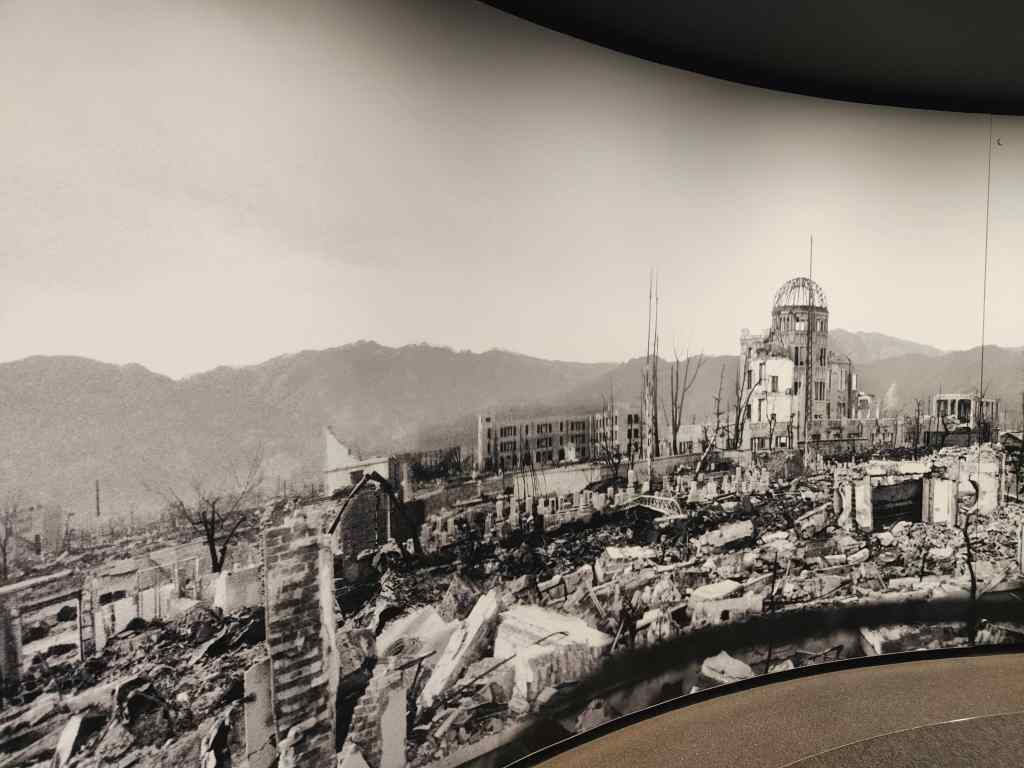
There was also the Peace Memorial Hall, with a display of a view of the city after the bombing as seen from the hypocentre (point where the bomb exploded), and a sculpture representing a clock showing 8.15 – the time of the explosion.

A bit further away was the Atomic Bomb Dome – the ruins of a building that was the only thing left standing near the centre of the blast. The dome itself was made of copper supported by iron girders; the heat of the explosion melted the copper but left the iron standing.
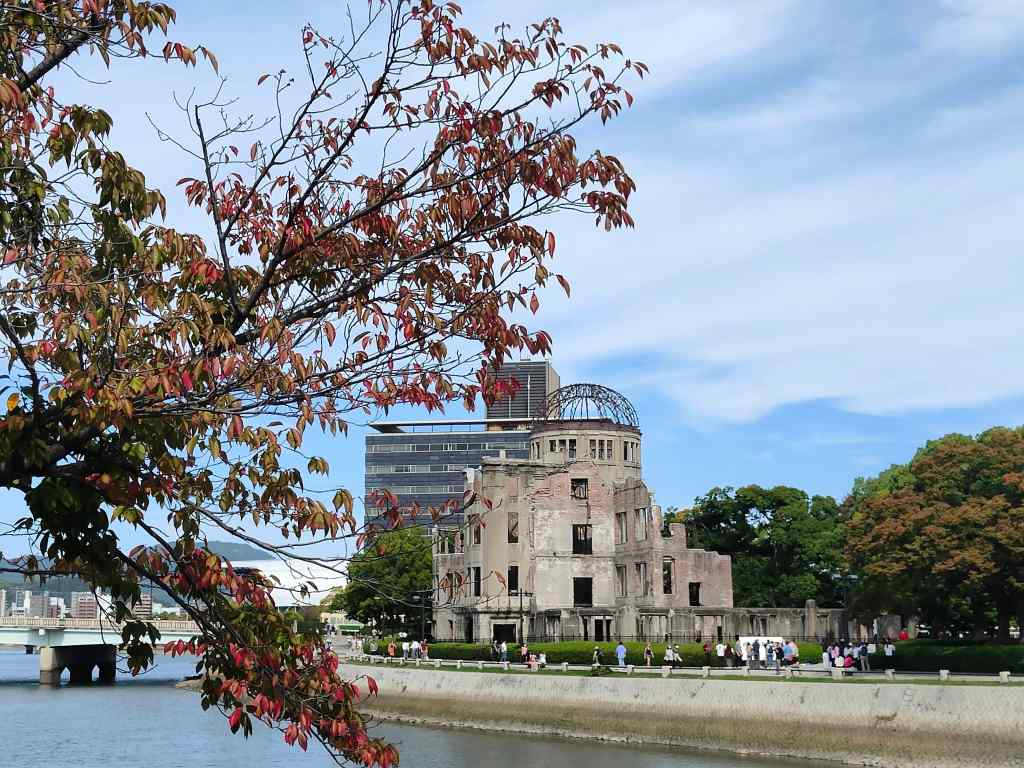
After seeing the sites in and around the Peace Park, we went for a stroll around the city centre. There were few other classic tourist sights, but it had a pleasant feel, both relaxed and busy at the same time, and a remarkable location – sandwiched between mountains and the Inland Sea, with its countless small islands. As we headed to the port to catch the ferry to our next destination, we contemplated the contrasts between the utter devastation after the bombing and the thriving city that exists today, with its friendly people and peaceful vibe. Perhaps there is another important message to be taken from Hiroshima, in addition to the evils of nuclear weapons. It is one of the triumph of the human will in the face of suffering and adversity – in the form of the thriving and pleasant city the Japanese rebuilt from the ashes of Hiroshima.
Previous Post: Takayama
Next Post: Miyajima
 Trouspinet travels
J’aprecie beaucoup votre reportage sur Hiroshima.
LikeLiked by 1 person
Very nice and interesting account despite the visit of the museum being harrowing.
Amazing sunset, as a sign of hope.
LikeLiked by 1 person
j aime beaucoup cette conclusion, pleine d’espérance
LikeLiked by 1 person
Very moving post. It is the one thing that I really regret not having the time to visit when I was there. It is a lesson for all of us on destruction and recontruction. Not a light visit but one that is necessary.
LikeLike
We would have liked to spend an extra night there. Not because there are lots of things to see, but just to enjoy the pleasant vibe of the city
LikeLike