Over the next couple of days we explored Kanazawa, a port city famous for its food, and which retained many old districts, since it escaped bombing during WWII. The city was once the headquarters of the powerful Maeda family, who sided with Tokugawa Ieyasu in the decisive battle which led to the establishment of the Tokugawa shogunate. The Maeda’s Kaga clan became the second richest and most powerful in Japan, which greatly benefited Kanazawa’s development.
Our first stop was one of the city’s main attractions – the Kenrokuen Gardens. They were rather different to places like Kew Gardens that we knew from elsewhere in the world – very neat and ordered, as if in Japan nature is also elegant and tidy. It was a beautiful sunny day, so they looked at their best.
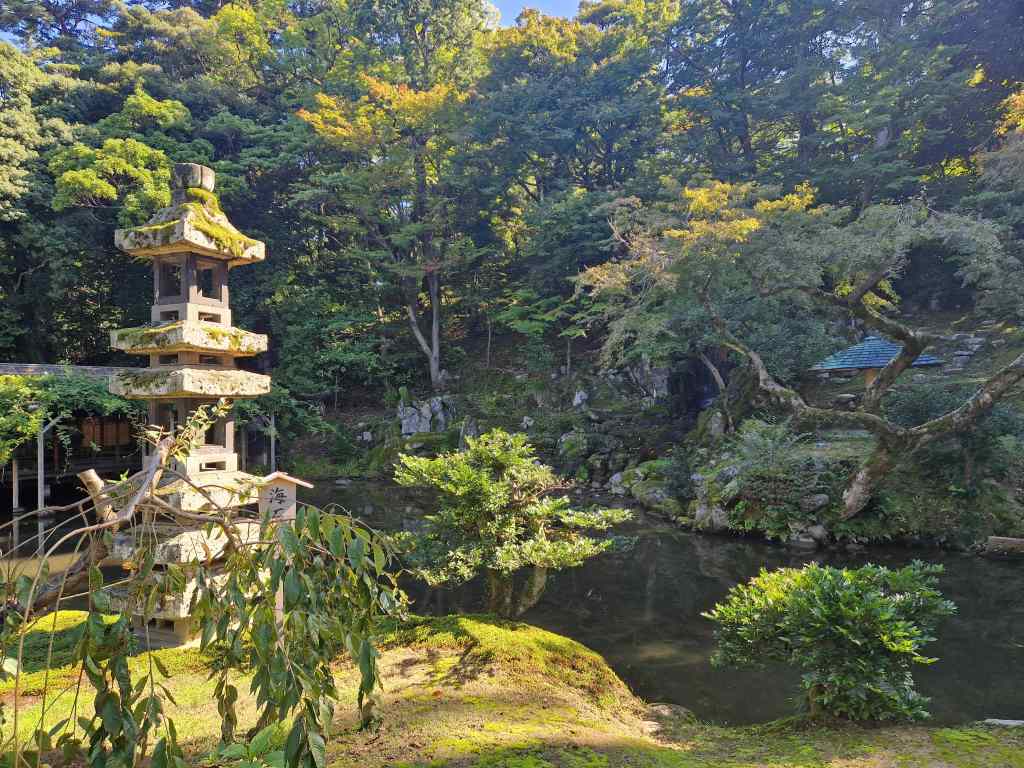
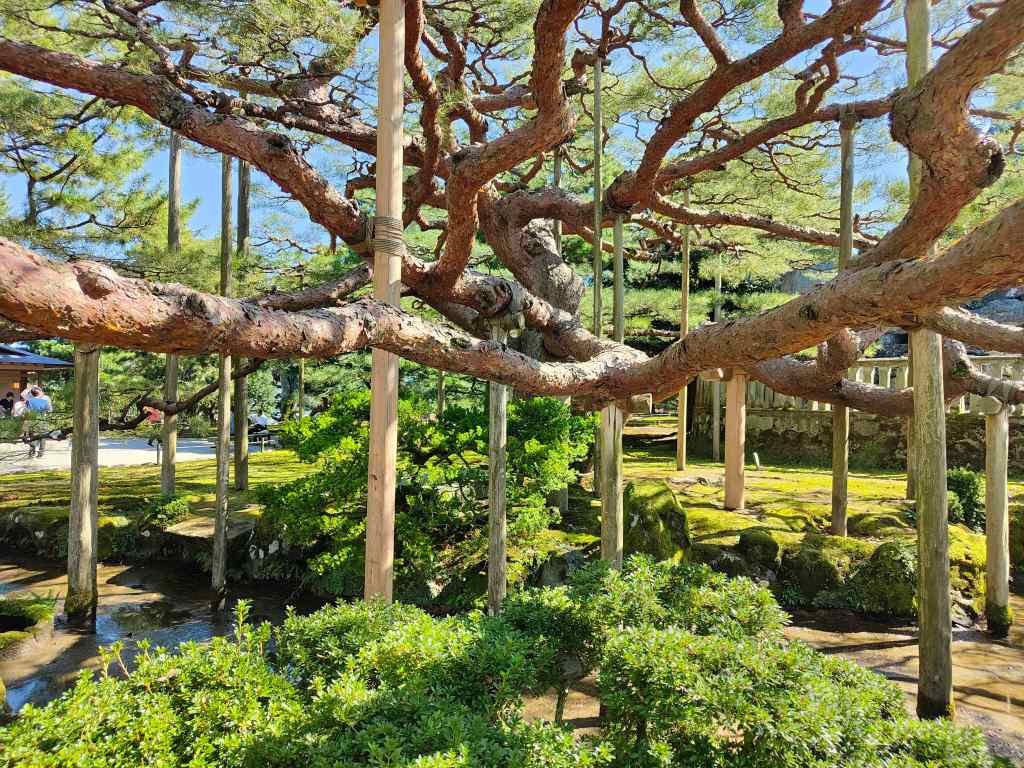
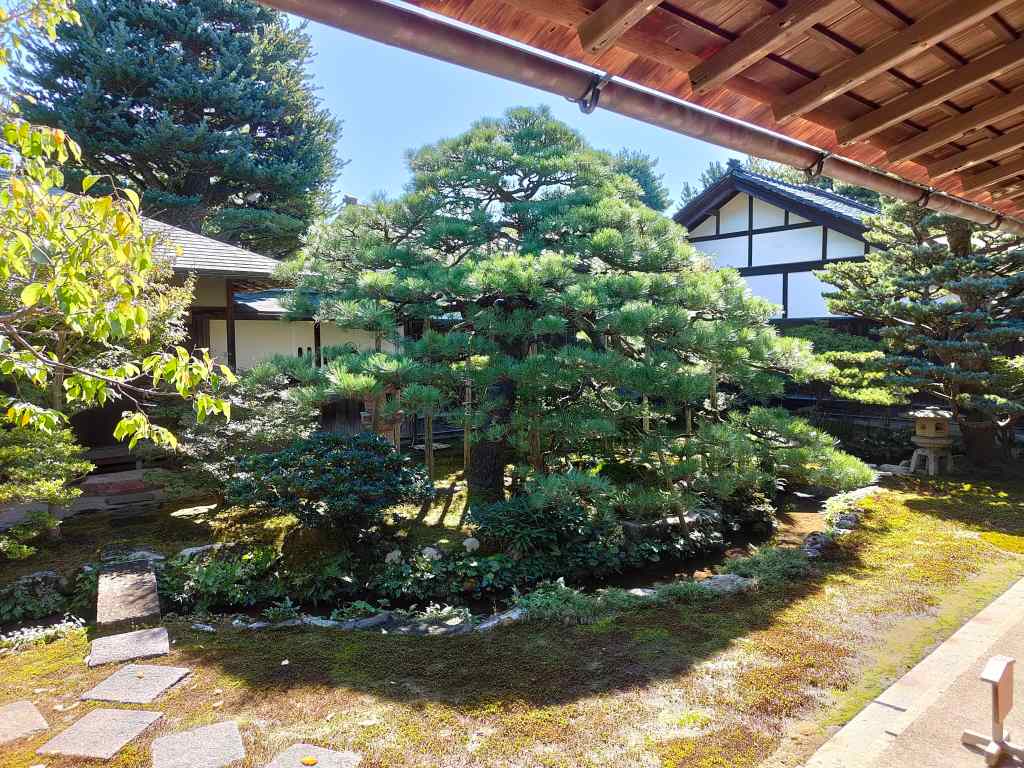
Inside the garden grounds was the beautiful Seisonkaku Villa, built by one of the Maeda clan chiefs for his mother.
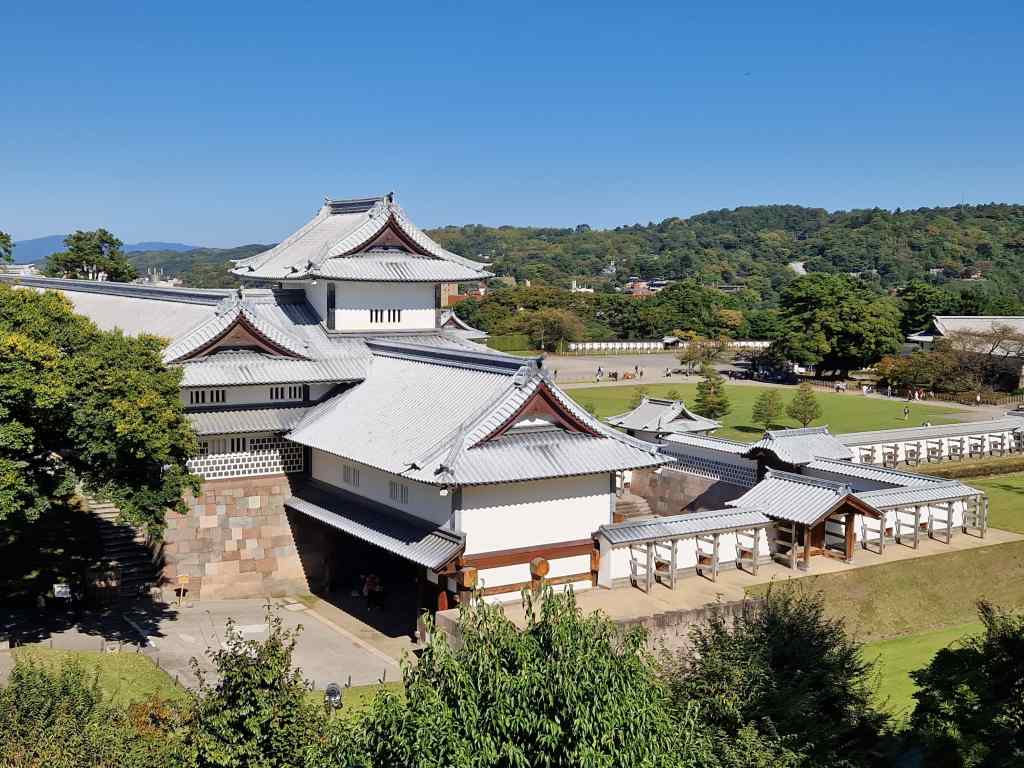
Our next stop was Kanazawa castle. This had burnt down several times during its history, mostly a disastrous fire in 1881 which left only one gate and two storehouse standing. It seems that fire and lightning were much bigger threats to wooden Japanese castles than enemy attacks. The buildings have been painstakingly restored in recent years, and now it makes for an impressive sight, even if what is visible is mostly modern reconstruction.
We didn’t visit inside, but inside continued our walk through the castle’s park to the city’s former geisha district. This was an odd mixture of charming quiet lanes, with wooden buildings and very few people, and a very busy centre with the same pretty houses, but lots of tourists.
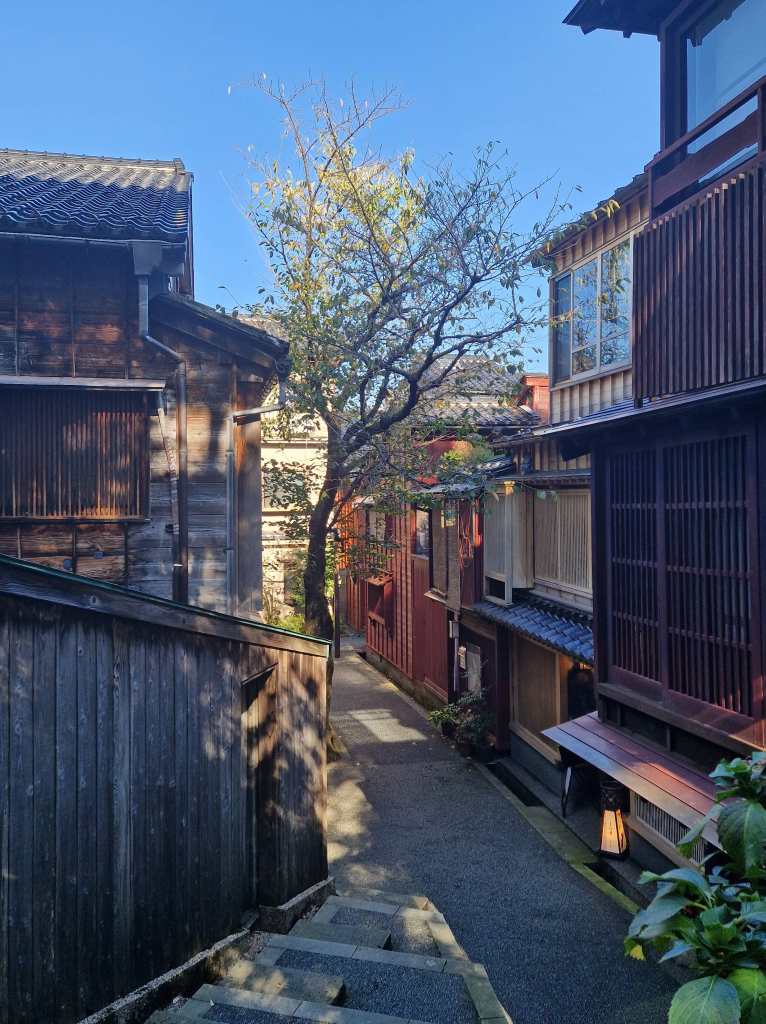
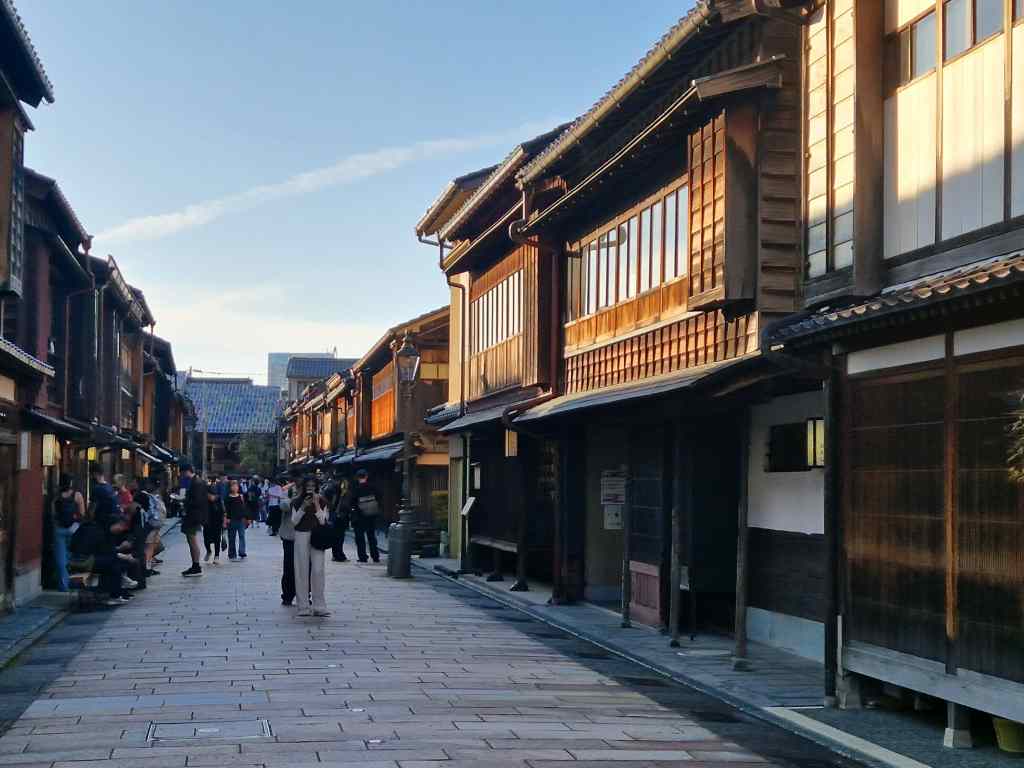
We stopped at the Ochaya Shima Geisha House, once a place where the geishas used to entertain their customers and now a museum (unlike most of the other former geisha houses, which have been converted into shops and restaurants). It was very pretty, but there was (as often in Japan) very little explanation in English about the exhibits and the geisha profession.


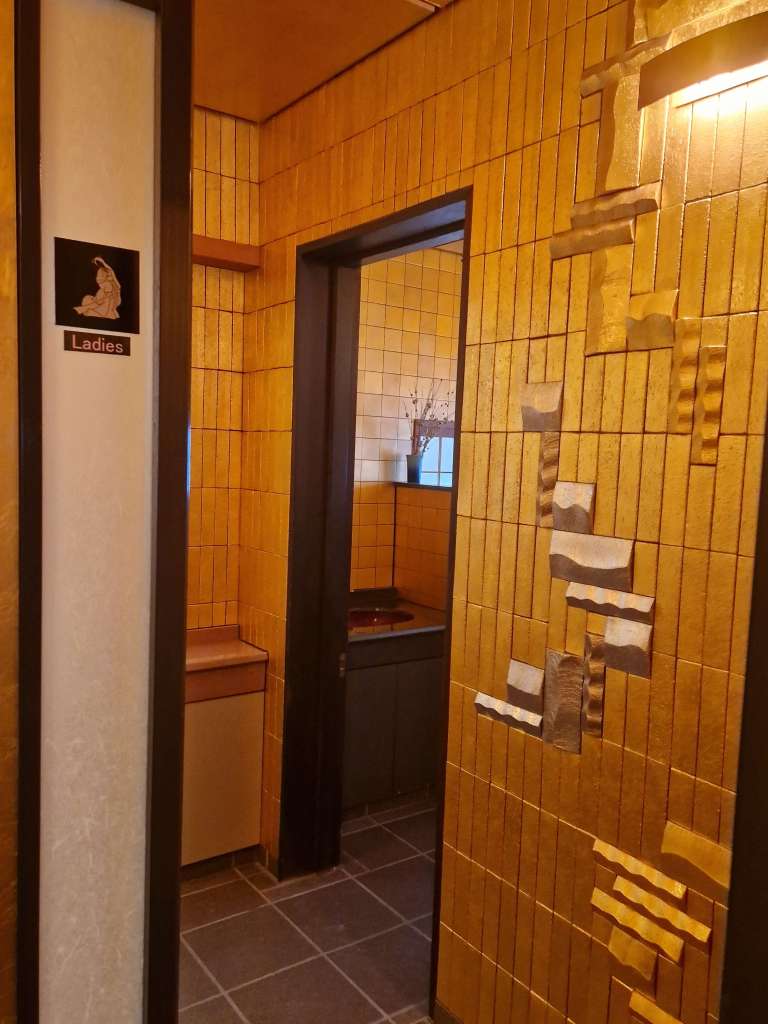
Our final stop of the day was a workshop making gold leaf and sculptures using this precious material. There were some really nice souvenirs on offer, but for us the highlight was the toilets, whose walls and ceilings were covered with gold (the ladies) or platinum (the gents).
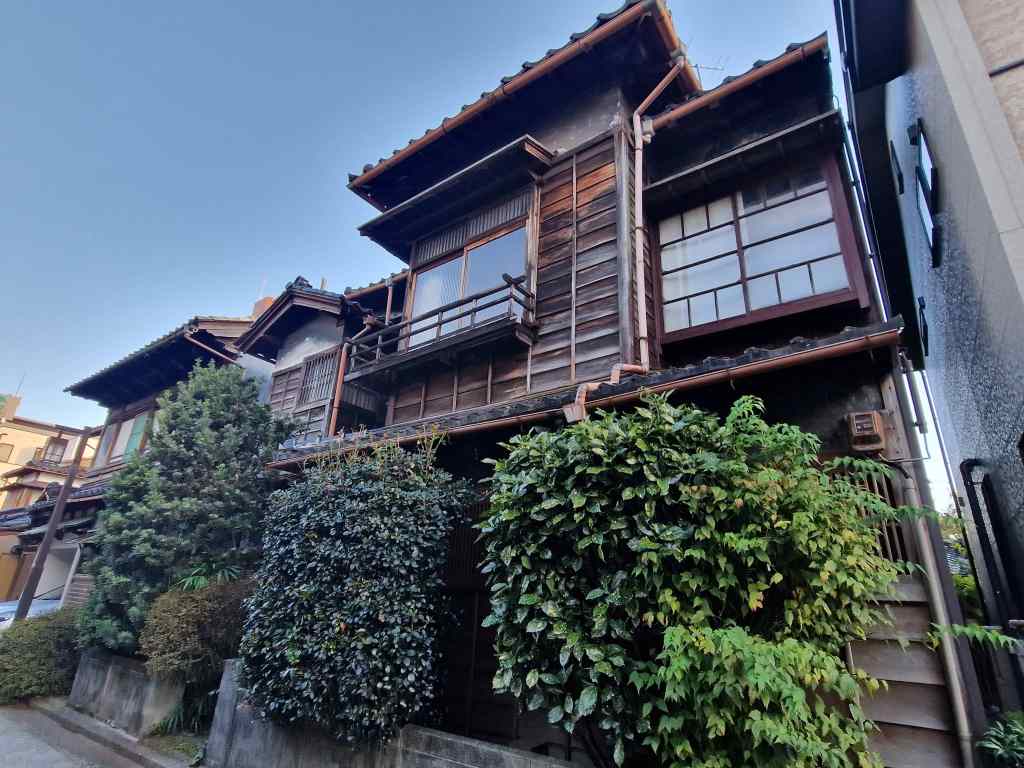
The next day we explored the city further, first visiting a district where many former samurai houses are preserved. It was indeed a beautiful area, despite the occasional tour groups. One of the old houses had been converted to a shop selling cakes and sweets, and we stopped there for a mid-morning coffee.
For lunch we headed to the Omicho market, a short walk away. The seafood here is rated amongst the best and freshest in all Japan, and originally we had planned to buy some sashimi for dinner. But we found that the shops selling food had mostly closed or sold out, leaving only restaurants. So, we changed plans and had an extraordinary sea food lunch instead.

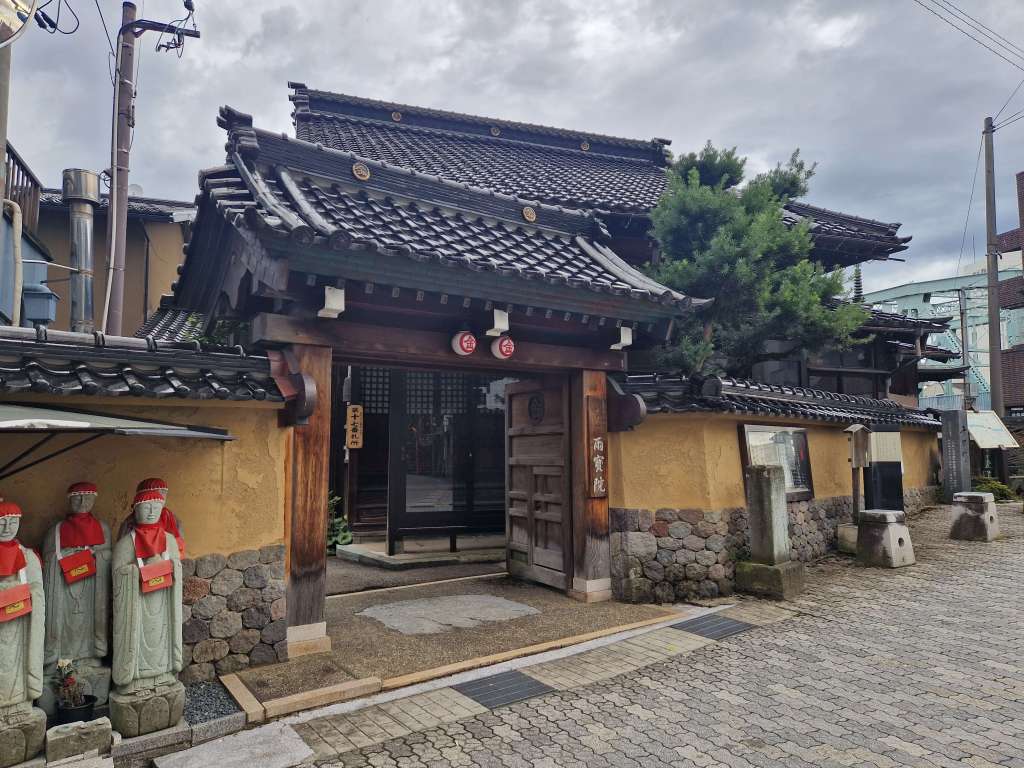
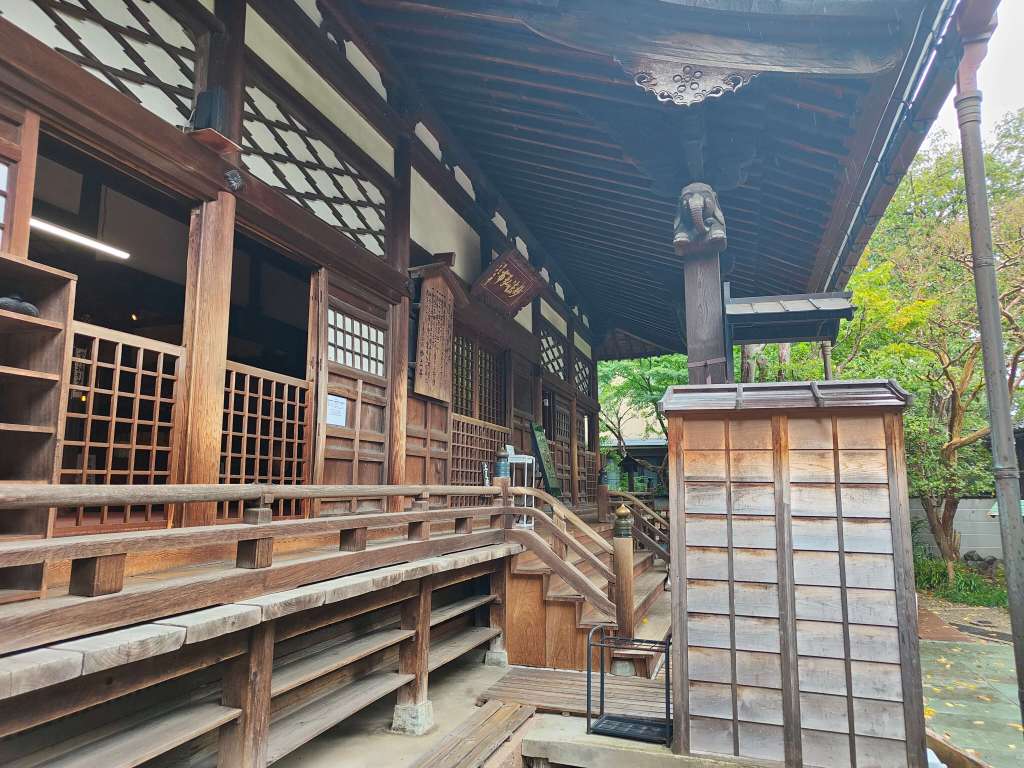
In the afternoon, we explored one final part of the city, a short bus ride away on the other side of Kanazawa’s river – the Teramachi Temple District. We found dozens of small temples located either on the main road or down quite side streets. We ended up outside one of the largest ones, the Myoryuji Temple, more often known by its nickname of “Ninja Temple”. There were signs saying that guided tours could be booked by telephoning to make a reservation or by applying to the temple office. This seemed rather strange – temples are usually free to visit – and we wondered if it was a tourist trap. We decided to give it a chance and were put on a tour leaving immediately. It was one of our best decisions of the holiday.
The structure was built by a Maeda lord at a time when there was deep mutual suspicion between his clan and the ruling Tokugawas. Superficially a temple from the outside, it was in fact a disguised military installation with many features to ensnare enemy soldiers or assassins. The tour was in Japanese only, but they gave us booklets with a description of each room in English. Our guide led us through fifteen rooms, each with a fascinating set of features, including many devious traps for the unwary. These included a secret escape tunnel, sunken pits for enemies to fall into, hidden doors, a watchtower, and our favourite – a small windowless room where a vanquished samurai warrior was expected to commit ritual suicide if he had failed to defeat intruders. The forty-minute visit was a highlight of Kanazawa and also of Japan as a whole.
This pleasant surprise concluded our exploration of Kanazawa. We thought the city’s reputation as one of the most interesting in Japan was richly deserved.
Previous Post: The Alpine Route
Next Post: Takayama
 Trouspinet travels
this reminds me some of the places visited in Kyoto including the amazing seafood. I love the way they tame the nature. Trees are beautiful everywhere. You obviously made the most of this grand tour in Japan.
LikeLike
Kyoto coming up…first Shikoku
LikeLike
Ninja Temple – very James Bond!
LikeLike
I think more Q than James Bond!
LikeLike