Today I got up early to take the train to Nikko, home to some of Japan’s most beautiful shrines. First, I met my Japanese friend Aki, who is to be my companion for parts of my Japan trip. Shinjuku station was very busy and very confusing, and it took us some time dodging through the crowds of people to find the right platform. Unusually for Japan, our train was a few minutes late, but when it arrived we sat down in large comfortable seats for the two-hour trip. The first hour was dull – miles and miles of rectangular blocks of flats or offices. But then the city finally ended, and the concrete gave way to green rice fields and mountains.
On arrival, Aki and I made a short walk through the town to the forest where various shrines and temples are located. The entrance to this area is marked by the famous Shinkyo bridge, built in 1636.
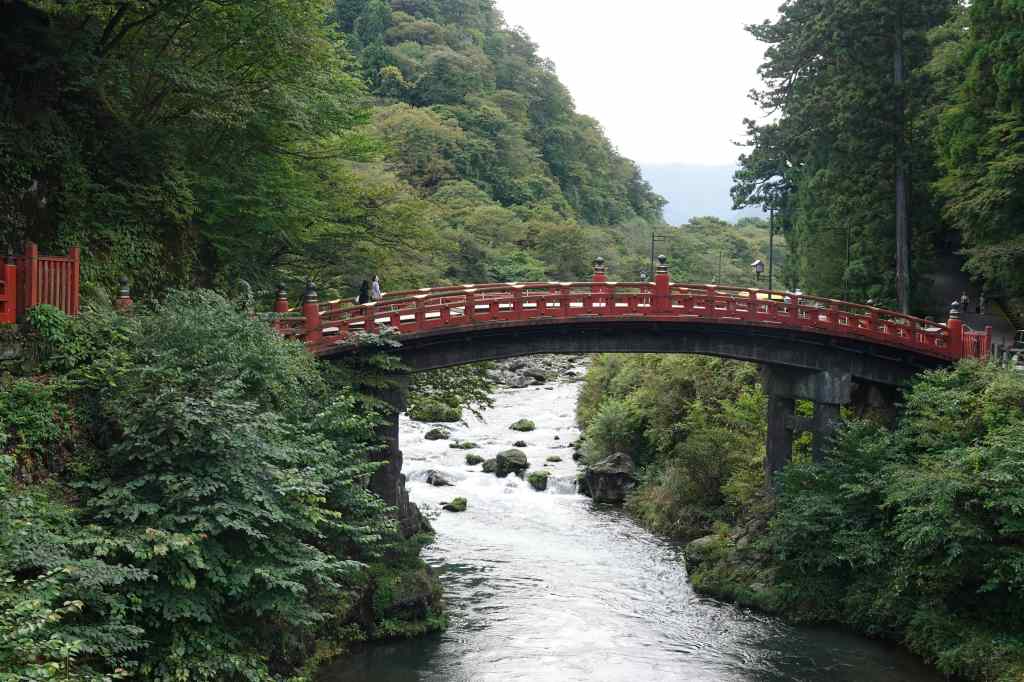
Just after the bridge is the entrance to a beautiful cedar forest and the Nikko world heritage site.
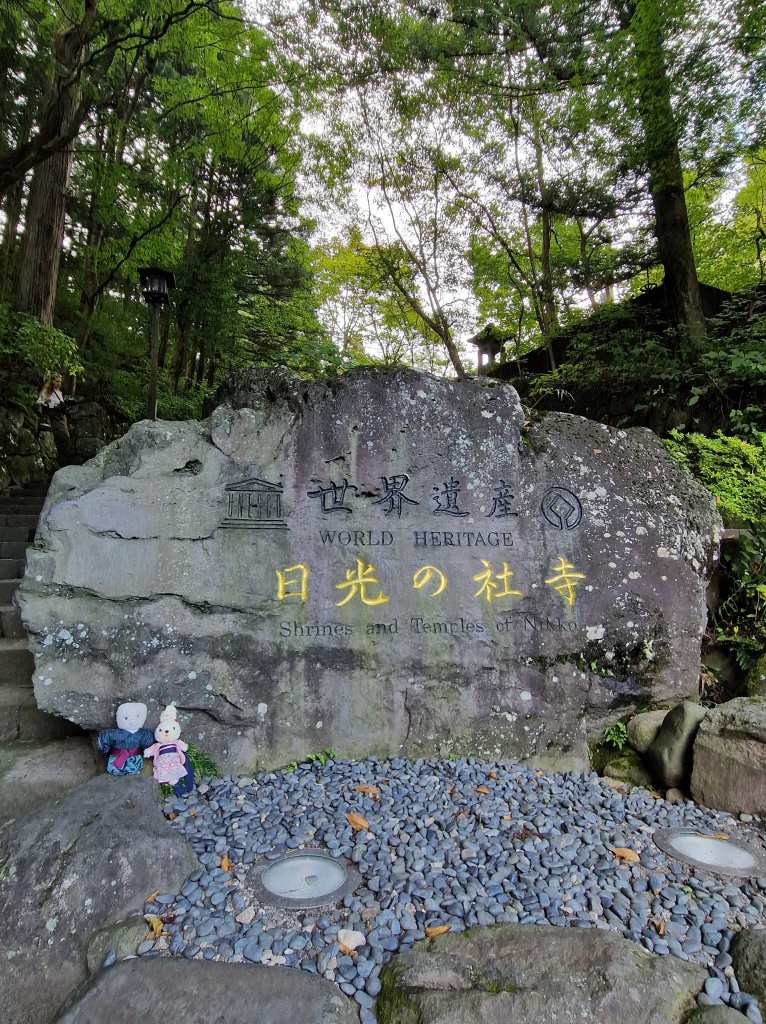
Once inside the park, we made for the Rinnoji Temple, the most important in the area, and originally founded in the 8th century by Shodo Shonin, a monk who brought Buddhism to Nikko.
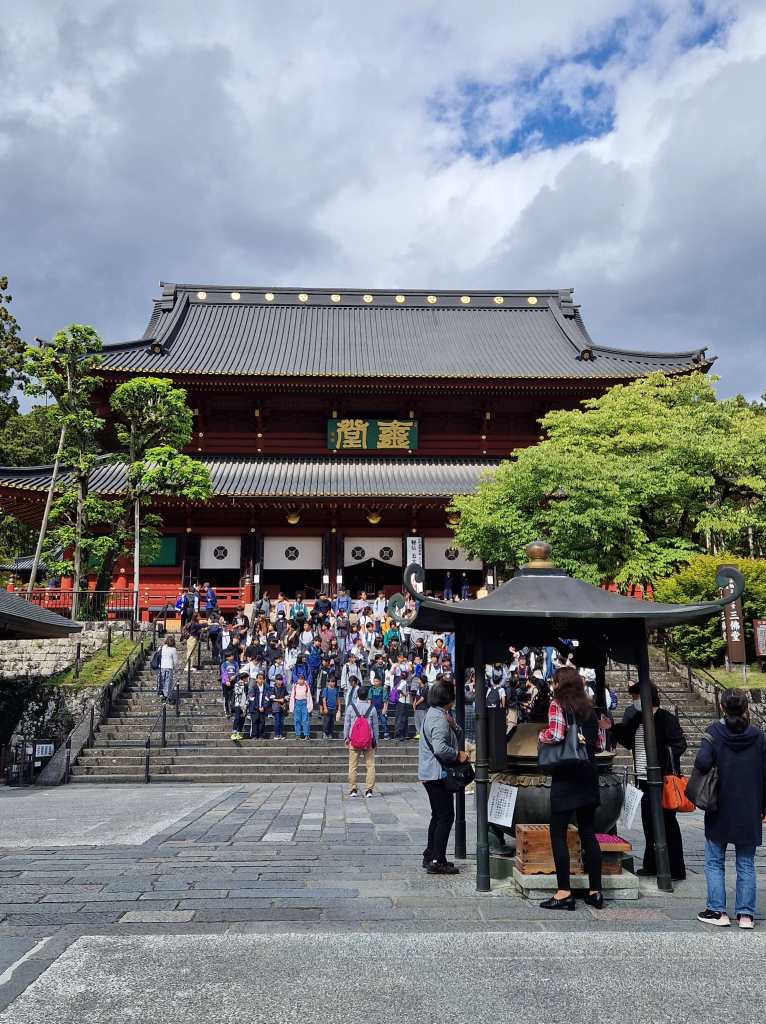
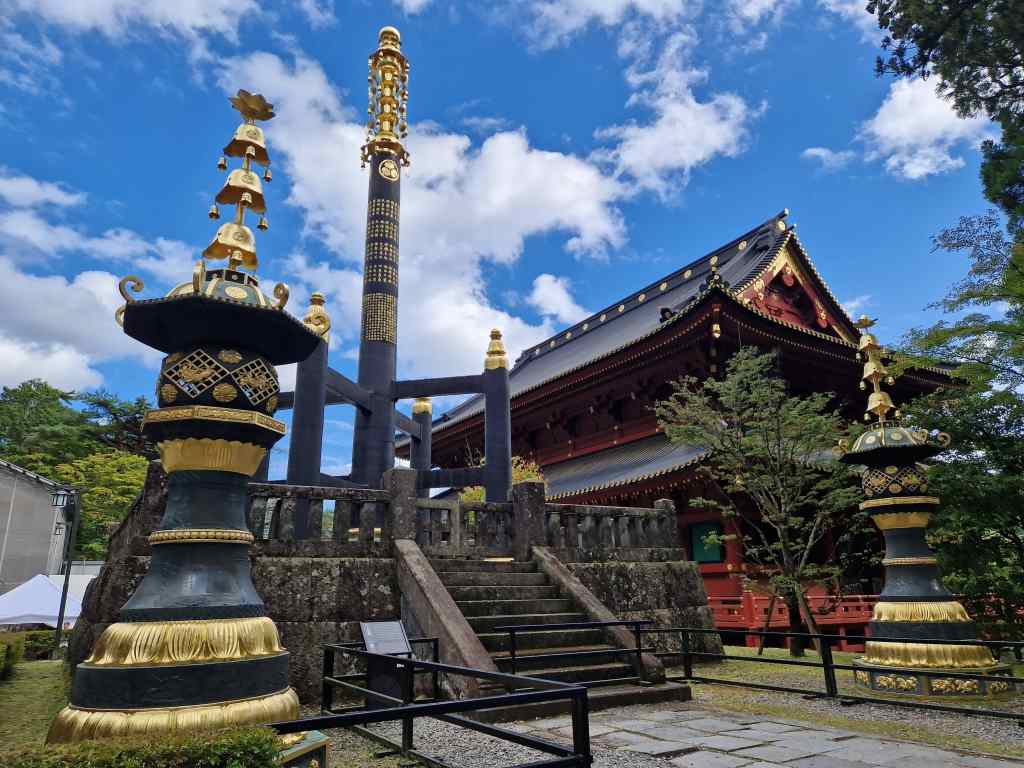
After visiting the temple we took a few minutes to visit the pretty Shoyoen Garden next door.

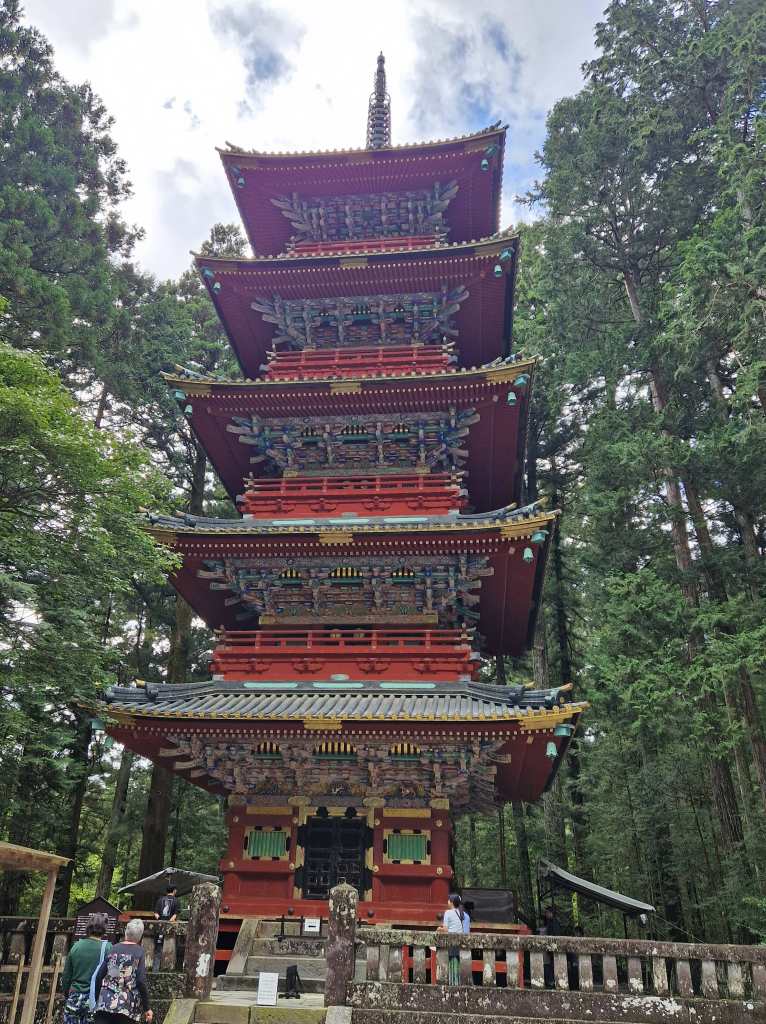
Our next stop was the highlight of Nikko – the Toshogu Shrine. This is a memorial to Tokugawa Ieyasu, the founder of the Tokugawa Shogunate, which ruled Japan for over 250 years until 1868. The shrine was at first a simple mausoleum, but was later transformed into a huge complex by Ieyasu’s grandson in the 17th century. There was a lot to see, and we spent about an hour wandering around and taking lots of photos. At the entrance there was an impressive five-story pagoda…..
…then inside the walls of the complex are a series of richly carved gates, shrines and temples….
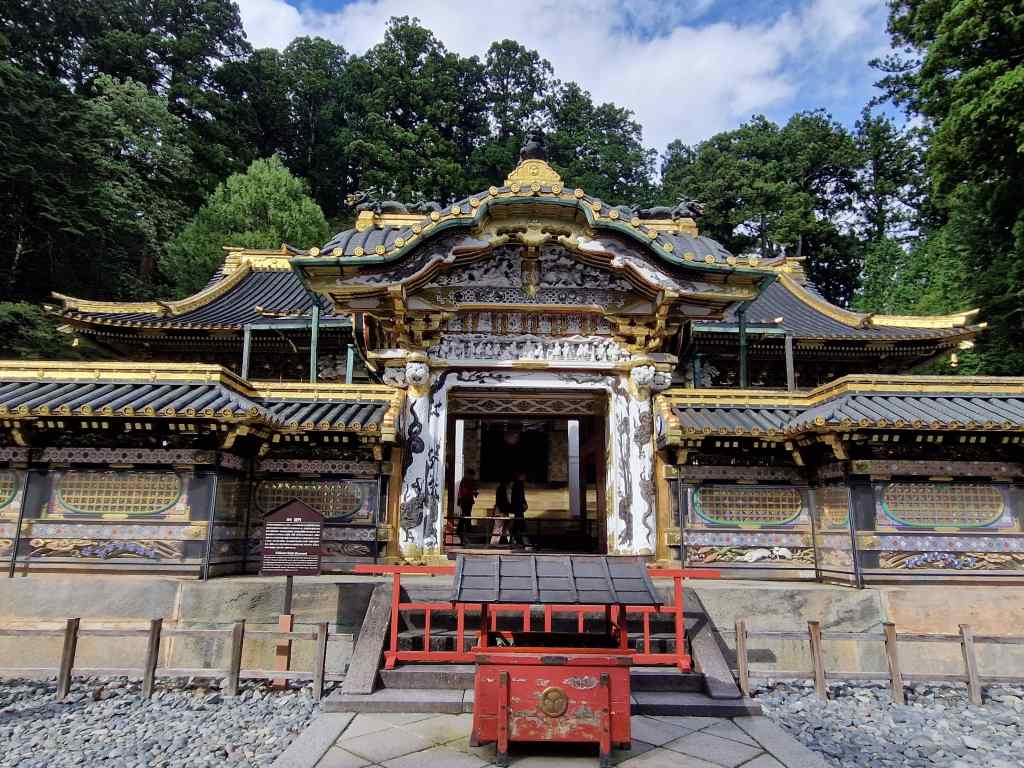
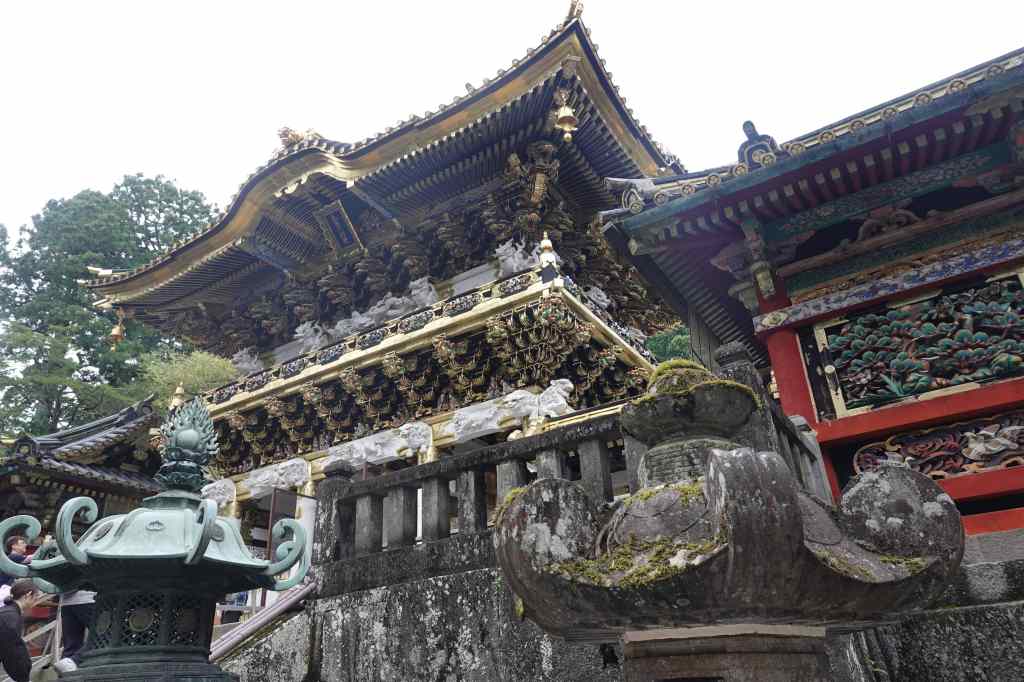
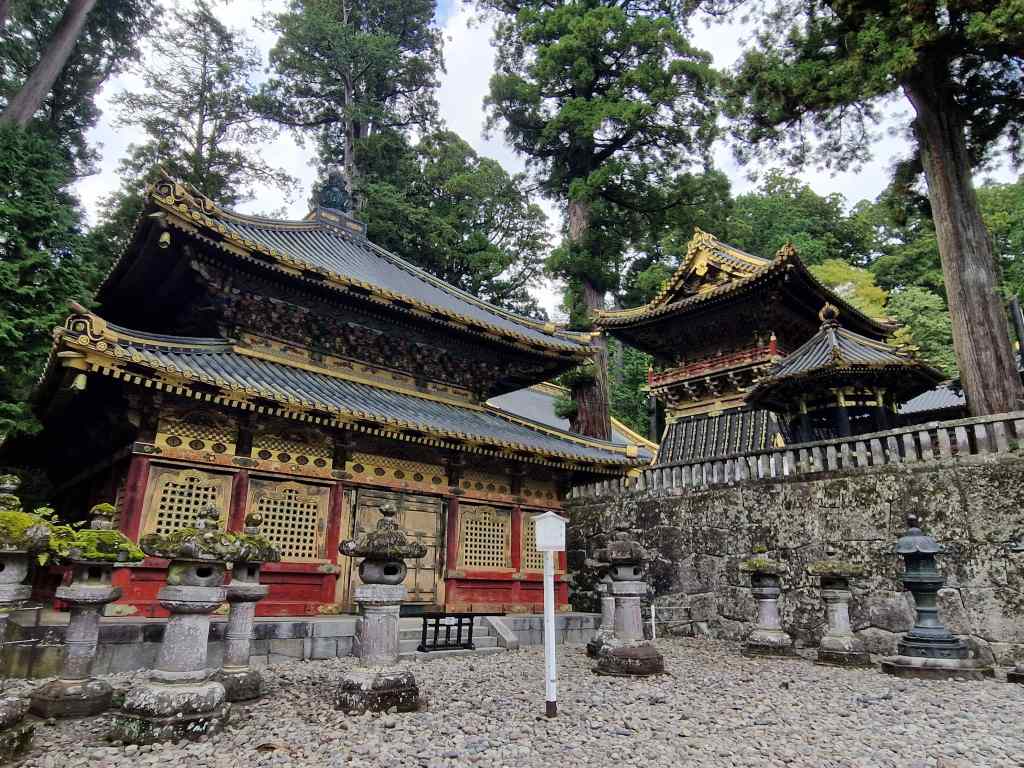
….and finally the relatively modest resting place of Tokugawa Ieyasu himself. The workmanship of this temple complex is incredible and it richly deserves its reputation as one of the highlights of any visit to Japan. Making the site even more remarkable is setting, surrounded by the towering trees of a beautiful cedar forest.
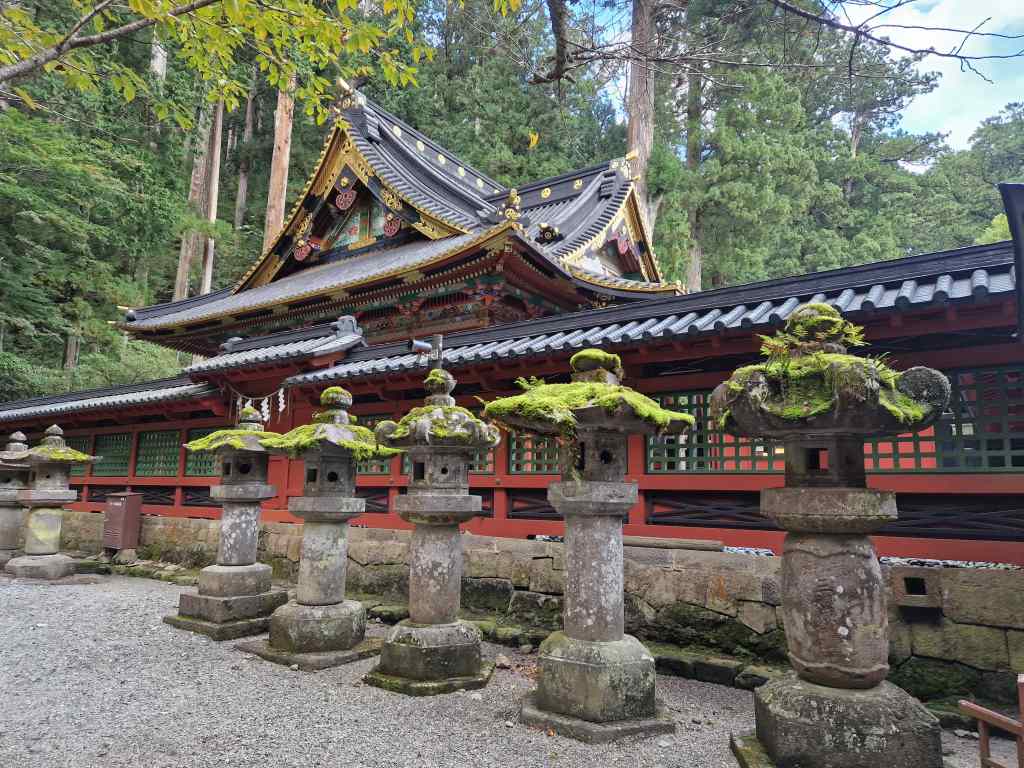
After the truly awesome Toshogu Shrine, our next stop was the more modest Futarasan Shrine, dedicated to Nikko’s sacred mountains. Indeed, the whole area around Nikko is a national park, famed for its beautiful November colours – but sadly we did not have time to spend the extra day that a visit there would have required. The Futarasan Shrine was more modest than the other places we had visited in Nikko, but less crowded, and still very pleasant.
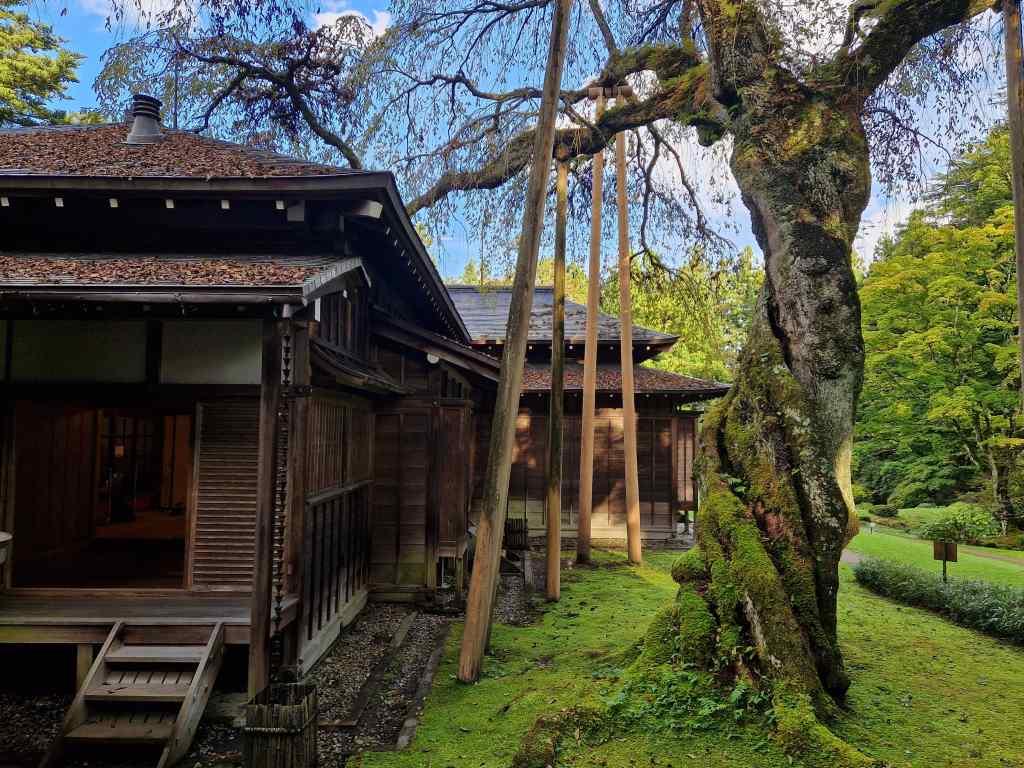
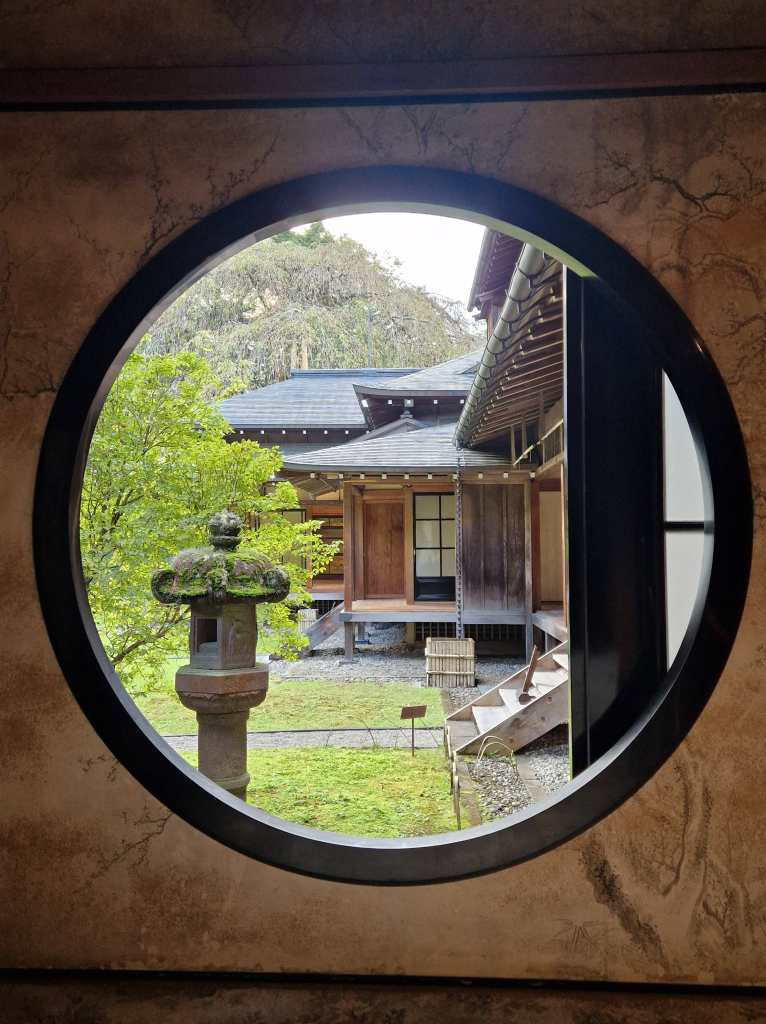
From there we made a short walk to our last destination, the Tamozawa Imperial Villa. This was constructed in 1899, using parts on an older building already on site and parts of a house in Tokyo belonging to the Tokugawa family. It was used as a summer residence for the emperor and his family. The villa was quite different to Nikko’s other sites – its restrained, elegant architecture contrasted with the extravagant carvings of the shrines. We found it radiated a feeling of calm and contemplation and were very happy we had chosen to visit this place last, to provide a peaceful end to a busy day sightseeing.
We both had a snooze in the train on the way back to Shinjuku, to prepare us for another night of partying – this time in the nearby Shibuya district, which is also famed for its nightlife. Shibuya’s station was even more confusing than Shinjuku’s and we spent a frustrating half an hour wandering through construction work, underground tunnels and then along raised walkways, with our Google Maps navigator totally unable to find its way out of the mess. When we finally emerged, we didn’t have much time left to explore the area but did at least get to see this aspiring boy band performing on the street.

Dinner was at the rooftop Ce La Vi restaurant and was excellent. Aki and I indulged in some very good cocktails and a glass of sparkling sake. It was a great way to end the day, even if we started early and got back to our flat at midnight.
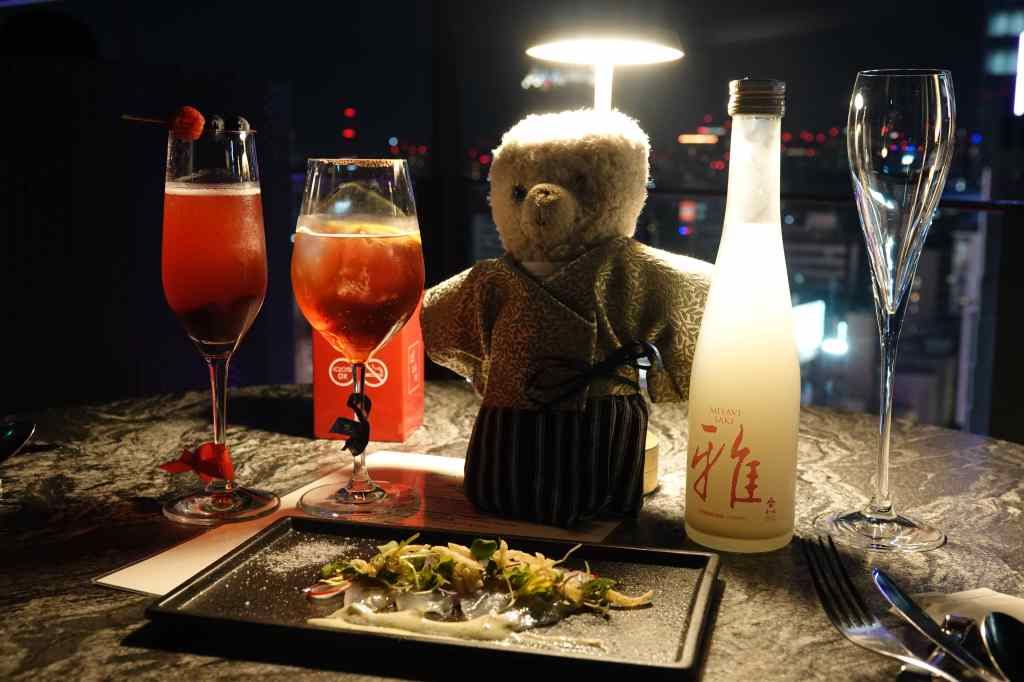
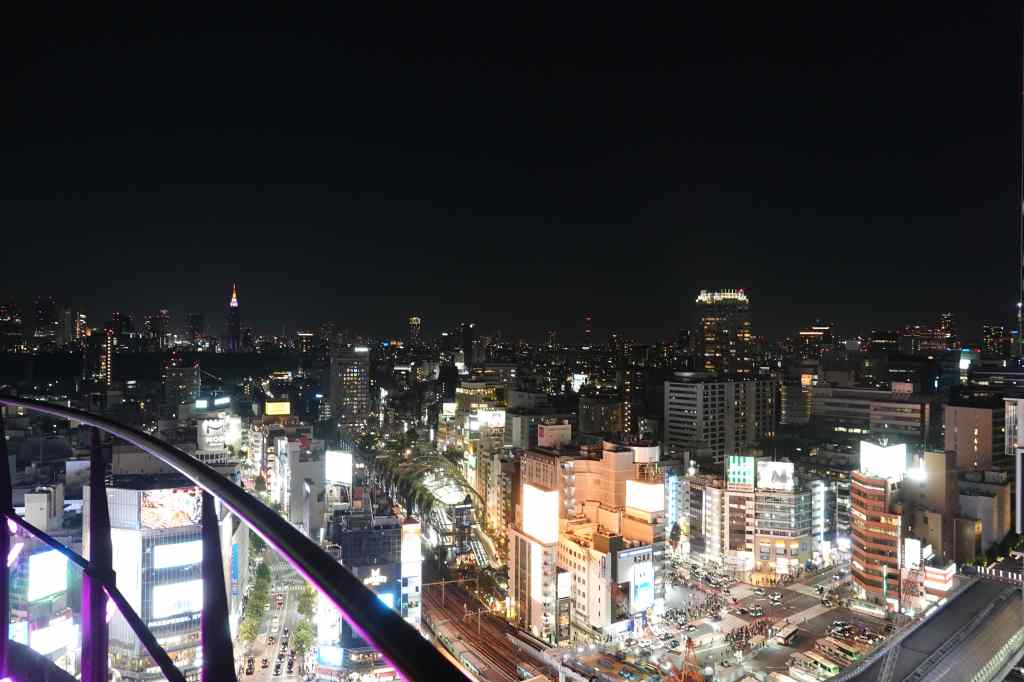
View over Tokyo’s skyscrapers at night
Previous Post: Tokyo – Shinjuku and Meiji Shrine
Next Post: Hakone Circuit
 Trouspinet travels
J’ai hâte de lire le prochain blog de Trouspinet… Tout est intéressant et inhabituel pour une Européenne ! Kika
LikeLike