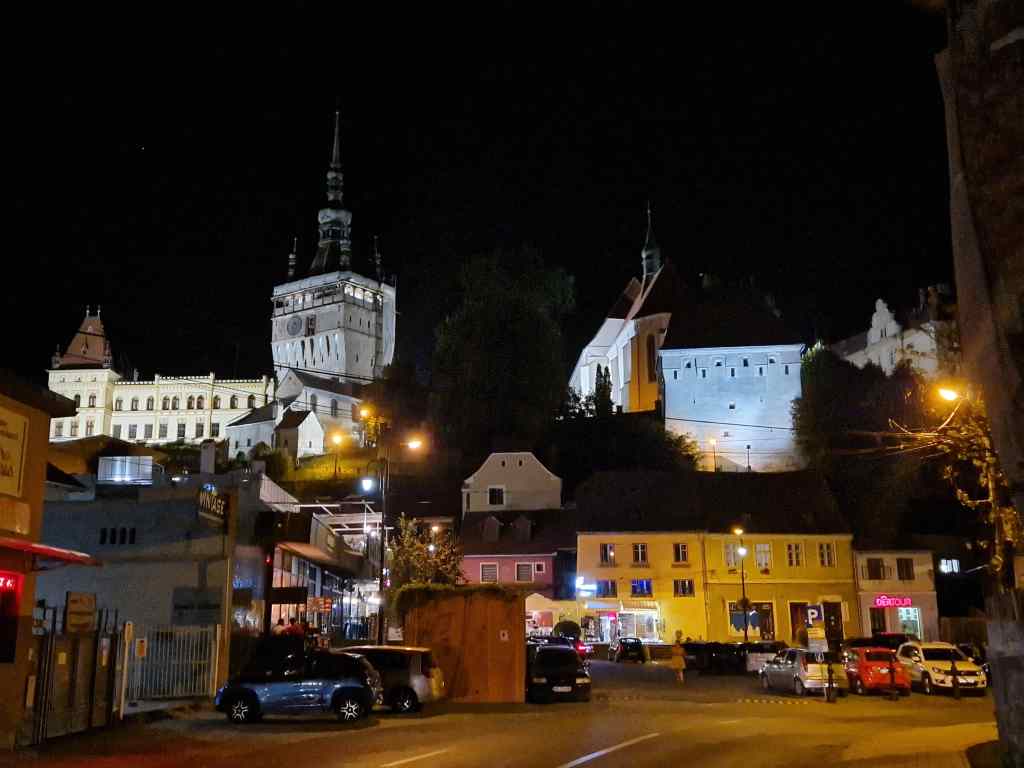
I arrived at my destination – Sighisoara – in the evening, and immediately went out for dinner. On the way back to my hotel I admired the spectacular old town, sitting on top of a steep hill.

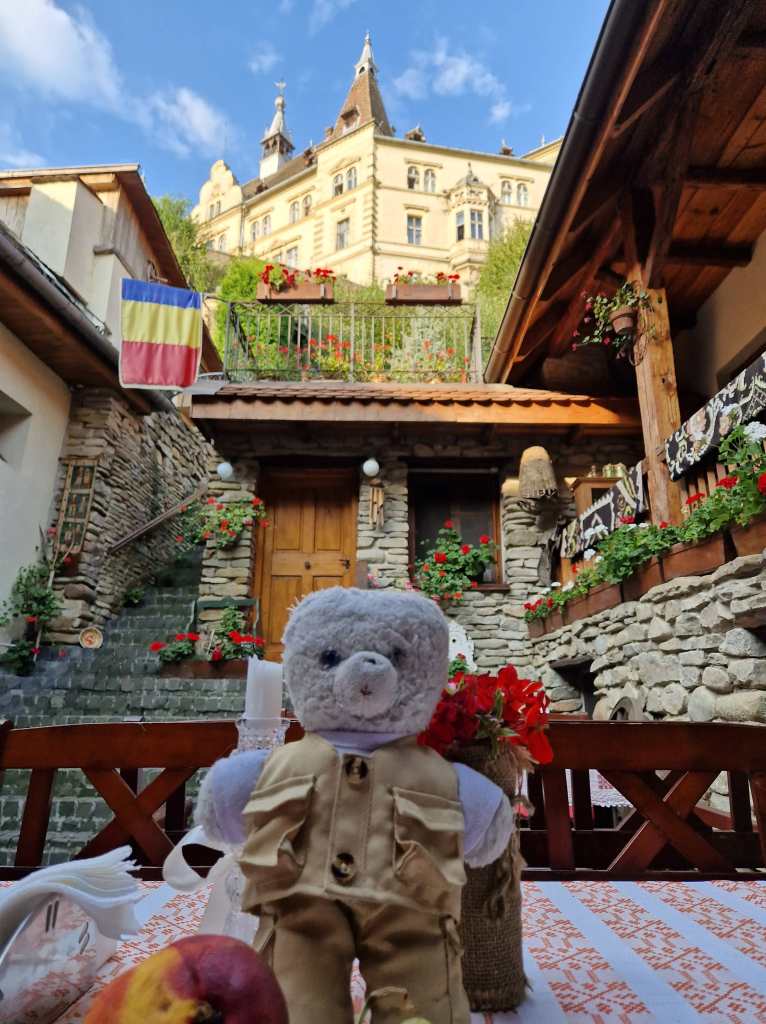
The next day I had breakfast in the small courtyard of my hotel with a great view of the castle, before setting off to explore.
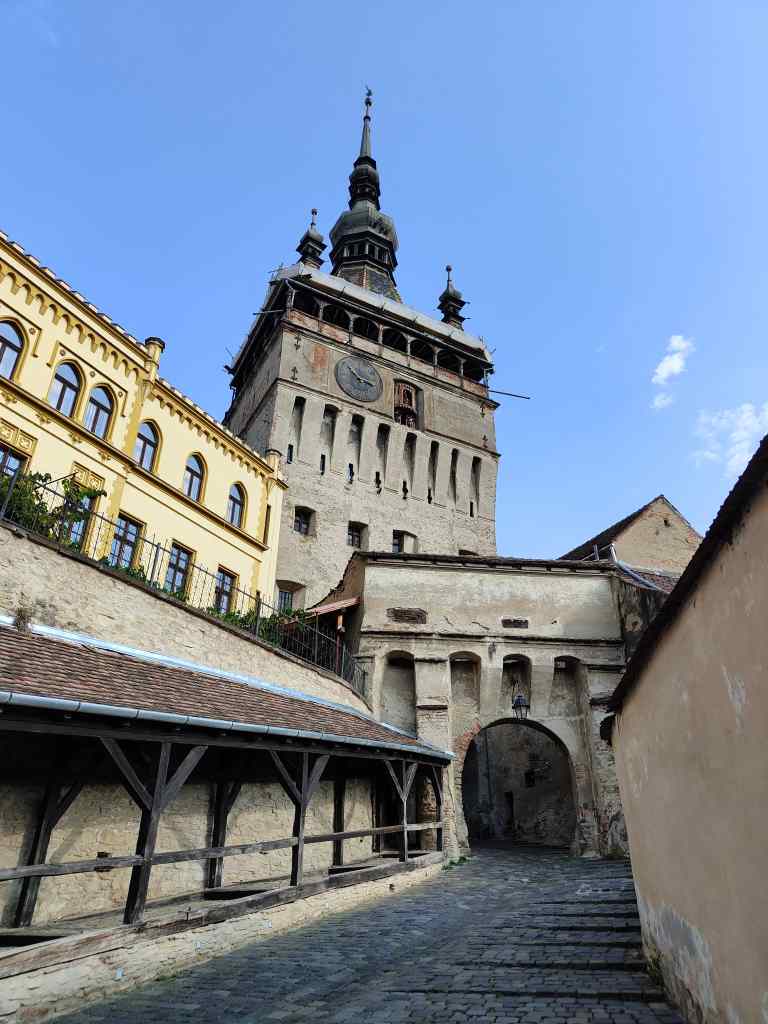
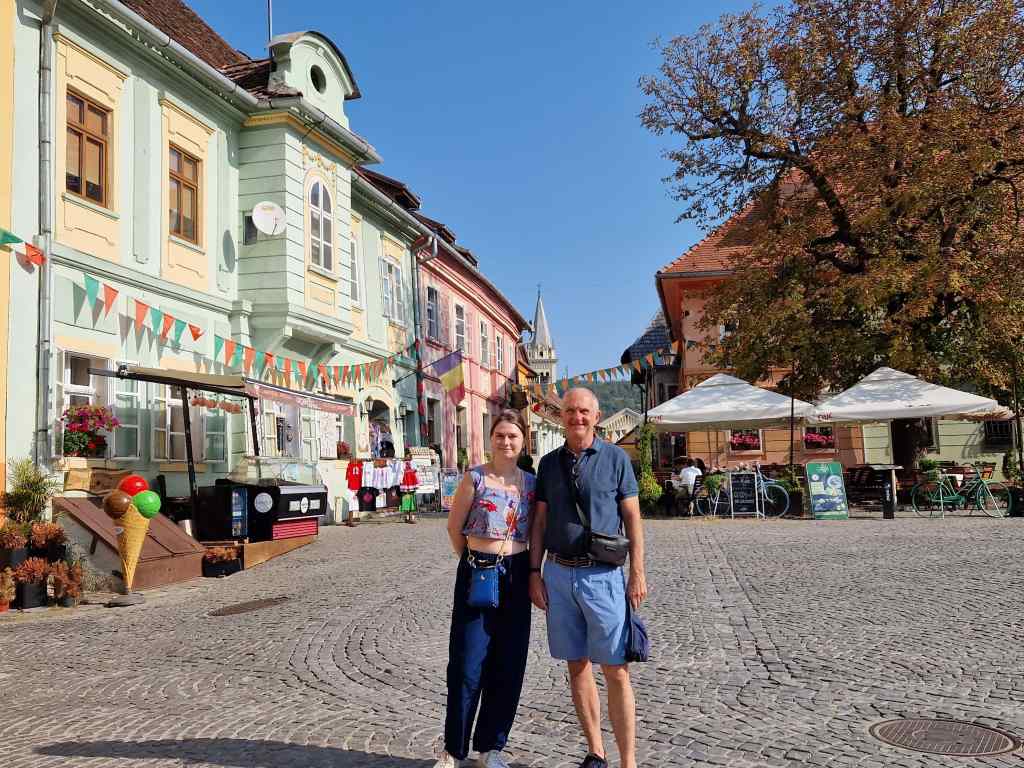
Sighisoara was – inevitably – founded by Saxon settlers in the 12th century and grew to become an important trade centre in the Middle Ages. Today it is one of the best preserved and prettiest fortified towns in the world and is very popular with Romanian tourists in the summer. I climbed up some steep steps to the old town and spent a very pleasant morning strolling around and taking in the relaxed atmosphere.

One curious sight was a long, covered staircase, built in 1652, to give children protection on their walk to the school right on top of the hill.
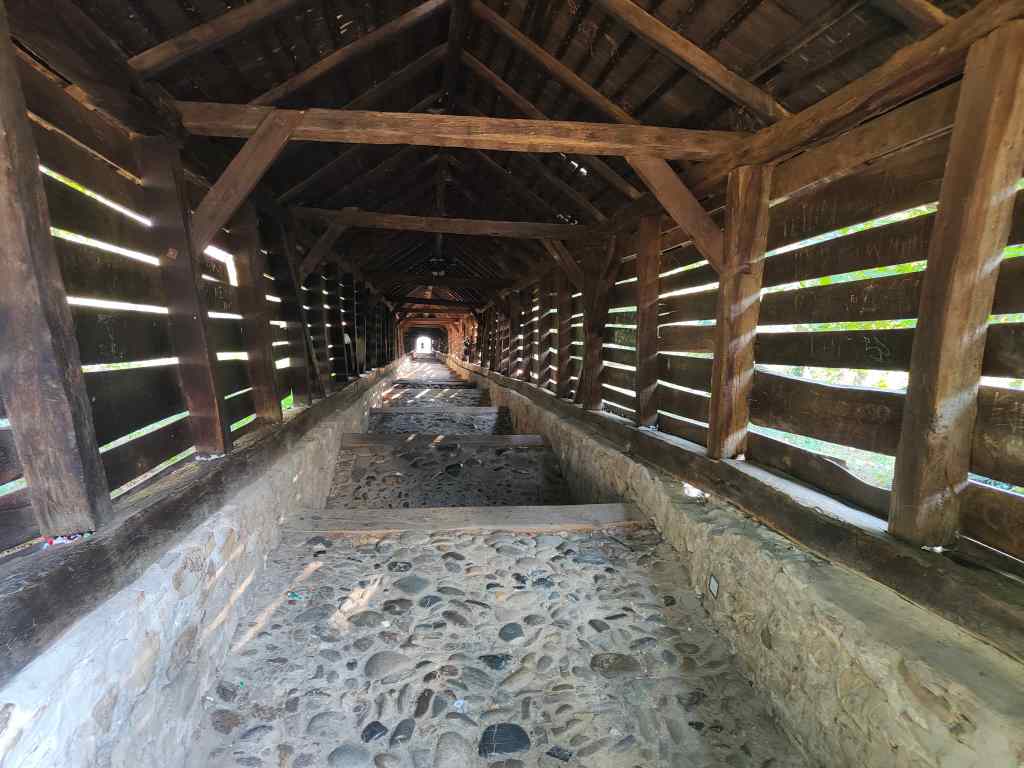
The school still functions to this day. I ended my tour at the central square, where, of course, I had coffee at one of the cafés.

It was time to move on. I checked out of my hotel and continued driving west. My first stop was yet another Saxon village, called Biertan, which of course had a fortified church.
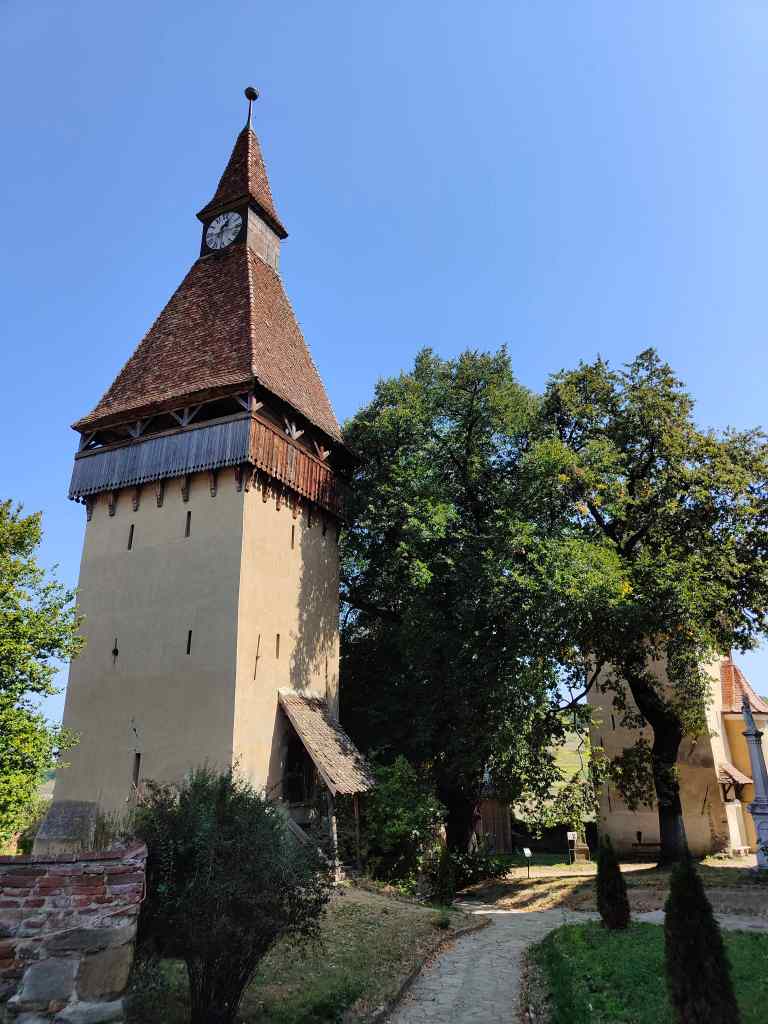
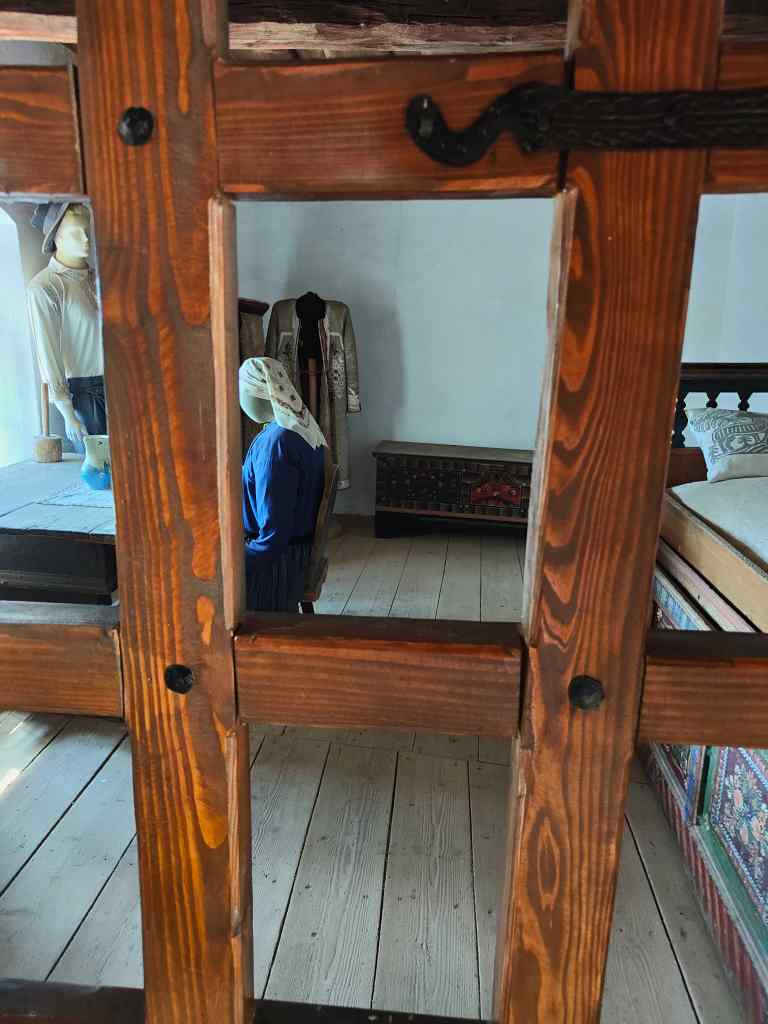
One original feature of the church was a prison for unhappy couples. The local priest kept squabbling spouses locked up there in a small room, until they resolved their differences.
From Biertan I drove to the city of Alba Iulia in the centre of Romania. This had been the largest Roman settlement in the Dacian province of their empire, and housed an important fort, some of whose ruins are still visible. Centuries later, the city was a major hub of the eastern part of the Austro-Hungarian empire, whose rulers built the impressive citadel that is the main tourist attraction of today.

Later, churches and monuments were added inside the defensive walls. At the end of the first world war, the citadel was where the union of Transylvania with the rest of Romania was signed, creating the modern-day Romanian state, and a few years later in 1922 Ferdinand and Maria were crowned here as king and queen of all Romania in the newly constructed Coronation Cathedral.
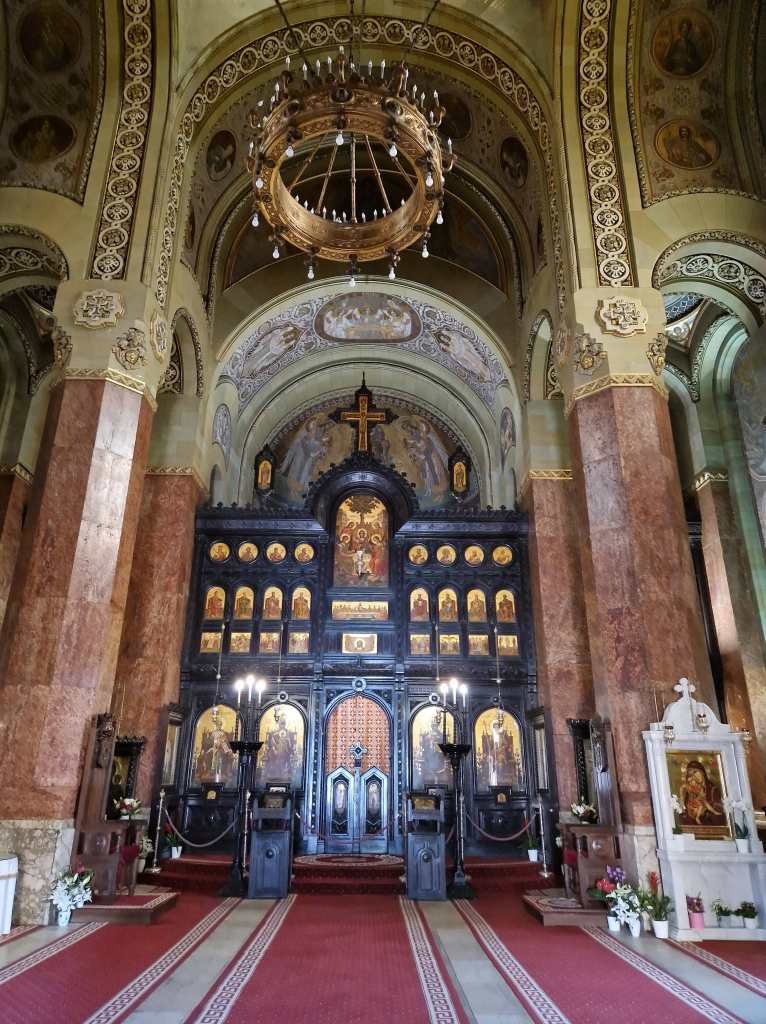
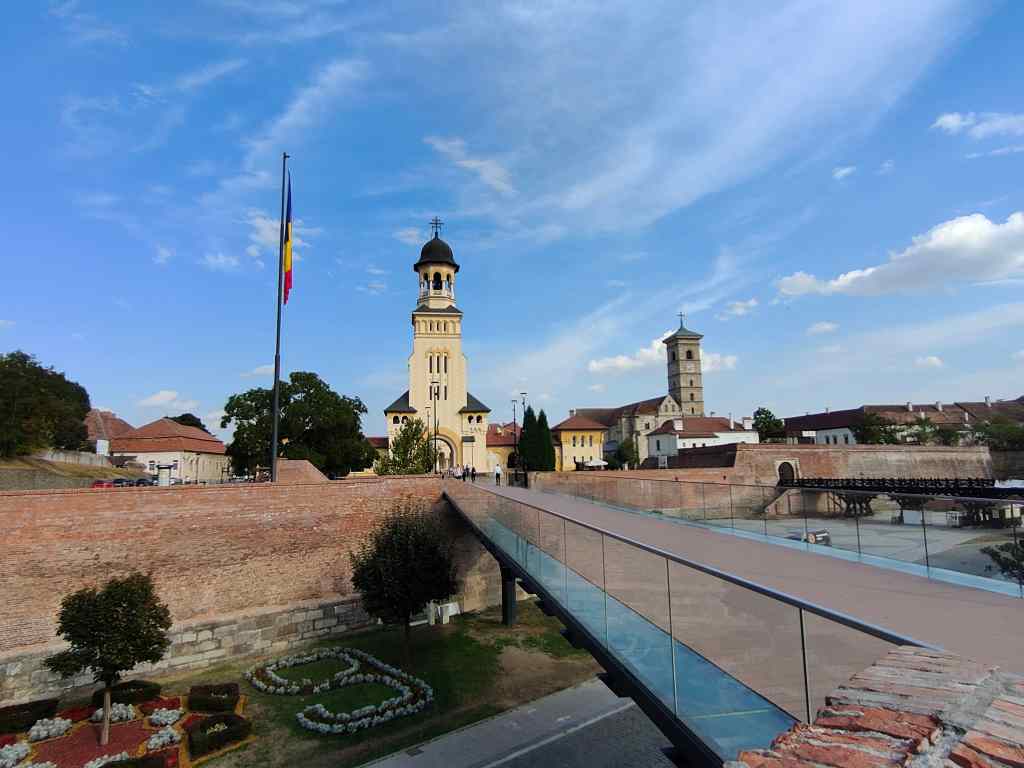
I found Alba Iulia to be a pleasant change to visiting Transylvania’s charming Saxon villages and towns, and to be well worth the ninety minutes detour to get there. My next destination was yet another former Saxon stronghold, the city of Sibiu – to be covered in tomorrow’s blog.
Next Post: Sibiu, the Transfagarsan…and Wild Bears!
Previous Post: Transylvania – Bears and Churches!
 Trouspinet travels
Hello Trouspinet, I am very impressed by Romania and wonder why it is not more advertised. The towns are really pittoresque. I really feel like going and visit the place. Thank you for sharing. Pascale
LikeLike
Hi, yes I would recommend Romania. Remarkably easy to get around, good food and wine. Go in early September – cooler and fewer local tourists.
LikeLike