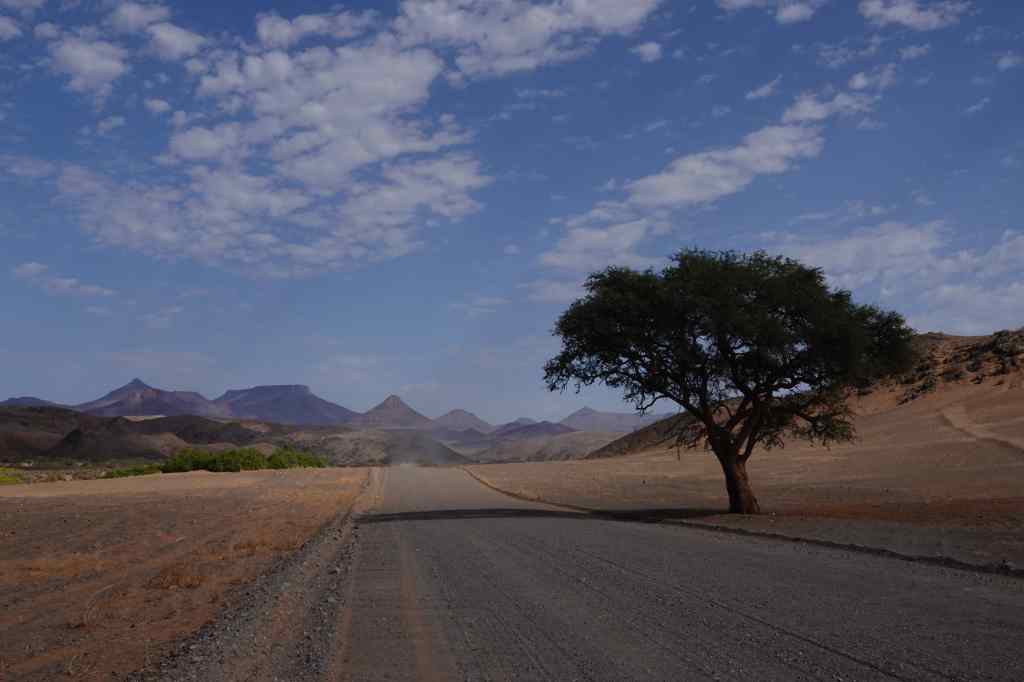
Today I set off on a long drive, from Twyfelfontein to Swakopmund, which is Namibia’s fifth biggest city (albeit with a population of only 25,000) and located on the coast, roughly half way down the country. To get there I was going to fulfill a childhood dream. When I was a young bear cub, my parents gave me a book about remote places in the world, and I was captivated by one of the them – the Skeleton Coast. The name was so evocative, and the book showed pictures of rolling dunes and wrecked ships, which were victims of the coast’s treacherous currents and dense fogs. Today, the Skeleton Coast is a national park and was rated highly by both my guidebooks. I set off with high expectations. At first, the road passed through some pretty Damaraland mountain scenery.

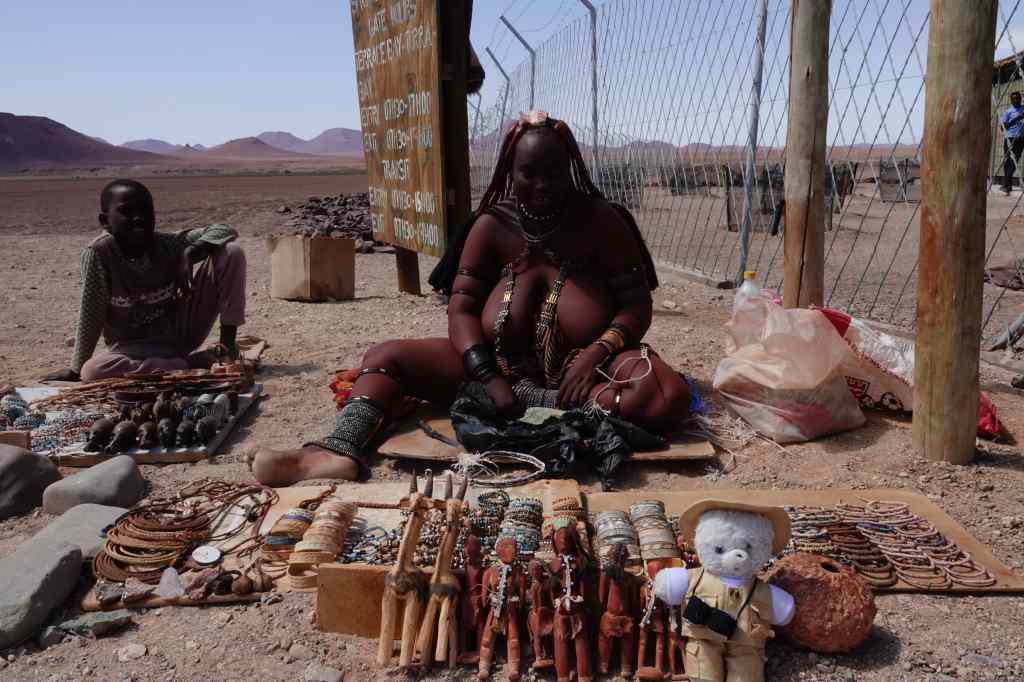
Then it became flat, and headed like an arrow to the coast. I reached the gates of the park at around 11am, and met this striking tribeswoman, who was selling jewellery for the few tourists that passed – in the register of visitors for the day, I was number 3.
Then I headed into the park for a huge disappointment. The road was flat, and almost featureless. At first, the sea was at out sight, hidden behind some low sand dunes. It wild and desolate, but in a negative nihilistic way and not at all what I had expected.
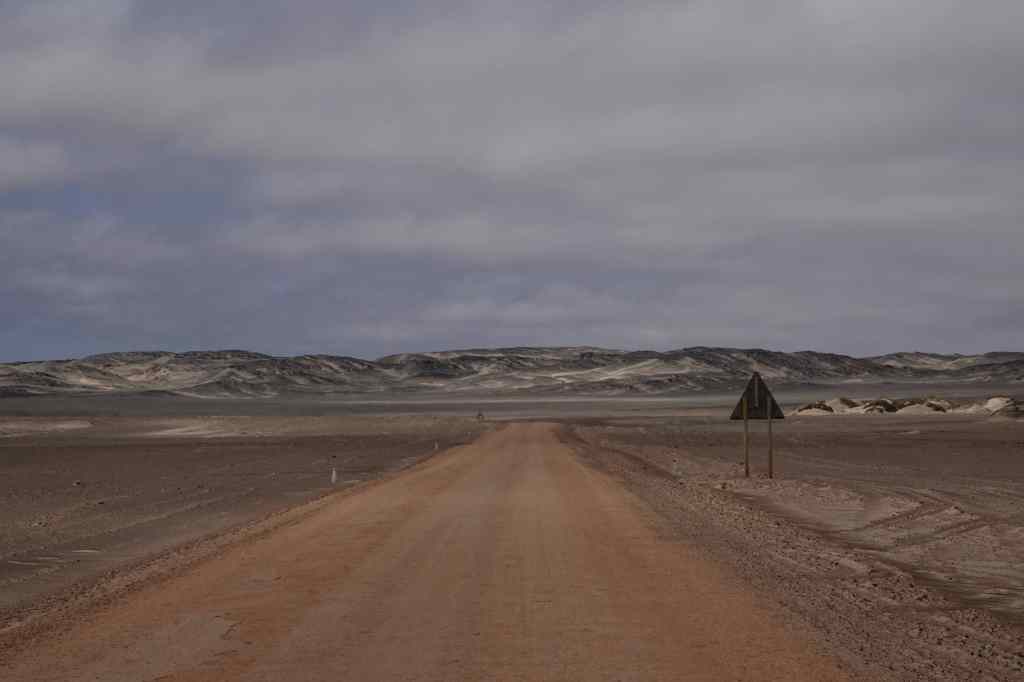
The insurance policy for my car limited my speed on gravel roads to a pedestrian 70 km/h, which made the miles pass very slowly. I tried to find music on my phone to match the utter emptiness of the place, and ended up playing Shostakovich string quartets. After an hour and a half, I saw a sign lying in the sand showing the location of a wreck, so I made a short detour and found the remains of a small fishing boat, which was being slowly buried by sand and dissolved by the salt water of the sea. Nearby was a huge bone from a dead whale, and three corpses of dead seals. It summed up the Skeleton Coast that this was recommended by the guidebook as a highlight and a nice place for a picnic.
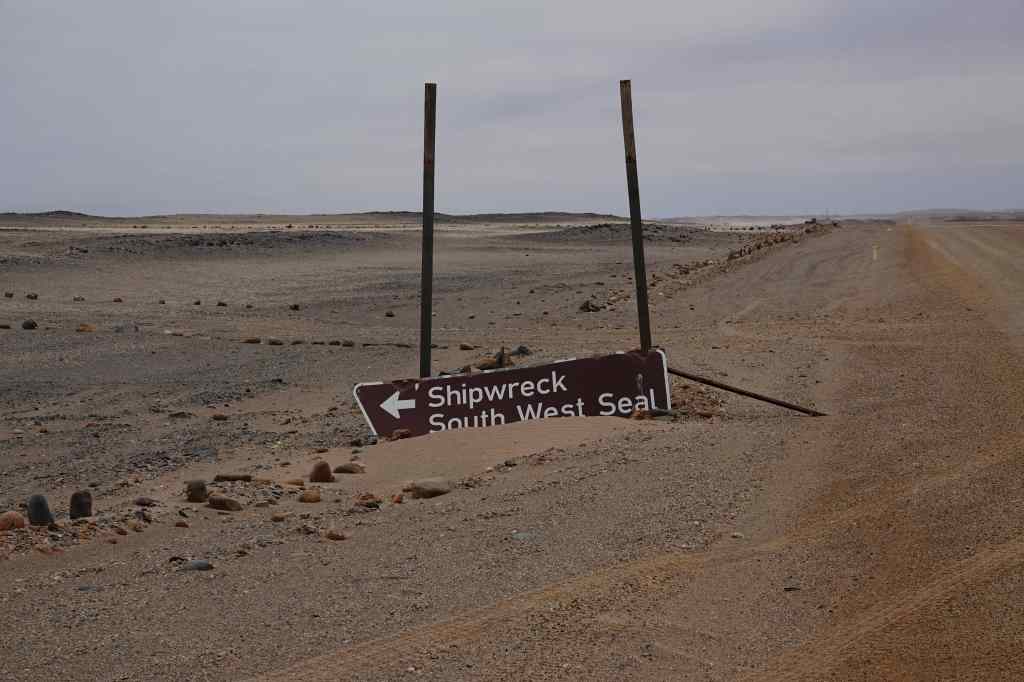
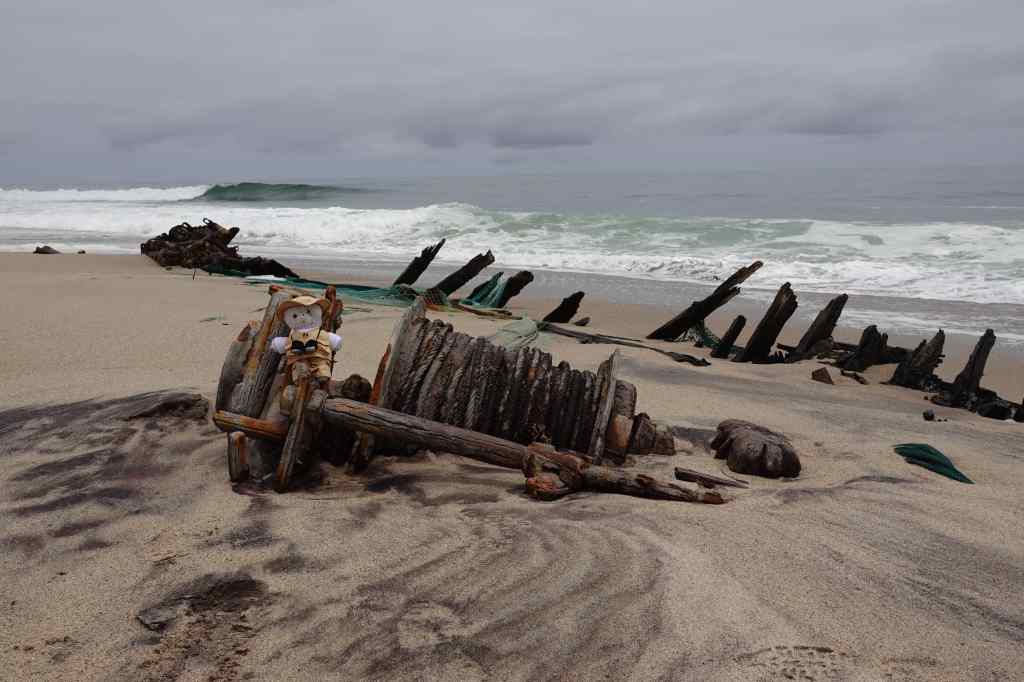
In another half an hour I reached the gates at the other end of the park. In the entire two hours I had spent there, I had seen only five living things other than plants – four vultures (who were yet to find the dead seals) and one seagull.
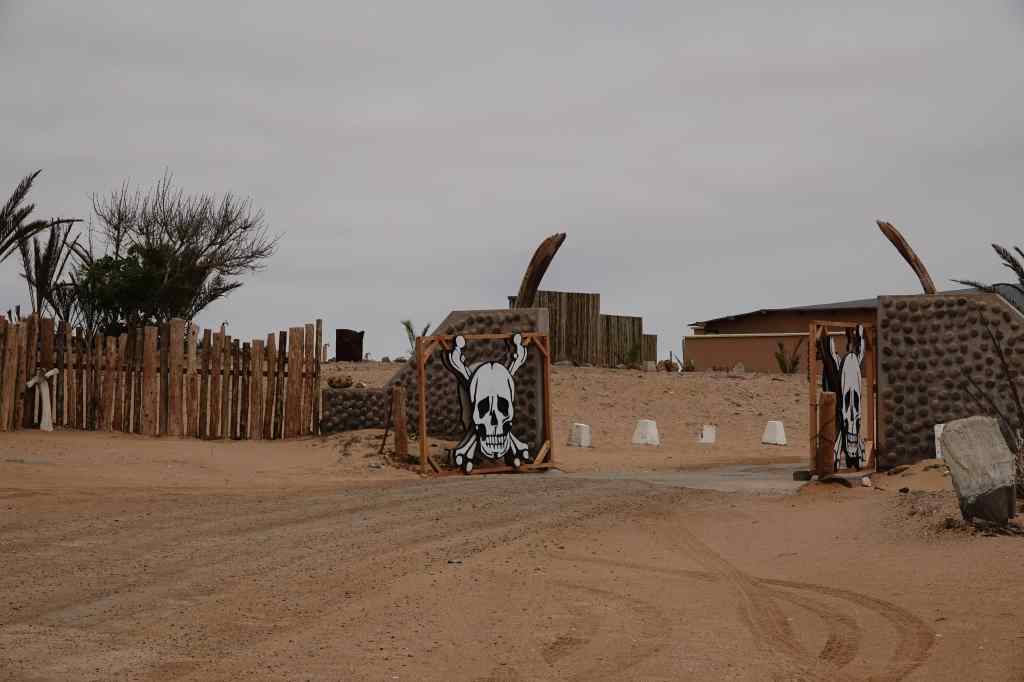
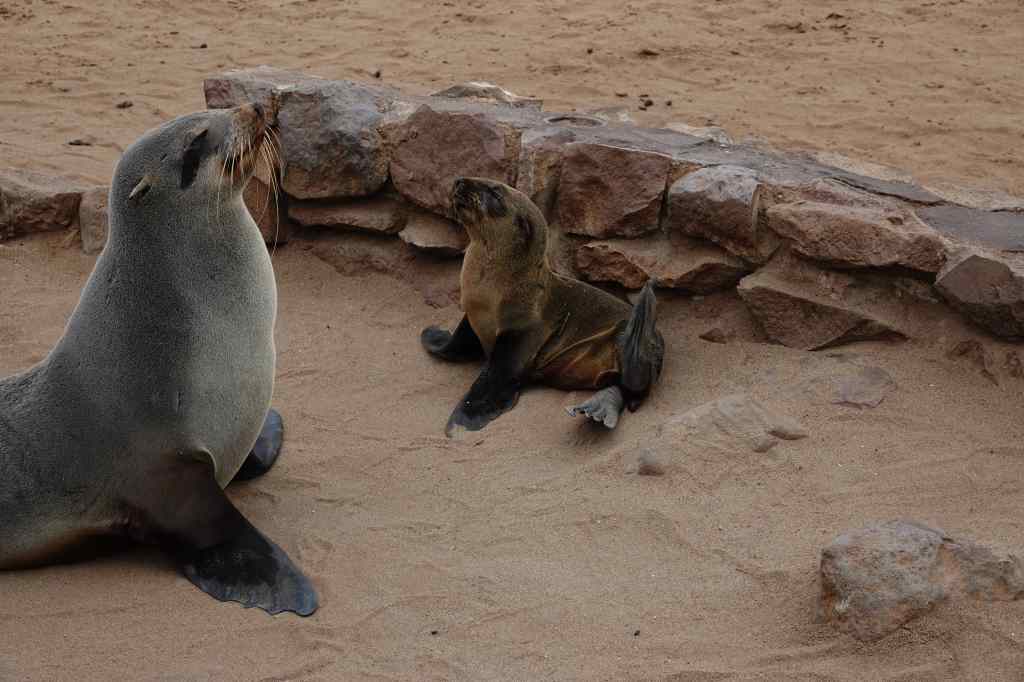
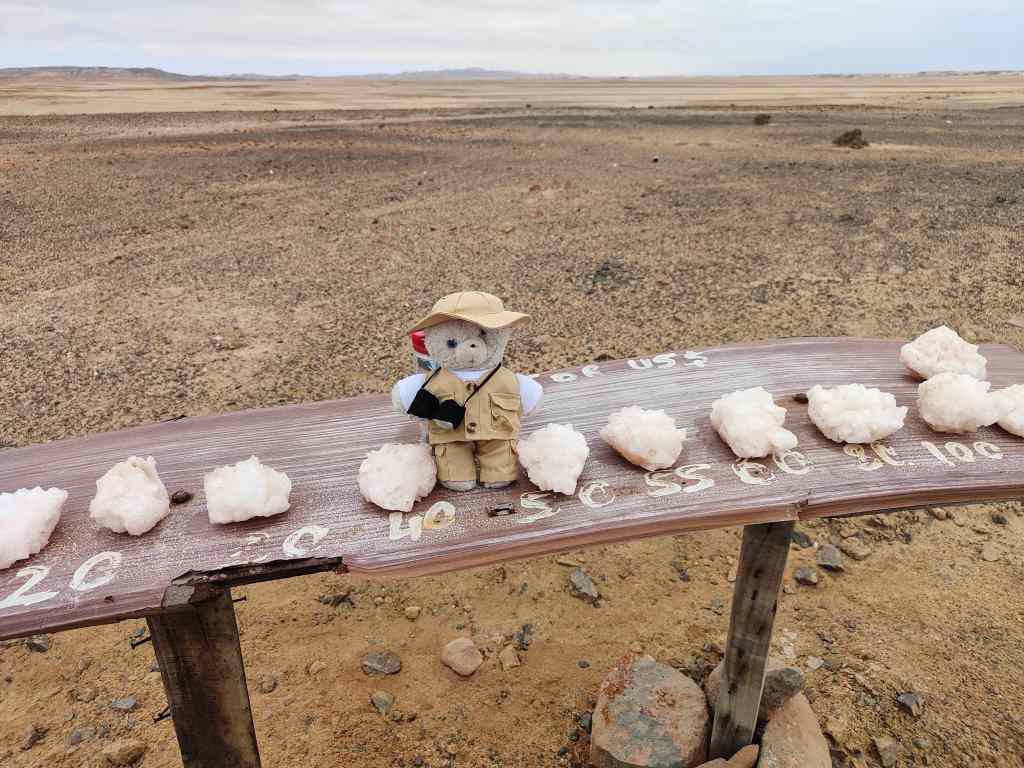
With a sense of relief and disappointment I drove through to different national park, the Dorob. If anything this was even more featureless than the Skeleton Coast – a flat salt plane. But at least it had a salt road rather than a gravel road, meaning I could drive faster. It also had some wildlife – the colony of seals at Cape Cross, which I reached via a side road after a short stop to buy some impressively bulky salt crystals.
The Cape Cross seal colony was impressive – hundreds of seals lying on the sand or on rocks. There were also many dead animals, mostly pups, lying on the sand being pecked at by gulls. A wooden walkway took visitors around and over the colony; the narrow space under the walkway seemed to be a popular place for seals to rest. The noise – males fighting each other for females, or seals grunting in alarm as I was walked above them – was deafening. Even more overpowering was the stench, that covered the whole area. It resembled rotting fish, with maybe decaying flesh mixed in. I hurried to find the place on the walkway closest to the shore, reasoning that the air coming from the sea must be a bit more breathable. I stayed to take pictures until my nose and stomach insisted that it was time to leave to escape the putrid odour. On the photos, the seals look cute and pretty, but it is hard to convey how bad they smell.
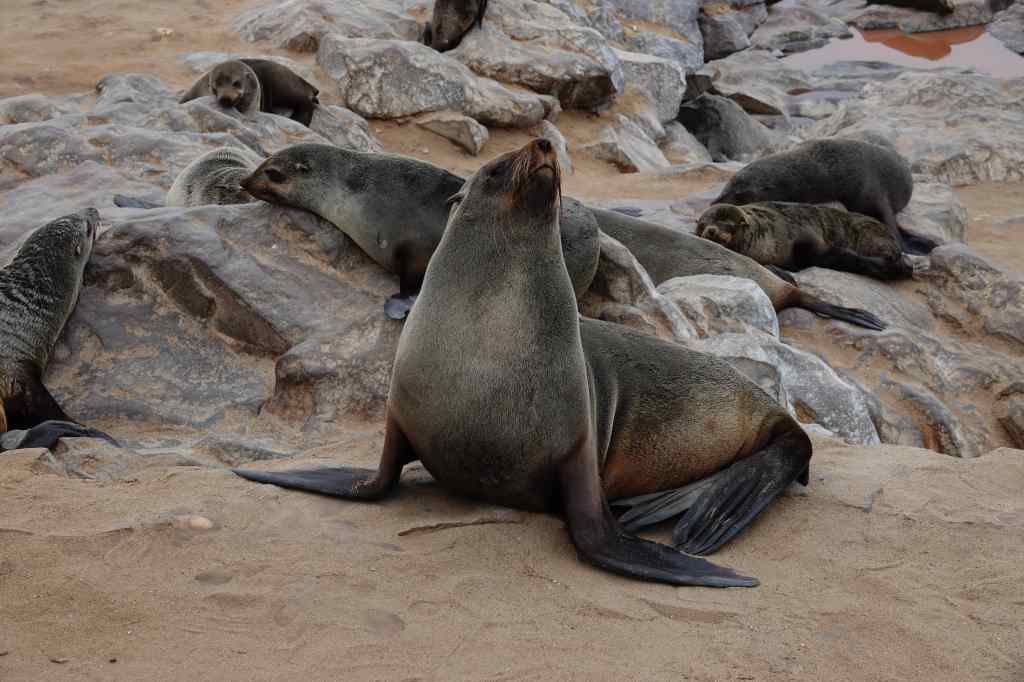
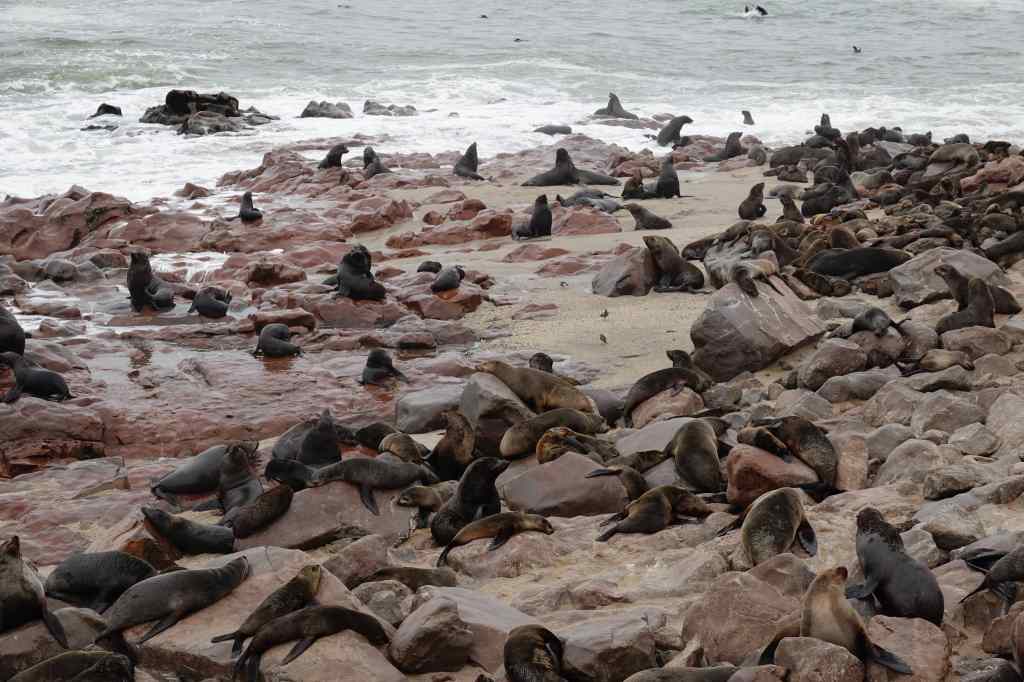
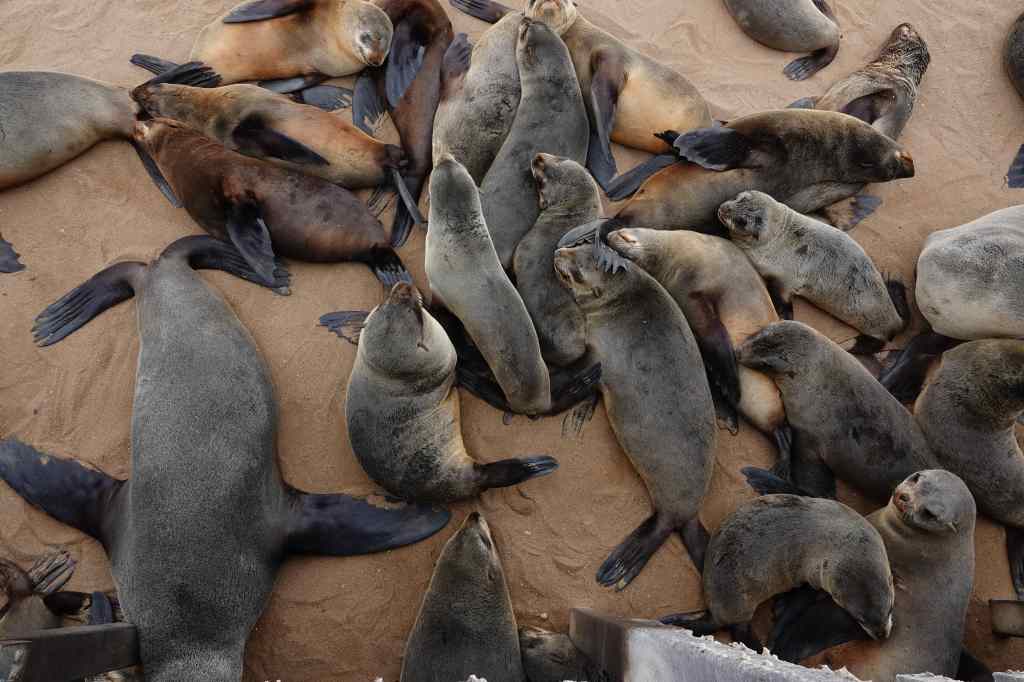
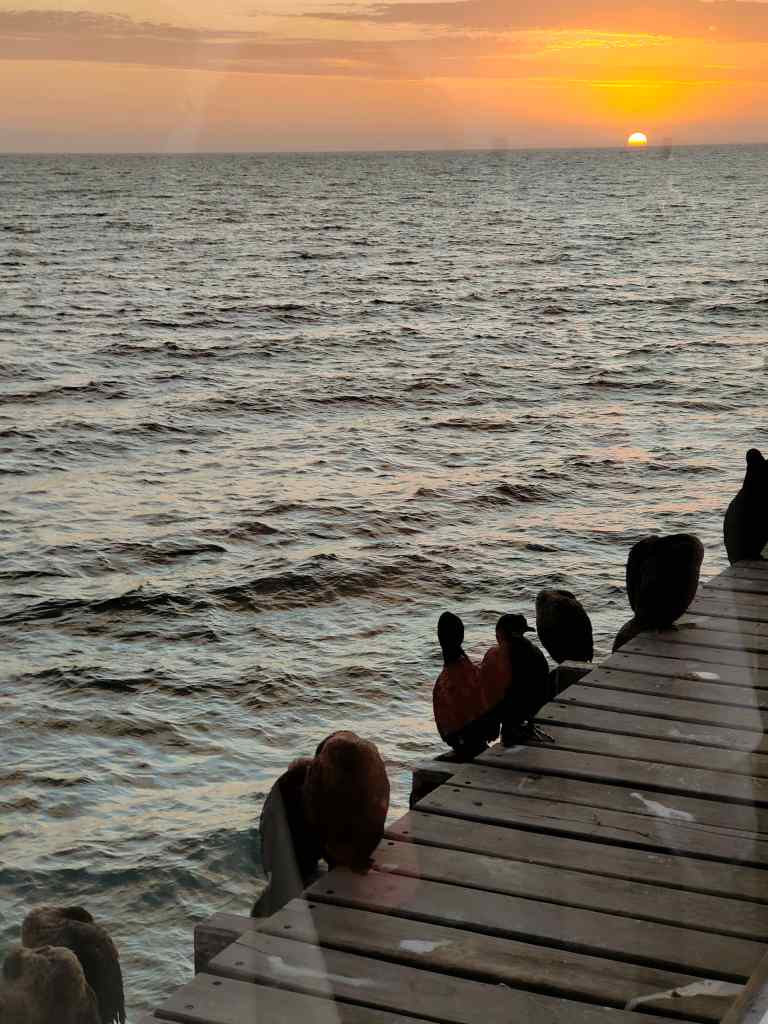
I regained my car and sped away, opening the windows wide to force the smell of the seals out of my clothes and fur. Soon I reached an asphalted road and could speed the remaining 100km/h to Swakopmund, where I just had time to check into my guest house before heading off for dinner. It had been a difficult day. The Skeleton Coast, which had so intrigued me in my childhood, had turned out to be a big disappointment. Going back to my guidebooks, I noticed that most of the photos shown were taken from the air – maybe the place is attractive from this perspective, but from ground level it was desolate and monotonous. I comforted myself with an excellent dinner in a fish restaurant located at the end of Swakopmund’s pier, in the company of a group of cormorants. It was nice to the have the company of living things that did not smell bad.
Next post: Swakopmund and Sandwich Harbour
Previous Post: Twyfelfontein
 Trouspinet travels
Thank you for your a lovely story.Sorry to hear the place a little bit to disappointment to you , but a also glad you had a lovely and deliceous dinner at a nice the restaurant.
LikeLike
Thanks Natalia!
LikeLike
It was not as bad as you said, some views were pretty too.
Maybe you were tricked by your memories.
LikeLike