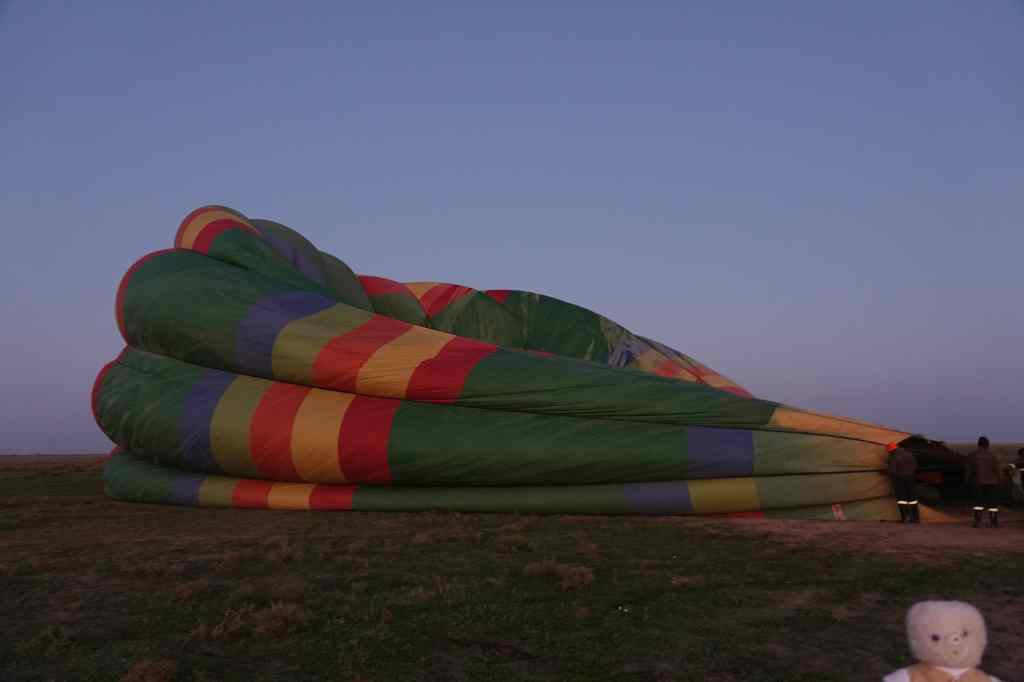
Today, even by the standards of our safari, we woke up unusually early for a 5.15 am departure. We drove through the night and arrived at a flat empty plain, where a group of Tanzanians was preparing a large hot air balloon. This was to be a new experience for us, and as the sky slowly got lighter in the east, we watched as the staff inspected the balloon’s fabric, and then started to fill it with hot air from a propane burner. The captain of our flight emerged to give us a safety briefing and assure us that he had been piloting balloons for twenty years without incident.
Checking our balloon
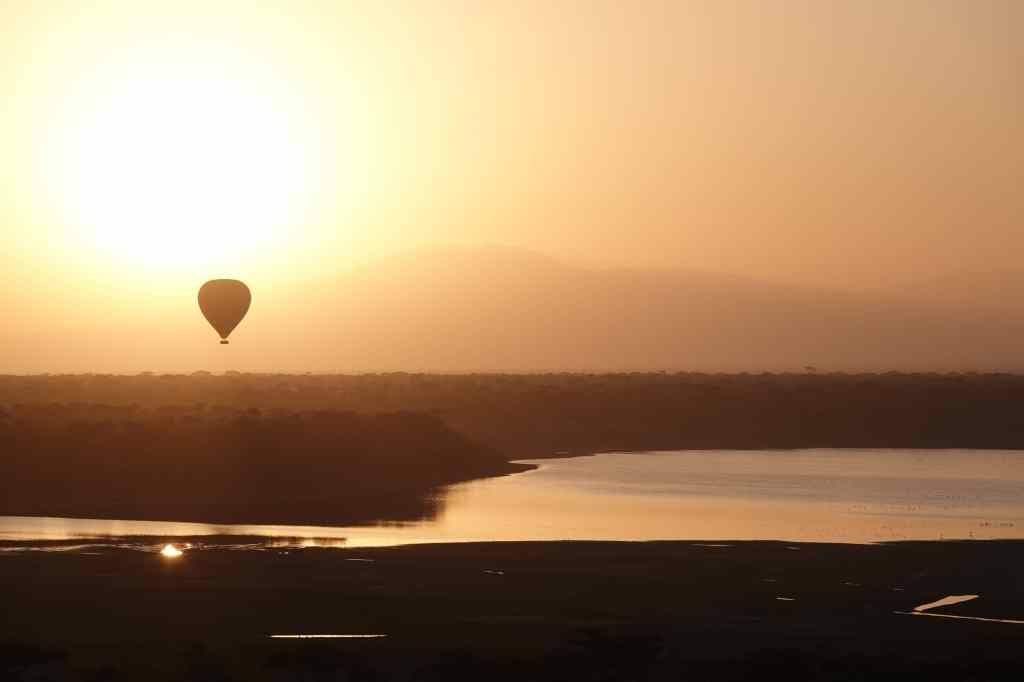
Just as the sun starting rising, we ready for take-off. Along with landing, this was the only slightly complicated part of the flight and involved us curling up at the bottom of the basket whilst balloon lifted slowly into the air. Soon our captain announced we could stand up and we were greeted by a magical sight of sunrise over the Serengeti plains, with the ground far below.
Sunrise from the air
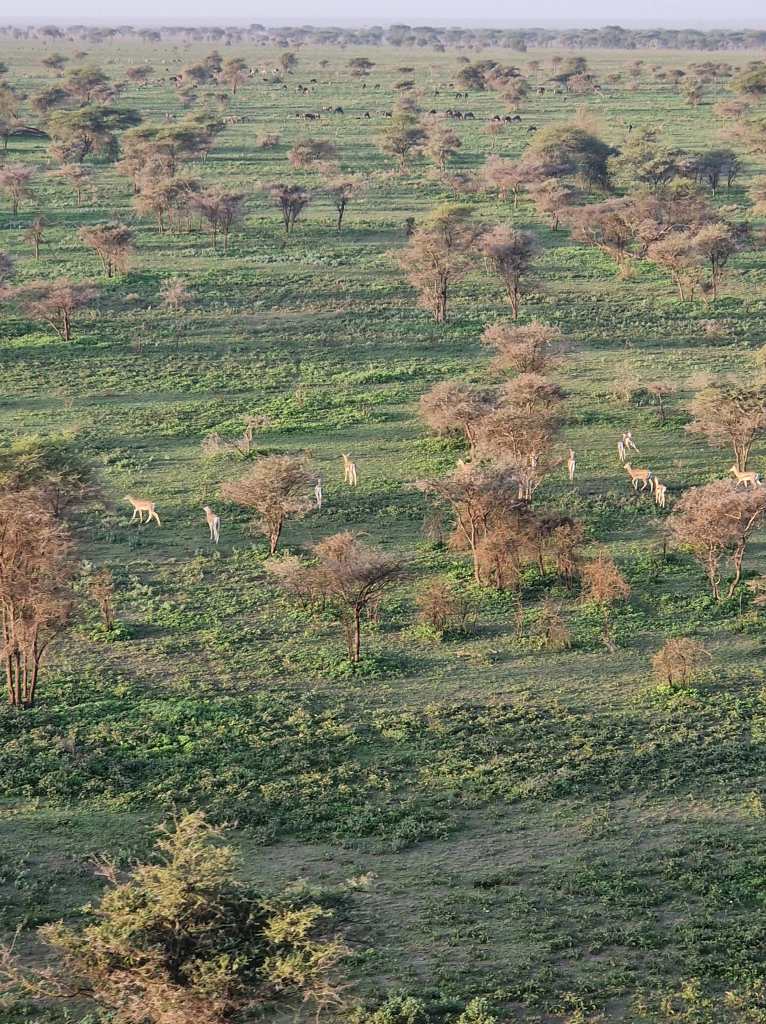
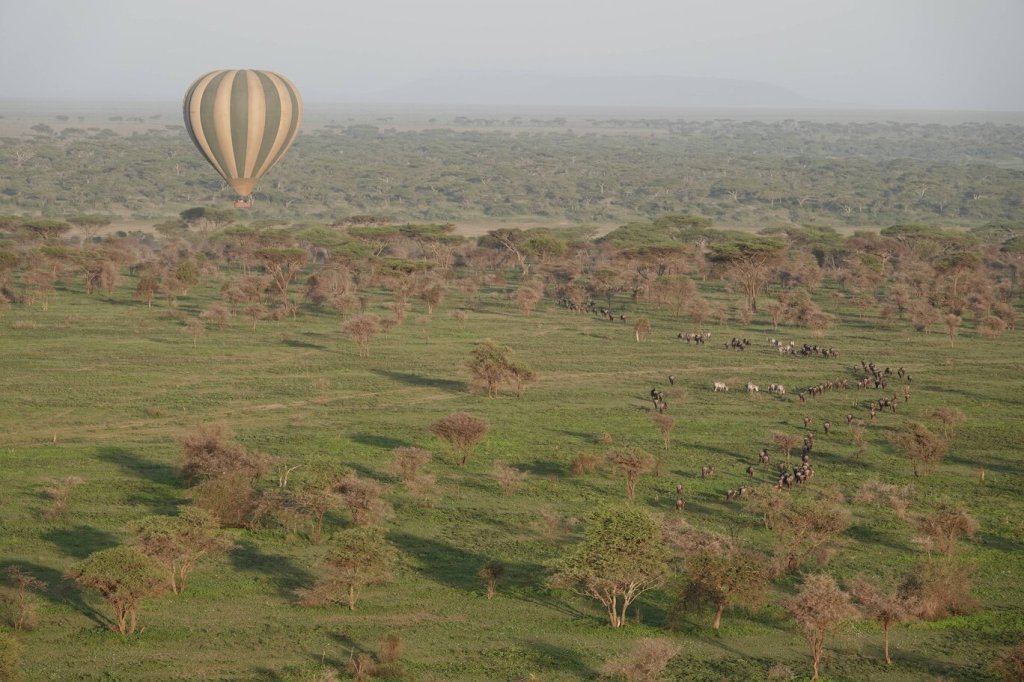
Our balloon drifted gently with the wind, sweeping over trees, herds of antelopes and giraffes. There was a wonderful silence, broken occasionally by the sound of some more gas been burnt to maintain our altitude, and the soft murmur of my fellow passengers as they admired the amazing sight. Although the Serengeti’s animals and birds are used to jeeps, they seemed scared by our balloon and hurried away as we approached them.
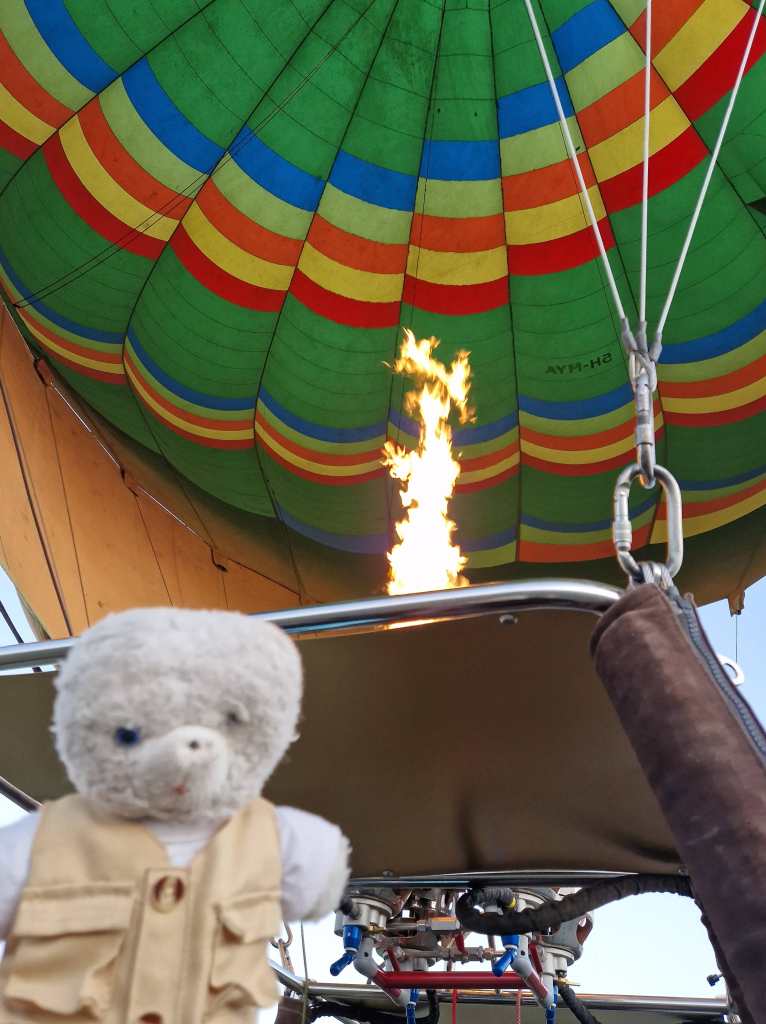
Looking down on antelopeKeeping afloat
We let our minds float with our balloon over the Serengeti plains, soaking in the experience and filming the animals below us.
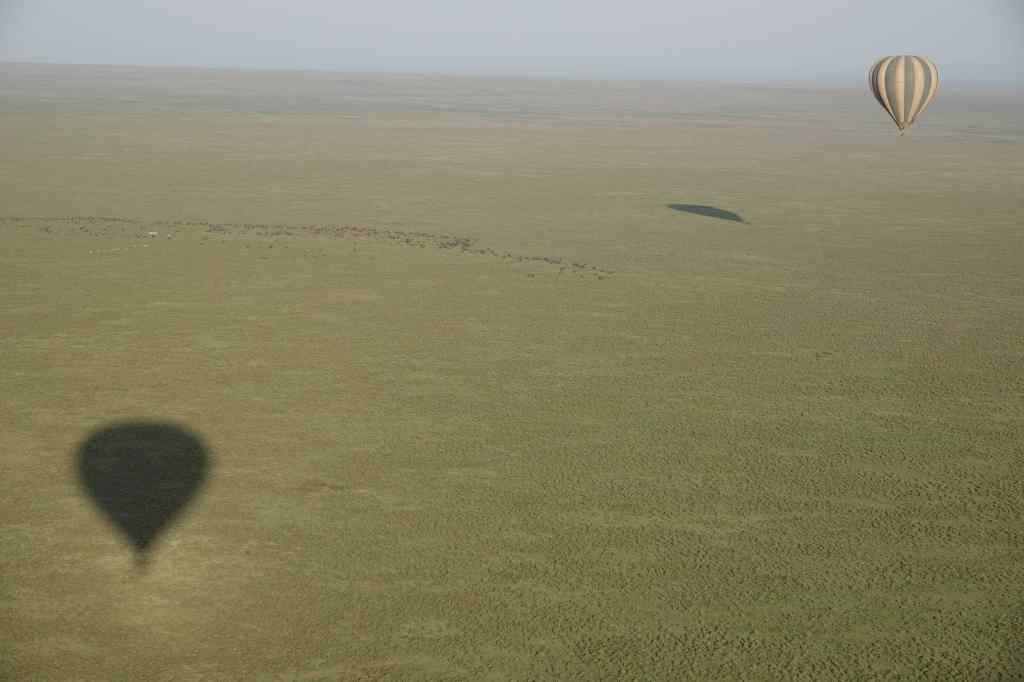
Our Balloon’s shadow on the plain
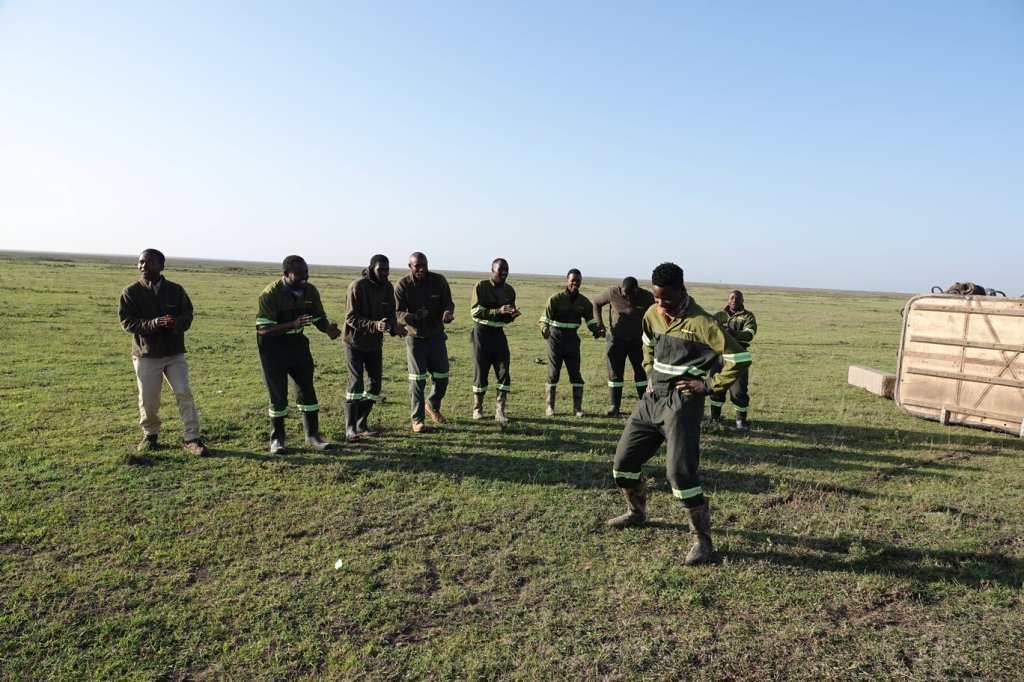
I was surprised when our pilot announced that we had been flying for over an hour and it was time to prepare for landing – it seemed that we had only just started. Too soon, we had to crouch back down in our basket and wait for out balloon to hit the ground with a series of bumps. Our successful flight was celebrated with fizzy wine accompanied by songs and dancing by the balloon’s support staff, who had been following us in jeeps as we flew.
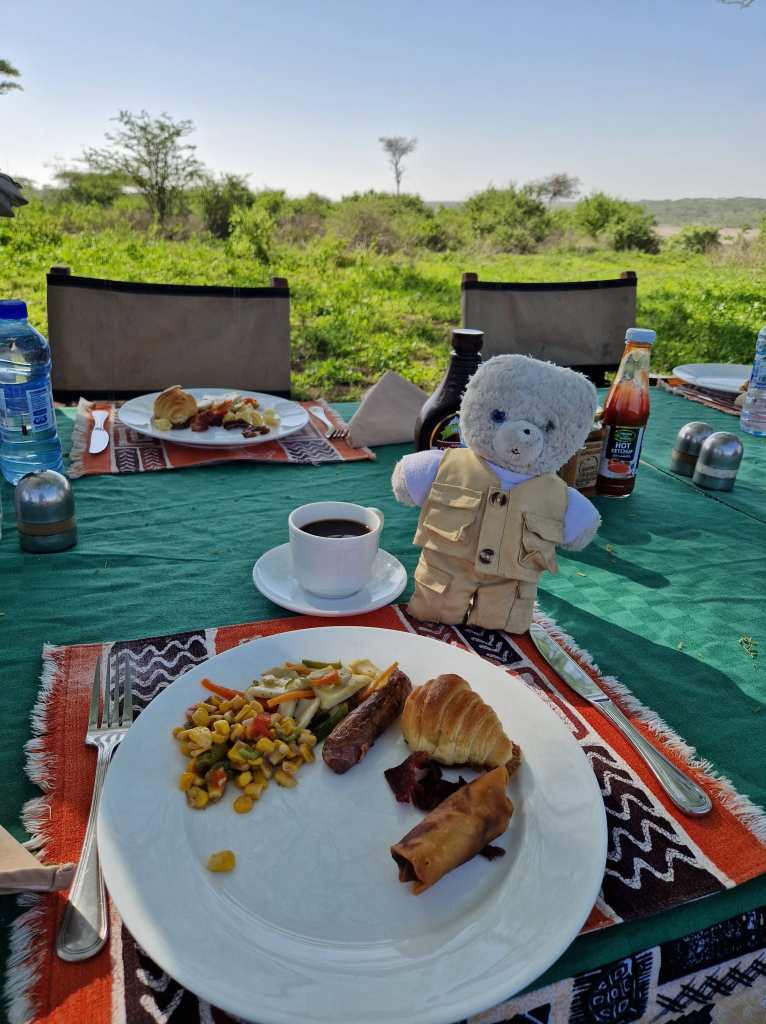
We then got back into a jeep and drove for about an hour back to a picnic area close to where we had started, for a copious outdoors breakfast. At around nine a.m. our balloon experience was over and we met up with our guide Estomih again in our own jeep.
Bush Breakfast
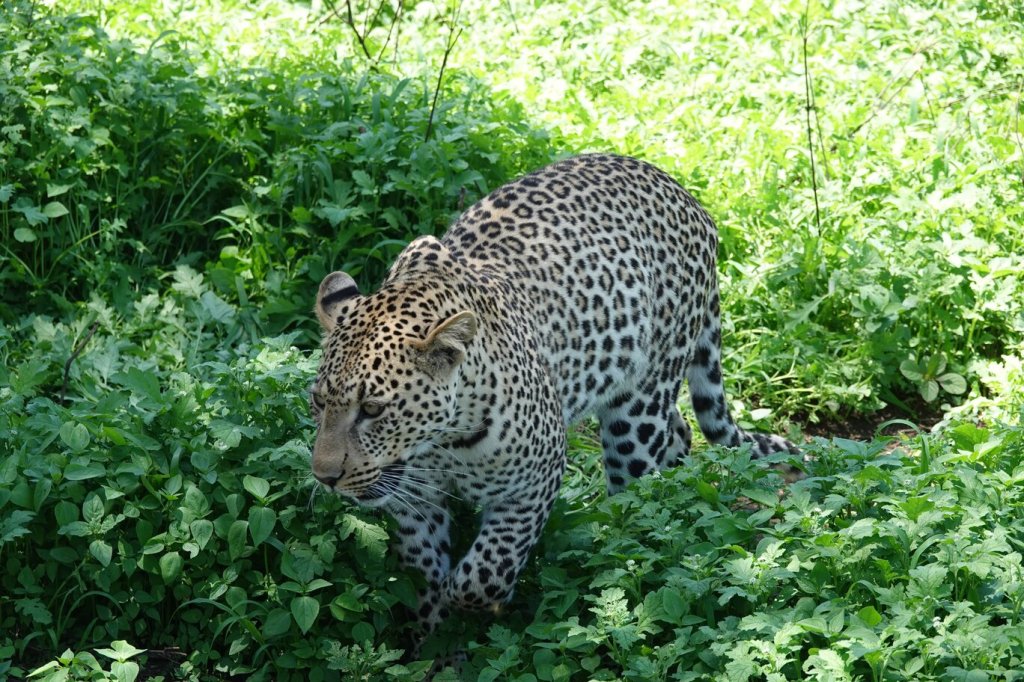
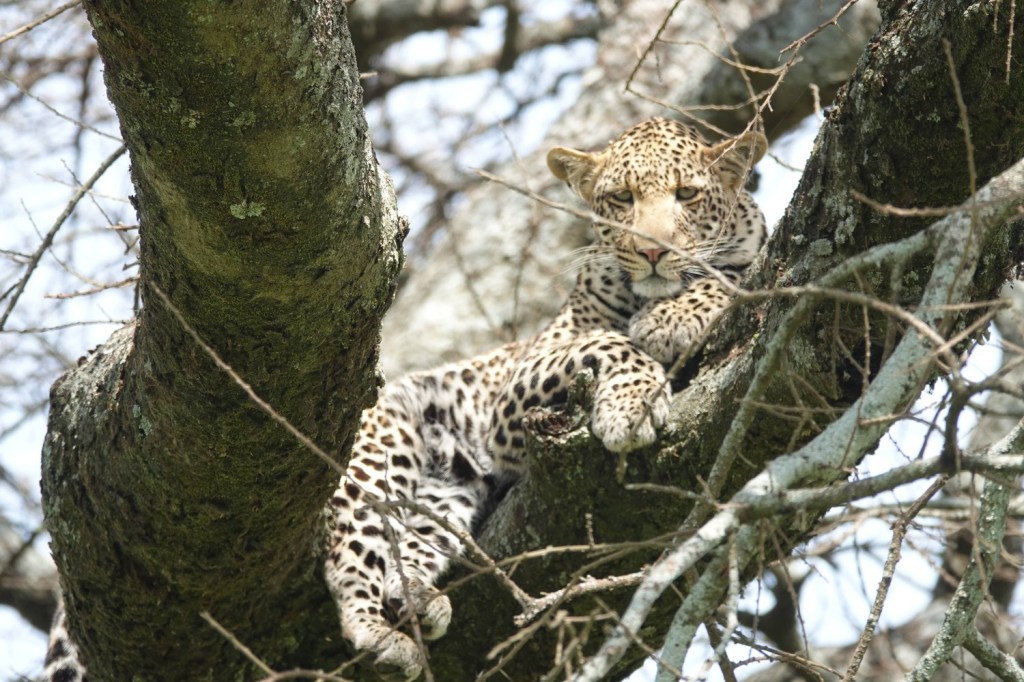
Amazingly we still had nearly a full day for a game drive, and to get yet more close up views of big cats, birds and herbivores. We got our closest yet view of a leopard, who started lying in the grass in front of us before climbing up a small tree…..
My best leopard photos yet!
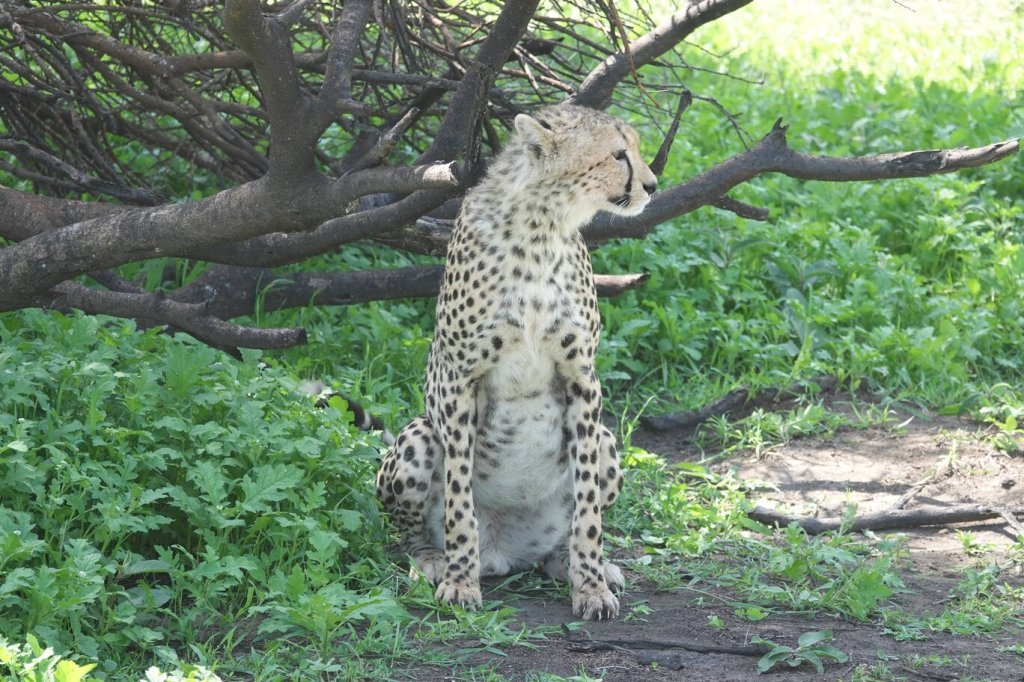
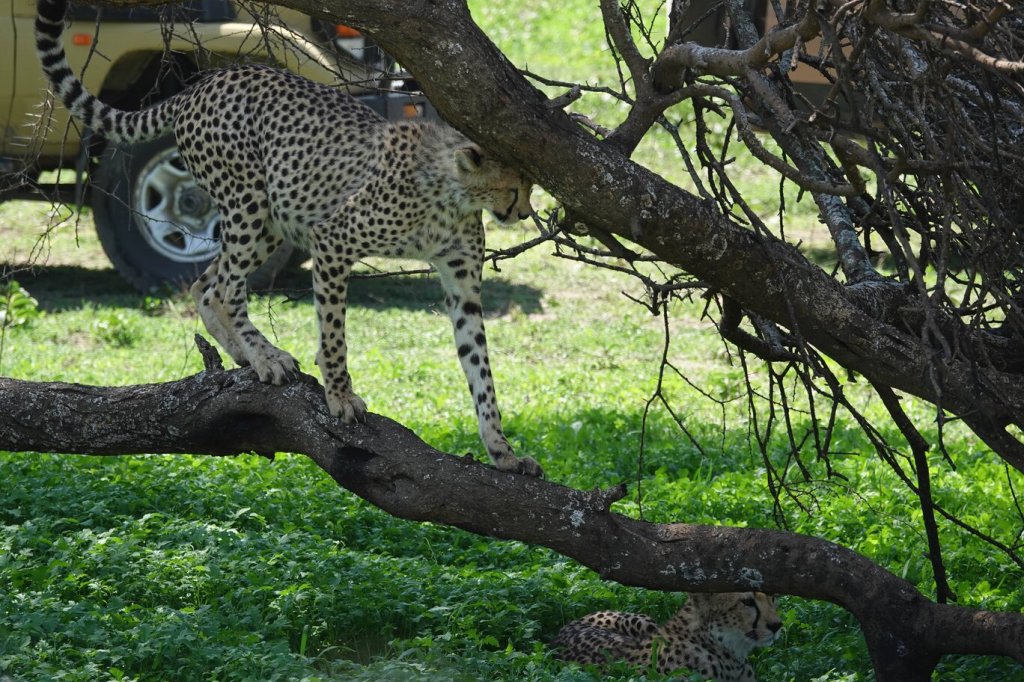
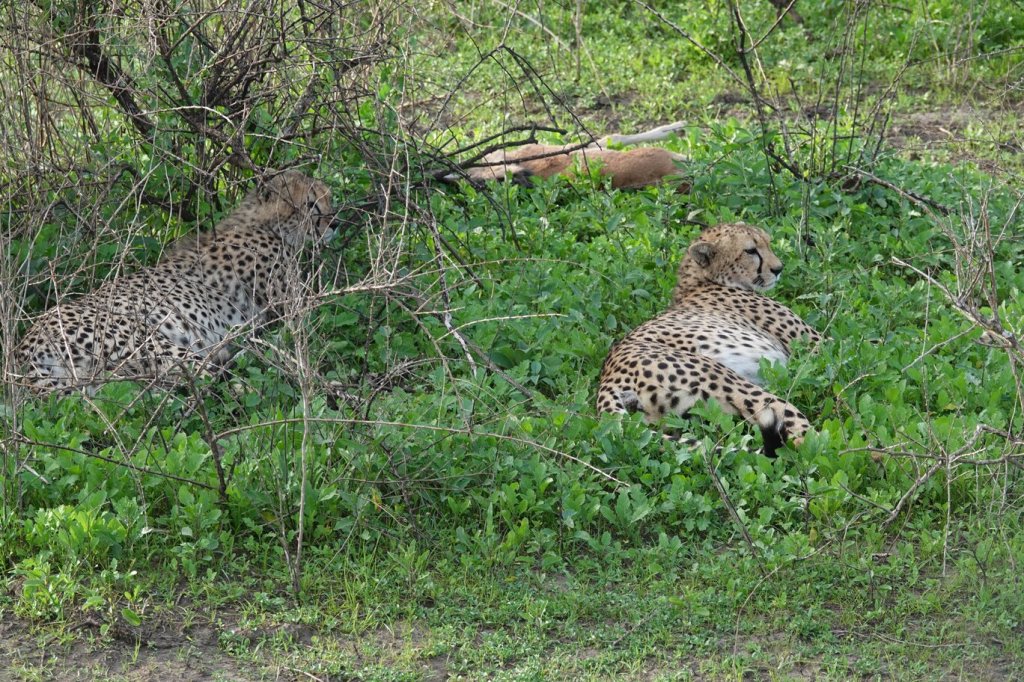
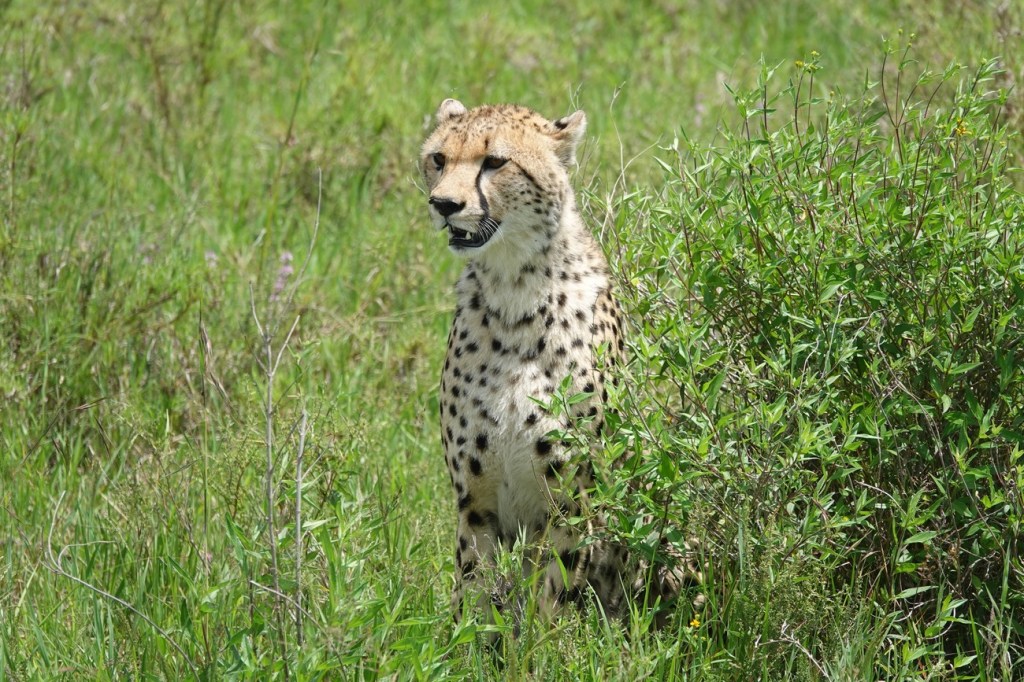
…..and then reconnected with the two cheetahs we had seen the day before.
We were not alone to admire these cheetahs, whose small shady bush had been surrounded by an array of tourist jeeps. We were travelling in the mid-season (January), and Estomih told us that in high season there would be twice as many vehicles. We don’t like crowds and were glad we had avoided this.
Reconnecting with two cheetahs…..
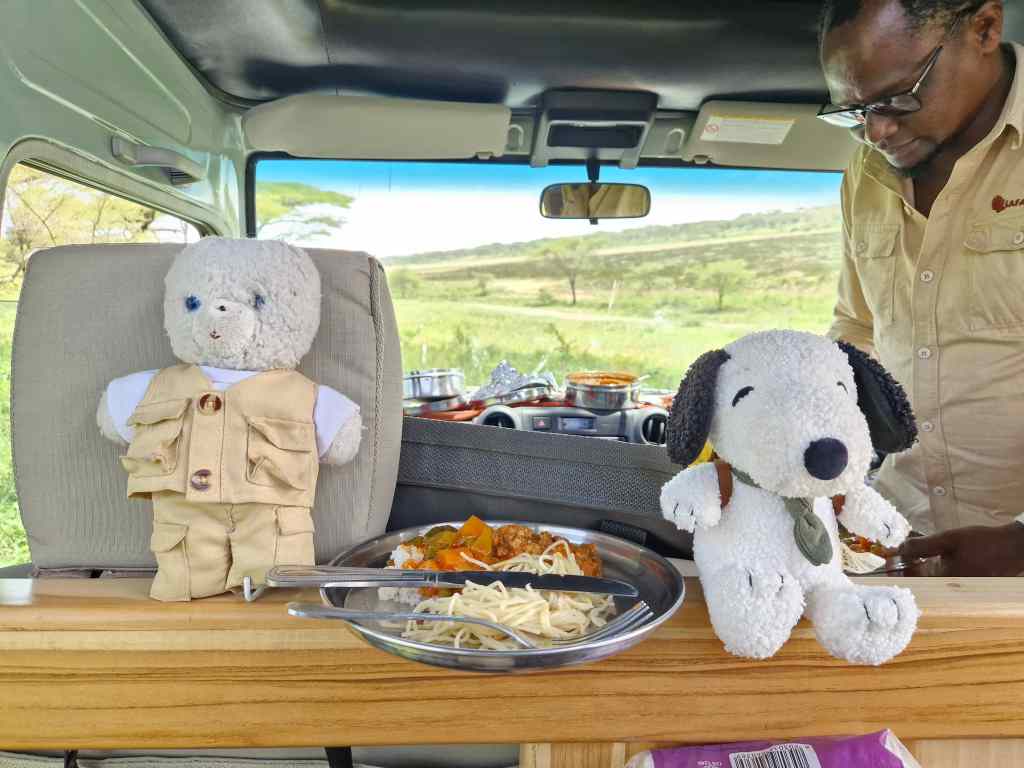
It was soon time for lunch, which we had inside our jeep for a change.
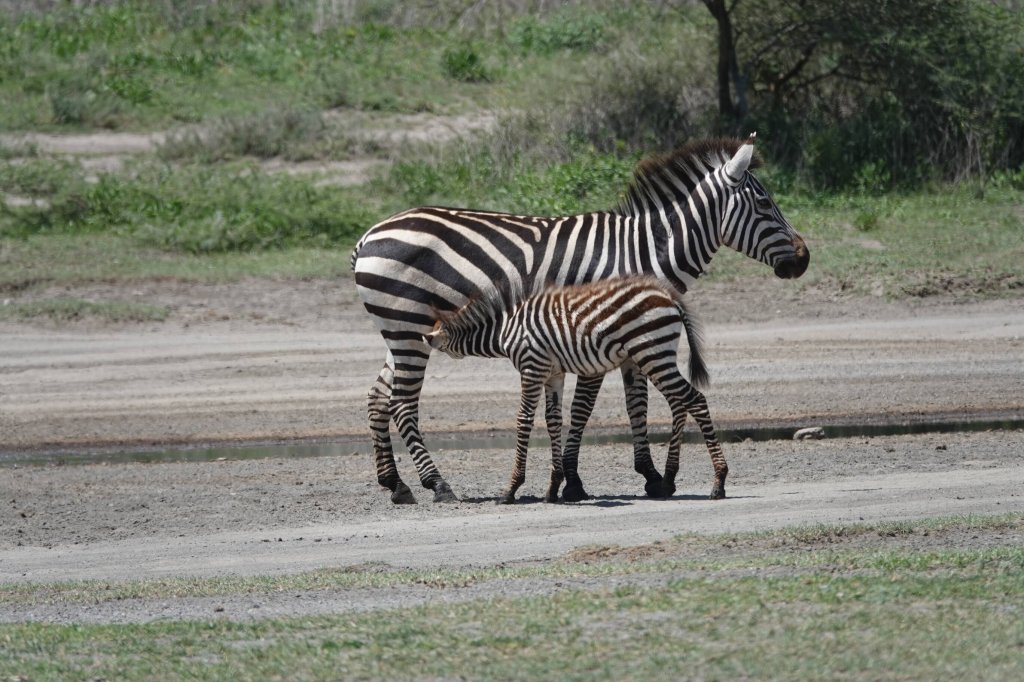
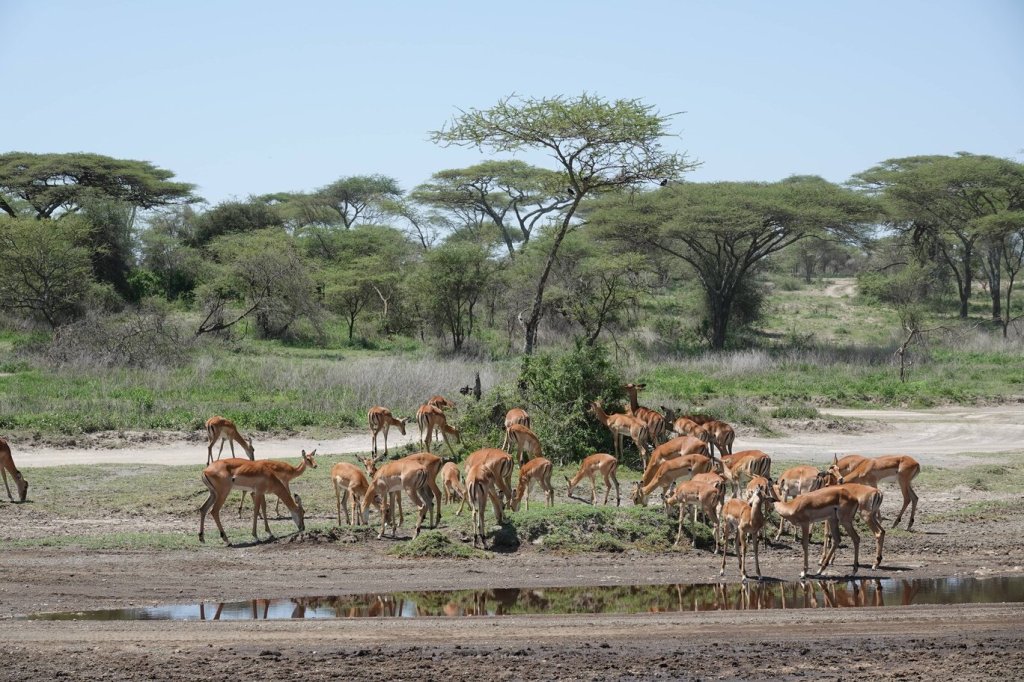
The afternoon’s game drive was quieter, with flamingos, impala, zebra, wildebeest and a few more lions.
Zebra with calfA herd of Impala
As the afternoon progressed, we became a bit tired after several long days and early starts, not to mention our big lunch and glass of Tanzanian wine! So we headed back to our camp to recharge our batteries after another memorable day.
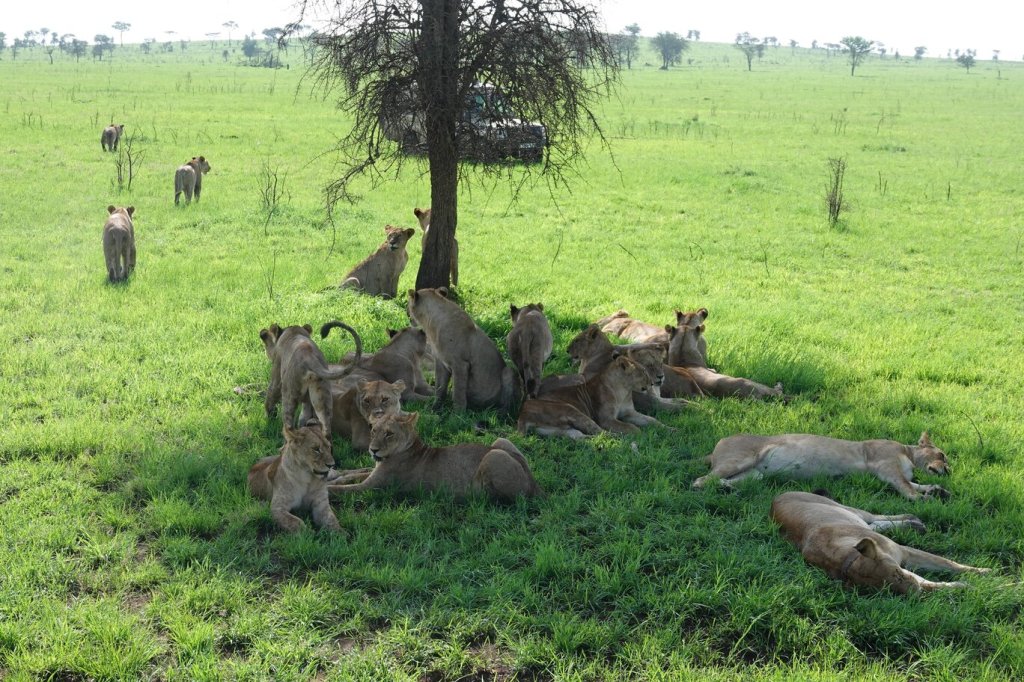
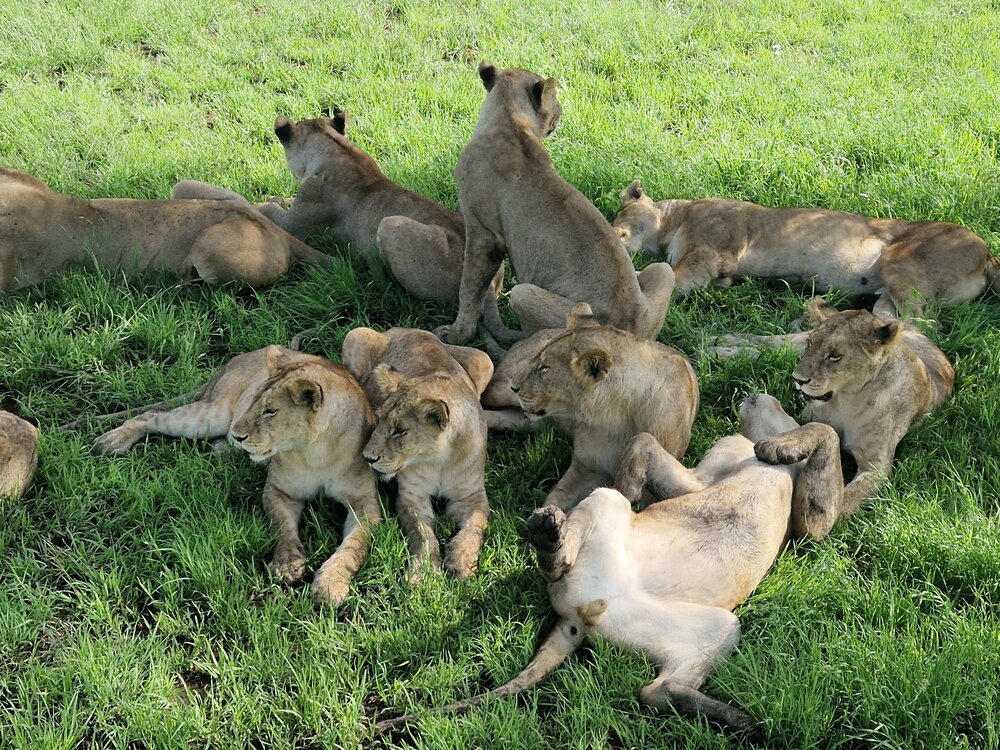
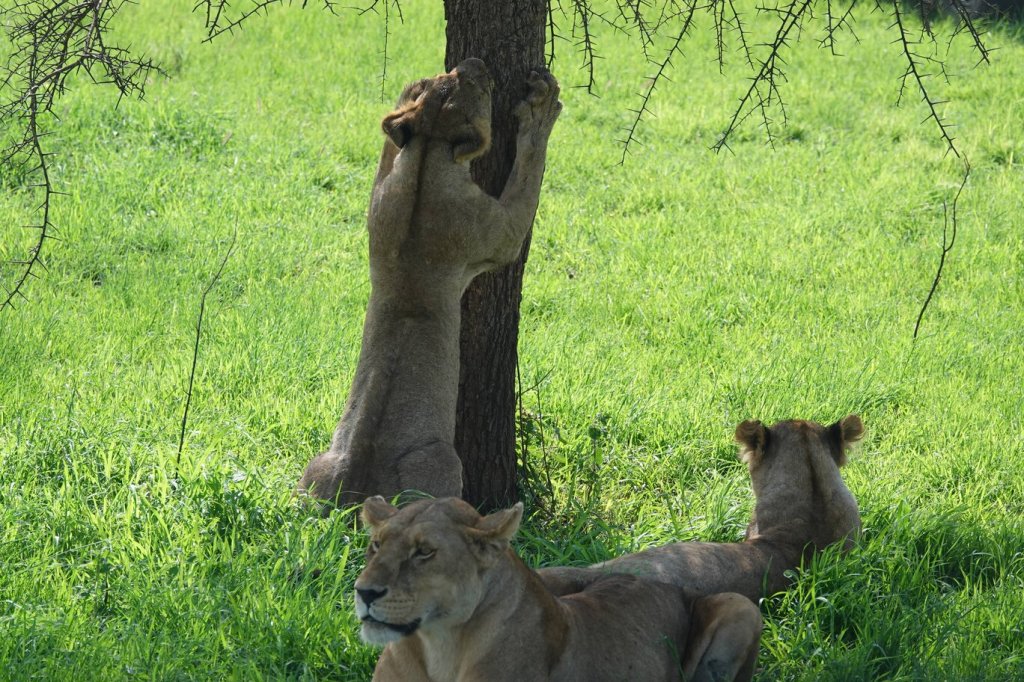
Today we were due to move from our camp in the centre of the Serengeti to one in the southern part of the park, enjoying a game drive along the way. Our day started well when we bumped into another superpride of lions. Initially we thought they were hunting some nearby buffalo, but instead they ambled along, inspecting our jeep and moving from one shady tree to the next.
Early morning lions finding shade under a tree……….and sharpening their claws
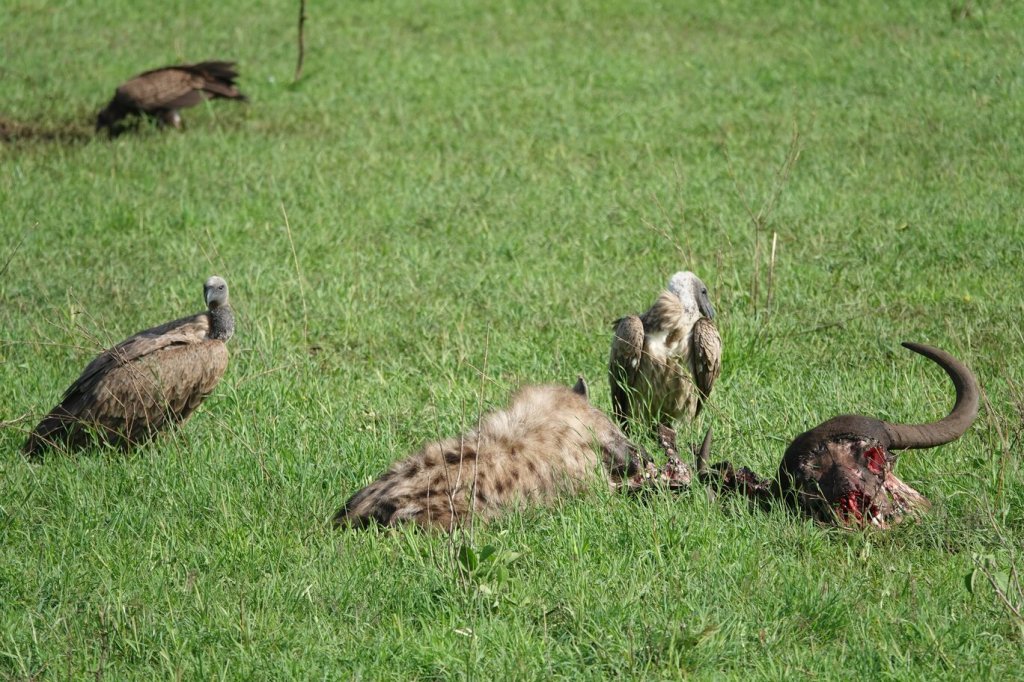
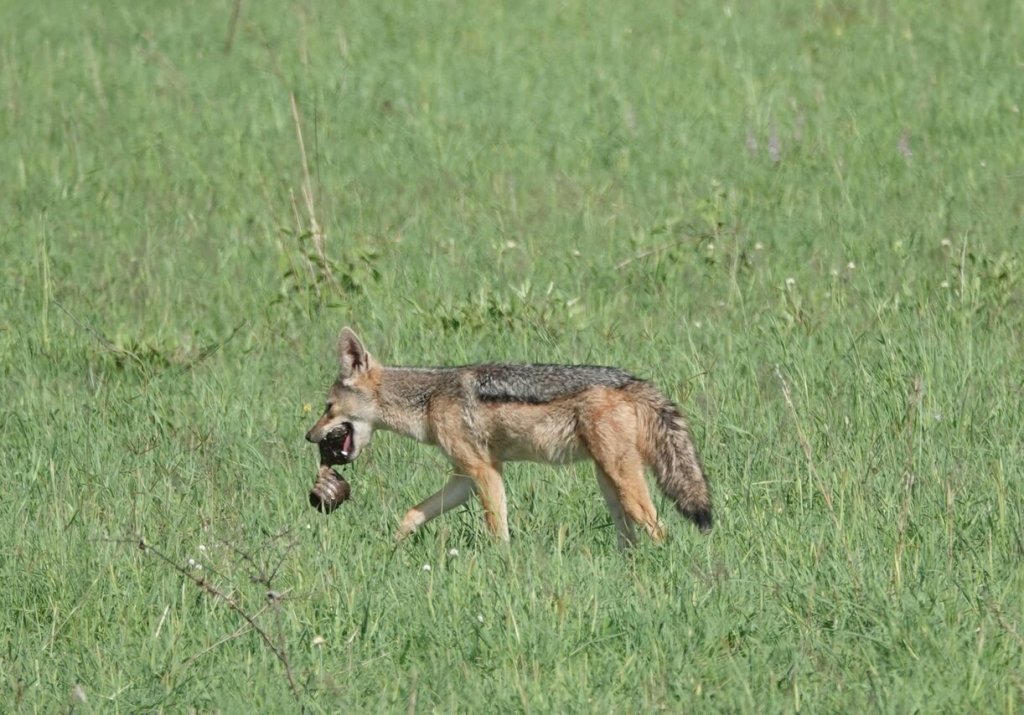
After this chance encounter we revisited the slain buffalo we had seen the previous day to see if the two lions were still there. It turned out that they had moved on, and been replaced by a couple of hyenas. All that was left of the poor buffalo was its skull – the hyenas have powerful jaws that can crush bones and will eat any part of any animal left over by more powerful predators. A couple of vultures waited patiently for the last hyena to finish, but we were not sure if anything would be left for them. Nearby a nimble jackal seemed to have managed to grab a bone from under the hyenas’ noses and was carrying it away to a safe distance to enjoy it.
All that was left of the poor buffaloA jackal escapes with a bone
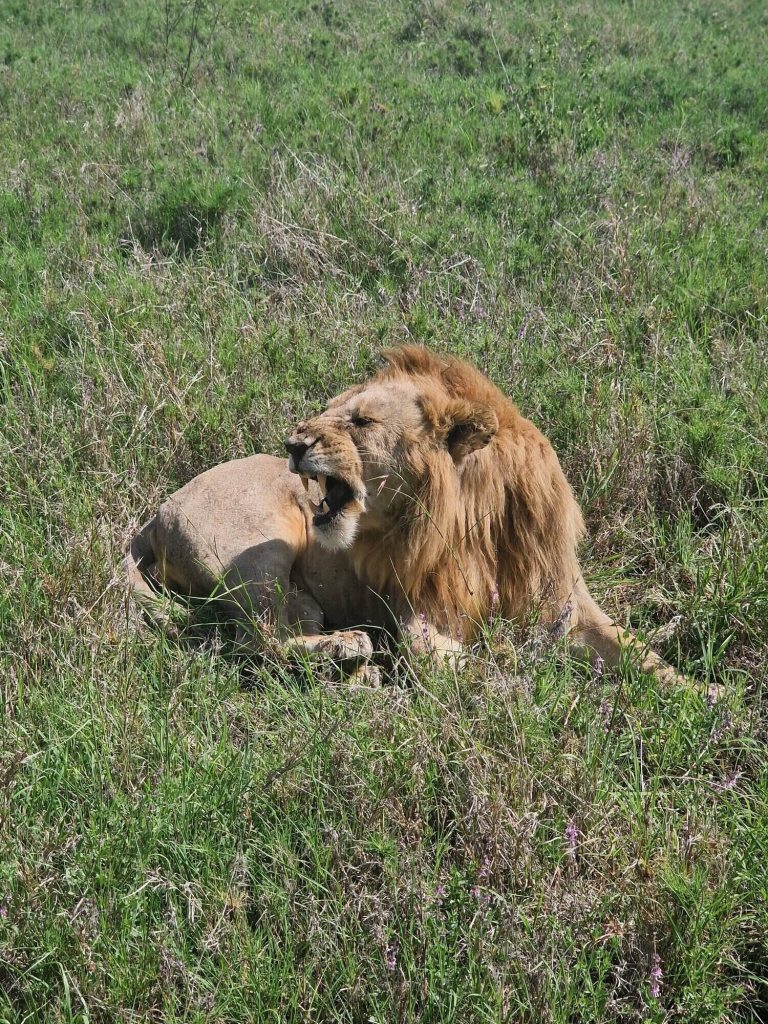
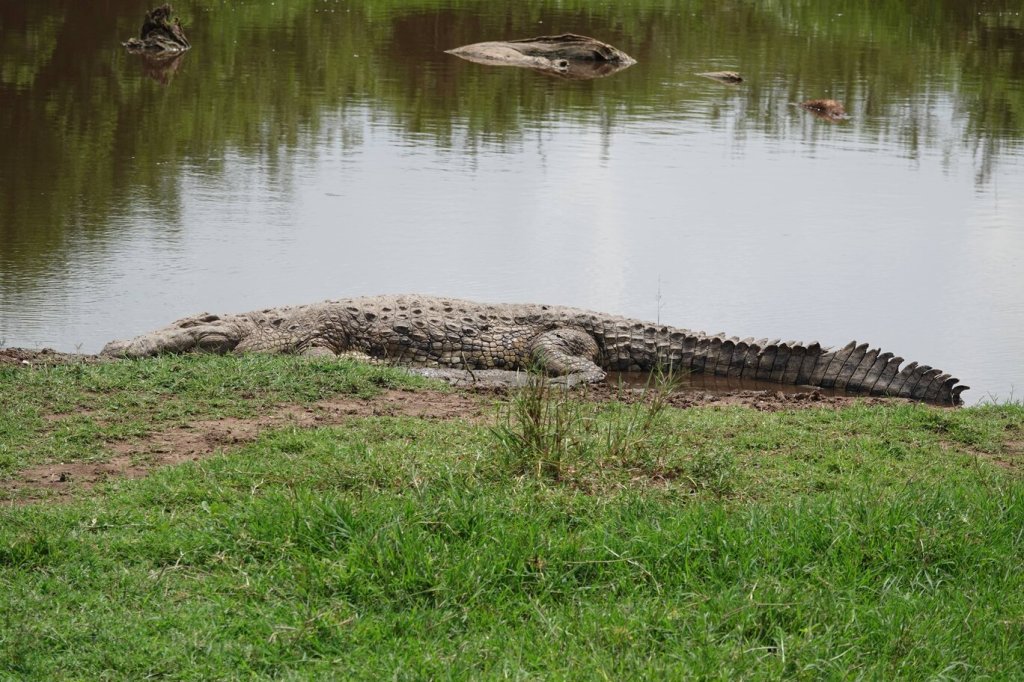
After the initial success of the early morning, we had less luck as the day wore on. We did find a group of three male lions hiding in the long grass, and spot a solitary Nile crocodile.
One of a group of three male lions we spotted A Nile Crocodile
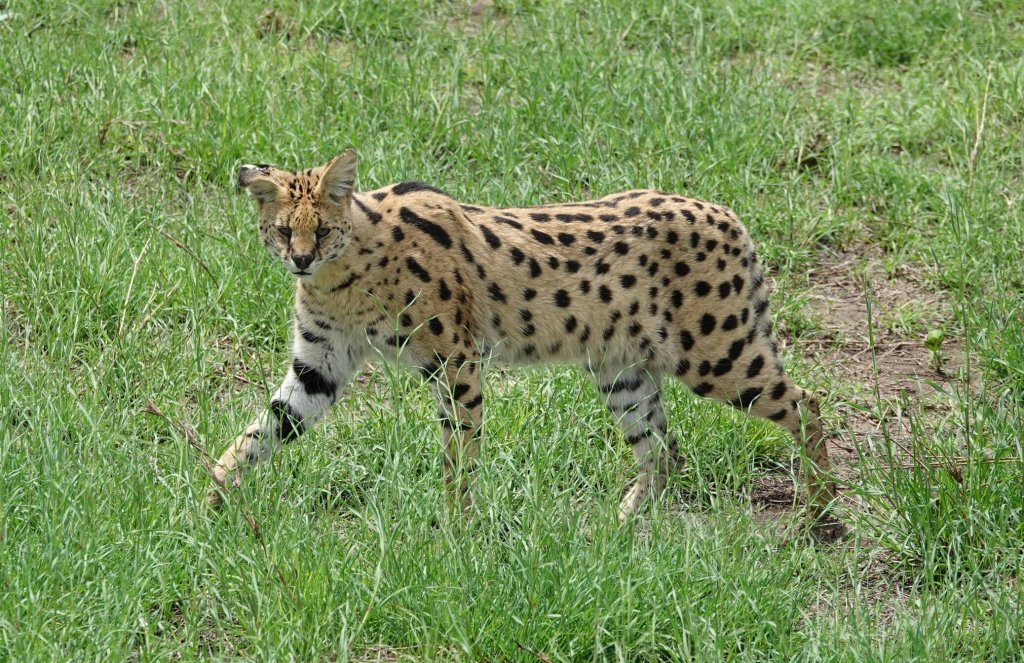
But then we spent a lot of time heading towards a reported sighting of a cheetah, only to find lots of jeeps and no signs of any animals. It was time for us to head south to our next camp, and we drove along a long and dusty road that initially appeared rather uninteresting. However we were lucky with two chance sightings of fairly rare animals – first we saw a bat-eared fox, an extremely cute animal that sadly disappeared into its burrow before I could take a picture. Next, we found a serval, a really beautiful smaller relative of leopards and cheetahs, who was much more happy to be filmed.
The beautiful Serval
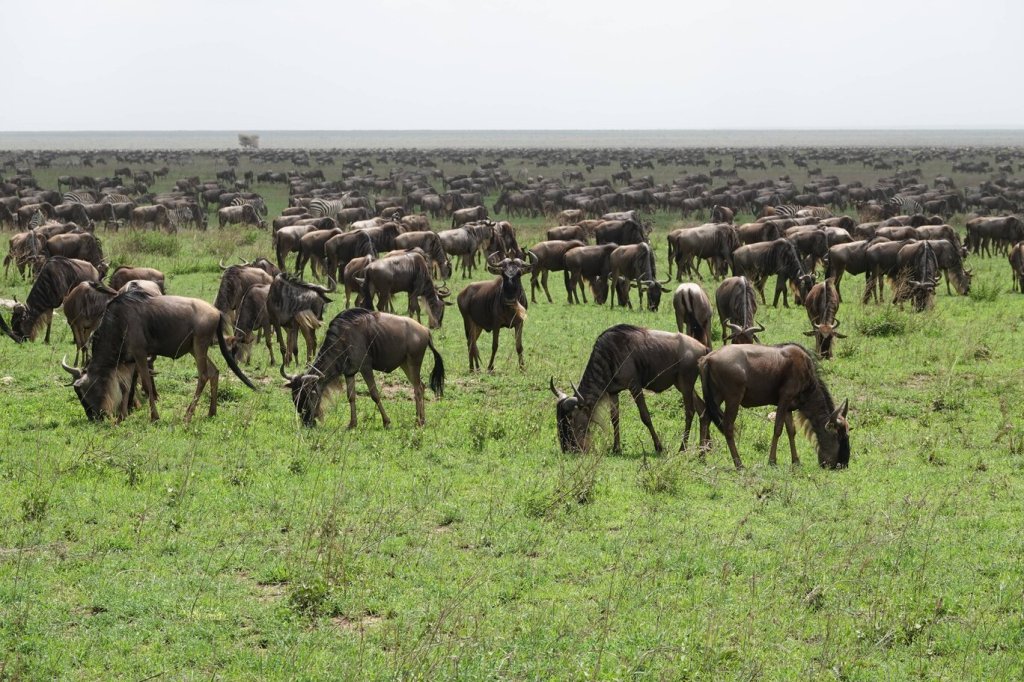
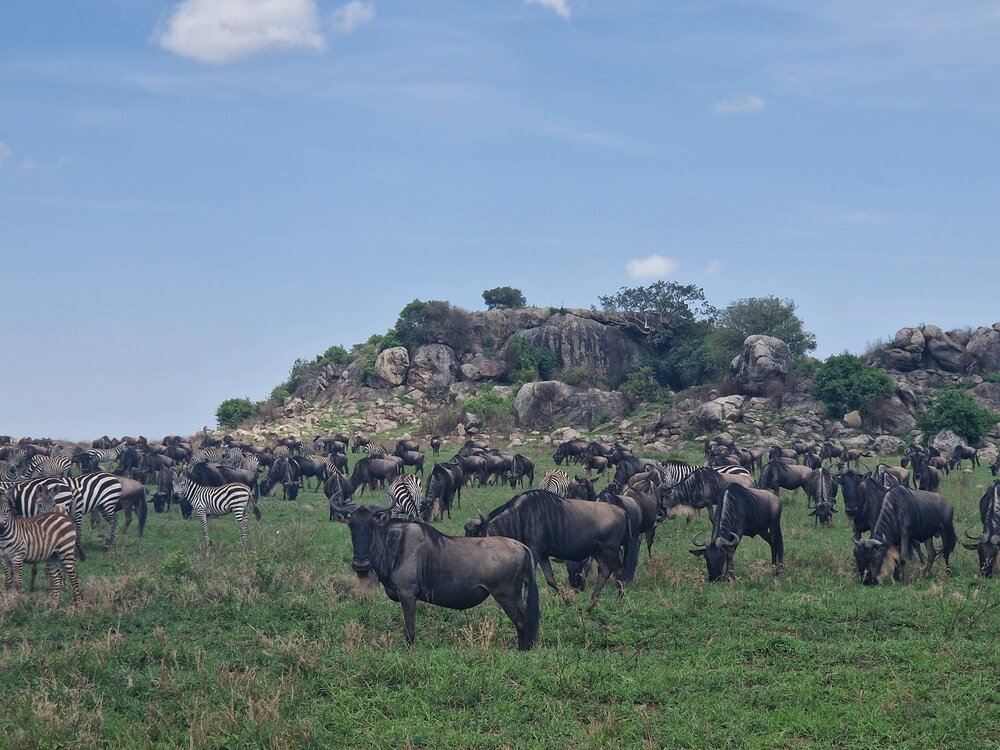
Further along the road we came across an amazing sight that the Serengeti is famous for – a huge herd of wildebeest and zebra, stretching all the way to the horizon and turning the yellow/green landscape into a mass of black animal bodies. In January most of these animals are found in the south of the park, which is why we had seen relatively few of them so far. In the summer most of them move north in a vast migration and make the hazardous crossing of the crocodile-infested Mara River into Kenya, before returning later in the year.
A huge herd of wildebeest and zebra stretches to the horizon
As we reached the southern part of the Serengeti it was getting late, but our guide Estomih insisted that we should check out two sightings of cheetahs before checking into our camp. We were a bit sceptical after several long days and our unsuccessful search in the morning, but eventually gave in to his enthusiasm. First we found a couple of young males, who had killed a gazelle, and were digesting their meal in the shade of a tree.
Two young cheetahs digest their meal
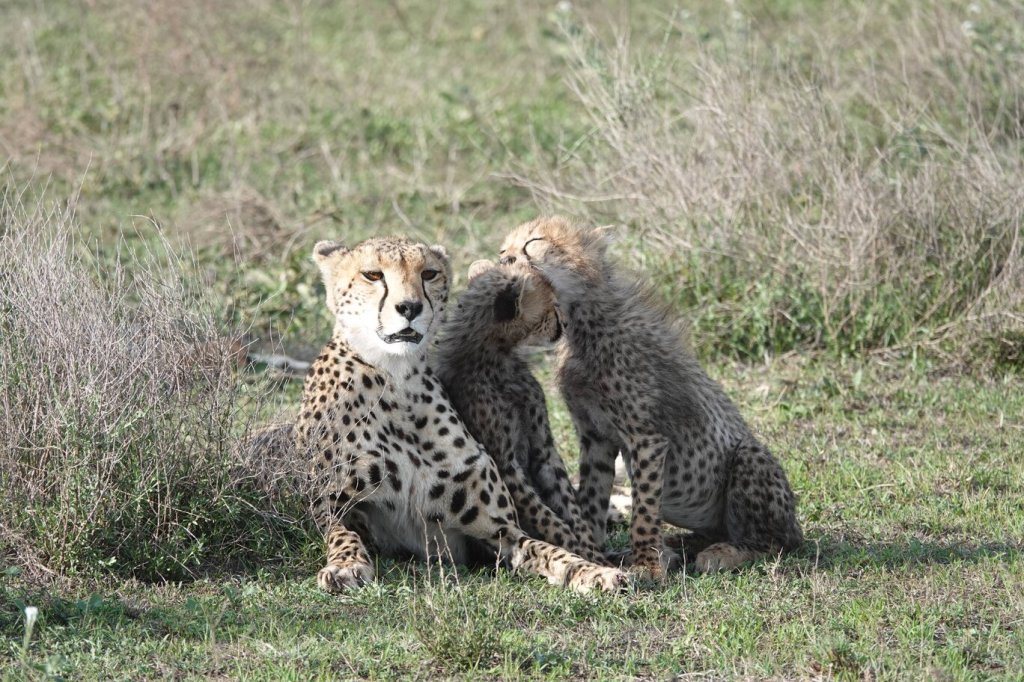
A bit further away, we found one of the highlights of our trip – a female cheetah with four cubs. She had caught them a young gazelle and was scanning the horizon for threats as they ate. When they had finished eating they approached her and gave her an affectionate lick.
A female cheetah with her four cubs
We finally reached our accommodation after sunset. It was a special mobile camp, which can be disassembled and moved to follow the migrating wildebeest. Despite this, it was remarkably comfortable and well-appointed. On arrival we went straight to dinner and then to bed, aware that the next day we would have to get up even earlier than usual for a very special treat.
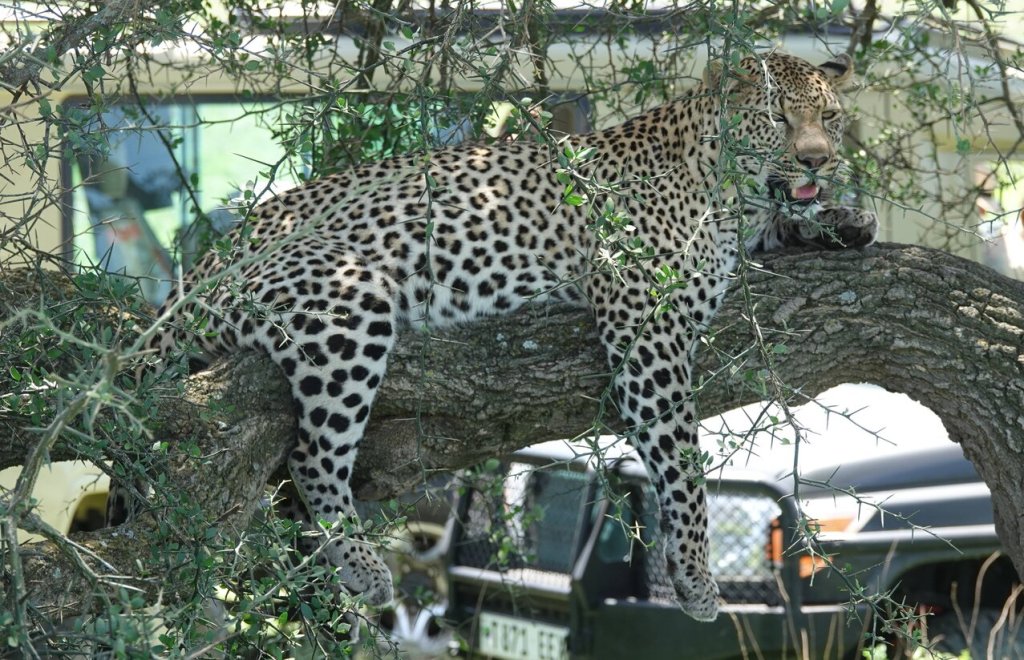
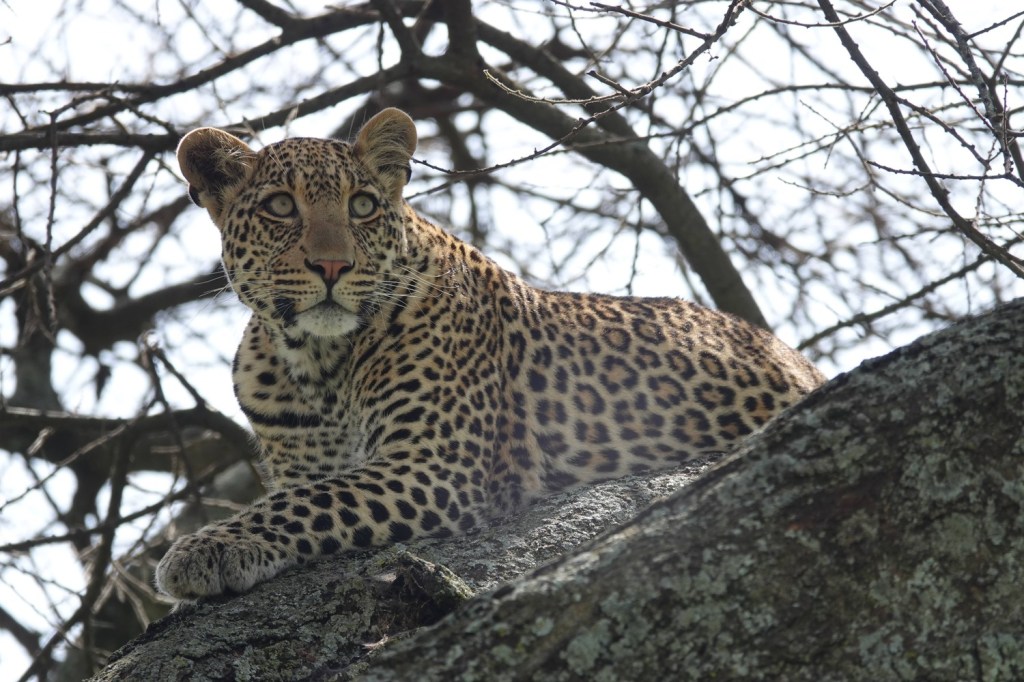
After the forty-eight lions we had seen yesterday, today Estomih our guide was determined to find us some different big cats. As usual, with the help of the guides’ exchanging of information over the radio, he delivered. Our first rendezvous was with a young male leopard, which as usual for its species was lazing in a tree.
A magnificent leopard
Having admired the magnificent animal for while, we set off in search of cheetahs…….and duly found three young males making their way through the thick grass of the Serengeti plains.
Our first cheetahs! (of many)
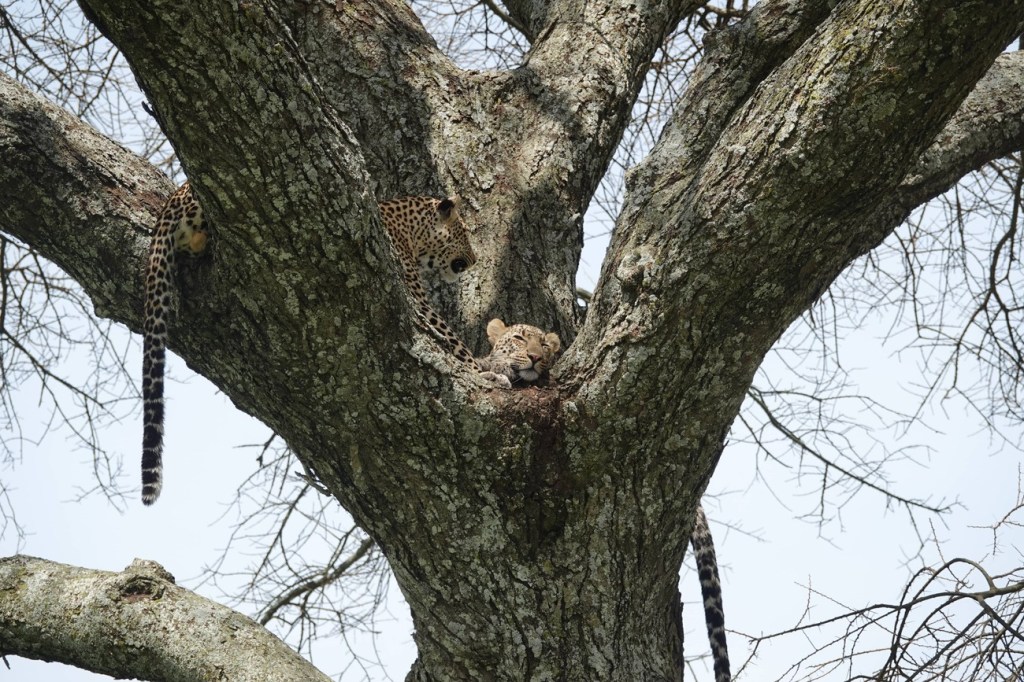
Over the radio, Estomih heard that our leopard had now been joined by his brother, so we headed back to the see the rather touching sight of the two siblings hanging out together in the branches of a tall tree.
Brotherly love
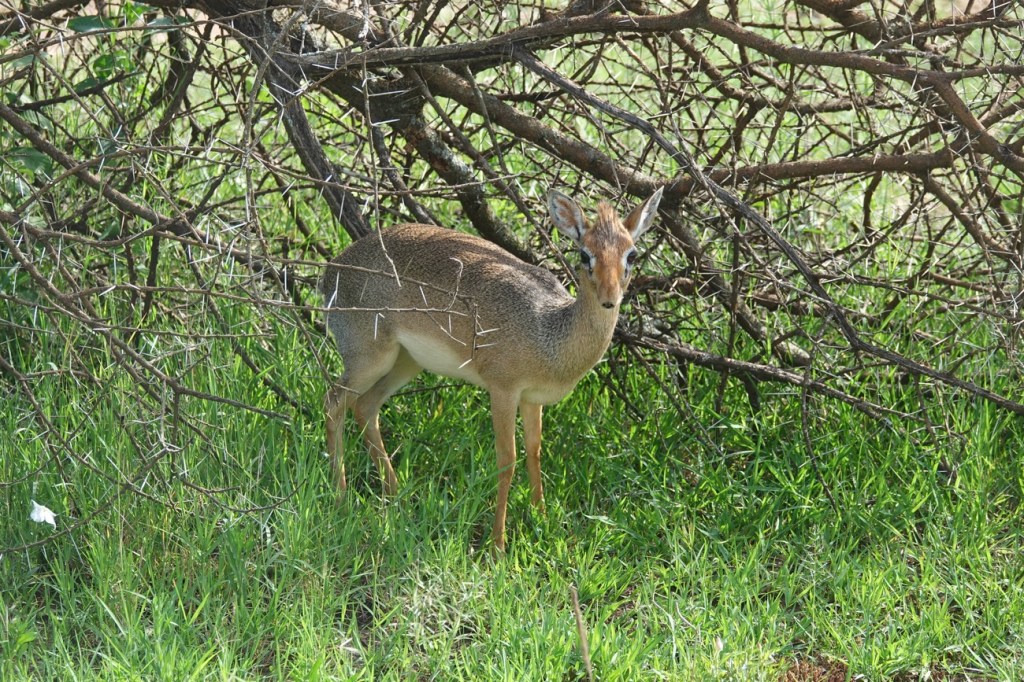
Having seen all of the big cats, we could relax, enjoy the Serengeti scenery, and pay more attention to the park’s less famous animals and birds, like the dik-dik, the smallest antelope…….
The cute dik-dik
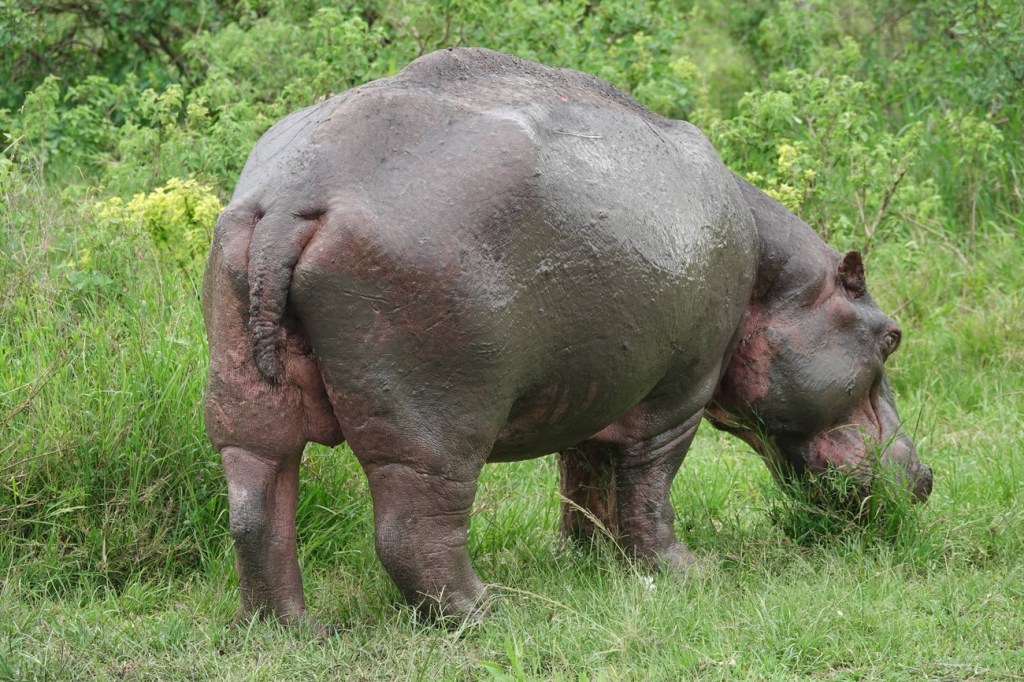
…..a big fat hippo, out of its pond…..
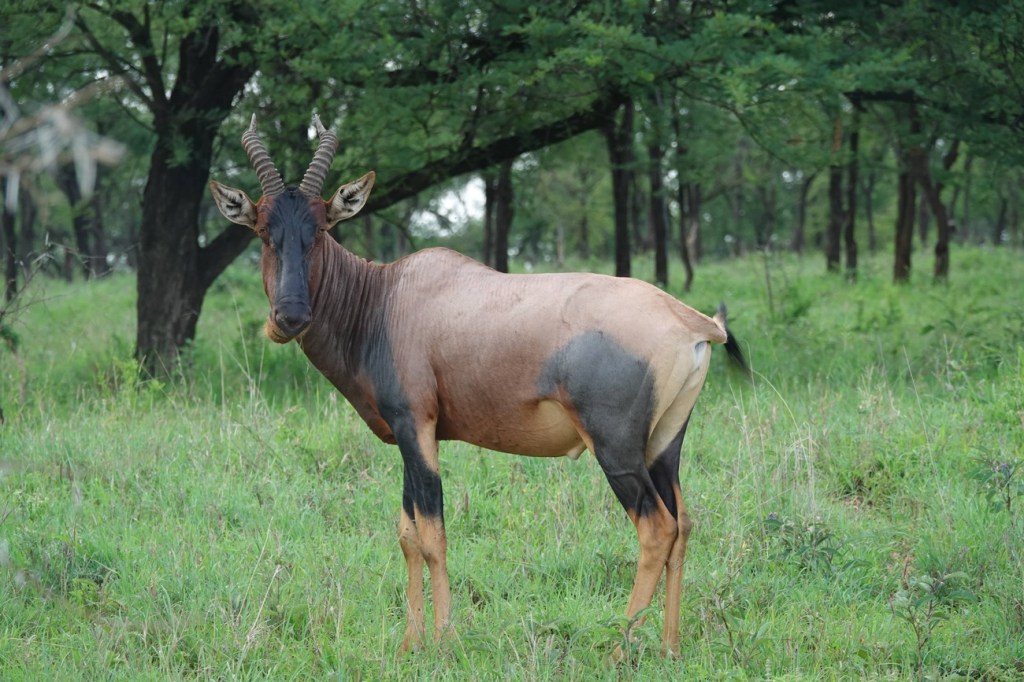
……the strange looking topi….
the Topi
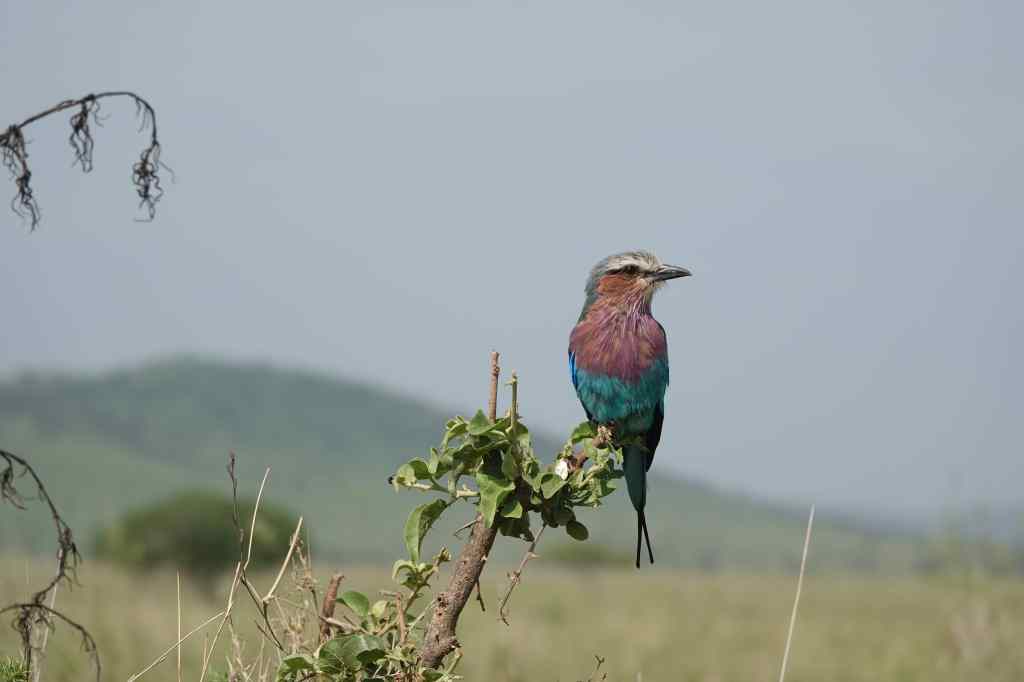
….and the beautiful lilac-breasted roller bird.
Lilac-breasted Roller Bird
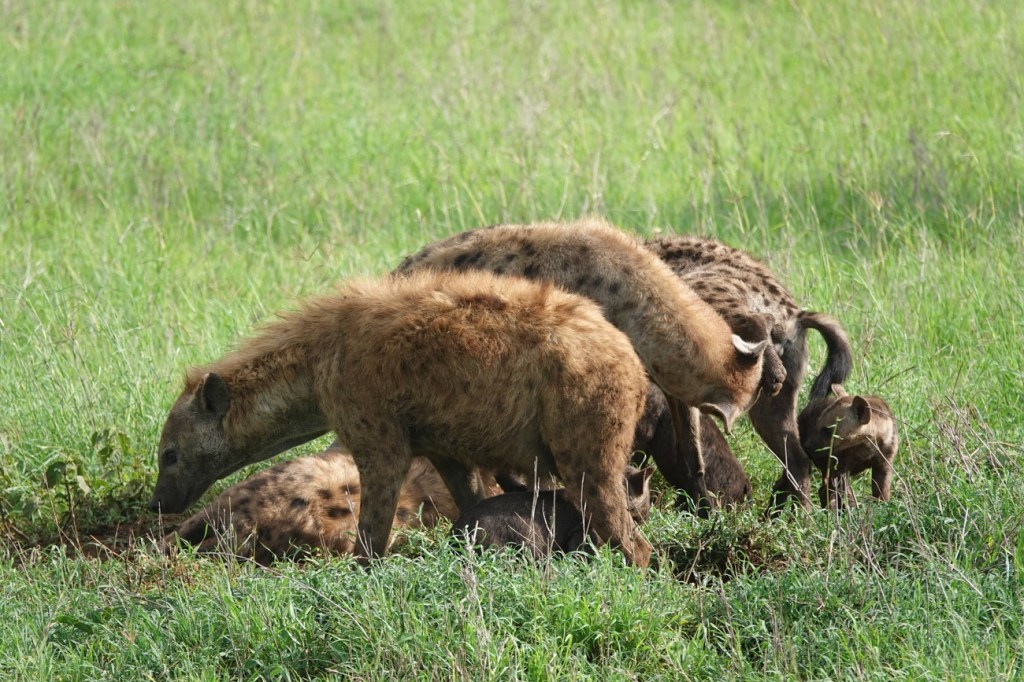
Towards the end of the day we bumped into a group of hyenas
A pack of hyenas
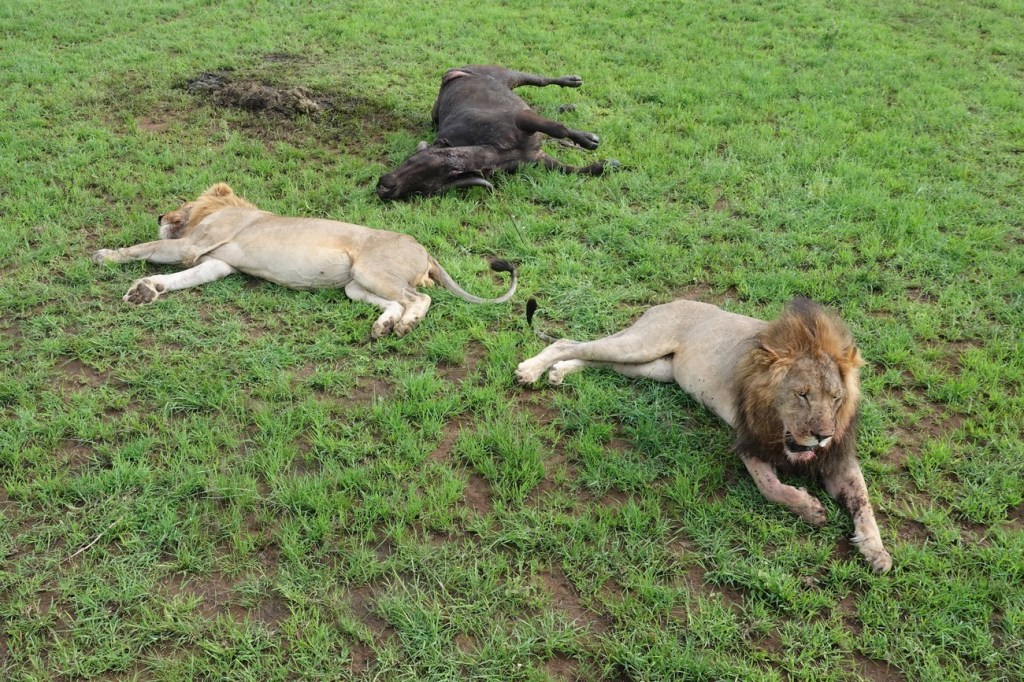
A short way further on, we found two lions who had recently killed a buffalo. They sat there with bloodied mouths and fat bellies, digesting their meal.
Two well-fed lions digesting their meal
It had been another great day, but over dinner back in our bush camp I began to wonder if we had already seen everything there was to see in the Serengeti, and whether the next two days here might become a bit repetitive. Fortunately I was wrong, as you will see in the next posts.
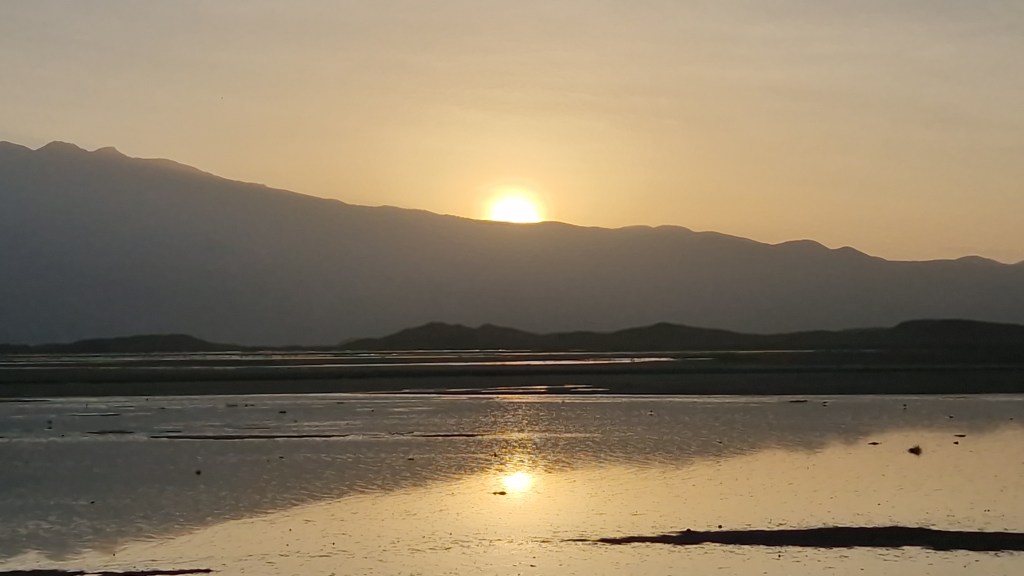
We woke up early and were ready to leave at six as our guide Estomih had suggested. Our first destination of the day was Lake Natron, a large salt lake that stretches across the border between Tanzania and Kenya. We arrived just in time for sunrise. Estomih parked the jeep, leaving us to make the short walk to the water’s edge across a mudflat.
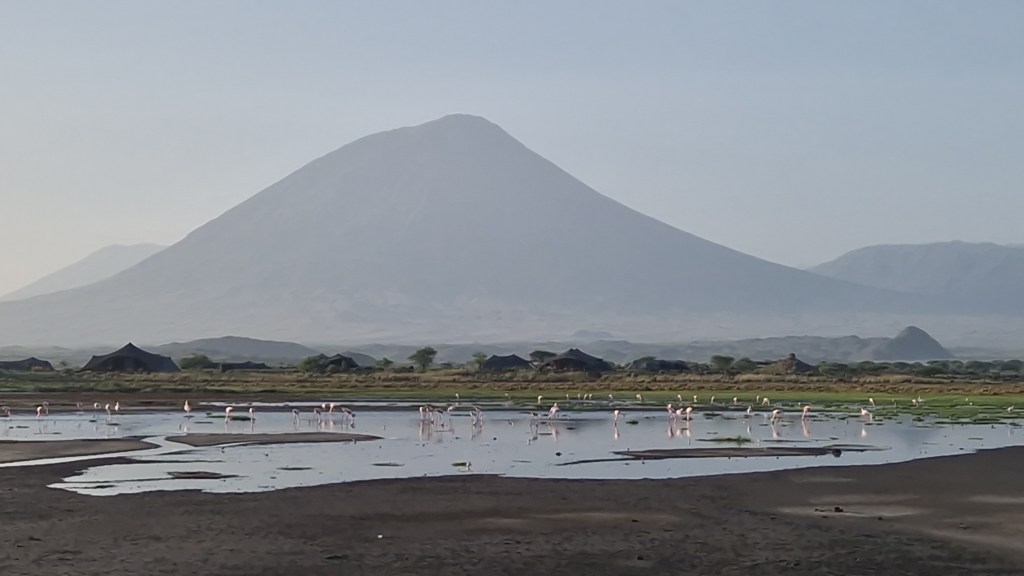
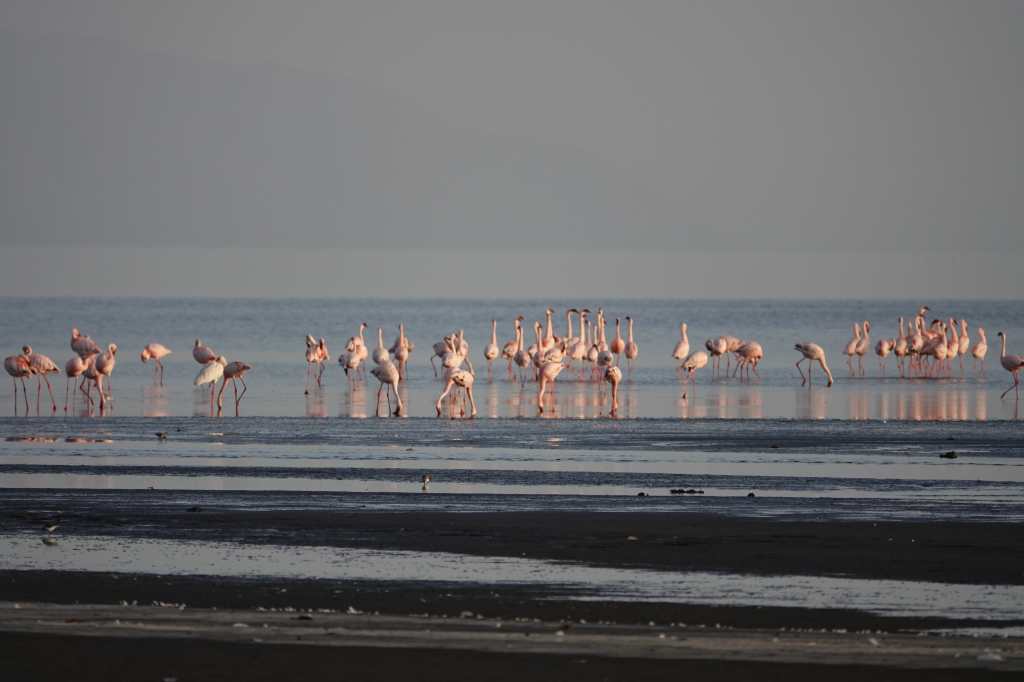
Sunrise at Lake NatronThe flamingos appear at Lake Natron
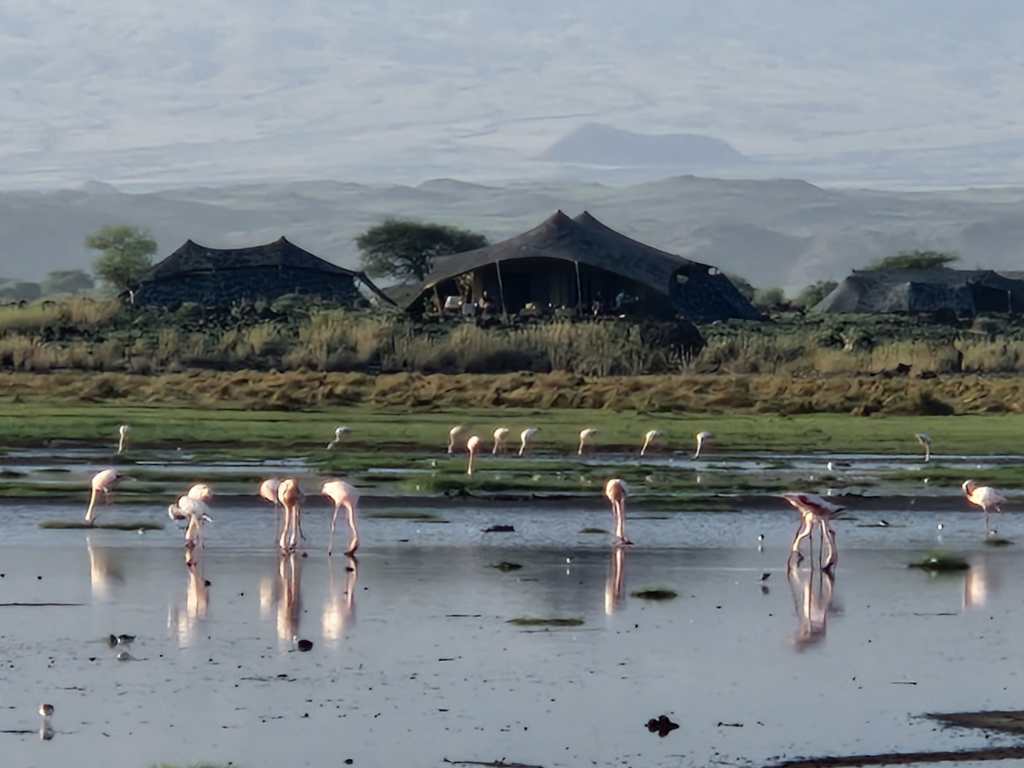
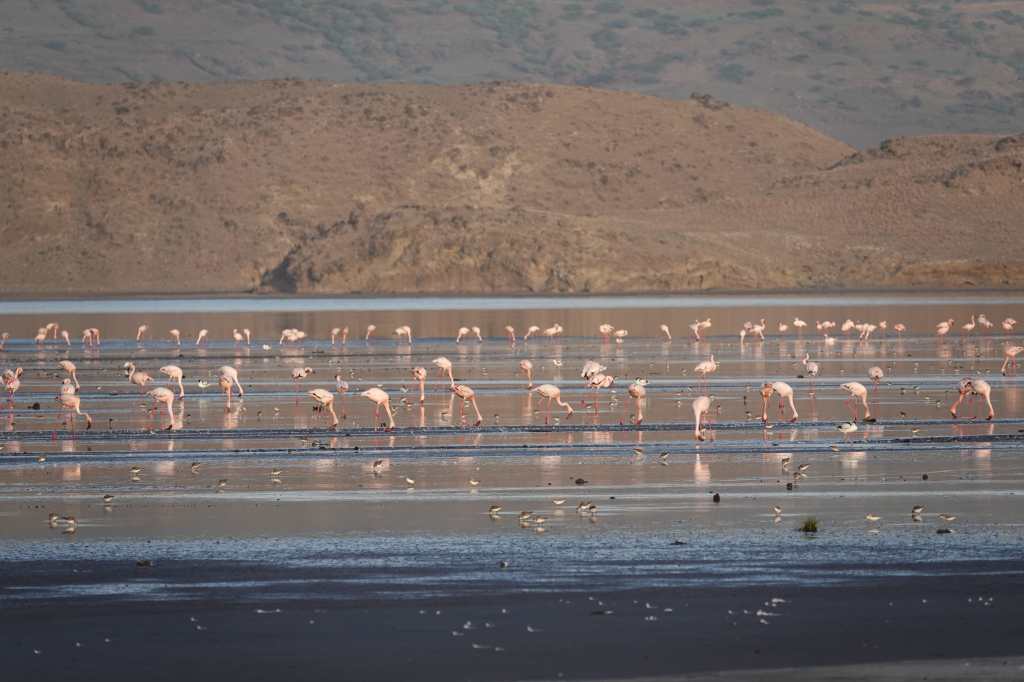
As it got lighter, we saw Lake Natron’s most famous sight – its flamingos, their pink colour enhanced by the early morning sun. From a distance they resembled a long pink band running along the short of the lake.
Flamingos…..……..and more flamingos
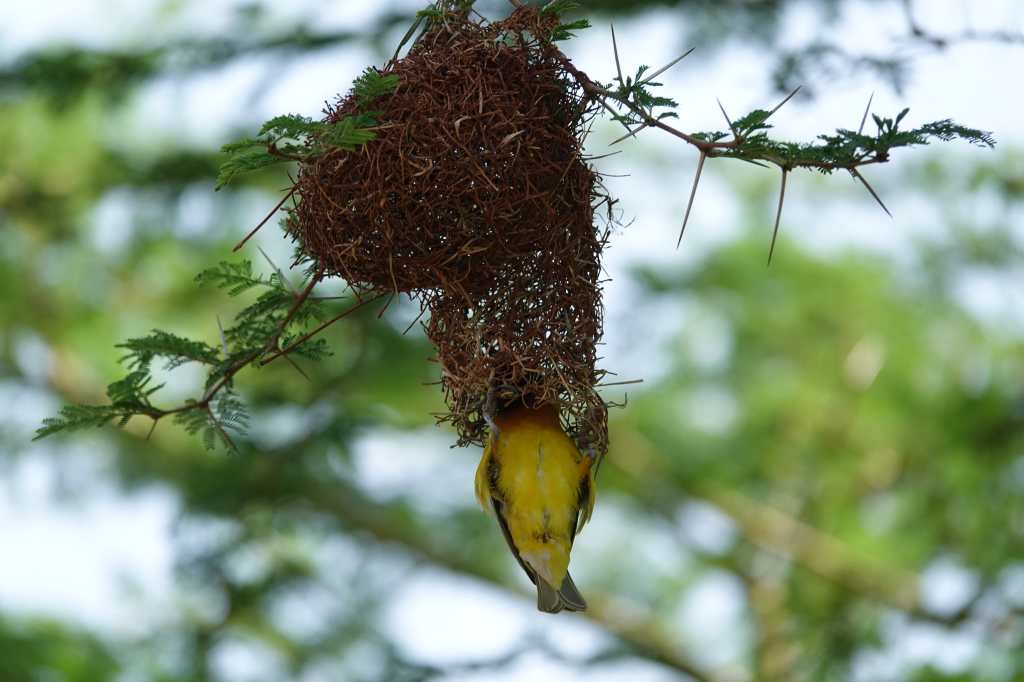
We were the only visitors there, and the lake had a very peaceful feeling, with the silence only broken by the occasional honking of the birds when we got too close to them. We spent about an hour there soaking up the atmosphere and then headed back to our lodge for breakfast, where we also admired the busy weaver birds who built nests in the nearby trees.
A busy weaver bird
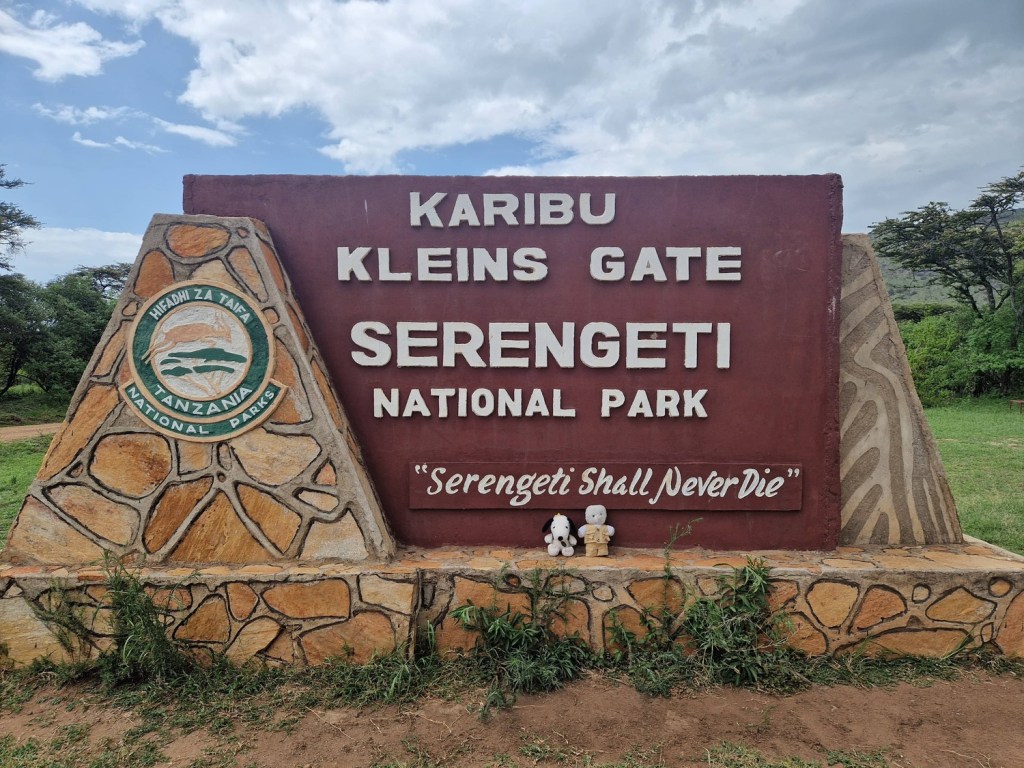
Refreshed and dosed with coffee, we got back into the jeep and made the four-hour drive along the back roads of Tanzania to the Klein’s gate, the northern entrance to the Serengeti National Park. The road was very quiet and quite scenic, and the time passed quickly.
Klein’s Gate, Serengeti National Park
We stopped for lunch just outside the entrance, and then in the early afternoon Estomih bought our pass and with mounting anticipation, we headed into the famous park. Initially, it was an anti-climax. We saw a few antelope and other small animals, but nothing remarkable. Estomih’s jeep had a radio with which he communicated with other guides, usually to share tips about where to see big cats. But this afternoon the guides were all complaining about how quiet things were.
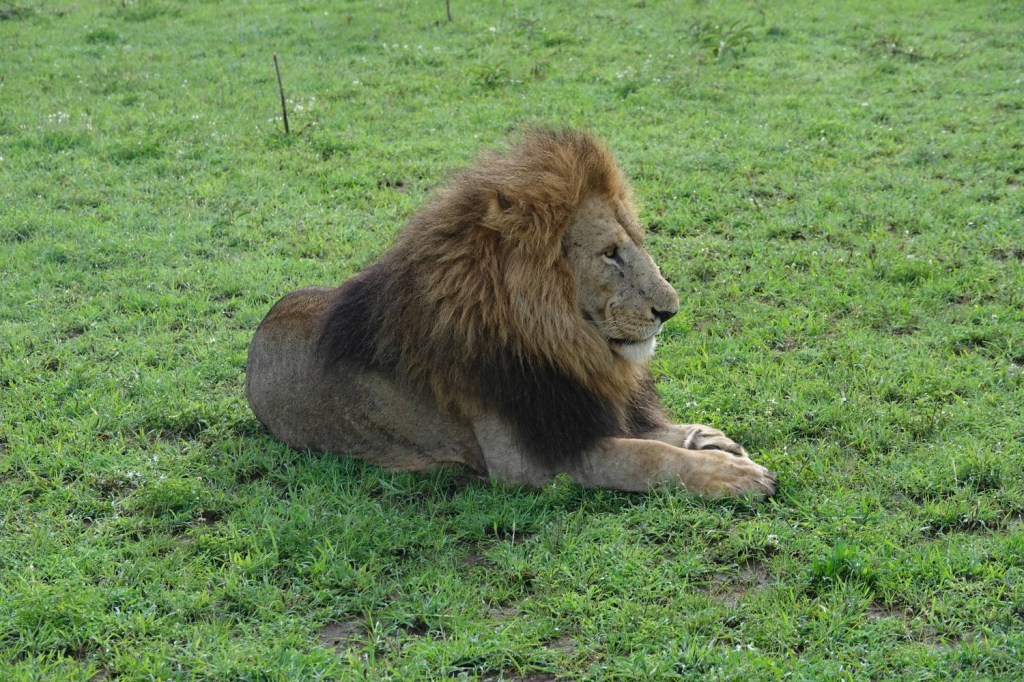
Estomih headed off to an area where some lions had been seen earlier in the day, and suddenly on the horizon I saw the distinctive profile of a large, old male lion with his large bushy mane. We rushed to look and found we had discovered one of the Serengeti’s “superprides” – a social group consisting of about a dominant male lion, many lionesses and even more cubs and young lions.
The leader of the superpride
Each member of the group behaved differently. The old male lounged around. He got up once to sniff our jeep suspiciously before peeing on our spare wheel to mark his territory, and then lay down again right beside us.
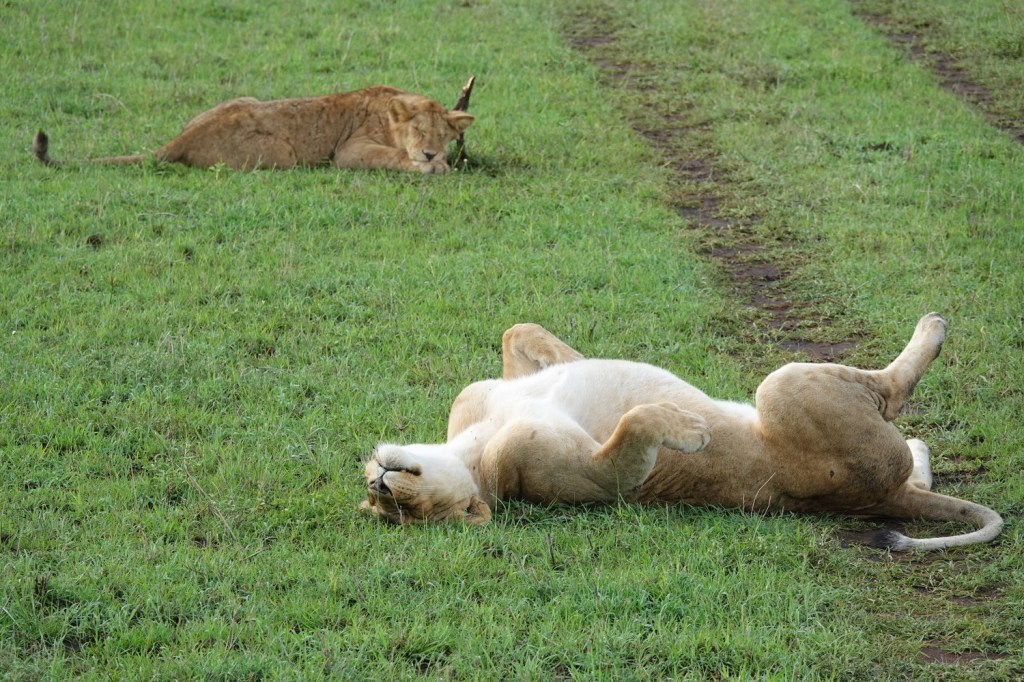
Lionesses relaxing
The lionesses walked around greeting each other and sometimes would roll around in the grass, with their tummies in the air – reminding me of my own little pet cat back home.
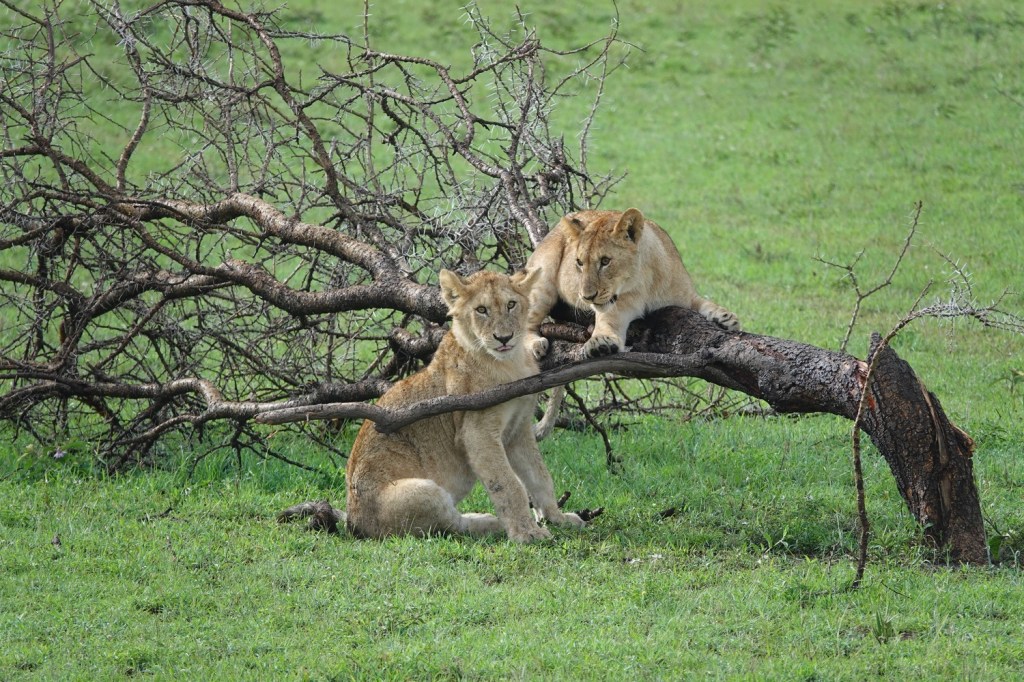
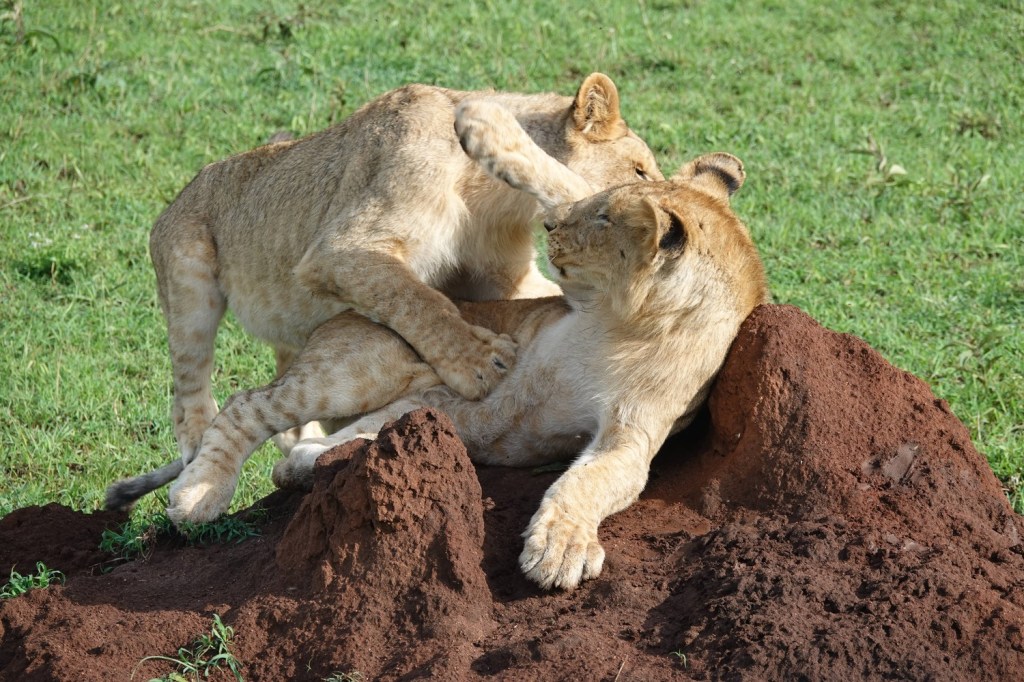
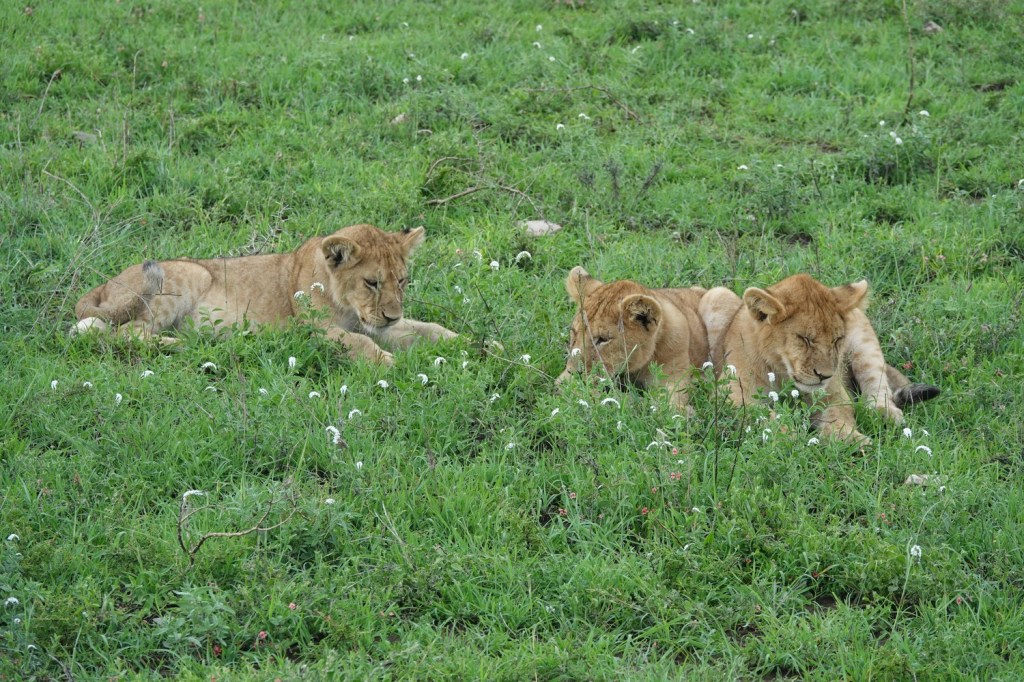
Cubs playing, Serengeti National Park
The younger lions on the other hand were very active and always playing.
At first we were one of only two jeeps to have discovered this pride, and had the amazing spectacle almost to ourselves. But as time passed more jeeps arrived, and we decided to move on. A short drive away we discovered yet more lions – a lioness with three young cubs, which Estomih said were part of the same superpride.
Yet more lion cubs
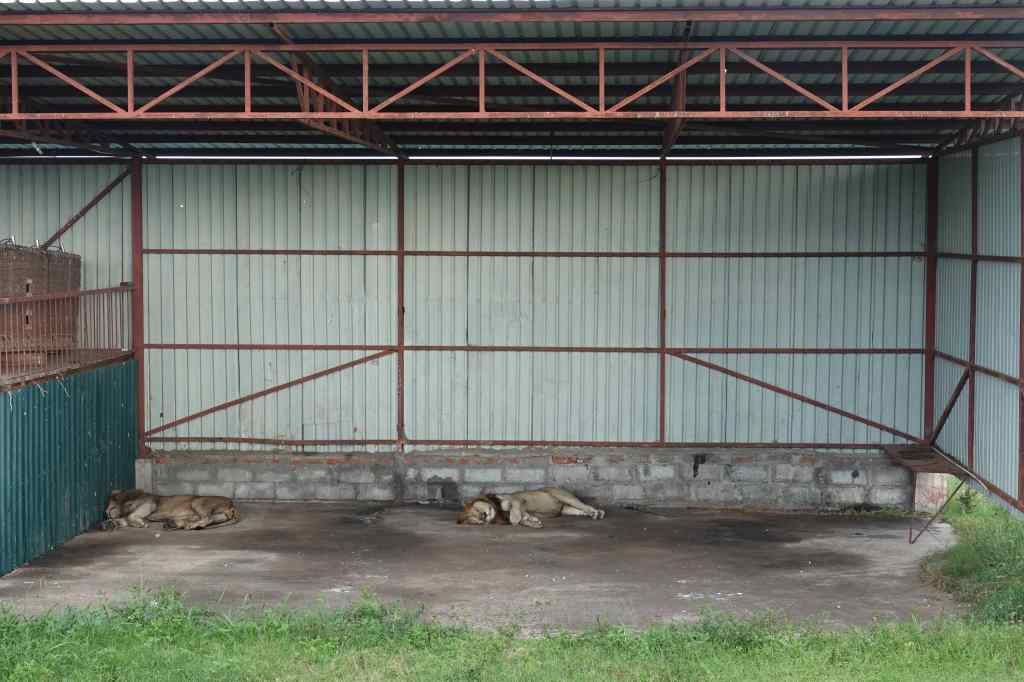
Another short drive away we found two more male lions, lounging around in a base used for balloon flights. In total that brought the number of lions we had seen to twenty eight.
Two outcast males
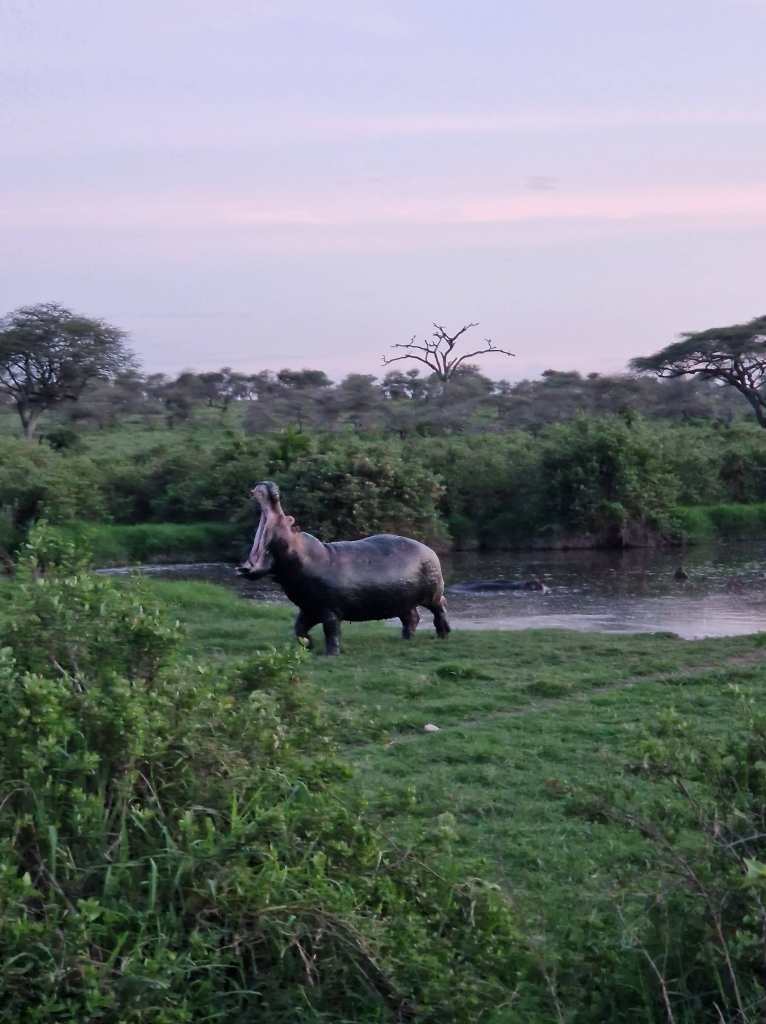
It was getting late, and it was time to head on to our camp for the night. In the fading light we caught a quick glimpse of a hippo that had left its river…….
Hippo, Serengeti National Park
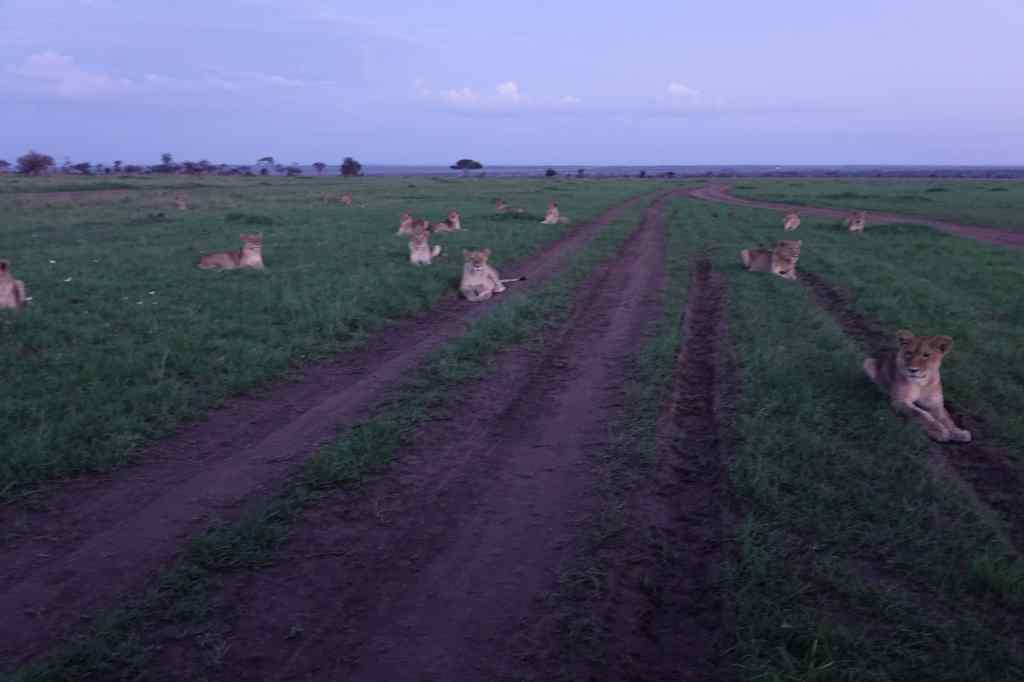
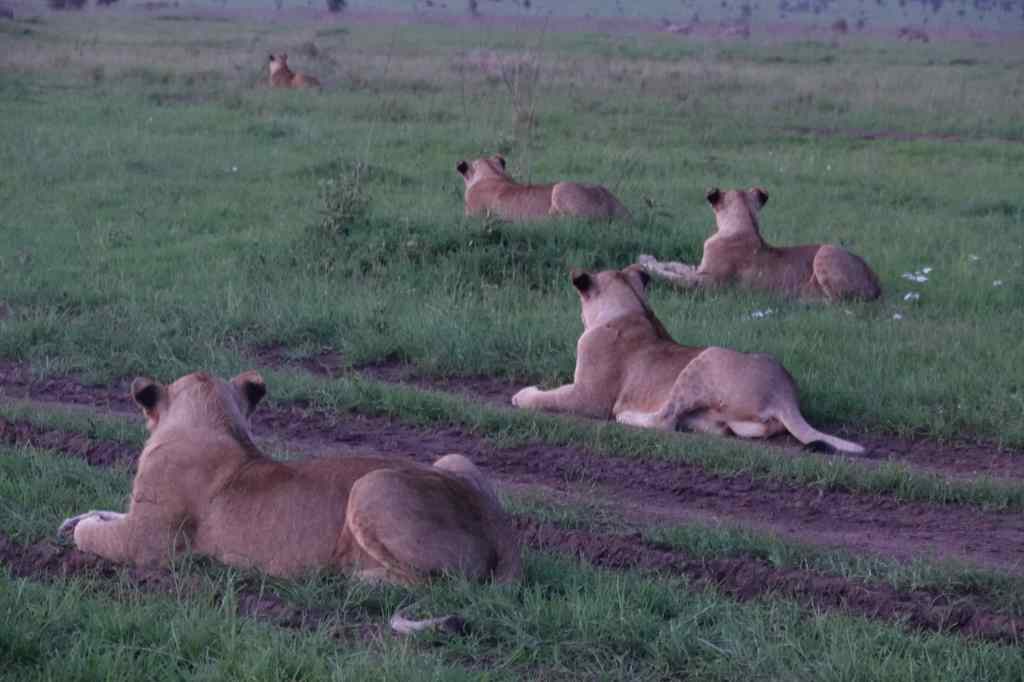
……and then just a bit later, a group of over twenty mostly female lions in a pack hunting zebra, spread out right across the track we were using. We stopped to take pictures, but they largely ignored us, staring intently into the distance in front of them. One of the lionesses got up to sniff the spare wheel which the large male had sprayed earlier, and looked at us suspiciously for a while before rejoining the group.
Dusk -a hunting pack of lionesses
Sadly, it was now very late, and we could not stay long to admire the lionesses. We finally got to our camp at about seven thirty, after a day which had started at six. We were impressed by Estomih’s stamina and dedication, and remembered that his work was not yet over – he still had to clean the jeep and wash up the plates from our lunch. What an amazing day – after the spectacular flamingos of Lake Natron, we had seen no less than forty-eight lions in the space of a few hours in the Serengeti National Park. Our expectations for the next three days we would spend there were now sky-high.
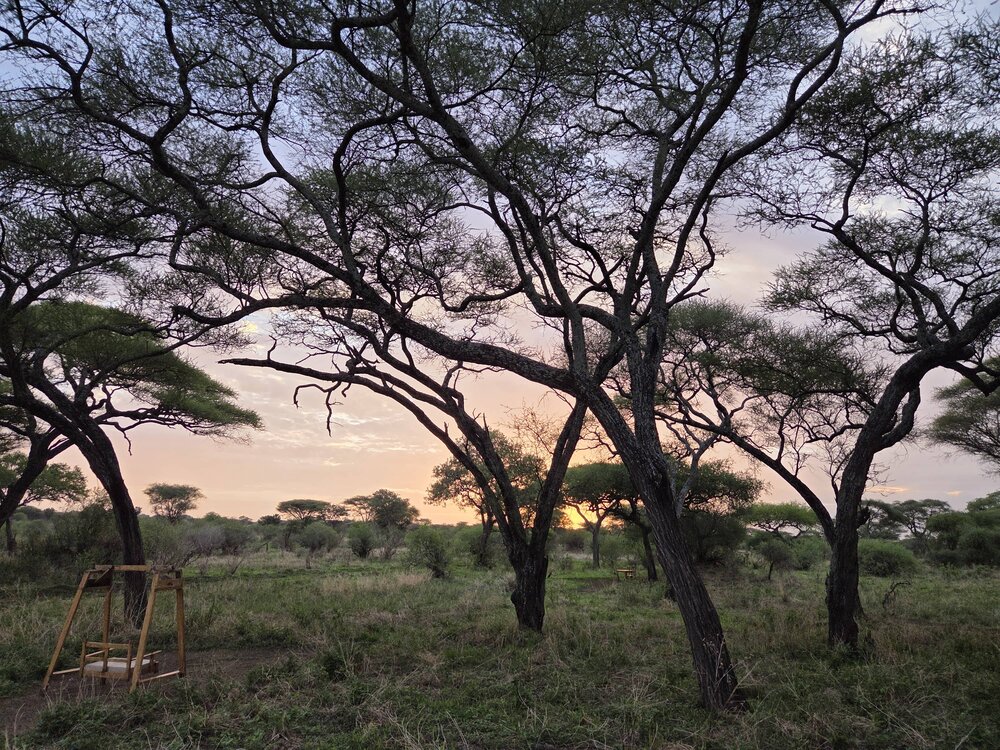
I slept very well in our bush camp tent, but my fellow traveller Snoopy had a more restless night, listening to the sounds of the jungle and some large animal that he thought was just outside. We got up and headed for breakfast, enjoying the sight of sunrise over the jungle.
Sunrise at Tarangire National Park
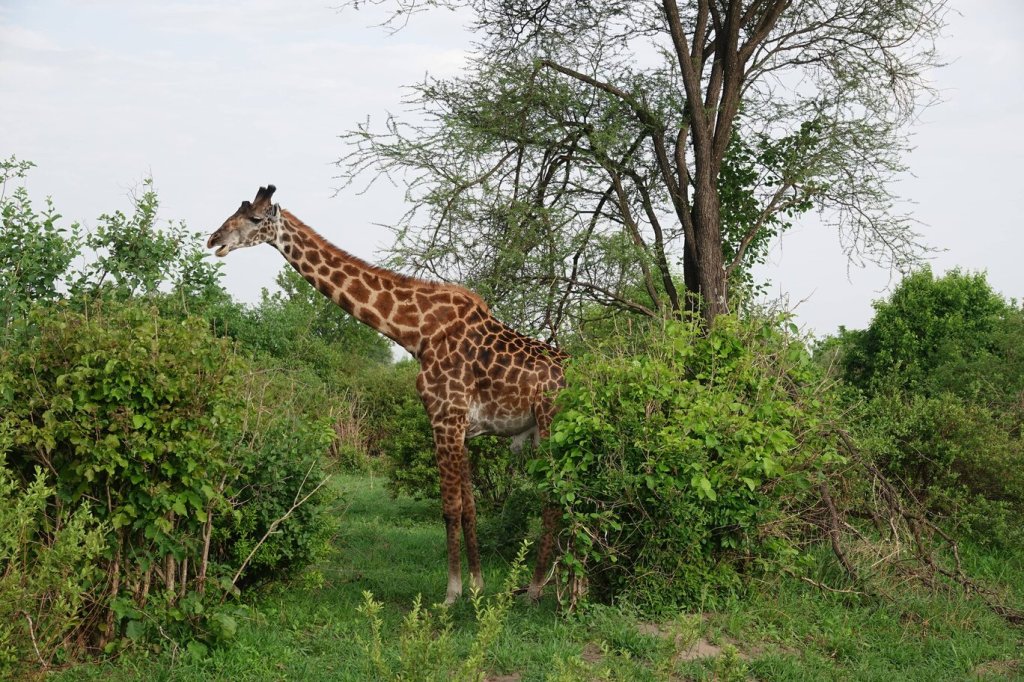
After breakfast we continued our game drive with our guide Estomih. The park seemed quieter today, and we didn’t see any big cats. Instead we enjoyed watching some of the park herbivores, including giraffes…
Tarangire Park – giraffe
….and more elephants….
A male elephant rubbing against a baobab
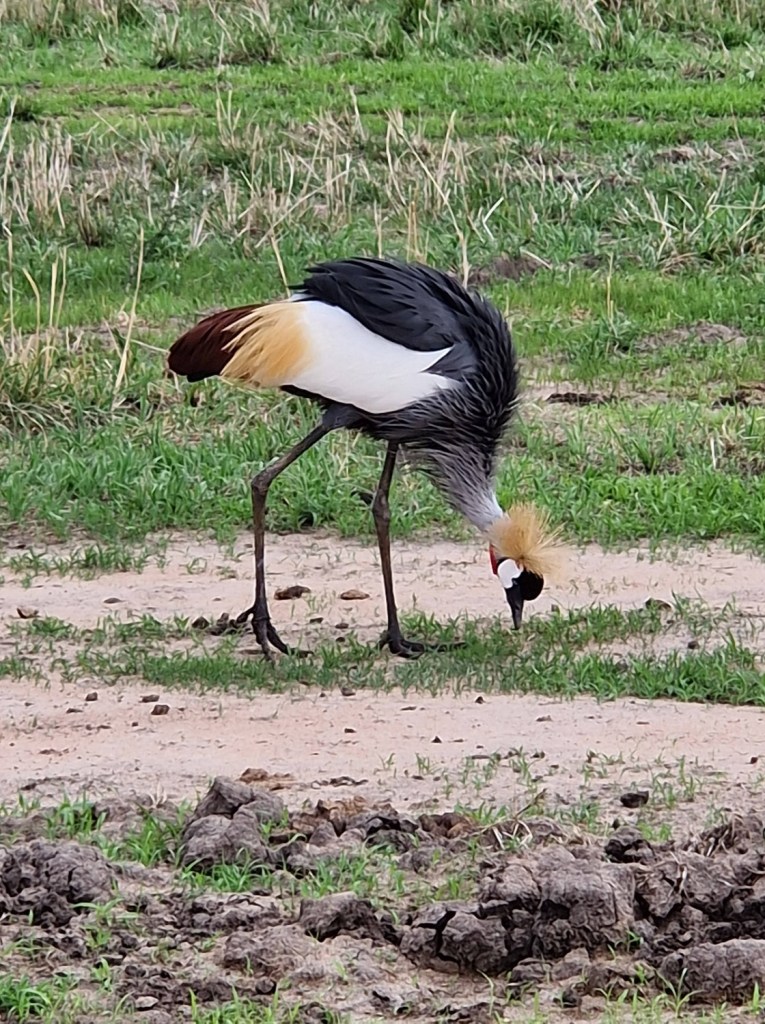
…and birds.
The Grey Crowned Crane
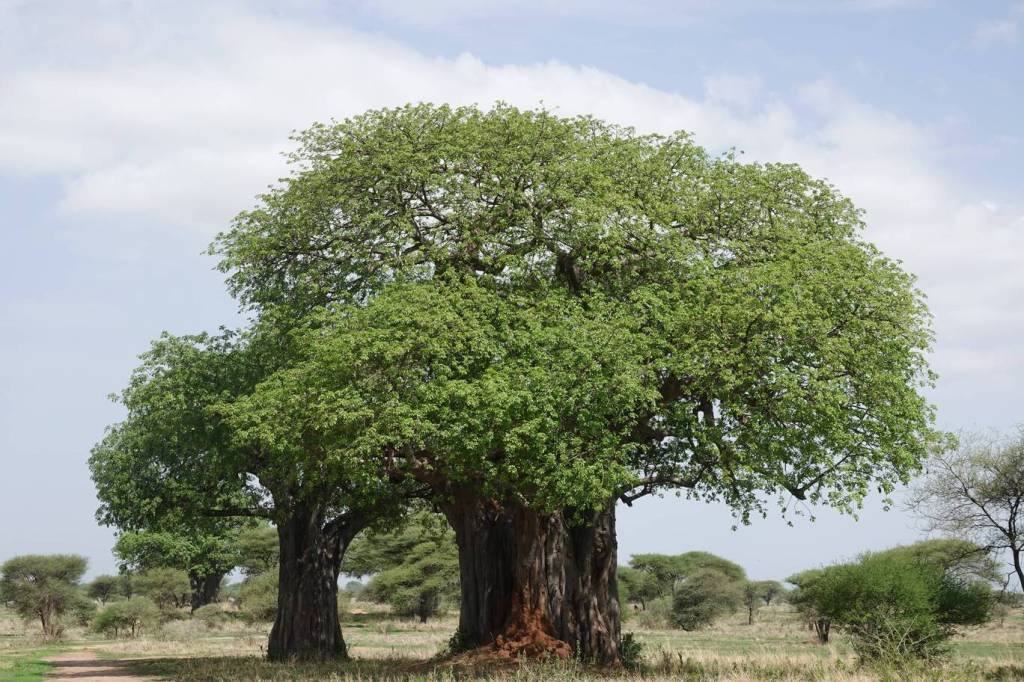
We also admired the park’s luxuriant vegetation, and especially its baobab trees…..
Magnificent Baobab Trees at Tarangire
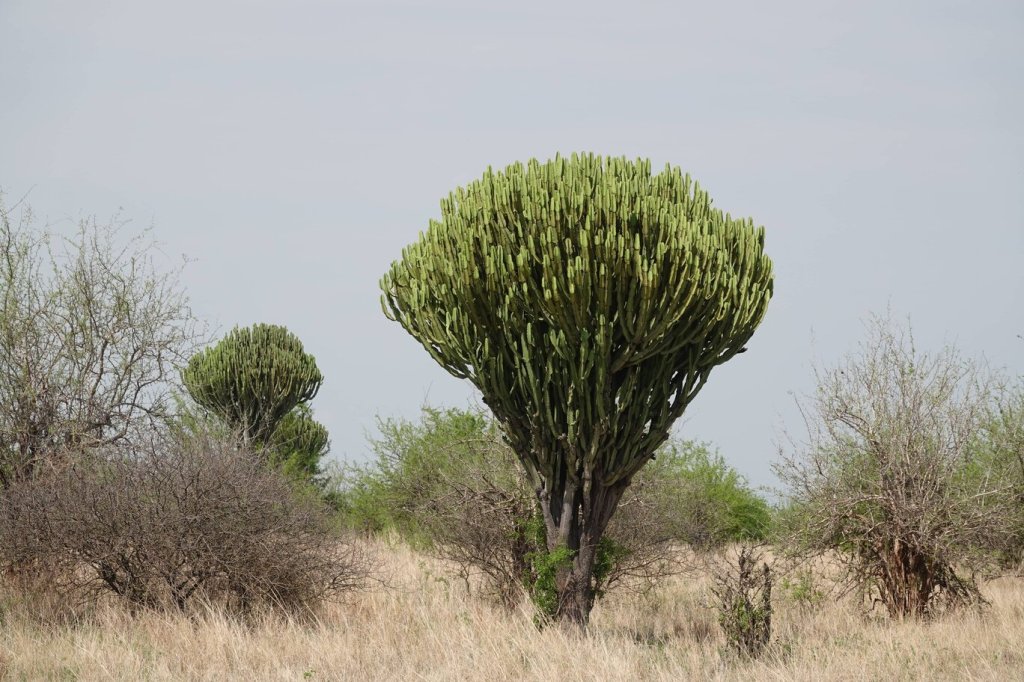
and “candelabra trees”.
A Candelabra or Cactus Tree
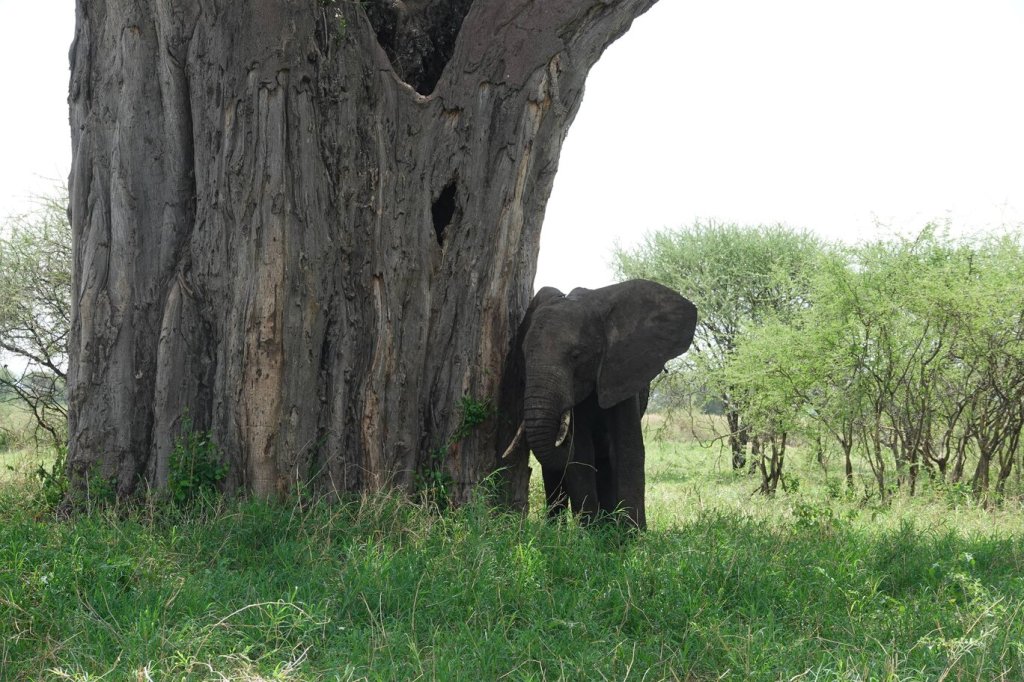
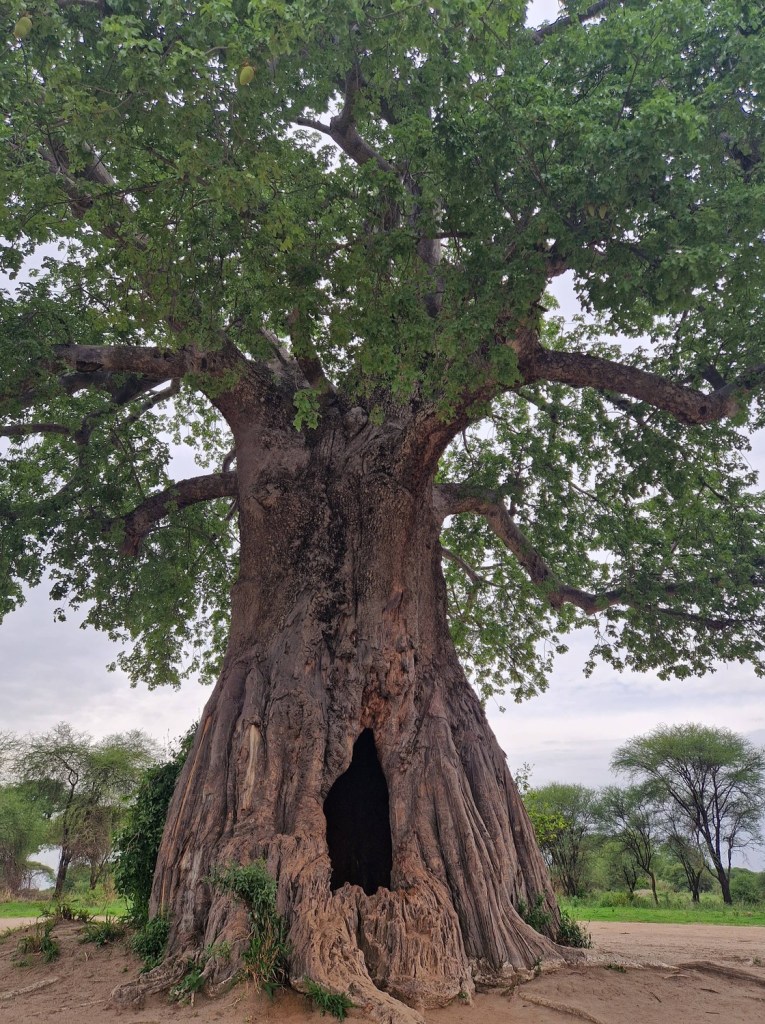
One large baobab had a large hole in the middle, and Estomih told us that this had been used by poachers to hide elephant tusks in the days when poaching had been a major problem in Tanzania (today the situation is much better, and the populations of hunted animals like rhinos and elephants are increasing again).
The poachers’ baobab
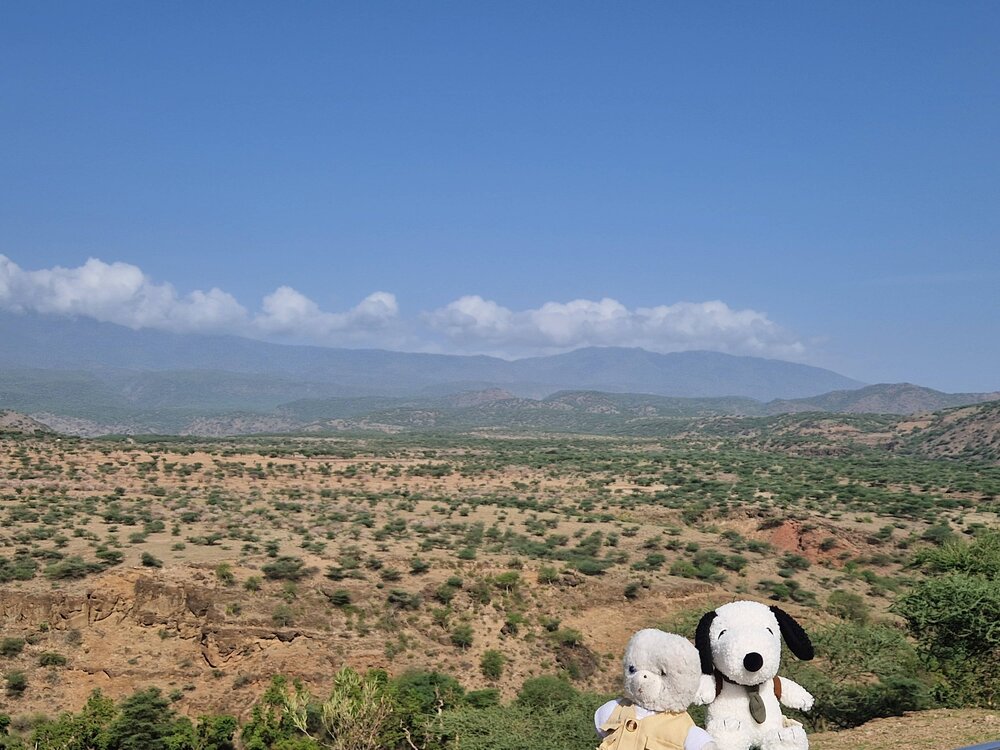
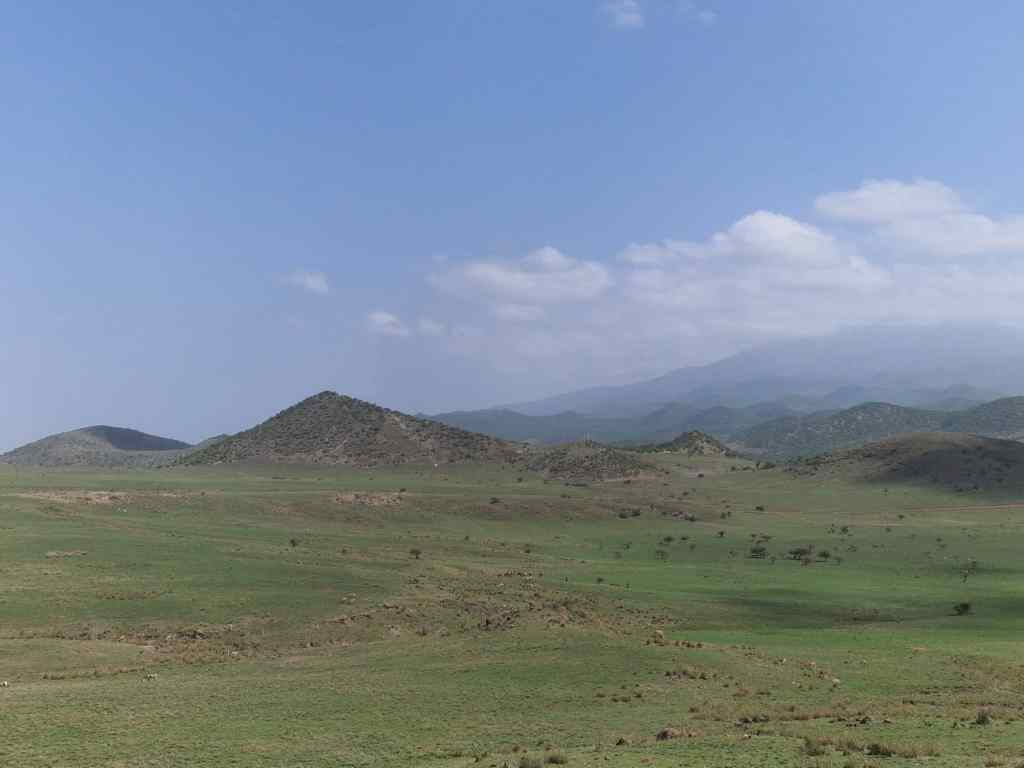
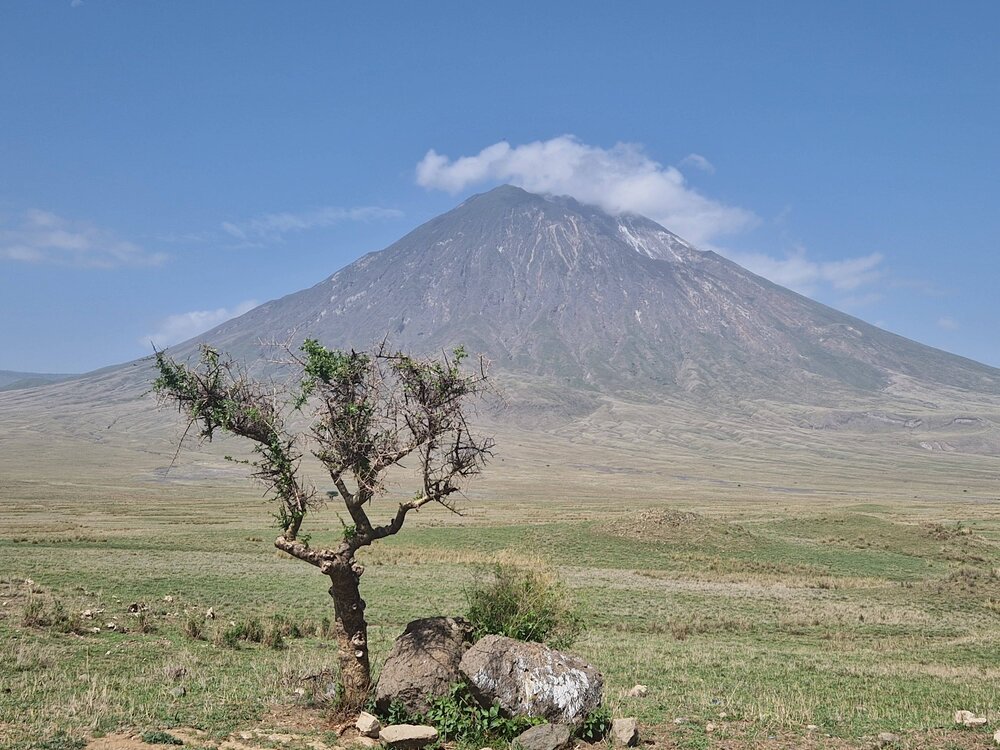
At around midday it was time to leave Tarangire and head on to our next destination, Lake Natron. We made the trip with an overnight stop at a lodge near Lake Manyara, one of the country’s salty lakes and the centre of another national park (which was not on our itinerary). From there we drove north towards the border with Kenya. Our route took us along the floor of the great East African Rift valley – a structure formed by the African and Arabian plates separating to leave a long stretch of low-lying land – and the scenery was magnificent, including the very steep and still active volcano Ol Doinyo Lengai. The sweeping plains were dotted with small villages, and we saw many Masai tending their herds of cows and goats alongside small groups of wild zebra and wildebeest.
The sweeping plains of the Great Rift ValleyOl Doinyo Lengai Volcano
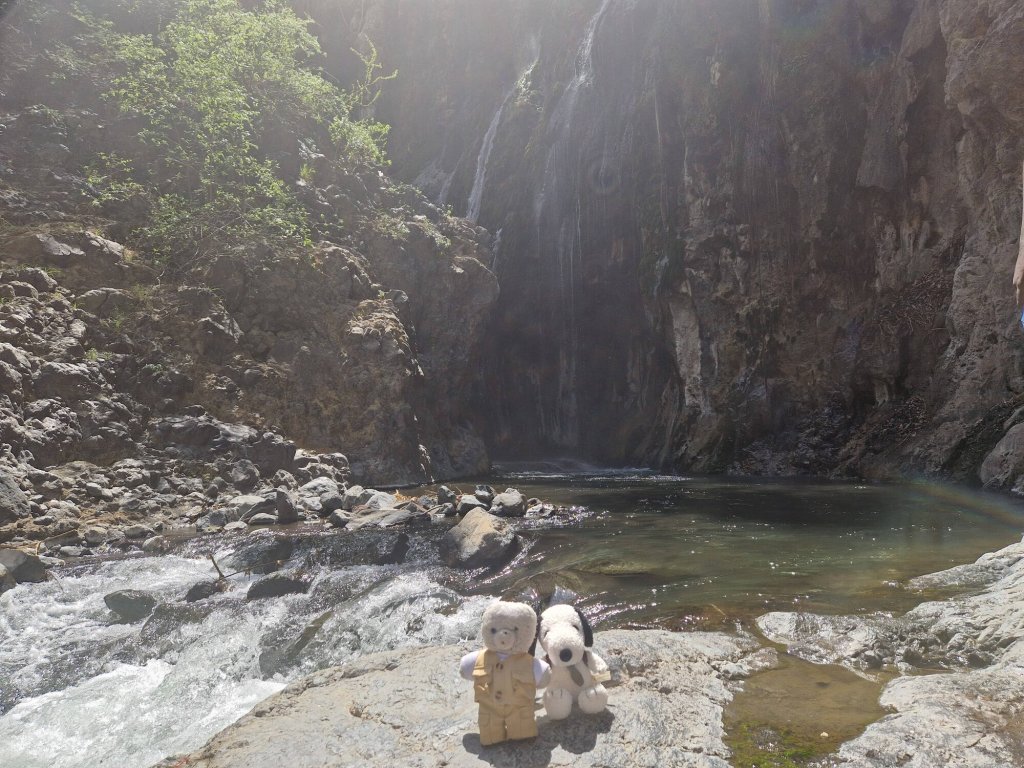
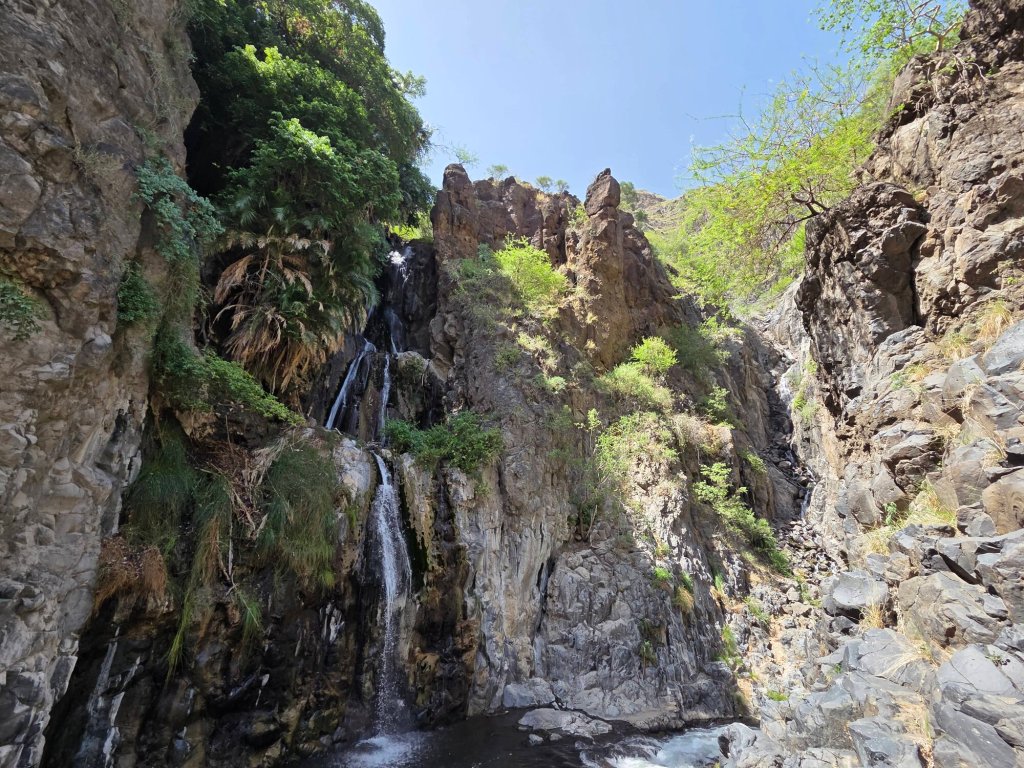
A short drive after the volcano we made a stop, where a Masai guide led us to a small waterfall hidden in a gorge.
An idyllic waterfall in the Great Rift Valley
It was a beautiful place and a very pleasant way to spend the late afternoon before we headed on to our lodge on the shores of Lake Natron. We got an early night, since Estomih warned us that tomorrow would be a very long day with a six a.m. start.
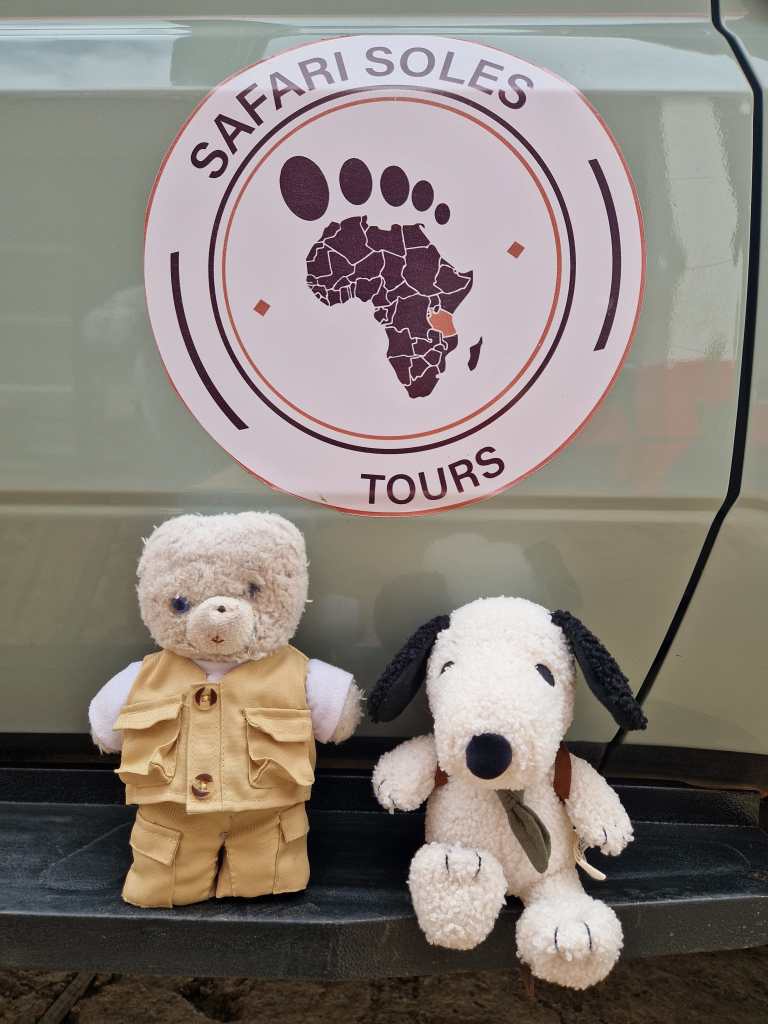
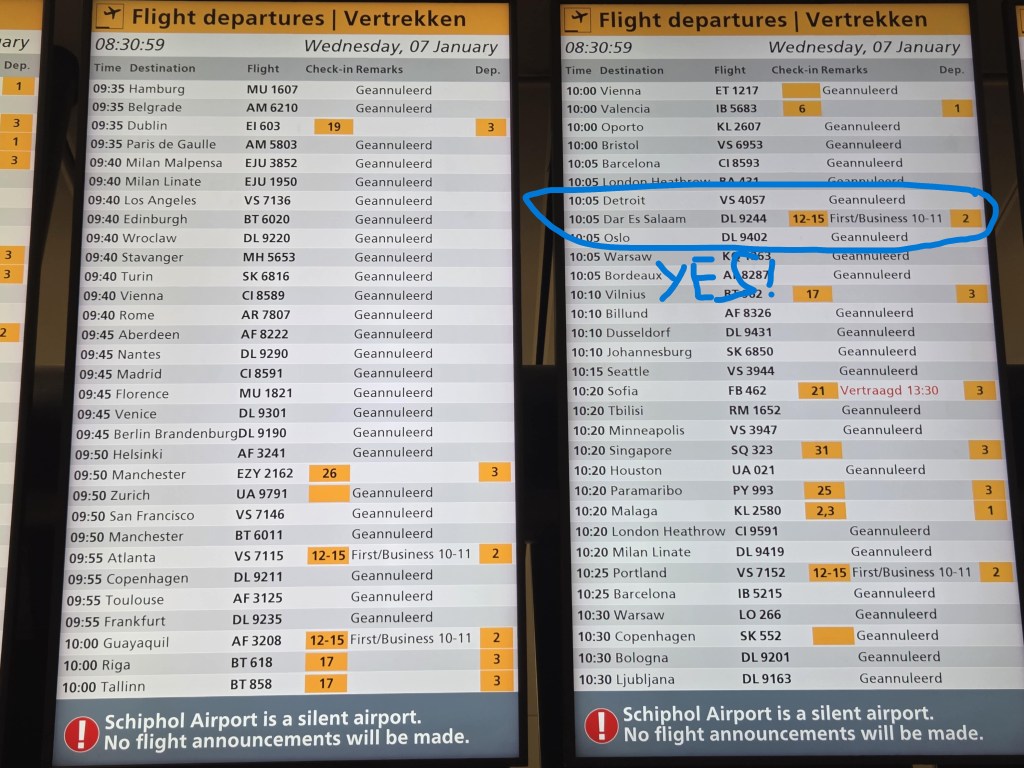
Welcome from Trouspinet the vagabond teddy bear! This time my destination is Tanzania, and I am accompanied by my friend Snoopy for a two week safari. As far as I know, there are no bears in this part of the world, but I am hoping to see lions, leopards, cheetahs, elephants and lots more – plus some amazing scenery and interesting people. We travelled in January to escape the depressing winter weather in London, but made the mistake of booking a flight passing through Schiphol airport in Amsterdam, where a couple of days of cold snowy weather had caused the cancellation of most of the flights. I followed developments anxiously online, but miraculously my flight from London into Amsterdam and my continuation to Tanzania were both among the small number of flights that operated.
Chaos at Schiphol airport, but we were very lucky
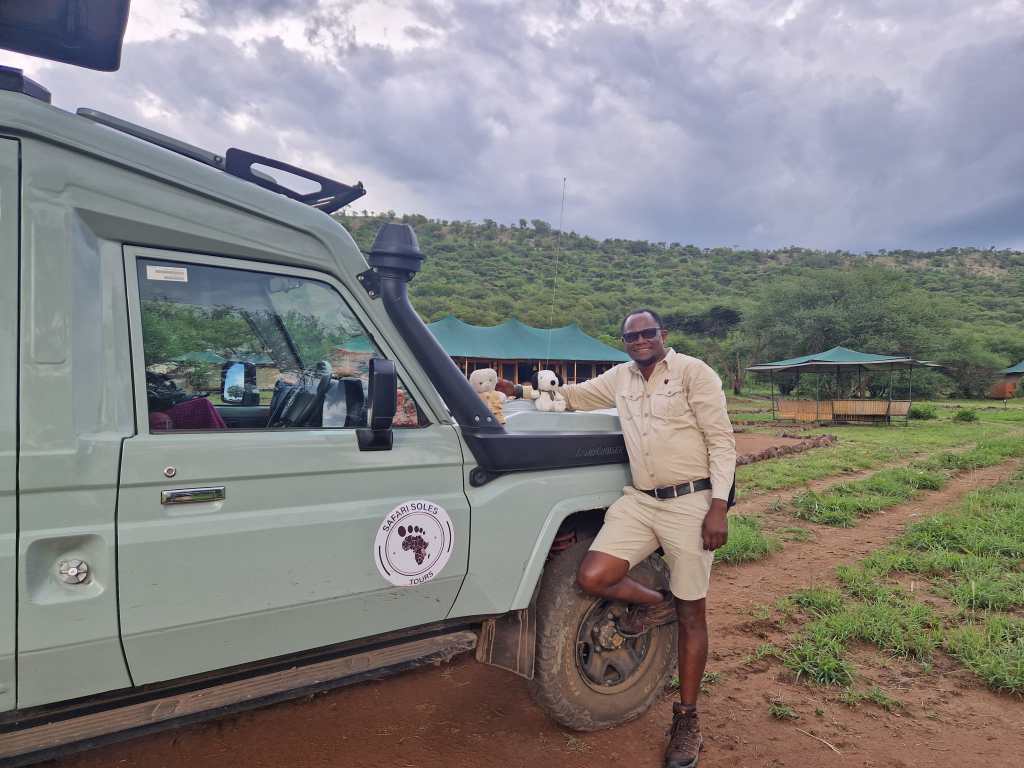
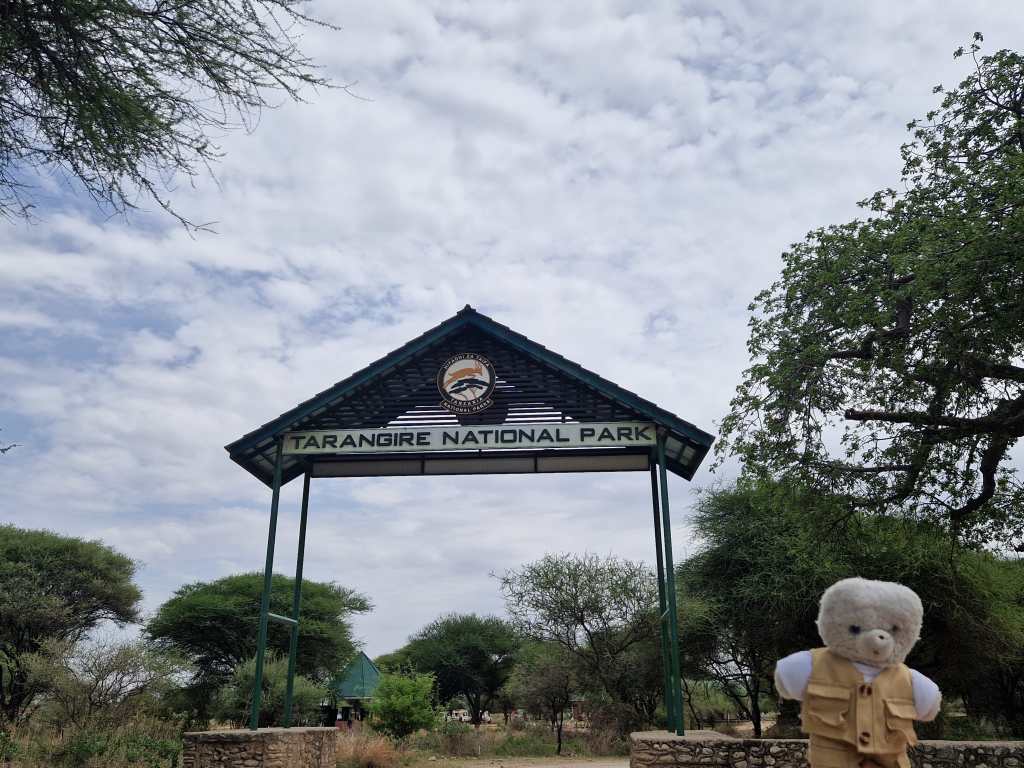
From the freezing cold in Amsterdam, we arrived in Arusha, Tanzania’s third biggest city, late in the evening. Immigration and baggage claim were both very efficient and soon after landing we were enjoying some warm fresh air and a cold beer by the side of my hotel’s swimming pool. We slept well and next day after breakfast met Estomih, who was to be our driver and guide for the next twelve days. He showed us to a large and comfortable specialised safari jeep with an opening roof, and we set off to our first destination, Tarangire National Park, a two hour drive away.
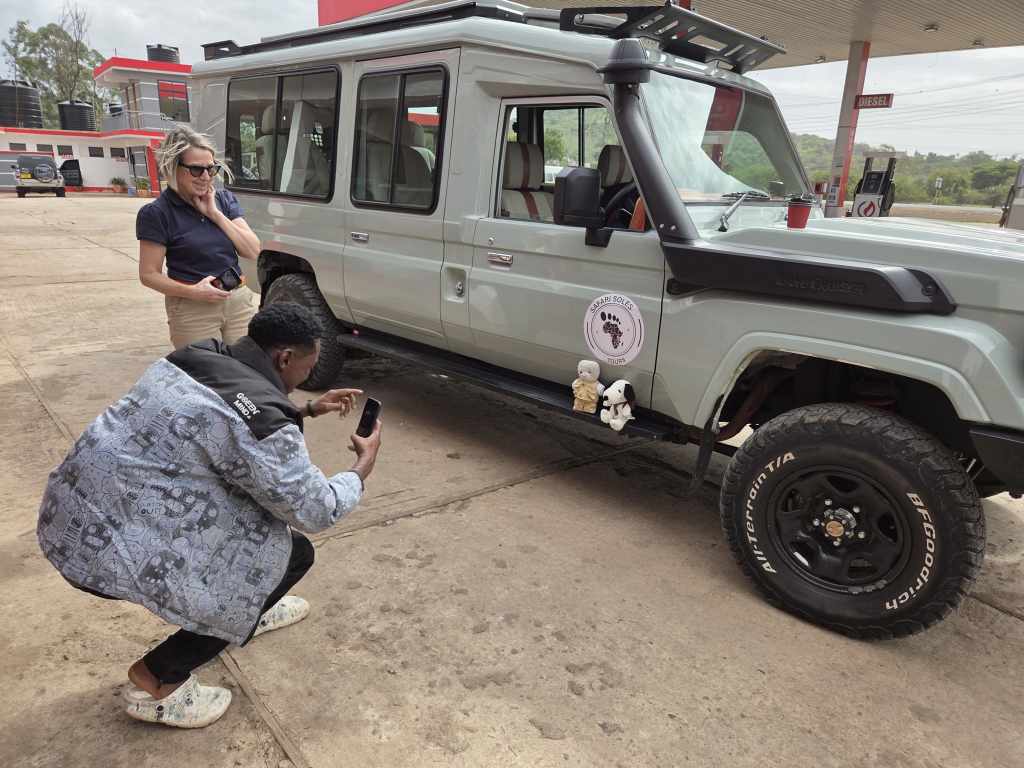
Our guide EstomihLocals were curious to see a teddy and dog on safariThe entrance to Tarangire National Park
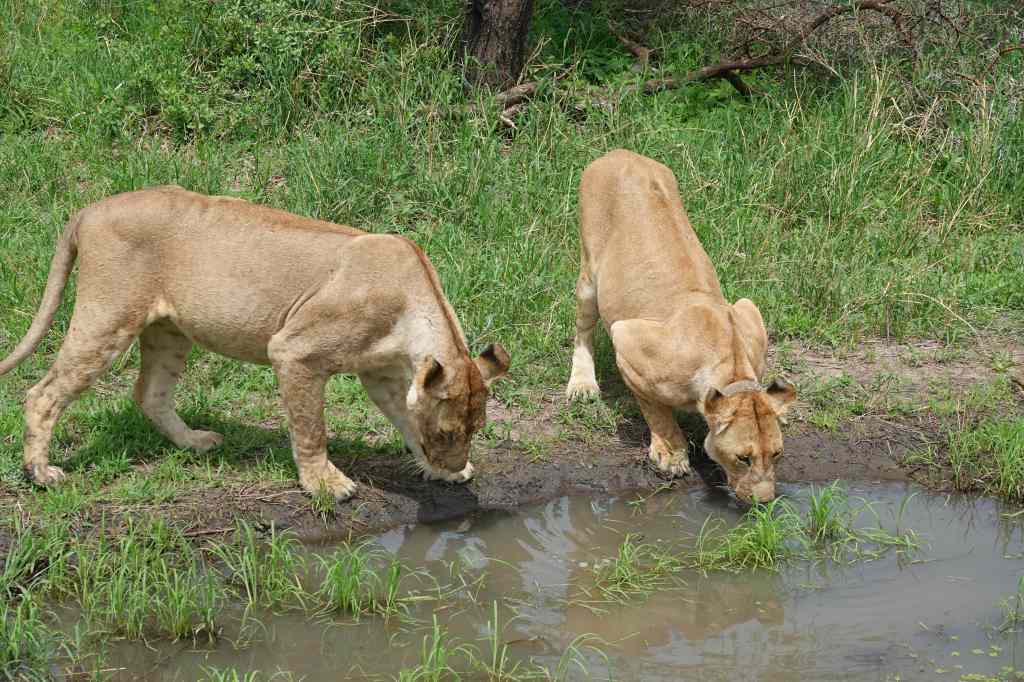
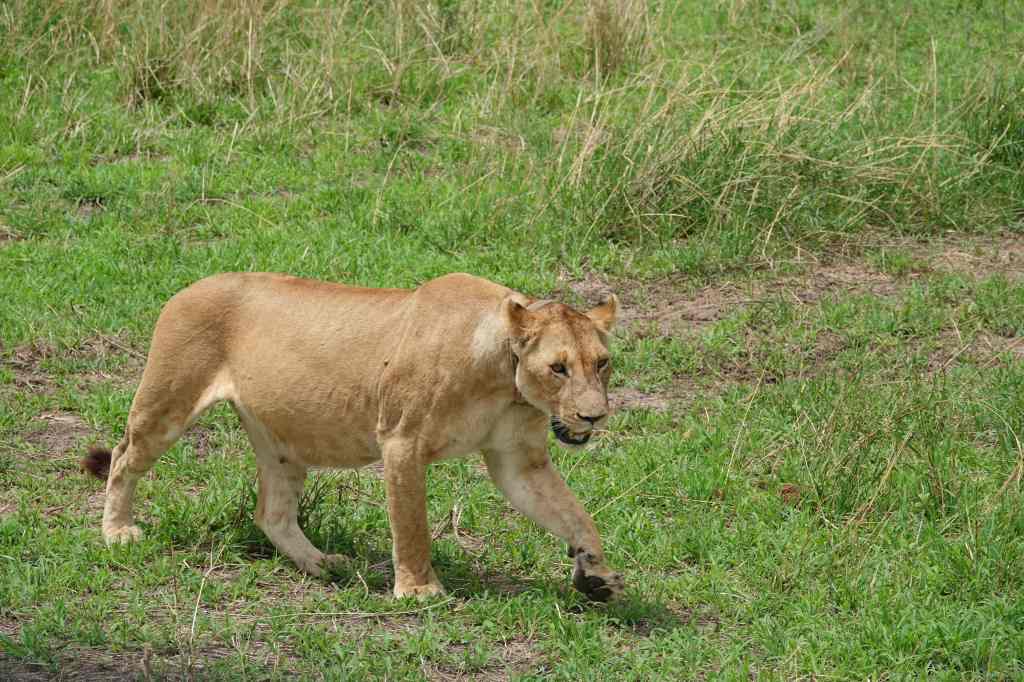
Tarangire Park is known for its dense forests, baobab trees and elephants. It is also home to lions and leopards, but they are usually hard to see because of the vegetation. However, luck smiled on us and a short way after the park entrance we bumped into a group of three lionesses drinking water and half-heartedly stalking some nearby zebra.
Two lionesses drinking waterA third lioness stalking zebra
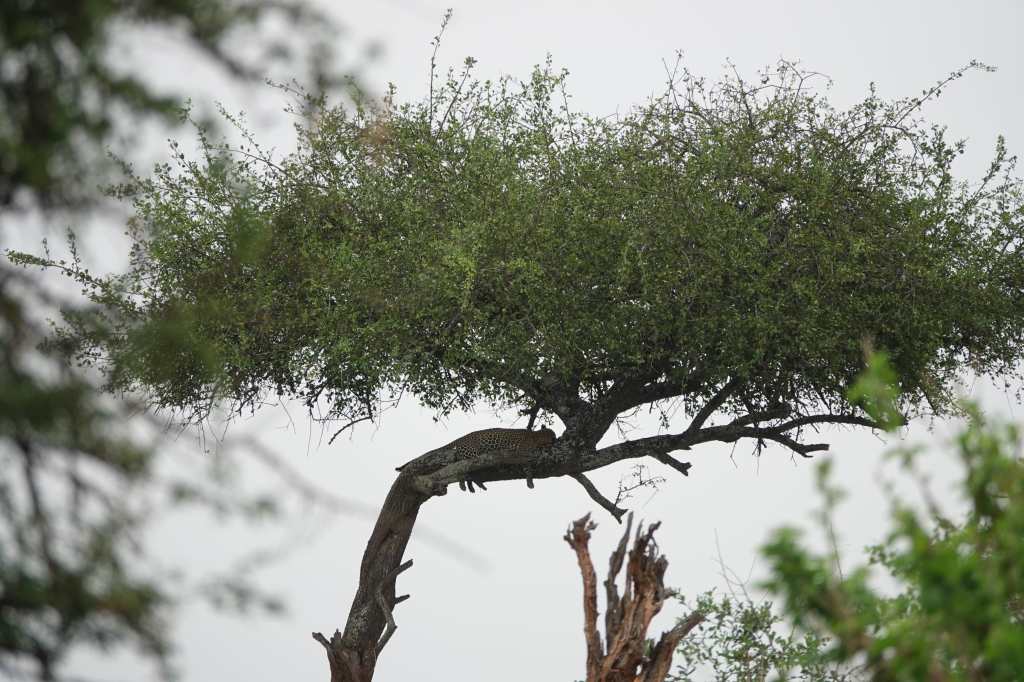
A short way further into the park we came across a leopard, hiding high in a tree.
A lazy leopard in a tree
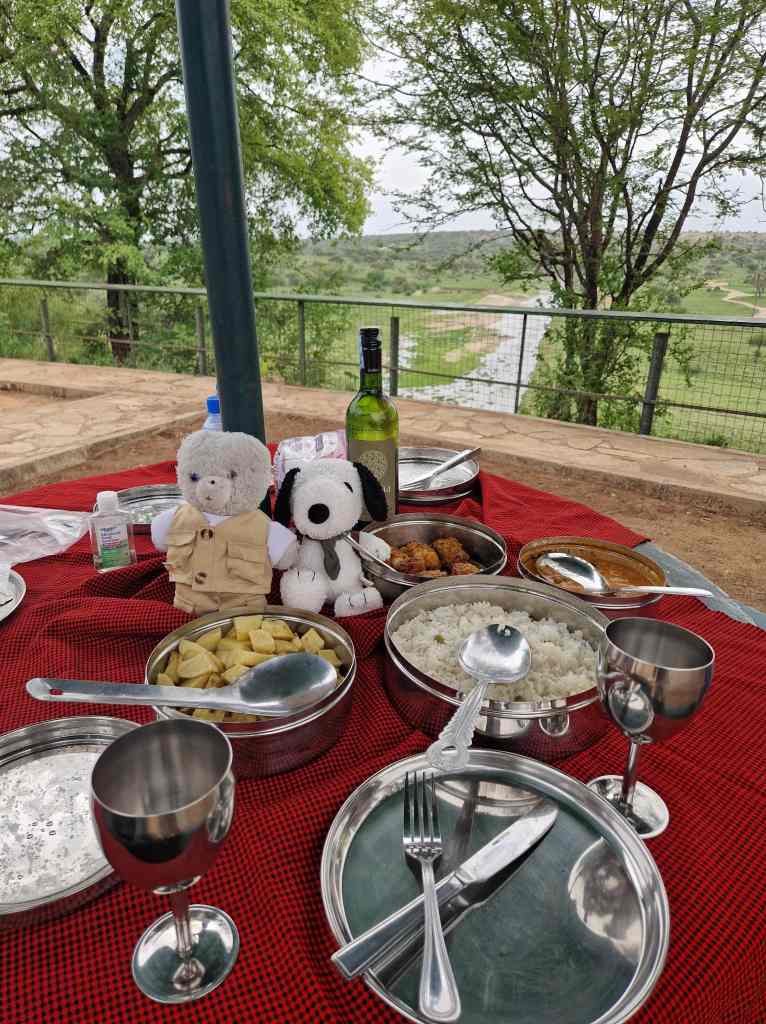
Surprisingly, finding Tarangire’s famous elephants proved rather harder. We drove around searching but the huge animals were nowhere to be seen, so instead we made a break for lunch at one of the park’s picnic areas. This proved to be a treat, and was to be a highlight of each day of our trip. Estomih brought a huge picnic hamper out of the jeep, found a picnic table, and set out a spread of rice, meat and vegetable stews, fish and fruit. As a final flourish he even produced a bottle of Tanzanian wine.
A feast at Tarangire National Park
We spent a leisurely hour sampling this feast and relaxing, occasionally driving away naughty monkeys who would jump onto tourists’ tables and steal any unguarded food.
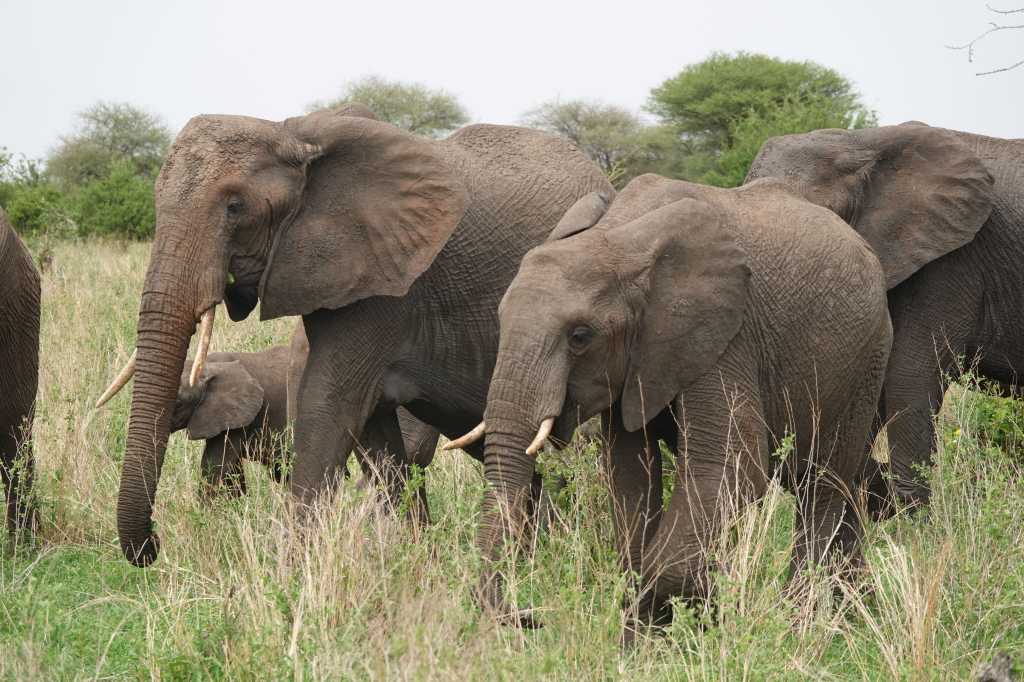
After lunch we set off to explore again, and soon stumbled on a large herd of elephants slowly making their way through the jungle.
A herd of female and young elephants
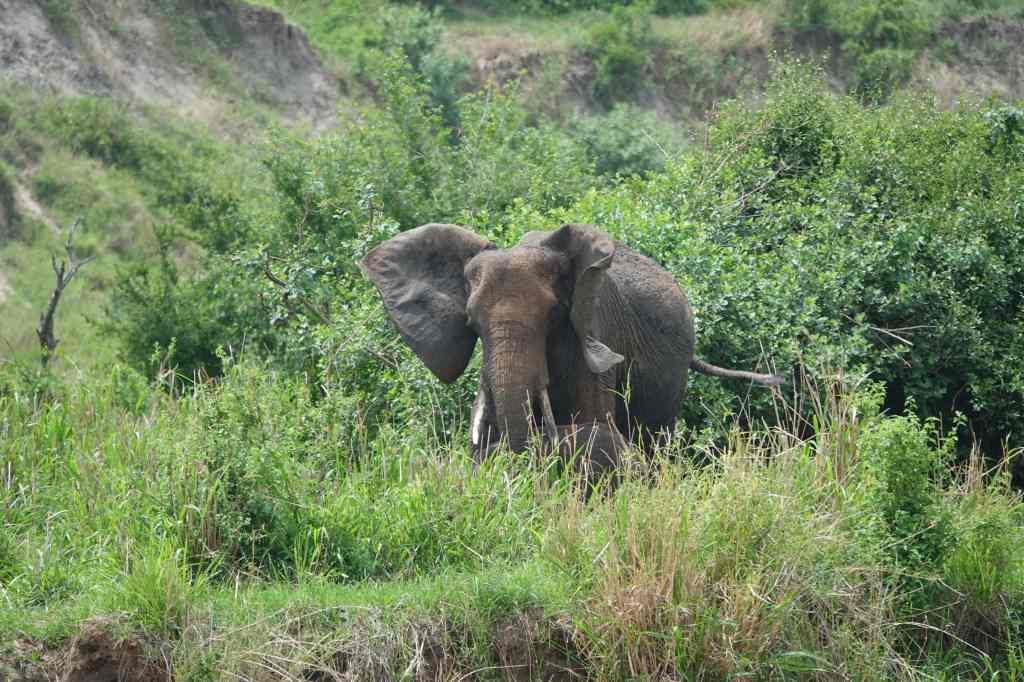
We also bumped into a few single adult males, who usually live separately from the herds of females and babies.
A solitary male elephant
As the afternoon wore on, it grew hot, and the wildlife became harder to see. Estomih drove us towards the remote part of the park where our camp was located; on the way we saw two more very sleepy lions.
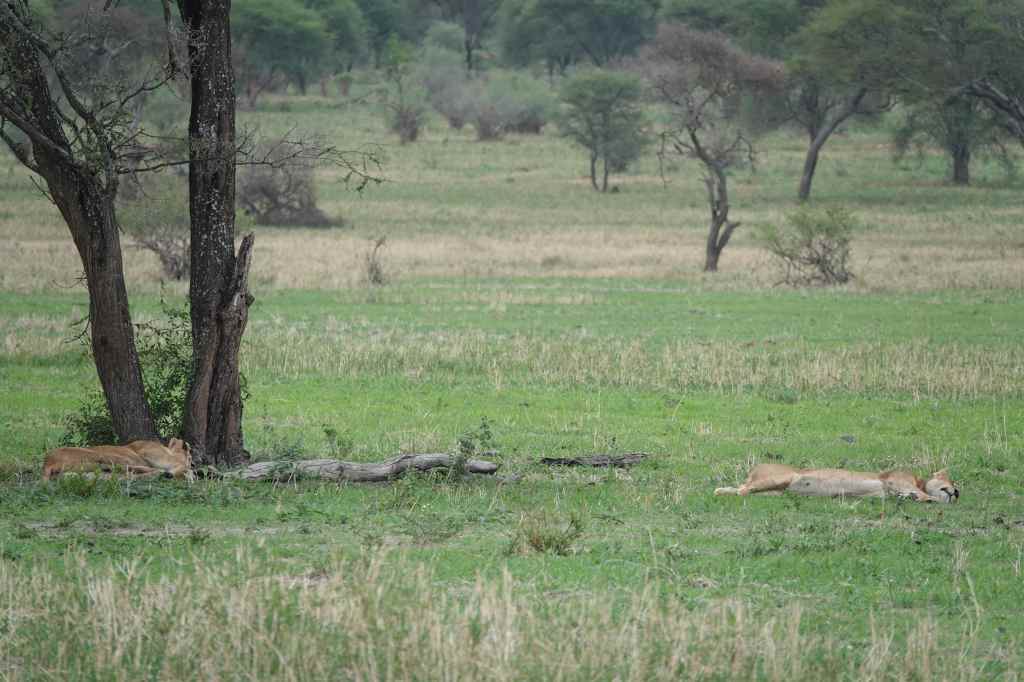
Two sleepy lions
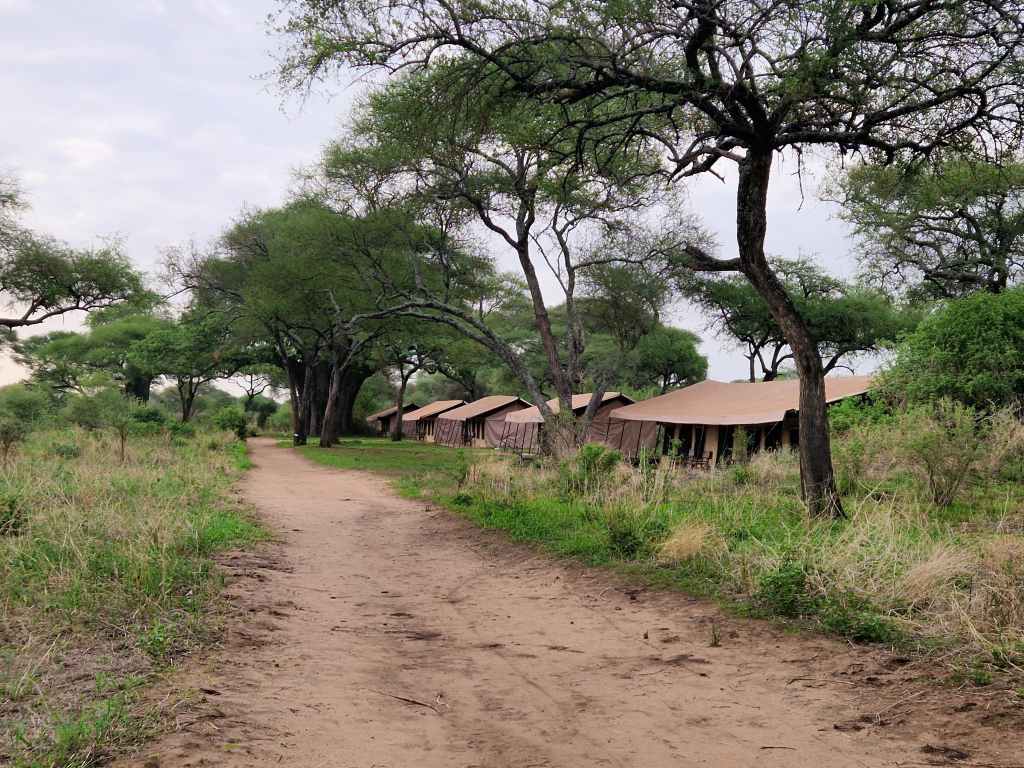
Our accommodation was located inside the park, meaning that it can be visited by wild animals, especially at night. The manager introduced us to his camp, and explained the rules to us – the most important one being to use the walkie-talkie in our room to ask for an escort to take us to and from the restaurant at night. He said that there had been cases where camp staff or tourists had been attacked by animals, but that inside our tent we were quite safe. After dinner – which was good, given the remoteness of the site – we settled down in our tent for the evening. It was large, with a big bed and separate toilet and shower inside. We were soon drifting to sleep, listening to the sounds of the jungle around us. Our safari trip around Tanzania had started well.
And these are only some of Pompeii’s less well-known sights!
Today was the last full day of my Italy trip and I devoted it to visiting Pompeii, the famous archaeological site located half an hour away from Naples on a very crowded train. I arrived as early as I could, to avoid the heat of the afternoon sun and as many of the crowds as I could. I still faced a short queue to get in, and had to squeeze pass various tour groups just after the entrance to the complex.
Pompeii has a long history and was settled by various peoples but is best known as the prosperous Roman provincial town which was buried by the eruption of nearby Mount Vesuvius in AD79. After this disaster it remained hidden under volcanic ash until the 16th century when it was rediscovered. Major excavations only started in the 18th century and were accompanied by looting of some of the site’s art works. In recent years the excavation of Pompeii has been carried out to high archaeological standards, and even today the site continues to offer up new surprises. This was actually my third visit to Pompeii; my first was 50 years ago when I was a little cub, and I don’t recall much of it. The second was in 2000 twenty five years ago, and I remember a site which impressed by its size but not always its beauty, with lots of long, dusty and empty Roman streets laid out in a grid. But Pompeii is possibly the world’s most famous archaeological site, so I decided to make a third visit, and was very glad that I did.
I am not sure what exactly had changed since the year 2000, but this time I was enchanted by Pompeii. There seemed to be a lot more art work on display in the ruined houses, and a much bigger area to explore, including some gardens that provided a partial respite from the heat.
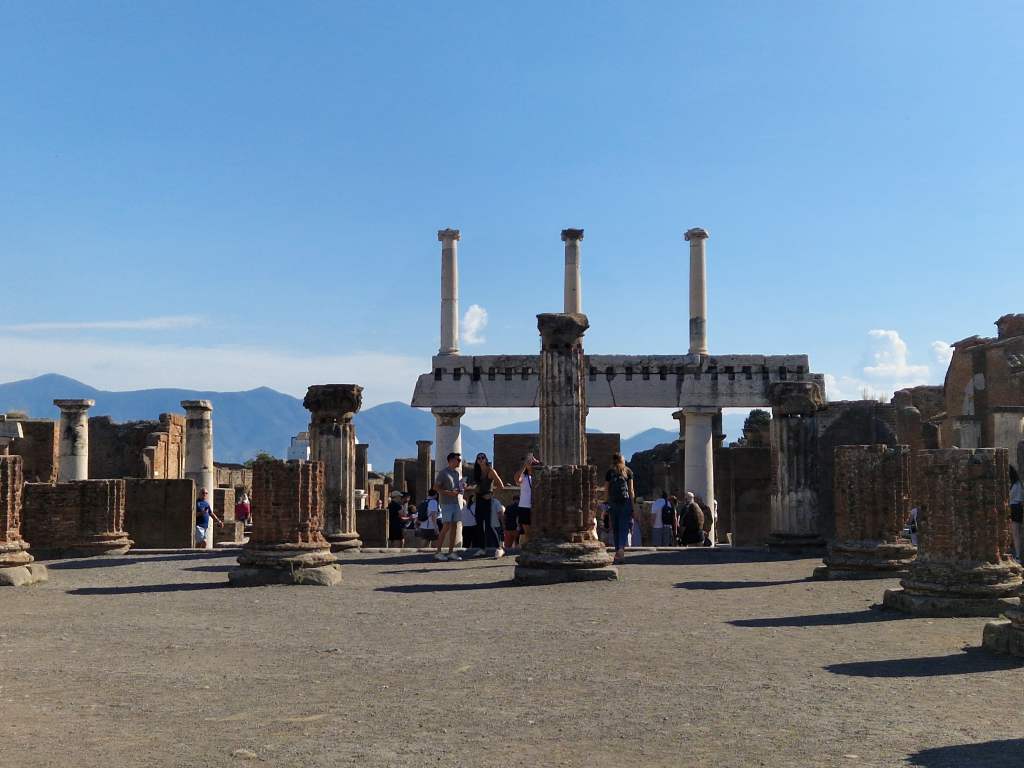
The forum – everyone’s first stop in Pompeii
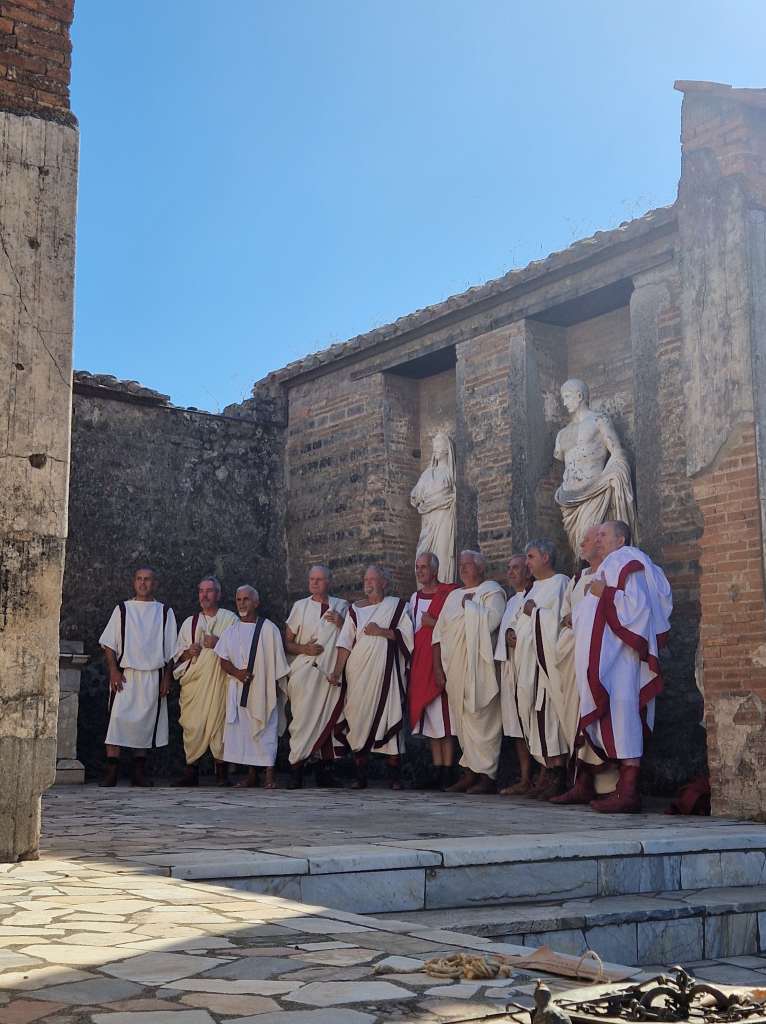
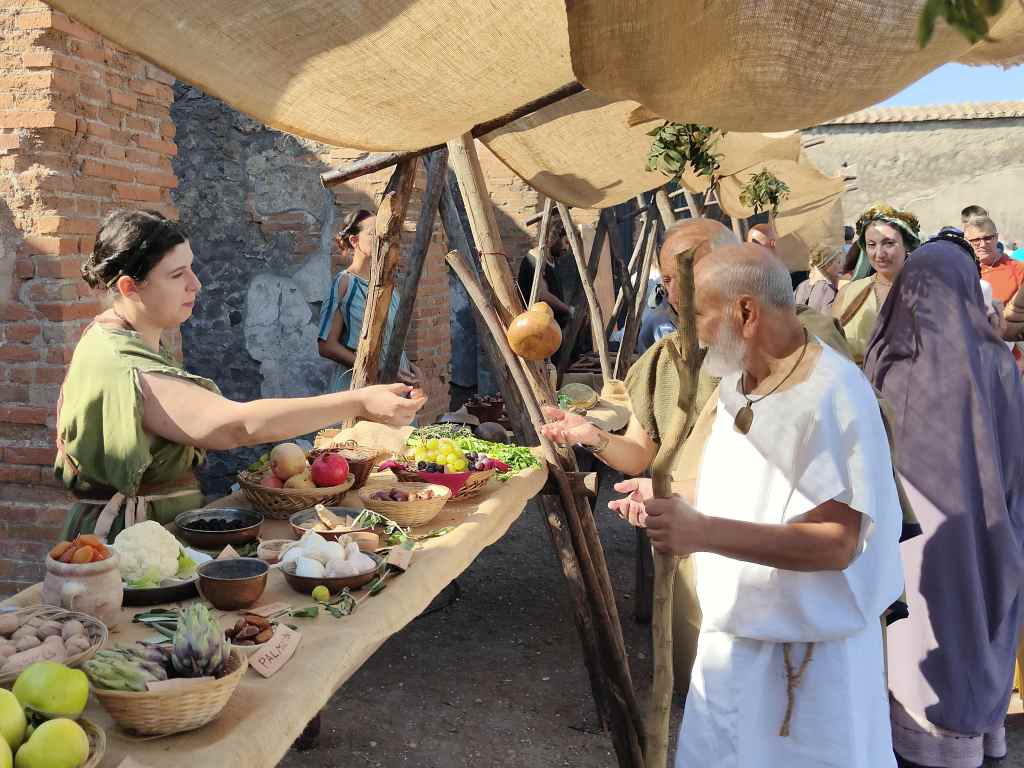
My first stop was the forum. Since this is located on the only road in from the main entrance, it is also everyone else’s first stop, and it was quite crowded. But it was still very impressive, with a fine view of the ruins and Vesuvius towering in the background. I was visiting on National Monuments Day, and to celebrate this the park authorities had arranged for staff to dress up as Romans and pretend to shop or participate in ancient religious rites.
Staff put on a show for visitors
After the forum the many visitors could disperse along several different routes into the ruins and explore them at their leisure, and except for the times I bumped into a tour group visiting the same house, I found it pleasantly quiet. I used the map provided with my ticket to plan my route and try to visit as many as the highlights as possible – seeing everything is simply not possible on one visit. Places of special interest were marked by blue dots on the map – one famous example is the House of the Faun, probably the most opulent residence in the town and owned by an important family. It is named after a small but beautiful statue of a faun that stands in its entrance.
House of the Faun, Pompeii
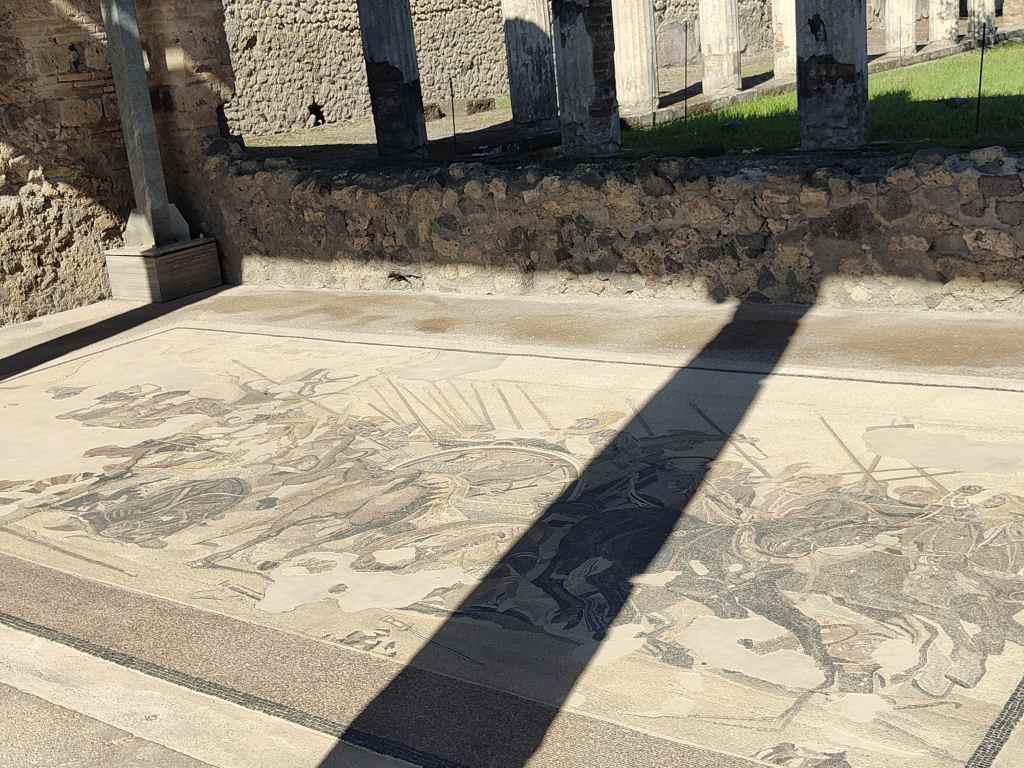
This house is also known for a famous mosaic, showing Alexander the Great in battle with the Persian Emperor Darius. The original has been moved to the Archaeological Museum in Naples (sadly not on display though when I visited) and what you see at Pompeii now is a reproduction.
A copy of the famous Alexander mosaic in the House of the Faun
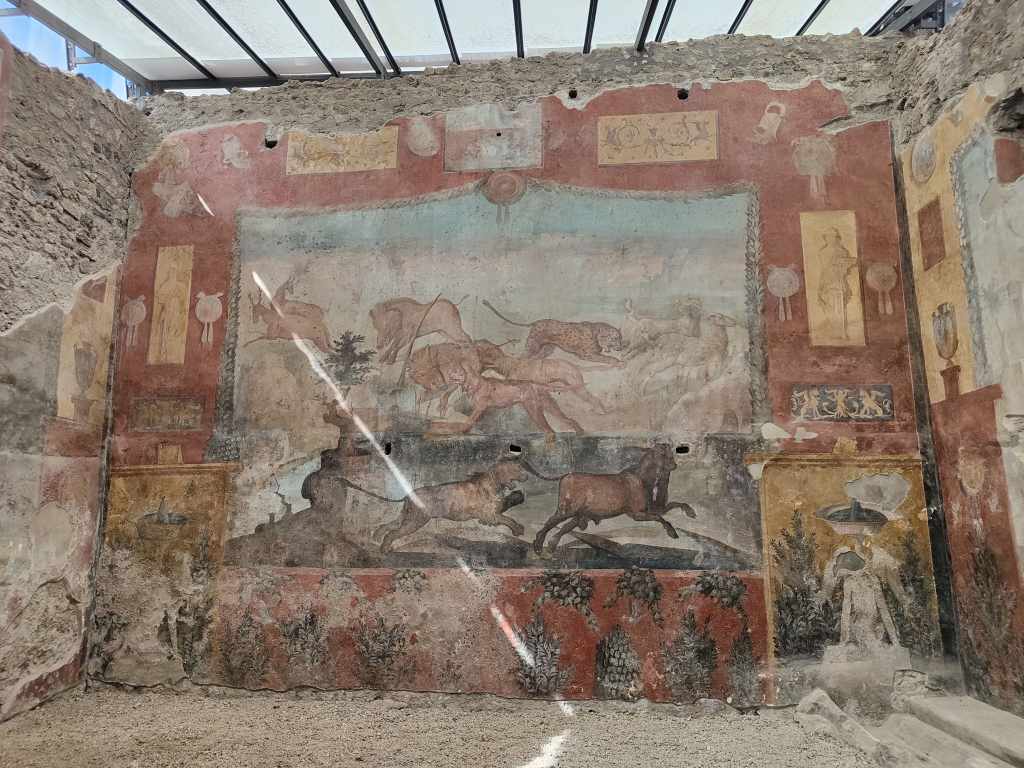
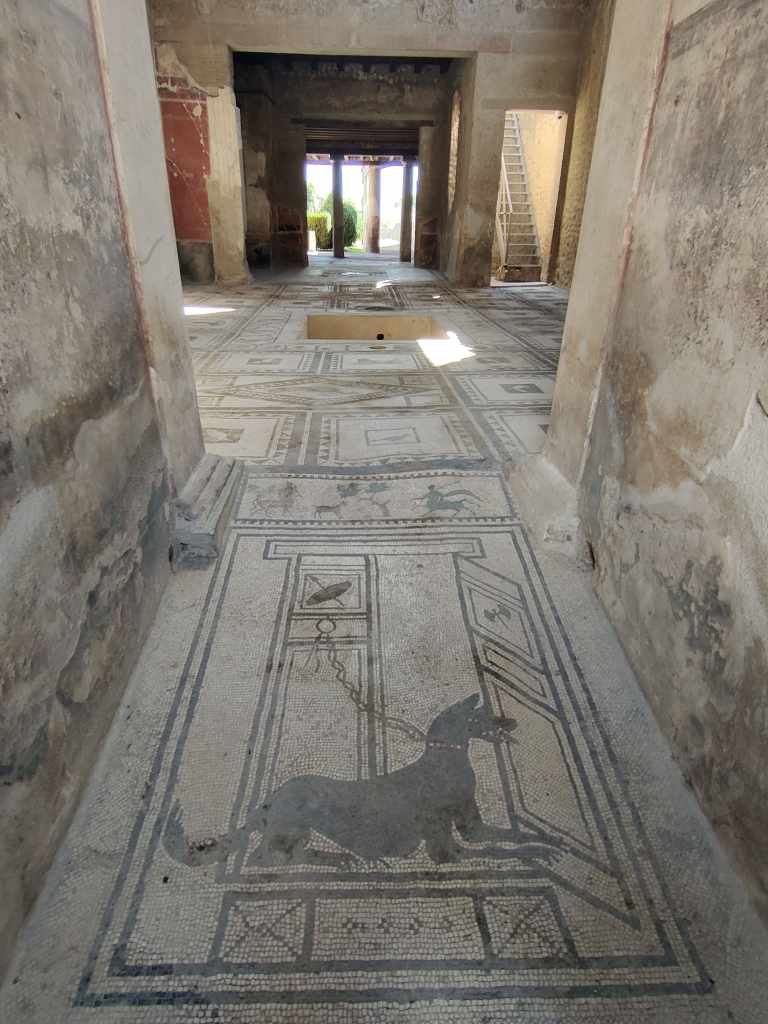
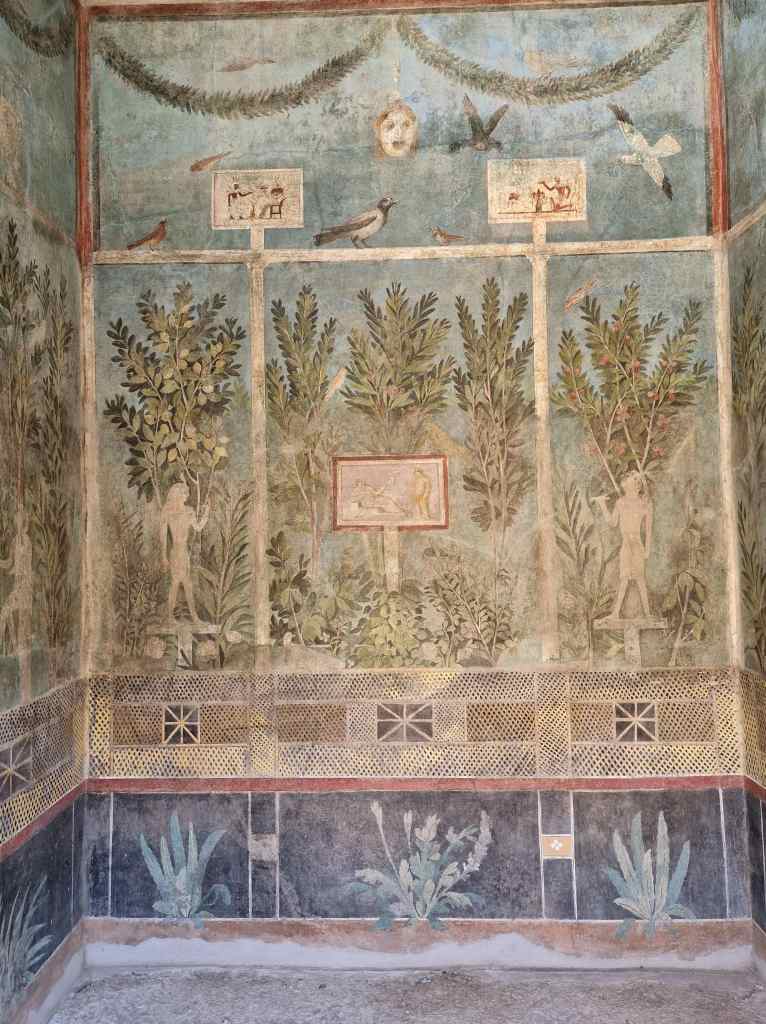
Although the Alexander mosaic is a copy, there are many other magnificent original mosaics and frescos dotted around the ruins. Some of these are well known, marked by a blue dot in the map, and attract a steady stream of visitors……..
Beautiful dog mosaic, PompeiiA once luxurious room in Pompeii
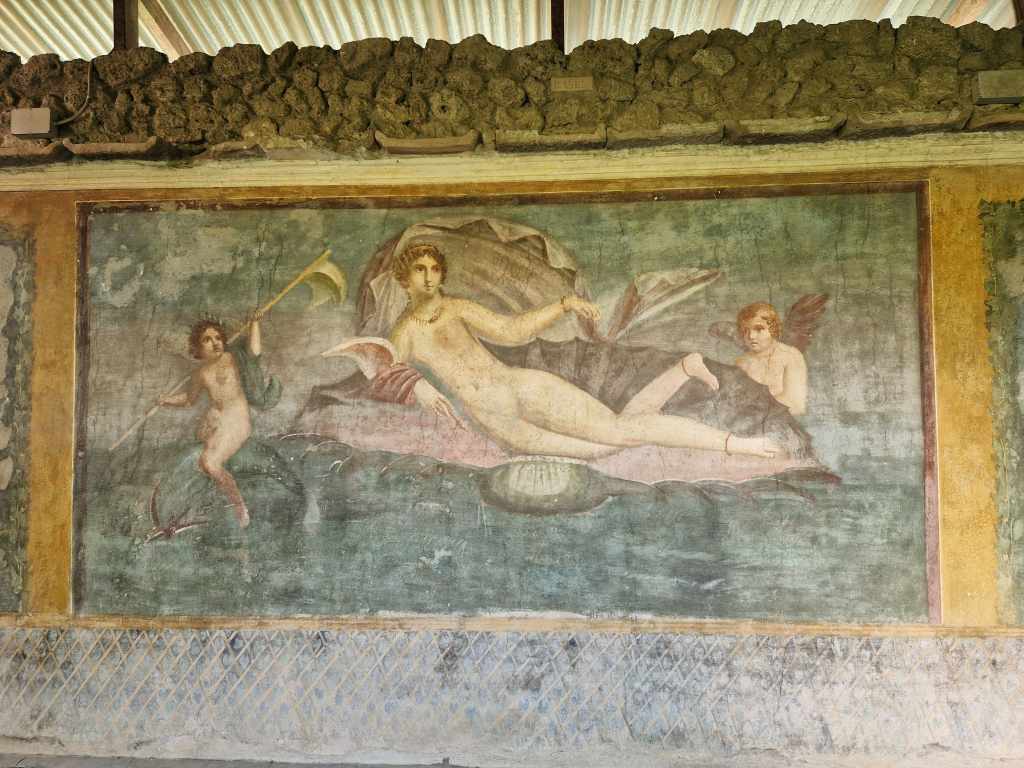
….but others, including a couple of my favourites, were less famous…
Another wonderful frescoThe Venus in a Shell fresco, Pompeii
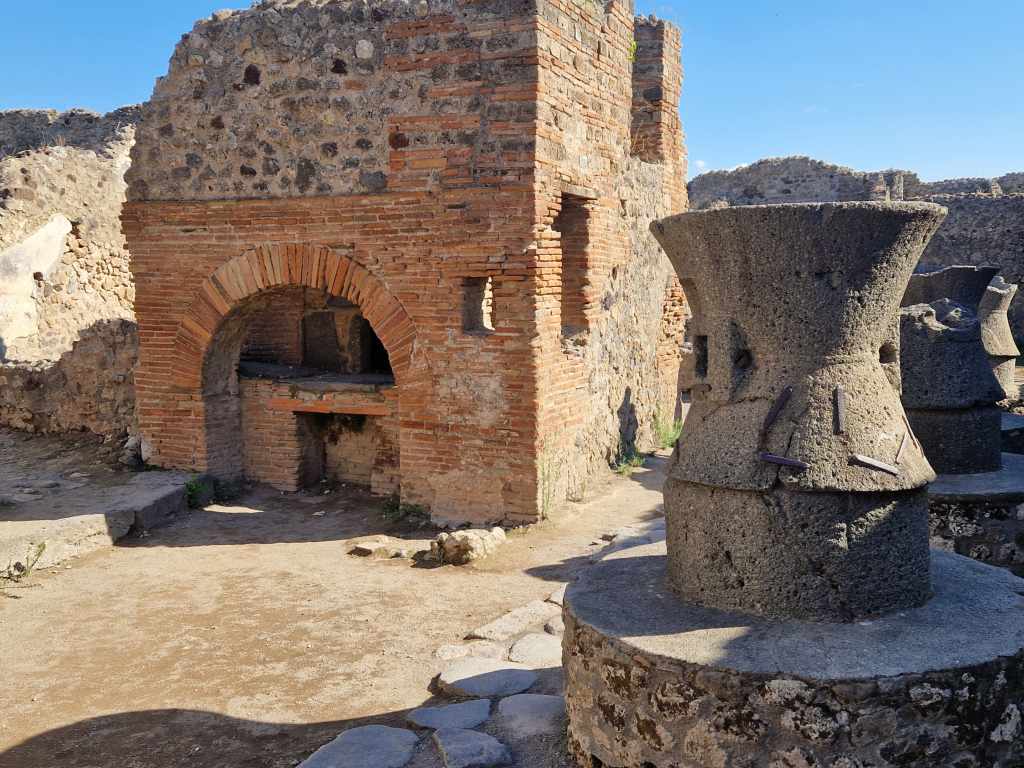
Apart from houses for rich people, with their amazing artwork, Pompeii also had many buildings providing essential services like shops and bakeries. I particularly liked this bread-making shop, with its well-preserved ovens.
A bakery in Pompeii
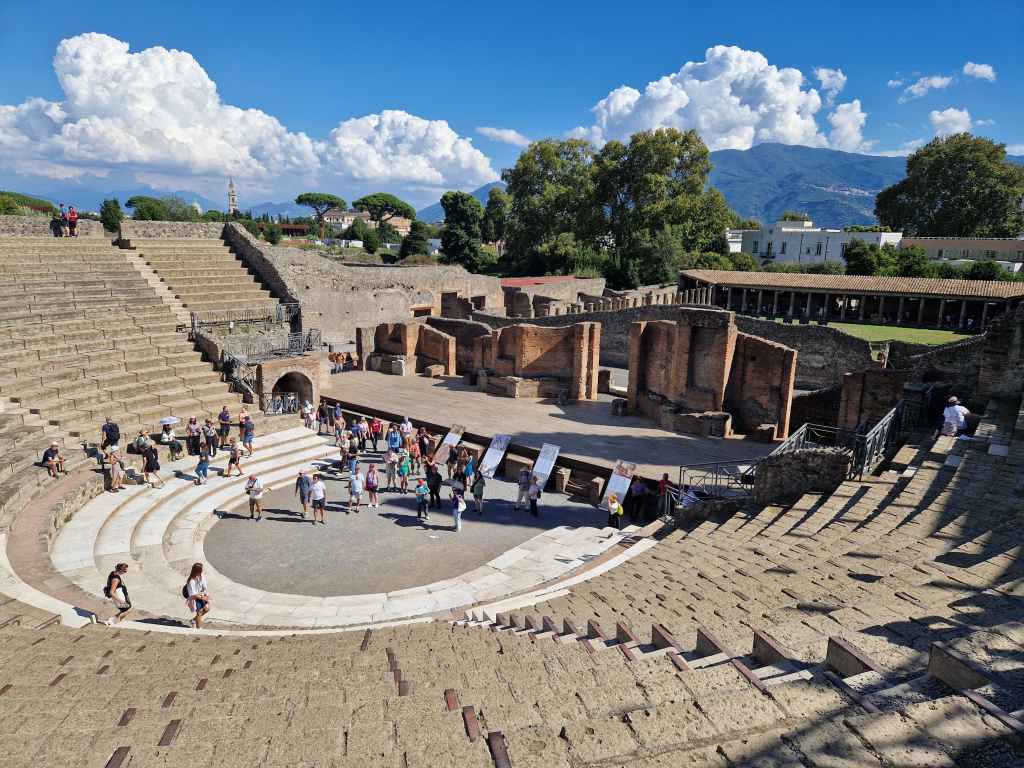
There were also leisure amenities, such as two sets of extensive baths, two theatres and one amphitheatre. That a town with a population of ten to twenty thousand could have such a range of entertainment options gives some idea of how rich the Roman Empire must have been.
One of Pompeii’s two theatres
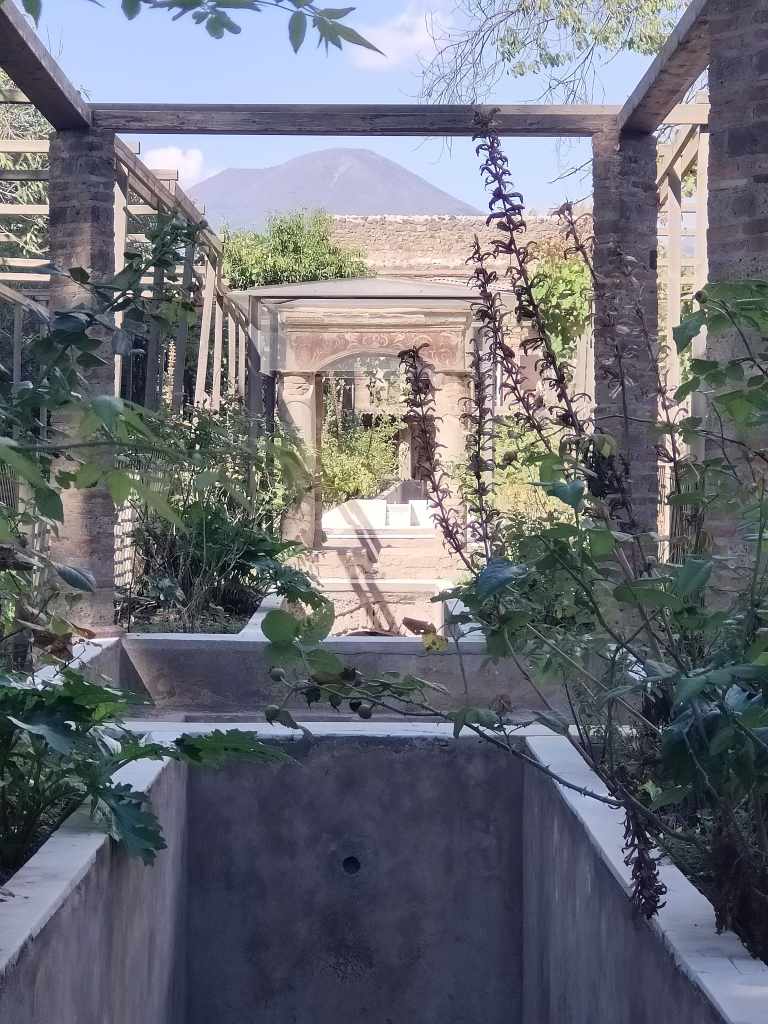
After wandering around the part of the ruins accessible with a standard ticket, I paid for a “Pompeii plus” supplement to see a couple of sites located a short way outside of the main town. The first was the Villa of Diomedes, a large property with an amazing view of the surrounding countryside and pleasant gardens.
The garden in Villa Diomedes, with Vesuvius in the background
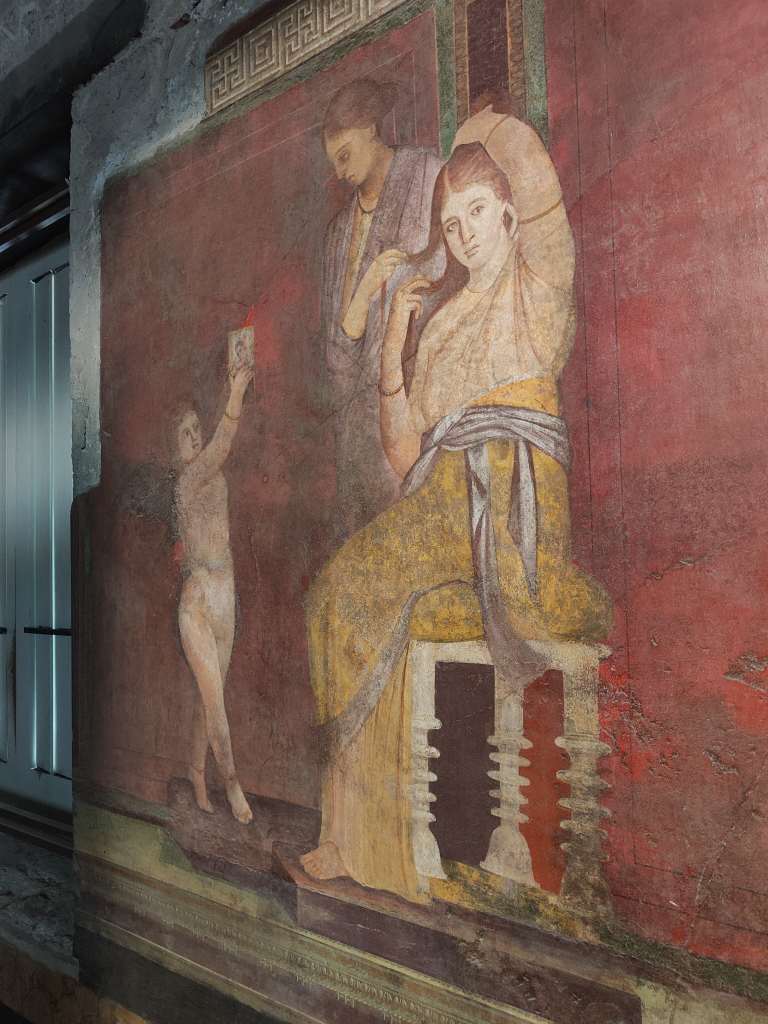
The second was the Villa of the Mysteries, so called because it contains an exceptionally preserved and beautiful fresco of what is thought to be a woman being inducted into a religious mystery cult.
The amazing fresco in the Villa of the Mysteries
Back in the main part of the town I explored some of the greener areas – one particular highlight was the Garden of the Fugitives, which contains the casts of thirteen victims of the disaster, adults and children. These people had probably successfully fled the initial phase of the eruption and had managed to take shelter here. However, a second phase saw a cloud of blisteringly hot toxic gases sweep the city and kill all remaining survivors. Their bodies were covered by volcanic ashes, and over time the organic matter rotted away to leave a hole. During the excavations these holes are injected with plaster to make a cast of the victim. Out of respect for those that died, I won’t include a picture of them in this post, but here is the garden….
Looking down onto the Garden of the Fugitives
After five hours and 20km of walking, my little teddy legs were feeling tired, and it was time to head back to the main entrance. On the way, I visited the Sanctuary of Apollo, which had been crowded on the way in but was now deserted. I stopped to take a last, rather naughty, selfie:
A naughty selfie in the Sanctuary of Apollo
It had been an exceptional day. Pompeii seemed to have improved since my last visit twenty-five years ago – certainly more has been excavated, but there also seemed to be more mosaics and frescos on display, many of them of exceptional quality. The structural integrity of some of the Roman buildings, some standing for two thousand years, puts some of Naples’ crumbling monuments to shame. Finally, I don’t think the onsite coffee shop existed earlier, and the ability to get some caffeine and cold drinks halfway through my visit had definitely helped me keep going for so long. I hope that I will be a fit enough bear to make at least one more trip to Pompeii, in another twenty-five years’ time. Excavations continue, and it will be fascinating to see what treasures they unearth.
Well, that is all for this series of posts about South Italy. It was a great trip, with a bit of everything – the amazing and anarchic city of Naples, the scenery of the Amalfi coast, the beautiful villages and cities of Puglia, and the amazing ruins of Pompeii. I will be back, in particular to explore Naples, where there were very many things that I missed, and the surrounding area where I have yet to hike up Vesuvius, visit the ruins of Herculaneum, sail to Ischia…….the list of things to do is very long!
Naples, Centro Storico – courtesy of Colette Hewitt Photography
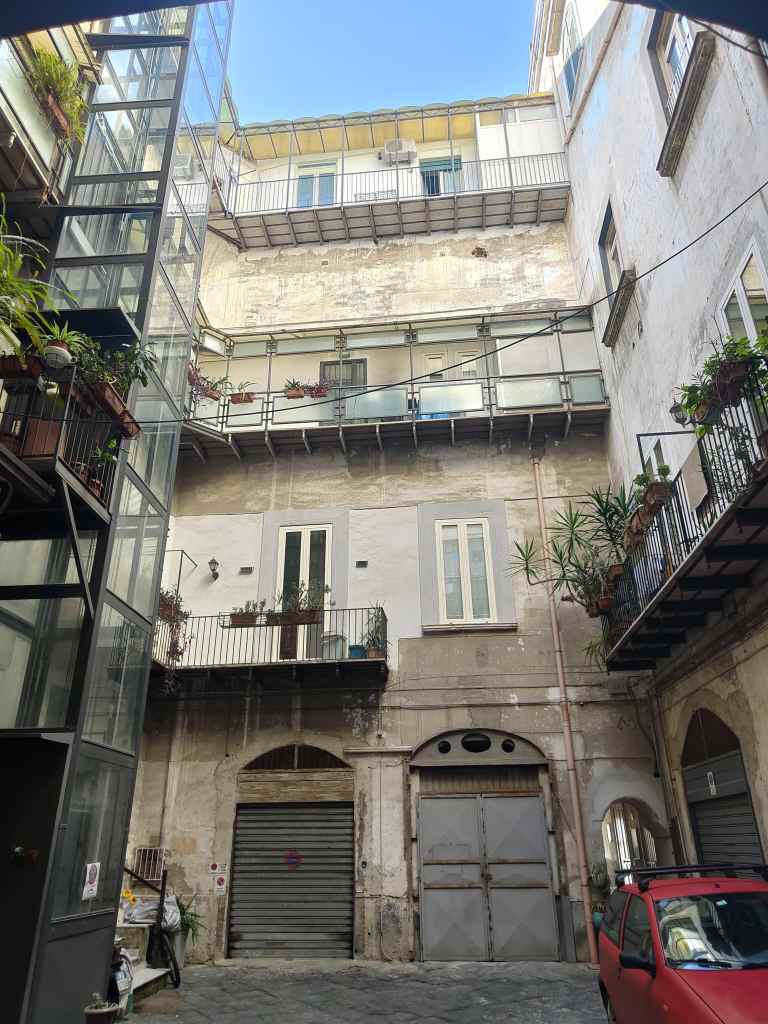
For the end of my exploration of Italy’s south, I had reserved a couple of nights in Naples. I had already spent one night here at the start of my trip, in an upmarket area near the port and the sea. This time I had chosen to stay in the centre, and my accommodation gave me a good introduction to the joys and frustrations of the city. It was a bed and breakfast establishment located in a typical Naples side street, lined with tall houses that might once have been grand, but which were now in need of refurbishment. A large wooden door opened into a rather dingy internal courtyard, from where a rickety lift took me up to the top floor of my building.
The unpromising courtyard of my B and B
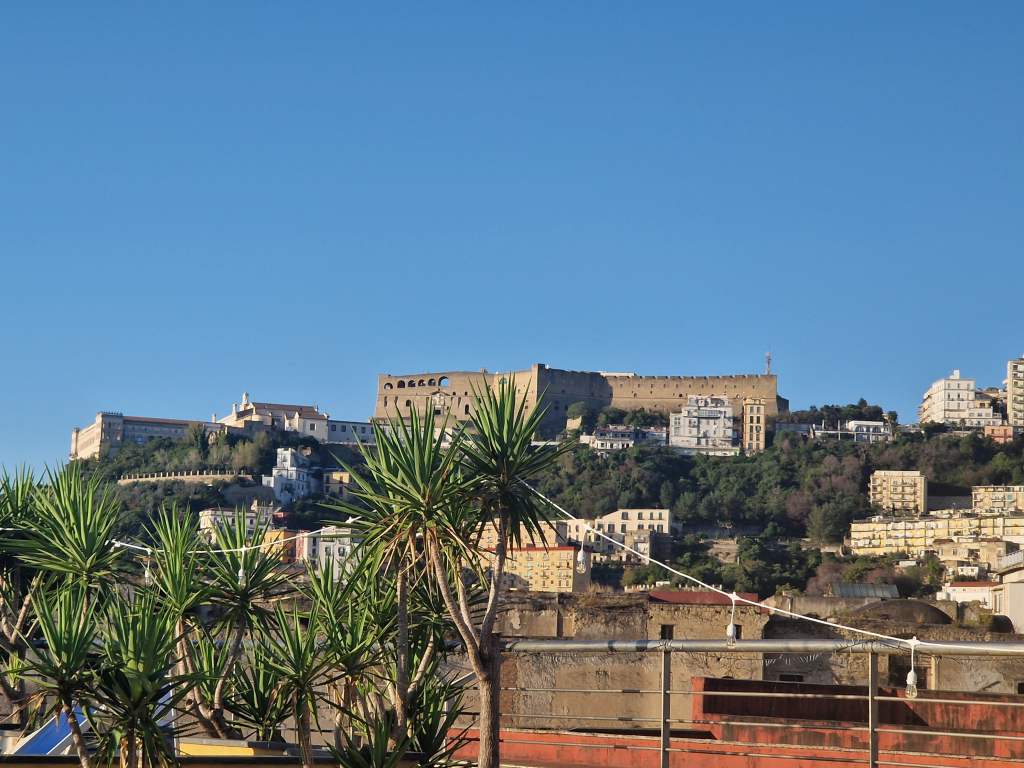
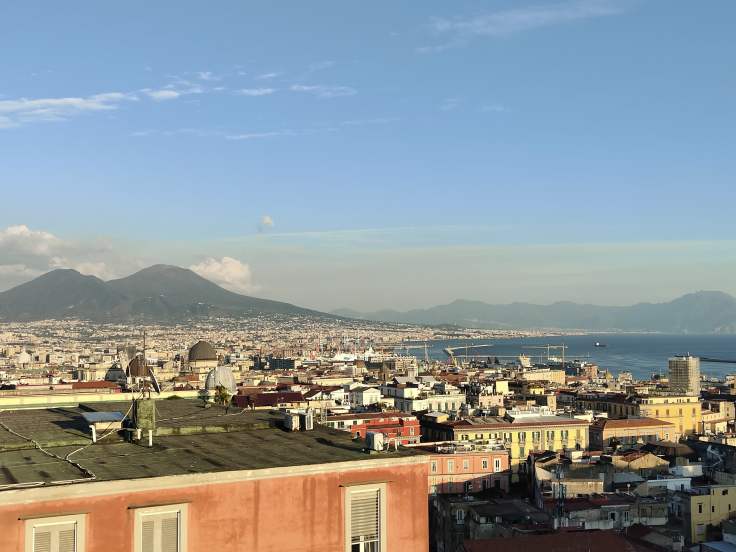
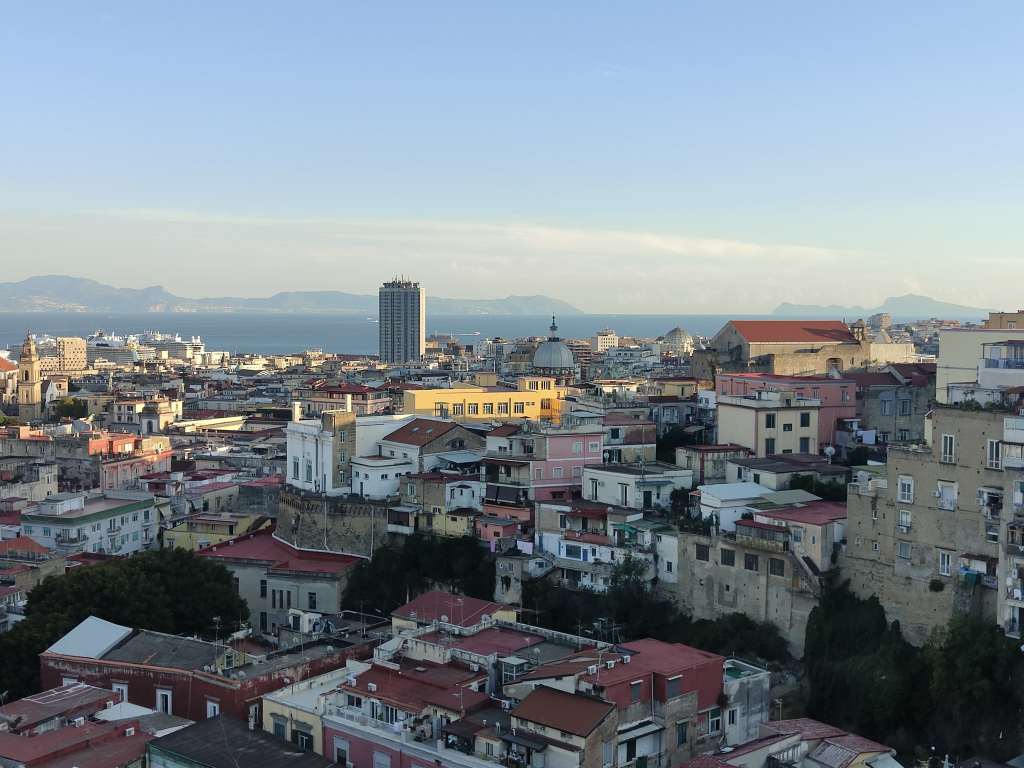
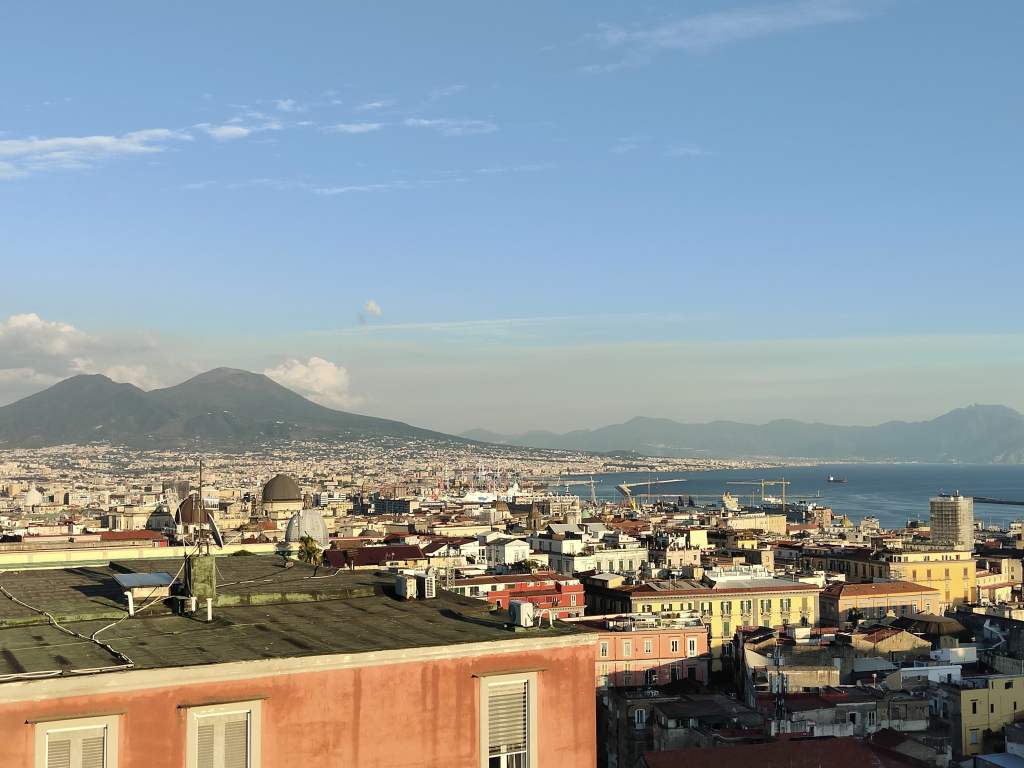
At the check in, my host led me to a room which was bigger, but not as nicely furnished, as the one I had booked. I complained and was told via Google translator that my original room was occupied. After I insisted, I was told I could have my chosen room after a two-hour wait. I was regretting my choice of accommodation until I was led up to the owner’s roof terrace for a welcome aperitif. There I enjoyed an Aperol spritz and some nibbles…and an amazing 360 degree view of Naples, a city with one of the very best settings in the whole world.
The magnificent view of Naples’ Castel St. Elmo from my terrace, looking west…….and the view east over the Bay of Naples
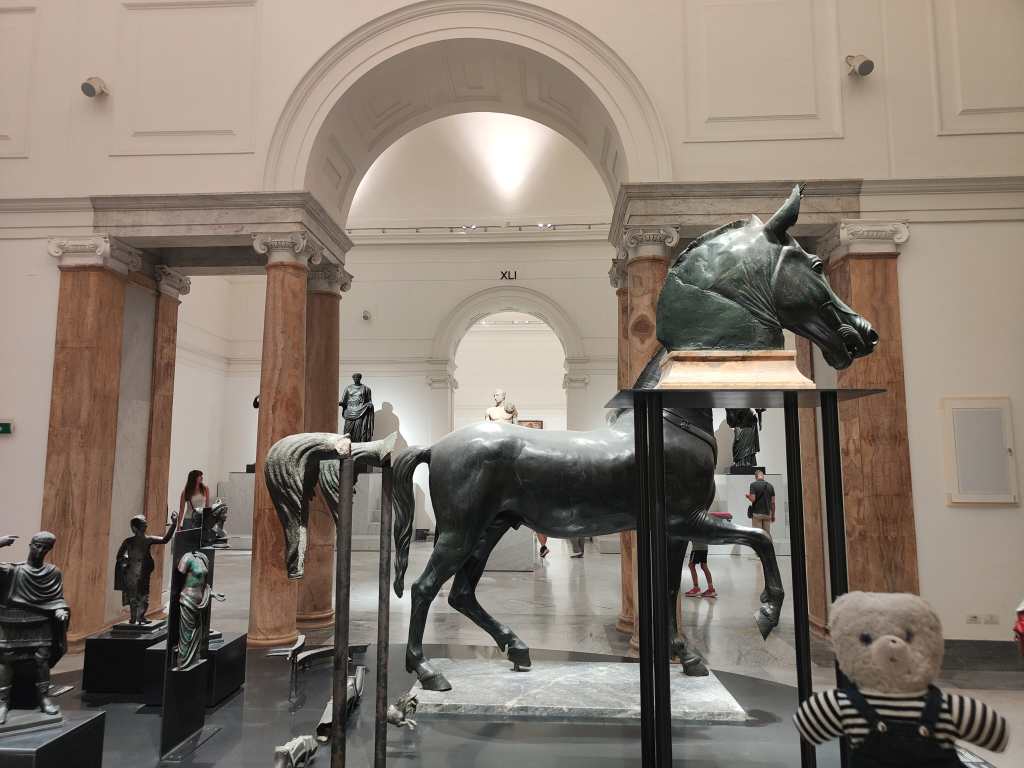
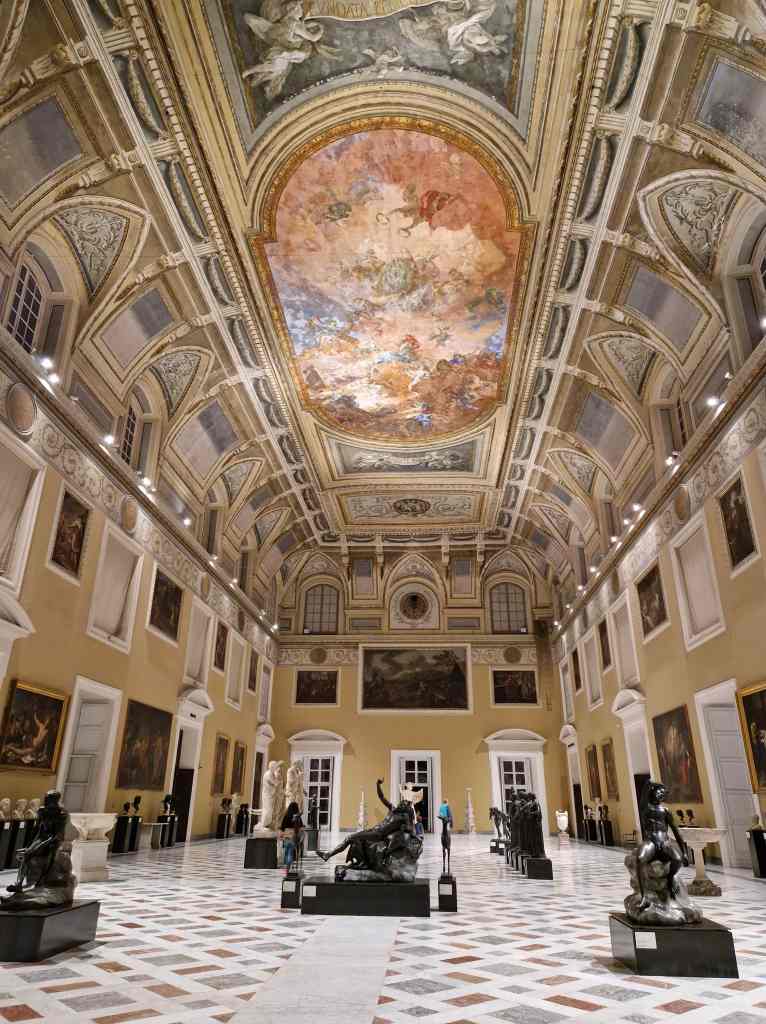
After freshening up, I set off to explore. My first stop was the Naples National Archaeological Museum, which has one of the best collections of ancient art in the world. I was lucky to visit when they had a special evening opening, and the galleries were quiet and very atmospheric.
Statues from Pompeii at the entrance of the Naples National Archaeological MuseumAn immense display room on the second floor of the Naples National Archaeological Museum A mosaic of an upwardly mobile Pompeian couple, Naples National Archaeological Museum
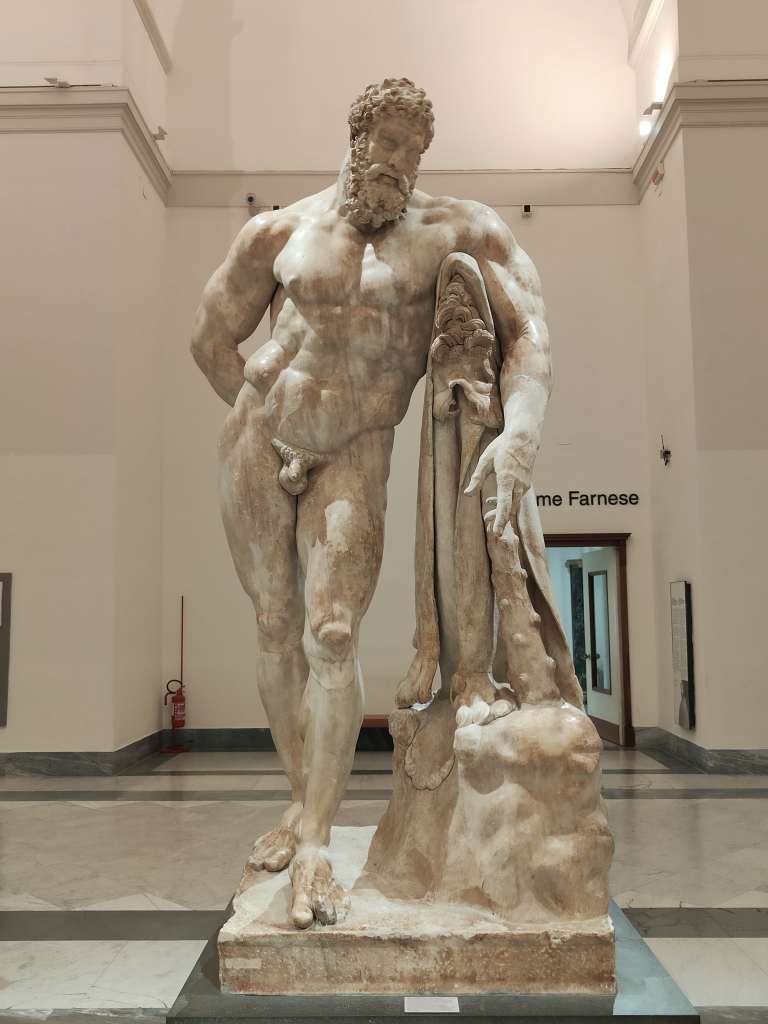
Many of the museum’s exhibits come from nearby sites like Pompeii and Herculaneum, but the museum also houses the magnificent Farnese collection, first assembled by Cardinal Alessandro Farnese (later to become Pope Paul III) in the 16th century and originally kept in his palace in Rome.
The Farnese Hercules
The museum is huge, and you could easily spend a day there, but I was a bit tired and limited myself to a couple of hours seeing the highlights. Apart from the magnificent mosaics and sculptures, there was also a fun exhibit of items that had been recovered after being stolen, together with the stories of their recovery. Some of these were quite funny, involving organised crime, disorganised crime, corrupt officials, innocent grandmas, bankrupt aristocrats or dodgy art dealers versus a special unit of the carabinieri set up to recover lost art work.
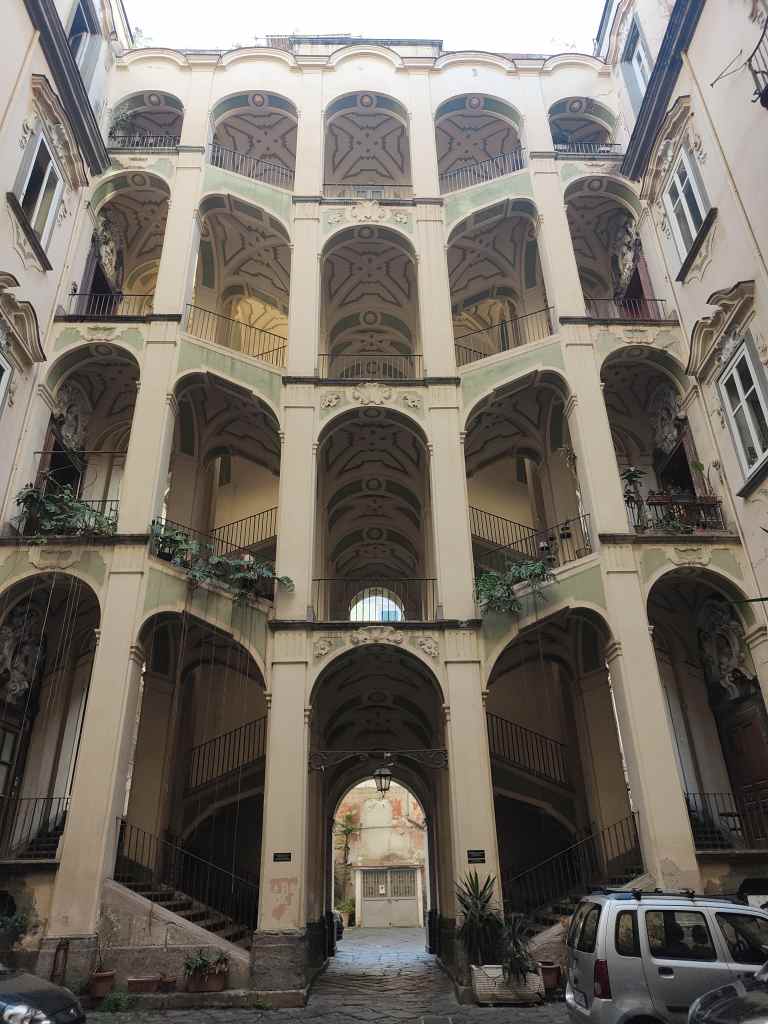
My next day was spent exploring central Naples, a chaotic, dirty, occasionally beautiful and always lively city. It is a good place to explore on foot – which is a good thing, since the traffic is terrible and the driving mad. My exploration started in the Rione Sanita district, a short walk from my accommodation. This was once where aristocracts lived, but became one of Napoli’s poorest areas with a reputation for corruption and crime. Today it is considered safe again to walk around but is still a poor, working class district, which features narrow streets lined by tall, once grand but now crumbling buildings, whose walls were covered in graffiti and from whose balconies clothes were hanging to dry. Even here though, in one Naples’ least touristy neighbourhoods, there were some stunning buildings to be seen by those brave enough to venture here.
The Palazzo dello Spagnuolo seen from the street The magnificent staircase inside, if you venture into the courtyard
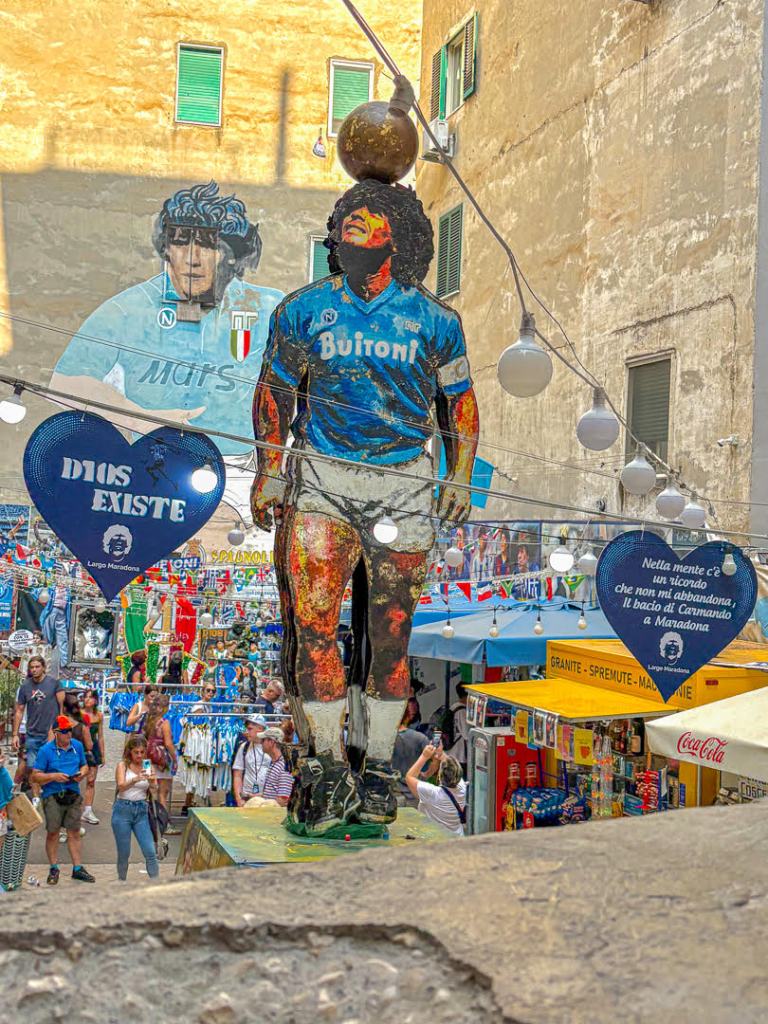
Every street seemed to have a small shrine in the wall of a house, and every small neighbourhood had a church – some dilapidated, some magnificent. Apart from Christianity, Neapolitans’ other religion is football, and every street also had a mural either devoted to the fact that Napoli had won the Italian championship four times or to the former star player Diego Maradonna, who last played for them in 1991, but is still worshiped locally.
Maradonna murual in the Centro Storico, courtesy of Colette Hewitt Photography
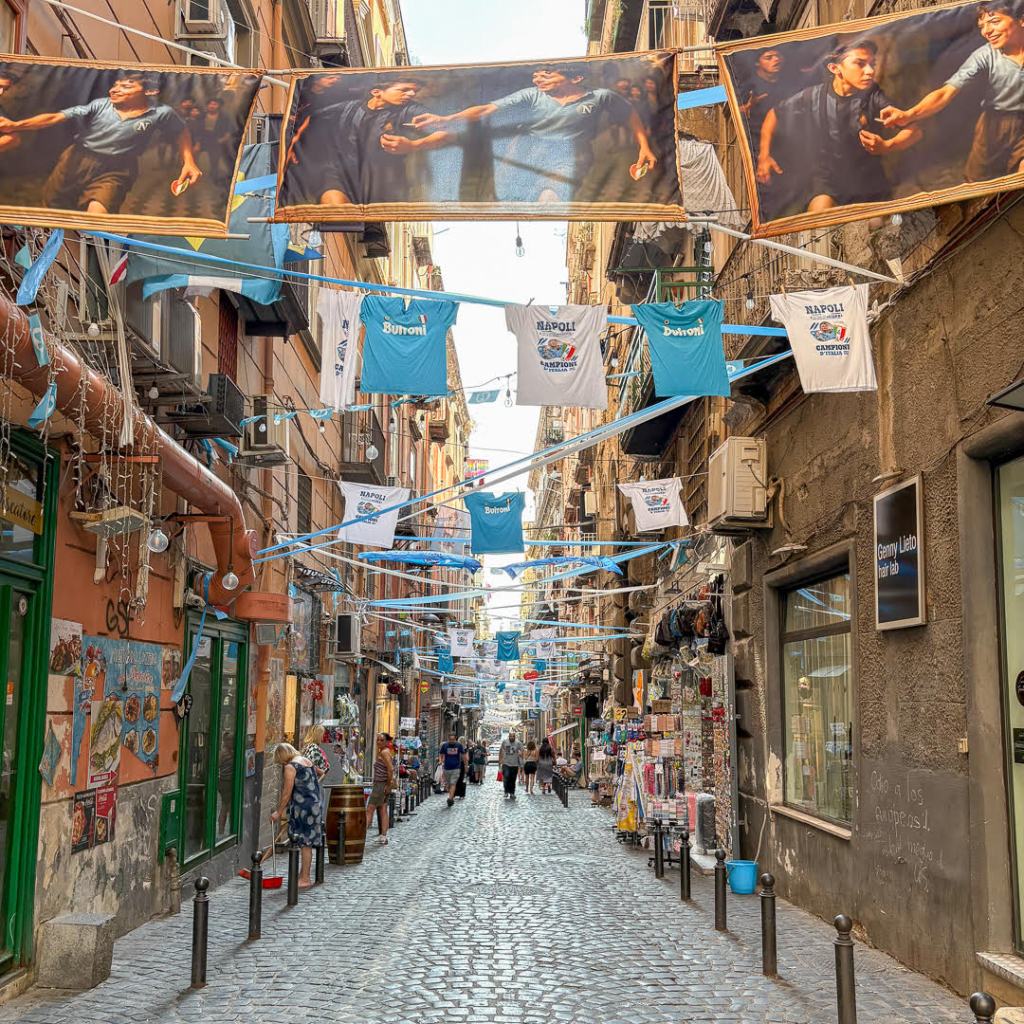
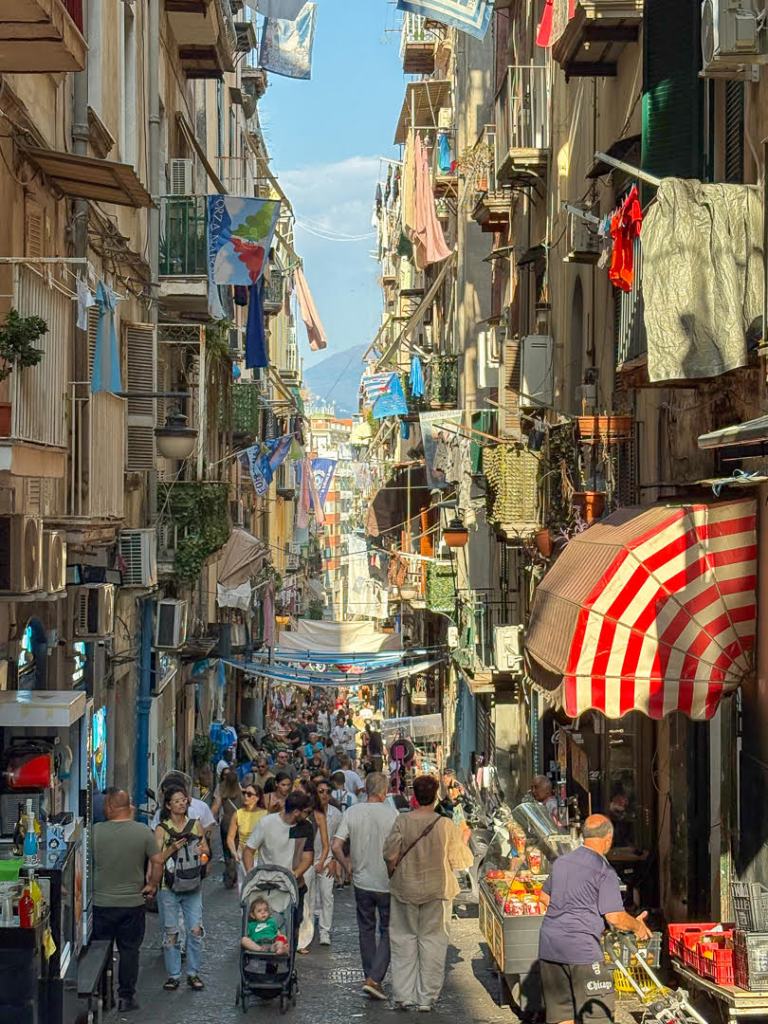
My walk then took me into Naples’ Centro Storico, the heart of the city. This was a noticeable richer area, with many more visitors. Compared to Raino Sanita, it had the same narrow streets, more old buildings, slightly less litter and graffiti, but also had cafes, restaurants and shops for tourists.
Centro Storico typical street, courtesy of Colette Hewitt Photography
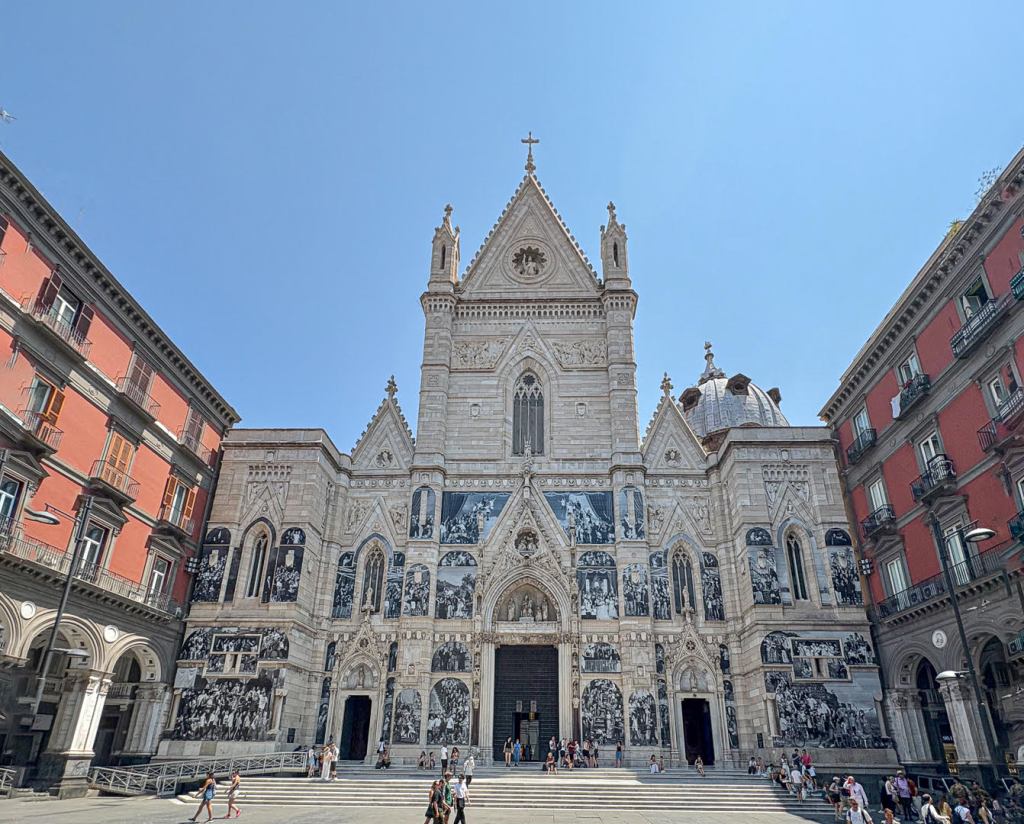
Amid all this seething, dirty and fascinating urban sprawl are many world-class tourist attractions – so many in fact that I only had time to visit a small portion of them. Best known is Naples’ Duomo, which was my next stop. It has a magnificent interior, and which houses the skull and two vials of dried blood of San Gennaro, the patron saint of the city. The latter were collected after the saint’s beheading in 305AD and the blood inside is supposed to miraculously liquefy on specific dates three times a year – a time of great celebrations amongst devotees.
Naples’ Duomo, courtesy of Colette Hewitt Photography
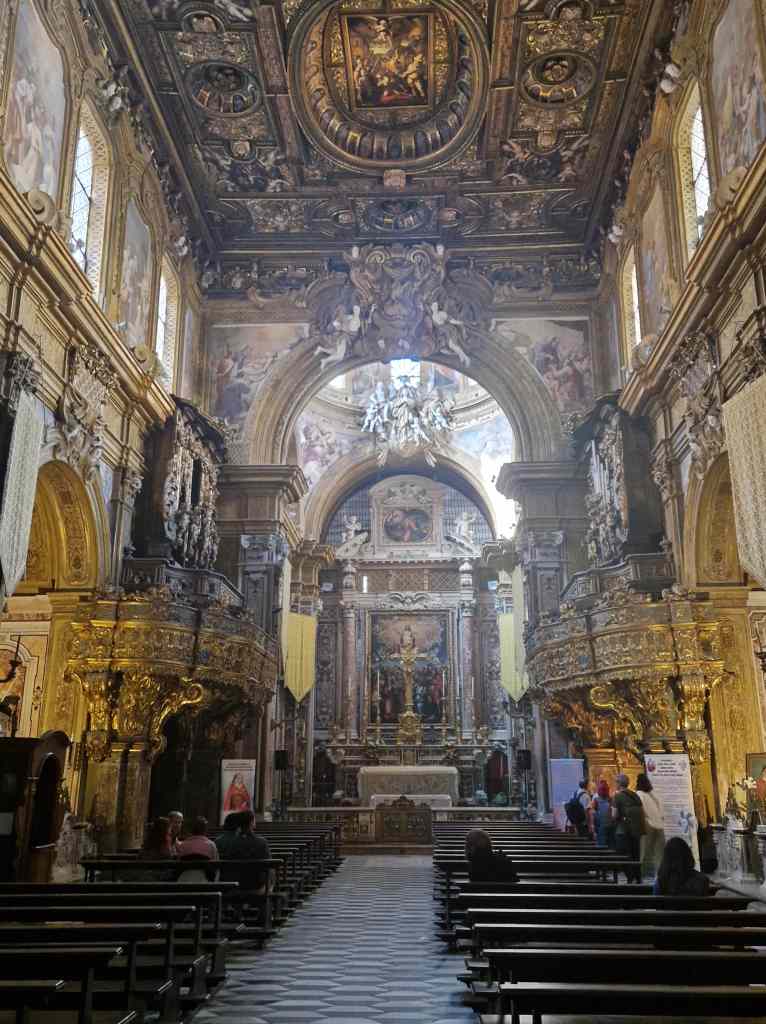
A short stroll further into the Centro Storico brought me to yet another beautiful church – this time a small baroque one.
Yet another beautiful church in Naples
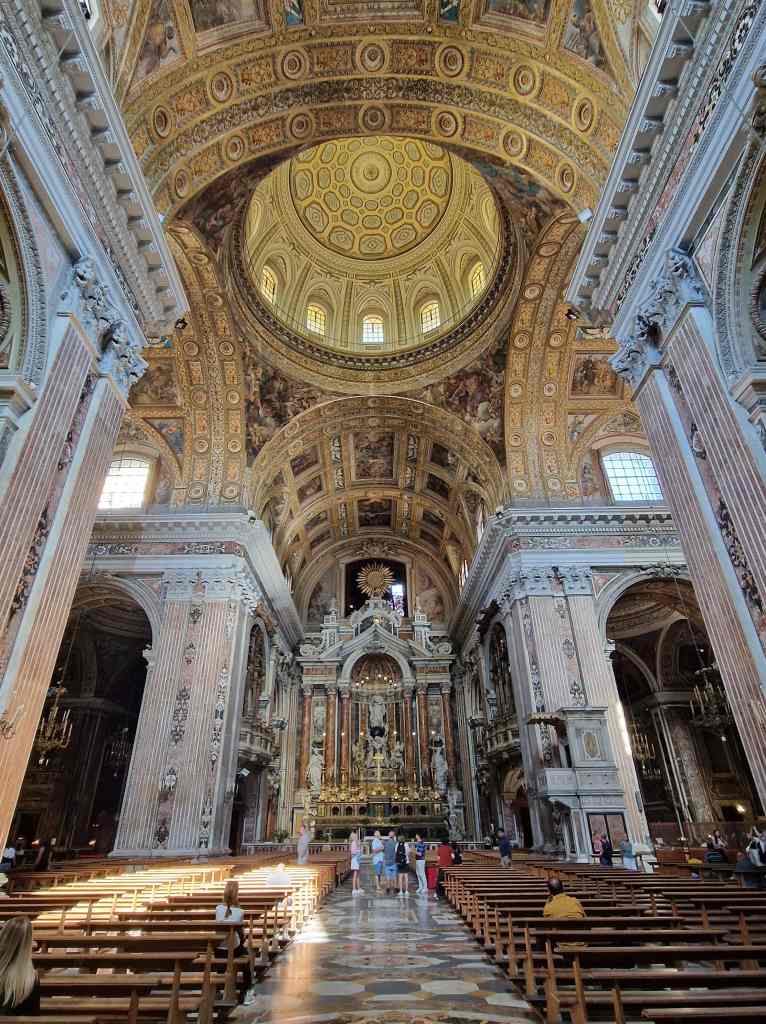
The cathedral is indeed impressive, but I found the Church of Gesu Nuovo (“New Jesus”) even better. This huge building was originally a palace, dating from 1470, but its owner fell into disgrace and it was confiscated and sold to the Jesuit order for them to convert to a church, whose construction began in 1584.
The distinctive outside of the Church of Gesu NuovoInside the Church of Gesu Nuovo
Today it is in my opinion the most beautiful church in Naples and certainly the biggest. A curious addition to the usual pictures of saints adorning the walls was an unusual twisted chunk of metal – an inscription explained that this was a bomb that fell through the church roof during WWII, but which failed to explode – something of course put down to divine intervention!
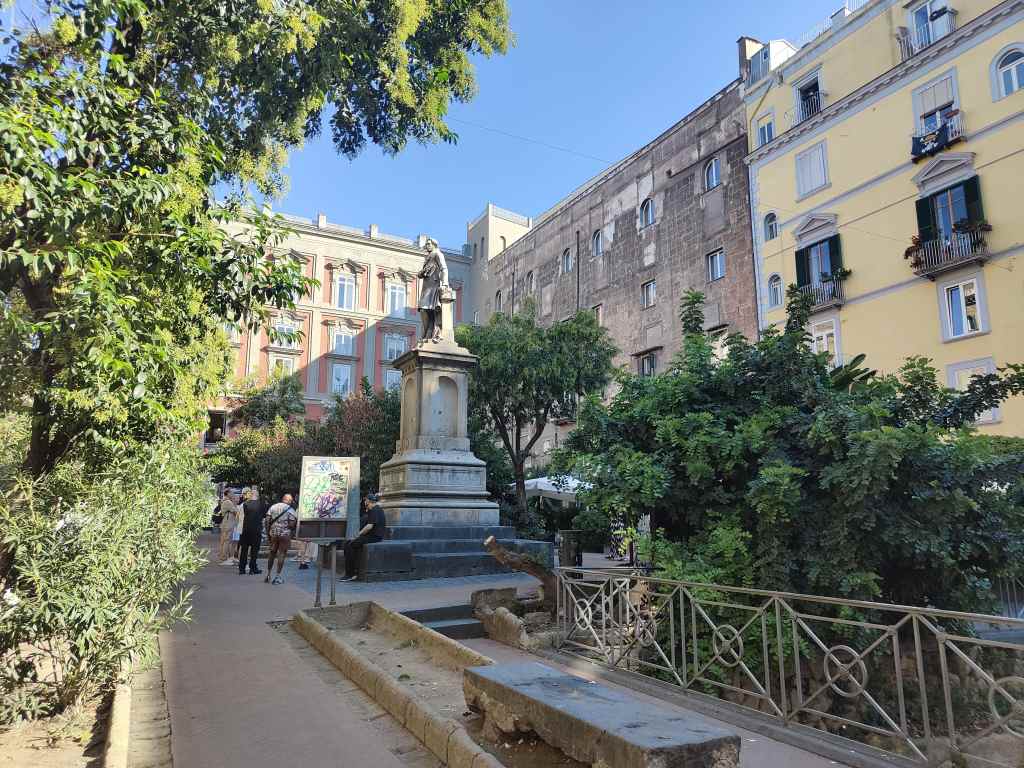
My stroll carried on past yet more interesting squares and buildings, like the Piazza Bellini and Piazza Dante.
Piazza BelliniPiazza Dante
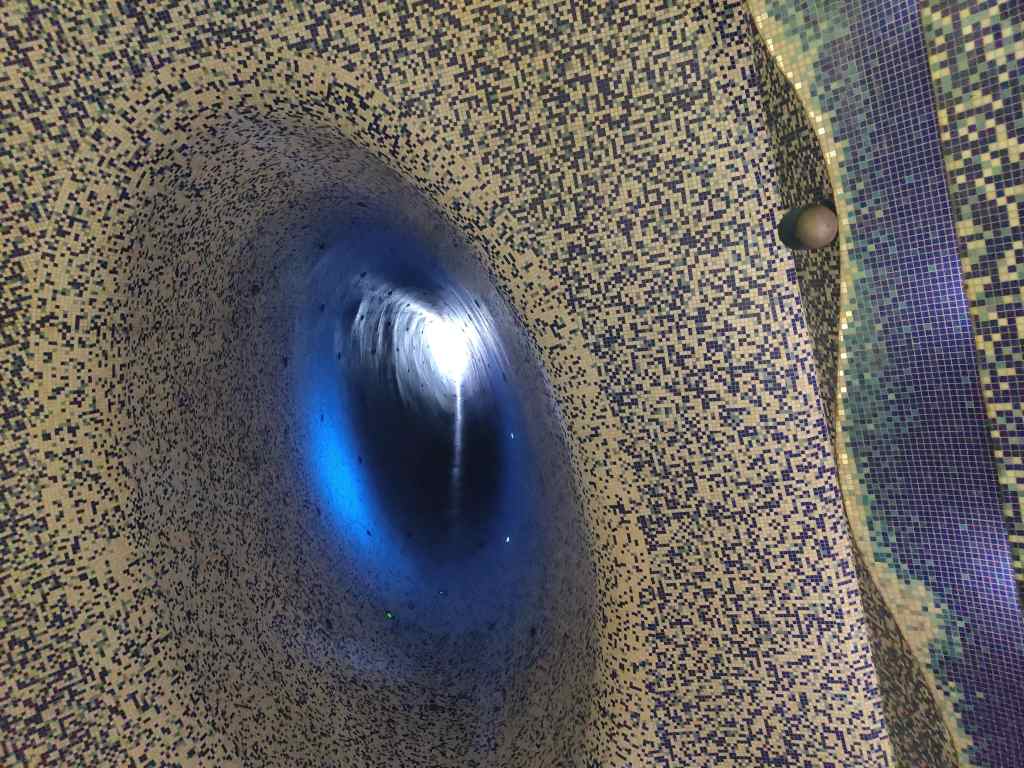
I finally ended up on Via Toledo, a main road in a more modern part of town. The metro station there is one of several in Naples that have important modern art installations, and is worth a visit even if you are not travelling anywhere.
Art installation at Toledo Metro Station, Naples
I took the metro back home and sat on my terrace enjoying the view and working on my blog as the sun set. I was hoping to see Naples’ many monuments at night, but the local authorities do not light up their buildings in the evening, so they were all hidden in darkness. This was a real shame, since I am convinced that nighttime Naples could be a spectacular sight, like Paris or Moscow – if only they would illuminate their city. To console myself I headed out for dinner in a local pizzeria, which was, as I expected, excellent and very reasonably priced. Apart from an imaginative and tasty octopus pizza and good wine, it was nice to be eating at an outside terrace in late September when I know that in London I would be shivering indoors.
A well-earned pizza after a long day’s walking around Naples
Over dinner I reflected on the last day and a half in Naples. I had found it an exceptional city, quite unlike anything I had seen elsewhere in the world – it felt like somewhere that could have been in Africa, but with European architecture. I loved its energy, crumbling historic buildings and magnificent setting on the Bay of Naples – and could forgive its chaotic traffic, noise and dirt. With some investment, Naples could rival Paris for its beauty – but for the moment I am rather glad that it remains as it is. I now had one day left to spend in the area, which I devoted to one of the world’s most famous sites – stay tuned to see which one (although I imagine many readers will already have guessed!).
Today I continued my exploration of deepest Puglia with visits to two more hilltop towns with old city centres. The first was Martina Franca, the biggest city in the area (albeit with a population of only 49,000). I found it similar to Cisternino – very picturesque with a well-defined old town which contained winding streets, churches, and a pretty main square. It was also not too busy, and was another nice place to happily lose oneself in for a couple of hours after a coffee on the main piazza.
Enjoying a cappuccino in Martina Franca’s piazzaMartina Franca’s fine piazza
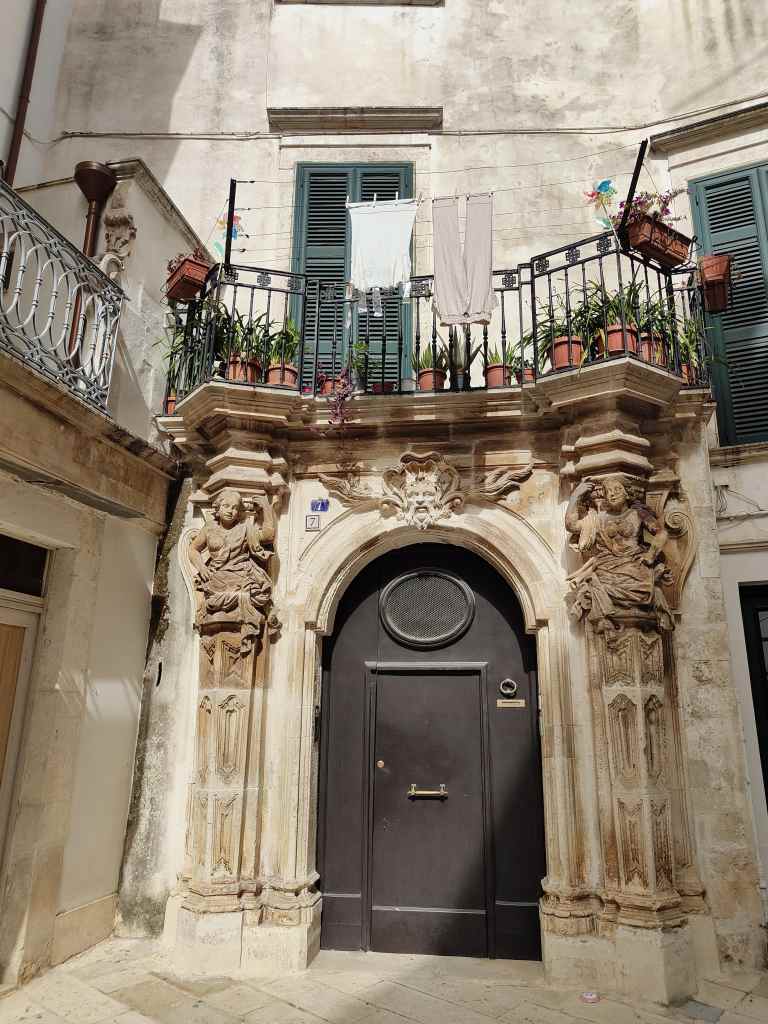
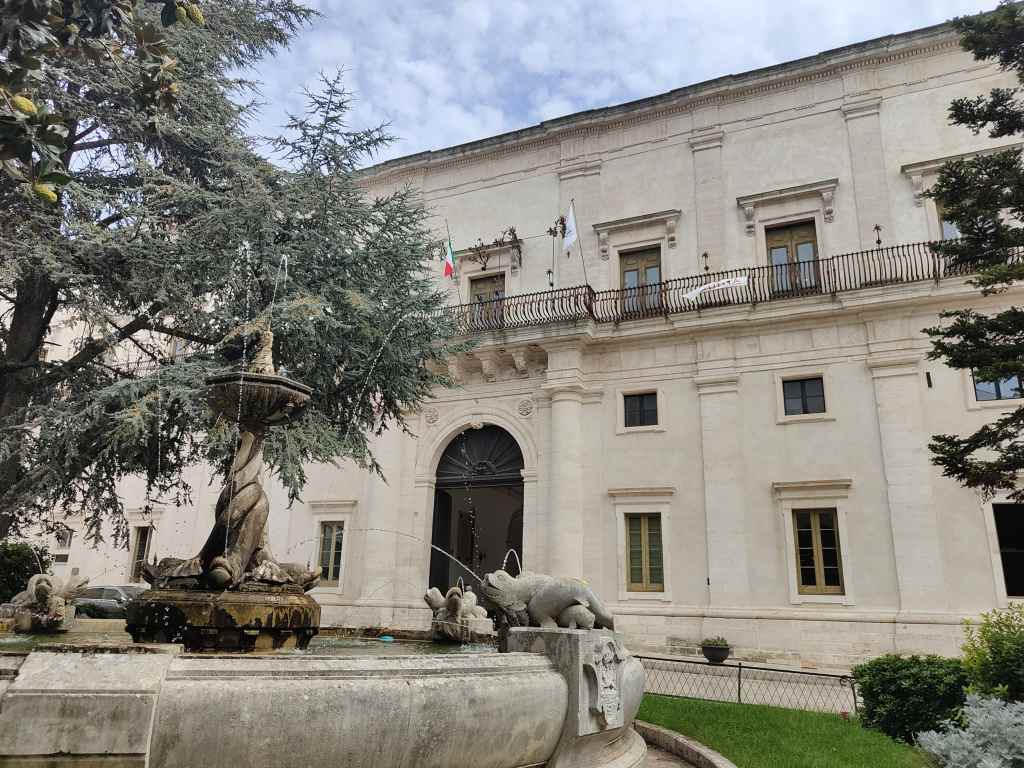
I thought that Cisternino’s small streets were more interesting, but Martina Franca had the more impressive monumental buildings, including a large church and a palace.
Building in a side street, Martina FrancaThe outside of the Palazzo Ducale, Martina Franca…….and inside
Next, I visited yet another hilltop village – Locorotundo, which I found to be more like Ostuni. It had a picturesque hilltop old town, visible for miles around from the surrounding plains, but its centre was too small to get properly lost in, and too crowded to get a feeling of discovering something for oneself. I took a couple of photos to prove I had been there before returning to Cisternino for dinner.
A photo of Locorotondo to prove that I was there
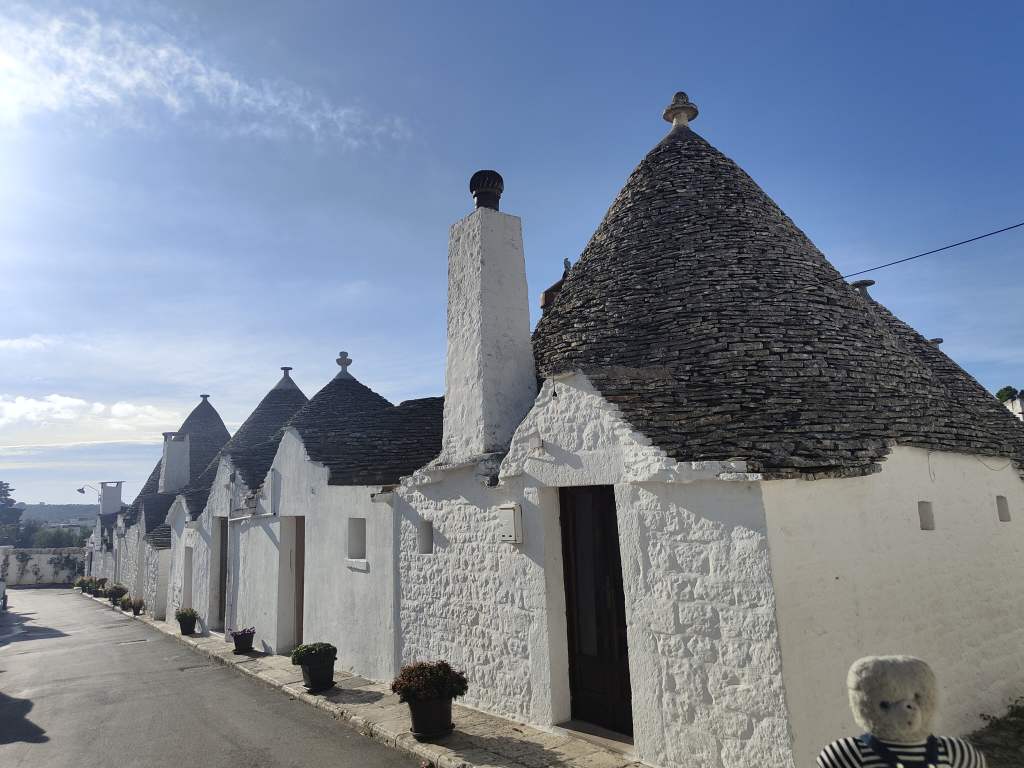
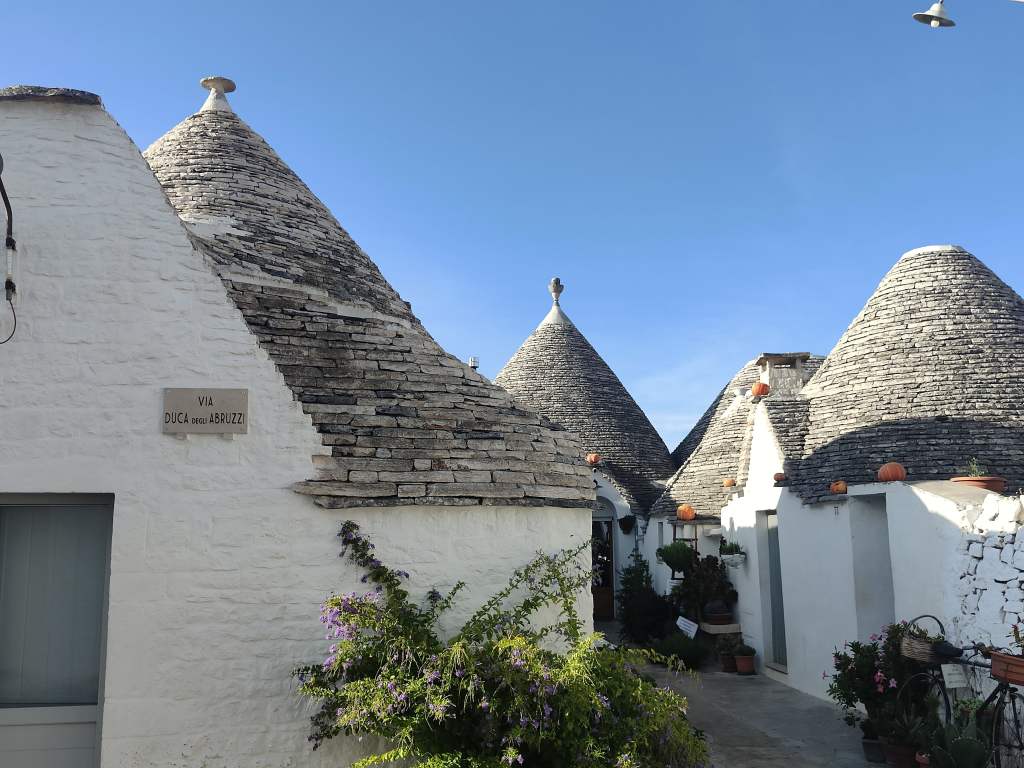
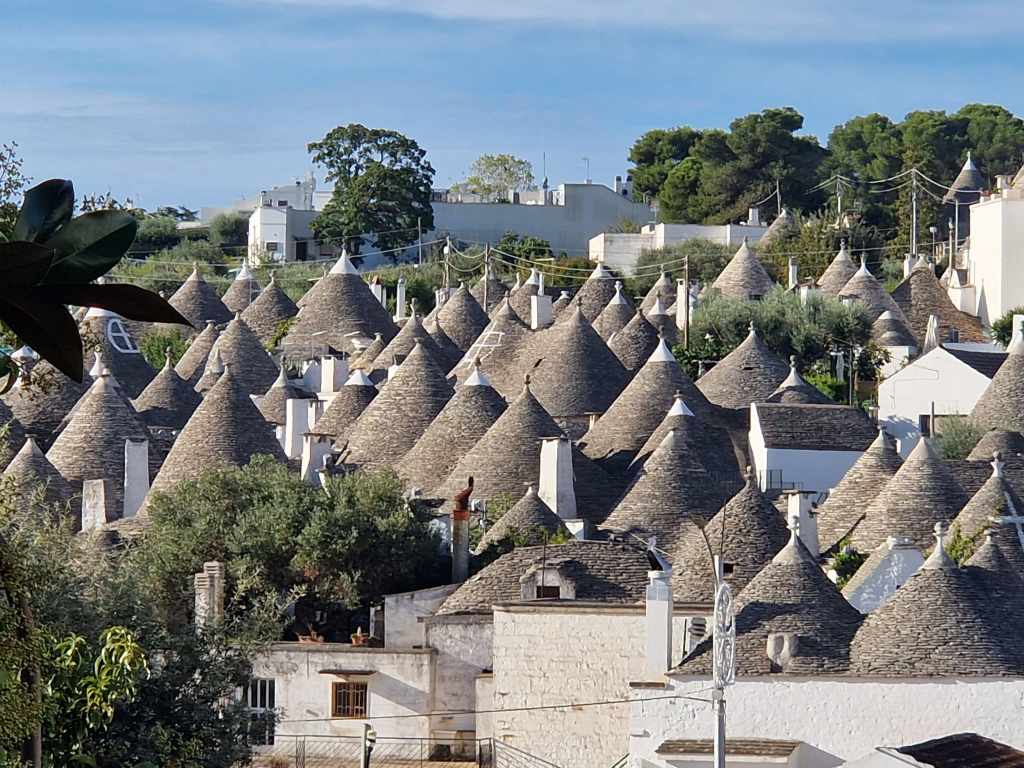
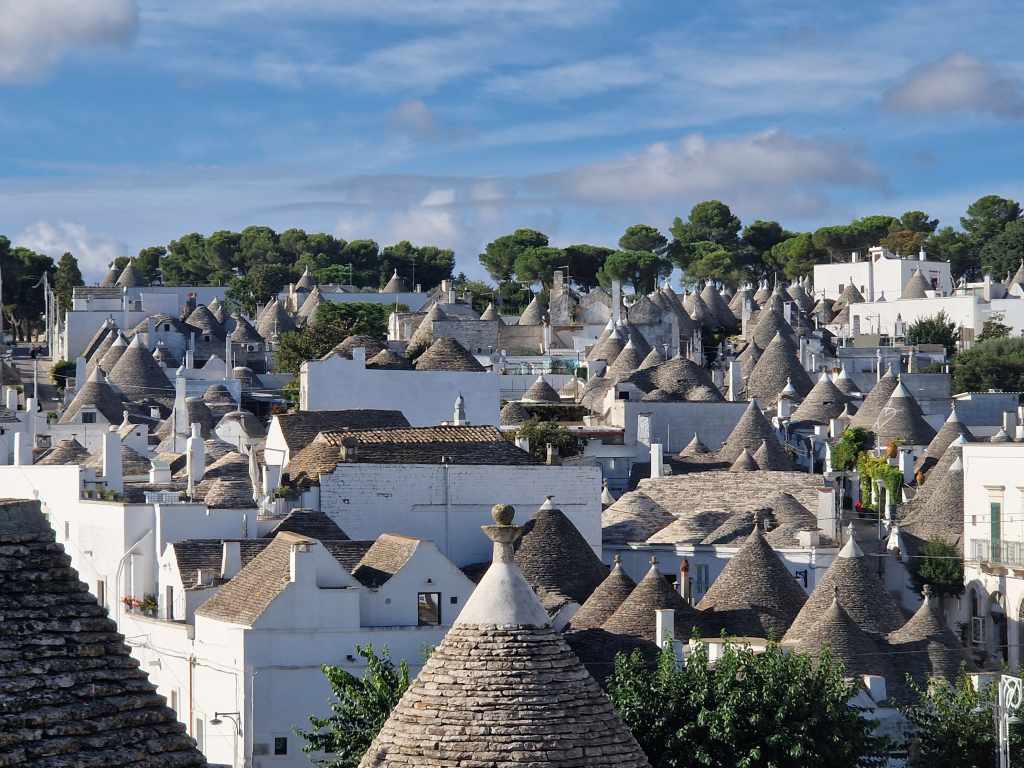
The next day I woke up early to make the four-hour trip back to Salerno to return my hire car. On the way I made a short early-morning stop at Alberobello, a small town known for its remarkable number of trulli – 1,600 apparently. These earned the town its listing as a UNESCO world heritage site, and a place on any tourist’s list of things to see in Puglia. The trulli were indeed a spectacular and strange sight, and I spent half an hour exploring them.
The first of many trulli at Alberobello
I looked at my watch, and wondered briefly whether I should not stop here longer to explore more deeply. But I had a deadline to return the hire car before the rental office in Salerno closed for its 1pm siesta break, so I decided to drive on. Leaving at that time turned out to be a good decision. On my way back to the car park, I crossed streams of other visitors heading the other way, and as I drove out of the town, I passed a veritable armada of tour buses driving in. It was clear that by 9.30 the small town would be overrun.
Hundreds of Alberobello’s trulli sit on one picturesque hillside
My drive back to Salerno proved challenging. Not because of the driving habits of local drivers, which were actually quite good, but because of the crazy rules imposed by the authorities. There were frequent road works (but no sign of anyone working) which were an excuse to limit the speed on perfectly good stretches of road to 50km/h (30 miles/hour) or even lower. It seemed that the government has bought thousands of “max 50km/h” signs that they did not know what to do with. The local drivers ignored these ridiculous limits and drove at an appropriate speed for the road conditions – often at twice or even three times the advertised limit. The rare speed cameras were well advertised in advance by signs and could also be spotted from far away by watching for when the drivers ahead braked suddenly. As a law-abiding foreign bear, I had an uncomfortable choice – obey the speed limit and cause a big queue of angry drivers to build up behind me, or drive like the locals. I won’t reveal my decision but let it be said that I arrived at Salerno in a slightly stressed condition just in time to return my car.
From Salerno I took the train to Naples for the last two nights of my Italian trip. I had enjoyed Puglia but thought that I had seen enough pretty villages and trulli and was yearning to experience the excitement of a big city once again. Whilst not always easy, Naples turned out to be exactly what I needed, and an exact opposite to the cute small towns of the last few days. Check out my blog tomorrow to find out more!
A teaser for my next post – the view of Naples from my accommodation!
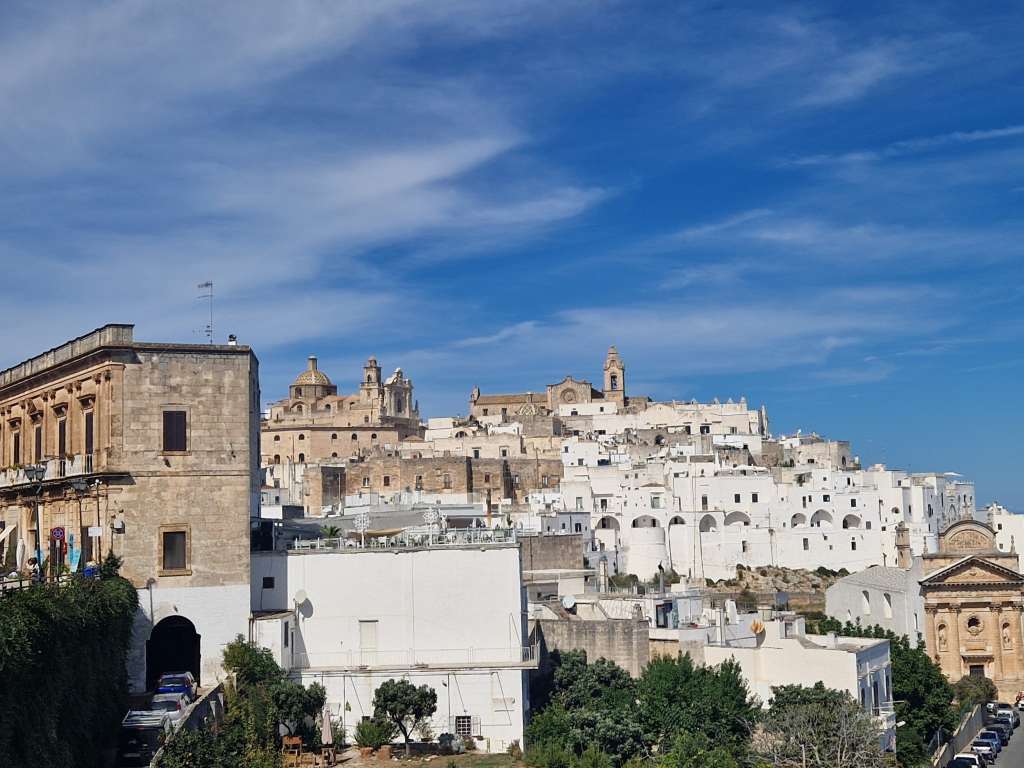
My next couple of days were devoted to exploring inland Puglia, with its pretty, white, hilltop villages and strange “trulli” (more about these below). I said a sad goodbye to Lecce and drove north to my first stop, Ostuni. This is arguably the prettiest town in Puglia, whose old town has a maze of windy lanes snaking up a hill. It dominates the surrounding plain and its visual impact is enhanced by the brilliant white colour of its houses, like villages in Greece.
Ostuni – beautiful from a distance
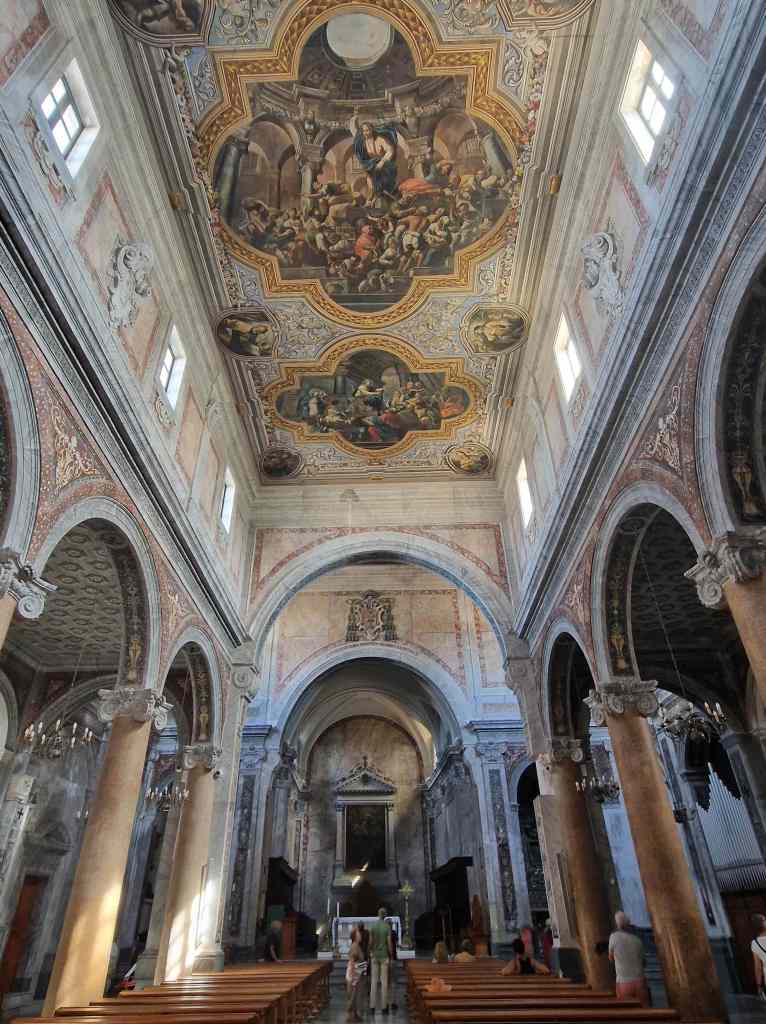
However, Ostuni’s beauty, and its proximity to the coast and the airport at Bari make it a popular destination for tour groups, and when I visited, it did not have enough small passageways to absorb the number of tourists it gets. I took lots of photos, but after a couple of hours wandering around, always seeming to come back to the same crowded piazza in front of the town’s 15th century cathedral, I had had enough and decided to drive on.
Inside Ostuni’s cathedralThe crowded piazza in front of the cathedreal
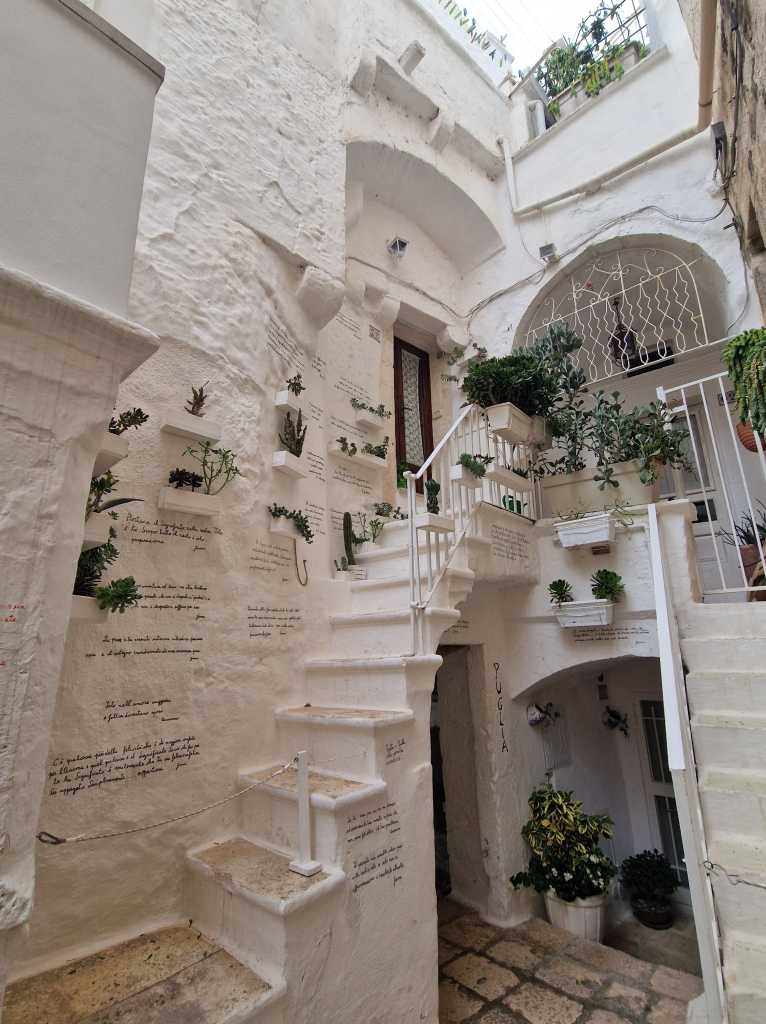
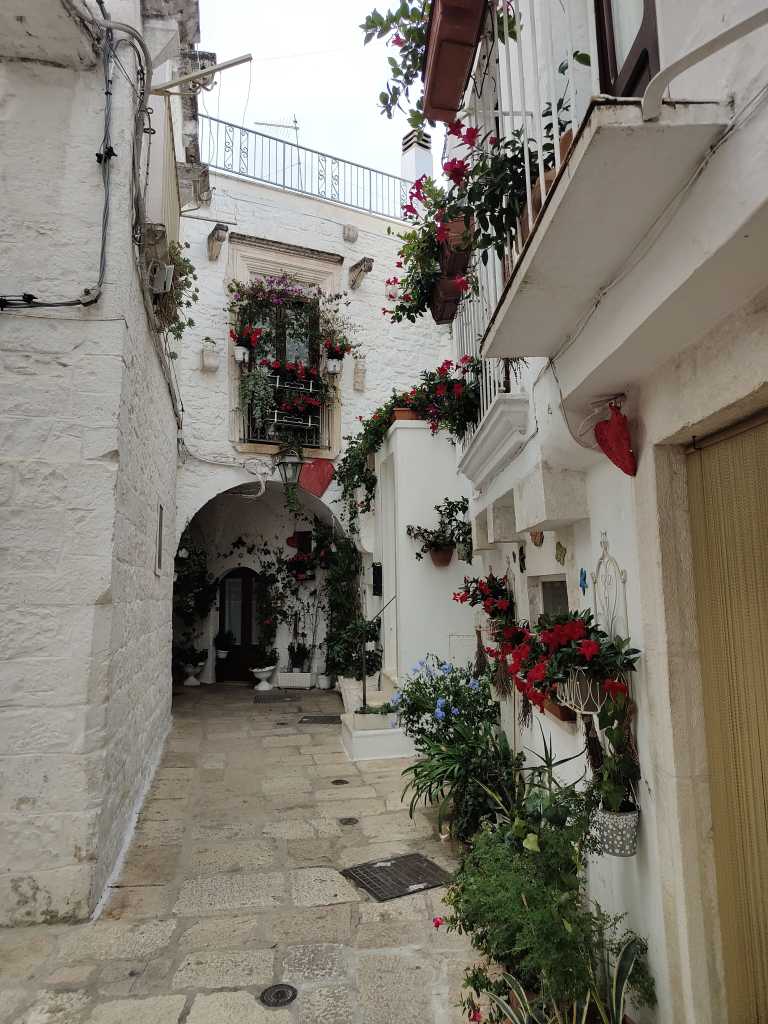
My decision to leave Ostuni earlier than I had planned left me with time to kill before I could check into my accommodation, and I decided to visit the little-known town of Cisternino. Unlike Ostuni, whose brilliant white old town is clearly visible for miles around, Cisternino’s was hidden behind more modern buildings, and on first appearances the city looked an unremarkable place. I had lunch in a local trattoria where I got a plate of excellent bombetti (little parcels of meat) for a ridiculously low price. Feeling very full after a big meal, I set off to look for the old town. I found a small archway in an ordinary looking modern building, and ducked under it to enter a different world – once again made up of winding narrow streets, white-painted houses and churches.
Hidden alleyways in Cisternino
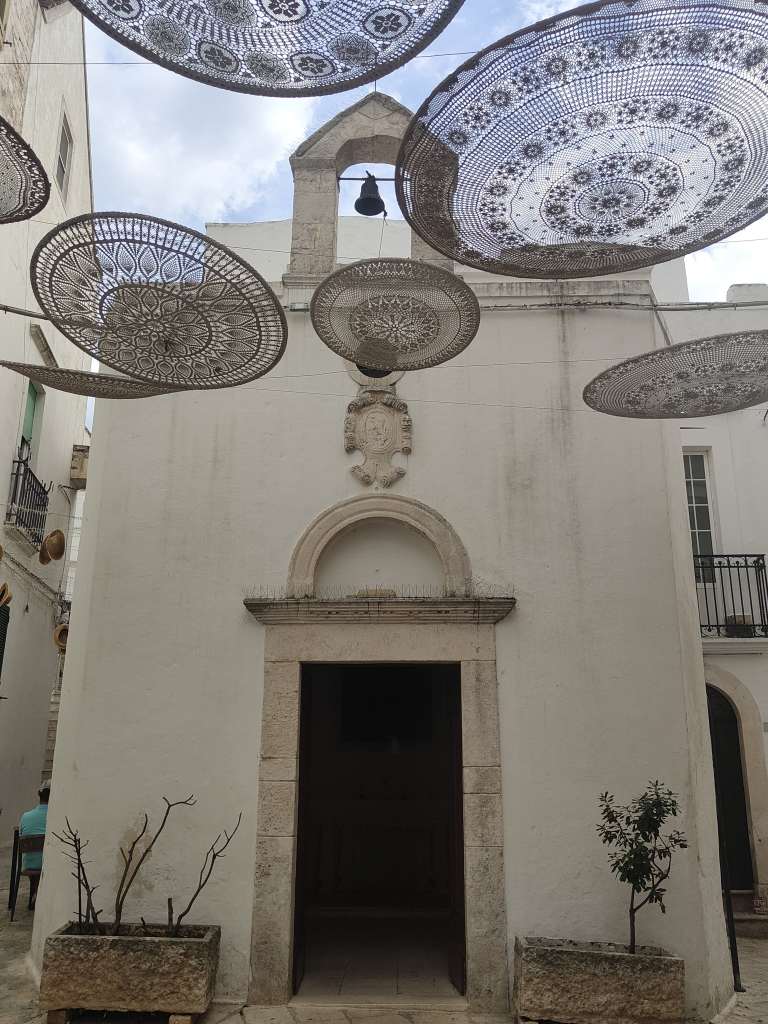
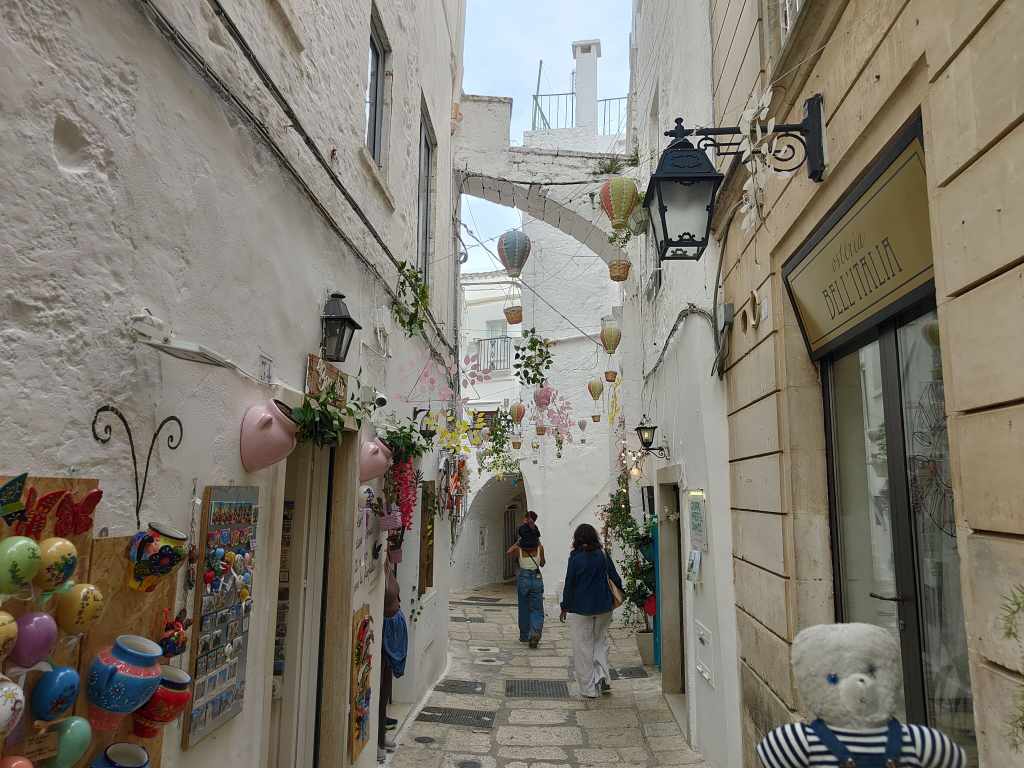
The residents of the old town had gone to great lengths to make the area interesting, decorating it in all sorts of imaginative ways. In some alleys, children’s swings with poetic inscriptions on the bottom of their seats hung above me; others were lined with red hearts and red flowers, and yet more displayed models of small hot air balloons hanging in the air above me.
Suspended art works in CisterninoRed flowers and red hearts in Cisternino
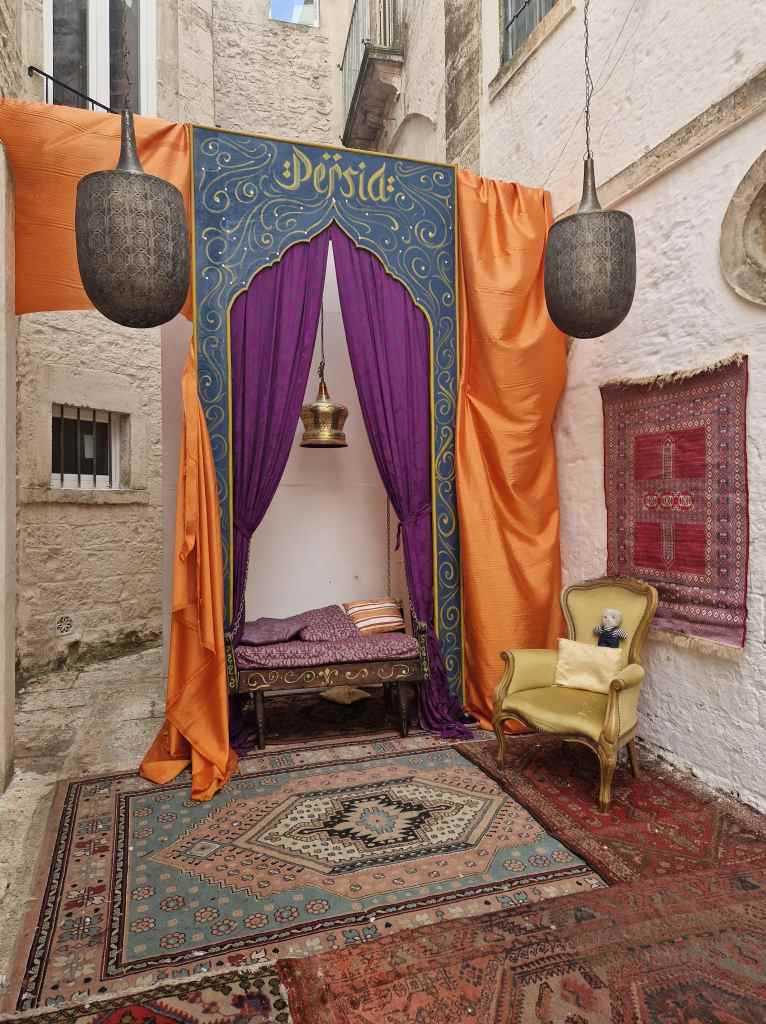
There were also some larger installations around the theme of countries in Asia – here is the one devoted to Persia:
Asian-themed display in Cisternino
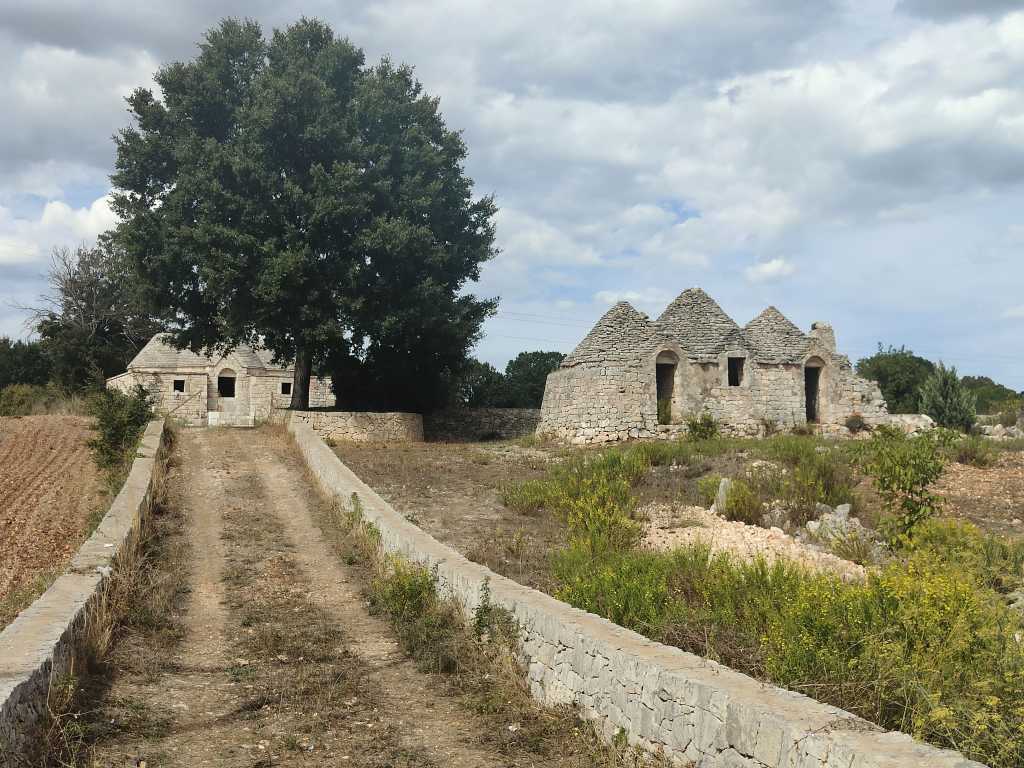
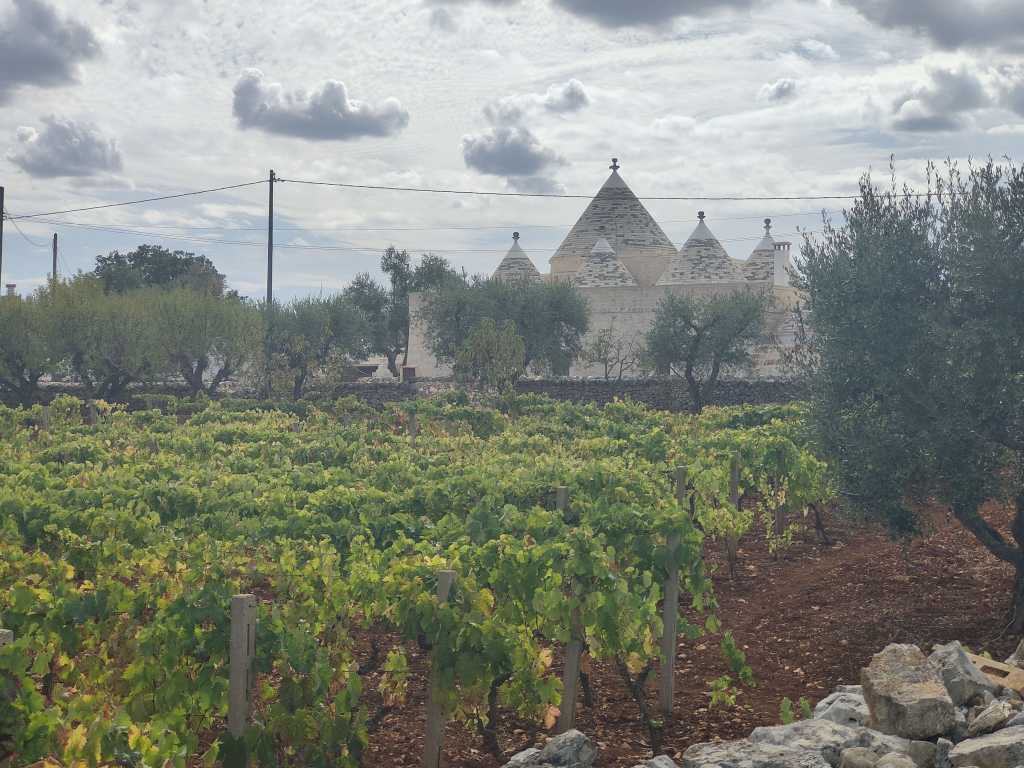
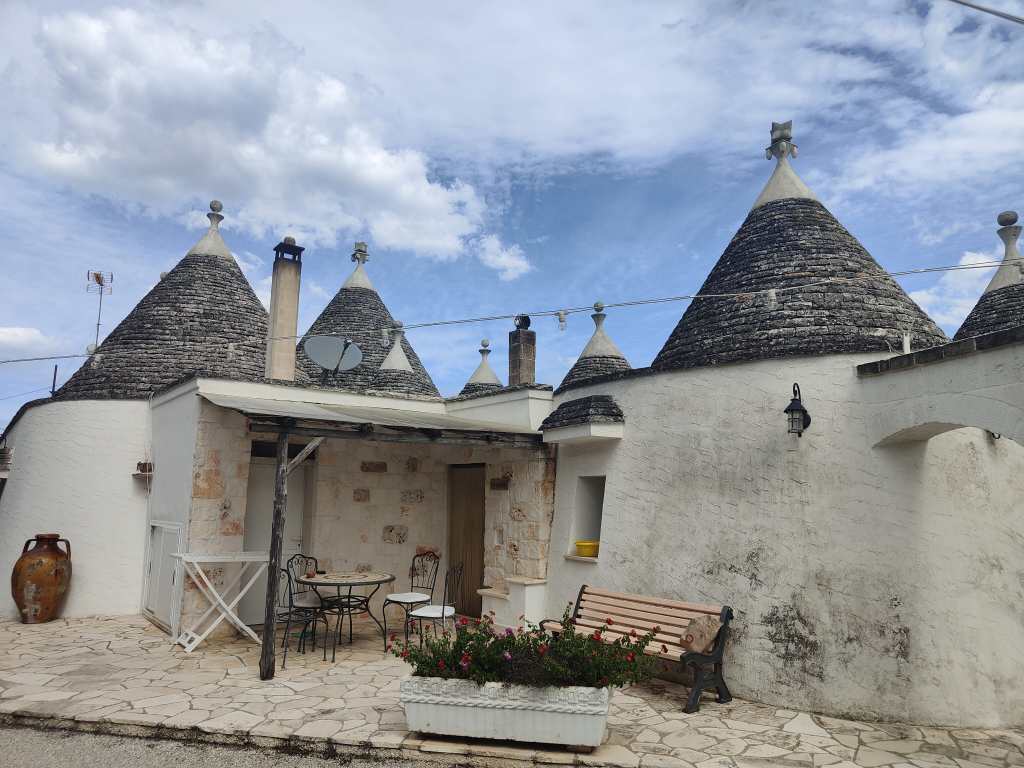
It was wonderful strolling around to see what new artistic ideas might lie behind the next corner. It was also very quiet – bumping into a fellow tourist was a pleasant surprise rather than a constant nuisance, like it had been in Ostuni. From being a stopgap to kill time before check-in, Cisternino had become one of the highlights of Puglia, and I was charmed by the place. But eventually it was time to go, and I drove on to my accommodation – a “masseria” or fortified farmhouse. The road led through the dry Puglia countryside down tiny country roads that crossed fields of olives or vines and were dotted with “trulli” – traditional stone huts with conical roofs. These were originally built as temporary storage facilities for farms, or as modest dwellings for agricultural labourers – but now many have been restored to provide accommodation for tourists.
Trulli on the backroads of PugliaTrulli and vines, Puglia
I eventually reached my masseria late in the afternoon. I had booked a room in one of these converted trulli, a popular idea with the many farmers who now make a living from agrotourism alongside cultivating crops. Staying in a trullo was something I thought I had to do whilst in Puglia, and was fun to do once, but I found the room a bit dark since the windows were very small.
My accommodation – a converted trullo
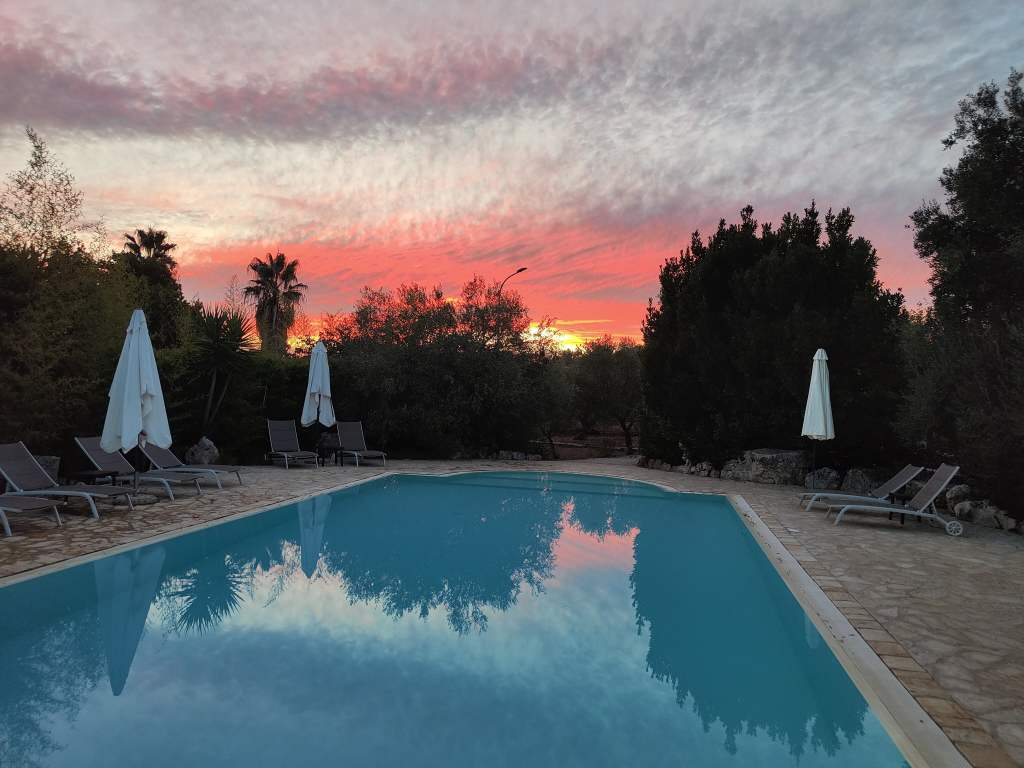
After check-in, I lay by the pool catching up on my blog. It had been a day of contrasts – I had been a bit underwhelmed by popular Ostuni, but charmed by little-known Cisternino, and was curious to see what other gems lay hidden in this remote part of inland Puglia – so remote in fact that my masseria had no mobile phone coverage.
















 Trouspinet travels